How to Adjust Camera Sharpness on DJI Drone
Peter Leslie
22 May 2026
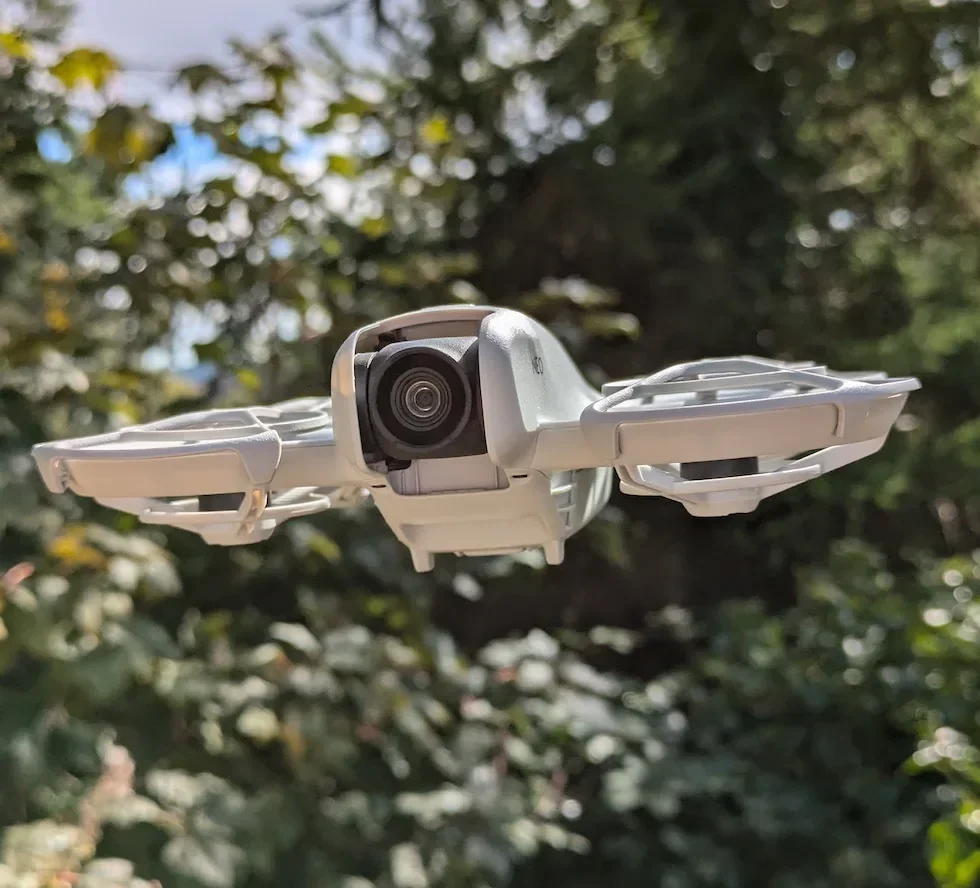
If the footage off a DJI drone is coming back too crunchy on the edges, with haloed treelines and roof ridges, or too soft for the kind of social clip that needs to read at thumb-scroll size, the control to tune is the camera Sharpness setting inside DJI Fly. It sits in the Style row of the Preferences panel once the camera is switched into Pro mode, and it snaps between four named positions — Off, Low, Standard, and High.
Drones this applies to
DJI Neo 2, DJI Mini 5 Pro, DJI Avata 2, DJI Air 3 Pro, DJI Mavic 4 Pro. The same Off, Low, Standard, and High scale lives inside the Preferences panel on any drone running DJI Fly v1.21.2 or later — only the rest of the colour profile choices around it vary slightly between models.
Quick guide
To Adjust Camera Sharpness on DJI Drone, go to DJI Fly → Camera View → switch to Pro mode → Preferences → scroll to Style → tap to expand → drag the Sharpness slider. The slider snaps between Off for the softest image, Low for cinematic work, Standard as the factory default, and High for the crispest, social-ready look.
Step-by-step: How to Adjust Camera Sharpness on DJI Drone
Follow these top to bottom the first time, and the path is muscle memory the second time. The labels and order are identical on every drone in the callout above — the screenshots are taken on a DJI Neo 2.
Switch the camera mode from Auto to Pro on the DJI Fly camera view
With the drone connected and DJI Fly sitting on the camera view, look at the right-hand control column for the mode label. Tap it once to flip from Auto to Pro — the full row of manual controls and the Preferences icon only appear in Pro.
Tap the Preferences icon to open the camera Preferences panel
In Pro mode a small Preferences icon — three horizontal sliders stacked together — appears alongside the manual control row. Tap it once and the Preferences panel slides up over the live feed with Format and bit-depth at the top, Histogram and Grid Lines below, then the Style row and the colour profile selector lower down.
Scroll down the Preferences panel until the Style row is in view
Inside the Preferences panel, scroll past Format and Histogram. The Style row sits roughly mid-panel — the label reads Style on the left and the current style is printed on the right. Standard is the factory default.
Tap the Style row to expand the Sharpness, Contrast, and Saturation sliders
Tap the Style row header once. The row drops open underneath to reveal three labelled sliders — Sharpness at the top, Contrast in the middle, Saturation at the bottom. Each one carries the same four named positions: Off, Low, Standard, and High.
Drag the Sharpness slider to Off to remove all in-camera edge enhancement
Drag the Sharpness slider all the way to the left to land on Off. The in-camera sharpening filter switches out completely and the live feed softens — treelines and roof ridges look less defined, but the image now carries no baked-in edge enhancement at all.
Drag the Sharpness slider to Low for cinematic, grade-friendly footage
Slide the Sharpness control one position right of Off to land on Low. The image keeps a touch of edge definition but stays soft enough that a colourist can add bite back in post — this is the position most UK drone pilots leave the slider on when the footage is going into a graded edit.
Drag the Sharpness slider to Standard for the factory default look
Centre the slider on Standard. The image carries a moderate amount of in-camera edge enhancement out of the box — sharp enough to look broadcast-ready, soft enough to hold up on a 4K timeline without ringing. This is the value the drone shipped with from the factory.
Drag the Sharpness slider to High for social-first, no-edit footage
Slide the Sharpness control all the way right to land on High. The in-camera sharpening filter runs at full strength — the image pops on a phone preview, treelines and roof ridges read crisp on the live feed, and the clip is ready to publish straight off the SD card with no edit pass. Tap anywhere off the Preferences panel to close it; the value holds across power cycles.
Peter's tip
I leave Sharpness on Low for anything that is going into a graded edit, and Standard for general flying. High looks great on the phone preview but the edge halos show up the moment the clip lands on a 4K timeline — and once the sharpening is baked in there is no removing it in post. Pull it down at capture, add the bite back with a touch of unsharp mask in the grade, and the footage will hold up at any size.
Off vs Low vs Standard vs High on a DJI drone
Four positions, four very different looks. Use this table to pick before the flight, not during one.
| Sharpness | Look on the live feed | When to use it |
|---|---|---|
| Off | Softest base, zero in-camera edge enhancement, slight loss of perceived detail on the live feed. | Maximum grading headroom — pick this when the clip is heading into a heavy colour grade and the editor will add detail back manually in post. |
| Low | Soft but resolvable, treelines and roof ridges read clean, no haloing or ringing artefacts. | The default cinematic setting — the position most UK drone pilots leave the slider on when the footage will be graded in post. |
| Standard | Factory default — sharp, broadcast-ready, moderate in-camera edge enhancement already applied. | General-purpose flying — fine for clips that may or may not be edited and the operator does not want to commit either way at capture. |
| High | Maximum in-camera sharpening, crisp edges on the phone preview, visible halos and shadow noise on a larger display. | Social-first capture — Reels, Shorts, TikTok — where the clip goes straight from the SD card to the platform with no edit pass. |
Frequently asked questions
What Sharpness values does a DJI drone offer?
Four named positions on every current DJI drone running DJI Fly — Off, Low, Standard, and High. The slider snaps in whole steps between the four, with Standard sitting in the centre as the factory default. The control lives inside the Style row of the Preferences panel in Pro mode, alongside Contrast and Saturation.
What Sharpness setting works best for cinematic footage on a DJI drone?
Low is the position most UK drone pilots reach for when the footage has to cut into a graded edit. Standard already biases the image toward a sharp, broadcast-ready look — pulling it down one stop to Low tames the edge enhancement on rooftops, treelines, and high-contrast horizons, which gives the colourist room to add the bite back in post without ringing artefacts. High is reserved for footage that goes straight to social with no grade.
Will turning Sharpness up to High make the footage look better?
Only on small screens. High cranks the in-camera sharpening filter harder, which exaggerates edges and makes the footage pop on a phone preview. On a larger display, that same setting introduces visible halos along high-contrast edges and noise in the shadows. The sharpening cannot be removed in post once it is baked in, so push the slider up only when the clip is going straight to a vertical short with no edit pass.
Does the Sharpness setting affect both photo and video on a DJI drone?
Yes. The Style row sits inside the Preferences panel in Pro mode, not inside the shooting mode panel, so the value applies to both photo and video output. The same Off, Low, Standard, or High value is baked into the next still you capture and the next clip you record. Switching between Photo and Video on the camera mode toggle does not reset Sharpness.
Does a DJI drone save the Sharpness value between flights?
Yes. Sharpness is a Style preference inside the Preferences panel, and DJI Fly holds the value across power cycles. Land the drone, pack it away, fly again the next day, and the slider is still where you left it. The only way to reset it is to drag it back to Standard by hand or to clear the app data.
Why does the footage still look soft after raising Sharpness?
In-camera Sharpness only sharpens what the sensor and lens already resolved. If the drone is flying through a vibration, the gimbal is fighting a gust, or the lens has fingerprint smudges on it, the source footage is soft before the sharpening filter ever runs. Land, clean the lens with a microfibre cloth, check the gimbal calibration, and only then judge the Sharpness slider — most of the time the real fix is upstream of the setting.
Should I match Sharpness between two DJI drones on the same shoot?
Yes. Different DJI drones ship with the same Sharpness scale but the underlying sharpening curves vary slightly between sensors, and two clips at factory Standard can read as two different cameras when cut together. Drop both drones to Low, grade them together, and the cut lines up. The Low starting point gives the colourist a softer base on both clips to add bite back in post.
Can I adjust Sharpness on a DJI drone while it is in the air?
Yes. Pro mode is one tap away from the camera view, the Preferences panel opens inside it, and the Style row expands to the sliders without leaving the flight. Stop recording before you scrub the slider — the value change is visible on the live feed and will land in the middle of the clip if you do not pause first.
Sharpness is one of the three Style sliders on a DJI drone that gets ignored straight out of the box and then quietly bakes a look into every clip the drone records. Drop it to Low for graded work, leave it on Standard for general flying, push it up to High only when the footage is going somewhere small and vertical with no edit pass to fix it.
If you are not sure which Sharpness position suits the kind of flying you are doing, drop the details to peter@hiredronepilot.uk and I will come back to you directly. The video version of this walkthrough is on YouTube and the comments are open.
References
Primary source material for this article is the official DJI user documentation for each drone in the callout and DJI Fly. External links open in a new tab.
- DJI Fly — App download and release notes · The app where Pro mode, the Preferences panel, and the Style row with the Sharpness slider all live across every current DJI drone. Release notes record any layout changes between versions.
- DJI — UK consumer drone product line-up · Per-drone user documentation carries the Style row options and the Off, Low, Standard, and High scale under the camera Preferences section.
- UK Civil Aviation Authority — The Drone and Model Aircraft Code (CAP2320) · The visual-line-of-sight rule that frames why settings changes mid-flight should be planned for a pause in the camera work, not mid-record.
Peter Leslie
Founder & GVC Drone Pilot
Peter is the founder of HireDronePilot. With thousands of logged commercial flight hours, he writes about drone technology, commercial surveying tactics, and UK aviation compliance.
Connect on LinkedIn