How to Adjust Shutter Speed on DJI Drone
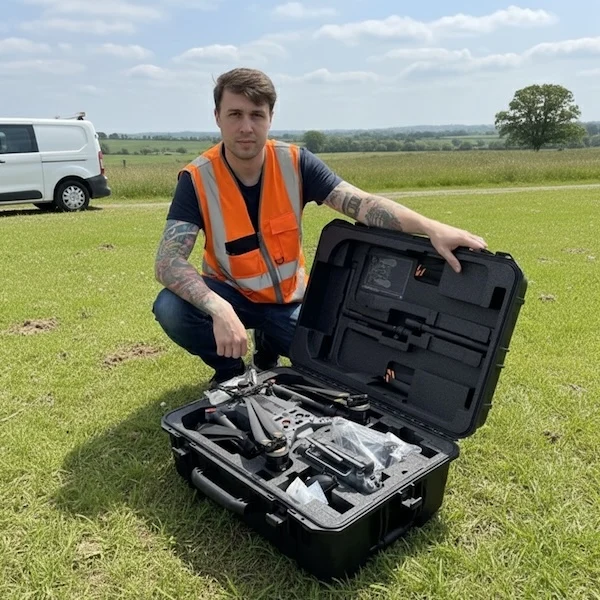
Peter Leslie
22 May 2026
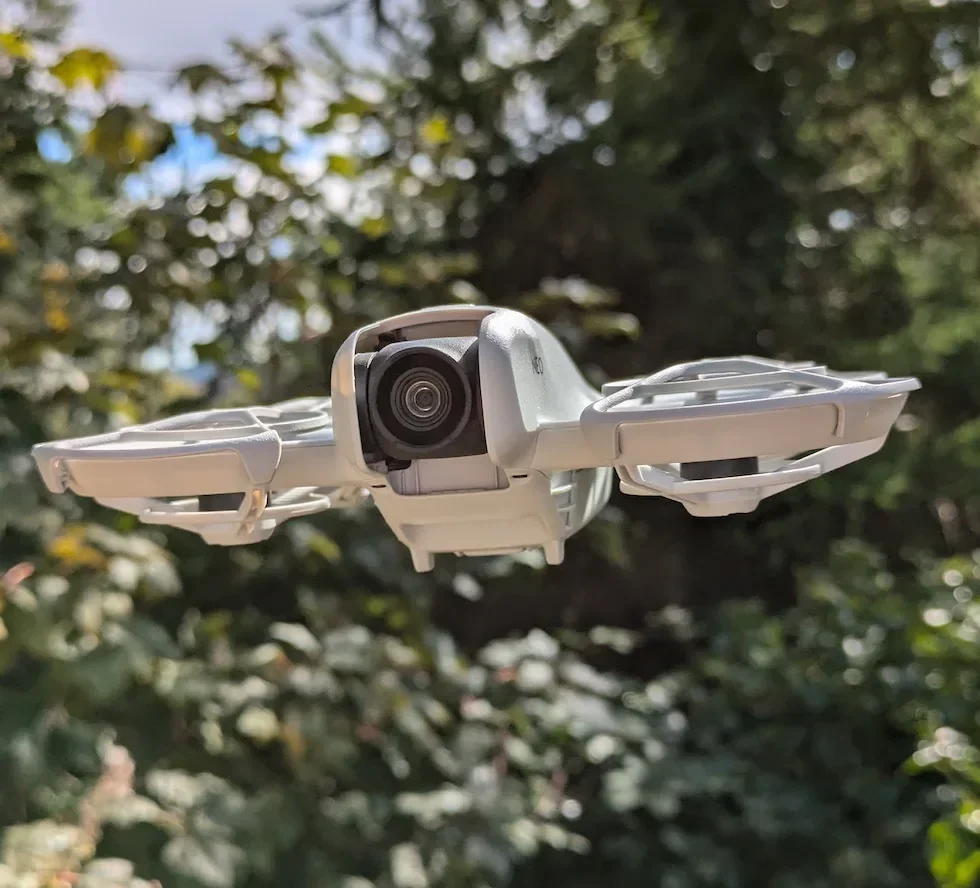
If the footage off a DJI drone is coming out too sharp on motion, blown out in bright light, or smeared in low light, the control you are looking for is the shutter speed. It sits inside Pro mode in DJI Fly, behind one toggle that lots of drone pilots miss the first time.
Drones this applies to
DJI Neo 2, DJI Mini 5 Pro, DJI Avata 2, DJI Air 3 Pro, DJI Mavic 4 Pro. The same procedure works on any drone running DJI Fly v1.21.2 or later — only the available shutter range and the maximum frame rate vary very slightly between models.
Quick guide
To adjust shutter speed on DJI Drone, go to DJI Fly → Camera View → bottom-right icon (set to Pro) → camera parameters → shutter section → switch automatic off → drag the slider. For video, the cinematic default is shutter at twice the frame rate — the 180-degree shutter rule.
Step-by-step: How to Adjust Shutter Speed on DJI Drone
Follow these top to bottom the first time, and you will know the path off by heart the second time. The labels and order are identical on every drone in the callout above.
Open DJI Fly and enter the camera view on the connected drone
With the drone powered on and the remote controller connected, launch DJI Fly and tap Go Fly to drop into the camera view. The live feed from the drone fills the screen with the shooting controls running down the right-hand edge.
Switch the camera into Pro mode using the bottom-right icon on the control column
Look at the very last icon at the foot of the right-hand control column — the camera mode toggle. If the label reads Auto, tap it once so it flips to Pro. The shutter row is only adjustable in Pro mode, so this step has to come before you go looking for the slider.
Open the camera parameters panel from the right-hand control column
Tap into the camera parameters panel on the camera view. The panel that slides open carries the manual exposure rows that Pro mode unlocks — ISO at the top, shutter in the middle, and exposure value at the bottom.
Select the shutter section in the camera parameters panel
The middle section along the panel carries the shutter icon — a small camera shutter glyph that sits between the ISO row and the EV row. Tap it to land on the shutter row, where the current shutter value and the automatic toggle both live.
Switch the automatic shutter toggle off inside the shutter row
The shutter row has its own automatic toggle, and the slider underneath stays inert until that toggle is off. Tap the toggle to disable automatic shutter — the slider lights up and the current value becomes editable the moment the switch flips.
Drag the slider to the manual shutter value you want
Drag the slider left for a slower shutter and longer exposure, or right for a faster shutter and crisper motion. The live feed on the camera view reacts to every drag in real time, so you can see the exposure brighten or darken as the slider moves. Release the slider when the value matches the look you want.
Match the shutter to twice the frame rate for cinematic video
For video, the cinematic default is the 180-degree shutter rule — shutter speed set at twice the frame rate. A 25 fps clip wants 1/50, a 30 fps clip wants 1/60, a 50 fps clip wants 1/100, and a 60 fps clip wants 1/125. That ratio gives the natural motion blur that reads as cinematic on the timeline.
Confirm the new shutter value on the camera view and start recording
Close the camera parameters panel and check the shutter readout on the camera view — the value you just set is now showing in the corner of the live feed. Pair it with a manual ISO and EV from the same panel to lock the full exposure, then hit record.
Peter's tip
I record almost everything off a DJI drone at 25 fps with the shutter pinned at 1/50, and I keep an ND4, ND8, and ND16 in my pocket for bright days. The moment the sun comes out, the shutter wants to climb to keep the exposure under control — that is when I drop an ND on the lens instead, so the shutter stays at 1/50 and the motion blur stays cinematic. Without the ND, the only way to keep the exposure right is to push the shutter up, and the footage starts to look crispy and digital.
Frequently asked questions
What shutter speed should I use on a DJI drone for cinematic video?
Follow the 180-degree shutter rule — set the shutter to twice the frame rate. A 25 fps clip wants 1/50, a 30 fps clip wants 1/60, a 50 fps clip wants 1/100, and a 60 fps clip wants 1/125. That ratio gives the natural motion blur that reads as cinematic on the timeline; anything much faster looks staccato and anything slower starts to smear the subject.
Do I have to be in Pro mode to set shutter speed manually on a DJI drone?
Yes. In Auto the shutter row is locked to automatic exposure — the drone picks the value for you and the slider is greyed out. Switching the camera mode to Pro using the bottom-right icon is the step that unlocks the manual shutter row and the automatic toggle inside it. Without Pro mode you cannot reach a manual shutter value at all.
When should I override the automatic shutter on a DJI drone?
Whenever the look of the footage matters more than the exposure being technically right. Manual shutter is the cleanest way to lock the 180-degree rule for cinematic video, to hold a consistent brightness across a multi-clip sequence, or to pull off a slow shutter night still. Leave Auto on for casual flying where the priority is just a well-exposed frame.
What is the slowest shutter speed I can use on a DJI drone at night?
In photo mode most current DJI drones allow multi-second exposures for low-light stills, with the long end of the slider opening up the moment automatic is off. In video the slowest shutter is capped by the selected frame rate — you cannot go slower than one over the frame rate, so a 25 fps clip is limited to 1/25 at the longest. For long-exposure night work, stay in photo mode and brace against a steady hover.
How does shutter speed relate to anti-flicker and frame rate on a DJI drone?
Mains-powered lights flicker at 50 Hz in the UK and 60 Hz in the US, and shutter speeds that are not a multiple of the local mains frequency pick up rolling banding. The DJI Fly anti-flicker setting forces the shutter to a flicker-safe value when the camera is in Auto. In Pro with manual shutter you have to pick a flicker-safe value yourself — 1/50, 1/100, or 1/200 in the UK, and match the frame rate to the same family to keep the 180-degree relationship clean.
Why is the shutter slider greyed out on my DJI drone even in Pro mode?
The automatic shutter toggle on the shutter row is still on. Pro mode unlocks the row but each parameter — ISO, shutter, EV — has its own automatic switch on the same row, and the slider stays inert until that switch is off. Open the shutter section, flip the automatic toggle off, and the slider becomes interactive.
Does changing shutter speed on a DJI drone affect the live feed straight away?
Yes. The live feed on the camera view reacts to every slider drag in real time, so you can see the exposure brighten or darken as you move the shutter value. The histogram on the camera view also updates live. Pair the slider with ISO and EV to dial in the look you want before you hit record.
How does the DJI drone shutter setting interact with ND filters?
ND filters let you keep the shutter at the 180-degree value in bright light without overexposing the image. Without an ND, a 25 fps clip in midday sun forces the shutter up to something like 1/2000 to control the brightness, which looks too sharp and crispy on motion. Slot an ND4, ND8, or ND16 over the lens, drop the shutter back to 1/50, and the motion blur returns to natural without the highlights blowing out.
Manual shutter on a DJI drone is the single biggest jump in footage quality you can make without buying anything new — pin it to twice the frame rate, lock ISO and EV alongside it, and the drone starts looking like part of a real camera kit rather than a point-and-shoot. The 180-degree rule plus a small set of NDs covers ninety percent of the shoots I do.
If you are not sure which shutter value suits the look you are after, drop the details to peter@hiredronepilot.uk and I will come back to you directly. The video version of this walkthrough is on YouTube and the comments are open.
References
Primary source material for this article is the official DJI user documentation for each drone in the callout and DJI Fly. External links open in a new tab.
- DJI Fly — App download and release notes · The app where Pro mode, the camera parameters panel, and the shutter slider live across every current DJI drone. Release notes record any menu reshuffles between versions.
- DJI — UK consumer drone product line-up · Per-drone user manuals carry the shutter range, frame rate options, and the Pro mode parameter list under §Camera Settings.
- UK Civil Aviation Authority — The Drone and Model Aircraft Code (CAP2320) · The visual-line-of-sight and altitude framework that the rest of the manual-camera workflow has to fit inside.
Peter Leslie
Founder & GVC Drone Pilot
Peter is the founder of HireDronePilot. With thousands of logged commercial flight hours, he writes about drone technology, commercial surveying tactics, and UK aviation compliance.
Connect on LinkedIn