How to Change Anti-Flicker Settings on DJI Drone
Peter Leslie
22 May 2026
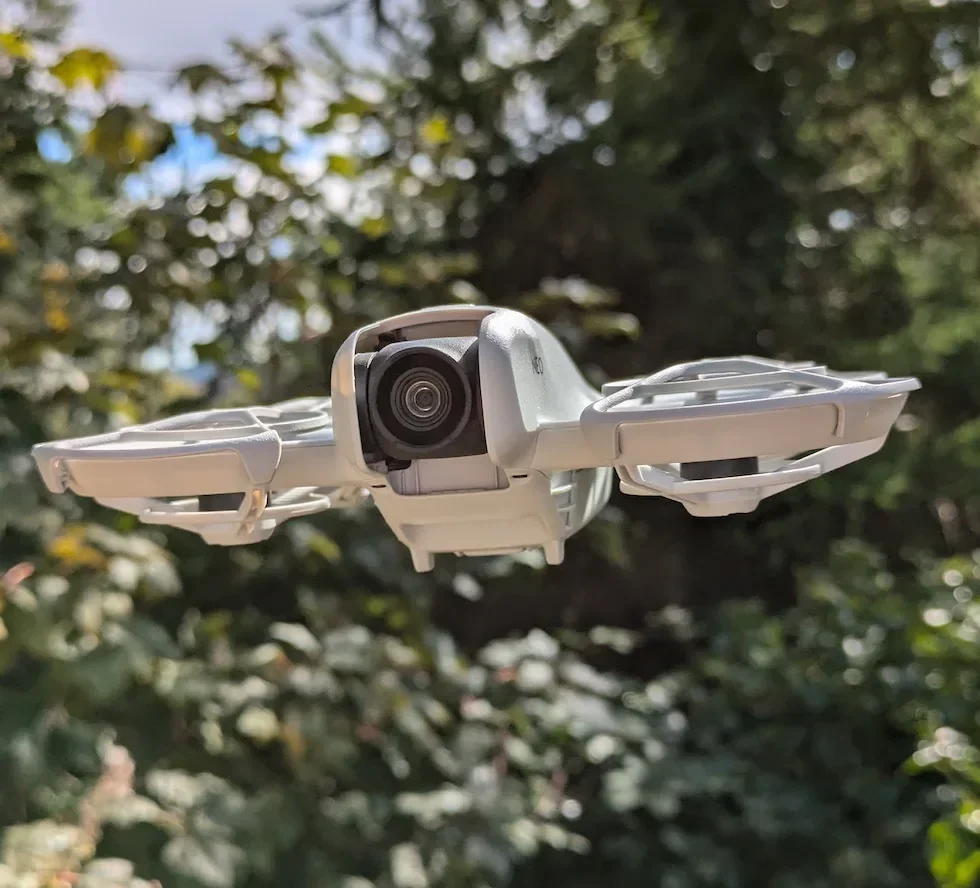
If a DJI drone is rolling dark bands across LED panels, ceiling lights, or computer monitors on the recording, the setting that fixes it is Anti-Flicker, tucked inside the Camera category of the DJI Fly settings panel. The picker offers four positions — Off, Auto, 50Hz, and 60Hz — and the right one for the clip is the one that matches the mains frequency of the country you are flying in.
Drones this applies to
DJI Neo 2, DJI Mini 5 Pro, DJI Avata 2, DJI Air 3 Pro, DJI Mavic 4 Pro. The same procedure works on any drone running DJI Fly v1.21.2 or later — only the position of the Anti-Flicker row inside the Camera category varies very slightly between models, and the four picker options are identical.
Quick guide
To change Anti-Flicker on DJI Drone, go to DJI Fly → Settings → Camera category → scroll to Anti-Flicker → pick Auto, 50Hz, or 60Hz. Pick 50Hz in the UK, 60Hz in the US, or Auto for outdoor daylight flights where no artificial light hits the frame.
Step-by-step: How to Change Anti-Flicker Settings on DJI Drone
Follow these top to bottom the first time, and the path is muscle memory the second time. The labels and order are identical on every drone in the callout above — the screenshots are taken on a DJI Neo 2.
Open DJI Fly and drop into the camera view of DJI Drone
With the drone powered on and the remote controller connected, launch DJI Fly and tap Go Fly to enter the camera view. The live feed from the drone fills the screen with the right-hand control column running down the edge and the Settings icon sitting at the top right of the screen.
Tap the Settings icon to open the main settings panel
The Settings icon sits at the top right of the camera view. Tap it once and the main settings panel slides in from the right-hand edge of the screen. A row of category tabs runs along the top or down the left of the panel — Safety, Control, Camera, Transmission, About.
Switch to the Camera category inside the settings panel
Tap Camera so the page body reloads with the camera-related rows. If a different category is selected — usually Safety, because that is the panel default — the Anti-Flicker row will not appear until the page is switched. On Pro models the Camera category sits between Control and Transmission.
Scroll the Camera page down until the Anti-Flicker row appears
The Camera page is longer than a single screen on every current drone. Drag the page upward to scroll past the file-format, storage, and grid-overlay rows. Keep going until the Anti-Flicker row is visible — the current setting is printed on the right of the row.
Tap the Anti-Flicker row to expand the option picker
Tap the row to open the option list. Four positions are shown — Off, Auto, 50Hz, and 60Hz — with a tick next to the value the camera is currently using. The picker stays open until you tap one of the four positions.
Tap Auto to let DJI Fly pick the frequency for you
Auto reads the region the drone is currently flying in and applies 50Hz or 60Hz on your behalf. It is the safe default for outdoor flying when there is no artificial light on the frame and you do not want to think about the setting between locations.
Tap 50Hz when flying in the UK or anywhere on 50-cycle mains
Pick 50Hz for the UK, the rest of Europe, most of Asia, Australia, and Africa. The shutter timing is locked to the 50-cycle rhythm of the mains, so LED and fluorescent lights in the frame stop strobing on the live preview and on the recording.
Tap 60Hz when flying in the US, Canada, or anywhere on 60-cycle mains
Pick 60Hz for the US, Canada, most of Central America, parts of South America, Taiwan, the Philippines, and the half of Japan that runs at 60 cycles. The camera locks to that rhythm and indoor light pulses fall in line with the shutter. Close the panel and watch the live preview — if the rolling bands are gone, the value is right for the room.
Peter's tip
I leave every DJI drone in the kit on 50Hz by default because I fly almost everything in the UK. The only time I change it is when I am shooting indoors on a job with lit screens or LED panels in shot, and even then a hard 50Hz value almost always beats Auto because Auto can second-guess itself when the GPS lock takes a moment to settle indoors. Pick the value for the country, lock it, and forget it.
Auto vs 50Hz vs 60Hz on DJI Drone
Three useful positions, one for each region. Use this table to pick before the flight, not while the camera is already rolling.
| Setting | What the DJI Drone camera does | When to pick it |
|---|---|---|
| Auto | Reads the drone's region and picks 50Hz or 60Hz on your behalf. Switches between values without asking when you cross regions on the same trip. | Outdoor daylight flying with no artificial light on the frame, or grab-and-fly footage where you do not want to manage the setting per location. |
| 50Hz | Locks shutter timing to a 50-cycle mains rhythm so 50Hz LED and fluorescent lighting stops banding on the recording. | UK, most of Europe, Asia, Australia, Africa. Anywhere the wall socket is 230V at 50Hz. Use this for any indoor flight in those regions. |
| 60Hz | Locks shutter timing to a 60-cycle mains rhythm so 60Hz LED, fluorescent, and screen lighting stops banding on the recording. | United States, Canada, most of Central America, parts of South America, and the eastern half of Japan. Anywhere the wall socket is 120V at 60Hz. |
Frequently asked questions
What does Anti-Flicker do on a DJI drone?
Anti-Flicker on DJI Drone tells the camera which mains frequency to align the shutter timing with so artificial lights do not pulse on the recording. Indoor LED, fluorescent, and some sodium lights cycle at the rate of the local mains supply — 50 cycles per second in the UK, 60 in the US — and the camera has to match that rhythm to keep the footage free of rolling bands. The setting affects video and live preview; it does not change exposure brightness.
Should I use 50Hz or 60Hz on DJI Drone in the UK?
Use 50Hz in the UK. UK mains runs at 50 cycles per second, and indoor LED and fluorescent lighting follows it, so the camera on DJI Drone needs to be locked to 50Hz to keep those scenes clean. The same value applies across most of Europe, Africa, Australia, India, and large parts of Asia.
What does Auto Anti-Flicker actually do on DJI Drone?
Auto reads the geographic region of the drone — set at activation and refreshed with each GPS lock — and picks 50Hz or 60Hz to match. It is a safe default for outdoor daylight flying when no artificial light is on the frame. For indoor flights or any scene with LED or fluorescent lighting, switch Auto off and pick the value manually so you can see the result on the live preview before you commit a clip.
Why is my DJI Drone footage still flickering with Anti-Flicker on?
The Anti-Flicker value does not match the local mains. If you are flying in a UK building with the picker set to 60Hz, the lights are still cycling at 50 and the camera will pick up the difference as rolling bands. Switch to 50Hz, or to Auto if the GPS lock is good, and re-shoot the clip. If the bands stay, the light source itself is the problem — cheap LED strips and some monitor screens flicker outside the standard mains frequencies.
Does Anti-Flicker on DJI Drone only apply indoors?
It matters most indoors, but it is not strictly indoor-only. Anywhere artificial light is in the frame — a stadium under floodlights, a high-street night shoot, an industrial site lit by warehouse fluorescents — the setting still has to be right. Pure daylight scenes are unaffected because sunlight does not pulse, so the value you pick has no visible effect on those clips.
Does Anti-Flicker affect photos on DJI Drone or only video?
It is a video-first setting. Photos take a single exposure rather than a continuous frame sequence, so they are less likely to land mid-cycle and capture a flicker band. Long-exposure stills under artificial light can still show banding, and Anti-Flicker contributes to the shutter timing in those cases, but for a normal single-shot photo the value barely matters. Video is where the setting earns its place.
Can I switch Anti-Flicker off entirely on DJI Drone?
Yes — Off is one of the four options in the picker. Use it only when you know the scene has no artificial light at all, because turning Anti-Flicker off removes the shutter timing constraint and lets the camera pick a shutter angle that may strobe under any indoor light. Auto is the safer default for grab-and-fly footage.
Do I need to set Anti-Flicker on every DJI drone separately?
Yes. The value is stored per drone, not against the DJI account or the DJI Fly install. If you fly a Mini 5 Pro one day and a Mavic 4 Pro the next, both drones hold their own Anti-Flicker value and you set each one independently the first time you fly it in a new country.
Anti-Flicker is one of those settings most DJI owners only notice when it is wrong, and then it ruins the clip. Lock it to the country once on each drone, leave it, and DJI Drone will roll bands-free across every job in that region without you thinking about it again.
If the live preview still bands after the right frequency is set, drop the room details to peter@hiredronepilot.uk and I will come back to you directly. The video version of this walkthrough is on YouTube and the comments are open.
References
Primary source material for this article is the official DJI user documentation for each drone in the callout and DJI Fly. External links open in a new tab.
- DJI Fly — App download and release notes · The app where the Camera category and the Anti-Flicker picker live across every current DJI drone. Release notes record any layout changes between versions.
- DJI — UK consumer drone product line-up · Per-drone user documentation carries the Anti-Flicker options and the shutter behaviour under the camera-settings section.
- UK Civil Aviation Authority — The Drone and Model Aircraft Code (CAP2320) · The visual-line-of-sight rule that frames why a clean live preview matters — banded footage can also mean a banded preview, and a banded preview makes situational awareness harder.
Peter Leslie
Founder & GVC Drone Pilot
Peter is the founder of HireDronePilot. With thousands of logged commercial flight hours, he writes about drone technology, commercial surveying tactics, and UK aviation compliance.
Connect on LinkedIn