How to Change Photo Mode Aspect Ratio on DJI Drone
Peter Leslie
22 May 2026
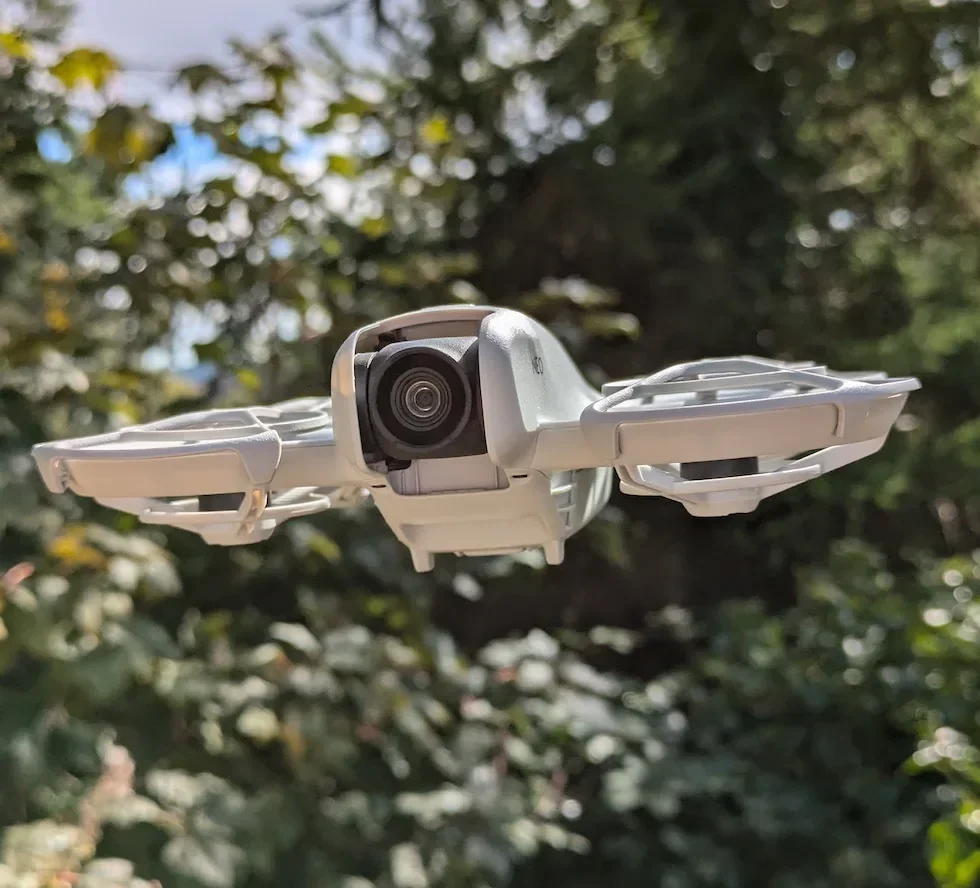
If your stills off a DJI drone are coming out the wrong shape for the edit — a tall 4:3 frame when you wanted widescreen, or a letterboxed 16:9 when you wanted the full sensor — the switch you are after is the photo mode aspect ratio inside DJI Fly. It lives in two slightly different spots depending on whether you are shooting in Auto or Pro camera mode, and the choice is a clean binary on every current DJI drone.
Drones this applies to
DJI Neo 2, DJI Mini 5 Pro, DJI Avata 2, DJI Air 3 Pro, DJI Mavic 4 Pro. The same procedure works on any drone running DJI Fly v1.21.2 or later — only the maximum photo resolution behind the aspect ratio chip varies between models.
Quick guide
To change the photo mode aspect ratio on DJI Drone, go to DJI Fly → Camera view → Photo mode → Resolution chip (Auto) or three-dot Preferences (Pro) → 4:3 or 16:9. 4:3 keeps the full sensor frame; 16:9 crops it to widescreen so the still cuts cleanly into video.
Step-by-step: How to Change Photo Mode Aspect Ratio on DJI Drone
Follow these top to bottom the first time, and the path is muscle memory the second time. The labels and order are identical on every drone in the callout above.
Switch DJI Fly to photo mode from the camera view
With the drone connected and DJI Fly on the camera view, look at the bottom right of the screen. Tap the Photo / Video toggle so the shutter glyph shows a still-camera icon rather than a record dot — that confirms photo mode is live and the preferences row down the right updates to show the stills options.
Check the camera mode chip is sat on Auto for the fast path
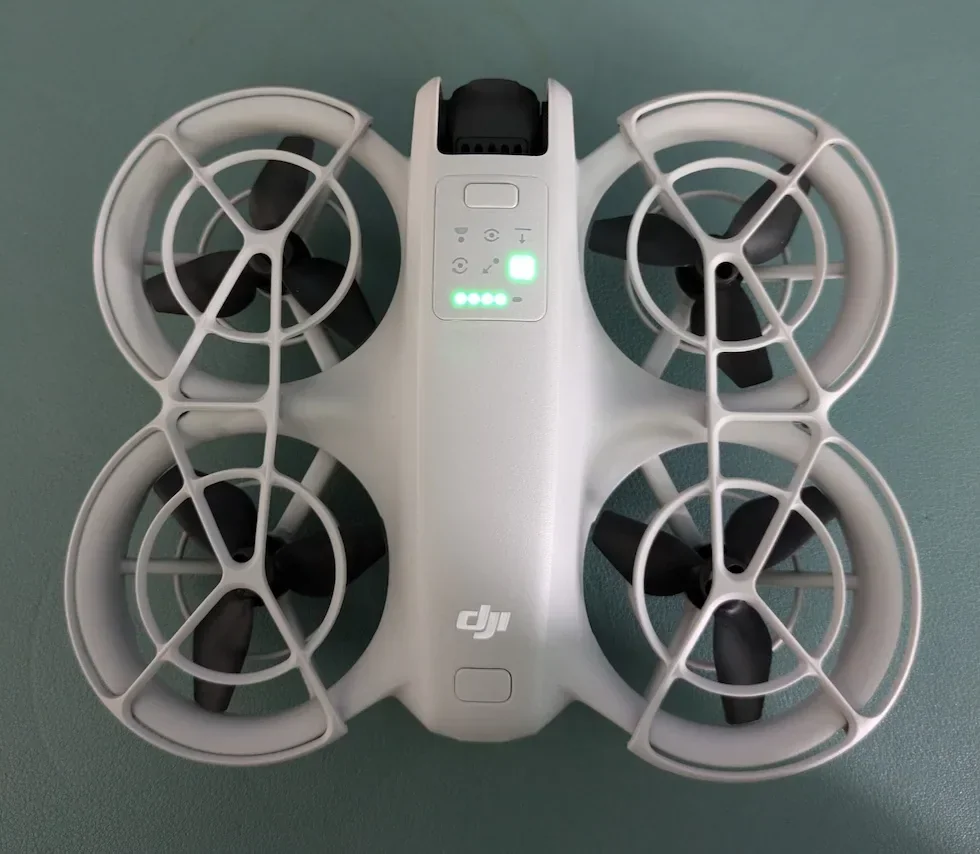
The camera mode chip — Auto or Pro — sits at the bottom of the camera view next to the shutter. Make sure it is on Auto for the first path. Auto exposes the aspect ratio switch on the preferences row directly; Pro hides the same options behind an extra tap covered later in the steps.
Find the resolution chip on the preferences row down the right of the camera view
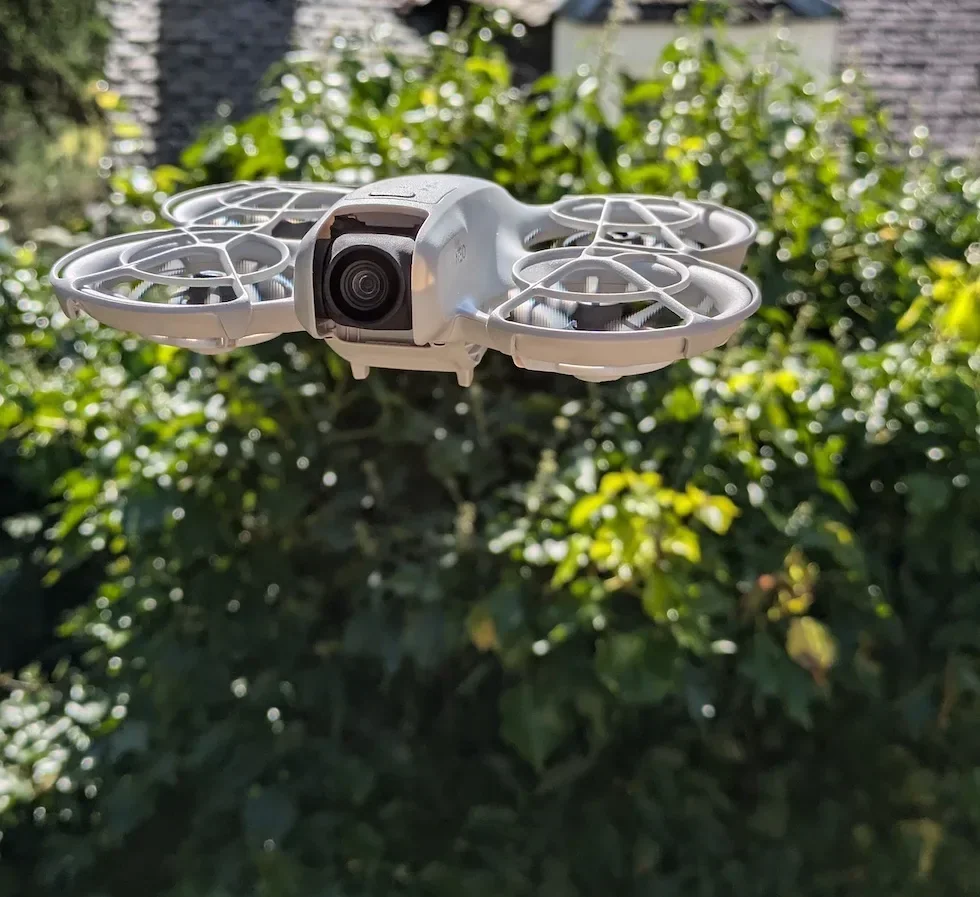
With Auto active, DJI Fly puts the live photo preferences down the right-hand edge of the camera view. You will see chips for exposure, white balance, format, and a resolution chip. The resolution chip is the entry that holds the aspect ratio switch on every current DJI drone.

Tap the resolution chip to open the aspect ratio panel
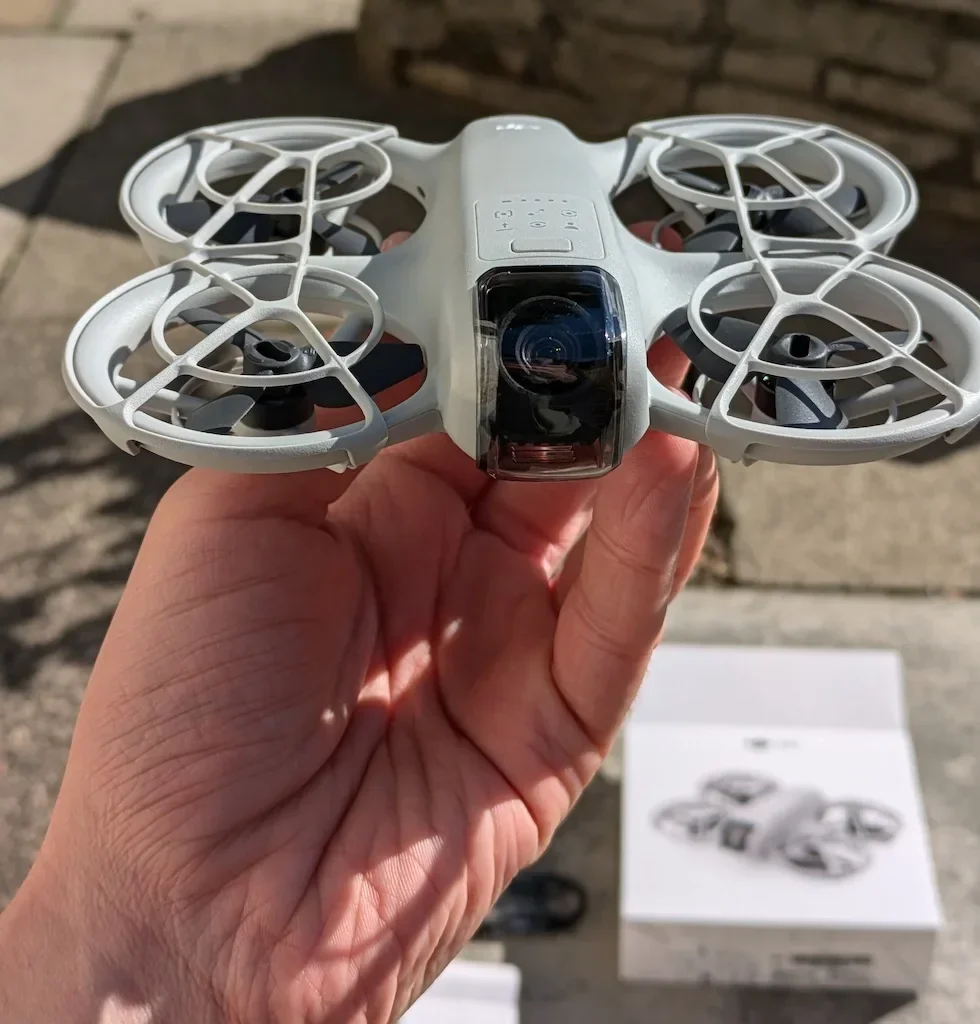
Tap the resolution chip once and DJI Fly slides out a small panel with the two aspect ratio options for the connected DJI drone — 4:3 and 16:9. The currently selected option carries the highlight, so you can see at a glance which one the drone is shooting.
Pick 4:3 for the full sensor read-out or 16:9 for widescreen
Tap 4:3 to keep the full sensor frame — the native read-out, the taller shape, more sky and ground in the same shot. Tap 16:9 for a widescreen crop that matches the video format and drops cleanly into a 16:9 edit without black bars. The selection saves the moment you tap it.
Switch the camera mode chip to Pro for the second path
If you would rather shoot in Pro mode for the manual exposure controls, tap the camera mode chip and swap from Auto to Pro. The preferences row down the right disappears — that is by design, Pro keeps the camera view clean and tucks the same options behind a single menu button in the corner.
Open the three-dot Preferences panel from the Pro camera view
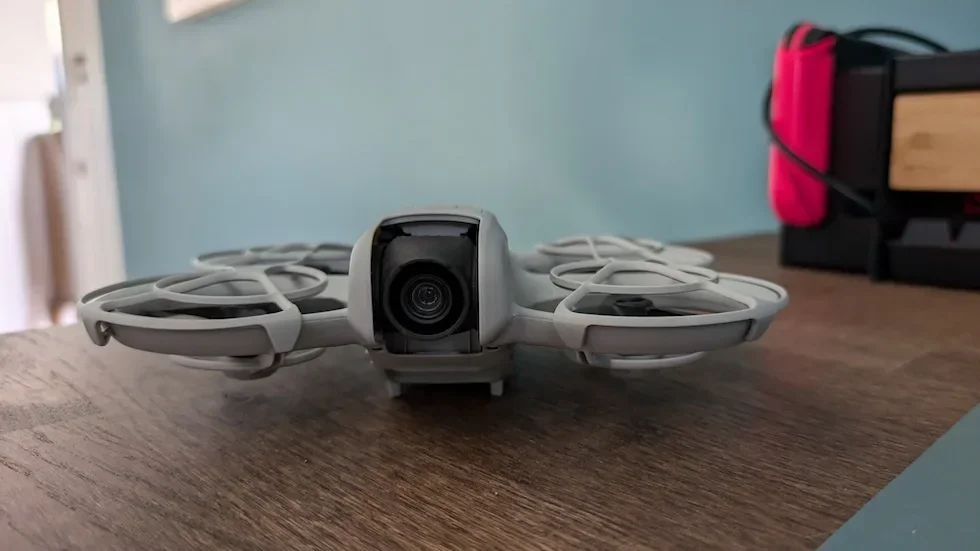
Tap anywhere on the Pro camera view once to wake the controls if they have faded. Then tap the three-dot or three-line preferences icon in the corner of the screen. The Pro preferences panel slides in with the aspect ratio row alongside format, white balance, and metering — the same setting as Auto, behind a different door.
Peter's tip
I leave my DJI drone on 4:3 for any shoot where I do not know yet what the deliverable shape is — print, social square, web hero — because 4:3 lets me crop down to 16:9 in post without losing pixels. The one time I switch deliberately is on a video-led shoot where I know every still will live next to 16:9 footage in the edit. Cutting in post is cheap; making vertical pixels appear out of nowhere is not.
4:3 vs 16:9 on DJI Drone
Two aspects, two very different end states. Use this table to pick before the shoot, not during the edit.
| Aspect ratio | When it works | Where it bites |
|---|---|---|
| 4:3 | Full sensor read-out, maximum megapixel count, taller frame with more sky and ground. Right default for stills you might crop later — print, Instagram square, web heroes of unknown shape — because every pixel stays on the file. | Drops into a 16:9 video timeline with black bars top and bottom, or forces the editor to crop the frame on the way in. Wrong default for video-led shoots and 16:9 social posts. |
| 16:9 | Widescreen crop straight off the sensor, slightly smaller megapixel count, matches the video format on every current DJI drone. Stills cut into video edits, widescreen web banners, and YouTube thumbnails all benefit. | Throws away the top and bottom band of the sensor on capture, so you cannot recover those pixels later. Wrong default for print, square crops, or anything you might want to reshape after the fact. |
Frequently asked questions
What is the default photo aspect ratio on DJI Drone?
4:3. Out of the box every current DJI drone captures stills at the full sensor read-out, which is a 4:3 frame. 16:9 is a crop of that same frame — you trade vertical pixels for a wider letterbox shape that matches the video format. Most drone pilots leave their DJI drone on 4:3 for stills and only switch to 16:9 when a still has to drop into a video edit without black bars.
Does switching to 16:9 reduce the file size on DJI Drone?
Yes, slightly. 16:9 is a crop of the native 4:3 frame so the JPEG ends up with fewer total pixels and a smaller file. The drop is not huge — it is the band of pixels above and below the 16:9 letterbox — but if storage is tight a long photo session in 16:9 will use noticeably less of the internal storage on any DJI drone.
Is 4:3 always sharper than 16:9 on DJI Drone?
No, sharpness is identical pixel-for-pixel. Both aspects read off the same sensor at the same resolution per row — 16:9 simply chops the top and bottom band away. If you compare a 4:3 frame and a 16:9 frame side by side at 100 percent zoom they look the same; the difference is only how much sky and how much ground you keep in frame.
When should I shoot 16:9 instead of 4:3 on DJI Drone?
Whenever the still needs to live next to video footage. Stills cut into a 16:9 timeline drop in cleanly without black bars or a forced crop in the edit. Landscape clients who want widescreen wallpapers, hero images for a 16:9 web banner, and YouTube thumbnails all benefit. Stick with 4:3 for print, Instagram square, and anything you might want to crop creatively later.
Does the aspect ratio toggle affect video on DJI Drone?
No. The aspect ratio inside the photo preferences only changes still images. Video on every current DJI drone records at its own resolution and frame rate set in the video preferences row, and the 4:3 / 16:9 photo switch does not touch it. Confirm you are in photo mode before changing it; the shutter glyph in the bottom right of the camera view tells you which mode is live.
Can I shoot in 1:1 square on DJI Drone?
No. DJI Fly only exposes 4:3 and 16:9 for stills — there is no square option in the preferences on any current DJI drone. If you need a square frame for Instagram, shoot in 4:3 and crop to 1:1 afterwards in the DJI Fly editor or your phone gallery. Cropping in post keeps the option open in case you want a different ratio later from the same file.
Why is the aspect ratio toggle in a different place in Pro mode on DJI Drone?
Pro mode hides the live preferences behind the three-dot menu to keep the camera view clean for manual exposure work. Auto mode surfaces the resolution chip directly because the audience expects a fast switch. Same setting, two entry points — pick the camera mode you are already in and the right path follows from it.
Does the aspect ratio I pick on DJI Drone stick between flights?
Yes. DJI Fly remembers the last aspect ratio you selected per camera mode, so a 16:9 choice in Auto stays at 16:9 the next time you boot the drone and the app. Worth a glance at the resolution chip before the first shot of a flight — if you swapped to 16:9 for a video-edit session last week, the drone will still be sat there a week later until you change it back.
The photo mode aspect ratio on DJI Drone is one of those settings where the right answer is workflow-driven, not technical. Pick it deliberately for what the still is going to be used for — print, social, or a frame inside a video edit — and stop fighting the crop in post.
If you want a second opinion on which aspect to default to for the kind of work you do, drop the details to peter@hiredronepilot.uk and I will come back to you directly. The video version of this walkthrough is on YouTube and the comments are open.
References
Primary source material for this article is the official DJI user documentation for each drone in the callout and DJI Fly. External links open in a new tab.
- DJI Fly — App download and release notes · The app where the resolution chip in Auto mode and the three-dot preferences panel in Pro mode both live. Release notes record any menu reshuffles between versions.
- DJI — UK consumer drone product line-up · Per-drone user manuals carry the photo aspect ratio options and the maximum stills resolution behind the resolution chip on each model.
- UK Civil Aviation Authority — The Drone and Model Aircraft Code (CAP2320) · The wider framework that sits behind any procedural change to a DJI drone's camera settings during a commercial flight in the UK.
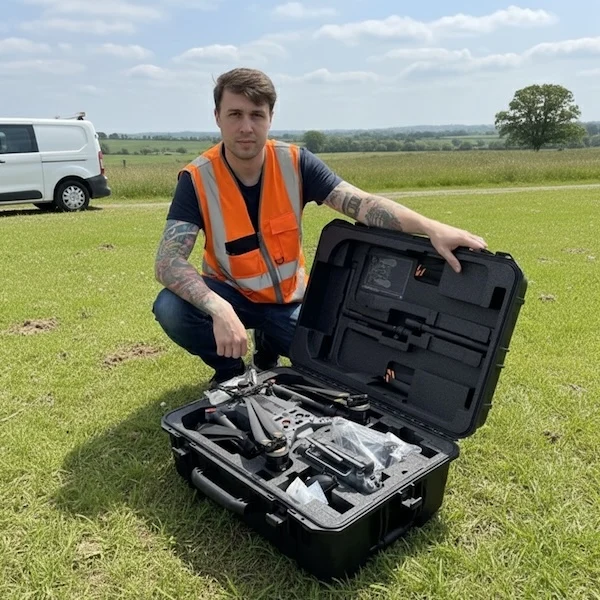
Peter Leslie
Founder & GVC Drone Pilot
Peter is the founder of HireDronePilot. With thousands of logged commercial flight hours, he writes about drone technology, commercial surveying tactics, and UK aviation compliance.
Connect on LinkedIn