How to Change Speed Mode on DJI Drone
Peter Leslie
22 May 2026
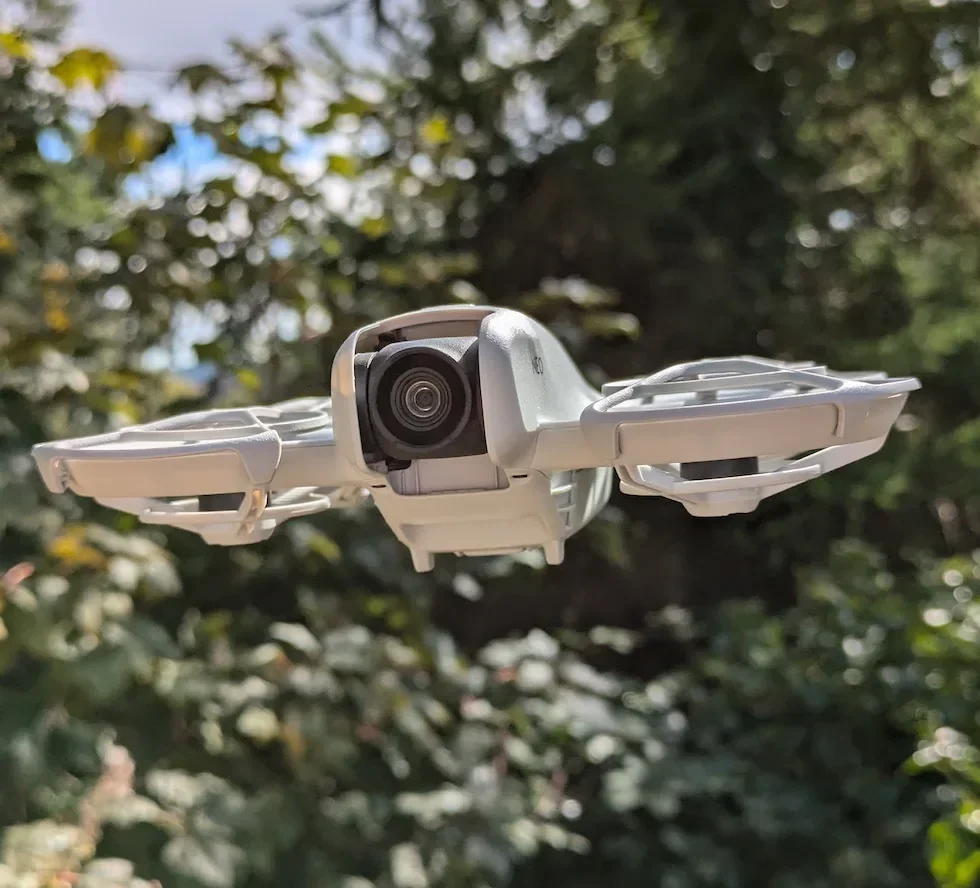
If a DJI drone feels too snappy for a slow camera reveal — or the opposite, too sluggish to chase a moving subject — the fix is the three-way flight mode switch on the remote controller, not anything buried inside DJI Fly. The same switch sits on every current DJI remote controller, and it picks between Cine, Normal, and Sport.
Drones this applies to
DJI Neo 2, DJI Mini 5 Pro, DJI Avata 2, DJI Air 3 Pro, DJI Mavic 4 Pro. The same C / N / S flight mode switch lives on every current DJI remote controller (DJI RC-N3 and DJI RC 2), and the same three modes — Cine, Normal, Sport — appear on every drone running DJI Fly v1.21.2 or later. Only the per-drone top speeds and a few sub-options vary, listed in the table further down.
Quick guide
To change speed mode on DJI Drone, slide the three-way flight mode switch on the remote controller to C (Cine), N (Normal), or S (Sport). Cine is the slowest and smoothest, Normal is the everyday balance with full obstacle sensing, and Sport is the fastest with obstacle avoidance disabled.
Step-by-step: How to Change Speed Mode on DJI Drone
Follow these top to bottom the first time, and the path is muscle memory the second time. The switch positions and labels are identical on every drone in the callout above.
Find the three-way flight mode switch on the remote controller
Hold the remote controller and look at the front face just above the right shoulder. The flight mode switch is the small sliding toggle marked C / N / S, sat near the power button on the DJI RC-N3 and the DJI RC 2. It clicks into three detents — there is no in-between position.
Check the active mode on the DJI Fly status bar before you slide
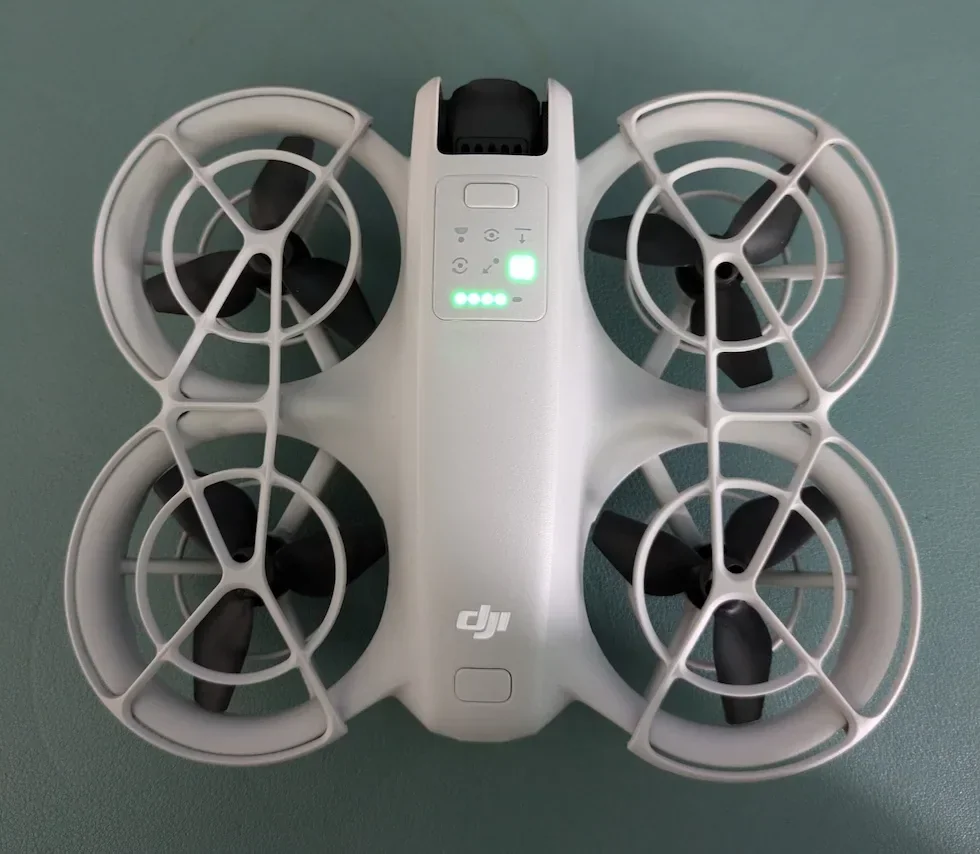
Open DJI Fly to the camera view and glance at the status bar across the top — the active flight mode shows as Cine, Normal, or Sport in plain text. Knowing what you are leaving makes it obvious when the switch has registered the change.

Slide the switch to N for everyday Normal mode
N is the middle detent. Normal is what every current DJI drone boots into when you power on, and it is the right answer for almost every flight — precise position hold, forward obstacle sensing active, and a stick response that is sharp enough to react to but smooth enough to film with if you are gentle.
Slide the switch to C for slow Cine mode
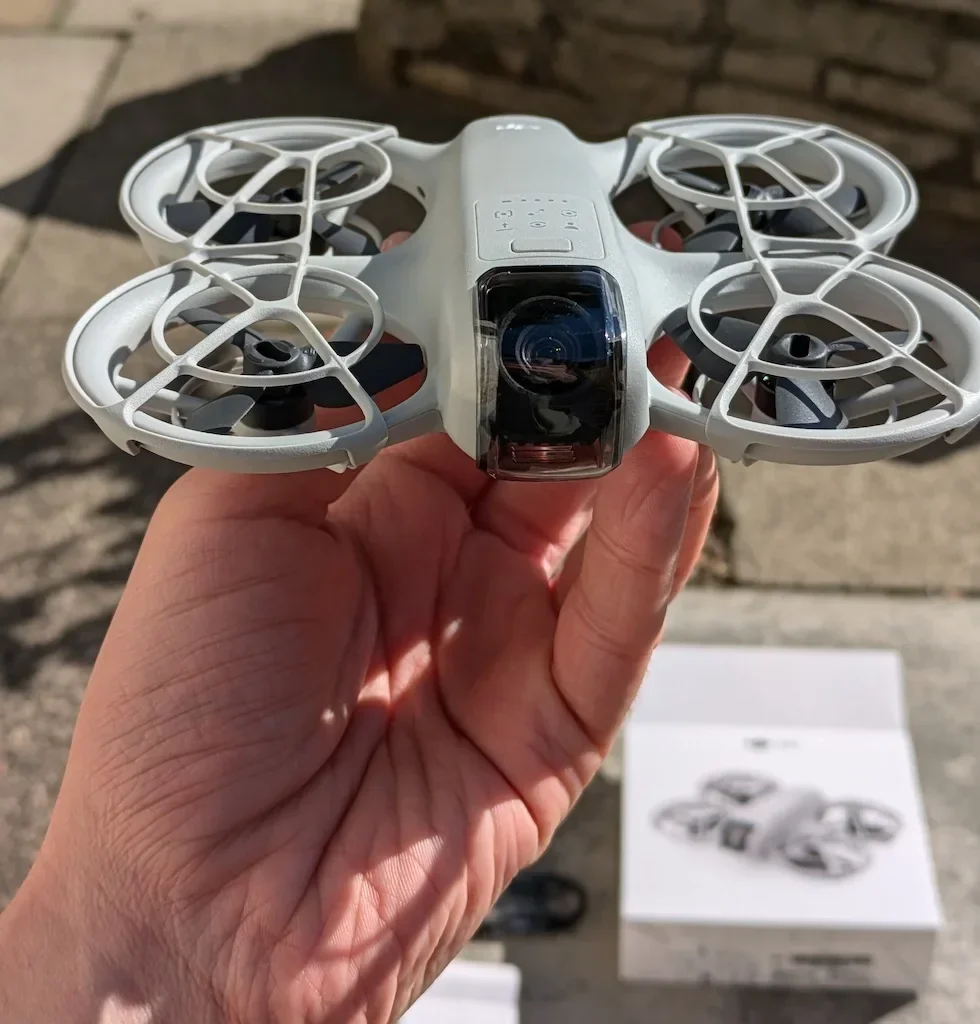
C is the left-hand detent. Cine caps the top speed and softens the stick curve so reveals, push-ins, and orbits look intentional. Obstacle sensing stays on. Use this for the shot itself; switch out to reposition between takes.
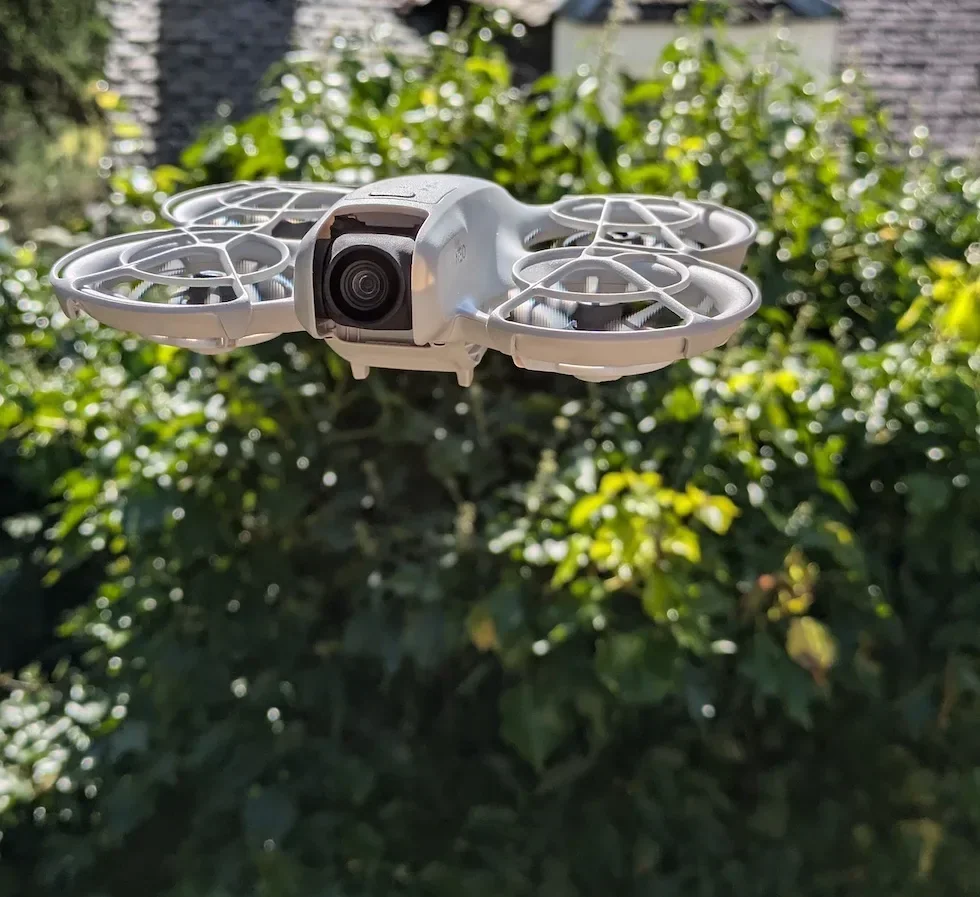
Slide the switch to S for fast Sport mode
S is the right-hand detent. Sport unlocks the top horizontal speed, sharpens stick response, and disables forward obstacle avoidance entirely. The braking distance also lengthens — give yourself plenty of clear air ahead before you commit to a full stick.
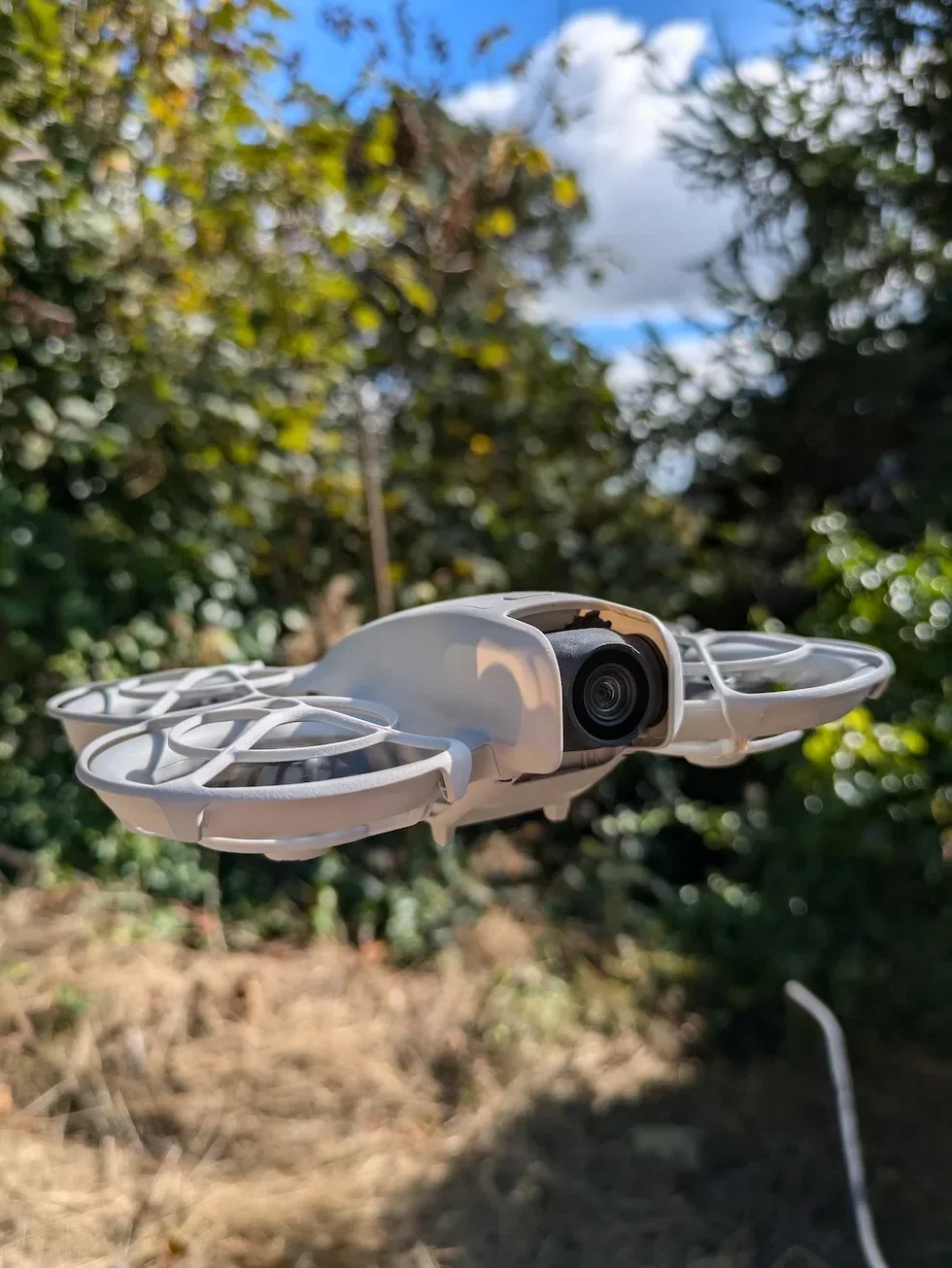
Confirm the new mode on the DJI Fly status bar
The status bar updates the moment the switch clicks into a new detent — Cine, Normal, or Sport in plain text across the top of the camera view. If it still shows the old mode, slide the switch back and through again to nudge the controller into resending the position.
Peter's tip
I launch every DJI drone in Normal, fly to the first shot in Normal, drop into Cine for the take, then come back to Normal to reposition. Sport only comes out when there is open sky in every direction and I am intentionally trying to cover ground fast — flicking into Sport near trees or buildings to "have a quick play" is how the obstacle-avoidance-disabled clause catches drone pilots out.
Cine vs Normal vs Sport
Three positions, three very different flight characters. Use this table to pick before the flight, not during one.
| Mode | What it does | Where it bites |
|---|---|---|
| Cine (C) | Top speed capped, stick response softened, obstacle sensing active. The right pick for camera moves — reveals, push-ins, orbits, slow tracks. Typical top speed sits around 6 m/s on most current DJI drones. | Anything that needs urgency — chasing a moving subject, fighting a gust, recovering from a slow line. Cine feels sluggish and the drone drifts in any breeze above a light wind. |
| Normal (N) | Default everyday flight mode. Full position hold, full forward obstacle sensing, balanced stick response. Typical top speed sits around 10 m/s to 15 m/s depending on the drone. | Camera work that demands extra-smooth stick input — Normal is fine for casual flying but Cine looks more deliberate on footage. Also slower than Sport when you actually need to cover ground. |
| Sport (S) | Top horizontal speed unlocked, stick response sharpened, braking distance extended. Forward obstacle sensing disabled. Per-drone top speeds in the table below. | Obstacle sensing is off — the drone will fly straight into anything you point it at. Longer braking distance means you cannot stop on a stick flick the way you can in Normal. Open sky only. |
Per-drone Sport mode top speed
Sport unlocks a different ceiling on every drone in the line-up. Use these figures as the manufacturer-stated maximums in calm conditions — real-world top speed drops as soon as there is any breeze on the nose.
| Drone | Sport mode top speed | Normal mode top speed |
|---|---|---|
| DJI Neo 2 | 16 m/s | 8 m/s |
| DJI Mini 5 Pro | 16 m/s | 10 m/s |
| DJI Avata 2 | 27 m/s in Manual / Sport | 8 m/s |
| DJI Air 3 Pro | 21 m/s | 12 m/s |
| DJI Mavic 4 Pro | 23 m/s | 15 m/s |
Frequently asked questions
What is the default speed mode on a DJI drone?
Normal. Every current DJI drone boots into Normal mode each time you power on, regardless of where the flight mode switch was sat the last time you flew. The drone reads the switch position once the controller links, so always glance at C / N / S before takeoff so the mode you launch in is the mode you intended.
Is obstacle avoidance disabled in Sport mode on a DJI drone?
Yes, on every current DJI drone. Sport mode disables forward obstacle sensing across the line-up — the drone trusts the stick input and will fly straight through a tree if you point it at one. That is the trade for the higher top speed and sharper response. Drop back into Normal the moment you are not actively flying a fast line.
When should I use Cine mode on a DJI drone?
Whenever the shot is the point. Cine caps the top speed and slows stick response so reveals, slow push-ins, and orbits look intentional instead of twitchy. Flip back to Normal to reposition between shots, then drop into Cine again for the next take — chasing a smooth shot in Normal mode usually betrays the stick input on the footage.
Does the flight mode switch work the same way on the DJI RC-N3 and the DJI RC 2?
Yes. Both remote controllers carry the same three-way C / N / S switch in the same position above the right shoulder of the unit. Sliding it produces the same mode change on the connected drone — the only difference is whether DJI Fly is running on a phone clipped to the cradle (DJI RC-N3) or on the controller's built-in screen (DJI RC 2).
What happens to the speed mode switch if I am flying with a motion controller or palm control?
There is no dedicated C position on the DJI Motion Controller 3 — the motion controller toggles between Normal and Sport using the dedicated mode button on its face, with no Cine option. Palm control (no controller at all, available on the DJI Neo and DJI Neo 2) holds the drone in a permanent slow speed similar to Cine, and there is no way to switch modes mid-flight. Pair the proper remote controller when you need access to all three speed modes.
Can I change speed mode mid-flight on a DJI drone?
Yes. Slide the switch from one position to the next and the drone transitions on the fly — there is no land-and-restart required. The transition is smooth in either direction; the drone re-reads the switch, the status bar updates, and the new top speed and obstacle-sensing behaviour take effect immediately.
Why does the drone not respond when I flip the flight mode switch?
Almost always a linking issue between the controller and the drone. Confirm the controller is paired and DJI Fly is reading the live status bar, then slide the switch firmly through to the next detent — a half-click between positions leaves the drone on the previous mode. If the status bar still does not update, power-cycle the controller and reconnect.
Does Sport mode drain the battery faster than Normal or Cine?
Yes, noticeably. Sport unlocks a higher top speed and steeper attitude angles, so the motors pull more current under stick input than they do in Normal or Cine. Plan for shorter flight times when you intend to spend most of the session in Sport — full battery to landing alarm comes around faster than a slow-and-low Cine flight will use.
Speed mode on a DJI drone is not a setting you bury in a menu and forget — it is a switch you actively work between Cine, Normal, and Sport across the same flight. Match the mode to what you are doing in that minute, not to a default for the whole session.
If you want a second opinion on which mode to pick for a specific shot or environment, drop the details to peter@hiredronepilot.uk and I will come back to you directly. The video version of this walkthrough is on YouTube and the comments are open.
References
Primary source material for this article is the official DJI user documentation for each drone in the callout and DJI Fly. External links open in a new tab.
- DJI Fly — App download and release notes · The app where the active flight mode label appears in the status bar and where mode changes are visually confirmed in real time.
- DJI — UK consumer drone product line-up · Per-drone user manuals carry the Flight Mode Switch positions (C / N / S), the Cine / Normal / Sport behaviour, and the maximum horizontal speed figures used in the per-drone table.
- UK Civil Aviation Authority — The Drone and Model Aircraft Code (CAP2320) · The visual-line-of-sight rule that frames why Sport mode — with obstacle sensing disabled — only belongs over open ground with clear sky.
Peter Leslie
Founder & GVC Drone Pilot
Peter is the founder of HireDronePilot. With thousands of logged commercial flight hours, he writes about drone technology, commercial surveying tactics, and UK aviation compliance.
Connect on LinkedIn