How to Change Stick Mode on DJI Drone
Peter Leslie
22 May 2026
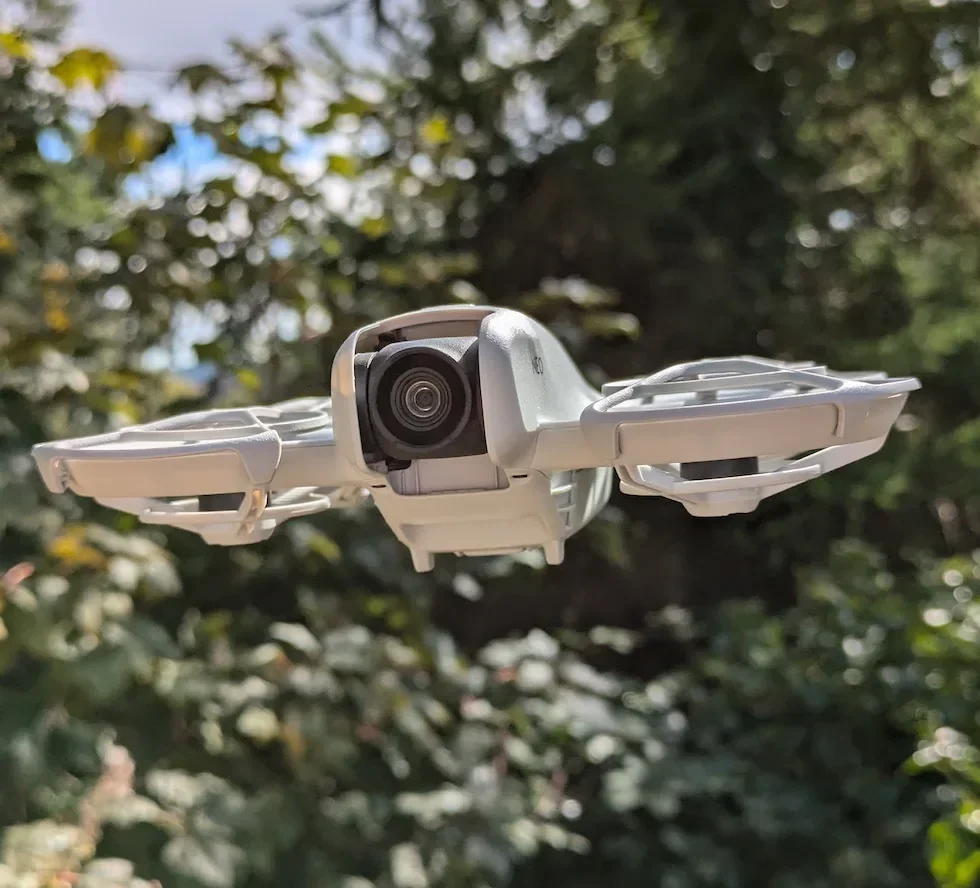
If you have picked up a DJI drone coming from older radio-control fixed-wing, a helicopter transmitter, or a different drone where throttle lived on a different stick, the default layout out of the box is going to feel wrong on the very first flight. The setting you are looking for is Stick Mode inside DJI Fly, and it lives in the same place on every current DJI drone with a twin-stick remote controller.
Drones this applies to
Any current DJI drone paired with a twin-stick remote controller — the DJI RC-N3, the DJI RC 2, or the DJI RC Pro. That covers DJI Neo 2, DJI Mini 5 Pro, DJI Avata 2, DJI Air 3 Pro, and DJI Mavic 4 Pro on DJI Fly v1.21.2 or later. The Stick Mode selector does not apply to motion-style controllers.
Quick guide
To change Stick Mode on DJI Drone, go to DJI Fly → Settings → Control → Stick Mode. Pick Mode 1, Mode 2, or Mode 3 from the fixed presets, or tap Custom to remap throttle, yaw, pitch, and roll onto whichever sticks you want.
Step-by-step: How to Change Stick Mode on DJI Drone
Follow these top to bottom the first time, and the path is muscle memory the second time. The labels and order are identical on every drone in the callout above.
Open the DJI Fly Settings menu from the camera view
With the drone powered on and the remote controller connected, tap the Settings icon in the top right of the DJI Fly camera view. The settings panel slides in from the right with the category tabs down the left.
Tap the Control category in the Settings panel
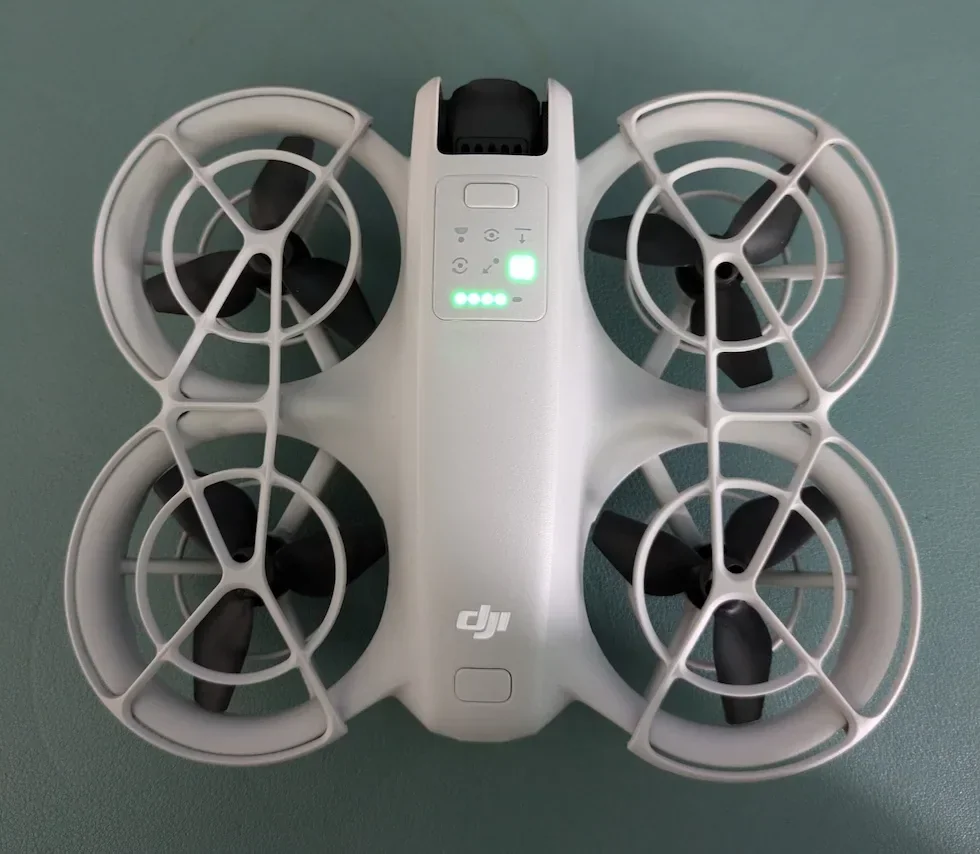
Control is the first tab down the left of the settings panel, sitting above Safety. Tap it and the right-hand pane updates to show every control-related row for the connected DJI drone — unit toggles, gain settings, EXP curves, and the Stick Mode entry further down.
Scroll down to the Stick Mode row inside Control
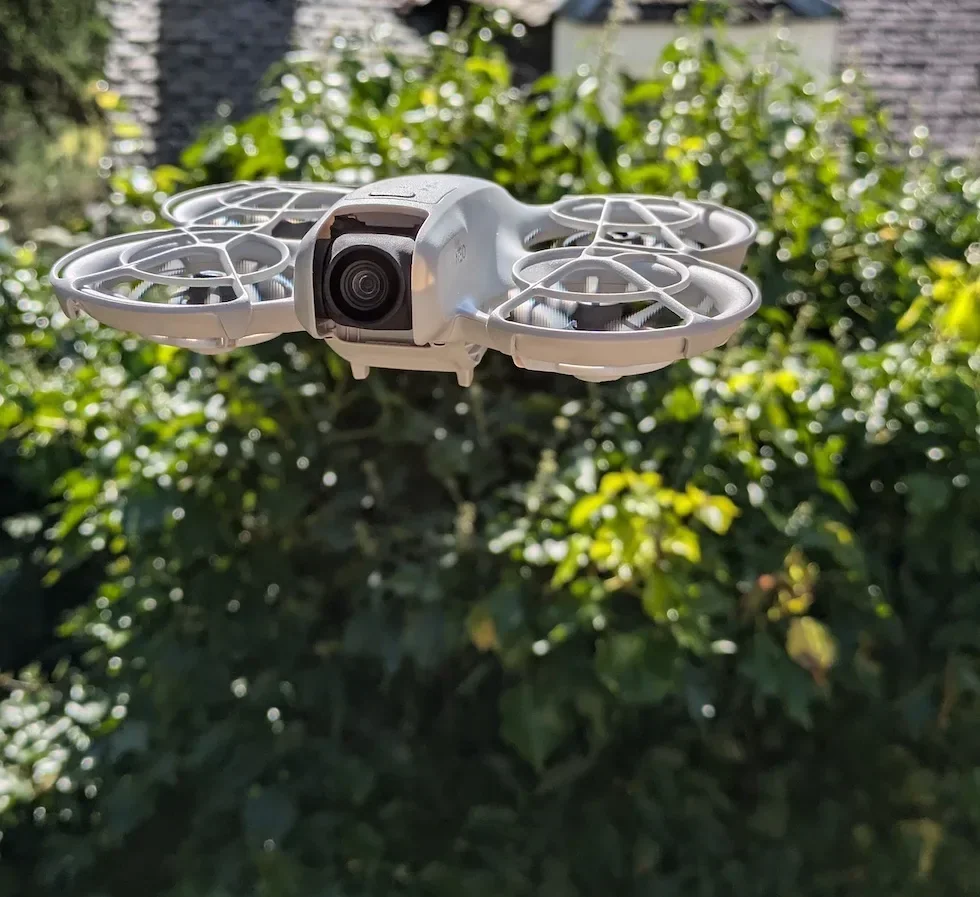
Scroll the Control page until the Stick Mode row appears. The current selection shows as a small label on the right of the row — Mode 1, Mode 2, Mode 3, or Custom — so you know what you are starting from before you tap in.

Tap the Stick Mode row to open the selector
Tap Stick Mode and DJI Fly drops you onto a dedicated selector page. Four tiles sit side by side — Mode 1, Mode 2, Mode 3, and Custom — each one showing a diagram of where throttle, yaw, pitch, and roll live for that layout.
Tap Mode 1, Mode 2, or Mode 3 to switch preset
Tap the tile for the layout you want. Mode 2 is the default — throttle and yaw on the left, pitch and roll on the right. Mode 1 puts throttle and roll on the right with pitch and yaw on the left. Mode 3 mirrors Mode 1 — throttle and yaw on the right, pitch and roll on the left.

Open Custom to remap the four axes yourself
Tap the Custom tile if none of the three presets suits you. Drag throttle, yaw, pitch, and roll onto whichever stick directions you want, then press Save when the layout reads the way you want it to. Only the Custom preset is editable — Mode 1, Mode 2, and Mode 3 are fixed and cannot be tweaked.
Close the selector and confirm the new mode from the ground
The selection saves the moment you tap it — there is no separate confirm button. Back out of Stick Mode and the new layout is already live. Before you take off, hover-test the sticks on the ground with the props removed or on a low-stakes first flight to make sure the layout actually feels like what you picked.
Peter's tip
If you are new to drones and have no muscle memory yet, leave the DJI drone on Mode 2. It is the layout every YouTube tutorial assumes, the layout every other consumer drone defaults to, and the layout that will not trip you up when you fly somebody else's controller for ten seconds at a meet-up. Custom is tempting but you only really want it when you have a specific muscle-memory problem to solve.
Mode 1 vs Mode 2 vs Mode 3
Three presets, three different layouts. Use this table to pick before the flight, not during one.
| Stick mode | Left stick / Right stick layout | Who tends to pick it |
|---|---|---|
| Mode 1 | Left stick controls pitch and yaw. Right stick controls throttle and roll. | Drone pilots with older fixed-wing or helicopter radio-control muscle memory, especially in markets where Mode 1 was the historical norm. |
| Mode 2 | Left stick controls throttle and yaw. Right stick controls pitch and roll. | The factory default and the worldwide standard for consumer drones. Almost everyone learning to fly today learns on Mode 2. |
| Mode 3 | Left stick controls pitch and roll. Right stick controls throttle and yaw. | Drone pilots who prefer a horizontally mirrored layout — throttle on the right hand instead of the left — but want the same pitch-and-roll-together feel as Mode 2. |
Frequently asked questions
What is the default stick mode on DJI Drone?
Mode 2. Every current DJI drone ships with throttle and yaw on the left stick and pitch and roll on the right stick — the layout that is standard for almost every consumer drone sold worldwide. You only need to change the selector if you learned to fly on Mode 1, on Mode 3, or you have a personal layout you want to rebuild under Custom.
What is the difference between Mode 1, Mode 2, and Mode 3 on DJI Drone?
The three presets move throttle, yaw, pitch, and roll onto different sticks. Mode 2 keeps throttle and yaw on the left and pitch and roll on the right — the worldwide default. Mode 1 puts throttle and roll on the right with pitch and yaw on the left — a layout common with older fixed-wing and helicopter radio-control hobbyists. Mode 3 mirrors Mode 1 horizontally, putting throttle and yaw on the right and pitch and roll on the left.
Can I edit Mode 1, Mode 2, or Mode 3 on DJI Drone?
No. The three numbered presets are fixed layouts you can only pick between — DJI Fly does not let you rebind individual axes inside them. If you want a layout that is not one of the three, tap Custom on the same selector page and drag the throttle, yaw, pitch, and roll assignments around to wherever you want them, then tap Save.
Why would anyone fly on Mode 1 instead of Mode 2?
Muscle memory. Drone pilots who came up through fixed-wing radio control or helicopter radio control often learned on Mode 1 because that was the standard layout in those communities for decades. Switching to Mode 2 would mean re-learning every reflex, so it is faster to flip the DJI drone onto Mode 1 instead and keep the muscle memory.
Will changing the stick mode affect my other DJI drones?
The stick mode is stored against the remote controller, not the drone, so the same controller will use the same mode for any DJI drone you bind it to. If you fly several DJI drones with the same controller, set the stick mode once and forget it. If you have a separate controller for each drone, each one has its own setting.
Can I change the stick mode mid-flight?
Technically yes, but never do it. Swapping stick mode while the drone is airborne moves throttle and yaw onto sticks your hands are not expecting, and the moment you nudge a stick the drone will react to an input you did not mean. Always land first, change the stick mode on the ground, then take off again.
What does the Custom preset do?
Custom lets you build your own stick layout instead of using one of the three numbered presets. Tap Custom on the Stick Mode selector page and DJI Fly shows the four axis assignments — throttle, yaw, pitch, roll — that you can drag onto whichever stick direction you want. Press Save when the layout is the way you want it. Only the Custom preset is editable; Mode 1, Mode 2, and Mode 3 stay fixed.
Does the stick mode setting apply to the DJI Motion Controller 3?
No. The Stick Mode selector inside Control only applies to the standard twin-stick remote controllers — DJI RC-N3, DJI RC 2, and DJI RC Pro. The DJI Motion Controller 3 is a tilt-and-trigger device with no sticks to remap, so it does not appear on this menu. If you fly with the motion controller, the stick mode setting is irrelevant to your day-to-day control.
Stick mode is the kind of setting most DJI owners set once on the first day and never touch again — which is exactly the point. Pick the layout that matches your hands, save it, and let the muscle memory do the work for every flight after that.
If you are coming across from older radio-control hardware and you are not sure which preset matches the layout you trained on, drop the details to peter@hiredronepilot.uk and I will come back to you directly. The video version of this walkthrough is on YouTube and the comments are open.
References
Primary source material for this article is the official DJI user documentation for each drone in the callout and DJI Fly. External links open in a new tab.
- DJI Fly — App download and release notes · The app where the Settings to Control to Stick Mode path lives across every current DJI drone with a twin-stick remote controller. Release notes record any menu reshuffles between versions.
- DJI — UK consumer drone product line-up · Per-drone product pages and downloads confirm the three control modes — Mode 1, Mode 2, and Mode 3 — and that Mode 2 is the factory default on every current DJI remote controller.
- UK Civil Aviation Authority — The Drone and Model Aircraft Code (CAP2320) · The visual-line-of-sight rule that frames why your control inputs have to map to a layout your hands actually know on every flight.
Peter Leslie
Founder & GVC Drone Pilot
Peter is the founder of HireDronePilot. With thousands of logged commercial flight hours, he writes about drone technology, commercial surveying tactics, and UK aviation compliance.
Connect on LinkedIn