How to Change Video Encoding (H.264 or H.265) on DJI Drone
Peter Leslie
22 May 2026
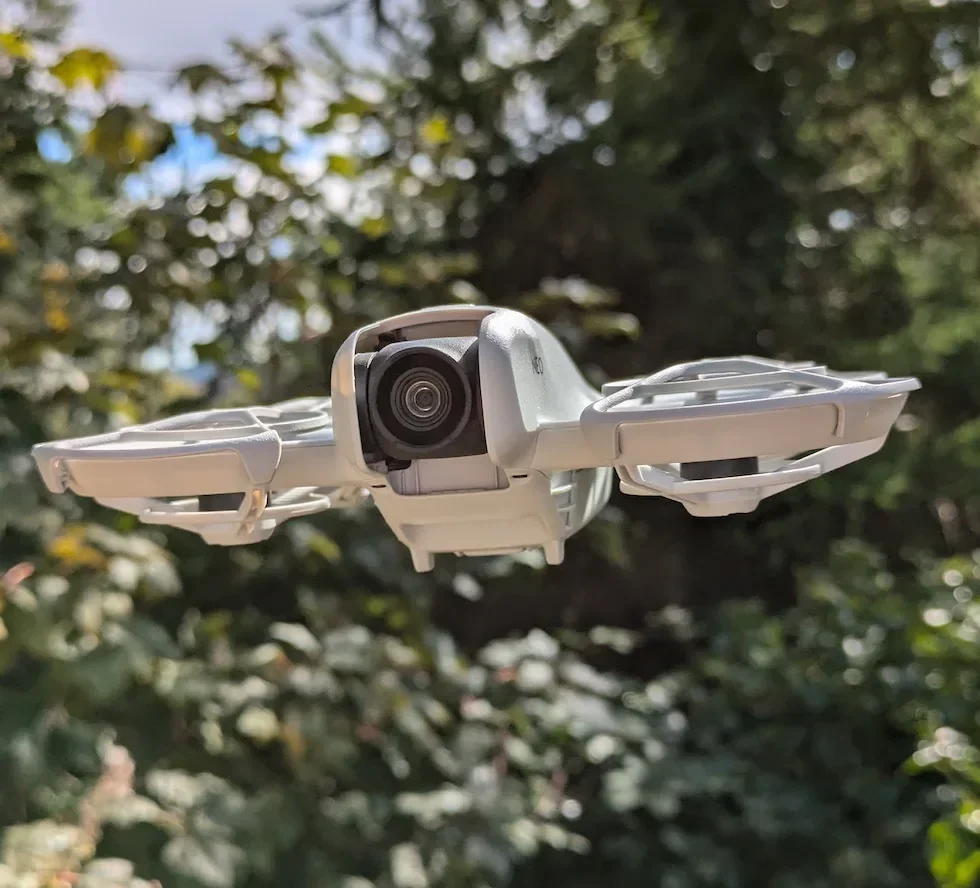
If a DJI drone is filling the microSD card faster than you expected, or a clip refuses to open in your editor, the setting you are looking for is Coding Format inside DJI Fly. It only shows up when the camera is in Video mode and Pro mode at the same time, which is why most drone pilots never notice it exists on any current DJI drone.
Drones this applies to
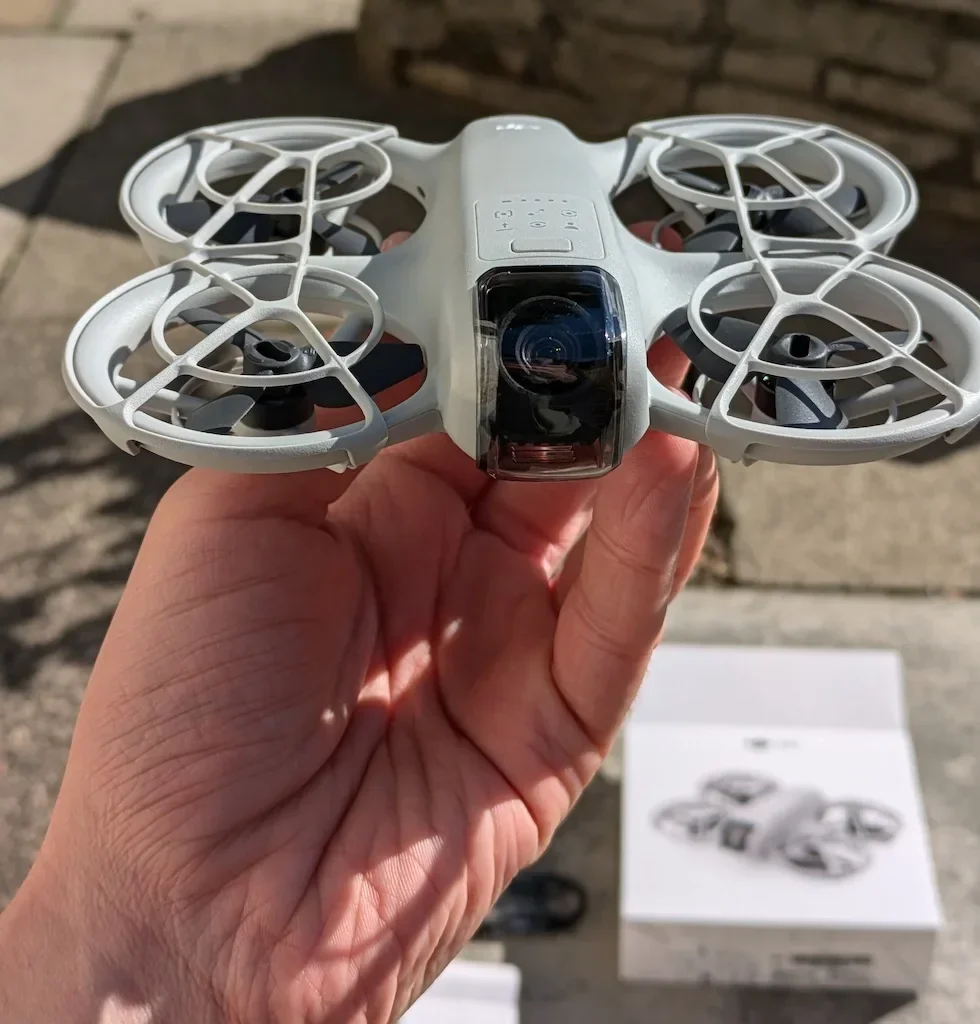
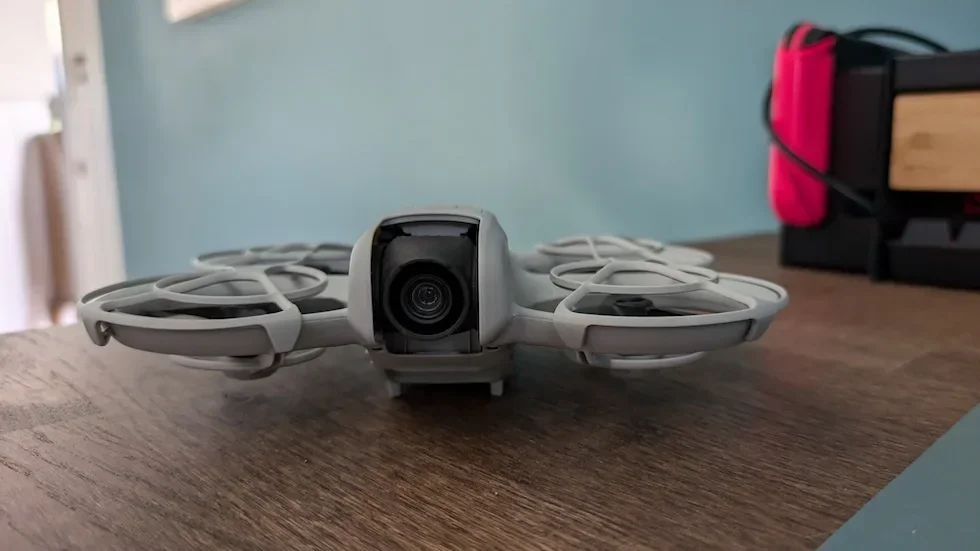
DJI Neo 2, DJI Mini 5 Pro, DJI Avata 2, DJI Air 3 Pro, DJI Mavic 4 Pro. The same procedure works on any drone running DJI Fly v1.21.2 or later — only the available resolution and frame-rate combinations on either side of the Coding Format row vary between models.
Quick guide
To change the video encoding on DJI Drone, go to DJI Fly → Video mode → Pro → camera panel → Preferences → Coding Format. Pick H.265 to halve file sizes on modern hardware, or H.264 for universal playback on older machines and clients.
Step-by-step: How to Change Video Encoding (H.264 or H.265) on DJI Drone
Follow these top to bottom the first time, and the path is muscle memory the second time. The labels and order are identical on every drone in the callout above.
Switch the camera to Video shooting mode from the DJI Fly camera view
With the drone connected and DJI Fly on the camera view, tap the small mode icon above the shutter button and pick Video from the list. The dedicated mode button on the remote controller does the same job in one press on the drones that have it.
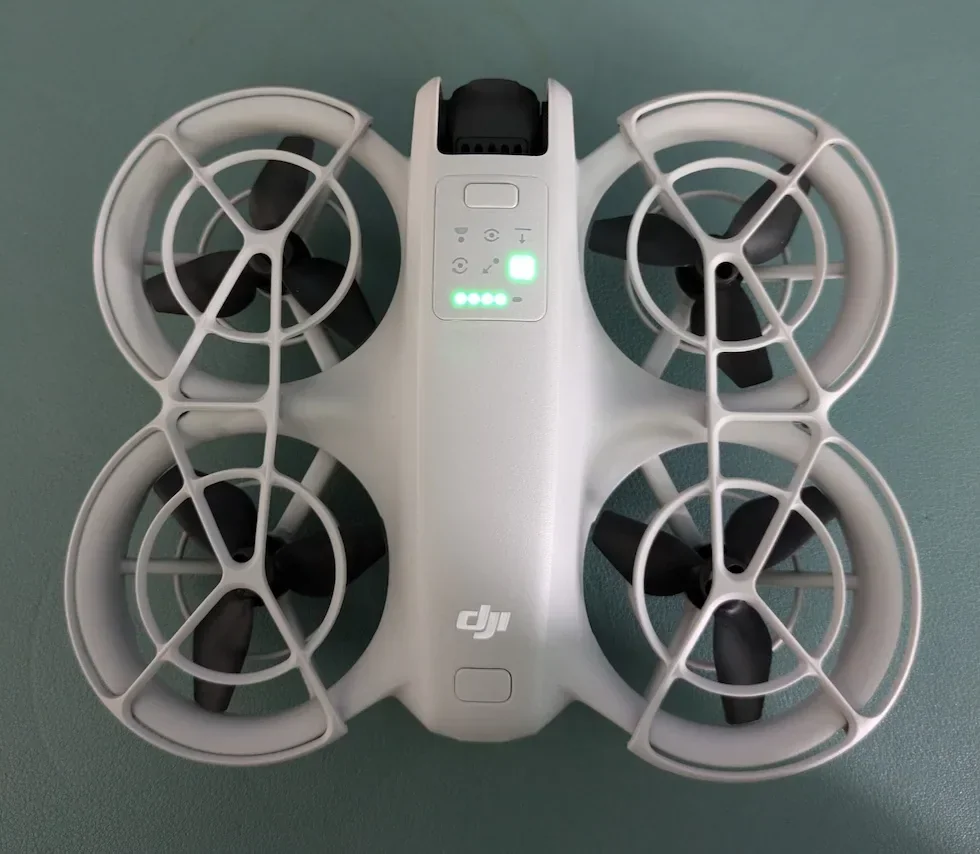
Switch the camera from Auto to Pro mode using the badge in the bottom right
With Video selected, tap the Auto badge at the bottom right of the camera view and pick Pro. The parameter row across the bottom of the screen lights up with the manual chips — that is the panel that hides the Coding Format setting.
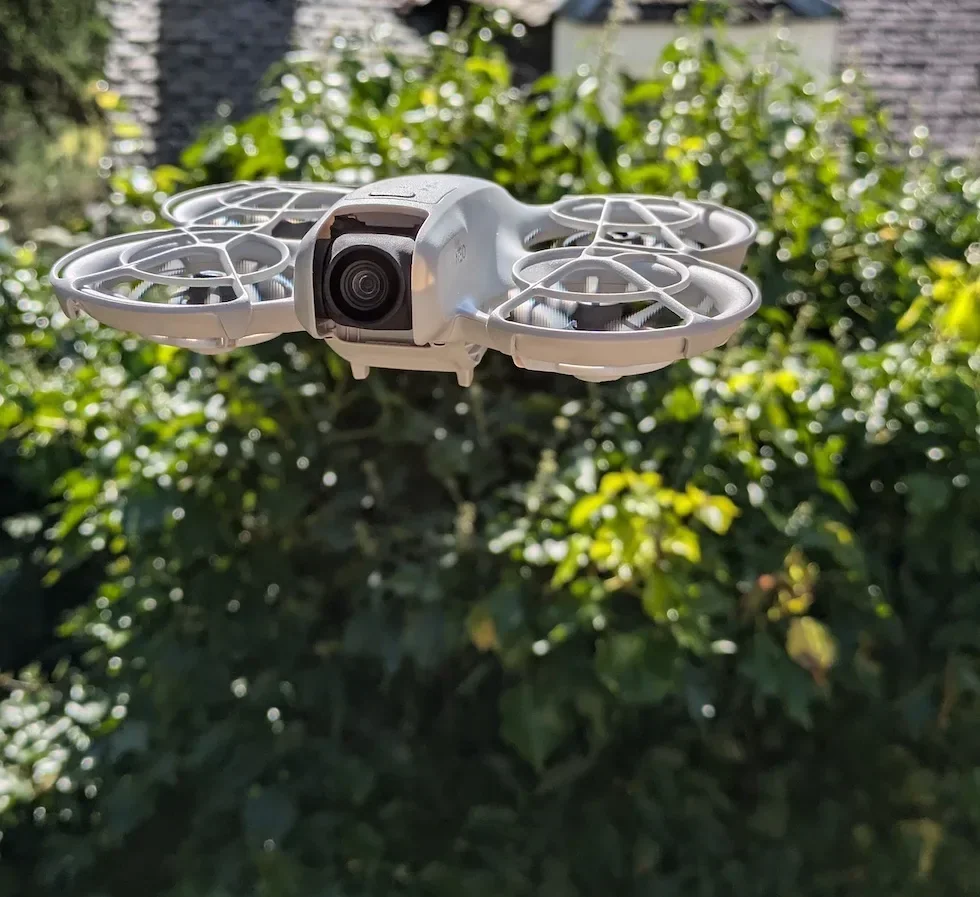
Tap the parameter row to slide up the camera panel
Tap anywhere on the parameter chips across the bottom — or tap the first chip on the left — and the camera panel slides up from underneath. Preferences is the first tab along the top of the panel.

Confirm Preferences is selected at the top of the camera panel
Preferences is the first tab in the camera panel — it should already be selected by default. If a different tab is highlighted, tap Preferences once to switch back. The body of the panel fills with the recording options for the connected drone.
Scroll down inside Preferences until Coding Format appears
The Preferences list scrolls vertically. Drag it upward until the Coding Format row is visible — the current encoder is shown to the right of the label as either H.264 or H.265.
Tap H.264 or H.265 under Coding Format to switch the encoder
Two pills sit on the Coding Format row. Tap H.265 to halve the file size on modern hardware, or tap H.264 for universal playback on older editors and clients. The selection saves the moment you tap it and the camera switches to the new encoder on the next clip.
Peter's tip
I leave every DJI drone I fly on H.265 for shoots that end up on my own machine — Final Cut Pro and DaVinci Resolve both handle it in silicon and I save roughly half the card space. The one time I flip it back to H.264 is on a client job where the final delivery has to travel through a few hands before anyone touches an editor — H.264 is the format that never causes a "this file will not open" reply.
H.264 vs H.265 on DJI Drone
Two encoders, two very different outcomes downstream of the flight. Use this table to pick before you start recording, not after the card is full.
| Coding Format | File size and compatibility | When to use it |
|---|---|---|
| H.265 (HEVC) | Roughly half the file size at the same visual quality. Modern Macs, current Windows machines, and recent iPhones decode it in hardware. Older laptops without HEVC hardware decoding stutter, and some free editors and older browsers refuse to open it at all. | Personal shoots cut on a modern Mac, recent Windows machine, current iPhone or iPad. Long flights where microSD card space is tight, or anywhere a smaller export speeds up a cloud upload. |
| H.264 (AVC) | Roughly double the file size at the same quality. Universal compatibility — every editor, every phone, every browser, every TV opens it. The card fills faster and uploads take longer. | Client deliverables where you do not control the machine on the other end. Footage that has to play on an older laptop, an older phone, or a TV via a USB stick without any transcoding step in the middle. |
Frequently asked questions
What is the difference between H.264 and H.265 on a DJI drone?
H.265 is the newer encoder and produces a file that is roughly half the size of an H.264 clip at the same visual quality, because the codec is more efficient. H.264 is the older standard and produces larger files, but every editor, phone, browser, and TV can play it without any extra work. On a DJI drone both encoders record the same resolution and frame-rate options — the difference is purely in how the footage is packed into the file.
Which encoder should I use by default on a DJI drone?
If you are cutting on a modern Mac, a recent Windows machine, or a current iPhone or Android phone, H.265 is the right default — you save storage on the microSD card and on your computer without losing any quality. Switch to H.264 only if you are editing on older hardware, sending footage to a client who needs a universally playable file, or uploading directly from an older phone that refuses to read the H.265 clip.
Why is the Coding Format option missing from my DJI drone camera panel?
Coding Format only appears when the camera is in Video mode and Pro mode at the same time. If the camera is set to Photo, Sport, or Auto, the row is hidden. Switch the camera to Video at the top of the shutter, tap the Auto badge and pick Pro, then open the camera panel again and the row appears under Preferences.
Can I change the Coding Format without entering Pro mode on a DJI drone?
Yes — there is a second route through the general settings on most DJI drones. With the camera in Video mode tap the three-dot icon on the camera view, pick the Camera tab, and the Coding Format toggle sits near the top of that panel. This is the faster route if you are switching encoders mid-shoot and do not want to leave Auto.
Does changing the Coding Format affect resolution or frame rate on a DJI drone?
No. The Coding Format selector only changes how the video is encoded, not what is recorded. Resolution, frame rate, bitrate, and colour profile are all set in separate rows further down the Preferences tab, and they carry across between H.264 and H.265 without resetting.
Will H.265 footage from a DJI drone play on every editor?
Most modern editors handle H.265 directly — Final Cut Pro, DaVinci Resolve, Premiere Pro on a current machine, and LumaFusion on iPad all open H.265 from a DJI drone without transcoding. Older versions of Premiere on Windows machines without a hardware decoder may stutter on the timeline, and free editors like iMovie on older Macs sometimes refuse to import H.265 at all. If a clip will not open, transcode to H.264 with Handbrake or shoot the next clip in H.264 to begin with.
Does H.265 take longer to render or upload from a DJI drone?
Rendering an H.265 timeline can be slower than the same H.264 timeline on a machine without hardware decoding for H.265, because the CPU has to do more work to decompress every frame. Uploads are usually faster because the file is smaller. The right trade depends on the machine you edit on — modern hardware decodes H.265 in silicon and the speed gap disappears.
Does H.265 cost extra storage space if I export back to H.264 later?
Only marginally. The original H.265 clip stays small on the microSD card, and a transcode to H.264 produces a file roughly the same size as if you had recorded directly in H.264. The penalty is the extra encode step on your machine, not double storage. If you know a client always needs H.264, it is still less work to record in H.264 to begin with.
Coding Format is one of the settings that quietly decides how much footage fits on a microSD card and how easy a client edit will be. Pick the encoder for the machine the footage will land on, not the one that was on the drone the last time you flew.
If you are not sure which codec will play nicely with your editor, drop the details to peter@hiredronepilot.uk and I will come back to you directly. The video version of this walkthrough is on YouTube and the comments are open.
References
Primary source material for this article is the official DJI user documentation for each drone in the callout and DJI Fly. External links open in a new tab.
- DJI Fly — App download and release notes · The app where the Pro mode Preferences tab and the Coding Format selector live across every current DJI drone. Release notes record any reshuffles to the camera panel between versions.
- DJI — UK consumer drone product line-up · Per-drone product pages list the supported video coding formats (H.264 and H.265) alongside the resolution and frame-rate options shared between them.
- ITU-T H.265 — High Efficiency Video Coding specification · The international standard behind the HEVC encoder DJI Fly labels as H.265, with the compression-ratio claims that underpin the file-size comparison.
Peter Leslie
Founder & GVC Drone Pilot
Peter is the founder of HireDronePilot. With thousands of logged commercial flight hours, he writes about drone technology, commercial surveying tactics, and UK aviation compliance.
Connect on LinkedIn