How to Change Video FPS on DJI Drone
Peter Leslie
22 May 2026
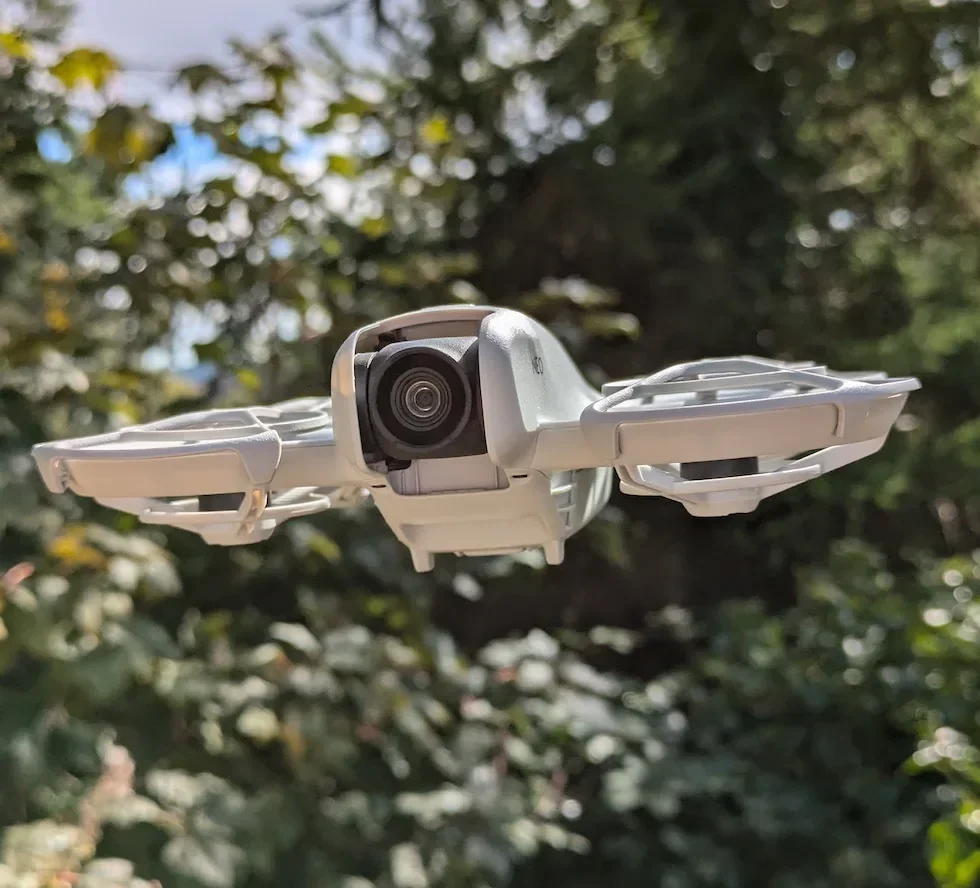
If a DJI drone is recording footage that comes back juttery, locked to 30 fps when you wanted something cinematic, or flickering under indoor lights, the setting you are looking for is the Res & FPS selector inside DJI Fly. It lives in the same spot on every current DJI drone — Auto mode has it as a tap on the camera view, Pro mode has it under the Preferences tab — and the available frame rates vary by drone.
Drones this applies to
DJI Neo 2, DJI Mini 5 Pro, DJI Avata 2, DJI Air 3 Pro, DJI Mavic 4 Pro. The procedure is the same on any drone running DJI Fly v1.21.2 or later — only the available frame-rate values vary between models. The per-drone table further down lists exactly what each drone offers.
Quick guide
To change video FPS on DJI Drone, go to DJI Fly → Video mode → tap the Res & FPS readout → pick the frame rate. 24 fps for cinematic, 30 fps for standard YouTube, 50 fps for indoor European lighting, 60 fps for half-speed slow motion, and 100 or 120 fps where the drone offers it for deeper slow motion in post.
Step-by-step: How to Change Video FPS on DJI Drone
Follow these top to bottom the first time, and the path is muscle memory the second time. The labels and order are identical on every drone in the callout above — the screenshots are taken on a DJI Neo 2.
Confirm DJI Fly is in video shooting mode from the camera view
Glance at the shutter button in the bottom right of the DJI Fly camera view. A red dot means the drone is in video shooting mode and ready to record. A white circle means it is in photo mode, and the Res & FPS selector will be greyed out until you switch over.
Switch the mode wheel to Video if the shutter button is white
Tap the mode wheel above the shutter and slide across to Video. The shutter dot turns red, the live preview adjusts to the video aspect ratio, and the Res & FPS readout becomes tappable. Every current DJI drone remote controller also has a dedicated mode-switch button on the body if you would rather use that.
Tap the Res & FPS readout on the left of the camera view in Auto mode
In Auto mode the current resolution and frame rate sit together as a single readout on the left side of the camera view — something like 4K 30. Tap it once and the Res & FPS selector slides up from the bottom of the screen with the resolutions on top and the frame-rate values along the bottom.
Pick a frame rate from the row of pill buttons next to the resolution
The available frame-rate values appear as a row of pill buttons alongside the resolution. Tap the one you want and the selection highlights to brand yellow. The list of values depends on the drone — see the per-drone table further down for exactly what each current DJI drone offers.
Switch the mode wheel to Pro if you want manual exposure with the same FPS choice
Slide the mode wheel across from Auto to Pro and the camera view reshuffles to expose ISO, shutter, and white balance as individual controls along the bottom. The Res & FPS readout still lives on the left of the screen, under the Preferences tab, with the same set of frame-rate values the drone offers in Auto.
Tap outside the selector to close it and confirm the new frame rate
The choice saves the moment you tap a value — there is no separate confirm button. Tap the live preview or the small chevron at the top of the selector to dismiss it. The readout on the left of the camera view should now show the new frame rate alongside the resolution, and every clip the drone records from this point uses that value until you open the selector again.
Peter's tip
I leave every DJI drone on 30 fps as the day-to-day default because the footage drops straight onto a 30 fps YouTube edit timeline with no conform step. The one place I always change it up is on a shot I know I want to slow down — a reveal, a hard pan, water spraying off a prop — where I bump to 60 fps on a Neo 2 or 120 fps on a Mavic 4 Pro for that one clip, then drop straight back to 30 once it is in the can. Mixing frame rates across a single edit looks worse than picking the wrong one in the first place.
Frame-rate options by DJI drone
The procedure is identical across the current line-up, but the available frame rates are not. Use this table to check what the drone in your hand actually offers before you go looking for an option that is not there.
| Drone | Frame rates offered | Highest slow-motion option |
|---|---|---|
| DJI Neo 2 | 30, 50, 60 fps | 60 fps — half-speed on a 30 fps timeline |
| DJI Mini 5 Pro | 24, 25, 30, 48, 50, 60, 100 fps | 100 fps at 1080p — roughly four-times slow motion |
| DJI Avata 2 | 24, 25, 30, 48, 50, 60, 100, 120 fps | 120 fps at 2.7K — four-times slow motion on 30 fps |
| DJI Air 3 Pro | 24, 25, 30, 48, 50, 60, 100 fps | 100 fps at 4K — roughly four-times slow motion |
| DJI Mavic 4 Pro | 24, 25, 30, 48, 50, 60, 100, 120 fps | 120 fps at 4K — four-times slow motion on 30 fps |
Cinematic, standard, or slow motion — pick by intent
Pick the frame rate by the shot you are about to capture, not by what the drone offers at the top end. This table covers the four buckets every frame-rate value falls into.
| FPS choice | What it gives you | Where it bites |
|---|---|---|
| 24 fps | The cinematic-look default. Natural motion blur, the frame rate every film camera shoots at, and the right answer when the rest of the project is also cut at 24 fps. | Stutters on fast pans, judders on quick subject motion, and looks wrong in a 30 fps edit timeline unless you conform it. Not available on the DJI Neo 2. |
| 30 fps | The everyday standard. Native to most YouTube and social timelines, smaller files than 60, and the look most viewers are used to from drone footage. | Flicker under European mains lighting (50 Hz). Not enough frames to slow down cleanly in post if you change your mind about a shot. |
| 60 fps | Half-speed slow motion when dropped onto a 30 fps timeline. Reveals, dramatic pans, and movement shots all benefit from the extra frames when slowed in post. | Double the file size of 30 fps, a slightly softer-looking image at full speed because the shutter has less time per frame, and the wrong default for talking-head or static cinematic shots. |
| 100 or 120 fps | Roughly four-times slow motion on a 30 fps timeline. Prop wash, water spray, hard turns, and any shot where the drama is in something fast happening slowly. Only on the Mini 5 Pro and above. | Resolution drops on some drones — 120 fps forces 1080p or 2.7K on a Mini 5 Pro or Air 3 Pro. File sizes balloon, and the look gets stock-video tired if you use it on everything. |
Frequently asked questions
What FPS values can a DJI drone record at?
It depends on the drone. The DJI Neo 2 offers 30, 50, and 60 fps. The DJI Mini 5 Pro adds 24 fps for cinematic and 100 fps for slow motion. The DJI Avata 2 and the DJI Mavic 4 Pro both go to 120 fps for deeper slow motion. The full set for each current drone sits in the per-drone table further up this page.
Which frame rate should I pick for normal video on a DJI drone?
30 fps for footage that will be uploaded straight to YouTube, social, or any standard edit timeline. 24 fps for cinematic-look projects where the rest of the project is also at 24 fps. 50 fps under European indoor lighting to kill the flicker that 30 fps produces. 60 fps or higher only when you intend to slow the footage down in post.
Why does my DJI drone footage flicker under indoor lights at 30 fps?
UK and European mains run at 50 Hz, and indoor lights cycle in step with that mains frequency. Recording at 30 fps puts the camera out of sync with the mains cycle and you see banding or flicker on screen. Switch the drone to 50 fps for any indoor flying under European lighting and the flicker disappears.
What is the 180-degree shutter rule and does it apply on a DJI drone?
The 180-degree shutter rule says the shutter speed should be roughly double the frame rate to keep motion blur natural. So 30 fps wants a 1/60 shutter, 60 fps wants 1/125, and 120 fps wants 1/250. It only matters in Pro mode where the shutter is a manual setting. In Auto mode DJI Fly handles the relationship automatically across every current DJI drone.
What does 60, 100, or 120 fps actually give you in post?
Drop a 60 fps clip onto a 30 fps timeline and it plays at half speed cleanly. 100 fps gives you roughly four-times slow motion on a 25 or 30 fps timeline, and 120 fps gives you four-times slow motion on a 30 fps timeline. Useful for reveals, dramatic pans, prop wash, and water shots — overused for everything else and the footage starts to feel like a stock-video edit.
Will changing the FPS on a DJI drone also change the video resolution?
Sometimes. Resolution and frame rate are separate selectors on the same Res & FPS panel, but the highest frame rates are not offered at every resolution on every drone. 4K 120 fps is only available on the Mavic 4 Pro and the Avata 2, for example, and selecting 120 fps on a Mini 5 Pro will force the resolution down to 1080p. Pick the resolution first, then check which frame rates the drone offers at that resolution.
Can I change the FPS on a DJI drone mid-flight?
Yes — the selector is live whether the drone is on the ground or in the air. Stop recording first, tap the Res & FPS readout, pick the new value, and tap the shutter again to start a fresh clip at the new frame rate. The drone will not let you switch frame rate mid-clip; the clip closes when the selector opens.
Does the FPS choice on a DJI drone affect the maximum recording time?
It affects file size, not flight time. A 60 fps clip writes twice as many frames per second to the microSD card as a 30 fps clip, and a 120 fps clip writes four times as many. Battery life is dictated by motor and downlink draw, not by frame rate, so a single battery records the same flight time at any FPS the drone offers.
Frame rate is one of those settings most DJI owners pick once on a fresh install and never revisit — and then wonder why the indoor footage flickers, why the slow-motion shot will not slow down, or why a cinematic edit looks wrong against a 30 fps timeline. Set it deliberately for the shot you are about to capture, every time.
If you have a specific project in mind and you want a second opinion on which frame rate to shoot at, drop the details to peter@hiredronepilot.uk and I will come back to you directly. The video version of this walkthrough is on YouTube and the comments are open.
References
Primary source material for this article is the official DJI user documentation for each drone in the callout and DJI Fly. External links open in a new tab.
- DJI Fly — App download and release notes · The app where the Res & FPS selector lives in both Auto and Pro mode across every current DJI drone. Release notes record any menu reshuffles between versions.
- DJI — UK consumer drone product line-up · Per-drone user manuals carry the full list of supported resolutions and frame rates under §Camera Specifications.
- DJI — UK consumer drone homepage · Spec sheets for the Neo 2, Mini 5 Pro, Avata 2, Air 3 Pro, and Mavic 4 Pro confirm the max frame rate at each resolution tier.
Peter Leslie
Founder & GVC Drone Pilot
Peter is the founder of HireDronePilot. With thousands of logged commercial flight hours, he writes about drone technology, commercial surveying tactics, and UK aviation compliance.
Connect on LinkedIn