How to Check Connected Satellites Before Flight on DJI Drone
Peter Leslie
22 May 2026
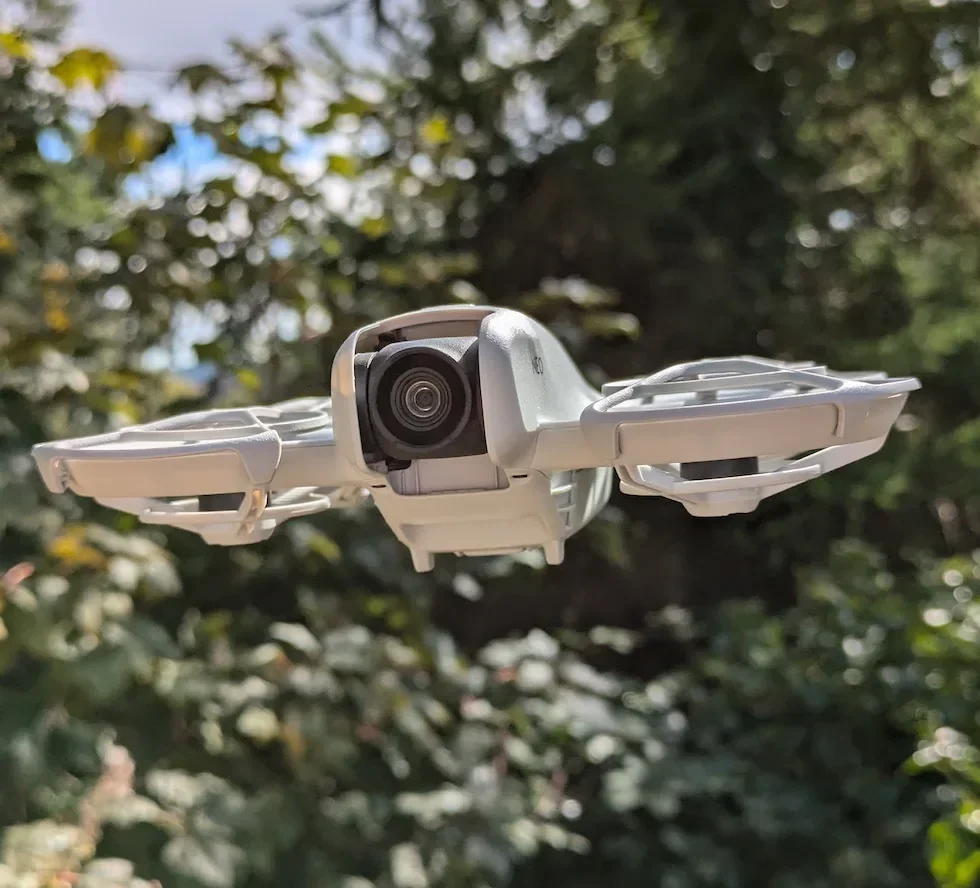
If you have ever pushed the throttle up and watched the drone behave like it cannot find itself, the live satellite count is the single most useful pre-flight check you can run inside DJI Fly. The connected satellite count sits one tap deep in the camera view — the GPS icon in the top-right of the status bar exposes the live figure when you tap it, and it tells you whether the drone has a real positioning lock before take-off.
Drones this applies to
DJI Neo 2, DJI Mini 5 Pro, DJI Avata 2, DJI Air 3 Pro, DJI Mavic 4 Pro. The same procedure works on any drone running DJI Fly v1.21.2 or later — the GPS icon sits in the same place on the status bar across every current model, and the tap-for-count behaviour is identical.
Quick guide
To check the connected satellite count on DJI Drone, go to DJI Fly → Go Fly → camera view → top-right status bar → tap the GPS icon. The pop-up shows the live satellite count; wait until the figure clears six and the icon turns white before take-off.
Step-by-step: How to Check Connected Satellites Before Flight on DJI Drone
Follow these top to bottom the first time, and you will know the path off by heart the second time. The labels and order are identical on every drone in the callout above — the screenshots are taken on a DJI Neo 2.
Power the drone on and confirm the DJI Fly connection banner
Bring the drone and the remote controller up, then wait for DJI Fly to show the connection banner on the phone. The satellite count is a live read from the drone, so the link has to land before the icon will report anything other than red.
Tap Go Fly on the DJI Fly home screen to drop into the camera view
Open DJI Fly on the phone. The home screen lists the connected drone and a large Go Fly button near the bottom. Tap Go Fly to enter the camera view — the live feed fills the screen and the status bar runs across the top edge.
Look at the GPS icon in the top-right of the DJI Fly status bar
Track your eye across the top edge of the camera view to the right-hand side. The GPS icon is the small satellite glyph sitting in the status bar group with the battery percentage and the transmission bars. The colour of the icon is the at-a-glance summary — red for no lock, yellow for weak, and white for strong.
Tap the GPS icon once to open the live satellite count pop-up
Tap the satellite icon. A small detail pop-up drops down from the status bar with the exact number of GNSS satellites the drone is currently locked on to. The figure refreshes in real time, so leave the pop-up open and watch the count climb as the receiver acquires more of the sky.
Wait until the satellite count clears six and the icon turns white
Six locked satellites is the working minimum for a strong Home Point and a reliable Return to Home. Hold the drone on the ground and let the receiver climb. On a cold start in clear sky the count typically reaches six in thirty to sixty seconds, and a warm start in the same spot often locks in under fifteen.
Listen for the DJI Fly Home Point recorded voice prompt
DJI Fly fires an audible voice prompt the moment a Home Point is locked, which only happens once the satellite count is high enough. Confirm the prompt has played before pushing the throttle — the prompt is the trustworthy confirmation that Return to Home has a real point to come back to.
Walk to opener sky if the count stalls under six satellites
Tall buildings, dense tree canopy, and large metal structures block GNSS signals reaching the drone. If the count is stuck under six after a minute or two, move the drone away from the obstruction and try again in a spot with a clearer view of the sky. Indoors or under a roof the count will sit at zero — the drone needs line of sight to satellites.
Re-check the GPS icon mid-flight if the figure starts dropping
The satellite count is not just a pre-flight check. Glance back at the GPS icon during the flight, especially when the drone is working close to buildings or under trees. A figure that drops back through six and the icon turning yellow is the prompt to bring the drone out into clearer sky before the positioning lock fails completely.
Peter's tip
I make a habit of waiting for twelve satellites rather than six on every paid job. Six is the published floor that gets a Home Point recorded, but twelve gives me a stable enough lock that the drone holds position to within a metre and Return to Home lands almost on the take-off spot. Spending an extra thirty seconds on the ground for a higher count is the cheapest insurance there is against a long walk to find the drone after a flyaway.
Frequently asked questions
How many satellites does a DJI drone need before take-off?
Six locked satellites is the working minimum for any current DJI drone to record a Home Point and behave predictably under Return to Home. The GPS icon in the DJI Fly status bar turns white once the count clears that figure. Anything below six leaves the drone leaning on the vision system for hold, and a Home Point either does not record at all or records loosely enough that Return to Home can land short of the take-off spot.
What do the different colours of the GPS icon mean in DJI Fly?
Red means zero or very few satellites and no positioning lock. Yellow means the drone has a partial lock and the signal is weak — flight is possible but Return to Home accuracy is reduced. White means a strong lock with enough satellites for a recorded Home Point, full Return to Home accuracy, and the published flight envelope. Wait for white before take-off whenever the environment allows it.
Why is the satellite count stuck at zero?
A satellite count locked at zero almost always means the drone is indoors, under heavy tree cover, or in the lee of a tall building. The drone cannot see the sky through a roof, so the GNSS receiver has no signal to lock. Walk out into an open area away from buildings and large metal structures, give the drone thirty to sixty seconds, and the count climbs as the receiver acquires satellites overhead.
Can you fly a DJI drone with weak GNSS?
Yes. Every current DJI drone will lift off on the vision system alone — the drone uses its downward and forward sensors to hold position when GNSS is unavailable. The trade-off is that there is no Home Point, Return to Home falls back to a vision-only landing at the take-off vision frame, and altitude limits behave differently. For any flight where Return to Home accuracy or distance work matters, wait for the satellite count to climb above six.
How long should you wait for a DJI drone to acquire satellites?
Thirty to sixty seconds is normal on a cold start in a clear-sky environment. The first satellite locks fastest and the count climbs in steps as the receiver picks up more. If the count is still under six after a couple of minutes, the spot has poor sky coverage — move the drone into an opener area rather than waiting indefinitely. A warm start from a recent flight in the same location often locks in under fifteen seconds.
What does a bad satellite lock actually look like?
A red or yellow GPS icon, a satellite count that hovers under six, and a Home Point recorded voice prompt that never fires. On the camera view you may also see the position-hold reticle drift slightly when the drone is sat on the ground, because the receiver is guessing rather than locking. Treat any of those signs as a hold-off — the failure mode is a Return to Home that lands somewhere other than the take-off spot.
What is the difference between satellites and the transmission bars in DJI Fly?
They measure different things. The GPS icon and the satellite count measure the link between the drone and the GNSS satellites overhead — positioning and Home Point. The transmission bars measure the video and control link between the drone and the remote controller — that is the OcuSync radio signal. Both need to be healthy before take-off, but a weak transmission link does not affect satellite lock, and a weak satellite lock does not affect transmission.
Does the satellite count keep updating during flight?
Yes. The GPS icon and the pop-up readout track the live satellite count throughout the flight, not just on the ground. Glance back at it when flying near buildings or trees — a figure that drops back through six and the icon turning yellow mid-flight is the prompt to bring the drone out into clearer sky before the positioning lock fails altogether.
Checking the connected satellite count on a DJI drone is a fifteen-second tap on the GPS icon and a thirty-second wait for the figure to clear six. Once the icon is white and the Home Point voice prompt has fired, the drone has the positioning lock it needs for full Return to Home accuracy and the published flight envelope. Bake the check into every pre-flight and you will not lose a drone to a missing Home Point.
If you are seeing a satellite count that will not climb on a site that should be clear sky, drop me a note at peter@hiredronepilot.uk and I will come back to you directly. The video version of this walkthrough is on YouTube and the comments are open.
References
Primary source material for this article is the official DJI user documentation for each drone in the callout and DJI Fly. External links open in a new tab.
- DJI Fly — App download and release notes · The app that hosts the status bar GPS icon, the satellite count pop-up, and the Home Point recorded voice prompt. Release notes record any layout changes between app versions.
- DJI — UK consumer drone product line-up · Per-drone product pages list the GNSS receiver specification, the published positioning accuracy figures, and the Home Point recording threshold under §Positioning.
- UK Civil Aviation Authority — The Drone and Model Aircraft Code (CAP2320) · The visual-line-of-sight and pre-flight planning rules that frame why confirming a strong GNSS lock is part of every responsible take-off.
Peter Leslie
Founder & GVC Drone Pilot
Peter is the founder of HireDronePilot. With thousands of logged commercial flight hours, he writes about drone technology, commercial surveying tactics, and UK aviation compliance.
Connect on LinkedIn