How to Download Videos to Your Phone From DJI Drone
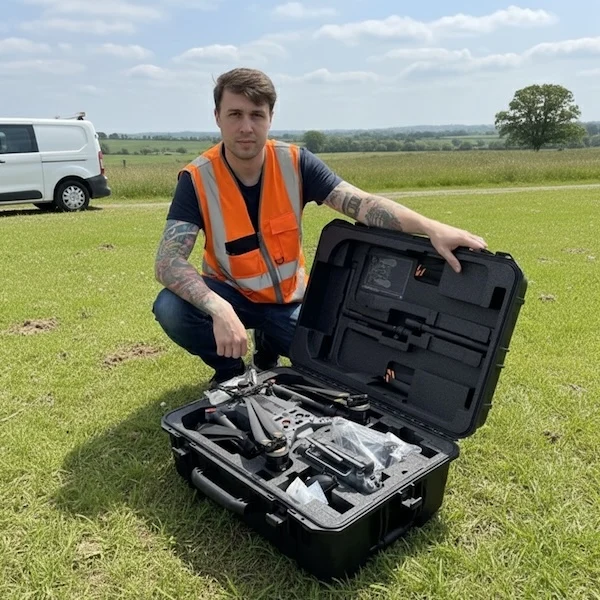
Peter Leslie
22 May 2026
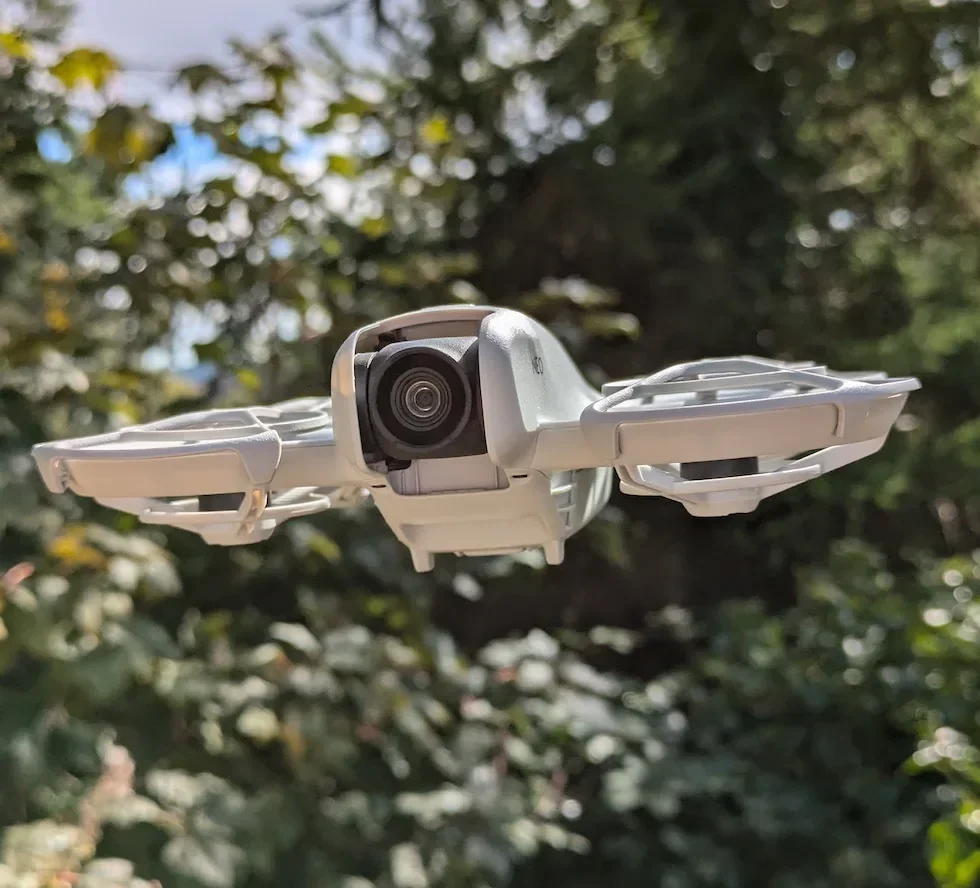
If you have just landed a DJI drone and want a clip on the phone before the kit goes back in the bag, the download lives inside DJI Fly and there are two click paths depending on what is connected. With the drone and the remote controller already paired to the phone, tap into the in-app Album from the camera view, open the clip, and tap the download icon. With the controller out of the loop, pair the phone directly with the drone over Wi-Fi via QuickTransfer for a faster bulk pull.
Drones this applies to
DJI Neo 2, DJI Mini 5 Pro, DJI Avata 2, DJI Air 3 Pro, DJI Mavic 4 Pro. The same procedure works on any drone running DJI Fly v1.21.2 or later — only the QuickTransfer link rate (5.8 GHz peak vs 2.4 GHz fallback) varies by model and by local radio environment, and FPV drones add the goggles-recorded clips alongside the on-board files inside the Videos tab.
Quick guide
To download a video to your phone from DJI Drone, go to DJI Fly → Go Fly → thumbnail icon below the shutter → Album → Videos tab → tap a clip → download icon. For higher-rate bulk pulls without the controller in the loop, tap QuickTransfer on the DJI Fly home screen and pair the phone directly with the drone over Wi-Fi.
Step-by-step: How to Download Videos to Your Phone From DJI Drone
Follow these top to bottom the first time, and the next download is one tap from the Album. The screenshots are taken on a DJI Neo 2 — the labels and the order are identical across the drones in the callout above.
Power the drone on and confirm DJI Fly shows the connection
Switch the drone on, then bring the remote controller up if you intend to use the Album route. Wait for DJI Fly on the phone to show the connection banner — the Album only mirrors the drone storage once the link is live, so jumping into the camera view before the banner is up gives back an empty grid.
Tap Go Fly on the DJI Fly home screen to enter the camera view
Open DJI Fly on the phone. The home screen lists the connected drone with a large Go Fly button near the bottom. Tap Go Fly to drop into the camera view, and the live feed from the drone fills the screen with the shooting controls stacked down the right-hand edge.
Tap the thumbnail icon below the shutter button to open the Album
Look at the right-hand control column for the small square thumbnail icon sat directly beneath the round shutter button. Tap it once. The live feed slides away and the Album opens with a grid of every photo and every video on the drone on-board storage, sorted newest-first.
Tap the Videos tab along the top of the Album to filter the grid
The Album opens with Photos, Videos and Favourites tabs across the top. Tap Videos to hide every still and leave only the clips in the grid. The most recent take sits in the top-left of the grid and the file count in the top bar reflects whichever tab is currently active.
Tap a clip thumbnail in the grid to open it full screen on the phone
Tap any video thumbnail to open the clip full screen. The video opens on the timeline scrubber with a play button overlaid and an action row across the bottom of the screen. Scrub the timeline first to confirm the take is the one you want before pulling it across.
Tap the download icon in the bottom action row to copy the clip to the phone
The action row along the bottom of the full-screen preview carries the heart icon for marking Favourites, the download icon for pulling the file across, and the share sheet. Tap the download icon once and DJI Fly copies the original MP4 into the phone DJI Fly folder, with the in-app audio track already merged in.
For the QuickTransfer route, tap the QuickTransfer card on the DJI Fly home screen
Switch the remote controller off and back out to the DJI Fly home screen on the phone. The home screen reveals a QuickTransfer or Wi-Fi Devices card pointing at the drone. Tap the card to start the direct Wi-Fi pairing — on the first pairing for a new phone, long-press the power button on the drone when DJI Fly prompts you to confirm.
Long-press a clip inside the QuickTransfer Album to enter multi-select
Inside the QuickTransfer Album, long-press any thumbnail to enter multi-select mode. Tap each clip you want to pull across — the selected thumbnails carry a tick mark in the top-right corner — then tap the download icon in the bottom action bar. The transfer runs at the QuickTransfer rate (5.8 GHz where permitted, 2.4 GHz with a 12 megabytes per second cap as the fallback) and the files land in the phone DJI Fly folder when the queue completes.
Peter's tip
I always pull clips through the Album rather than over a cable when I have used the in-app microphone. The audio track only merges into the MP4 when the file is downloaded via DJI Fly — a raw USB-C pull off the drone hands back the silent video and leaves the audio stuck inside the app on the phone. For any take where the voiceover or the on-board mic is the soundtrack, the Album route is the one that saves a re-sync in the editor later.
Album download or QuickTransfer — pick the one that matches the session
Both routes land the same MP4 in the same phone DJI Fly folder. The decision is about whether the controller is already in the loop and how many clips you are pulling.
| Route | When to use it | Notes |
|---|---|---|
| Album download (controller connected) | Between flights, with the drone and controller already paired to the phone and the camera view live. | One tap from the camera view via the thumbnail icon below the shutter. Audio track merges in automatically. Transfer rate is the standard control-link rate. |
| QuickTransfer (phone direct to drone) | End of the session with the controller packed away, or any time the phone needs to pull several clips off the drone quickly. | Phone pairs with the drone over Wi-Fi from the DJI Fly home screen. Peak rate on 5.8 GHz, 12 megabytes per second cap on the 2.4 GHz fallback. First pairing needs a long-press of the power button. |
Frequently asked questions
Does the in-app audio recorded through DJI Fly get downloaded with the video?
Yes, but only when the clip is pulled across through the Album view inside DJI Fly. Audio captured by the in-app recording function lives on the phone during the flight and the video lives on the drone, and the two streams merge into a single MP4 automatically the moment a clip is viewed or downloaded through the Album. A raw pull off the drone over a USB-C cable bypasses that merge and hands back the silent video track only, which is why the in-app download route is the safer one when audio matters.
How fast does QuickTransfer actually run on a DJI drone?
Peak rate is on the 5.8 GHz band in a clean radio environment, which is where most QuickTransfer sessions land in the UK. When 5.8 GHz is blocked by local regulations, when the phone does not support 5.8 GHz, or when the environment has heavy interference, the link falls back to 2.4 GHz with a published cap of 12 megabytes per second. If the drone heats up during a long session it engages ECO mode automatically and the cap drops further on the 5.8 GHz path.
Where do downloaded DJI drone videos end up on the phone?
Downloads land inside the DJI Fly app Album on the phone, which is sandboxed by iOS or Android and sits separately from the main camera roll. To get a clip out into the camera roll, into Files, or into a third-party editor, open the clip inside DJI Fly and tap the export or share icon. On Android the export step writes a copy into the gallery; on iOS it offers Photos, Files, or any installed share target.
Can I download videos from a DJI drone without the controller switched on?
Yes. That is exactly what QuickTransfer is for. From the DJI Fly home screen with the drone powered on and the controller off or out of the room, tap the QuickTransfer or Wi-Fi Devices card and follow the prompt to pair the phone directly with the drone over Wi-Fi. The first pairing on a new phone needs a long-press of the drone power button to confirm. After that, every QuickTransfer session is a single tap from the home screen.
Why does QuickTransfer refuse to pair sometimes?
The most common cause is a controller in the same room that is still bound to the drone and holding the Wi-Fi link. The drone only binds to one control device at a time, so a powered controller locks the phone out. Switch the controller off entirely, force-quit DJI Fly on the phone, then re-open the app and try again. Other failure modes include a cached DJI Fly pairing on the phone and a 5.8 GHz environment too saturated to negotiate; toggling the phone Wi-Fi off and back on clears the first, and moving away from other access points clears the second.
Can I batch-download every video on a DJI drone to my phone at once?
You can select multiple clips inside the QuickTransfer Album and queue them for download, yes, but QuickTransfer copies them one after another rather than in parallel. For ten or twenty clips the wait is tolerable; for a full memory of footage the link slows compared to a USB-C cable plugged into a computer. The right tool for a true batch off-load is a cable from the drone USB-C port to a PC or laptop, where the drone mounts as a removable drive and a normal drag-and-drop empties the storage in seconds rather than minutes.
Do downloaded files stay on the DJI drone after they land on the phone?
Yes. Tapping download in the Album copies the file rather than moving it. The original stays on the drone on-board storage until it is wiped manually through the Album, formatted from inside Settings, or overwritten when the storage fills up. That is why most drone pilots tag the keepers as Favourites, pull them onto the phone, and only batch-wipe the rest once the laptop copy is verified.
Does the download route differ between a DJI Neo 2, a DJI Mini 5 Pro, or a DJI Avata 2?
No. The download flow lives inside DJI Fly rather than the drone firmware, so the Album view, the download icon, and the QuickTransfer pairing card are identical across every current DJI drone. The only per-drone variation is link rate — the larger Air and Mavic drones negotiate a faster 5.8 GHz session than the smaller Neo, and the FPV drones add the goggles-recorded clips alongside the on-board files inside the Videos tab.
Downloading clips to your phone from DJI Drone is a two-route procedure — the Album when the controller is already paired, QuickTransfer when it is not. Either way the same MP4 lands in the phone DJI Fly folder with the in-app audio already merged in, ready for a vertical edit or a straight share.
If a clip is stuck in the Album, a QuickTransfer pairing keeps failing, or the download icon is missing where you expect it, drop the details to peter@hiredronepilot.uk and I will come back to you directly. The video version of this walkthrough is on YouTube and the comments are open.
References
Primary source material for this article is the official DJI user documentation for each drone in the callout and DJI Fly. External links open in a new tab.
- DJI Fly — App download and release notes · The app that hosts the Album view, the download icon, and the QuickTransfer pairing flow across every current DJI drone. Release notes record any layout changes between app versions.
- DJI — UK consumer drone product line-up · Per-drone product pages and downloads, where the QuickTransfer pairing flow, the 5.8 GHz / 2.4 GHz link behaviour, and the ECO mode cap are documented in each drone user documentation set.
- UK Civil Aviation Authority — The Drone and Model Aircraft Code (CAP2320) · The visual-line-of-sight and operator-responsibility framework that sits behind every UK flight a downloaded clip in the Album was captured on.
Peter Leslie
Founder & GVC Drone Pilot
Peter is the founder of HireDronePilot. With thousands of logged commercial flight hours, he writes about drone technology, commercial surveying tactics, and UK aviation compliance.
Connect on LinkedIn