2026 UK Drone Laws: The January Reset Explained
Peter Leslie
Updated 21 May 2026
Key Takeaways
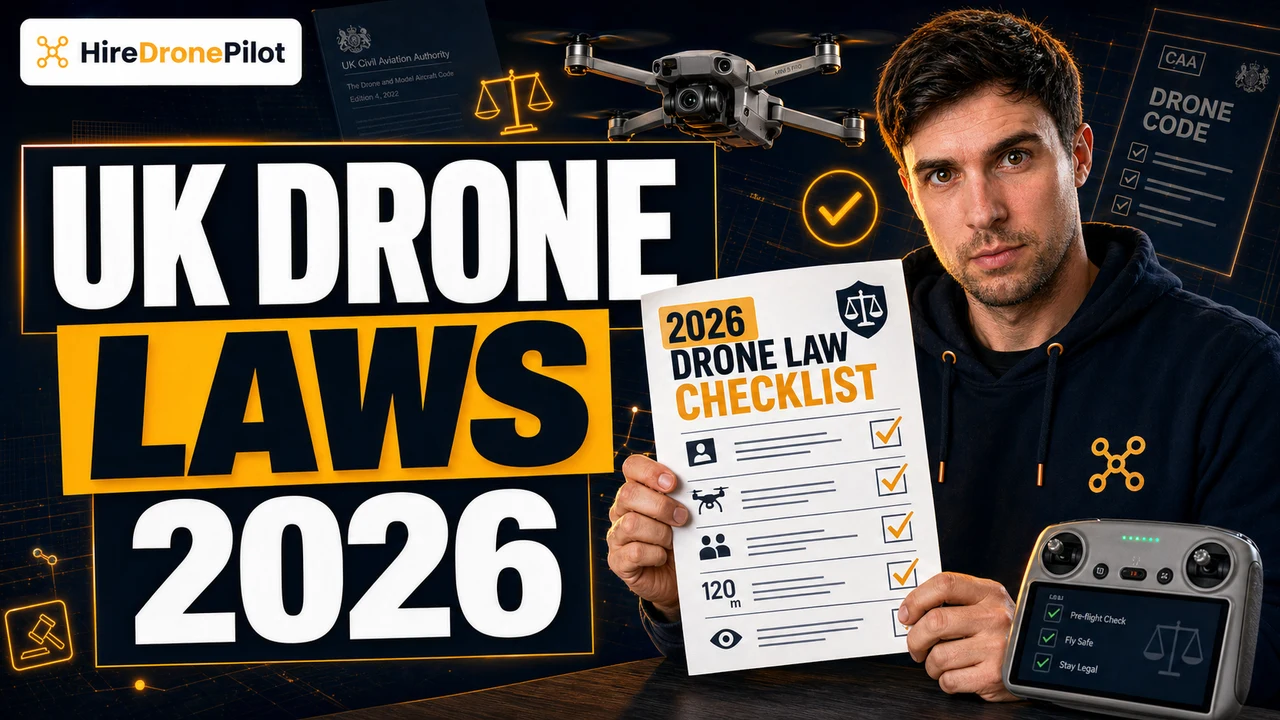
- The transitional concessions for legacy unmarked drones ended on 1 January 2026, and class marks UK0 to UK6 now drive the Open Category sub-categories
- Remote ID broadcast became mandatory on 1 January 2026 for UK1, UK2, UK3, UK5, and UK6 drones — UK0 and legacy drones have until 1 January 2028
- Open Category flying is still bounded by four hard numbers: 120 metres of altitude, 50 metres from uninvolved people, zero crowd overflight, and an unaided Visual Line of Sight
- Most paid drone work that crosses the 50-metre boundary in built-up areas needs a GVC, an Operational Authorisation, and insurance that meets Assimilated Regulation (EU) 785/2004
- Airspace, devolved-nation rules, and local council bylaws are an extra layer on top of the national framework, and every site needs a check before take-off
UK drone law went through its biggest single-day rewrite in years on 1 January 2026. The transitional class-mark concessions that let legacy unmarked drones keep flying under the old weight categories ended overnight, Remote ID activation kicked in for most class-marked drones, and the framework that drone operators had been half-learning through 2024 and 2025 finally settled into its long-term shape.
The three operating categories survived the January reset unchanged, and most paid work still sits inside the Open Category
The framework is split into three risk-based categories. The Open Category covers low-risk flying under 25 kg, below 120 metres, within Visual Line of Sight, and away from crowds. No CAA permission is needed, but every standing rule still applies.
The Specific Category is the medium-risk bracket — closer to people than the Open Category allows, beyond visual line of sight, or above crowds. It requires a written Operational Authorisation from the CAA tied to a risk assessment. The Certified Category sits above that and behaves like manned aviation, with a type-certified drone and a licensed Remote Pilot.
Which category a given flight falls into is decided by three things: what you fly, where you fly, and who is below you. Nothing about that calculus changed on 1 January. What changed is how the first half of the question — what you fly — is now answered.
Class marks UK0 to UK6 now drive where in the Open Category your drone is allowed to operate
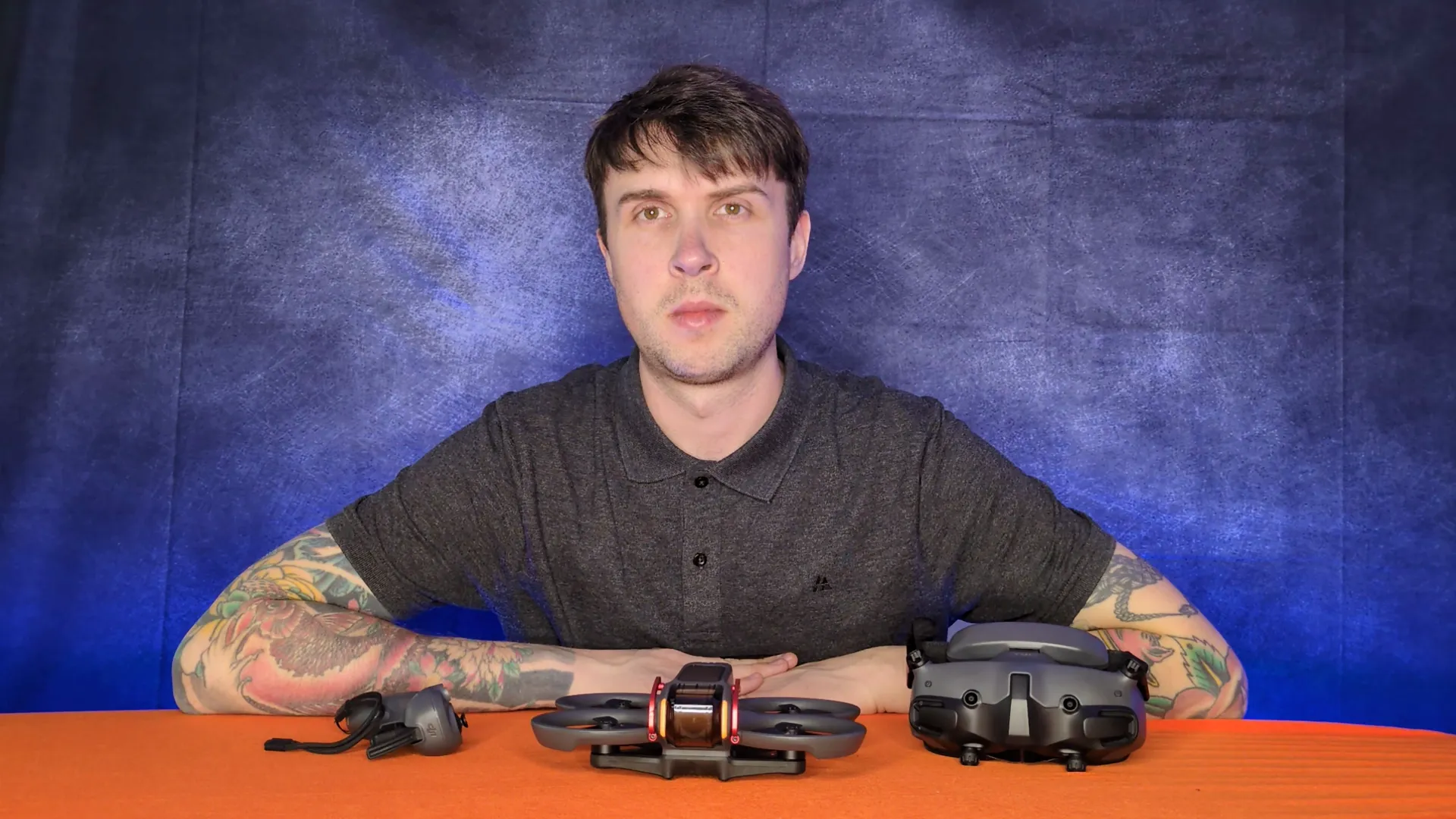
The biggest visible change is the class-mark system finally biting. Any new drone placed on the UK market from 1 January 2026 must carry a UK class mark (UK0 to UK6). Retained European C class marks (C0 to C6) can still be flown as the equivalent UK class until 31 December 2027, after which they become legacy drones governed by weight alone.
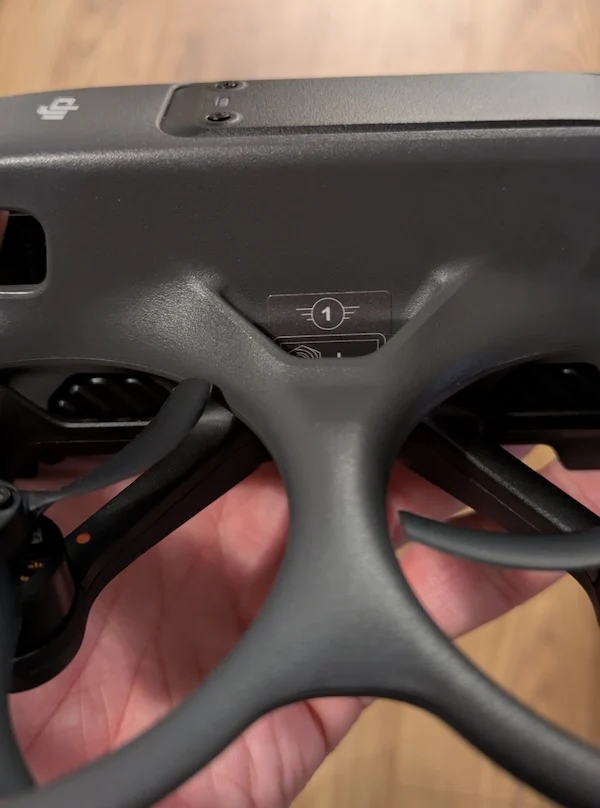
The class mark decides which Open sub-category a drone belongs to. UK0 and UK1 sit in A1 (Over People). UK2 sits in A2 (Near People) with the A2 Certificate of Competency, otherwise A3. UK3 and UK4 sit in A3 (Far From People). UK5 and UK6 are Specific Category only and cannot fly in Open at all.
If your drone is unmarked and was bought before the transition, the legacy weight rules still apply, but you are now boxed into A3 for anything heavier than 250 grams. That is the single change most hobby drone operators are still adjusting to.
Every Open Category flight still comes back to four hard numbers — 120, 50, 0, and a clear unaided view
Underneath all the category language, an Open Category flight reduces to four numbers. The altitude ceiling is 120 metres above the closest surface, measured continually during the flight — not above your take-off point. The horizontal buffer from uninvolved people is 50 metres in A2 and A3. The number of people you can fly over in an assembled crowd is zero, in any sub-category, regardless of class mark.
The fourth requirement is Visual Line of Sight throughout the flight. That means seeing the drone clearly with your own unaided eyes — no binoculars, no telephoto, no goggles unless an observer is holding the direct view. I put together a longer plain-English breakdown of the VLOS test for the local business community, published on the Dundee and Angus Chamber of Commerce news feed, if you want the operator-side view of how the rule is actually applied on site.
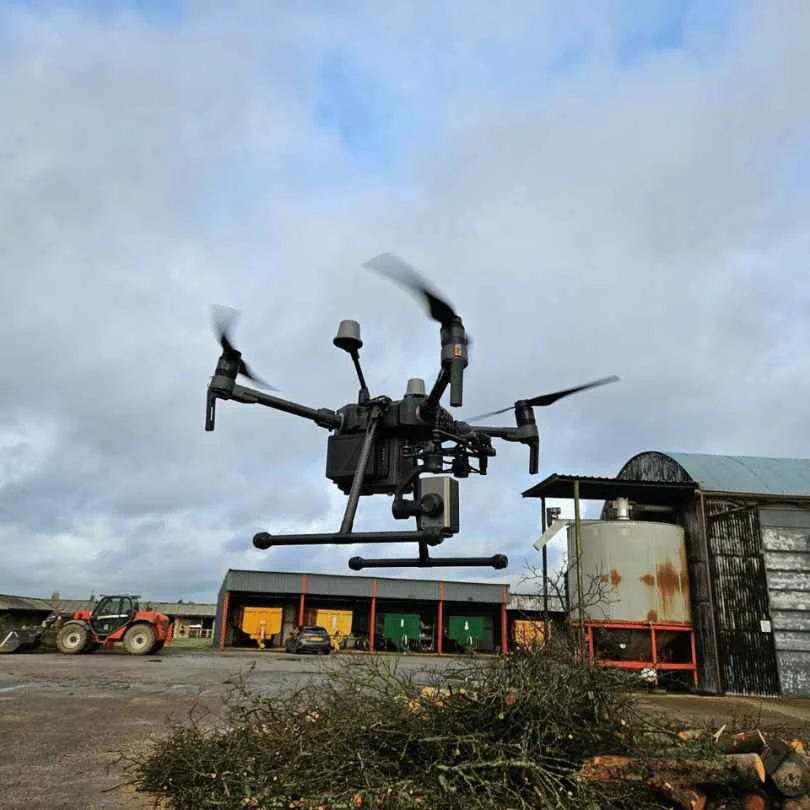
Commercial work that crosses the 50-metre boundary pushes you into the Specific Category, with all the paperwork that comes with it
Plenty of paid drone work fits neatly inside the Open Category. A lot of my own day-to-day jobs do. Filming product footage on a closed field site for a metal detector retailer, mapping a tricky industrial-unit roof for a Dundee Electrician sizing up a solar install, or running a thermal scan over an old warehouse roof for an Arbroath electrician chasing a hot junction box, all stay inside A2 or A3 because the site is closed and the people on it are involved in the shoot.
The moment you need to fly closer than 50 metres from uninvolved people in built-up areas, you are outside Open and into the Specific Category. The most common route in is PDRA01 — a pre-defined Operational Authorisation that unlocks built-up flying under set conditions, including a 50-metre buffer (reducing to 30 metres only during take-off and landing) and a 500-metre Remote Pilot range. To hold a PDRA01 you need a General Visual Line of Sight Certificate or an equivalent qualification, an Operations Manual, and insurance that meets Assimilated Regulation (EU) 785/2004.
If you are weighing up whether to do the qualification yourself or just hire someone in, I broke the numbers down for the Dundee and Angus Chamber of Commerce — what a half-day, a full day, and a fully-authorised Specific Category flight actually cost in Scotland in 2026.
Airspace, devolved-nation rules, and local council bylaws are the layer most drone operators forget to check
The category framework and the four standing numbers are the national layer. Sat on top of them is a second layer that does not appear in the Drone Code at all: Flight Restriction Zones around airports, temporary NOTAMs for events and incidents, prison and emergency-services exclusions, and military danger areas. Scotland adds the Land Reform (Scotland) Act 2003 access regime, and a handful of councils have park and beach bylaws that bite even when the airspace is clear.
My own patch is a good example of how locally specific this gets. I put together a short walkthrough on where drone pilots are banned in Dundee and where you are safe for the local Chamber, covering the Dundee Airport FRZ, the harbour, HMP Perth nearby, and the parks that remain usable with permission. Every UK city has an equivalent map. The question is whether you have done the homework before the props start spinning.
The 2026 framework is easier to live with than the half-transition state it replaced. Class marks now mean what they say, Remote ID is on by default for the drones that matter, and the four standing numbers have not moved. If you fly inside them, label your drone properly, and keep the paperwork current, the law is not the part of the job that catches you out.
If you are planning a specific flight and want a sanity check on which category and authorisation it needs, drop a note to peter@hiredronepilot.uk with the site, the drone, and what you are trying to capture, and I will come back to you directly. If you prefer the video version of this explainer, the comments are open on YouTube.
Peter Leslie
Founder & GVC Drone Pilot
Peter is the founder of HireDronePilot. With thousands of logged commercial flight hours, he writes about drone technology, commercial surveying tactics, and UK aviation compliance.
Connect on LinkedIn