GVC Drone Licence UK: What It Covers, Costs and Unlocks

Peter Leslie
16 Apr 2026
Key Takeaways
- The GVC is the entry-level qualification for the Specific Category of UK drone operations, awarded by CAA-approved Recognised Assessment Entities
- The GVC is a Visual Line of Sight only qualification and does not on its own unlock Beyond Visual Line of Sight flying
- The GVC is valid for five years and covers fixed wing and multirotor drones, with no minimum age requirement
- On its own the GVC does not grant flight privileges, and must be paired with an Operational Authorisation such as PDRA01 to actually unlock Specific Category flying
- The A2 CofC sits below the GVC inside the Open Category and caps out at very different weights, distances and environments
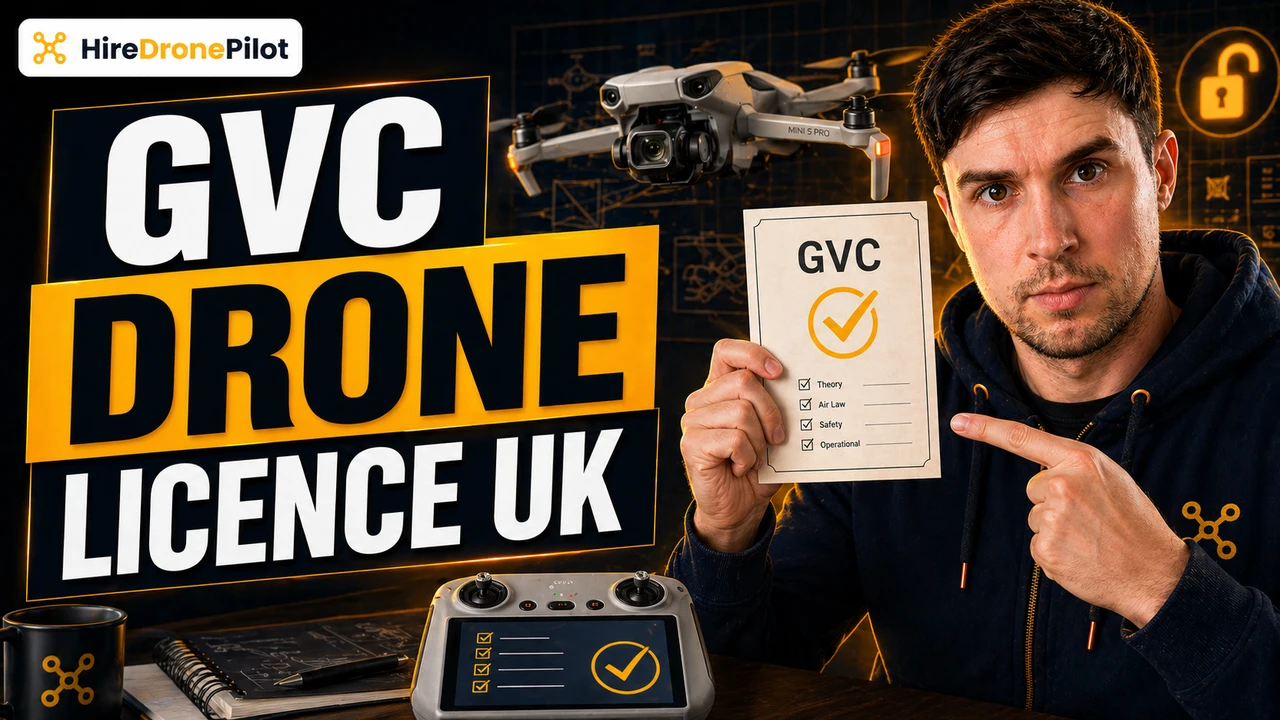
The General Visual Line of Sight Certificate, or GVC, is the qualification most commercial drone operators in the UK get first. It is the gateway into the Specific Category, and it is the certificate that sits behind most drone pilots flying in towns, on construction sites, or near the public.
This article walks through exactly what the GVC is, what it covers, what it does not cover, how it fits with Operational Authorisation, how it differs from the A2 CofC, and where it sits against the RPC framework. You should finish knowing whether the GVC is the right next step for you, or whether another qualification fits your work better.
The GVC is the Specific Category entry-level drone qualification, not a licence and not a requirement for every drone pilot
The General Visual Line of Sight Certificate is a remote drone pilot competency certificate awarded by CAA-approved training bodies known as Recognised Assessment Entities, or RAEs. It is the foundation qualification for the Specific Category, which is the middle band of UK drone regulation — above the Open Category and below the Certified Category.
Despite the popular phrase "GVC drone licence", the GVC is not a licence. The Civil Aviation Authority calls it a certificate of competency, and that distinction matters. A licence would grant flight privileges on its own. The GVC does not. It demonstrates you have passed the theory and practical standard required to operate under a Specific Category authorisation, which the CAA issues separately.
It is also worth being clear that the GVC is not legally required just because you are getting paid. UK drone law has not used a commercial versus recreational split since the withdrawal of PfCO at the end of 2020. What triggers the need for a GVC is the risk profile of the operation — where you fly, how close you fly to uninvolved people, and how heavy the drone is.
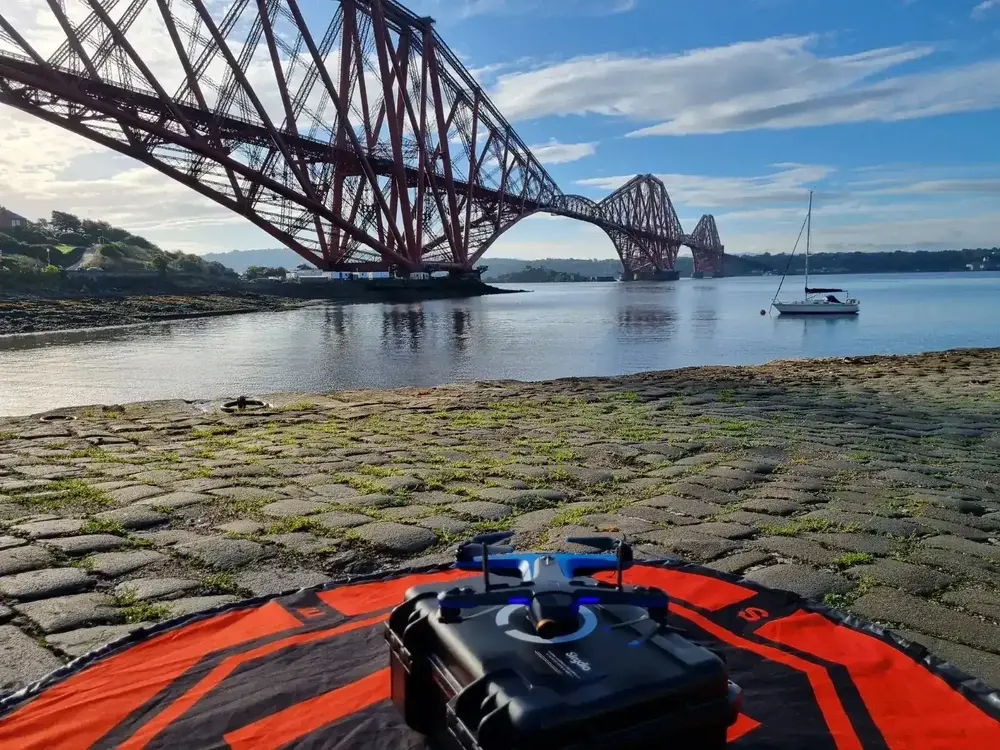
The GVC is a Visual Line of Sight only qualification, and it does not on its own unlock BVLOS
This is the single biggest misconception worth clearing up. The GVC is a VLOS-only certificate. It is defined that way in the CAA's Specific Category qualifications table, and the Operational Authorisations that use it — including PDRA01 — are all VLOS operations.
If you want to fly Beyond Visual Line of Sight, the GVC is not the qualification that unlocks it. BVLOS in UK law requires one of the higher Remote Pilot Certificates — the RPC-L2 for BVLOS operations in airspace with no other traffic, or the RPC-L3 for more complex airspace integrated with other traffic.
Extended Visual Line of Sight is a different category again. If that is the relevant scope for you, start with the EVLOS explainer before committing to a course.
So if your work plan involves long-range inspection, linear-asset survey, or any operation where the drone will routinely be out of your own direct sight, the GVC is the wrong ceiling to aim for. Keep that in mind before you book a course.
GVC training covers theory, a practical flight test and an Operations Manual, and the qualification is valid for five years
The GVC has three examinable components, plus the paperwork that sits behind every Specific Category operator.
The theory exam is a closed-book assessment — usually remotely proctored through webcam, though some RAEs run in-person sessions. The syllabus is the same one a GVC candidate has worked through since the Specific Category was introduced: UK air law, airspace, airmanship and safety, human factors, meteorology, navigation charts, operating procedures, and the technical fundamentals of your drone. Reading aeronautical charts is a meaningful chunk of it, and the ability to pull apart a NOTAM or a METAR is expected by the time you sit the exam.
The practical flight test — sometimes called the Operational Evaluation — is assessed by a flight examiner from your RAE. You bring your own drone, you run a full pre-flight site survey, and you demonstrate controlled manoeuvres inside VLOS. In my own test that meant a figure-of-eight holding line of sight without looking at the controller, an ascending and descending diamond, and a long-distance orientation recovery where the drone was deliberately spun on the spot and I had to bring it back visually.
The Operations Manual is your own written document describing how you conduct drone operations — your organisation, drone details, procedures, emergency drills, risk assessments and maintenance regime. Most RAEs give you a template or a builder to work from, and many will review a draft before you sit the practical.
Once all three are signed off, the RAE awards the GVC. It is valid for five years, covers fixed wing and multirotor drones, and has no minimum age requirement beyond the prerequisite of a valid Flyer ID.
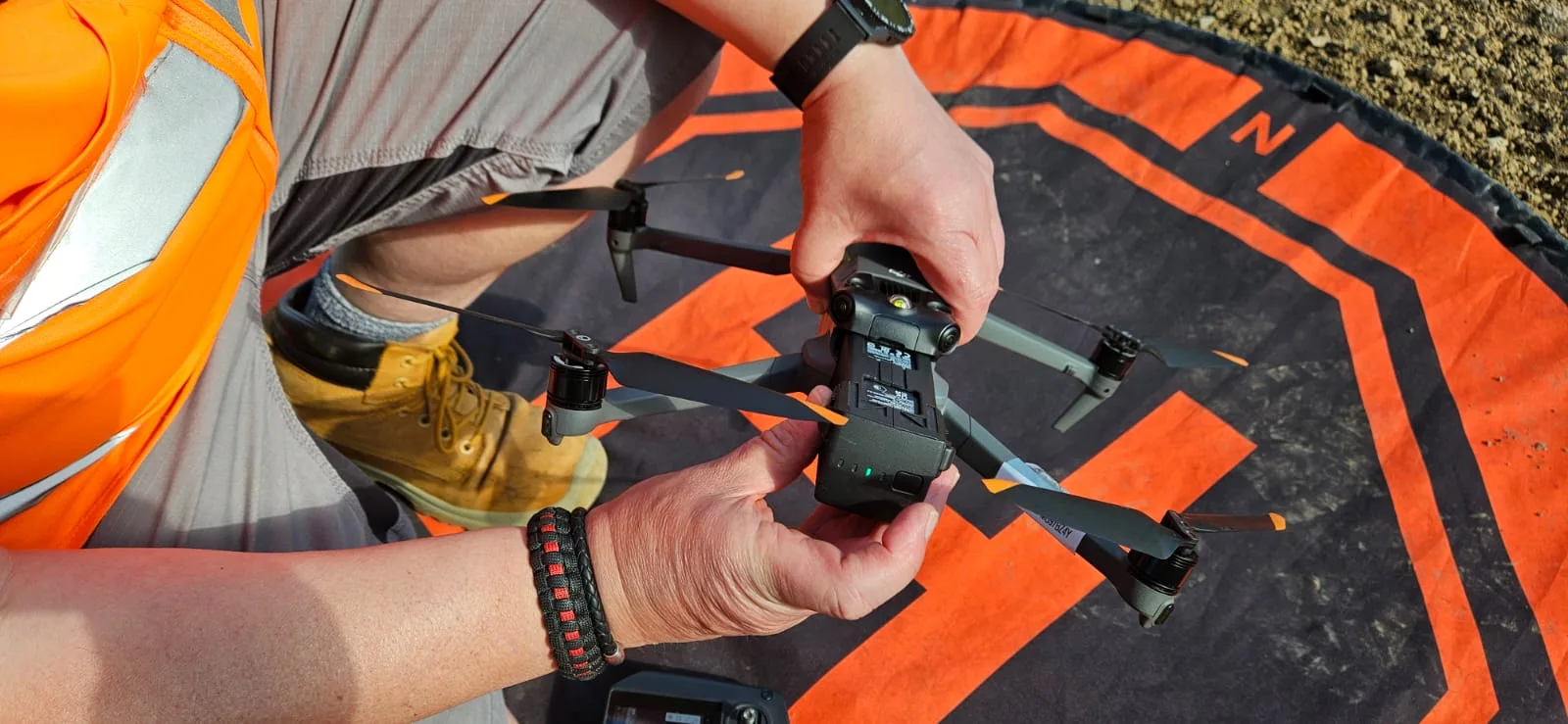
Without an Operational Authorisation the GVC does not grant you any new flight privileges, and PDRA01 is the usual pairing
On the day your certificate lands in your inbox, your actual flying privileges are unchanged. The GVC only becomes useful once it is paired with a Specific Category Operational Authorisation issued by the CAA.
The standard pairing for a new GVC holder is PDRA01, the Pre-Defined Risk Assessment that covers the majority of routine commercial work. PDRA01 is what actually unlocks the things people associate with the GVC — flying drones between 250 g and 25 kg inside residential, commercial, industrial and recreational areas, where the Open A3 sub-category would otherwise keep you 150 metres away.
The PDRA01 authorisation itself costs £524 per year, lasts twelve months, and must be renewed annually. The conditions attached are tight: a hard 120 metre altitude ceiling, a 50 metre separation from uninvolved people reducing to 30 metres only during take-off and landing, a 500 metre maximum distance from the Remote Pilot, and the explicit 1-to-1 rule for assemblies of people. Overflying an assembly is not permitted at any height.
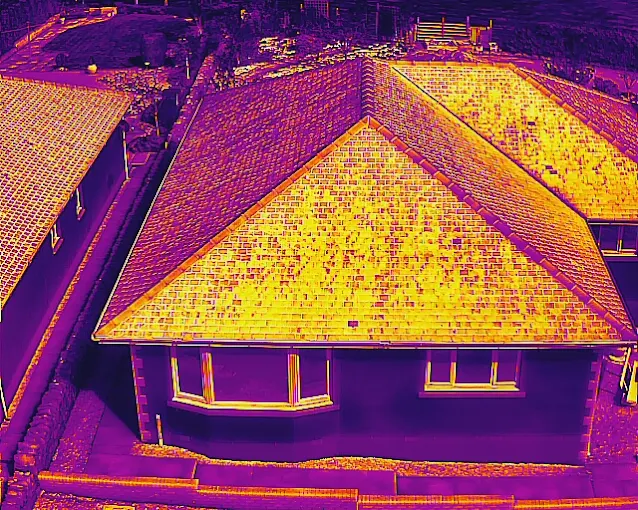
Most new GVC holders apply for PDRA01 first because the CAA turnaround on a standard application is fast, often inside a day or two, and because it already covers the jobs a typical drone business takes on — roof inspections, drone photography, site surveys and property marketing.
RAEs set their own fees, and most candidates budget around £1,100 to get qualified and authorised in year one
CAA-approved training providers set their own prices for GVC courses. The CAA publishes the RAE list but does not regulate course fees. The typical commercial GVC course sits in the £500–£1,000 range depending on format and whether the A2 CofC is bundled, though that figure is an author estimate and worth checking provider by provider at the point of booking.
On top of the course fee, budget the £524 CAA fee for the PDRA01 authorisation, travel costs to your flight test, and any optional extras your RAE offers — drafting help for the Operations Manual, additional mock exams, or supplementary practical coaching.
From a drone pilot's perspective the first-year total typically lands somewhere near £1,100, and subsequent years drop to the CAA renewal fee plus whatever refresher you choose to run. Every fifth year you plan for a GVC re-certification to keep the certificate current.
The A2 CofC sits below the GVC inside the Open Category and is the wrong qualification for most commercial work in towns and cities
The qualification the GVC is most often confused with is the A2 Certificate of Competency. They are not interchangeable.
The A2 CofC is an Open Category qualification — specifically the A2 sub-category, which from January 2026 is officially named the Near People sub-category. It is awarded by the same RAEs as the GVC, but the course is lighter: self-directed practical training plus a theory test of at least 30 multiple-choice questions covering meteorology, drone flight performance and ground-risk mitigation. There is no practical flight test, no Operations Manual requirement, and no supervising Operational Authorisation to apply for afterwards.
The trade-off is scope. The A2 CofC is a VLOS-only qualification valid for five years, the same as the GVC, but the operations it unlocks are materially smaller. It does not authorise flight inside congested residential, commercial or industrial environments, it does not cover drones up to 25 kg, and it does not give you the PDRA01 pathway.
| Feature | A2 CofC | GVC |
|---|---|---|
| Category | Open (Near People / A2) | Specific |
| Practical flight test | No | Yes |
| Theory exam | Min. 30 MCQs | Full theory exam |
| Operations Manual | Not required | Required |
| VLOS / BVLOS | VLOS only | VLOS only |
| Pairs with PDRA01 | No | Yes |
| Period of validity | 5 years | 5 years |
If your work is sub-250 g in uncongested areas, the A2 CofC is often more than enough — or you may not need it at all. If your work routinely lives in towns, on construction sites, or close to uninvolved people, the GVC is the qualification that actually matches the risk profile.
The RPC ladder sits above the GVC, and it is where BVLOS privileges actually live
The Specific Category now has five qualifications rather than one: the GVC plus four Remote Pilot Certificate levels. They were introduced in early 2025 to give the CAA a cleaner progression path as Specific Category operations grow.
The RPC-L1 is the closest sibling to the GVC. It is VLOS-only, available in rotorcraft and fixed-wing variants, valid for five years, and has no minimum age. A valid GVC exempts you from the RPC-L1 theory exam, which is why many drone operators who need both pick up the GVC first. If you are weighing up the two directly, the RPC-L1 vs GVC comparison is the right next read.
The RPC-L2 is the first qualification in the ladder that actually unlocks BVLOS operations, specifically in ARC-a airspace with no other air traffic. It requires a minimum age of 18, a held RPC-L1 in the same category, a Flyer ID, and a minimum of 50 logged flight hours. The RPC-L3 extends that to BVLOS operations up to ARC-c, adds a LAPL medical certificate, and requires 50 logged BVLOS hours on top of a held RPC-L2. An RPC-L4 sits above that again.
For an overview of how these qualifications fit together across Open and Specific, the drone pilot qualifications guide stitches the whole ladder together.
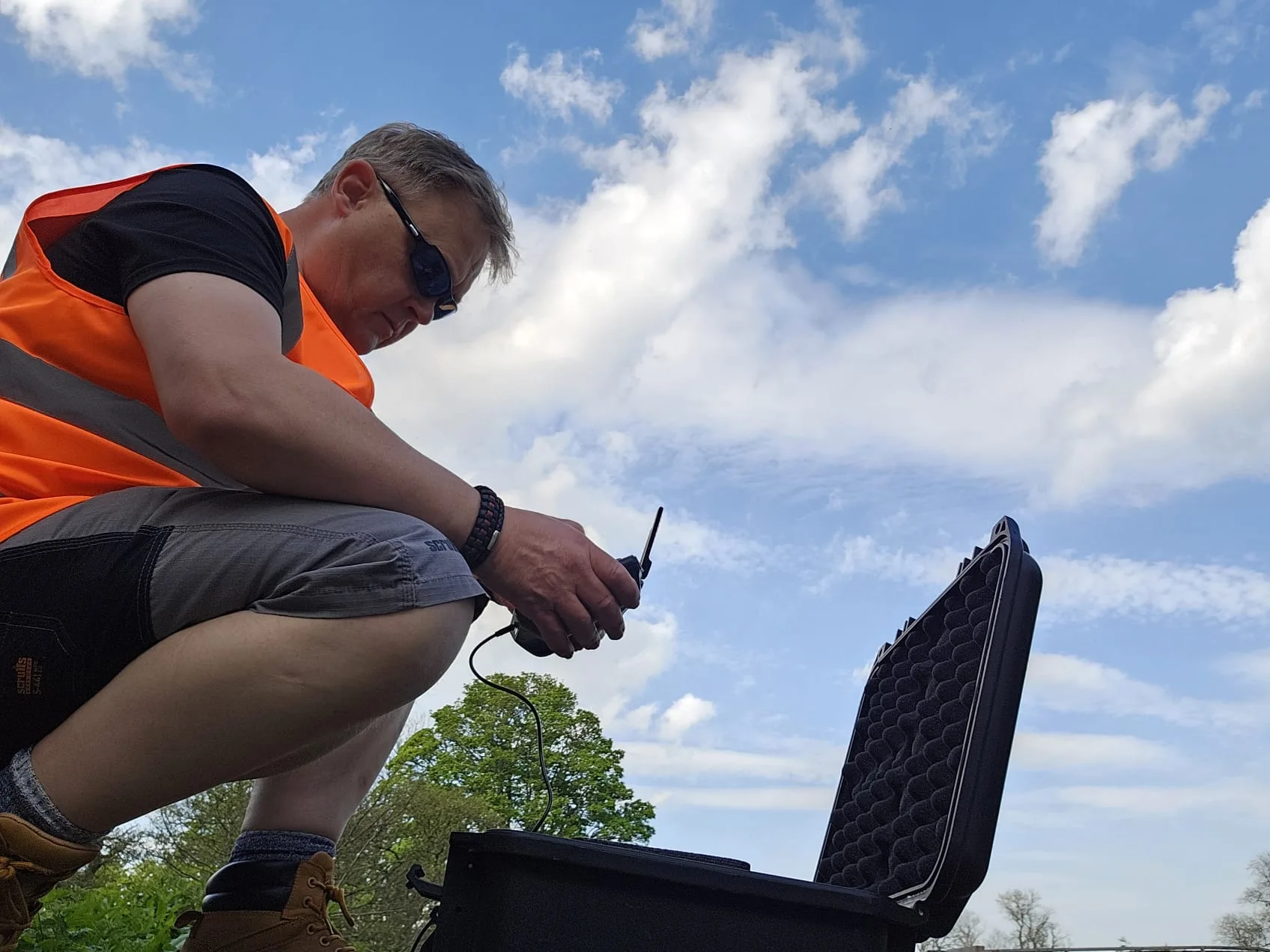
The GVC is the right starting point if your work lives in the Specific Category and stays inside Visual Line of Sight
If your intended work fits inside PDRA01 — roof inspections in a town, construction site survey, urban filming, residential property photography — the GVC is the correct qualification and the most efficient entry point into the Specific Category. It is the certificate most CAP 722 reading assumes you are working towards, and most commercial drone insurance is written on the assumption the Remote Pilot holds one.
If your work plan needs BVLOS, the GVC alone will not get you there, and an RPC-L2 or higher is the qualification to aim at. If your work stays genuinely lightweight and remote, the A2 CofC or even just a Flyer ID may be enough. The decision is always made against the operation, not against the word commercial.
Common questions about the GVC exam, fees and resits
What is actually in the GVC exam?
The GVC has three distinct components and you must pass every one before the certificate is issued. The theory exam is closed-book and covers UK air law, airspace, meteorology, human factors, navigation, operating procedures and the technical fundamentals of the drone you intend to fly. The practical flight test is a full site survey followed by a set of controlled manoeuvres flown inside Visual Line of Sight on a drone you bring yourself. The Operations Manual is a written document you submit for review, and the RAE will not issue the certificate without it. Fees, exam duration, pass marks, and resit rules are set by each CAA-approved Recognised Assessment Entity rather than by the CAA itself — confirm each one with your chosen provider. The GVC is VLOS-only and does not unlock BVLOS on its own.
Do you need insurance in place before booking the GVC course?
Some Recognised Assessment Entities bundle test-day insurance into the course fee — others expect you to arrange your own — so always check the small print before booking. Recreational and hobby flying with a GVC remains exempt from the formal insurance requirement, but you stay personally liable for any damage or injury, which is why most candidates take cover out before the practical flight test rather than after. Commercial flying after qualification requires insurance compliant with Assimilated Regulation (EU) 785/2004; see drone insurance requirements for the full breakdown.
What happens if you fail the GVC exam or flight test?
The CAA does not examine you — Recognised Assessment Entities do, and each RAE sets its own pass mark, resit policy, and resit fees. A theory fail or a practical fail is usually a separate booking, and a practical retest often involves another examiner travel charge. The Operations Manual is reviewed against a template; the typical fail reason is a thin manual, and the RAE will usually request revisions rather than issue a hard fail. If you do not pass, you keep your Flyer ID, you do not gain GVC privileges, and you cannot pair the GVC with PDRA01 or any other Operational Authorisation until the certificate is issued. Some RAEs allow same-day resits, some require booking another session, and some cap the total resits before re-enrolment is required.
Got a specific scenario you want covered — a borderline PDRA01 site, a GVC renewal question, or a choice between GVC and RPC-L1? Drop a note to peter@hiredronepilot.uk and I will come back to you directly. If you prefer the video version of this explainer, the comments are open on YouTube.
References
Primary source material for this article is the UK Civil Aviation Authority. External links open in a new tab.
- UK CAA — Level 1, 2 and 3 Remote Pilot Certificates and GVC · GVC scope, VLOS-only status, five-year validity, Flyer ID entry condition
- UK CAA — Remote Pilot Qualifications Overview · how GVC fits across Open and Specific Category qualifications
- UK CAA — A2 Certificate of Competency (A2 CofC) · scope, theory format and differences from the GVC
- UK CAA — CAA-approved training providers · Recognised Assessment Entities delivering the GVC
- UK CAA — PDRA01 Operational Authorisation Overview · £524 fee, 12-month validity, 120 m ceiling, 50 m separation, 1-to-1 rule
- UK CAA — UK Regulatory Framework for Drones · Air Navigation Order 2016 and the UAS Regulations
Peter Leslie
Founder & GVC Drone Pilot
Peter is the founder of HireDronePilot. With thousands of logged commercial flight hours, he writes about drone technology, commercial surveying tactics, and UK aviation compliance.
Connect on LinkedIn