How to Manage Gallery Retouch Preferences on DJI Drone
Peter Leslie
22 May 2026
If a portrait clip out of a DJI drone is coming back over-smoothed and you want the texture back, the controls sit inside DJI Fly — open the Album, tap into a photo or video, hit the three-dot icon in the top-right, and the Photo Retouching and Video Retouching switches drop down with their own Skin Effects and Body Effects toggles. Switch them off to ship the raw frame, or leave them on to push the in-app smoothing pass before downloading via QuickTransfer.
Drones this applies to
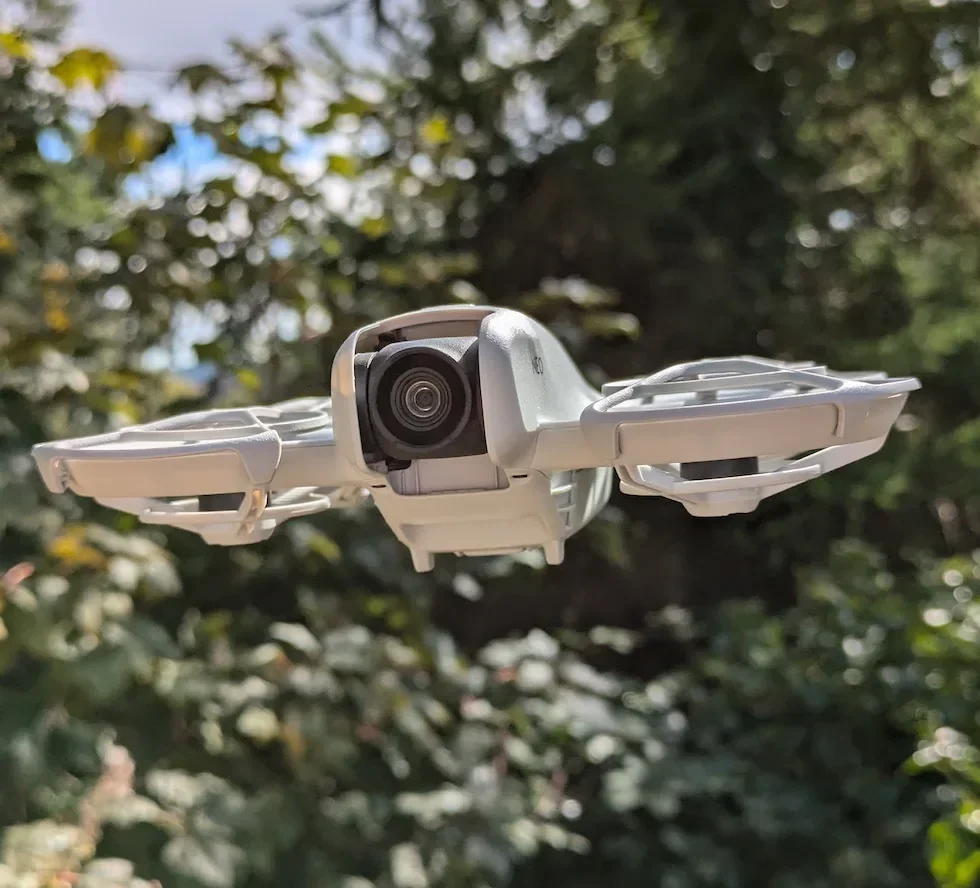
DJI Neo 2, DJI Mini 5 Pro, DJI Avata 2, DJI Air 3 Pro, DJI Mavic 4 Pro. The retouch panel is part of DJI Fly rather than the drone firmware, so the same Album → three-dot menu → Photo Retouching / Video Retouching path works on any drone running DJI Fly v1.21.2 or later.
Quick guide
To manage gallery retouch preferences on DJI Drone, go to DJI Fly → Album → tap a photo or video → three-dot menu (top-right) → Photo Retouching / Video Retouching → Skin Effects / Body Effects toggles. Blue with the white circle on the right means the effect is on; gray with the circle on the left means it is off.
Step-by-step: How to Manage Gallery Retouch Preferences on DJI Drone
Follow these top to bottom the first time, and the path is muscle memory the second time. The labels and order are identical on every drone in the callout above — the screenshots are taken on a DJI Neo 2.
Open the Album from the DJI Fly camera view
From the live camera view in DJI Fly, tap the small thumbnail icon directly below the round shutter button on the right-hand control column. The live feed slides away and the Album opens with a grid of every photo and video on the drone on-board storage.
Tap a photo or video to open it full screen
Tap any thumbnail in the Album grid to open the file full screen. The retouch panel lives on the in-file overlay rather than at the Album-grid level, so a clip has to be open before the three-dot menu carries the right options.
Hit the three-dot menu in the top-right corner of the playback screen
Look at the top-right corner of the phone screen with the photo or video still open. Tap the three-dot icon there, and a panel slides in carrying the Photo Retouching and Video Retouching blocks stacked one above the other.
Tap the Skin Effects toggle inside the Photo Retouching block
Inside the Photo Retouching block at the top of the panel, the first switch is Skin Effects — the face-side retouch that softens texture and lifts tone. Tap once to flip state. Blue with the white circle on the right is on; gray with the circle on the left is off.
Tap the Body Effects toggle inside the Photo Retouching block
Directly under Skin Effects sits the Body Effects switch — the silhouette-side retouch that reshapes the body. Tap it independently of Skin Effects to set the stills recipe. The two switches do not move together, so any combination of on and off is fair game.
Scroll to the Video Retouching block lower down the panel
Underneath the Photo Retouching block sits a second block headed Video Retouching, with its own pair of Skin Effects and Body Effects switches. The two blocks are entirely independent — changing the Photo Retouching toggles has no effect on the Video Retouching toggles or vice versa.
Tap the Skin Effects and Body Effects switches inside Video Retouching to set the clip recipe
Set the Skin Effects and Body Effects switches inside Video Retouching the same way as the Photo Retouching pair. Blue means the effect runs over every video preview opened from the Album; gray means the clip plays back without the retouch pass applied.
Tap outside the panel or hit the back arrow to bank the change
Tap anywhere outside the slide-in panel, or hit the back arrow in the top-left, to return to the Album. DJI Fly carries the new switch positions forward as the default — there is no separate Save tap, and the recipe holds across app restarts.
Peter's tip
I keep Photo Retouching off and Video Retouching on as the default recipe — stills go to a client as the raw frame, but a hand-held selfie clip out of a DJI drone benefits from a light Skin Effects pass before it gets cut into a social edit. Setting the two blocks differently is the whole reason this menu exists, so do not feel obliged to mirror the switches.
Frequently asked questions
Does the retouch preference on DJI Drone change the original file on the drone?
No. The retouch toggles only change how DJI Fly renders the preview of the file on the phone — the source photo or video on the drone on-board storage is untouched. If a clip is downloaded via QuickTransfer and the toggles are then flipped, the phone copy is unaffected, because the retouch pass is a preview-time effect rather than a destructive edit.
Are the retouch toggles on by default on a new DJI drone?
By default the Photo Retouching and Video Retouching switches sit in the off position on a freshly installed DJI Fly, so the Album previews render the raw frame straight from the drone. The toggles only carry a saved position once a drone pilot has flipped them at least once — and the new position then persists across Album sessions, app restarts and drone reconnects.
What is the difference between Skin Effects and Body Effects in the DJI Drone retouch panel?
Skin Effects is the face-side retouch — softening texture, evening tone, lifting brightness around the subject's face and hands. Body Effects is the silhouette-side retouch, slimming and reshaping the body. The two run independently, so a portrait can keep skin smoothing on while body reshaping stays off, or the other way round.
Can I turn the retouch effect off entirely on a DJI drone?
Yes. Open any photo or video in the Album, hit the three-dot menu, and set all four switches — Skin Effects and Body Effects inside both Photo Retouching and Video Retouching — to the gray off position. DJI Fly will then render every Album preview as the raw frame and the retouch pass is fully bypassed across the entire on-board library.
Can I set different retouch preferences for photos and videos on DJI Drone?
Yes. The retouch panel splits into a Photo Retouching block and a Video Retouching block, each with its own Skin Effects and Body Effects switches. Toggling one block has no effect on the other, which is the right shape for drone pilots who want a stronger pass on stills than on motion clips.
Why does the three-dot menu in the DJI Drone Album not show the retouch panel?
The retouch panel only appears once a single photo or video is open full screen — the three-dot icon at the Album-grid level carries different actions (Select, batch download, share). Tap a thumbnail to open the clip first, then look for the three-dot icon in the top-right corner of the playback screen, and the Photo Retouching and Video Retouching controls will be inside.
Will the DJI Drone retouch settings stay set the next time the Album is opened?
Yes. The Skin Effects and Body Effects positions persist across Album sessions, app restarts and drone reconnects, so the recipe set today is the recipe applied tomorrow. If DJI Fly is reinstalled the toggles return to default — switch them back to taste once the app is back.
Does the retouch panel work the same on every DJI drone?
Yes. The retouch panel is part of DJI Fly rather than the drone firmware, so the Photo Retouching and Video Retouching blocks look and behave identically whether the connected drone is a DJI Neo 2, DJI Mini 5 Pro, DJI Avata 2, DJI Air 3 Pro or DJI Mavic 4 Pro. Only the file types listed inside the Album vary between drones — for example, FPV drones add goggles-recorded clips alongside the on-board files.
The retouch panel on DJI Drone is a quiet menu most drone pilots never open, but the moment a portrait clip comes back over-smoothed it is the first place to head. Album, open a file, three-dot icon, Photo Retouching, Video Retouching — set the recipe once and it holds across every clip on the drone.
If the panel is not showing the toggles or a switch refuses to flip, drop the detail to peter@hiredronepilot.uk and I will come back to you directly. The video version of this walkthrough is on YouTube and the comments are open.
References
Primary source material for this article is the official DJI user documentation for each drone in the callout and DJI Fly. External links open in a new tab.
- DJI Fly — App download and release notes · The app that hosts the Album playback overlay, the three-dot menu, and the Photo Retouching / Video Retouching toggles. Release notes record any layout changes between app versions.
- DJI — UK consumer drone product line-up · Per-drone product pages and downloads, where the Album view behaviour and the in-app retouch panel are documented in each drone user guide.
- UK Civil Aviation Authority — The Drone and Model Aircraft Code (CAP2320) · The visual-line-of-sight and operator-responsibility framework that sits behind every UK flight a previewed clip in the Album was captured on.
Peter Leslie
Founder & GVC Drone Pilot
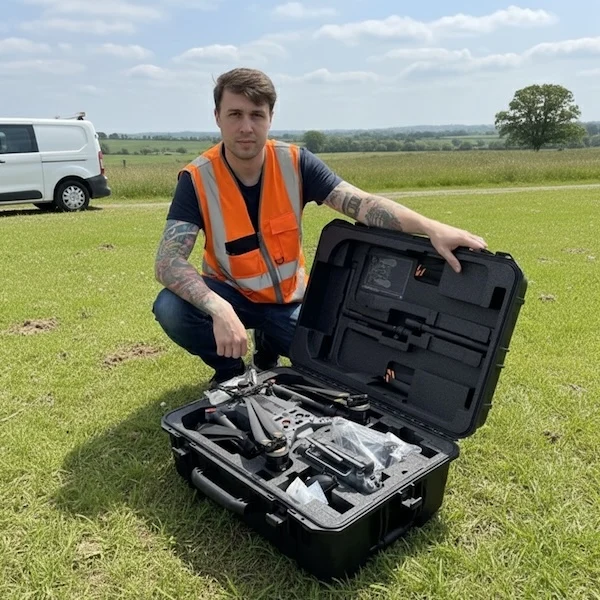
Peter is the founder of HireDronePilot. With thousands of logged commercial flight hours, he writes about drone technology, commercial surveying tactics, and UK aviation compliance.
Connect on LinkedIn