Best Camera Drone UK 2026: What I’d Buy With My Own Money

Peter Leslie
31 July 2026 · 18 min read
Every drone guide you have read this week ranked five drones from best to worst. I have written one of those myself. The problem with the format is that it answers a question you do not have. You are not trying to find out which drone is best in the abstract — you are trying to find out which one is right for you, and what it will still be costing you in month six.
Those two questions have almost nothing to do with camera reviews and almost everything to do with two numbers: what the drone weighs, and what you are willing to spend after you have bought it.
Answered properly, the best camera drone in 2026 is whichever one survives your constraints — not the one that wins on paper.
Weight decides what the law lets you do with it, which decides whether the thing is useful to you at all. And the sticker price, in my experience, is somewhere between 60 and 80 per cent of what you actually hand over in year one.
So this guide does two things a ranking on its own cannot. It asks four questions about how you will actually fly, then narrows twelve drones to the one that fits you rather than the one that wins on paper. Then it works out what that drone really costs to own, because the number on the box is not the number you pay. By the end you will know which is the best camera drone in the UK for you, and how much more than the sticker it will take to keep it flying.
How I get paid: the Amazon links below are affiliate links, so if you buy through one I earn a small commission at no extra cost to you. It does not change what I recommend — you will notice I spend most of this article talking you out of the expensive ones, and one of the twelve has no affiliate link at all.
The Best Camera Drone in 2026 Is the DJI Mini 5 Pro
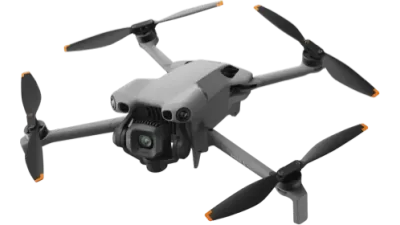
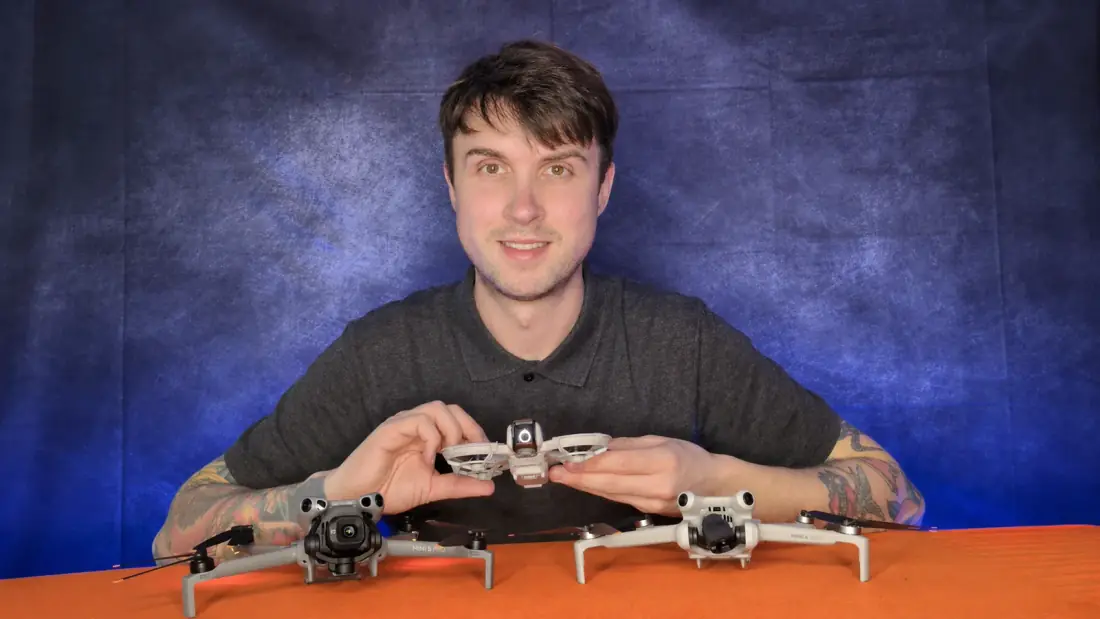
Nearly every drone with a camera this good is heavy enough that the law makes you sit a test first. This one doesn’t.
- No test and no licence — just a £12.34 registration you do online.
- Photos sharp enough to print, not just post. The camera sensor is the size you’d find in a good compact camera (1-inch, 50 megapixels).
- A one-inch camera under the 250-gram line. Nothing else in this guide manages both.
- Around 28 minutes of real flying per battery. DJI advertises 52, but only with the bigger battery that pushes it over 249 g.
- A rule change in 2028 catches bigger drones. Not this one — it stays under 250 grams.
Affiliate link · costs you nothing extra · full disclosure
PART ONE
Here are the five that win their categories outright — and what is wrong with each of them, because none of them is perfect.
Best Budget Camera Drone: DJI Flip
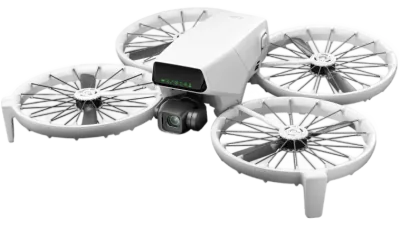
The Mini 4 Pro’s class of sensor, in prop cages, at the cheap end of this whole guide.
- No test and no licence — just a £12.34 registration you do online.
- The same size sensor as the Mini 4 Pro (1/1.3-inch, 48 megapixels), for a fraction of the price.
- Propeller cages built in, so it is the one I would hand a nervous beginner.
Best Camera Drone for Photography: DJI Mavic 4 Pro
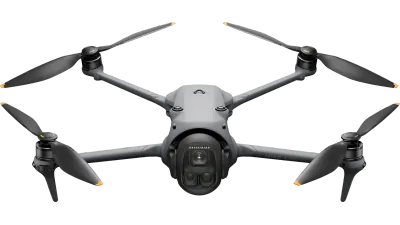
A 100-megapixel Four Thirds sensor, and the only aperture on this page that actually moves.
- Needs the A2 test to fly near people.
- The only drone here with an adjustable aperture (f/2.0–f/11), which is most of what the extra money buys.
- A 100-megapixel Four Thirds sensor that holds detail in a bright sky and a dark landscape at once.
Best Camera Drone for Video: DJI Mavic 3 Pro
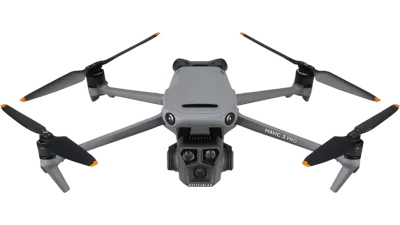
Three focal lengths on one Four Thirds sensor, for less than the Mavic 4 Pro. If you cut between framings, that buys you more than any single spec.
- Needs the A2 test to fly near people.
- A Four Thirds sensor, roughly twice the light-gathering area of a one-inch, plus two extra lenses.
- Out of stock in every configuration at DJI UK, so you are buying old stock at old prices.
Best Action and FPV Camera Drone: DJI Avata 2
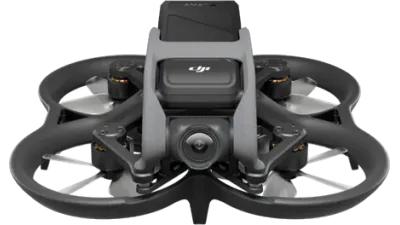
The only FPV drone in the guide, and the only one that makes you grin out loud.
- The law requires a second person watching the drone whenever you fly it through goggles.
- 12-megapixel video from a wide 12mm lens, and it cannot hold a still frame.
- From January 2028 it needs the A2 test to fly near people — one of only two here that lose that freedom.
Best 360 Camera Drone: Antigravity A1
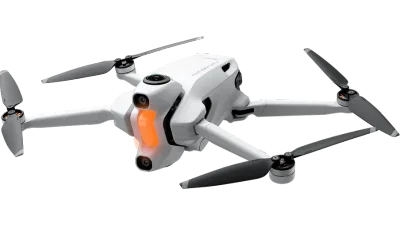
On every other drone here, cropping is your only zoom. This one records the whole sphere in 8K and lets you find the frame afterwards.
- No licence needed — but only on the standard battery. The high-capacity one advertises 39 minutes and takes it to 291 g, which loses that.
- It shoots 8K in every direction at once, and you choose the framing afterwards.
- It is a 360 camera that flies. Brilliant fun, wrong tool for a landscape print.
Affiliate links · costs you nothing extra · full disclosure
Take the quiz: find the best camera drone for you
Get a drone matched to what you actually need — not a generic top ten.
- Matched to what you actually film, not a generic top ten.
- Based on twelve drones I have flown myself.
- Tells you the real year-one cost, not just the sticker price.
- About 20 seconds, and no email needed.
STEP 1 OF 4
12 of 12 still fit
All twelve, and why each one might not suit you
-
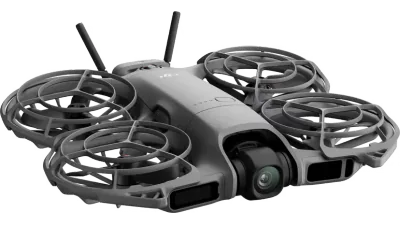
DJI Neo 2
151 g · 1/2″ 12MP · 19 min · no test needed
The one you throw off your palm. A toy in the best sense, and I mean that as a compliment rather than a criticism.
- No test and no licence — just a £12.34 registration you do online.
- A 12-megapixel camera on a tiny sensor. Fine for the group chat, not for printing.
- About 15 minutes of real flying per battery, though DJI claims 19.
-
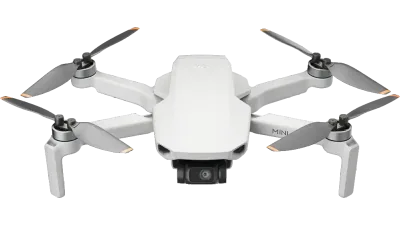
DJI Mini 4K DJI UK no longer lists it
246 g · 1/2.3″ 12MP · 31 min · no test needed
The cheapest way into a stabilised aerial shot. It is a lovely first drone and a genuinely poor camera, and both of those things are true at once.
- No test and no licence — just a £12.34 registration you do online.
- 12 megapixels on the smallest sensor here. It is a first drone, not a camera.
- DJI no longer lists it in the UK, so you are buying up remaining stock.
-
DJI Flip
249 g · C0 · 1/1.3″ 48MP · 31 min · no test needed
The same class of sensor as the Mini 4 Pro, wrapped in prop cages, for a fraction of what that drone costs. The quiet bargain of this whole list.
- No test and no licence — just a £12.34 registration you do online.
- The same size sensor as the Mini 4 Pro (1/1.3-inch, 48 megapixels), for a fraction of the price.
- Propeller cages built in, so it is the one I would hand a nervous beginner.
-
DJI Avata 2 loses privileges in 2028
377 g · C1 · 1/1.3″ 12MP · 23 min · observer required
The only drone here that makes you grin out loud. Also the only one that legally requires a second person stood next to you every single flight.
- The law requires a second person watching the drone whenever you fly it through goggles.
- 12-megapixel video from a wide 12mm lens, and it cannot hold a still frame.
- From January 2028 it needs the A2 test to fly near people — one of only two here that lose that freedom.
-
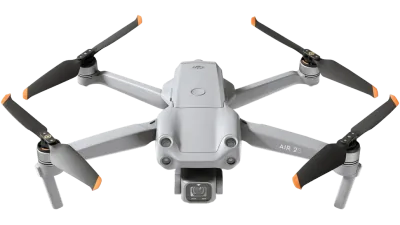
DJI Air 2S refurbished stock only
595 g · legacy, no class mark · 1″ 20MP · 31 min
The cheapest way to a one-inch sensor in this guide, if you will accept a renewed unit. Five years old and it still takes a better picture than anything cheaper.
no link- Needs the A2 test to fly near people. Without it you stay 150m from anything built-up.
- A proper one-inch sensor, which nothing else this cheap gives you.
- Only sold refurbished now — DJI stopped listing it in the UK.
-
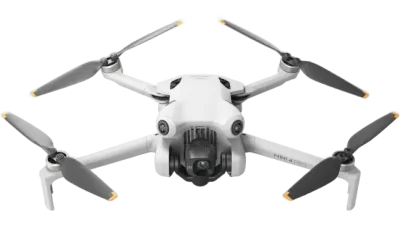
DJI Mini 4 Pro
249 g · C0 · 1/1.3″ 48MP · 34 min · no test needed
For two years this was the obvious answer for most people. The Mini 5 Pro has since made it a hundred pounds too expensive for what it is.
- No test and no licence — just a £12.34 registration you do online.
- 48 megapixels on a 1/1.3-inch sensor, with raw files you can actually edit.
- DJI does not sell the bigger battery in Europe, so 34 minutes a charge is what you get.
-
DJI Mini 5 Pro
249.9 g · C0 · 1″ 50MP · 36 min · no test needed
A one-inch sensor under the 250-gram line, with no test and no certificate to fly it. Five years ago that combination did not exist at any price.
- No test and no licence — just a £12.34 registration you do online.
- Photos sharp enough to print, not just post. The sensor is the size you’d find in a good compact camera (1-inch, 50 megapixels).
- Around 28 minutes of real flying per battery. DJI advertises 52, but only with the bigger battery that pushes it over 249 g.
-
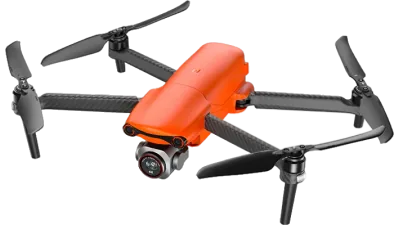
Autel EVO Lite+ no affiliate link — I could not find UK stock
835 g · legacy, no class mark · 1″ 20MP · 40 min
Here so that nobody can accuse this list of being a DJI catalogue. It is the credible non-DJI option, and it is still the one I would not buy.
no link- Needs the A2 test to fly near people.
- A one-inch, 20-megapixel camera — the only serious non-DJI option here.
- I could not find UK stock, so there is no buy link for it.
-
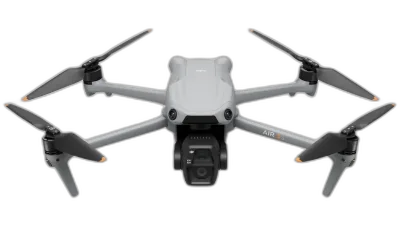
DJI Air 3S loses privileges in 2028
724 g · C1 · 1″ 50MP + 1/1.3″ tele · 45 min
Two usable focal lengths instead of one, which changes how you shoot more than any sensor upgrade will. Its legal position in 2028 is the catch.
- No test needed today, but from January 2028 it needs the A2 to fly near people. You are buying about eighteen months of that freedom.
- Two real focal lengths, 24mm and 70mm, which changes how you shoot more than any sensor upgrade.
- The same one-inch 50-megapixel main camera as the Mini 5 Pro, for a good deal more money.
-
Antigravity A1
249 g · 8K 360° · 1/1.28″ 55MP · 24 min · no test needed
An 8K 360 camera that flies, under 250 grams. The most interesting object on this list and the hardest to justify owning.
- No licence needed — but only on the standard battery. The high-capacity one advertises 39 minutes and takes it to 291 g, which loses that.
- It shoots 8K in every direction at once, and you choose the framing afterwards.
- It is a 360 camera that flies. Brilliant fun, wrong tool for a landscape print.
-
DJI Mavic 3 Pro out of stock in every configuration at DJI UK
958 g · C2 · Four Thirds 20MP + two tele · 43 min
A superb three-camera drone that DJI has effectively stopped selling here. Buying one now means buying old stock at old prices.
- Needs the A2 test to fly near people.
- A Four Thirds sensor, roughly twice the light-gathering area of a one-inch, plus two extra lenses.
- Out of stock in every configuration at DJI UK, so you are buying old stock at old prices.
-
DJI Mavic 4 Pro
1,063 g · C2 · Four Thirds 100MP + two tele · 51 min
The best flying camera you can buy in a bag this size. If you are not being paid to fly it, you are buying dynamic range you will never spend.
- Needs the A2 test to fly near people.
- The only drone here with an adjustable aperture (f/2.0–f/11), which is most of what the extra money buys.
- A 100-megapixel Four Thirds sensor that holds detail in a bright sky and a dark landscape at once.
Specifications checked against manufacturer pages on 31 July 2026, and every link points at the cheapest configuration that actually flies. I do not print prices here: they move week to week, and a stale number beside a buy button is worse than no number at all — the link shows you what each one costs right now. Comparison specs from DroneCompare, CC BY 4.0.
PART TWO
What makes a good drone camera: sensor, aperture and 10-bit log
You have narrowed the field. Now the part every spec sheet is worst at explaining. If you have used a proper camera before, three numbers on a drone listing behave differently from how you expect — and one of them decides what you have to put in the bag.
Sensor size, in units you already know
Forget the fractions for a second. Sensor area is what gathers light, and here is how the drones above line up against cameras you can picture.
SENSOR AREA, TO SCALE
≈ a Lumix G or OM System body
≈ a Sony RX100 compact
≈ the main camera in a flagship phone
≈ a pocket compact from 2012
For scale: a full-frame body is 864 mm² — nearly four times the largest sensor here. Nothing that flies under 250 grams is going to out-shoot your mirrorless.
The useful question is not which is biggest, it is where each one stops holding up. A 1/2.3-inch sensor falls apart the moment the sun goes off it. A 1/1.3-inch is genuinely good in daylight and noisy by dusk. A one-inch holds a usable picture through golden hour and just into blue hour. Four Thirds keeps detail in a bright sky and a dark landscape at the same time — which is precisely the shot that breaks everything smaller.
And megapixels are not the story. The Mavic 4 Pro’s 100 MP and the Neo 2’s 12 MP are not eight times apart in quality. Pixel count buys you crop room and print size. Sensor area buys you the picture.
The fixed aperture problem
This is the one that catches people who know cameras, and I have never seen a buying guide mention it. On almost every drone here, the aperture does not move.
The Mini 5 Pro is f/1.8. The Air 3S is f/1.8. The Mini 4 Pro and Flip are f/1.7. The Avata 2 is f/2.8. Not defaults — fixed. There is no ring, no dial, no menu item. Two drones in this entire guide can stop down: the Mavic 4 Pro at f/2.0–f/11 and the Mavic 3 Pro at f/2.8–f/11. Both Four Thirds, and both the two most expensive drones on this page by a wide margin. A variable aperture is a large part of what that money is actually for.
For stills you can live with it, because you can raise the shutter speed as far as you like, and at altitude everything is at infinity anyway so you are not stopping down for depth of field. For video it is the whole ballgame.
Natural-looking motion wants a shutter around double your frame rate — 1/50s at 25fps, the old 180-degree rule. Now put that on a bright afternoon at f/1.8 and ISO 100. You are several stops overexposed, and you have no aperture to close. You get two choices: crank the shutter and accept the stuttery, camcorder-ish motion that comes with it, or physically take light out of the lens.
Which is what ND filters are for. Not a nice-to-have, not an upsell — on a fixed-aperture drone they are the only exposure control you have left for video. That is why they have a line of their own in the bill below, alongside the battery and the card, and why I would treat them as compulsory rather than optional.
10-bit, D-Log M, and the ISO tax
If you intend to grade your footage rather than post it straight off the card, this is the spec that decides whether you can.
Eight-bit video carries about 16.7 million colours; ten-bit carries roughly 1.07 billion. In practice that is the difference between pushing a clear-sky gradient and watching it band into visible stripes, and pushing it and having it hold. Most of this field records 10-bit D-Log M. Two exceptions are worth knowing: the Neo 2 has no log profile at all and shoots JPEG only, so there is nothing to grade; and the Mavic 4 Pro is the only drone here that records 10-bit 4:2:2 rather than 4:2:0 — and only in its H.264 ALL-I mode. The Mavic 3 Pro reaches 4:2:2 solely through Apple ProRes, which DJI restricts to the Cine model, so the version linked here records 4:2:0 like everything else.
Then there is the part that genuinely is not on the box. Switching to the log profile costs you ISO headroom, and not a little of it.
| DRONE | NORMAL | IN D-LOG M |
|---|---|---|
| DJI Mini 5 Pro | ISO 12800 | ISO 3200 |
| DJI Mini 4 Pro | ISO 6400 | ISO 1600 |
| DJI Flip | ISO 6400 | ISO 1600 |
Two full stops, on every one of them. The moment you select the profile you need in order to grade, your low-light performance falls off a cliff. It is not a reason to avoid log — it is a reason to plan around it. Shoot log while the light is good, and switch back to a standard profile at dusk rather than dragging a noisy log clip through a grade afterwards.
Photo quality: RAW, megapixels and print size
RAW. The Mavic 4 Pro, Mavic 3 Pro, Air 3S, Mini 5 Pro, Mini 4 Pro, Flip and Air 2S all write DNG. The Neo 2 and Avata 2 are JPEG-only — the camera makes your white balance and highlight decisions for you and you live with them. If you are the sort of person who edits, that alone rules those two out.
Print size. 12 MP is a comfortable A4 and a stretch at A3. The 48–50 MP drones will do A2 and leave you real cropping room, which on a fixed 24 mm lens matters more than it sounds — cropping is your only zoom, unless you buy the Air 3S and its 70 mm tele.
Every camera spec, all twelve
| DRONE | SENSOR | AREA | MP | EQUIV | APERTURE | LOG | RAW |
|---|---|---|---|---|---|---|---|
| Mavic 4 Pro | Four Thirds | 225 | 100 | 28 mm | f/2.0–11 variable | 10-bit D-Log M 4:2:2 | DNG |
| Mavic 3 Pro | Four Thirds | 225 | 20 | 24 mm | f/2.8–11 variable | 10-bit D-Log 4:2:0 | DNG |
| Air 3S | 1-inch | 116 | 50 | 24 + 70 mm | f/1.8 fixed | 10-bit D-Log M | DNG |
| Mini 5 Pro | 1-inch | 116 | 50 | 24 mm | f/1.8 fixed | 10-bit D-Log M | DNG |
| Air 2S | 1-inch | 116 | 20 | ~23 mm | — | — | DNG |
| EVO Lite+ | 1-inch | 116 | 20 | ~29 mm | — | — | — |
| Mini 4 Pro | 1/1.3-inch | 69 | 48 | 24 mm | f/1.7 fixed | 10-bit D-Log M | DNG |
| Flip | 1/1.3-inch | 69 | 48 | 24 mm | f/1.7 fixed | D-Log M | DNG |
| Avata 2 | 1/1.3-inch | 69 | 12 | 12 mm | f/2.8 fixed | D-Log M | JPEG only |
| Antigravity A1 | 1/1.28-inch ×2 | ~71 | 55 | 360° | f/2.2 fixed | — | DNG |
| Neo 2 | 1/2-inch | 31 | 12 | 16.5 mm | f/2.2 fixed | none | JPEG only |
| Mini 4K | 1/2.3-inch | 28 | 12 | — | — | none | DNG |
Area in mm². Figures from manufacturer specification pages, checked 31 July 2026, except sensor dimensions and the equivalents marked “~”, which are computed from hand-sourced optical data. A dash means I could not verify it from a manufacturer source — the Air 2S and Mini 4K spec pages are no longer served in the UK and Autel’s returned an error — so I have left it blank rather than guess.
UK camera drone rules: weight, licences and the 2028 change
Two of those four questions were straightforward. What you film and what you spend need no explaining. The other two — the licence question, and the one about what happens to the photos — are where people buy the wrong drone, so they are worth understanding properly rather than taking my word for it.
The 250-gram line is the only spec that changes your legal life
Every drone in the UK needs the same two registrations: a Flyer ID, which is a free online theory test valid for five years, and an Operator ID, which costs £12.34 a year and goes on a label stuck to the drone.
After that, weight takes over. Under 250 grams and you are in Over People (A1) with nothing further to do. Over it, and you are into class marks, sub-categories and, for most interesting drones, a qualification. That single line is why six of the twelve above need no licence at all and the other six do — and it is why the sub-250g category has become where all the clever engineering happens. If you are hunting for the best camera drone without a licence, that 250-gram line is the whole search. A one-inch sensor at 249.9 grams is not a coincidence. It is the entire product brief.
The A2 CofC is cheap, easy, and most people still should not bother
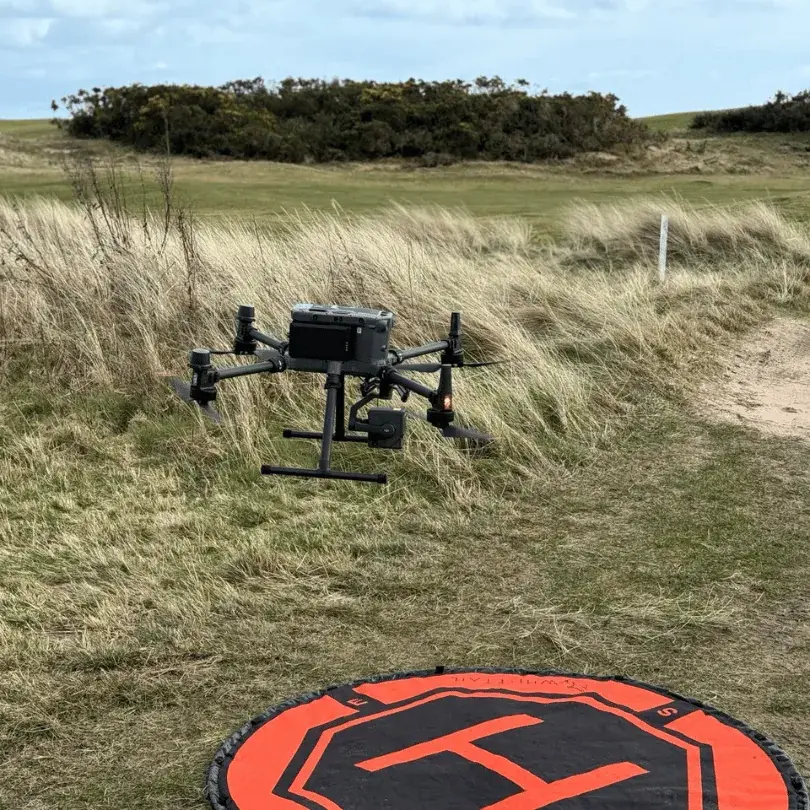
The A2 Certificate of Competence is a theory test of at least thirty multiple-choice questions, taken with a CAA-approved Recognised Assessment Entity. It lasts five years. The CAA does not set the price — the providers do, so it varies, and it is worth ringing round.
What it buys you is the Near People (A2) sub-category for a C2-marked drone or a legacy drone under 2 kg. Without it, those same drones are restricted to Far from People (A3): 150 metres from residential, commercial, industrial or recreational areas. In most of Britain that means a field, and it means driving to one.
Here is the part the shops leave out. If you buy sub-250g, the A2 CofC buys you nothing at all — you already have better privileges than it grants. Sitting the test only makes sense if you have already decided you need a heavier drone. Decide the weight first, then the paperwork. Never the other way round.
And then there is 1 January 2028
This is the one almost nobody selling you a drone will mention, and if you are about to spend serious money this year it should probably change your mind.
Until 31 December 2027, a drone carrying a European C class mark can be flown as though it held the equivalent UK class. From 1 January 2028 that stops. A C-marked drone becomes legacy and falls back to plain weight rules: under 250 g flies A1, under 2 kg needs an A2 CofC, under 25 kg is A3.
For most of this list, nothing changes. The C2 Mavics already need an A2 CofC and will carry on needing one. Everything under 250 grams stays exactly where it is. But two drones here fall off the cliff, and they are both C1 drones weighing more than 250 grams:
WHAT CHANGES ON 1 JAN 2028
| DRONE | TODAY | FROM 2028 |
|---|---|---|
| DJI Air 3S 724 g, C1 | Over People (A1), no qualification | Near People (A2), A2 CofC required |
| DJI Avata 2 377 g, C1 | Over People (A1), no qualification | Near People (A2), A2 CofC required |
Nothing gets confiscated and nothing becomes illegal to own. But if you buy an Air 3S in 2026 partly because it needs no qualification, understand that you are buying eighteen months of that privilege, not a permanent one. Either accept you will sit the A2 CofC in 2027, or buy under 250 grams and never think about it again.
PART THREE
What a camera drone really costs in the UK in year one
Say the cut left you with the Mini 5 Pro, as it does for most people who answer honestly. You now have a number in your head, and it is the one on the product page. Here is what actually leaves your account in the first twelve months, which is a different number entirely.
I am not going to print that total to the penny. The sticker moves week to week, and a figure typed in July is a fiction by October. What does not move is the shape of the bill — which lines are compulsory, which are genuinely optional, and roughly how much they add on top of whatever you paid. That part is stable, and it is the part nobody puts on the page where the price is.
YEAR ONE — DJI MINI 5 PRO
Start with the drone itself in the plain RC-N3 configuration — the cheapest one that actually flies, and the one the link above points at. Then the paperwork, which is the only part of this bill somebody else fixes for you. The Flyer ID is free and lasts five years. The Operator ID is £12.34 a year and goes on a label stuck to the drone. The A2 CofC is nothing at all, because at 249.9 grams you do not need one — which is precisely why this drone is the pick.
Then the three things that are not optional, however the shop presents them. A second standard battery, not the Plus, for the reason the box below spells out — one battery is under half an hour of flying and you will drive further than that to reach the spot. A set of ND filters, which on a lens fixed at f/1.8 is not an accessory but your only exposure control for video. And a 256 GB V30 microSD card, V30 being the rating that keeps up with 4K without dropping frames. Those three together are the largest thing on this bill after the drone, and every one of them is bought separately.
Then two lines people leave off and later regret. Hobby third-party insurance is genuinely optional right up to the moment somebody pays you for a photograph, at which point it stops being optional. And the crash you have not had yet: propellers, a gimbal cover, an excess. Allow for it once and it is an irritation. Allow for it never and it is the end of the drone.
Put sensible numbers against all of that and the Mini 5 Pro turns out to be a decision within touching distance of four figures, rather than the number printed on the product page.
That is roughly forty per cent over the sticker, and I have not bought a bag, a landing pad or a spare set of propellers. None of those lines are unreasonable. They are just never on the page where the price is. And note which one stopped being a luxury: with a fixed f/1.8 aperture, the ND filters are the only way to hold a proper shutter speed in daylight. On a drone you cannot stop down, they are as much a part of the camera as the lens.
THE THREE THINGS YOU WILL ACTUALLY NEED
- Check price
A second standard battery
Not the Plus — that one costs you the sub-250g status.
- Check price
ND filters
Compulsory for video, because the aperture does not move.
- Check price
A 256GB V30 card
V30 is the rating that keeps up with 4K without dropping frames.
Affiliate links · costs you nothing extra · full disclosure
THE ONE THAT COSTS MORE THAN MONEY
Do not buy the bigger battery
The Mini 5 Pro is offered with an Intelligent Flight Battery Plus. More flight time, modest price, obvious upgrade. Every shop will offer it to you — and it is the only way to reach the 52 minutes DJI puts on the box.
DJI’s own specification page spells out what it does. The drone in the Fly More Combo is C0-certified while the one in the Combo Plus is C1 — and fitting the Plus battery to the C0 drone means it “can no longer be operated under C0/UK0 classification.” The advertised 36 minutes becomes 52, and the sub-250g status goes with it.
Read that again in plain English. The upsell battery takes a drone you can fly over people with no qualification whatsoever, and turns it into one that cannot. And because it is now a C1 drone over 250 grams, it is also one of the drones that needs an A2 CofC from January 2028.
You would be paying the price of a spare battery for sixteen extra minutes, and paying for it again in 2028 with a qualification you did not previously need. Buy a second standard battery instead. For much the same money you get more total airtime, and you stay under the line.
The same sum, for all twelve
Same method, run across the whole field: whatever the drone costs on the day, plus the £12.34 Operator ID, plus a second battery, filters, a card and a crash allowance scaled to the drone — plus an allowance for the A2 CofC where the drone legally needs one. The totals are not the interesting part, because they move every time a listing does. The uplift is: how much the unavoidable extras add as a proportion of the sticker. That figure is remarkably stable whatever the drone happens to cost this week, and it is the one that ought to change your shortlist.
| DRONE — CHEAPEST FIRST | A2 COFC | YEAR-ONE UPLIFT |
|---|---|---|
| DJI Neo 2 | Not needed | +58% |
| DJI Mini 4K | Not needed | +55% |
| DJI Flip | Not needed | +53% |
| DJI Avata 2 | From 2028 | +50% |
| DJI Air 2S | Needed now | +69% |
| DJI Mini 4 Pro | Not needed | +43% |
| DJI Mini 5 Pro | Not needed | +38% |
| Autel EVO Lite+ | Needed now | +44% |
| DJI Air 3S | From 2028 | +39% |
| Antigravity A1 | Not needed | +23% |
| DJI Mavic 3 Pro | Needed now | +34% |
| DJI Mavic 4 Pro | Needed now | +34% |
The pattern worth noticing: the cheaper the drone, the worse the uplift, because the £12.34 registration, a card and a spare battery are close to fixed costs however little you spent on the drone they attach to. At the bottom of that table the extras add well over half again — the drone you picked because it was the cheap option ends the year costing something like half as much again. On a genuinely tight budget that matters more than any spec on this page.
The Air 2S is the worst of the twelve, and for a different reason: it is the only inexpensive drone here that also needs an A2 CofC, so the cost of a qualification lands on top of a small sticker. At the other end, the Antigravity A1 has the mildest uplift simply because there is so little to add to it — and because everything else is a large number to divide into.
PART FOUR
The best camera drone for most people in 2026
The DJI Mini 5 Pro. That is what I would buy with my own money, and I would not spend long deciding.
A one-inch sensor is the meaningful camera threshold — the gap between 1/2.3-inch and one-inch changes your pictures far more than the gap between 48 and 100 megapixels ever will. Until recently, crossing that threshold meant crossing the 250-gram line too, and accepting the qualification, the sub-categories and the mental overhead that come with it. The Mini 5 Pro is the first drone to put that sensor underneath the line where none of it applies. Buy it, register it, fly it. There is no second conversation.
On the camera specifically, you are giving up remarkably little. It shoots the same 10-bit D-Log M and the same DNG raw files as drones costing three times as much, through an f/1.8 lens at a 24 mm equivalent. What you do not get is the variable aperture — and as far as I can tell that, plus the Four Thirds sensor, is most of what a Mavic’s extra money actually buys — and a Mavic 4 Pro is close to three times the price. For a fixed set of ND filters you close a surprising amount of that gap.
Spend less if you can. The DJI Flip has the same class of sensor as the Mini 4 Pro, stays under 250 grams, and costs well under half what the Mini 5 Pro does. It is the best camera drone for beginners on this page by a distance. If you are buying your first drone and the honest answer is that you want to find out whether you enjoy this, buy the Flip and put the difference towards a Mini 5 Pro next year, when you know.
Spend more only for one reason. The Mavic 4 Pro is the best flying camera in this size class and I would not hesitate if a client were paying for the footage. If nobody is, you are buying dynamic range you will never spend, plus a qualification, plus a bag you will not want to carry up a hill.
The one I’d actively tell you to avoid
The DJI Air 3S — and it pains me, because it is an excellent drone and the dual focal lengths genuinely change how you shoot.
But look at what you are buying. It is the better part of three hundred pounds more than the Mini 5 Pro, for the same one-inch, 50-megapixel main sensor. It is 724 grams, so you are over the line. Its C1 mark currently lets you fly over people with no qualification — and that privilege expires on 1 January 2028, at which point you will need an A2 CofC to fly it near anyone at all. So you are paying a premium today for a legal position with eighteen months left on it.
If you want the tele lens badly enough to accept that, go in with your eyes open and budget for the qualification. If you were mostly drawn to it because it seemed like a step up from a Mini, it is not the step up you think it is.
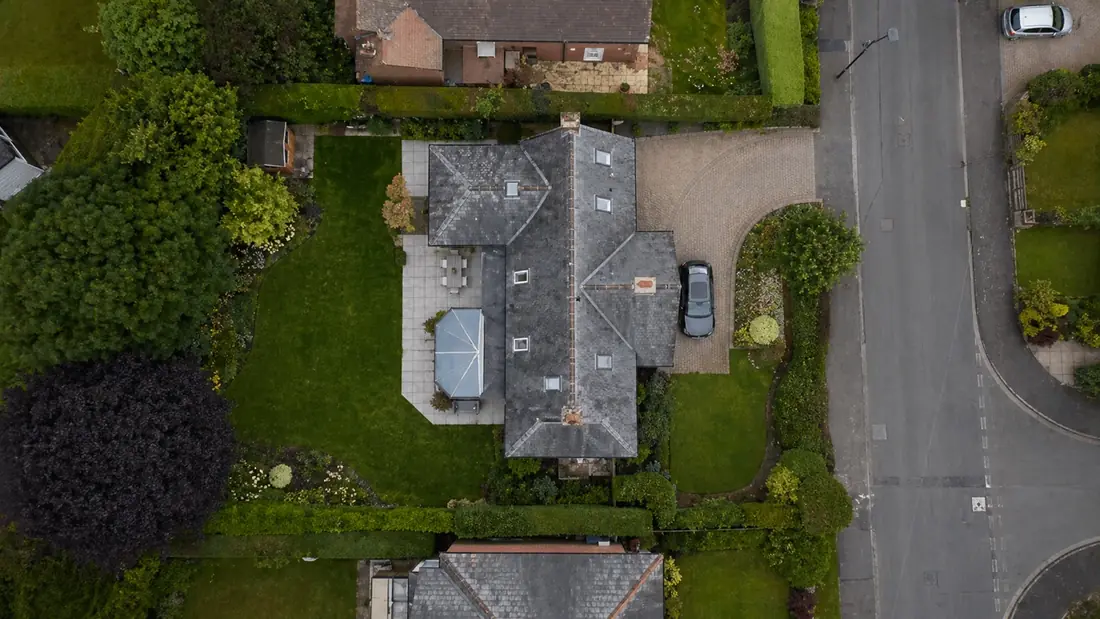
If you would rather not own any of this — and for a one-off roof survey or a single set of property shots, owning is rarely the cheaper answer — that is what the rest of this site is for. You can hire a qualified drone pilot who already has the drone, the qualifications and the insurance.
Best camera drone UK: the questions I get asked most
What is the best camera drone in the UK in 2026?
The DJI Mini 5 Pro. It is the only drone that puts a one-inch, 50-megapixel sensor under the 250-gram line, so it shoots like a camera three times its weight class and needs no licence or test beyond the two basic registrations. Spend less and the DJI Flip is the best camera drone for a beginner, for well under half the money; spend more and the Mavic 4 Pro is the best camera drone in the UK outright, if someone else is paying for the footage.
Which camera drones can I fly with no licence beyond registration?
Anything under 250 grams flies in Over People (A1) with only a free Flyer ID and the £12.34-a-year Operator ID. Here that means the Mini 5 Pro, Mini 4 Pro, Flip, Mini 4K, Neo 2 and the Antigravity A1. Watch the upsell batteries — DJI states that the Intelligent Flight Battery Plus pushes a Mini 4 Pro or a C0 Mini 5 Pro over 249 grams, which removes exactly that status. The Antigravity A1’s high-capacity battery does the same, taking it to 291 grams.
What actually happens to class marks on 1 January 2028?
Until 31 December 2027 a European C class mark can be flown as its UK equivalent. From 1 January 2028 that stops, and the drone becomes legacy, governed by weight alone: under 250 g flies A1, under 2 kg needs an A2 CofC, under 25 kg is A3. In this guide the two that lose privileges are the Air 3S and the Avata 2 — both C1, both over 250 grams.
Do I need an A2 Certificate of Competence?
Only to fly a C2 or UK2 drone, or a legacy drone under 2 kg, in Near People (A2). Without it those drones are restricted to Far from People (A3) — 150 metres from anything built-up. It is a theory test of at least 30 multiple-choice questions with a CAA-approved Recognised Assessment Entity, valid five years, and providers set their own fees. If you buy under 250 grams it buys you nothing you do not already have.
Can you change the aperture on a drone camera?
On almost all of them, no. The Mini 5 Pro and Air 3S are fixed at f/1.8, the Mini 4 Pro and Flip at f/1.7, the Avata 2 at f/2.8. Only the two Four Thirds Mavics have a variable aperture — f/2.0–f/11 on the Mavic 4 Pro and f/2.8–f/11 on the Mavic 3 Pro. This matters most for video: with no aperture to close you cannot hold a 1/50s shutter in daylight, so ND filters stop being an accessory and become your only exposure control.
Is a bigger sensor actually worth paying for?
Sensor area matters far more than megapixels for the light you will really shoot in. The gap that changes pictures is 1/2.3-inch to one-inch, not 48 to 100 megapixels. That is why the 50MP one-inch Mini 5 Pro outshoots the 12MP 1/2.3-inch Mini 4K by a visible margin even though both fly without a test, while the jump from there to a Four Thirds Mavic mostly buys dynamic range in hard light.
The short version
If you read all of that and still want me to just say it: buy the DJI Mini 5 Pro. It is the only drone here with a proper one-inch camera that you can fly with no test and no certificate — and budget roughly forty per cent on top of the sticker for year one, once the registration, a spare battery, filters and a card are in.
Affiliate links · costs you nothing extra · full disclosure
Specifications checked 31 July 2026 against manufacturer sources. I do not print prices anywhere in this guide: they change from week to week, so the only figure worth trusting is the one on the listing when you click through. Regulatory detail from the UK Civil Aviation Authority. Comparison specifications from DroneCompare, licensed under CC BY 4.0. Amazon links are affiliate links.