A2 CofC Drone Licence: What It Unlocks in UK Airspace

Peter Leslie
2 Oct 2025
Key Takeaways
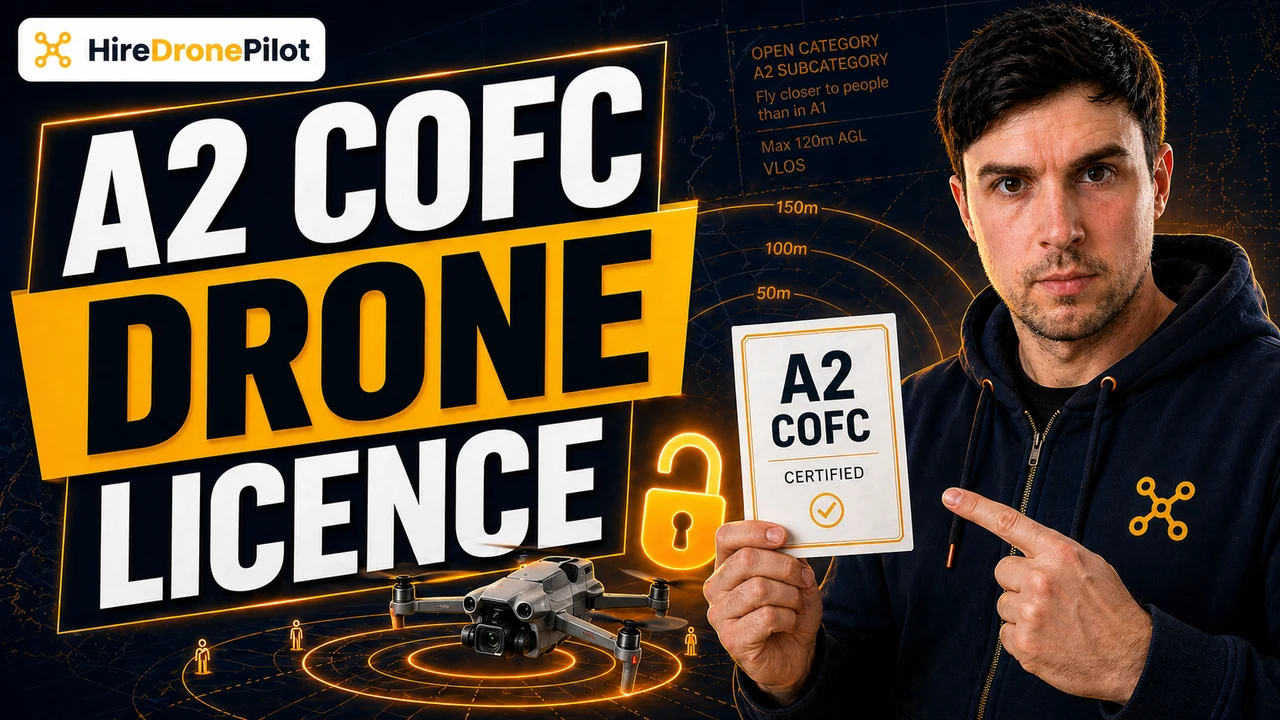
- The A2 CofC is the Open Category qualification that unlocks the Near People (A2) sub-category for drone pilots
- It is awarded by CAA-approved providers called Recognised Assessment Entities, and the certificate is valid for five years
- It is a VLOS-only qualification — the A2 CofC does not grant any Beyond Visual Line of Sight privileges
- A valid Flyer ID is the entry requirement, and there is no minimum age for the A2 CofC itself
- The course pairs self-directed practical training with a multiple-choice theory test covering meteorology, drone flight performance, and ground-risk mitigations
- Until January 2026, the A2 CofC also allows legacy drones between 250g and 500g to fly closer than 50m to uninvolved people, provided there is no intentional overflight
The A2 Certificate of Competency is the most commonly earned drone qualification in the United Kingdom, and for good reason. It is the single piece of paper that moves you out of empty-field flying and into the Near People sub-category of the Open Category, where most real-world jobs actually happen.
What it is not is a commercial licence, a free pass over crowds, or anything to do with Beyond Visual Line of Sight. The rules it unlocks are narrow, specific, and written down by the Civil Aviation Authority — and getting them exactly right is what keeps you legal on every flight that follows.
The A2 CofC is the Open Category qualification that lets you fly in the Near People sub-category
The CAA splits Open Category flying into three sub-categories: Over People (A1), Near People (A2), and Far from People (A3). Each one has its own class-mark and weight rules, and each one pins down how close you can fly to the public.
Without an A2 Certificate of Competency, a legacy drone between 250g and 2kg has to fly under A3 rules. That means staying at least fifty metres horizontally from any uninvolved person, at least fifty metres from individual buildings, and at least 150 metres from any residential, commercial, industrial, or recreational area. In most of the United Kingdom, that leaves you flying in open countryside and not much else.
The A2 CofC is the qualification that moves that same drone into the A2 sub-category. You can now fly inside those residential, commercial, industrial, and recreational areas, provided you respect the A2 distances from uninvolved people. From 1 January 2026, the CAA will formally rename the A2 sub-category to Near People (A2), but the underlying permission is the same thing the A2 CofC has always unlocked. If you would rather skip the A2 CofC entirely, the simpler route is to buy a drone that never needs it — see my best drones under 250g for 2026 guide.
The certificate is awarded by Recognised Assessment Entities, not by the CAA directly
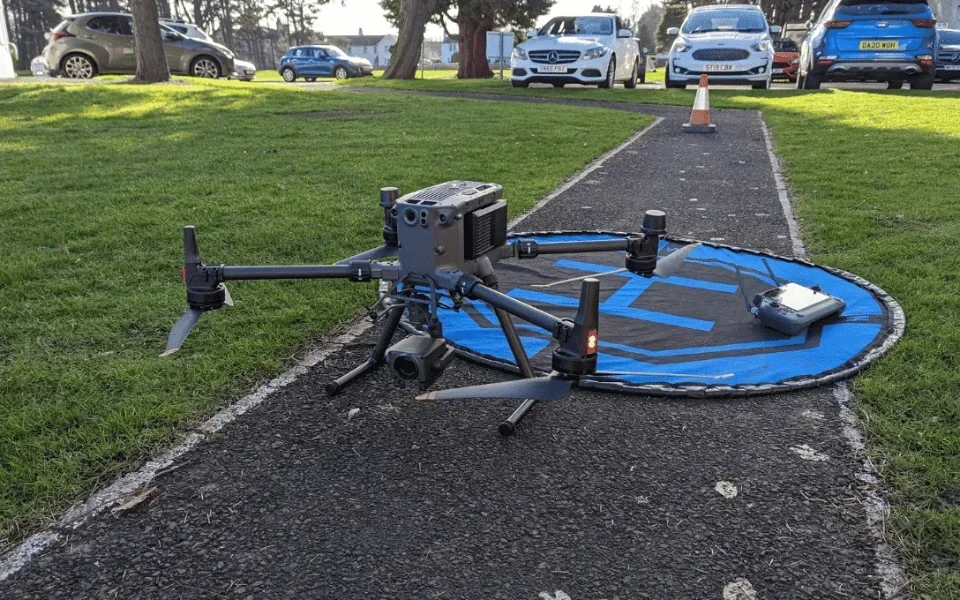
The A2 Certificate of Competency is awarded by CAA-approved providers known as Recognised Assessment Entities, or RAEs. The CAA publishes the full list on its website and adds providers as they are approved. There is no separate application to the CAA for the certificate itself — the RAE issues it once you pass the theory test, and that document is what proves your competency.
RAEs set their own fees for training and for the certificate, so prices vary across the market. If cost is a factor, it is worth checking two or three providers before committing — the syllabus is defined by the CAA, but the delivery format, support, and price are not.
The list of approved providers includes long-established training companies as well as operational drone businesses that run training as a side of the operation. Any of them will issue the same A2 CofC at the end.
The course is self-directed practical training plus a theory test of at least thirty multiple-choice questions
The A2 CofC has two components. The first is self-directed practical training, which you carry out on your own under A3 rules — far from people, in a safe area, building up the flying skills the Near People sub-category assumes you already have. There is no instructor standing next to you for this part.
The second is a theory test. The CAA mandates a minimum of thirty multiple-choice questions, and providers can run the test either online or on paper. The syllabus is fixed and covers three areas: meteorology, drone flight performance, and technical and operational mitigations for ground risk. The RAE sets the exam format, pass mark, and retake policy within the CAA framework, so those details are worth checking with your chosen provider before you book.
There is no separate in-person flight test with an examiner. The practical side is entirely self-directed. That is what makes the A2 CofC a quicker and cheaper qualification than the General VLOS Certificate, which does require a flight-test element.
A valid Flyer ID is the only entry requirement, and there is no minimum age
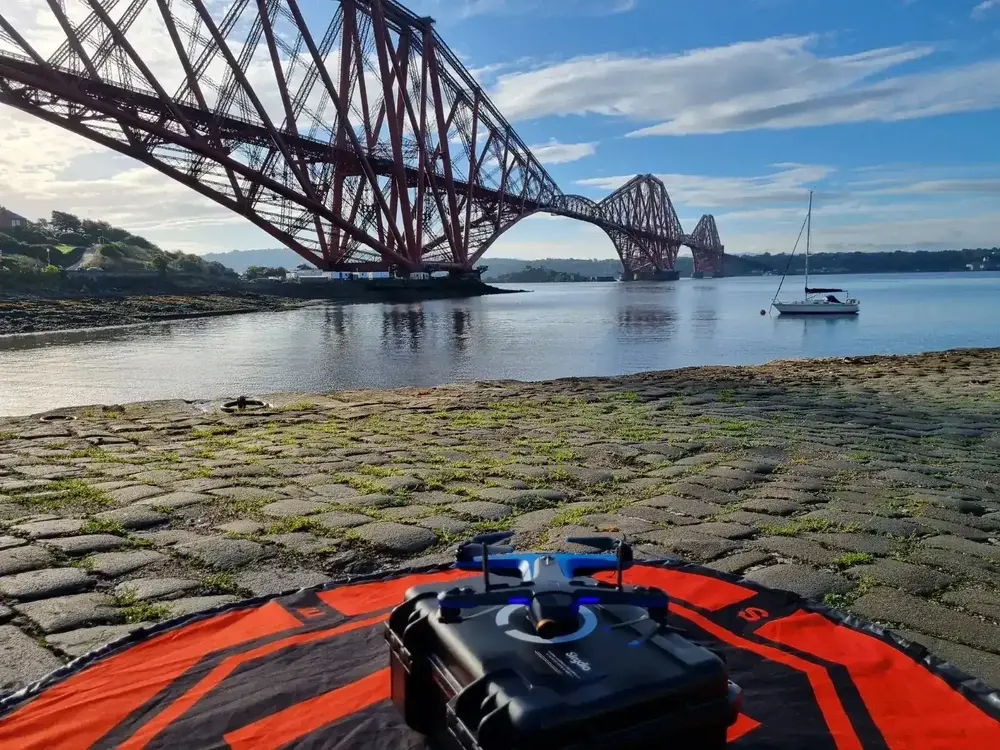
Before you can book onto an A2 CofC course, you need a valid Flyer ID. That is the free CAA online test that anyone flying a drone of 250g or more has to pass already — and from 1 January 2026, the Flyer ID becomes mandatory for drones of 100g or more. The Flyer ID is the foundation qualification; you cannot hold any other CAA drone qualification without one.
The A2 CofC itself has no minimum age, which is unusual compared with the Specific Category certificates. The RPC-L2 and RPC-L3, for instance, both require candidates to be at least eighteen. The A2 CofC does not, which makes it accessible to younger drone pilots who have passed their Flyer ID and want to unlock the Near People sub-category.
The certificate is valid for five years and it is VLOS-only
An A2 Certificate of Competency is valid for five years from the date of issue. There is no annual renewal, no logbook requirement, and no mid-cycle refresher. When the five years are up, you retake the course and exam to re-certify.
Two limits matter a great deal on this certificate. The first is that the A2 CofC is VLOS-only. The qualification gives you absolutely no Beyond Visual Line of Sight privileges. You have to keep the drone in Visual Line of Sight at all times, with a clear view of the surrounding airspace, exactly as you do under any Open Category flight.
The second is that the A2 CofC lives inside the Open Category only. Anything that falls outside Open Category rules — higher-risk operations, heavier drones, overflight of uninvolved people, controlled environments — requires the Specific Category, a GVC or higher, and an Operational Authorisation from the CAA. The A2 CofC does not reach any of that.
Until January 2026, the A2 CofC gives legacy drones between 250g and 500g a transitional concession
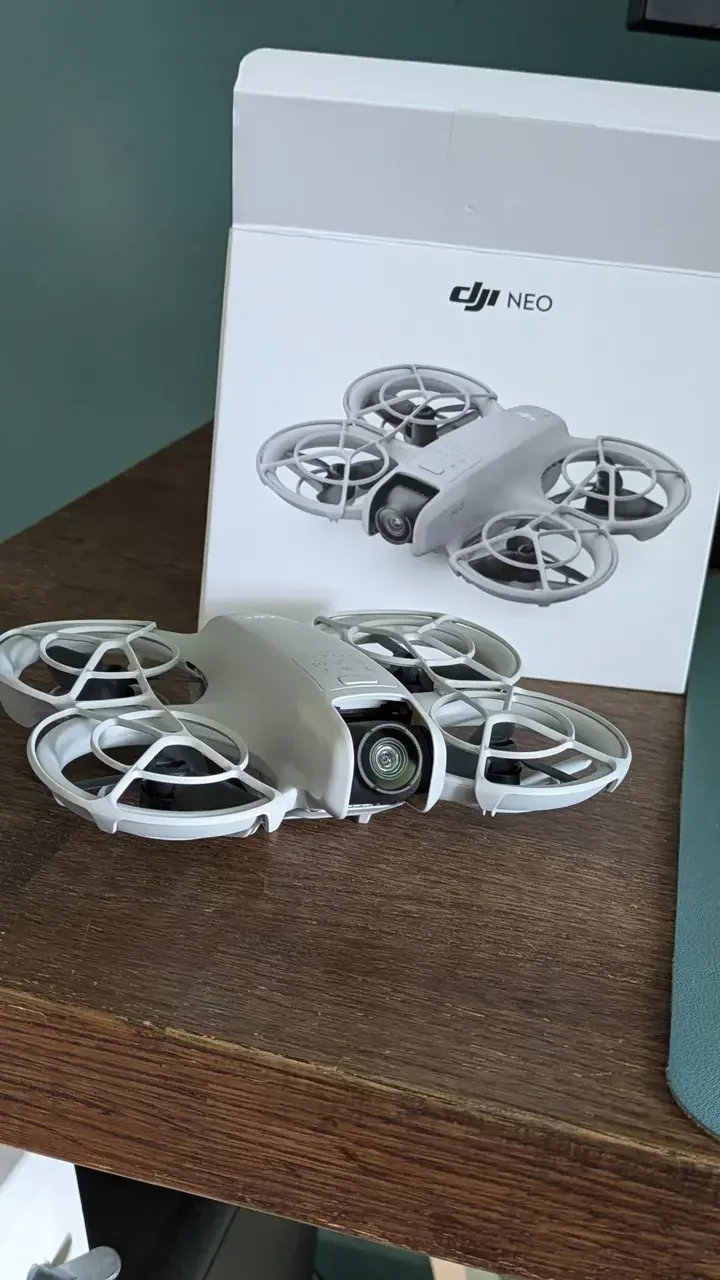
The A2 CofC has a specific transitional rule that is easy to miss. If you hold the certificate and you are flying a legacy drone that weighs between 250g and 500g, you are permitted to fly closer than fifty metres to uninvolved people. You must not intentionally fly over them, but the usual fifty-metre A2 buffer is waived for drones in that weight band.
This concession is only available until January 2026. After that, the UK class-mark system takes over and the transitional privileges tied to legacy weight bands drop away. The Near People (A2) sub-category continues, but the rules that apply inside it are defined by the drone's class mark rather than by legacy weight concessions.
If you bought a drone specifically to use this transitional rule, it is worth planning now for what your flying looks like once the concession ends. Most current legacy drones in the 250g–500g band will still be flyable — the class-mark framework and the A2 CofC both carry forward — but the specific “closer than fifty metres” privilege for that weight band is time-limited.
Where the A2 CofC stops and the GVC takes over is the most important boundary to understand
The General Visual Line of Sight Certificate is the next qualification up. It lives in the Specific Category, it requires a Flyer ID as its entry condition, and it is also valid for five years. Unlike the A2 CofC, the GVC is the drone-pilot qualification you pair with a CAA Operational Authorisation — often PDRA01 — to run operations that Open Category rules do not cover.
A quick mental test: if the flight you want to plan fits inside Open Category rules — VLOS, under 120 metres, the right distances from uninvolved people for your drone's category, no crowds, no restricted airspace — the A2 CofC is probably all you need. If any one of those rules is a problem for the job, you are in Specific Category territory and the A2 CofC alone will not get you there.
The A2 CofC is also VLOS-only. For genuine Beyond Visual Line of Sight work, drone operators need the RPC-L2 for BVLOS operations in ARC-a airspace, or the RPC-L3 for more complex environments. Neither is reached through the A2 CofC route.
The A2 CofC is a sensible investment for any serious Open Category drone pilot
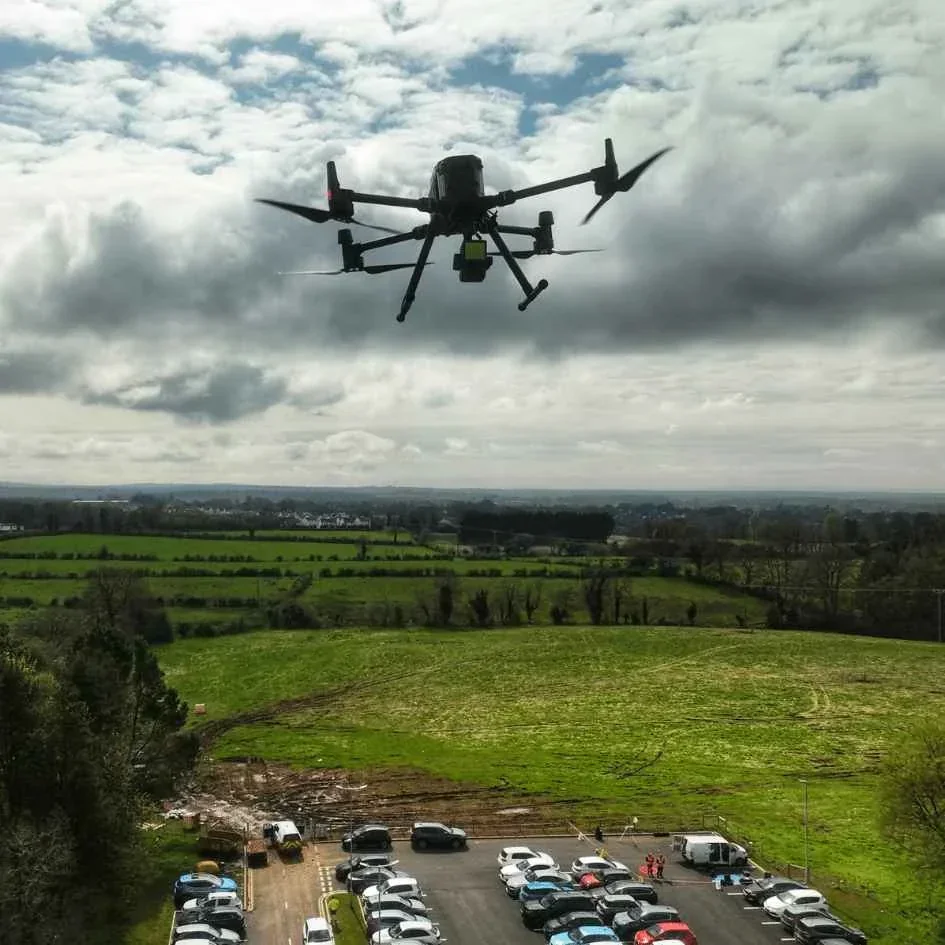
For most UK drone pilots flying a legacy drone between 250g and 2kg, the A2 CofC is the qualification that turns the drone from a countryside-only tool into one you can genuinely use. Without it, that drone is stuck in A3. With it, the same drone earns you access to residential and commercial areas, subject to the A2 distances.
It is also the most practical starting point for anyone building toward commercial drone photography or drone videography work. Under UK rules, the distinction between commercial and recreational flying is gone — both live inside the same risk-based category framework — so an A2 CofC holder can take on paid work that fits inside Open Category rules, with appropriate third-party insurance in place.
So the short version is this. The A2 CofC does exactly one thing well: it unlocks the Near People (A2) sub-category inside the Open Category, with all the distance, altitude, and VLOS rules that apply there. It does not unlock BVLOS, it does not unlock overflight of uninvolved people, and it does not unlock Specific Category operations. Inside its envelope, though, it is the single most useful certificate the CAA issues.
For the bigger picture of how the certificates stack together, our breakdown of the GVC drone licence sits next to this guide, and the UK drone laws explainer stitches the whole framework together.
Common questions about the A2 CofC exam, insurance and resits
Can you sit the A2 CofC exam remotely?
Yes. The A2 CofC theory test can be sat online or on paper, and most Recognised Assessment Entities offer a remote-invigilated online sitting. To sit it remotely you need a laptop or desktop with a working webcam and microphone, a stable internet connection, and a quiet, well-lit room with no other people present. Photo ID is mandatory, and the invigilator runs a screen-share and a room scan before the test starts. Each RAE runs its own remote process, so the booking flow, software, and pass mark detail vary between providers. A remote pass produces the same A2 CofC certificate as an in-person sitting — the qualification is identical.
Do you need insurance in place before booking the A2 CofC course?
Recreational and hobby flying under an A2 CofC is exempt from the formal insurance requirement, but you remain personally liable for any damage or injury. Some Recognised Assessment Entities bundle test-day liability cover into the course fee — check the small print before booking. The legislative anchors here are Assimilated Regulation (EU) 785/2004 and the Civil Aviation (Insurance) Regulations 2005. For any paid work after qualification, see drone insurance requirements for the full breakdown.
What happens if you fail the A2 CofC exam?
Failing the A2 CofC theory test does not cost you your Flyer ID and does not affect any other CAA qualification you already hold. The CAA does not run the exam — Recognised Assessment Entities deliver it, and each RAE sets its own pass mark, resit policy, and resit fees. Some RAEs allow same-day resits; others require a fresh booking, and a few include one resit in the original course price. Without a valid A2 CofC, a legacy UK2 or C2 drone has to fly under A3 rules — fifty metres from uninvolved people and one hundred and fifty metres from built-up areas. There is no time bar on resitting, and no permanent record of a fail; the qualification is awarded the moment you pass.
What happens if you don't have an A2 CofC at all?
Without an A2 CofC, a UK2 or C2 drone is restricted to the A3 sub-category — a 50-metre buffer from uninvolved people and a 150-metre buffer from residential, recreational, commercial, and industrial areas. UK0, UK1, C0 and C1 drones still fly in A1 over people without any A2 CofC, so under-250g and lightweight class-marked drones are unaffected. You can still hold a Flyer ID, fly recreationally, and hold an Operator ID with no A2 CofC at all. Commercial work that fits inside Open Category rules does not require an A2 CofC by default — the certificate is only triggered when your drone weight class plus your location demand A2 privileges. The A2 CofC is not a fine-bearing offence in itself; flying a UK2 drone in A2 conditions without one is, and it is enforced under the same framework as the rest of UK drone law.
Got a specific scenario you want covered — a borderline A2 job, a class-mark question, or a step up to the GVC? Drop a note to peter@hiredronepilot.uk and I will come back to you directly. If you prefer the video version of this explainer, the comments are open on YouTube.
References
Primary source material for this article is the UK Civil Aviation Authority. External links open in a new tab.
- UK CAA — A2 Certificate of Competency (A2 CofC) · course format, syllabus, five-year validity, transitional 250g–500g privilege
- UK CAA — Remote Pilot Qualifications Overview · Flyer ID as prerequisite, Open vs Specific Category qualifications
- UK CAA — CAA-approved training providers · list of Recognised Assessment Entities; providers set their own fees
- UK CAA — Level 1, 2 and 3 Remote Pilot Certificates and GVC · GVC, RPC-L1/L2/L3 entry conditions and validity periods
- UK CAA — Where you can fly (A1, A2, A3 sub-categories) · A3 distance rules, A2 entry conditions, Open Category structure
- UK CAA — Class marks · legacy weight bands, UK and C class mark system, transition timeline
Peter Leslie
Founder & GVC Drone Pilot
Peter is the founder of HireDronePilot. With thousands of logged commercial flight hours, he writes about drone technology, commercial surveying tactics, and UK aviation compliance.
Connect on LinkedIn