DJI Mini 3 vs DJI Mini 2: which one should you buy?
Two generations of the same idea, and unusually for DJI the important thing changed between them. The camera is four times the resolution behind a far wider lens. Neither drone can see an obstacle.
 Written by Peter Leslie, GVC-qualified commercial drone pilot | Every figure checked against both DJI manuals | 3 Aug 2026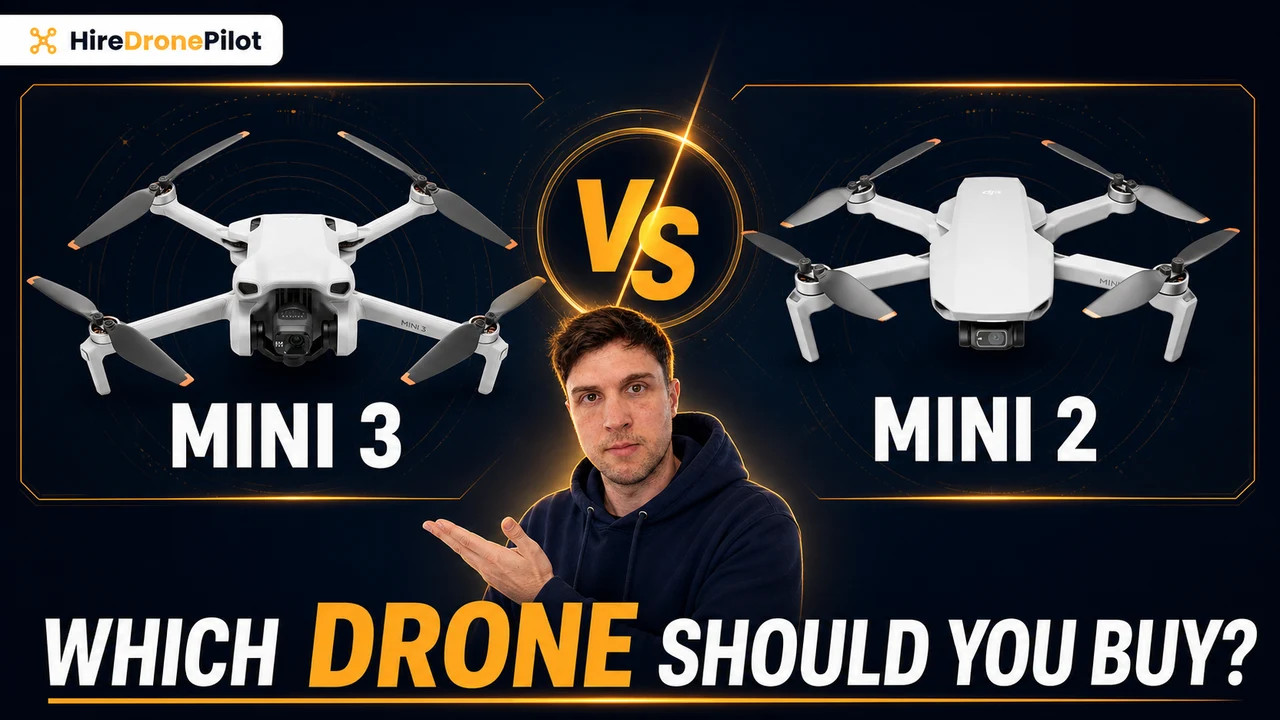
My short answer
I recommend the DJI Mini 3
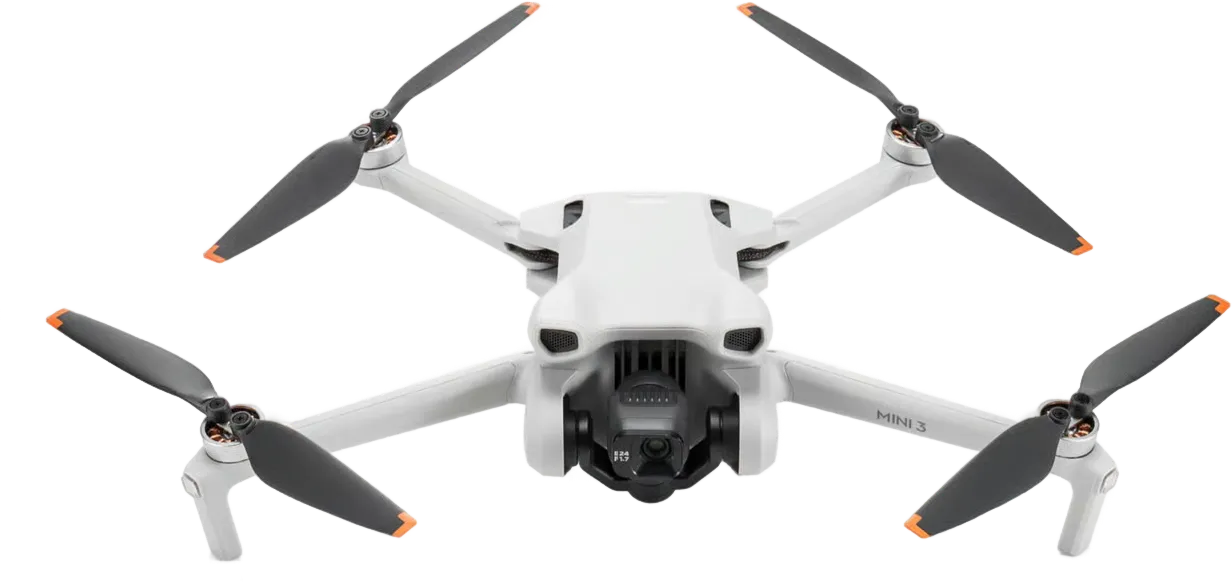
DJI Mini 3
The 2022 camera mini
The generation where the camera actually changed. Four times the stills, a far wider lens, seven more minutes and a class mark.
- 1/1.3-inch, 48 MP against 1/2.3-inch, 12 MP
- Much wider f/1.7 lens against f/2.8
- 38 minutes against 31
- Rated to minus ten degrees, not zero
- C0 class marked
- 248 g leaves two grams of margin, against eight
I recommend this if…
- You care how the finished footage looks
- You want the longest flights in this class
- You fly on cold mornings
- You are buying new rather than used
Only if it is clearly cheaper
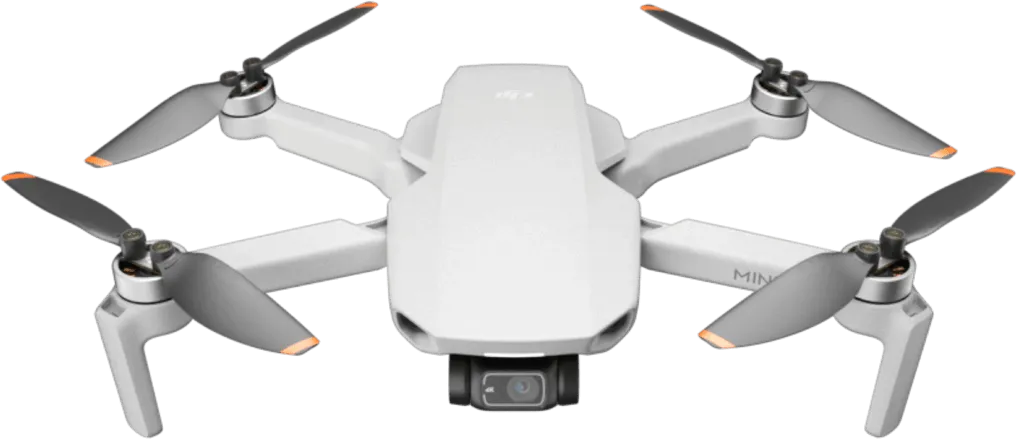
DJI Mini 2
The 2020 original
Six grams lighter, and a generation behind on everything that matters. Still a competent little drone if the price is right.
- 1/2.3-inch, 12 MP sensor only
- Narrower f/2.8 lens
- 31 minutes against 38
- Not rated below zero degrees
- No class mark — legacy
- 242 g, so eight grams of margin
I recommend this if…
- You have found one substantially cheaper
- You want the largest weight margin here
- You fly in good light and mild weather
- You already own Mini 2 batteries
Both links are Amazon affiliate links. As an Amazon Associate I earn from qualifying purchases, at no extra cost to you — full disclosure.
One thing that applies to both
Neither of these drones can sense an obstacle in any direction, and that is the most important sentence on this page.
Both have downward sensors for hovering and landing, and nothing facing forwards or sideways. Both fly on bare propellers.
So whichever you choose, you are the collision avoidance system, and a clipped branch is usually a repair rather than a bump.
If that worries you, the honest answer is that neither of these is the drone you want, and something newer with sensing is worth the wait.
Both appear in my best drones under 250g guide.
Five things that do not separate them
Clear these away first.
-
Same three-axis gimbal
Tilt, roll and pan on both.
-
Same lack of obstacle sensing
Downward positioning only, on both.
-
Same lack of storage
A microSD card is compulsory on both.
-
Same top speed and ceiling
16 m/s and 4000 m on both.
-
Same UK paperwork
Flyer ID and Operator ID for both.
-
So ignore all 5
None of it can tell you which to buy. The next four things can.
Both also cap 4K at 30 frames a second, so neither offers slow motion. Both need a controller with your phone clamped in as the screen.
The four differences that actually matter
1. The Mini 3 has four times the stills resolution and a far wider lens
This is the generational change that justifies the comparison, and it is a large one.
The Mini 3 uses a 1/1.3-inch sensor at 48 megapixels. The Mini 2 uses a 1/2.3-inch sensor at 12.
Mini 3
48MP
1/1.3-inch sensor, f/1.7
Mini 2
12MP
1/2.3-inch sensor, f/2.8
The lens is the half people forget. The Mini 3 opens to f/1.7 where the Mini 2 sits at f/2.8, which is a substantial difference in light reaching the sensor before anything else happens.
Stills go from 4000 by 3000 to 8064 by 6048, which is the difference between a phone screen and something you could print.
Both cap 4K at 30 frames a second, so slow motion is not part of the upgrade. The gain is in resolution and low light rather than frame rate.
Winner — DJI Mini 3
A larger sensor, four times the stills detail and a much wider lens. If you are buying a camera drone, this is the whole reason to choose the newer one.
In bright, still light on a phone, the Mini 2 still produces perfectly watchable 4K.
Check the Mini 3 on Amazon2. The Mini 3 flies 38 minutes, the longest in the class
Seven minutes more than the Mini 2, and the highest standard figure of any sub-250 gram DJI drone.
DJI rates the Mini 3 at 38 minutes in forward flight and 33 hovering. The Mini 2 is rated at 31.
Mini 3
38min
about 28 in reality
Mini 2
31min
about 22 in reality
Both are laboratory figures measured in still air with the battery run flat, so expect materially less on a real afternoon.
The Mini 3 also offers a Plus battery quoted at 51 minutes, but its own manual notes that fitting it takes the drone over 249 grams.
So the 51-minute claim and the sub-250 gram claim cannot both be true. The honest comparison is 38 against 31.
Winner — DJI Mini 3
Seven extra minutes from the longest-flying drone in the class, without leaving the friendly weight bracket. Across a walk that is a real difference.
A spare battery narrows this considerably, and both charge over USB-C.
Check the Mini 3 on Amazon3. The Mini 3 works in frost. The Mini 2 is not rated below zero
A small line with a real seasonal consequence, and one almost nobody checks before buying.
The Mini 3 is rated for minus ten to forty degrees. The Mini 2 is rated zero to forty.
Mini 3
-10°C
rated to fly in frost
Mini 2
0°C
not rated below freezing
Frosty mornings produce some of the best flying light of the year: still air, low sun, sharp shadows.
One of these two is outside its rated range before you have got out of the car on those mornings.
Lithium batteries lose capacity in cold regardless, so neither hits its quoted time in January. Only one is rated to be there at all.
Winner — DJI Mini 3
Ten degrees of extra rated range, covering exactly the mornings that produce the best light. It is a specification you will not think about until the first frost.
If you only fly in summer, this line makes no practical difference at all.
Check the Mini 3 on Amazon4. The Mini 2 has more weight margin, and no class mark
The one measurable advantage of the older drone, and it comes with a documentation cost.
The Mini 2 is 242 grams and the Mini 3 is 248, so the Mini 2 has eight grams of margin under the limit against two.
Mini 3
248g
C0, 2 g under the limit
Mini 2
242g
legacy, 8 g under the limit
At these weights that is a meaningful proportion. A sticker, a lanyard loop or a heavier third-party propeller genuinely matters on the Mini 3.
Both manuals warn against adding payload or fitting unapproved parts, and on the Mini 3 that warning has real teeth.
The trade is documentation. The Mini 3 declares a C0 class mark on page 71 of its manual; the Mini 2 declares none, which makes it a legacy drone in the eyes of the rules.
Under 250 grams that changes nothing practical in the UK today. It can matter abroad, where some countries lean on class marks more heavily.
Winner — DJI Mini 2
Four times the weight margin, which at these weights is genuinely useful if you intend to fit anything at all. It is the Mini 2’s only measurable win.
The Mini 3 answers with an actual class mark, and for UK flying under 250 grams both are treated the same way.
Check the Mini 2 on AmazonFour questions that will tell you which one to buy
Work down them and stop at the first one you can answer firmly. That is your drone.
Do you care how the finished footage looks?
Mini 3Do you want the longest flights in this class?
Mini 3Will you fly on cold mornings?
Mini 3Is the Mini 2 substantially cheaper, or do you own its batteries already?
Mini 2The Mini 3 wins three of four, so price is the only real argument for the Mini 2. Bear in mind neither can sense an obstacle — if that matters more than the camera, the Neo 2 comparison shows what sensing actually buys.
Two catches worth knowing before you order either one
Neither is a reason to avoid either drone. Both are things I would want to have been told before paying.
The Mini 3’s Plus battery takes it over 250 grams
The Mini 3 is quoted at 51 minutes with the Intelligent Flight Battery Plus, which is the figure most listings lead with.
Its manual notes on page 7 that the maximum takeoff weight exceeds 249 grams once that battery is fitted.
So the long flight time and the friendly weight bracket are mutually exclusive.
On the standard battery it is 38 minutes, which is still the longest in the class and the number worth comparing.
Both need a memory card and a charged phone
Neither drone has any internal storage, so a microSD card is compulsory rather than optional on both.
Both controllers have no screen. Your phone clamps in and becomes the display, so a flat phone is a cancelled flight.
The Mini 2 pipes a 720p live view over OcuSync 2.0; the Mini 3 uses O2. You record 4K either way.
Size, wind and buying used
Three practical points before you decide.
The Mini 2 is the smaller package folded, at 138 by 81 by 58 millimetres against the Mini 3’s 148 by 90 by 62.
Wind resistance goes to the Mini 3, at 10.7 metres per second against 10, which is roughly 24 miles an hour against 22.
The Mini 2 launched in November 2020, so much of what is available now is used or clearance stock.
Used is not a problem in itself, but a drone that has been crashed and repaired is harder to assess than a camera. Ask what it has hit.
Mini 3 vs Mini 2: every specification side by side
| DJI Mini 3 | DJI Mini 2 | |
|---|---|---|
| Released | December 2022 | November 2020 |
| Weight | 248 g | 242 g incl. battery, props and card |
| Class mark | C0 (manual p71, model MT3PD) | None — legacy |
| Folds? | Yes, to 148 × 90 × 62 mm | Yes, to 138 × 81 × 58 mm |
| Propeller guards | No | No |
| Palm takeoff | No, controller required | No, controller required |
| Obstacle sensing | Downward vision system only | None — downward positioning only |
| Rated flight time | 38 min standard, 51 with the Plus battery | 31 min |
| Operating temperature | −10° to 40° C | 0° to 40° C |
| Gimbal | Three-axis (tilt, roll, pan) | Three-axis (tilt, roll, pan) |
| Camera sensor | 1/1.3-inch, 48 MP | 1/2.3-inch, 12 MP |
| Lens | f/1.7, 82.1° | f/2.8, 83° |
| ISO range | 100–3200 | 100–3200 |
| Max video | 4K at 30fps | 4K at 30fps |
| Max stills | 8064 × 6048 (48 MP) | 4000 × 3000 (12 MP) |
| Internal storage | None — microSD required | None — microSD required |
| Transmission | O2, 10 km | OcuSync 2.0, 720p live view |
| Battery | 2453 mAh standard, 3850 Plus | 2250 mAh |
| Max speed | 16 m/s | 16 m/s Sport, 10 Normal, 6 Cine |
| Wind resistance | 10.7 m/s (Level 5) | 10 m/s (Scale 5) |
| Ceiling | 4000 m standard, 3000 m on Plus | 4000 m |
| On Amazon | Check price | Check price |
Figures from the official DJI specification pages and both user manuals. Amazon affiliate links — disclosure.
Both drones need a Flyer ID and an Operator ID. Neither is exempt
You will read all over the internet that drones under 250 grams need no licence. For a camera drone in the UK that is simply wrong, and both of these are camera drones.
Any camera drone between 100 g and 250 g needs both of these before you fly it outdoors. At 248 g and 242 g, both sit in that bracket.
Flyer ID
Proves you know the rules. A free online theory test, valid five years.
Operator ID
Registers you as responsible for the drone. £12.34 a year, and the number must be labelled on the drone.
Neither needs a GVC or an A2 Certificate of Competence for ordinary recreational flying. The Mini 3 carries a C0 class mark and the Mini 2 carries none, but both fly in the same open category while under 250 g. There is more in do I need a licence for a sub-250g drone and UK class marking explained.
Why I pick the DJI Mini 3 over the DJI Mini 2
This is one of the few DJI generational jumps where the thing that changed is the thing that matters.
Four times the stills resolution, a much wider lens, seven more minutes and a rated range that covers a British winter.
The Mini 2 keeps six grams of extra weight margin and a lower price, and if the saving is large it remains a competent drone. Neither can see an obstacle, so fly both accordingly.
My recommendation — DJI Mini 3
DJI Mini 3
2022 — 248 g, C0 class mark
I recommend the DJI Mini 3 over the DJI Mini 2 because this is the generation where DJI actually changed the camera. Four times the stills resolution behind a much wider lens, seven more minutes in the air, and it keeps working when there is frost on the car. The Mini 2 is lighter and older and will be cheaper. Unless the saving is large, the Mini 3 is the one worth owning.
- 1/1.3-inch 48 MP sensor, f/1.7
- 38 minutes, the longest in the class
- Rated down to minus ten degrees
- C0 class marked
- O2 transmission
- Three-axis gimbal, 48 MP stills
- Only two grams under the limit
- No forward sensing, and no storage
Amazon affiliate link — no extra cost to you.
The older option
DJI Mini 2
Buy this instead if it is much cheaper, or if the extra six grams of weight margin genuinely matters to you.
Amazon affiliate links — disclosure.
Written by Peter Leslie — GVC-qualified commercial drone pilot
I fly compact DJI drones alongside enterprise survey kit, and I judge them on the footage and the safety margin they give me in real UK conditions.
Every figure here came out of the official DJI manuals or the CAA, not a press release. Where the manuals contradicted the marketing I went with the manuals.
Comparison you want covered next? peter@hiredronepilot.uk.
Sources