DJI Neo 2 vs DJI Mini 4K: which one should you buy?
These two get shortlisted against each other constantly, and they are not really the same kind of thing at all. One films you on its own. The other is a small drone you fly, and it cannot see a fence post.
 Written by Peter Leslie, GVC-qualified commercial drone pilot | Every figure checked against both DJI manuals | 3 Aug 2026
My short answer
I recommend the DJI Neo 2
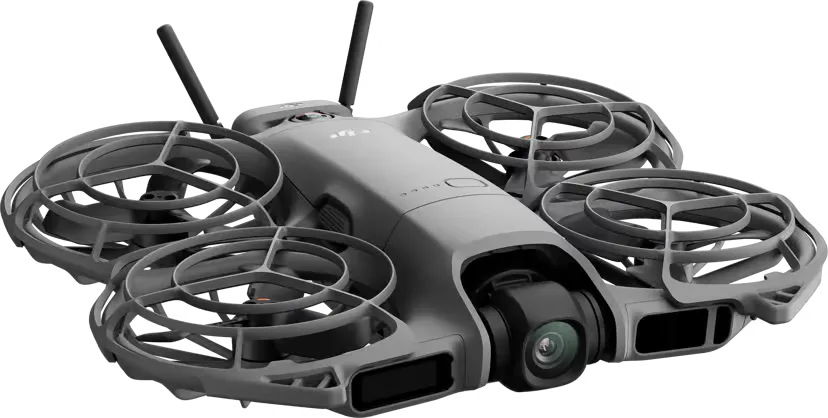
DJI Neo 2
The 2025 palm-launch model
It flies itself, and it can see what is in front of it. The Mini 4K can do neither, and its own manual says so plainly.
- Spots obstacles ahead of it and to the sides
- Launches off your palm, no controller needed
- Caged propellers, so knocks rarely end a flight
- 49 GB of storage built in
- About 19 minutes in the air, not 31
- Two gimbal axes rather than three
I recommend this if…
- You will fly near trees, buildings or people
- You want to film yourself without a controller
- You are buying it for a nervous first-timer
- You would rather not carry a controller at all
Only if you want longer flights
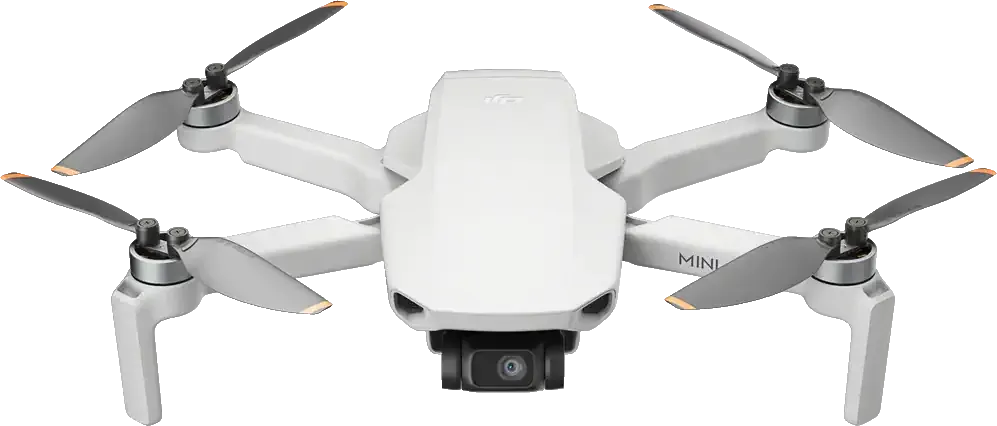
DJI Mini 4K
The 2024 budget folding drone
A conventional small drone that you pilot yourself. It flies far longer and comes with a controller in the box, but nothing on it looks where it is going.
- Cannot sense obstacles at all, in any direction
- No palm launch — a controller is required
- Bare propellers with no guards fitted
- No internal storage, so a card is compulsory
- About 31 minutes in the air
- Three gimbal axes, including pan
I recommend this if…
- You want the longest flights of the two
- You would rather fly with sticks in your hands
- You want a controller included in the box
- You are happy to watch out for obstacles yourself
Both links are Amazon affiliate links. As an Amazon Associate I earn from qualifying purchases, at no extra cost to you — full disclosure.
These two are not the same kind of drone
Worth getting straight before any specification comparison, because it is the thing that actually decides this one.
The Mini 4K is a conventional drone in miniature. It folds up, it comes with a remote controller, and you fly it yourself with two sticks. Everything it does, you tell it to do.
The Neo 2 is a camera that flies itself. You press a button on the drone, hold your hand flat, and it lifts off your palm. You pick a move beforehand — follow me, orbit me, climb and reveal the view — and it does that one job and comes back to your hand.
The Neo 2 also keeps its propellers inside a plastic cage. Clip a branch and you usually get a bump rather than a crash. The Mini 4K flies on bare propellers.
So the honest question is not which drone has the better numbers. It is whether you want to fly a drone, or be filmed by one.
If you have not narrowed it to these two yet, my best beginner drones guide and best drones under 250g both take a wider run at the shortlist.
Four things that are the same on both
Before anything else, let us clear the noise. These points do not separate them, so they cannot help you choose.
-
Same photo resolution
12 megapixels from either drone.
-
Same wind rating
Both rated to 10.7 m/s, Level 5.
-
Same UK paperwork
Flyer ID and Operator ID for both.
-
Both need a card eventually
The Mini 4K from day one, the Neo 2 once 49 GB fills.
-
So ignore all 4
None of it can tell you which to buy. The next four things can.
One number to treat with suspicion on both: the quoted flight times are laboratory figures, measured in still air with the battery run flat. Expect a good deal less on a normal British afternoon.
The four differences that actually matter
1. The Mini 4K cannot sense obstacles at all. The Neo 2 has LiDAR and vision all round
This is the one that should settle it for most people, and it is not a close call.
Drones stay out of trouble using sensors that measure distance. The Mini 4K has a downward vision system and an infrared sensor underneath, and that is the complete inventory. Both point at the ground.
Its manual does not dress this up. Page 13 states outright that the drone cannot sense obstacles on its route automatically, and that the pilot should stay alert and steer around them.
Read that again, because it is unusual for a manufacturer to be so blunt. You are the collision avoidance system.
The Neo 2 adds a forward-facing LiDAR unit, which is a small laser that measures how far away things are, plus cameras watching sideways all the way round. It will brake or steer around what it sees.
In practice that changes where you can fly. A follow-me shot along a hedge line is a normal request of the Neo 2. On the Mini 4K it is a gamble with your own money.
Neo 2
LiDAR ahead, vision all round
- Forward-facing laser rangefinder
- Cameras watching sideways, all round
- Infrared sensing underneath
- Brakes or steers round what it sees
- Switches off in Sport mode
Mini 4K
Downward sensors only
- Knows its height above the ground
- Nothing facing forwards
- Nothing watching sideways
- Manual: cannot sense obstacles automatically
- Bare propellers, so a clip is a crash
Winner — DJI Neo 2
One of these drones will try to avoid a tree and the other will fly into it. No amount of care on your part changes what the Mini 4K is physically able to detect, and its bare propellers mean the contact costs more too.
The Mini 4K is fine in genuinely open space. Fly it over an empty field with nothing but sky around it and the missing sensors never come up.
Check the Neo 2 on Amazon2. The Mini 4K flies for 31 minutes. The Neo 2 manages about 19
The one clear win for the older drone, and it is a substantial one.
DJI rates the Mini 4K at 31 minutes, measured flying at 17 kph in windless conditions. The Neo 2 is rated at about 19. That is roughly two Neo 2 batteries to one Mini 4K battery.
Neither figure survives a real flight. Both drop once there is wind to push against, and the Neo 2 loses more again with its propeller cages fitted.
Neo 2
19min
about 12 to 15 in reality
Mini 4K
31min
about 22 to 25 in reality
There is a colder wrinkle worth knowing. The Mini 4K is only rated to work down to zero degrees, where the Neo 2 goes to minus ten.
For a British winter that matters more than the headline. The longer-flying drone is the one that stops being usable first on a frosty morning.
Winner — DJI Mini 4K
Twelve extra minutes per battery is not a rounding error. If you are walking a coast path and want the drone up repeatedly across an afternoon, the Mini 4K simply lasts longer on the same number of batteries.
The counter-argument is how these get used. The Neo 2 flies in twenty-second bursts off your palm, so you rarely run a battery flat in one go.
Check the Mini 4K on Amazon3. The Neo 2 shoots 4K slow motion and sees into dull light. The Mini 4K does neither
Both drones take 12-megapixel photographs, so anybody comparing them on megapixels is comparing two identical numbers.
The sensors differ slightly in size, at 1/2 inch on the Neo 2 against 1/2.3 inch on the Mini 4K, but that gap is small enough to ignore. What surrounds the sensor is where this opens up.
Start with frame rate. The Neo 2 records 4K at up to 100 frames a second, so a clip can be slowed right down and stay smooth. The Mini 4K records 4K at 30 and nothing faster.
Neo 2
100fps
smooth 4K slow motion
Mini 4K
30fps
normal speed only
Then light. The Neo 2 opens to f/2.2 and pushes its sensitivity to ISO 12800. The Mini 4K opens to f/2.8 and stops at ISO 3200, which is a quarter of the headroom.
Overcast afternoons, late evenings and mid-winter are most of the British year. That is precisely where a quarter of the light sensitivity shows.
Storage is the last of it. The Neo 2 has 49 GB built in and will happily fly with nothing else bought. The Mini 4K has no internal storage whatsoever, so a microSD card is not an accessory but a requirement.
Neo 2
Camera you can push
- 4K at up to 100fps for slow motion
- Wider f/2.2 lens
- ISO up to 12800
- 49 GB of storage built in
Mini 4K
Camera that needs good light
- 4K capped at 30fps
- Narrower f/2.8 lens
- ISO stops at 3200
- No internal storage at all
Winner — DJI Neo 2
Slow motion, four times the light headroom and no card to buy. If the footage is going anywhere other than straight to the bin, the Neo 2 is the better camera despite the two drones looking level on paper.
In bright, still conditions the Mini 4K produces perfectly decent 4K. It is the awkward light where the gap opens.
Check the Neo 2 on Amazon4. The Neo 2 weighs 151 g. The Mini 4K weighs 246 g, and the limit is 250
UK drone rules are built around a 250 gram line. Under it you sit in the friendliest bracket there is, and crossing it tightens the rules sharply on how close you may fly to other people.
DJI is explicit that the Mini 4K figure already includes the battery, the propellers and a microSD card. There is nothing left to take out of it.
Neo 2
151g
99 g under the 250 g limit
Mini 4K
246g
just 4 g under the limit
So one of these has ninety-nine grams of room to play with and the other has four.
Four grams is nothing. It is a sticker, a small mount, a slightly heavier third-party propeller.
There is a second layer to this. The Neo 2 carries a C0 class mark, declared in its manual, while the Mini 4K manual contains no class marking of any kind.
Practically that changes little today, because a drone under 250 g flies in the same open category either way. It does mean the Mini 4K is a legacy drone in the eyes of the rules rather than a classified one.
Both manuals carry the same warning about modification, and on the Mini 4K it has real teeth: add anything and you are not merely voiding a class mark, you are pushing a 246 g drone towards a limit it is already touching.
Winner — DJI Neo 2
This is not about which drone is lighter for its own sake. It is that the Neo 2 leaves you room to add a lanyard, a sticker or a spare propeller without thinking about it, and the Mini 4K does not.
If you fly it exactly as it comes out of the box and add nothing, 246 g is under the line and stays under it.
Check the Neo 2 on AmazonFour questions that will tell you which one to buy
Work down them and stop at the first one you can answer firmly. That is your drone.
Will you fly it anywhere near trees, buildings or people?
Neo 2Do you want to be filmed without holding a controller?
Neo 2Is the footage going somewhere that matters, in typical overcast UK light?
Neo 2None of the above, and you want the longest flights and a controller in the box?
Mini 4KReached the bottom without a firm yes anywhere? The Mini 4K is the cheaper way to find out whether you enjoy flying a drone at all, and there is nothing wrong with starting there. If it is the Neo 2 you are leaning towards, it is also worth reading it against the DJI Flip and the original Neo.
Two catches worth knowing before you order either one
Neither is a reason to avoid either drone. Both are things I would want to have been told before paying.
The Mini 4K is useless without a phone, and its picture feed is only 720p
The Mini 4K ships with the RC-N1 controller, which sounds generous until you look at what it is. It has no screen of its own. Your phone clamps into it and becomes the display.
So a flat phone means no flight. There is no way to see what the camera sees without it.
The transmission system is also a generation behind. The Mini 4K uses OcuSync 2.0 and pipes a 720p live view to your phone, where the Neo 2 uses O4 once its transceiver is fitted.
You still record in 4K either way. It is the picture you frame the shot on that is softer.
The Neo 2 needs a bolt-on part before any controller will work
The catch in the other direction. If you decide later that you want a proper controller or goggles, the Neo 2 needs a separate accessory called the Digital Transceiver.
Until that is fitted, no controller and no goggles will connect to the drone at all. Out of the box it is palm and phone only.
It is not a clip-on either. DJI tells you to check its screws every thirty hours, and fitting it takes the drone from 151 g to 160 g.
The Mini 4K has no equivalent step, because its controller is in the box and pairs directly. That is a genuine point in its favour.
Size, and what each one is like to carry
The thing people ask about last and notice first.
Both are small enough to bring without thinking. The Mini 4K folds to 138 by 81 by 58 millimetres, and the Neo 2 does not fold at all, measuring 147 by 171 by 41 with its cages on.
Folded, the Mini 4K is the tidier package. Unfolded it is the larger drone by some margin, at 245 by 289 millimetres once the propellers are out.
The Neo 2 wins on the part that matters more day to day. There is nothing to unfold, so it goes from pocket to hovering in seconds, where the Mini 4K needs four arms out, a controller powered up and a phone clamped in.
That difference decides how often each one actually gets used. The drone you can launch in ten seconds is the drone that comes out.
Neo 2 vs Mini 4K: every specification side by side
| DJI Neo 2 | DJI Mini 4K | |
|---|---|---|
| Released | November 2025 | April 2024 |
| Weight | 151 g (160 g with transceiver) | 246 g incl. battery, props and card |
| Room under the 250 g limit | 99 g | 4 g |
| Class mark | C0 | None — legacy |
| Folds? | No, fixed frame | Yes |
| Propeller guards | Yes, full cage | No |
| Palm takeoff | Yes | No, controller required |
| Controller in the box | No | Yes, RC-N1 |
| Obstacle sensing | Forward LiDAR, all-round vision, downward infrared | None — downward positioning only |
| Rated flight time | Approx. 19 min | 31 min |
| Operating temperature | −10° to 40° C | 0° to 40° C |
| Gimbal | Two-axis (tilt, roll) | Three-axis (tilt, roll, pan) |
| Camera sensor | 1/2-inch, 12 MP | 1/2.3-inch, 12 MP |
| Lens | f/2.2, 119.8° | f/2.8, 83° |
| ISO range | 100–12800 | 100–3200 |
| Max video | 4K at 100fps | 4K at 30fps |
| Internal storage | 49 GB | None — microSD required |
| Transmission | Wi-Fi; O4 with the transceiver | OcuSync 2.0, 720p live view |
| Max speed | 12 m/s (Sport) | 16 m/s (Sport) |
| Wind resistance | 10.7 m/s (Level 5) | 10.7 m/s (Level 5) |
| Ceiling | 2000 m | 4000 m |
| On Amazon | Check price | Check price |
Figures from the official DJI specification pages and both user manuals. Amazon affiliate links — disclosure.
Both drones need a Flyer ID and an Operator ID. Neither is exempt
You will read all over the internet that drones under 250 grams need no licence. For a camera drone in the UK that is simply wrong, and both of these are camera drones.
Any camera drone between 100 g and 250 g needs both of these before you fly it outdoors. At 151 g and 246 g, both of these sit in that bracket.
Flyer ID
Proves you know the rules. A free online theory test, valid five years.
Operator ID
Registers you as responsible for the drone. £12.34 a year, and the number must be labelled on the drone.
Neither drone needs a GVC or an A2 Certificate of Competence, which are the qualifications for heavier or commercial flying. The Neo 2 carries a C0 class mark and the Mini 4K carries none, but both fly in the same open category while they stay under 250 g. There is more in do I need a licence for a sub-250g drone and UK class marking explained.
Why I pick the DJI Neo 2 over the DJI Mini 4K
I pick the DJI Neo 2 over the DJI Mini 4K because a drone that cannot see obstacles is a drone you can only fly in empty space, and empty space is not where most people want their footage.
The Mini 4K counters with twelve extra minutes and a controller in the box, and for somebody who wants to learn to fly properly rather than be filmed, that is a fair trade.
For everybody else the Neo 2 is the one that gets used, because it launches off your hand in seconds and looks after itself while it is up there.
My recommendation — DJI Neo 2
DJI Neo 2
2025 — 151 g, C0 class mark
I recommend the DJI Neo 2 over the DJI Mini 4K because one of these drones can see what is in front of it and the other cannot. The Mini 4K will stay up twelve minutes longer, and it comes with a controller in the box. But it has no obstacle sensing in any direction and no cage around its propellers, so one mistake costs you the whole drone. The Neo 2 is the one that survives being learned on.
- Forward LiDAR plus vision all round
- Palm launch, no controller needed
- Caged propellers absorb a knock
- 4K at 100fps, ISO to 12800
- 49 GB built in, no card to buy
- 151 g, with 99 g of legal room
- Shorter flights at about 19 minutes
- Transceiver extra if you want a controller
Amazon affiliate link — no extra cost to you.
The endurance option
DJI Mini 4K
Buy this if flight time and a controller in the box matter more to you than obstacle sensing, and you are content to be the thing that avoids the trees.
Amazon affiliate links — disclosure.
Written by Peter Leslie — GVC-qualified commercial drone pilot
I fly compact DJI drones alongside enterprise survey kit, and I judge them on the footage and the safety margin they give me in real UK conditions.
Every figure here came out of the official DJI manuals or the CAA, not a press release. Where the manuals contradicted the marketing I went with the manuals.
Comparison you want covered next? peter@hiredronepilot.uk.
Sources