DJI Neo vs DJI Mini 4K: which one should you buy?
These are the two cheapest routes into a DJI drone, and they could hardly be less alike. One weighs 135 grams, cages its propellers and takes off from your hand. The other is a conventional folding drone that cannot see a fence post.
 Written by Peter Leslie, GVC-qualified commercial drone pilot | Every figure checked against both DJI manuals | 3 Aug 2026
My short answer
I recommend the DJI Neo
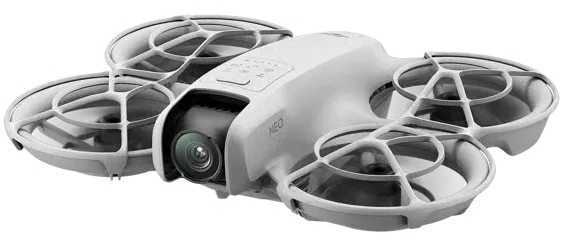
DJI Neo
The 2024 palm-launcher
The safest way into flying, and the lightest drone here by a hundred grams. Caged propellers, palm launch and a C0 class mark.
- 135 g, with 115 g of legal room
- Caged propellers, so a knock rarely ends a flight
- Launches off your palm, no controller needed
- 22 GB inside, so no card needed on day one
- About 18 minutes per battery, not 31
- One gimbal axis, levelled in software
I recommend this if…
- This is a first drone, for you or a gift
- You want to be filmed rather than to pilot
- You will fly near people, trees or indoors
- You want it flying seconds after leaving a pocket
Only if you want longer flights
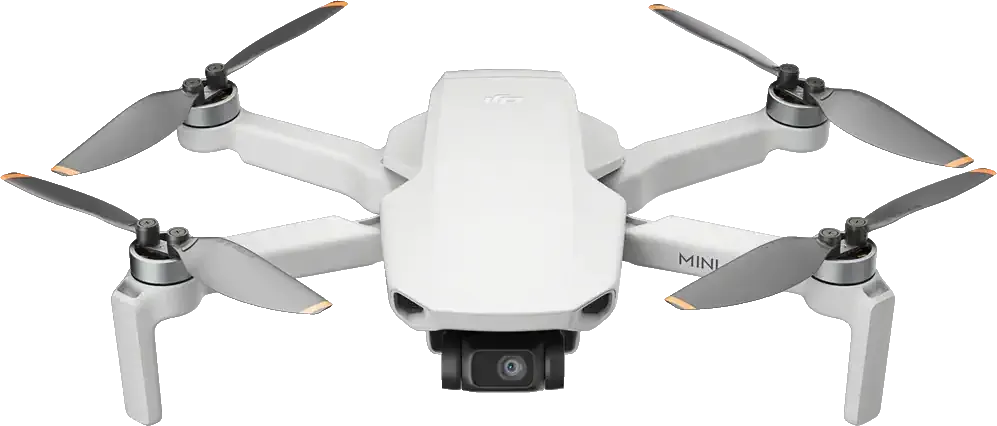
DJI Mini 4K
The 2024 budget folding drone
Longer flights and a proper three-axis gimbal. It also cannot sense obstacles in any direction, and its own manual says so.
- About 31 minutes per battery
- Three-axis gimbal, including pan
- Ships with the RC-N1 controller
- Cannot sense obstacles at all, in any direction
- Bare propellers with no guards
- 246 g, no class mark, and no internal storage
I recommend this if…
- You want the longest flights of the two
- You would rather learn to fly with sticks
- You want a controller included in the box
- You will fly in genuinely open space
Both links are Amazon affiliate links. As an Amazon Associate I earn from qualifying purchases, at no extra cost to you — full disclosure.
Two cheap drones, two completely different ideas
The Mini 4K is a conventional drone in miniature. It folds out, it comes with a controller, your phone clamps in as the screen, and you fly it yourself.
The Neo is a camera that flies itself. Press a button on the drone, hold your hand flat, and it lifts off your palm, films a preset move and lands back on your hand.
The Neo also keeps its propellers inside a plastic cage. Clip a branch or a doorframe and you usually get a bump rather than a crash.
That cage is why I hand the Neo to nervous first-timers, and why I would not hand them the Mini 4K.
Both turn up in my best beginner drones guide and best drone under £300.
Three things that do not separate them
Clear these away first, because they cannot decide it for you.
-
Same photo resolution
12 megapixels from either drone.
-
Same UK paperwork
Flyer ID and Operator ID for both.
-
Similar small sensors
1/2-inch against 1/2.3-inch.
-
So ignore all 3
None of it can tell you which to buy. The next four things can.
Both quoted flight times are laboratory figures. Expect materially less on any normal British afternoon, and less again on the Neo with its propeller cages fitted.
The four differences that actually matter
1. The Mini 4K cannot sense obstacles at all, and its propellers are bare
These two failings compound each other, which is why I treat them as one difference rather than two.
The Mini 4K manual is unusually blunt on page 13. It states that the drone cannot sense obstacles on its route automatically, and that the pilot should stay alert and steer around them.
Its only sensors point at the ground, and they are there to help it hover and land. Nothing looks forwards.
The Neo is no better on paper here, with downward vision and infrared only. But it puts a plastic cage around all four propellers.
Neo
No forward sensing, but caged
- Full propeller cage on all four rotors
- A clip is usually a bump, not a crash
- Safe enough to catch out of the air
- No forward or sideways sensing
Mini 4K
No forward sensing, and bare
- No propeller guards fitted as standard
- A clip usually ends the flight
- Manual: cannot sense obstacles automatically
- You are the collision avoidance
So neither drone will steer itself around a tree. The difference is what happens when you get it wrong.
On the Neo that is a wobble and a sheepish landing. On the Mini 4K it is a repair or a replacement.
Winner — DJI Neo
Neither drone can see an obstacle coming, so the one with a cage around its propellers is the one that survives learning. For a first drone that matters more than any specification on this page.
Fly the Mini 4K in genuinely open space and the missing guards never come up. Propeller guards are also available for it separately.
Check the Neo on Amazon2. The Mini 4K flies for 31 minutes. The Neo manages about 18
The clearest win for the Mini 4K, and it is a substantial one.
DJI rates the Mini 4K at 31 minutes, measured flying at 17 kph in windless conditions. The Neo is rated at about 18, dropping to 17 with its propeller cages fitted.
Neo
18min
about 12 in reality
Mini 4K
31min
about 22 in reality
That is close to double, and there is no getting around it. If you want the drone in the air for as much of an afternoon as possible, the Mini 4K does that better.
The counter is how the Neo gets flown. It goes up in twenty-second bursts off your palm, so a battery covers many clips rather than one long flight.
There is also a cold-weather difference that cuts the other way. The Mini 4K is rated only to zero degrees, where the Neo has no such published floor.
Winner — DJI Mini 4K
Thirteen extra minutes per battery is not a rounding error. On a long walk with one battery each, the Mini 4K is still flying when the Neo has been packed away.
Buy a spare battery for either and this largely evaporates. Both charge over USB-C, so a power bank covers you.
Check the Mini 4K on Amazon3. The Mini 4K has a three-axis gimbal. The Neo has one axis and software
The camera sits in a small motorised cradle called a gimbal, and the number of directions it can move in is what people mean by axes.
The Mini 4K has three: tilt, roll and pan. It corrects the drone leaning and twisting underneath it, mechanically, as it happens.
The Neo has one. It tilts, and it straightens the horizon afterwards in software by rotating the picture and cropping into it.
Neo
One axis plus software
- Tilts mechanically
- RockSteady and HorizonBalancing in software
- Levelling crops into your frame
- Horizon can wander in gusts
Mini 4K
Three axes, all mechanical
- Tilt, roll and pan on motors
- No cropping to level the horizon
- Steadier in wind
- Smoother pans
The sensors are close enough to ignore, at 1/2-inch on the Neo and 1/2.3-inch on the Mini 4K, both at 12 megapixels.
So the gimbal is where the picture quality actually differs, and the Mini 4K has the better one.
The Neo answers on storage instead. It has 22 GB built in, where the Mini 4K has none at all and needs a memory card from the first flight.
Winner — DJI Mini 4K
Three mechanical axes against one plus software cropping. On a breezy day the Mini 4K holds a level horizon without throwing away part of your frame.
The Neo is not producing bad footage, and 22 GB of built-in storage is a genuine convenience the Mini 4K cannot match.
Check the Mini 4K on Amazon4. The Neo weighs 135 g and carries a class mark. The Mini 4K has neither
UK rules are built around a 250 gram line, and both drones are under it. But they are not equally under it.
The Neo weighs about 135 grams. The Mini 4K weighs 246, and DJI is explicit that the figure already includes the battery, propellers and a microSD card.
Neo
135g
115 g under the 250 g limit
Mini 4K
246g
just 4 g under the limit
Four grams is nothing at all. It is a sticker, a small mount or a slightly heavier third-party propeller.
There is a second layer. The Neo carries a C0 class mark, declared in its manual, while the Mini 4K manual contains no class marking of any kind.
Practically that changes little today, because a drone under 250 grams flies in the same open category either way. It does make the Mini 4K a legacy drone in the eyes of the rules rather than a classified one.
Winner — DJI Neo
A hundred and eleven grams more headroom, plus an actual class mark. The Neo leaves you free to add a lanyard or a spare propeller without doing arithmetic, and the Mini 4K does not.
Fly the Mini 4K exactly as it came and 246 grams is under the line and stays there.
Check the Neo on AmazonFour questions that will tell you which one to buy
Work down them and stop at the first one you can answer firmly. That is your drone.
Is this a first drone, or a gift for a nervous beginner?
NeoWill you fly near trees, buildings, people or indoors?
NeoDo you want to be filmed without holding a controller?
NeoNone of the above, and you want the longest flights and a controller in the box?
Mini 4KIf you got to the bottom without a firm yes, the Mini 4K is the more conventional drone and will teach you more about flying. If the Neo appeals, it is worth reading it against the Neo 2, which fixes its two biggest weaknesses.
Two catches worth knowing before you order either one
Neither is a reason to avoid either drone. Both are things I would want to have been told before paying.
The Mini 4K needs a phone, a controller and a memory card before it flies
The Mini 4K ships with the RC-N1 controller, which sounds generous until you look at it. It has no screen of its own.
Your phone clamps in and becomes the display, so a flat phone means a cancelled flight.
It also has no internal storage whatsoever, so a microSD card is compulsory rather than optional. Treat it as part of the purchase.
The Neo needs none of that to fly. It has 22 GB inside and launches off your hand with nothing else involved.
The Neo only reaches 30 metres without a controller
Flown on palm control or from your phone, DJI caps the Neo at 30 metres of altitude.
Most people who buy a Neo never attach a controller, which makes that the real ceiling on every flight they make.
It is not a legal limit. UK rules allow 120 metres, so this is DJI being careful rather than the CAA.
The Mini 4K has no equivalent restriction, because it always has a controller attached.
Size, speed and what each one needs
Three practical points that will not decide it but are worth knowing.
Folded, the Mini 4K is the tidier package at 138 by 81 by 58 millimetres. Unfolded it is much the larger drone, at 245 by 289 with its propellers out.
The Neo never folds and never needs unfolding, which is the part that decides how often it actually comes out of a pocket.
Top speed goes to the Mini 4K at 16 metres per second against the Neo’s 8 in Sport mode. The Neo quotes 16 as well, but only in Manual mode, which needs the separate FPV controller.
Ceiling also favours the Mini 4K, at 4000 metres against 2000. Neither figure has any bearing in the UK, where you are held to 120 metres.
Neo vs Mini 4K: every specification side by side
| DJI Neo | DJI Mini 4K | |
|---|---|---|
| Released | September 2024 | April 2024 |
| Weight | Approx. 135 g | 246 g incl. battery, props and card |
| Class mark | C0 (manual p96) | None — legacy |
| Folds? | No, fixed frame | Yes, to 138 × 81 × 58 mm |
| Propeller guards | Yes, full cage | No |
| Palm takeoff | Yes | No, controller required |
| Obstacle sensing | Downward vision and infrared only | None — downward positioning only (manual p13) |
| Rated flight time | Approx. 18 min (17 with cages) | 31 min |
| Operating temperature | — | 0° to 40° C |
| Gimbal | Single-axis (tilt) plus software stabilisation | Three-axis (tilt, roll, pan) |
| Camera sensor | 1/2-inch, 12 MP | 1/2.3-inch, 12 MP |
| Lens | f/2.8, 117.6° | f/2.8, 83° |
| ISO range | 100–6400 | 100–3200 |
| Max video | 4K (4:3) at 30fps; 1080p at 60fps | 4K at 30fps |
| Max stills | 12 MP | 4000 × 3000 (12 MP) |
| Internal storage | 22 GB | None — microSD required |
| Transmission | O4 with RC-N3 | OcuSync 2.0, 720p live view |
| Battery | 1435 mAh | 2250 mAh |
| Max speed | 6 m/s Normal, 8 Sport, 16 Manual (FPV controller only) | 16 m/s Sport, 10 Normal, 6 Cine |
| Wind resistance | 8 m/s (Level 4) | 10.7 m/s (Scale 5) |
| Ceiling | 2000 m | 4000 m |
| On Amazon | Check price | Check price |
Figures from the official DJI specification pages and both user manuals. Amazon affiliate links — disclosure.
Both drones need a Flyer ID and an Operator ID. Neither is exempt
You will read all over the internet that drones under 250 grams need no licence. For a camera drone in the UK that is simply wrong, and both of these are camera drones.
Any camera drone between 100 g and 250 g needs both of these before you fly it outdoors. At 135 g and 246 g, both sit in that bracket.
Flyer ID
Proves you know the rules. A free online theory test, valid five years.
Operator ID
Registers you as responsible for the drone. £12.34 a year, and the number must be labelled on the drone.
Neither needs a GVC or an A2 Certificate of Competence for ordinary recreational flying. The Neo carries a C0 class mark and the Mini 4K carries none, but both fly in the same open category while under 250 g. There is more in do I need a licence for a sub-250g drone and UK class marking explained.
Why I pick the DJI Neo over the DJI Mini 4K
Neither of these drones can see an obstacle coming, so the sensible question is which one forgives you when you get it wrong.
That is the Neo, because of the cage, and it is also lighter, class marked and usable with nothing in your hands.
The Mini 4K wins on flight time and on the gimbal, and if you want to learn to fly properly with sticks in your hands it is the better teacher. It is just a less forgiving one.
My recommendation — DJI Neo
DJI Neo
2024 — 135 g, C0 class mark
I recommend the DJI Neo over the DJI Mini 4K because a caged, palm-launched drone with a class mark is a far more forgiving thing to learn on. The Mini 4K flies longer and has a better gimbal, and both of those are real. But it cannot sense a single obstacle, its propellers are bare, and it will not fly at all without a controller and a charged phone. For most people spending this little, the Neo is the one that survives the first month.
- 135 g with 115 g of legal room
- Caged propellers absorb a clip
- Palm launch with nothing in your hands
- 22 GB of storage built in
- C0 class marked
- O4 transmission with an RC-N3
- About 18 minutes per battery
- Single-axis gimbal
Amazon affiliate link — no extra cost to you.
The endurance option
DJI Mini 4K
Buy this if flight time and a three-axis gimbal matter more to you than obstacle sensing, propeller guards and palm launch, and you are content to be the thing that avoids the trees.
Amazon affiliate links — disclosure.
Written by Peter Leslie — GVC-qualified commercial drone pilot
I fly compact DJI drones alongside enterprise survey kit, and I judge them on the footage and the safety margin they give me in real UK conditions.
Every figure here came out of the official DJI manuals or the CAA, not a press release. Where the manuals contradicted the marketing I went with the manuals.
Comparison you want covered next? peter@hiredronepilot.uk.
Sources