Best DJI Alternative 2026: What I’d Buy If I Were Leaving DJI

Peter Leslie
31 July 2026 · 19 min read
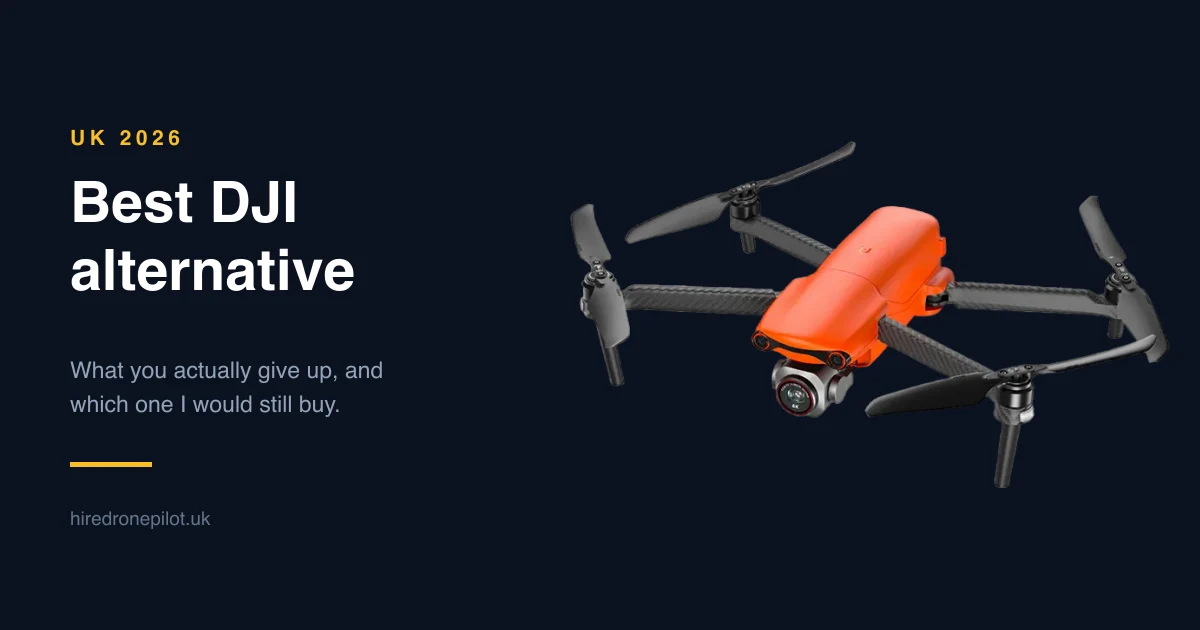
Nobody searches for this because they woke up excited about a drone. You are here because something pushed you — a policy at work, a client questionnaire, a news story, or just a quiet dislike of one company owning an entire category. That is a perfectly good reason to look around, and this page exists to help you look properly.
But almost every guide with this title does the same dishonest thing. It lists six drones, says each one is “a serious rival to DJI”, and never tells you what you are handing back. So two questions decide this, and neither is about megapixels: what exactly are you trying to get away from, and what are you willing to lose to do it.
Answered properly, the best DJI alternative in 2026 is whichever drone still solves your reason for leaving once you have priced what leaving actually costs. For some readers that is a genuinely good drone. For one group of readers, and I want to be straight about this early, the honest answer is that nothing on this page solves the problem at all.
One disclosure before anything else, because it shapes how you should read the rest. I have flown every DJI drone. I have not flown the HOVERAirs, the Potensics, the Autels or the Antigravity. Everything I say about DJI is from my own hands. Everything I say about the alternatives is judgement built on manufacturer specification pages, UK stock checks and thirteen years of knowing what a spec sheet leaves out — and I have marked which is which rather than letting you assume.
So this guide does three things. It asks four questions and narrows twelve non-DJI drones to the one that fits you. It then itemises the ecosystem tax — the money and the capability you quietly hand over at the door. And it runs the check almost nobody runs, which is whether the alternative is actually different in the way you needed it to be different.
How I get paid: the Amazon links below are affiliate links, so if you buy through one I earn a small commission at no extra cost to you. It does not change what I recommend — two of the twelve drones here have no affiliate link at all, because I could not find anywhere in the UK that sells them.
The Best DJI Alternative in 2026 Is the Potensic ATOM 3
The only drone here that is not made by DJI and still does the whole job: big sensor, long battery, proper controller, under the weight that keeps the paperwork simple.
- Under 249 grams, so no test and no certificate — just the two registrations everyone needs.
- A 1/1.3-inch, 50-megapixel sensor with raw DNG files and a log profile, which is flagship-phone territory rather than toy territory.
- Forty minutes a battery on the standard pack, and the box has a controller and three batteries in it.
- The honest catch: no obstacle sensing in any direction except down, and Potensic sells no accident cover for this model.
Affiliate link · costs you nothing extra · full disclosure
PART ONE
Here are the five that win their categories — and what is wrong with each of them, because none of them is a DJI-beater and pretending otherwise would waste your money. None of the five is the drone I have just recommended: the ATOM 3 above wins on breadth, and these five win on the particular things it cannot do at all. It takes four different companies to fill the five slots, which is the state of this market rather than laziness on my part.
Best DJI Alternative for Flying Through Goggles: EMAX Tinyhawk 3 Plus
The one kit here that puts you in goggles with nothing of DJI’s in it — which, in a category DJI otherwise defines, is the entire point.
- Goggles, a controller and the drone in one box, and not one part of that chain is DJI’s.
- The only drone here you have to learn to fly rather than simply operate — no GPS and nothing holding position for you.
- An analogue video feed and no gimbal, so the footage is for the thrill rather than for keeping.
- Flying through goggles legally needs a second person stood beside you watching the drone.
Best Cheap DJI Alternative: Potensic ATOM 2
Raw files, a log profile and an f/1.8 lens, for less than the price of a DJI battery and a filter set.
- Under 249 grams, so no test and no certificate — just the two registrations everyone needs.
- A controller and three batteries in the box, and 32 minutes on each of them.
- The only drone here Potensic will sell you an accident-cover plan for.
Best DJI Alternative for Filming Yourself: HOVERAir X1 PROMAX
The one category where the non-DJI answer is simply better. Off your palm, 8K, and back in your hand.
- Under 249 grams, so no test and no certificate — just the two registrations everyone needs.
- 8K at 30fps on a 1/1.3-inch sensor, from something that folds into a coat pocket.
- Sixteen minutes a battery, no controller in the box, and it can only see behind itself.
Best DJI Alternative for Water and Wind: HOVERAir AQUA
DJI makes nothing that floats. If you surf, paddle or sail, this is not a compromise — it is the only option.
- IP67 waterproof with positive buoyancy, so it takes off from and lands on water.
- Rated to wind level 7, roughly 17 metres a second — more than anything else here.
- No obstacle avoidance in any direction, which is a great deal to give up at this price.
Best DJI Alternative for a Shot DJI Cannot Take: Antigravity A1
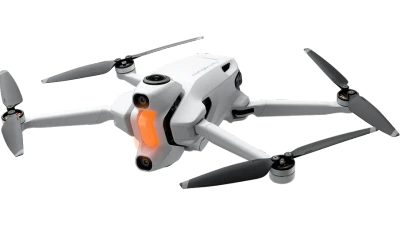
Eight K in every direction at once, with goggles in the box. Nothing DJI sells does this.
- Under 249 grams on the standard battery, which is where its EU C0 mark applies.
- The high-capacity battery buys 39 minutes but takes it to 291 grams and into C1.
- Proprietary files that only Antigravity’s own software will open.
Affiliate links · costs you nothing extra · full disclosure
Take the quiz: find the DJI alternative that fits your reason for leaving
Four questions, starting with the one nobody else asks: why are you leaving?
- Matched to your actual reason for avoiding DJI, not a generic top ten.
- Twelve non-DJI drones, each checked for UK stock on the day of writing.
- Tells you when the honest answer is that nothing here fits.
- About 20 seconds, and no email needed.
STEP 1 OF 4
12 of 12 still fit
All twelve non-DJI drones, and why each one might not suit you
-
Potensic ATOM SE
under 249 g · C0 (EU) · 1/3″ 12MP · 31 min · controller in the box
The cheapest way to own a stabilised, GPS-held camera that is not a DJI. A genuinely poor camera attached to a genuinely competent little drone.
- Under 249 grams, so no test and no certificate — just the two registrations everyone needs.
- Twelve megapixels on the smallest sensor in this guide, and no digital zoom or vertical mode at all.
- Thirty-one minutes a battery, which is more than most drones costing twice as much.
-
HOVERAir X1 the one I’d avoid
125 g · 1/2″-class 12MP · 11.5 min · 30 m range
The drone that started the follow-me category, now comprehensively outclassed by its own successors. Eleven and a half minutes is not a flight, it is a demonstration.
- Eleven and a half minutes a battery, and HOVERAir quotes about twenty automated shots per pack.
- Thirty metres of live video range, against five hundred on the newer models.
- The one drone here I would actively steer you away from — its own replacements cost very little more.
-
Holy Stone HS900 listing gets UK law wrong
249 g · no class mark published · 1/2.3″ 48MP · 3-axis gimbal · 6 km
A surprisingly complete little drone for the money, sold with a claim about British law that is simply untrue.
- Its own Amazon listing says the drone “doesn’t need CAA registration”. That is wrong — 249 grams with a camera needs both IDs.
- A real three-axis gimbal and a 48-megapixel 1/2.3-inch Sony sensor, which is a lot of hardware at this price.
- Holy Stone publishes no class mark for it, and its website would not serve me a specification page at all.
-
Potensic ATOM 2
under 249 g · C0 (EU) · 1/2″ 48MP f/1.8 · 32 min · controller + 3 batteries
The value pick of the whole guide. Raw files, a log profile and an f/1.8 lens on a drone that costs less than a decent set of DJI filters and a battery.
- Under 249 grams, so no test and no certificate — just the two registrations everyone needs.
- Raw DNG files and a P-Log profile, which is the difference between footage you can grade and footage you cannot.
- The only drone here Potensic will actually sell you an accident-cover plan for.
-
EMAX Tinyhawk 3 Plus
analogue FPV · goggles and controller included · no GPS · no stabilised camera
The only ready-to-fly goggles kit here that owes DJI nothing. It is also the only drone on this page you have to learn to fly rather than simply operate.
- Goggles and a controller in the box, and no DJI part anywhere in the chain.
- An analogue video feed and no gimbal, so the footage is for the thrill rather than for keeping.
- Flying through goggles legally needs a second person stood beside you watching the drone.
-
HOVERAir X1 PRO
191.5 g · C0 (EU) · 1/2″ 4K60 · 16 min · rear sensing only
Throw it off your palm and it films you. Nothing DJI makes does this particular job as calmly, and nothing here is more honest about being a camera rather than a drone.
- Under 249 grams, so no test and no certificate — just the two registrations everyone needs.
- Sixteen minutes a battery, and the Standard box contains the drone and a cable. Nothing else.
- It can only see behind itself. There is no forward obstacle sensing at all.
-
Potensic ATOM 3
under 249 g · C0 (EU) · 1/1.3″ 50MP · 40 min · 4K60 · 16 km
The closest thing to a proper camera drone that nobody at DJI had a hand in. On paper it gives up almost nothing except the thing that stops you hitting a tree.
- Under 249 grams, so no test and no certificate — just the two registrations everyone needs.
- A 1/1.3-inch, 50-megapixel sensor with raw DNG files and a log profile, which is flagship-phone territory rather than toy territory.
- Forty minutes a battery on the standard pack, and the box has a controller and three batteries in it.
- The honest catch: no obstacle sensing in any direction except down, and Potensic sells no accident cover for this model.
-
HOVERAir X1 PROMAX
192.5 g · C0 (EU) · 1/1.3″ 8K30 · 16 min · rear sensing only
The best self-flying camera anyone makes, and I include DJI in that. It shoots 8K, weighs less than a phone and asks nothing of you but a flat palm.
- Under 249 grams, so no test and no certificate — just the two registrations everyone needs.
- 8K at 30fps on a 1/1.3-inch sensor, from a drone that folds into a coat pocket.
- Sixteen minutes a battery, no controller in the box, and it can only see behind itself.
-
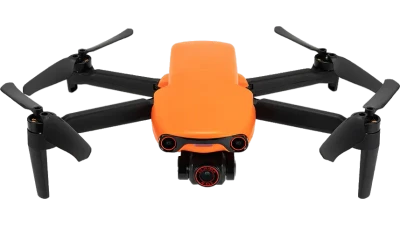
Autel EVO Nano+ no UK seller I could find
249 g · no class mark published · 1/1.28″ 50MP f/1.9 · 28 min · three-way sensing
On paper this is the drone this article wanted to recommend: a big sensor, real obstacle sensing, under the weight limit. On the day I checked, nobody in Britain would sell me one.
no link- The only drone here besides DJI with obstacle sensing in more than one direction.
- Autel publishes no European or UK class mark for it, so you would be flying it on weight alone.
- I could not find anywhere in the UK selling one, so there is no link.
-
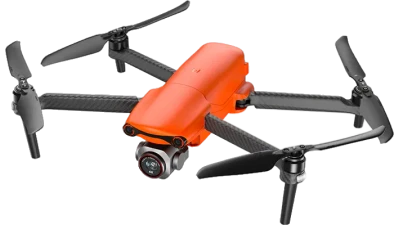
Autel EVO Lite+ no UK seller I could find
835 g · legacy, no class mark · 1″ 20MP f/2.8–f/11 · 40 min
The drone everybody names when you say the words DJI alternative, and the one with an adjustable aperture nothing under a thousand pounds from DJI can match. Also the heaviest legal problem here.
no link- An aperture that actually moves, from f/2.8 to f/11, which nothing else in this guide offers.
- 835 grams and no class mark, so it needs the A2 test before you can fly it near people.
- I could not find anywhere in the UK selling one, so there is no link.
-
HOVERAir AQUA
249 g · C0 (EU) · IP67 · 1/1.28″ f/2.55 · 23 min · wind level 7
It floats, it takes off from water, and it shrugs off a wind that would ground everything else on this page. DJI does not make anything remotely like it.
- Under 249 grams, so no test and no certificate — just the two registrations everyone needs.
- IP67 waterproof with positive buoyancy, so it takes off from and lands on water.
- HOVERAir’s own comparison table lists its obstacle avoidance as, simply, no. That is a lot of money for a drone that cannot see.
-
Antigravity A1
249 g or 291 g · EU C0 or C1 · 8K 360° · 1/1.28″ 55MP · 24 or 39 min
An 8K camera that films in every direction at once, with goggles in the box. The most interesting object in this guide and the hardest to justify owning.
- Under 249 grams on the standard battery. The high-capacity one takes it to 291 grams and out of C0 into C1.
- Eight K in every direction at once, and you choose the framing afterwards in Antigravity’s own app.
- Its files are a proprietary format that only Antigravity’s software opens, which is a real constraint if you already have an edit.
Every link points at the exact configuration described in the row beside it — the drone, the controller and the batteries named, not a cheaper box with the same name. Stock and configurations were checked on 31 July 2026. Prices move constantly and promotions come and go, so read the current price on Amazon before you decide. Specification figures come from each manufacturer’s own pages. Comparison specifications from DroneCompare, CC BY 4.0.
PART TWO
The ecosystem tax you pay to leave DJI
Here is the thing the comparison tables never show you. When you buy a DJI drone you are not only buying an object. You are buying a spare-parts network, an accident-cover plan sold in Britain, a filter market with thirty suppliers competing on price, a controller nobody charges you extra for, and an obstacle-sensing system that has quietly saved more drones than any pilot will admit.
Leave, and you hand some of that back. Not all of it, and not always at a loss — but you should know the bill before you sign, because it is not on the box. I have split it into the four charges that actually bite.
Charge one: the sensing you quietly give up
This is the biggest one, and it is not close. Obstacle sensing is the single most expensive thing to engineer on a small drone, and it is the first thing every challenger leaves out. Here is what each manufacturer publishes about what its drone can actually see.
WHAT EACH DRONE CAN SEE
| DRONE | WHAT THE MAKER PUBLISHES |
|---|---|
| DJI Mini 5 Pro the benchmark, not an entry in this guide | Omnidirectional binocular vision, plus a forward-facing LiDAR |
| Autel EVO Nano+ | Forward, backward and downward binocular vision |
| Antigravity A1 | Forward and downward vision, plus bottom infrared |
| HOVERAir X1 PROMAX | Rear only — time-of-flight plus a rear vision sensor |
| HOVERAir X1 PRO | Rear only — time-of-flight |
| Potensic ATOM 3, ATOM 2, ATOM SE | Downward vision for holding position. Nothing in any other direction |
| HOVERAir AQUA | No |
| Holy Stone HS900 | Nothing published that I could find |
That “No” against the AQUA is not my summary. It is the word in the obstacle-avoidance row of HOVERAir’s own comparison table — on the most expensive drone in this guide, which costs more than twice what my top pick does.
Read that table properly and the picture is clear. Outside DJI, at this price, obstacle sensing basically does not exist. The one drone that matches DJI for sensing is the Autel EVO Nano+, and you cannot buy it here.
Whether that matters depends entirely on how you fly. If your flying is over open water, open fields and open coast, you will never miss it. If it is between trees, near a roofline or with a child in the frame, it is the difference between a scare and a repair bill. I would rather you made that trade knowingly than discovered it in a hedge.
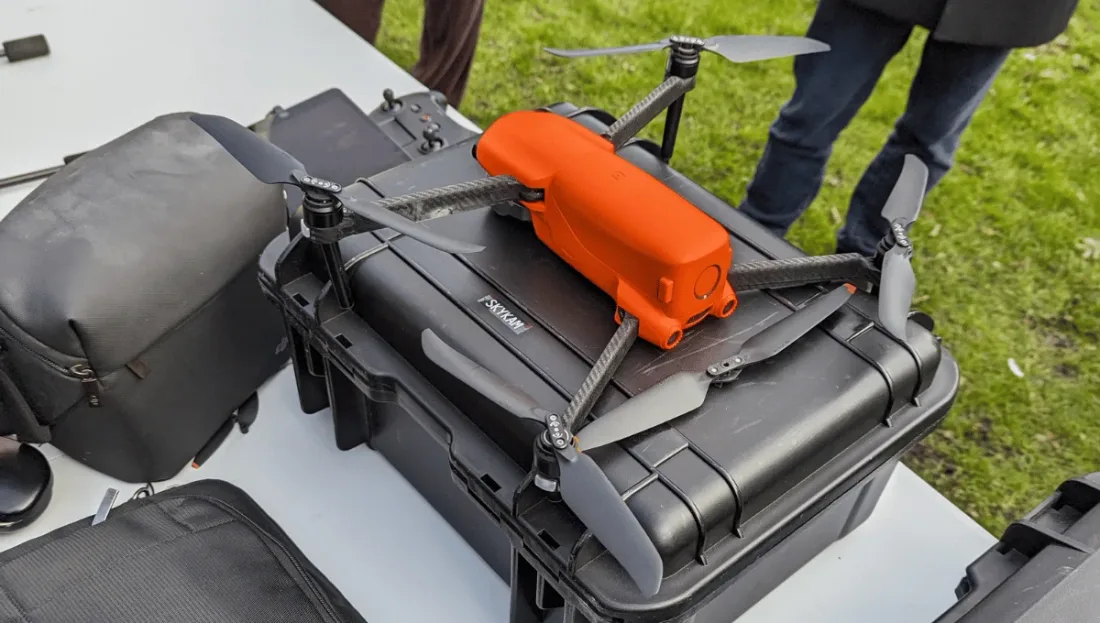
Charge two: the controller is not always in the box
Every DJI drone arrives with something to fly it with. That is so consistent that nobody thinks to check — and then a HOVERAir turns up.
HOVERAir’s Standard bundle, in the company’s own words, contains “X1 PRO (with battery), USB C-C cable”. That is the entire contents. You fly it by tapping the buttons on the drone itself, or from the phone app. Which is genuinely lovely, right up to the point where you read what the app’s range actually is.
HOVERAir publishes a proper interference table rather than one heroic number, and it is worth reading twice. In a city centre, an iPhone gets 30 to 100 metres. In a suburb or a park, 100 to 150. Only in a completely open environment with no electromagnetic interference does it reach 250 metres for iOS or 500 for Android. The Beacon — the little wrist unit that reaches a kilometre — is a separate purchase, and the bundle that adds the JoySticks costs well over half as much again. Neither is a trivial sum next to what you paid for the drone, and neither is mentioned on the box.
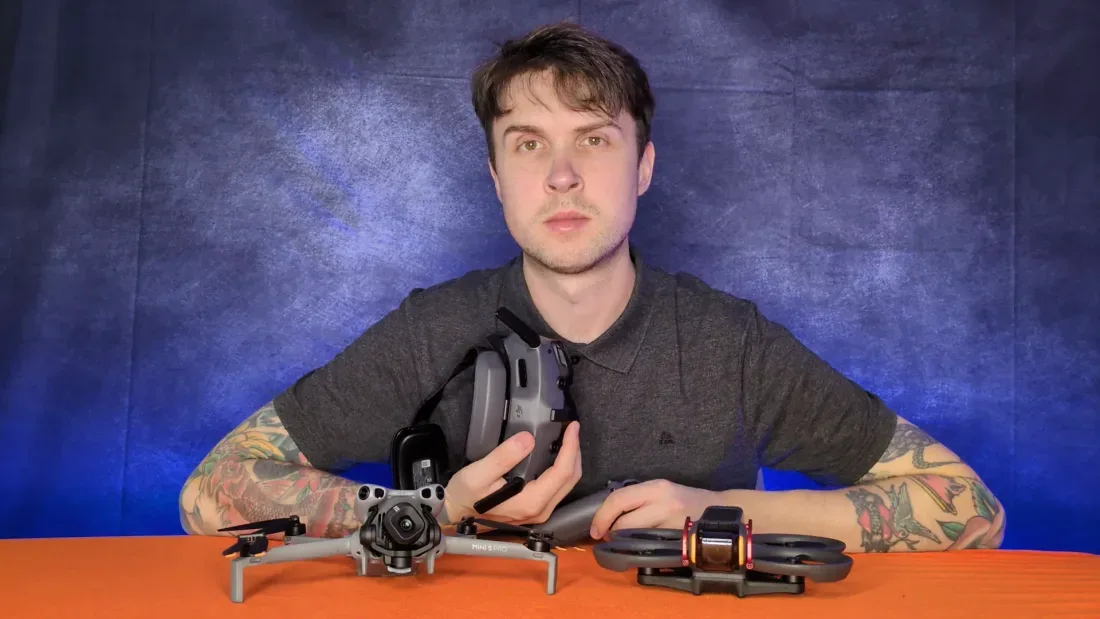
Potensic goes the other way and it is one of the reasons it wins this guide: both the ATOM 2 and ATOM 3 packages I have linked include a controller and three batteries. That is the pattern to look for. Read the box contents, not the headline.
Charge three: the running costs, side by side
Now the four things you will want in the first month, and which of these three companies expects you to pay for each of them. Read it as a list of who charges you rather than a list of figures: the numbers move week to week, but the pattern of what is included and what is not has been stable for two years. All four lines were checked against each manufacturer’s own UK store on 31 July 2026.
| WHAT YOU WILL WANT | DJI MINI 5 PRO | HOVERAIR X1 PRO | POTENSIC ATOM 3 |
|---|---|---|---|
| Something to fly it with | In the box | Buy the Beacon, or fly it from your phone | In the box |
| A second battery | Sold separately | Sold separately, for much the same as DJI asks | Three in the box |
| A set of ND filters | A maker’s set, plus a crowded third-party market | A maker’s set only, and dearer than DJI’s | None listed for this model |
| Cover for the crash | A year of cover, sold in the UK | A year of cover, sold in the UK, for about half of DJI’s | Not sold for this model |
Sources: store.dji.com/uk, uk.hoverair.com and potensic.com, all read 31 July 2026. Potensic’s own filter set is listed as compatible with the ATOM 2 series only, and only for its f/1.8 aperture — the ATOM 3 is f/2.8.
Two of those lines deserve staring at. The cover for the crash row is the ecosystem tax in its purest form. Potensic’s care page states plainly that “the Potensic Care Plan is only available for ATOM 2 Drone”. So the drone I am recommending as the best DJI alternative in this guide — the company’s own flagship — has no accident-cover plan you can buy. Crash it and you buy another one.
And the ND filter row is what a thin accessory market looks like from the inside. On a DJI you have a manufacturer set, four good third-party sets and a race to the bottom on price. On an ATOM 3 you have, as far as I can find, nothing at all yet.
Charge four: the file at the end of it
A quieter one, and the one that catches people who already have an editing workflow. The Antigravity A1 records to INSV video and INSP photos, which Antigravity notes are “exported through Antigravity App or Antigravity Studio”. There is DNG for stills, which helps. But the 360 video — the entire reason you bought it — goes through one company’s software before it goes anywhere else.
That is not a scandal. Every 360 camera works this way. It is simply another thing that was free and invisible when you were inside a big ecosystem, and becomes a decision the moment you leave.
The charge I could not price: Remote ID in 2028
I want to flag one thing I genuinely could not settle, because it is the sort of thing that turns into a problem in eighteen months.
From 1 January 2028, the CAA makes Remote ID mandatory for essentially all drone operations — including any legacy drone of 100 grams or more that has a camera. That is every single drone on this page. Remote ID means the drone broadcasts its position, the pilot’s position and the Operator ID while it is flying.
I could not confirm from any of these manufacturers’ public pages whether their current drones will broadcast UK Remote ID, or whether that will arrive as a firmware update. What I can tell you is that Potensic already sells a separate bolt-on Remote ID module, the RID-916, with its own battery and GPS — which tells you the company has thought about it, and also that the answer for at least some of its drones is a box you strap on. Ask before you buy. It is a fair question and any manufacturer that intends to still be supporting your drone in 2028 should be able to answer it.
UK drone rules do not care which badge is on the shell
This is the part I most want you to take away, because a surprising number of listings imply otherwise. The law is written about the drone, not the company. Nothing in this section changes because you bought a Potensic instead of a DJI.
Two registrations, and you need both
Every drone in this guide has a camera and weighs more than 100 grams. That combination means two things, from the CAA, regardless of brand:
- A Flyer ID. A free online theory test that proves you know the rules. It lasts five years and you renew it by taking the test again.
- An Operator ID. This registers you as the person responsible for the drone. It costs £12.34 a year and the number goes on a label stuck to the outside of the drone. You must be 18 or over. One Operator ID covers every drone you own.
That is it. There is no test, no certificate and no further qualification for anything under 250 grams, which is ten of the twelve drones above.
A LISTING THAT WILL GET YOU FINED
The Holy Stone HS900 listing on Amazon UK, read on 31 July 2026, says the drone “weighs only 249 grams and doesn’t need CAA registration”. That is wrong. A drone between 100 g and 250 g with a camera needs a Flyer ID and an Operator ID. The HS900 has a camera. The CAA is explicit that flying without the required IDs is against the law.
I am not picking on Holy Stone for sport. I am showing you what happens when you step outside the brand whose compliance department is the size of a small government — the drone can be perfectly good and the paperwork advice can still be nonsense. Take the law from the CAA, never from a product listing.
Class marks, and what actually happens in 2028
A class mark is a label on the drone saying which safety standard the manufacturer declares it meets. Most of the drones here carry a European C0 mark, which HOVERAir, Potensic and Antigravity all publish. Until 31 December 2027 you can fly a C-marked drone in the UK as though it held the equivalent UK class.
From 1 January 2028 that stops, and the drone becomes what the CAA calls a legacy drone, governed by weight alone: under 250 grams flies in Over People (A1), under 2 kilograms needs an A2 Certificate of Competence, under 25 kilograms is Far from People (A3).
Here is the good news, and it is the one place where this guide is genuinely relaxed: for a sub-250-gram drone, that change costs you nothing. Legacy and under 250 grams is still A1. Ten of the twelve drones above go through 1 January 2028 without so much as a shrug.
The exception is the Autel EVO Lite+ at 835 grams, and it is not waiting for 2028. Autel publishes no class mark for it at all, so it is a legacy drone today. Under 2 kilograms and legacy means you need the A2 Certificate of Competence to fly it near people, and without one you are in A3 — 150 metres away from anything residential, commercial, industrial or recreational. In most of Britain that means driving to a field.
One rule change worth knowing about
From 1 January 2026, any new model of drone placed on the UK market must have a UK class mark. I could not find a UK class mark published for any drone in this guide — they all declare European C0 or nothing. That may simply be a labelling lag rather than a problem, and it does not affect what you are allowed to do today. But if a compliance officer at your work ever asks to see the mark, it is worth knowing which one is physically on the shell before you order.
PART THREE
The passport test: who actually makes these drones
Now the check that decides whether any of the last four thousand words were worth reading. A good chunk of the people searching for a DJI alternative are not doing it because they dislike the app. They are doing it because a policy, an employer, a client questionnaire or a news cycle told them to.
So it is worth asking, plainly, where each of these companies says it is from. Not what a forum says. What the company itself publishes.
IN THE COMPANY’S OWN WORDS
| BRAND | WHAT ITS OWN SITE SAYS |
|---|---|
| HOVERAir Zero Zero Robotics | “Headquartered in Hangzhou, China, it has offices in Beijing, Shenzhen, Xinchang, and San Francisco.” |
| Potensic | “Shenzhen Potensic Intelligent Co., Ltd is a limited liability company established under the laws of the People’s Republic of China.” |
| Autel Robotics | “Headquartered in Shenzhen—the ‘Drone Capital’ of China…” |
| Antigravity | “Incubated by Insta360 and founded by drone enthusiasts and engineers…” — no headquarters stated on its UK site |
| Holy Stone | No specification or company page I could load. Its Amazon UK listing gives the country of origin as China |
Read from each company’s own about, privacy or corporate page on 31 July 2026. DJI is not in the table because you already know its answer — that is why you are here.
There is the passport test, and there is no gentle way to put the result. Every alternative in this guide is sold by a company that describes itself as Chinese. If your reason for leaving DJI is a rule written about a company, swapping brands solves it. If it is a rule written about a country, swapping brands inside this list does not solve anything at all — it just costs you the obstacle sensing.
The follow-up question is the obvious one: so what is left? And the honest answer at consumer prices is: not much. Parrot, the French manufacturer everybody names next, now titles its own home page “European leader in professional drones” and its product menu lists ANAFI UKR, ANAFI Ai and ANAFI USA. There is no consumer camera drone on it. The company that used to sell you a Bebop for a few hundred pounds now sells to defence and industry.
So if you need a drone that is not Chinese-made, you are not shopping in this market. You are shopping in the professional one, at professional prices, and you should say so out loud before you spend an afternoon comparing 48-megapixel sensors. For a one-off job it is almost always cheaper to hire a qualified pilot who has already made that decision, and who carries the insurance and the qualifications with it.
To be clear about what I am not saying. I am not telling you any of these drones is unsafe, and I am not telling you what to think about any of it. I am telling you where each company says it is from, so that you can check your own reason against the facts rather than against a marketing page. That check takes two minutes and it is the single most useful thing on this page.
PART FOUR
What I’d buy if I were leaving DJI
The Potensic ATOM 3, with a controller and three batteries in the box, for comfortably less than the DJI it is standing in for. That is what I’d buy if I were leaving DJI, and I would not spend long deciding.
Look at what it does not give up. A 1/1.3-inch, 50-megapixel sensor is the same class of sensor as a DJI Mini 4 Pro. It writes raw DNG files and shoots a log profile, so you can grade it. It does 4K at 60fps. It claims forty minutes on the standard battery, which is longer than the Mini 5 Pro manages on its standard pack, and there are three of those batteries in the box. It is under 249 grams, so the CAA asks you for a free test and £12.34 and then leaves you alone.
Add up year one honestly and it is a short list, which is the point. The drone. The £12.34 Operator ID, which is a CAA fee and the one figure here that does not move. A fast V30-rated memory card, because it needs one and does not include one — a rounding error next to the drone. No second battery, because there are already three in the box, and that alone is the line item that usually adds a tenth to the bill on a DJI. No care plan, because Potensic does not sell one for this model. Insurance is optional unless you are being paid, in which case budget forty pounds or so more. So: the drone, a card, and a registration fee smaller than a takeaway. What you cannot budget for is the crash, because nobody will cover it. Fly it like it is uninsured, because it is.
Spend less if the camera is not the point. The Potensic ATOM 2 saves you a meaningful chunk of the ATOM 3’s price and still has an f/1.8 lens, 48 megapixels, raw files, a log profile, 32 minutes a battery and the same controller-and-three-batteries box. What you give up is sensor size and eight minutes of flight. It is the best value in this entire guide by a comfortable margin, and it is the only drone here you can also buy a care plan for.
Spend more only for a job DJI does not do. The HOVERAir X1 PROMAX costs a little more than the ATOM 3 and films you better than anything DJI sells, and the HOVERAir AQUA costs more than twice the ATOM 3 and is the only drone on this page that floats. Those are not compromises. They are categories where leaving DJI is the upgrade — and in the AQUA’s case, the only place you can go at all.
The one I’d actively tell you to avoid
The HOVERAir X1, the original. It is priced like the sensible way into the follow-me category, and it is not.
Eleven and a half minutes a battery. Thirty metres of live video range — not five hundred, thirty. A 12-megapixel camera. Meanwhile its own successor, the X1 PRO, shoots 4K at 60fps, flies for sixteen minutes and reaches five hundred metres. Yes, it costs more. But the X1 is close enough in price to the far better Potensic ATOM 2 that I cannot construct an argument for it that survives contact with a spreadsheet. Buy the newer one or buy a different thing entirely.
And if the reason does not survive the reading
Some of you will get this far and conclude that the reason you came was softer than you thought. That is a completely respectable outcome and I would rather you reached it here than after spending five hundred pounds.
If the honest answer turns out to be that you wanted the best small camera drone and the brand was a preference rather than a requirement, the DJI Mini 5 Pro has a one-inch sensor, omnidirectional sensing plus LiDAR, and a spares and cover network none of these companies can match. It costs more than my top pick here, and it is worth it if the badge was never really the point. I have flown it. It is the better drone, and saying so is the least I owe you after four thousand words arguing the other way. There is a fuller treatment of it in my camera drone guide.
And if the real requirement is a piece of work rather than a piece of kit — a survey, a set of property shots, a roof — owning is rarely the cheaper answer. You can hire a qualified drone pilot who already has the drone, the qualifications and the insurance, and who can tell you exactly what is in their case.
Best DJI alternative: the questions I get asked most
What is the best DJI alternative in 2026?
The Potensic ATOM 3, which comes with a controller and three batteries in the box. It is the only non-DJI drone I found on sale in the UK that pairs a 1/1.3-inch 50MP sensor with 40 minutes of flight on the standard battery, raw DNG files, a log profile and a takeoff weight under 249 grams. Spend less and the Potensic ATOM 2 does most of it for a good deal less. If you want a drone that films you rather than one you fly, the HOVERAir X1 PROMAX is the better answer.
Are there any consumer drones that are not made in China?
Not at these prices, as far as I can establish. Every brand in this guide — HOVERAir, Potensic, Autel, Antigravity, Holy Stone and EMAX — is sold by a company that describes itself as Chinese in its own published material. Parrot, the French maker people usually name next, now titles its own home page “European leader in professional drones” and lists only professional models. If your reason for leaving DJI is a rule written about a country rather than a company, switching brand inside this list does not solve it.
Do I still have to register a non-DJI drone with the CAA?
Yes, and the brand makes no difference at all. Any drone from 100 g to under 250 g with a camera needs both a Flyer ID, which is a free online theory test valid five years, and an Operator ID, which costs £12.34 a year and goes on a label stuck to the drone. Every drone in this guide has a camera and weighs more than 100 grams, so every one of them needs both. Be careful with listings that tell you otherwise: the Holy Stone HS900 listing on Amazon UK claimed on 31 July 2026 that the drone “doesn’t need CAA registration”, which is wrong.
Can you buy Autel drones in the UK?
I could not find one on 31 July 2026. Searching Amazon UK for Autel EVO drones returned propellers, motor arms, gimbal cables and car diagnostic tools, but no EVO Nano+ or EVO Lite+ to buy. Autel’s own product pages are readable and its specifications are good, but a spec page is not a shop. That is why both Autel drones sit in the list above with no buy link and cannot win the quiz.
Do non-DJI drones have obstacle avoidance?
Mostly not, and this is the single biggest thing you give up. The DJI Mini 5 Pro carries omnidirectional binocular vision plus a forward LiDAR. Against that, HOVERAir publishes “Rear ToF” for the X1 PRO, “Rear ToF + Rear Vision Sensor” for the X1 PROMAX and a flat “No” for the AQUA, its dearest drone. Potensic’s ATOM SE, ATOM 2 and ATOM 3 specification pages list a downward vision system for positioning and no obstacle sensing in any other direction. Only Autel’s EVO Nano+, which you cannot buy here, matches DJI for sensing.
What do you actually give up by leaving DJI?
Four things, in rough order of how much they will annoy you: obstacle sensing, which mostly does not exist outside DJI at this price; accident cover, because Potensic’s own care plan is sold for the ATOM 2 only and nothing covers the ATOM 3; the controller, because no HOVERAir includes one and the Beacon is a paid extra; and the third-party accessory market, where a filter set or a battery has one supplier instead of thirty. What you do not give up is the paperwork — UK registration is identical whatever badge is on the shell.
The short version
If you read all of that and still want me to just say it: buy the Potensic ATOM 3. It is the only non-DJI drone on sale here with a big sensor, raw files, a long battery and a controller in the box, and it stays under the weight that keeps your paperwork down to a free test and one annual registration. Fly it carefully, because it cannot see forwards and nobody will insure it for you.
Affiliate links · costs you nothing extra · full disclosure
Stock, bundle contents and accessory availability checked 31 July 2026 against Amazon UK, uk.hoverair.com, potensic.com and the DJI UK store. Drone prices move constantly, so read the current price on the link before you buy rather than taking one from a page like this one. Specifications are from each manufacturer’s own pages. Regulatory detail from the UK Civil Aviation Authority. Comparison specifications from DroneCompare, licensed under CC BY 4.0. Amazon links are affiliate links.