Best Drone Under £1,000 in the UK 2026: Where I’d Stop Spending

Peter Leslie
31 July 2026 · 20 min read
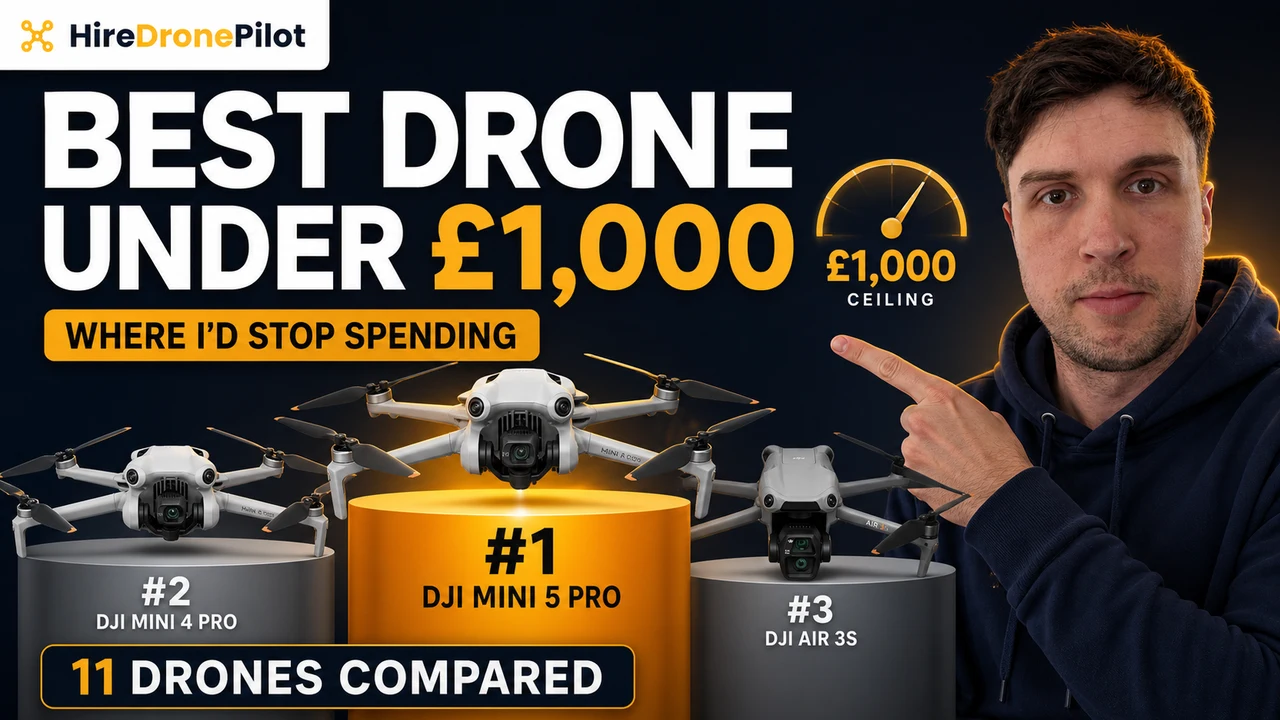
A thousand pounds is the budget at which people stop asking what they can afford and start asking what they should get. It is also, in my experience, the budget most likely to be spent badly — because at this level nothing is obviously too expensive, so there is nothing to stop you.
Two things decide this purchase, and neither is the camera. The first is where the extra money stops changing your pictures, which on the current UK line-up happens at a specific, identifiable price. The second is what the drone weighs — because past a certain point every extra pound you spend buys grams, and past 250 grams, grams buy paperwork.
Get those two right and the best drone under £1,000 in 2026 turns out to cost noticeably less than a thousand pounds.
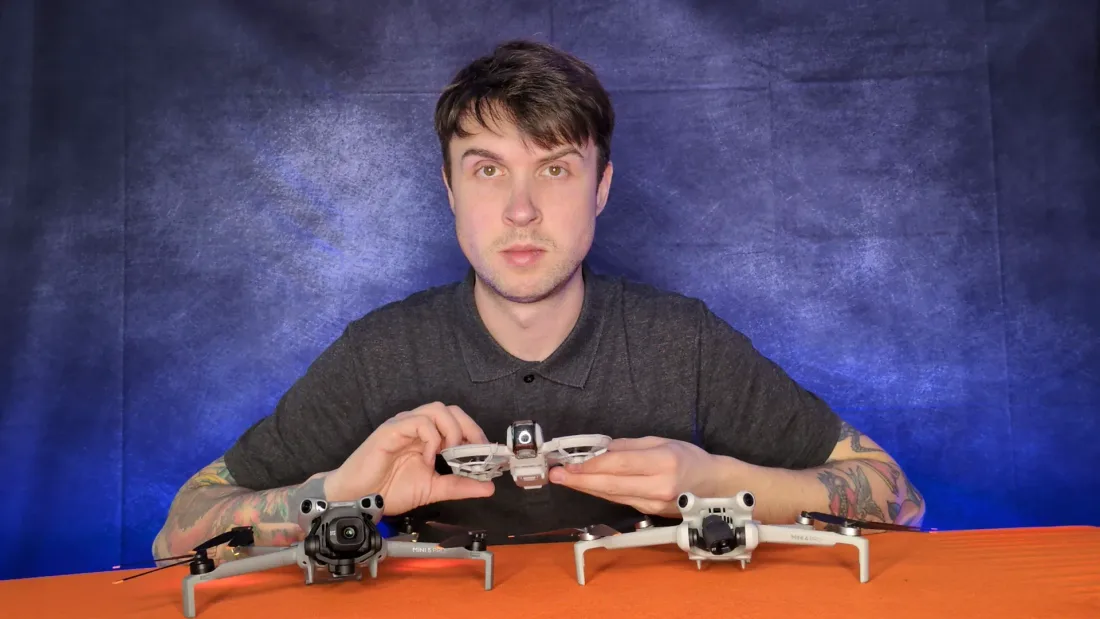
I have flown every DJI drone in the list below. What follows is not a ranking of specification sheets — it is an attempt to draw the curve. How much does each step up actually cost, what does it actually buy, and at what point does the line go flat?
So this guide does three things a top-ten list cannot. It asks four questions and narrows eleven drones to the one that fits you. It walks the plateau one step at a time, so you can see where the money stops working. And it lays out what year one really contains on both sides of the £1,000 line, because the sticker is not the bill.
How I get paid: the Amazon links below are affiliate links, so if you buy through one I earn a small commission at no extra cost to you. It does not change what I recommend — I spend most of this article arguing you down from your budget rather than up to it, and one of the eleven drones has no affiliate link at all.
The Best Drone Under £1,000 in 2026 Is the DJI Mini 5 Pro
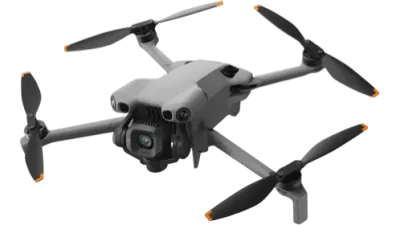
It is the last step up that changes your pictures, and the last one you can take without the law changing too.
- No test and no certificate — just a £12.34 registration you do online.
- The only one-inch camera in Britain that stays under 250 grams, at roughly 1.7 times the light-gathering area of the sensor in everything below it.
- Rated to 12 m/s of wind, which is the same rating as drones three and four times its weight.
- 36 minutes is the wind-tunnel figure. DJI’s own “typical” number, in a breeze while recording 4K, is 21.
- It does not use up your budget, so the spare battery, the filters and the card fit inside it too.
Affiliate link · costs you nothing extra · full disclosure
PART ONE
Here are the five other drones that win their categories at this budget — each with the thing that is wrong with it, because not one of them is without a catch.
Best Drone for Flying Among Obstacles: DJI Mini 4 Pro
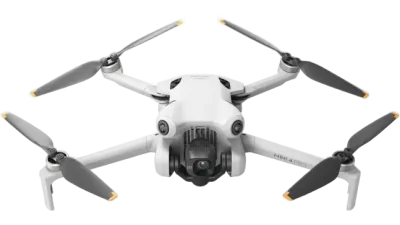
The one step up in this guide that buys safety rather than picture — the cheapest drone here that can see what it is about to fly into.
- Obstacle sensing in every direction, which nothing cheaper in this guide has — it is what I would want flying near trees or a building.
- Under 250 grams, so all that sensing costs you nothing legally: no test, no certificate, just the £12.34 registration.
- The same size sensor as the Flip for a lot more money. What you are buying here is the sensing, not the picture.
- 34 minutes is the real figure — the longer headline needs a battery DJI does not sell in Europe.
Best Drone for the Full £1,000: DJI Air 3S
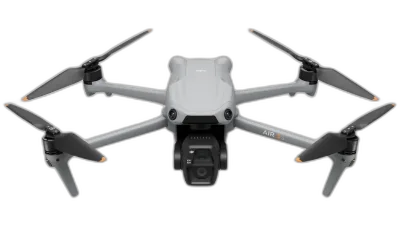
If you are going to spend the whole budget, spend it on the second lens rather than the bigger number.
- Two real focal lengths, 24 mm and 70 mm, which changes how you shoot more than any sensor upgrade.
- Forty-five minutes and a 12 m/s wind rating — the longest useful endurance under the line.
- No test needed today, but from January 2028 it needs the A2 to fly near people. You are buying about eighteen months of that freedom.
Best Drone for a Third of the Budget: DJI Flip
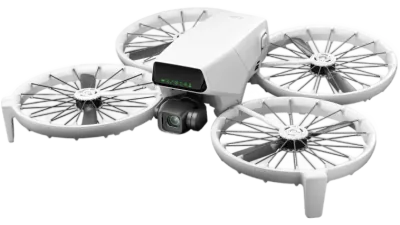
Spend a third of the money and you keep most of the picture. That is the single most useful fact in this guide.
- No test and no certificate — just a £12.34 registration you do online.
- A 48-megapixel 1/1.3-inch sensor writing DNG raw files, which is the same class of camera as drones costing twice as much.
- Propeller cages built in, so it is the one I would hand a nervous beginner.
Best FPV Drone Under £1,000: DJI Avata 2
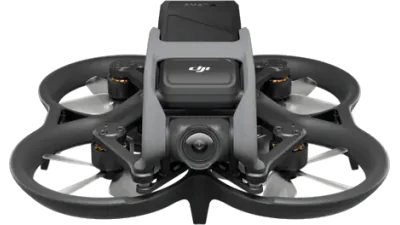
The only drone in this guide bought for the feeling rather than the footage — and the only one with a rule about how many people must be present.
- The law requires a second person watching the drone whenever you fly it through goggles.
- The link here goes to the cheapest bundle that actually flies — the goggles and the motion controller are not optional extras.
- From January 2028 its C1 mark stops counting and it needs the A2 test to fly near people.
Best Drone for Filming Yourself: DJI Neo 2
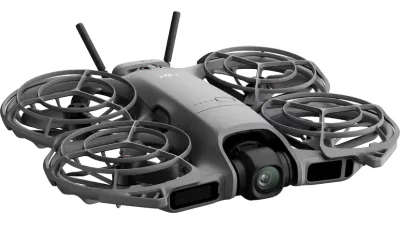
If what you actually want is footage of yourself, a fifth of this budget does it better than all of it would.
- No test and no certificate — just a £12.34 registration you do online.
- Palm takeoff and landing, so you can fly it without a controller or a phone.
- The smallest sensor here, JPEG only, and no log profile — it is a camera for the group chat.
Affiliate links · costs you nothing extra · full disclosure
Take the quiz: how much of the £1,000 do you actually need to spend?
Four questions, and a drone matched to what you will really do with it.
- Eleven drones from palm-sized to professional, all in or near this budget.
- Tells you where to stop, not just what is most expensive.
- Flags every drone that needs a qualification, now or from 2028.
- About 20 seconds, and no email needed.
STEP 1 OF 4
11 of 11 still fit
All eleven, cheapest first, and what each one gives up
-
DJI Neo 2
151 g · C0 · 1/2″ 12MP · 19 min · no test needed
Throw it off your palm and it films you. It is the only drone here that needs neither a controller nor a plan, and buying it leaves most of your budget untouched.
- No test and no certificate — just a £12.34 registration you do online.
- Palm takeoff and landing, so you can fly it without a controller or a phone.
- The smallest sensor here, JPEG only, and no log profile — it is a camera for the group chat.
-
DJI Flip
<249 g · C0 · 1/1.3″ 48MP f/1.7 · 31 min · no test needed
The cheapest drone that takes a picture worth editing. Propeller cages built in, which is why it is the one I hand to someone who has never flown.
- No test and no certificate — just a £12.34 registration you do online.
- A 48-megapixel 1/1.3-inch sensor writing DNG raw files, which is the same class of camera as drones costing twice as much.
- Propeller cages built in, so it is the one I would hand a nervous beginner.
-
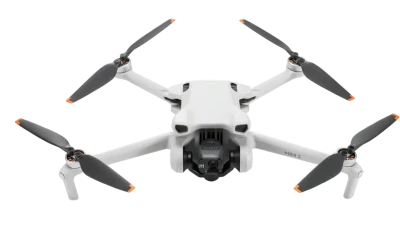
DJI Mini 3 longest flight time here
248 g · C0 · 1/1.3″ 48MP f/1.7 · 38 min · no test needed
An older drone that quietly stays in the air longer than anything else in this guide except the two heaviest. Proof that the expensive end is not winning on every number.
- No test and no certificate — just a £12.34 registration you do online.
- 38 minutes on its standard battery, which is more than any sub-250-gram drone released since.
- It only senses downwards. There is no forward or sideways obstacle detection at all.
-
DJI Mini 4 Pro
<249 g · C0 · 1/1.3″ 48MP f/1.7 · 34 min · no test needed
The first drone in this list that can see in every direction, which is a safety upgrade rather than a picture upgrade. Its problem is what sits one step above it.
- No test and no certificate — just a £12.34 registration you do online.
- Obstacle sensing in every direction, which the cheaper drones here do not have.
- The same size sensor as the Flip for a lot more money, and DJI does not sell its bigger battery in Europe.
-
HOVERAir X1 PROMAX not a DJI
192.5 g · 8K video · 16 min · no test needed
A self-flying camera rather than a drone you pilot, and the most credible non-DJI option at this money. I have not flown one, so treat this as judgement rather than experience.
- No test and no certificate — it is well under 250 grams.
- It flies itself around you on preset paths, which is the whole product rather than a mode.
- Sixteen minutes a battery, the shortest here, and no manual piloting worth the name.
-
DJI Mini 5 Pro
249.9 g · C0 · 1″ 50MP f/1.8 · 36 min · no test needed
A one-inch sensor under the 250-gram line, with nothing to sit and nothing to renew. This is the knee of the curve, and everything above it is a smaller step for more money.
- No test and no certificate — just a £12.34 registration you do online.
- The only one-inch camera in Britain that stays under 250 grams, at roughly 1.7 times the sensor area of everything cheaper.
- 36 minutes is the wind-tunnel figure. DJI’s own “typical” number, in a breeze while recording 4K, is 21.
-
DJI Avata 2 needs a test from 2028
377 g · C1 · 1/1.3″ 12MP f/2.8 · 23 min · observer required
The only drone here that makes you laugh out loud. It is also the only one that legally requires a second person stood beside you on every single flight.
- The law requires a second person watching the drone whenever you fly it through goggles.
- The link here goes to the cheapest bundle that actually flies — the goggles and the motion controller are not optional extras.
- From January 2028 its C1 mark stops counting and it needs the A2 test to fly near people.
-
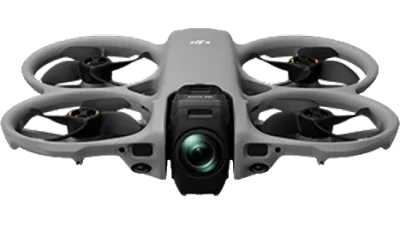
DJI Avata 360 needs a test from 2028
455 g · C1 · two 1/1.1″ 64MP · 23 min · observer required
It records everything around it at once and you choose the framing afterwards. Brilliant, and a different job from the one most people are buying a drone to do.
- The law requires a second person watching the drone whenever you fly it through goggles.
- Two square sensors covering every direction at once, at 8K, which nothing else here does.
- From January 2028 its C1 mark stops counting and it needs the A2 test to fly near people.
-
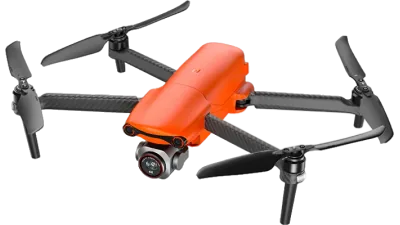
Autel EVO Lite+ no affiliate link — I could not find UK stock
835 g · legacy, no class mark · 1″ 20MP f/2.8–f/11 · 40 min
The one drone here with an aperture that actually moves, wrapped in the worst legal position on the page. It is the clearest illustration of what this guide is about.
no link- Needs the A2 test today, not in 2028 — without it you must stay 150 m from anything built-up.
- A one-inch sensor with a variable f/2.8 to f/11 aperture, which nothing else under £1,000 offers.
- I could not find a UK seller, so there is no link for it and no way to check what it actually goes for here.
-
DJI Air 3S needs a test from 2028
724 g · C1 · 1″ 50MP + 1/1.3″ 70 mm tele · 45 min
The most drone you can buy and still be under the line this guide draws. Two usable focal lengths change how you shoot more than any sensor upgrade will.
- Two real focal lengths, 24 mm and 70 mm, which changes how you shoot more than any sensor upgrade.
- Forty-five minutes and a 12 m/s wind rating — the longest useful endurance under the line.
- No test needed today, but from January 2028 it needs the A2 to fly near people. You are buying about eighteen months of that freedom.
-
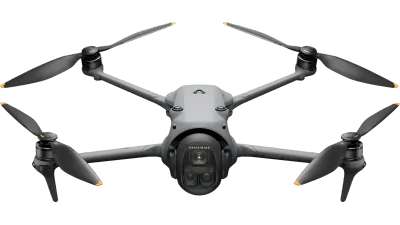
DJI Mavic 4 Pro way over the line
1,063 g · C2 · Four Thirds 100MP f/2.0–f/11 + two tele · 51 min
Here so you can see what the next step up really is, and what it costs. It is the best flying camera in a bag this size and it is nearly twice this budget.
- Needs the A2 test today before you can fly it near people.
- A Four Thirds sensor, roughly 1.9 times the area of a one-inch, plus two more lenses and an aperture that moves.
- Its spare batteries and its filter set together cost more than the cheapest drone in this guide.
Ordered cheapest first, and every link goes to the cheapest configuration that will actually fly — so the DJI Avata 2 link includes the goggles and controller it cannot fly without, and DJI UK sells a cheaper Fly Smart Combo of the same drone with lower-spec goggles. The DJI Mini 3 row is the version with DJI’s screen controller, which is what the link goes to; there is a cheaper phone-mount version of the same drone. Order checked 31 July 2026 — drone prices move constantly, so click through for what any of them costs today. The Autel has no UK listing I could find, so it has no link and sits in the order where I would expect it. Comparison specifications from DroneCompare, CC BY 4.0.
PART TWO
The £1,000 plateau: what you stop gaining
Every buying guide tells you what the expensive drone has. Almost none of them tell you what the cheap one is missing, in order, with the size of each step attached. That is the only way to see a plateau — you have to walk up the steps and notice when they stop rising.
So here is the ladder, built out of the drones above and nothing else. I am not going to print prices for them, because drone prices move constantly and a figure typed here is out of date within weeks — the links go to the seller, which is where the live number lives. What does not move is the shape: how big each step is relative to the drone you are stepping off, and what that step actually delivers. Read it as proportions and it tells you more than the pounds ever did.
WHAT EACH STEP UP ACTUALLY BUYS
| STEP | ADDS TO THE PRICE | BUYS |
|---|---|---|
| Neo 2 → Flip | about two-fifths | A proper 48 MP sensor, raw files, a controller and twelve more minutes. Pound for pound the biggest jump on the page. |
| Flip → Mini 4 Pro | doubles it | Obstacle sensing in every direction and a longer radio link. The same size sensor. Twice the money and not one extra square millimetre of it. |
| Mini 4 Pro → Mini 5 Pro | about a sixth | A one-inch sensor — about 1.7× the light-gathering area — and a 12 m/s wind rating. The smallest step on the ladder and the largest camera upgrade on it. |
| Mini 5 Pro → Air 3S | about two-fifths again | A second 70 mm lens and nine more minutes. The same main sensor — and 474 grams more, which is the 250-gram line gone. |
| Air 3S → Mavic 4 Pro | doubles it again | Four Thirds, a third lens and an aperture that moves — plus 339 grams, a qualification, and roughly double the accessory bill. |
Read the middle row, and read it against the one above it. The step before it doubles what you are paying and changes the picture not at all. The highlighted step is the cheapest rung on the whole ladder in proportion — and it buys the largest single camera improvement available at any price in this range. It is also the last one that does not cost you something other than money.
1. Sensor size is the whole camera argument, and it runs out before the budget does
Forget megapixels. What decides whether a picture holds up is sensor area — how much light the thing can physically collect. In this guide there are only three sizes that matter: about 31 mm² on the Neo 2, about 69 mm² on the four 1/1.3-inch drones, and about 116 mm² on the one-inch drones.
That means the entire camera story across this guide, from the cheapest drone with a real camera to the most expensive one still under the line, is a single step. The Flip, the Mini 3 and the Mini 4 Pro all share a sensor. The Mini 5 Pro and the Air 3S both share the next one up. Nothing between them changes the picture; only the crossing does — and the crossing happens at the Mini 5 Pro, roughly two-thirds of the way up this budget.
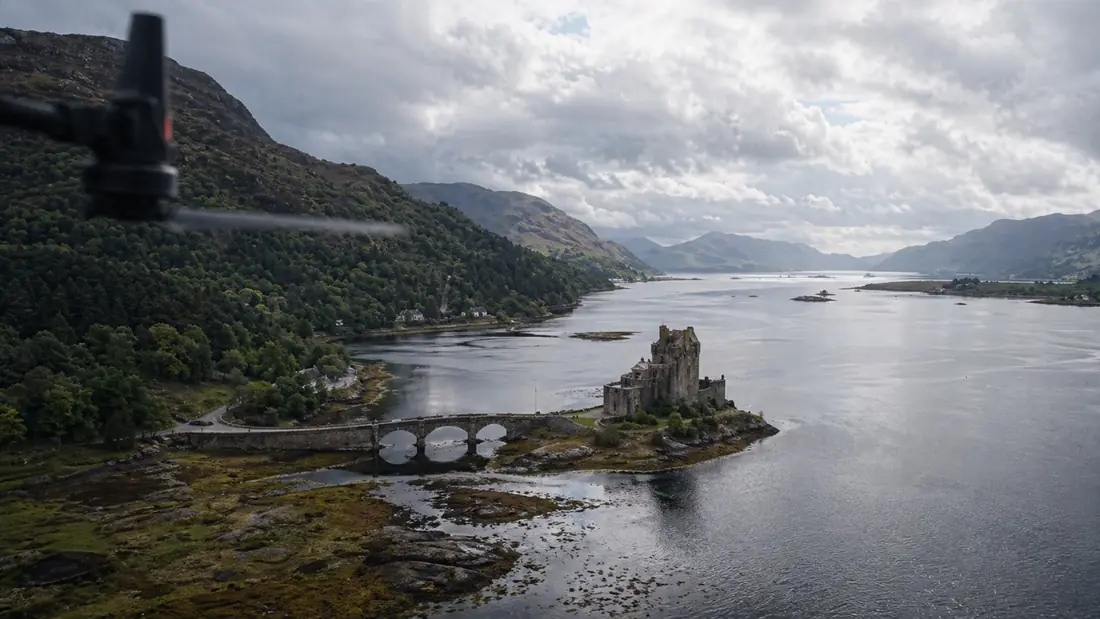
The next step after that — one-inch to Four Thirds, roughly 116 mm² to 225 mm² — roughly doubles the bill all over again, and only shows up in genuinely hard light: a bright sky and a dark landscape in one frame. If you have never been annoyed by that specific problem, you are not going to notice what you bought.
2. Flight time stopped improving years ago
This is the number people assume scales with price, and it plainly does not. The Mini 3 flies for 38 minutes on its standard battery. The Mini 5 Pro, which costs not far off twice as much, flies for 36. You can pay the better part of a second Mini 3 and land two minutes sooner. The oldest drone in this guide beats every other sub-250-gram drone in it on the one number people ask about first.
It is worth being precise about those figures, because manufacturers are not. All of them are wind-tunnel maximums measured at a constant forward speed with no wind. DJI publishes a second, quieter figure for the Mini 5 Pro — a typical flight time of 21 minutes, measured in a breeze while actually recording 4K. That is the number that matches a real afternoon.
There is a second trap underneath. Both the Mini 3 and the Mini 4 Pro quote a much longer headline — 51 and 45 minutes — but only with an Intelligent Flight Battery Plus. DJI’s own footnote says that battery is “not sold in Europe” for the Mini 4 Pro and “sold separately and only in selected countries and regions” for the Mini 3. And DJI states that fitting it takes the drone over 249 grams. So it is a figure you cannot buy, attached to a change you would not want.
3. Above the Mini 5 Pro, what you are mostly buying is weight
Here is the part that turns a spending decision into a legal one. Line the drones up by weight rather than by price and the shape of this budget changes completely — because above the 250-gram line the two orders are very nearly the same order. Spending more, at this budget, mostly buys grams.
WEIGHT, AND WHAT IT COSTS YOU
—— the 250-gram line: below it, nothing further to do ——
Amber: over 250 grams but carrying a European C1 class mark, so no qualification today — and one required from 1 January 2028. Red: a qualification required right now.
Every single drone in this guide that costs more than the Mini 5 Pro is over the 250-gram line. Every one of them either needs an A2 Certificate of Competence today, or will need one from 1 January 2028. There is not one exception. That is not a coincidence and it is not a quirk of my shortlist — it is what a bigger sensor, a second lens and a bigger battery physically weigh.
That is the plateau, stated properly. It is not that the expensive drones are bad — the Air 3S is a lovely thing and I would happily own one. It is that above my top pick the improvements get smaller, the price steps get larger, and a cost appears that is not measured in money at all.
4. The accessories scale with the drone, and nobody warns you
This is the one that surprised me when I laid it out. A drone battery is not a commodity — it is a specific part for a specific model, at a price the manufacturer picks. And that price climbs faster than you would guess.
WHAT THE SAME TWO PARTS COST, RELATIVE TO EACH OTHER
| DRONE | SPARE BATTERY | FILTER SET |
|---|---|---|
| DJI Mini 5 Pro | the baseline | the baseline |
| DJI Air 3S | nearly twice as much | nearly twice as much |
| DJI Mavic 4 Pro | well over twice as much | nearly three times as much |
All six are DJI UK’s own parts for their own drones, so this is one manufacturer’s pricing compared with itself — not a like-for-like across brands.
Put it in proportion and it lands harder. On the Mini 5 Pro, a spare battery and a set of filters together come to roughly a sixth of what the drone cost. On the Air 3S they come to about a fifth of a considerably bigger number. And on the Mavic 4 Pro, those two small accessories together cost more than the cheapest complete drone in this guide. None of it is optional. One battery is not enough for a day out on any drone here, and on a fixed-aperture camera the filters are the only exposure control you have left for video.
5. Two things that genuinely do not plateau
I do not want to oversell the flatness of this. Two things keep improving past the Mini 5 Pro, and if you want either of them, the money is not wasted.
A second focal length. The Air 3S adds a 70 mm medium tele camera alongside its 24 mm wide. On a drone, cropping is normally your only zoom, so a real second lens changes what you can frame from one hover position. That is a genuine creative difference, not a spec-sheet one. If you shoot property, or anything where you cut between framings, it is the strongest argument for spending the whole budget.
An aperture that moves. Almost every drone here has a fixed aperture — the Mini 5 Pro and Air 3S at f/1.8, the Flip and the Mini 4 Pro at f/1.7, the Avata 2 at f/2.8. Two do not: the Mavic 4 Pro at f/2.0–f/11 and the Autel EVO Lite+ at f/2.8–f/11. On everything else, holding a natural-looking shutter speed in daylight means physically screwing a dark filter onto the lens, because there is nothing else to close.
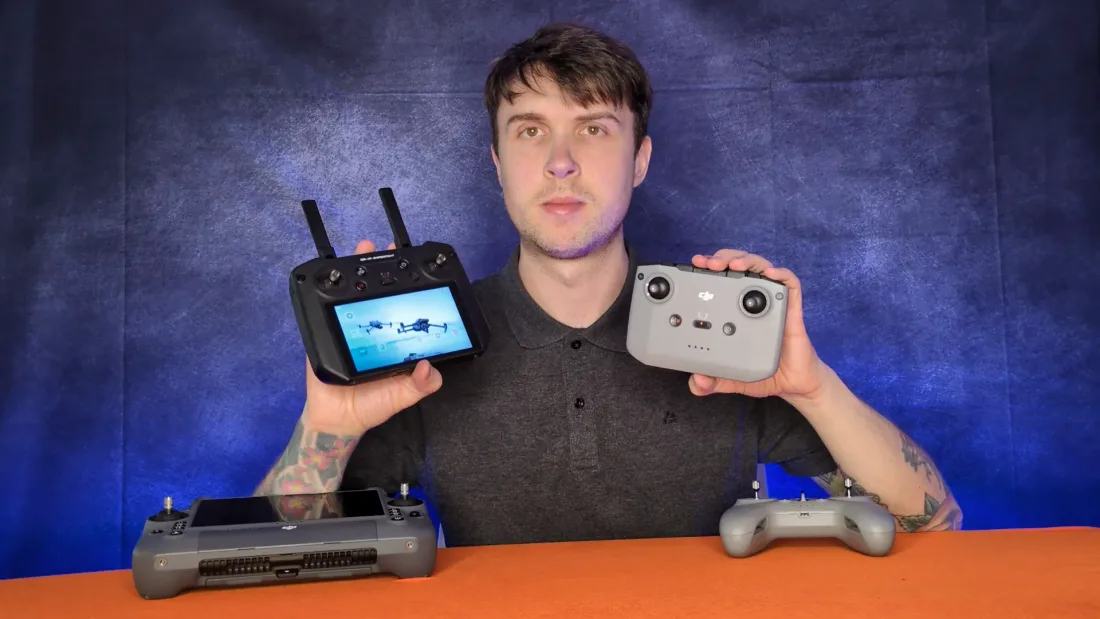
And one thing that is not on the drone at all: the controller. Most of these are sold twice, once with a plain controller that clamps your phone and once with a built-in screen. DJI charges roughly the same amount for that upgrade whichever drone you put it on, which means it adds about half again to the price of the Flip and about a quarter to the price of the Mini 4 Pro. It is a real convenience — no phone battery, no notifications, brighter in sun — and it does nothing whatsoever to your pictures. Decide on it separately from the drone, or it will quietly eat a slice of the budget you meant to spend on something that flies.
The paperwork, and why it is the real ceiling at this budget
If you have never owned a drone, this is the part that will blindside you, and at £1,000 it matters more than at any other budget — because this is exactly the price range where drones cross the line that triggers it.
Everyone does the same two registrations
Whatever you buy, you need two things from the Civil Aviation Authority. A Flyer ID is a free online multiple-choice test that shows you know the basic rules. It takes under an hour and lasts five years. An Operator ID registers you as the person responsible for the drone; it costs £12.34 a year and its number goes on a label stuck to the outside of the drone.
That is it. No licence, no course, no instructor. Most people do both in one sitting on the CAA website before the drone has even arrived.
Then the 250-gram line takes over
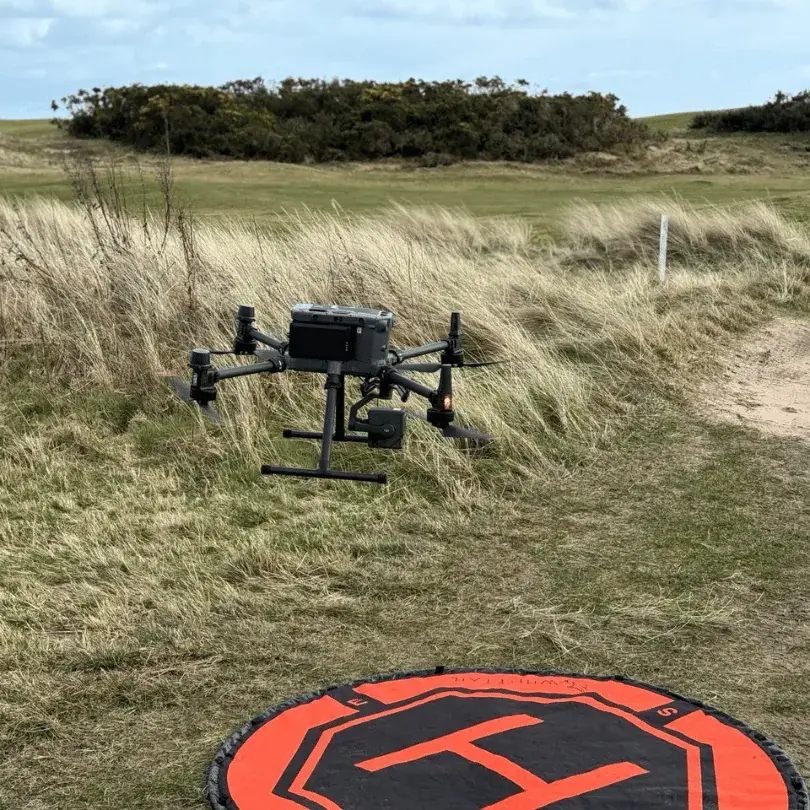
Under 250 grams, you are in the sub-category the CAA calls Over People (A1), and there is nothing else to do. Over 250 grams, what you can do depends on a class mark — a small label on the drone, C0 to C4, declaring which European standard it was built to. C0 and C1 drones fly in Over People (A1). A C2 drone, like the Mavic 4 Pro, only gets into Near People (A2) if you hold an A2 Certificate of Competence.
Without it, that drone drops to Far from People (A3), which in plain English means 150 metres from anything residential, commercial, industrial or recreational. In most of Britain, that means a field, and it means driving to one first.
The A2 Certificate of Competence itself is not hard. It is a theory test of at least thirty multiple-choice questions, taken with a CAA-approved Recognised Assessment Entity, valid for five years. What it is not is priced: the CAA does not set a fee, the providers do, so there is no number I can give you and no number the shop selling you the drone can either. That is a genuinely awkward line to put in a budget.
And if you buy under 250 grams, the A2 buys you nothing. You already have better privileges than it grants. Sitting it only makes sense once you have decided you want a heavier drone. Decide the weight first, then the paperwork — never the other way round.
And then 1 January 2028 moves the line again
This is the one nobody selling you a drone will mention, and at this budget it should change your mind. Until 31 December 2027, a drone carrying a European C class mark can be flown as though it held the equivalent UK class. From 1 January 2028 that stops. The drone becomes a legacy drone and falls back to plain weight rules: under 250 g flies A1, under 2 kg needs an A2 Certificate of Competence, under 25 kg is A3.
Nothing changes for anything under 250 grams. Nothing changes for the Mavic 4 Pro, which already needs the A2. But three drones in this guide fall off the cliff, and all three of them are C1 drones weighing more than 250 grams — which is to say, all three of them sit in the top third of the £1,000 this article is about. The change lands squarely on the drones you would buy if you decided to spend the whole budget.
WHAT CHANGES ON 1 JAN 2028
| DRONE | TODAY | FROM 2028 |
|---|---|---|
| DJI Avata 2 377 g, C1 | Over People (A1), no qualification | Near People (A2), A2 CofC required |
| DJI Avata 360 455 g, C1 | Over People (A1), no qualification | Near People (A2), A2 CofC required |
| DJI Air 3S 724 g, C1 | Over People (A1), no qualification | Near People (A2), A2 CofC required |
Nothing is confiscated and nothing becomes illegal to own. But if part of why you are looking at an Air 3S is that it needs no qualification today, understand that you are buying about eighteen months of that, not a permanent arrangement. Either accept you will sit the test in 2027, or buy under 250 grams and never think about it again. There is more detail in the guide to UK class marks if you want to see the whole table.
One last rule that catches people at this budget specifically. The two FPV drones here — the ones you fly through goggles — require an observer: a second person stood beside you, able to talk to you, keeping the drone in direct sight. That is not a weight rule and no amount of money removes it. The FPV drone guide goes through it properly.
PART THREE
Year one, on both sides of the £1,000 line
The plateau is not only about what the drone does. It is about what the drone costs to keep, and that curve does not flatten at all — it steepens.
I am not going to itemise this in pounds, for the same reason I did not price the ladder: the numbers move, and a bill totalled today misleads anybody reading it a month from now. What does not move is the list — and the list is the part nobody shows you. Here is every line that lands in the first twelve months, whether it stays the same on every drone or scales with the one you chose, and which of them you cannot look up at all before you commit.
THE FIRST TWELVE MONTHS
| LINE | WHAT IT IS | DOES IT SCALE? |
|---|---|---|
| The drone | The only figure anybody advertises, and the only line on this list you were expecting to pay. | It is the choice |
| Flyer ID | The CAA’s free online theory test. Valid five years, and everyone flying needs one. | Free, on all of them |
| Operator ID | The CAA’s annual registration, £12.34, on a label stuck to the drone. A regulator’s fee, so it is the one number here I can actually give you. | Identical on all of them |
| Second battery | A model-specific part at a price the manufacturer picks. One battery is not a day out on any of these. | Yes — steeply |
| Filter set | Not optional on a fixed aperture — it is the only exposure control you have left for video. | Yes — steeply |
| 256 GB V30 card | The same card whichever drone you buy. V30 is the write-speed rating that keeps up with 4K. | No |
| Hobby insurance | Optional as a hobbyist, a legal requirement the moment anybody pays you for the footage. | Barely |
| The crash you have not had | Propellers, a gimbal, an excess. Budget for it in year one, because year one is when it happens. | Yes — bigger drone, bigger repair |
| A2 CofC | Not needed on the Mini 5 Pro. Needed on the Air 3S from 2028. Needed on the Mavic 4 Pro today. | Unpriceable — providers set their own fees |
| What year one adds to the sticker | Between a third and two-fifths, on every one of them | |
Three things fall out of that list that matter more than any total would.
A £1,000 budget does not buy a £1,000 drone. It buys a drone at around two-thirds of that, and spends the rest on the things that turn a box into a flyable setup. Buy the Mini 5 Pro and year one lands just inside £1,000 — which is to say it fits, exactly, with nothing left over. Buy the Air 3S instead and year one lands a good way past £1,000, which is not a £1,000 budget at all. That is the single most useful sentence in this guide, and it is the reason my top pick is not the most expensive drone that fits.
The uplift barely moves, but the pounds do. Every one of these lands roughly a third to two-fifths over its sticker. The percentage is stable; the cash is not. Two-fifths on top of my pick is a battery, a card and some filters. Two-fifths on top of the Mavic 4 Pro is another drone entirely — and by then the whole year-one bill is approaching two and a half times the budget this guide is about.
The last line has no number in it, and never will. Cross 250 grams and the list ends in a cost I cannot quote you at any point, because the CAA sets no fee for the A2 Certificate of Competence — each training provider sets its own. A budget with an unpriceable line in it is not a budget. That, more than the sensor, is why I would not cross this line for a hobby.
THE THREE THINGS YOU WILL ACTUALLY NEED
- Check price
A second standard battery
The standard one, not the Plus — that one takes the drone over 249 grams.
- Check price
A set of ND filters
Compulsory for video on any drone whose aperture does not move, which is nearly all of them.
- Check price
A 256 GB V30 card
V30 is the write-speed rating that keeps up with 4K without dropping frames.
Affiliate links · costs you nothing extra · full disclosure
PART FOUR
Where I’d stop spending
About two-thirds of the way up the budget, at the DJI Mini 5 Pro. That is where I would stop, and I would not spend long deciding.
Everything this article has measured points at the same place. It is the cheapest one-inch camera you can buy in Britain and the only one that stays under 250 grams, so it is simultaneously the last big picture upgrade and the last drone the law does not care about. Above it the sensor stops changing, the flight time stops improving, the accessories get steeply more expensive and a qualification appears. Below it you give up the one-inch sensor, which is the only thing in this range that genuinely changes a photograph.
What to do with the money you did not spend
This is the part I would not skip. A thousand-pound budget spent entirely on a drone is a thousand-pound drone you cannot fly for a full afternoon, cannot expose properly in daylight and have not registered. Buy my pick instead and what is left of a £1,000 budget covers, almost exactly:
- The £12.34 Operator ID, and the free Flyer ID test that goes with it.
- A second battery, which is the difference between one flight and a day out.
- A filter set — not an accessory on a fixed-aperture camera, the only exposure control you have.
- A fast 256 GB card, and something set aside for the first crash.
That lands just inside the thousand all in, and you own a complete, legal, flyable setup rather than a box with one battery in it. Everything on that list is something you will end up buying anyway, on whichever drone you choose — the only question is whether you planned for it or discovered it. If the budget is a target rather than a ceiling, that is what I would hit with it.
If you want to spend the whole thousand anyway
Then buy the DJI Air 3S, and buy it for the 70 mm lens rather than for the price tag. That second focal length is the one thing at this budget that does not plateau, and if you shoot property or you cut between framings it will change your work more than any sensor will.
Go in with two things understood. Its first year does not land near £1,000 — it lands a comfortable distance past it, because the drone eats the budget and then the batteries and filters cost close to twice what my pick’s do. And it is 724 grams on a C1 class mark, which means that on 1 January 2028 it needs an A2 Certificate of Competence to fly near people. You are buying roughly eighteen months of not having a qualification, and then you are sitting the test. That is a fine trade if you make it knowingly. It is a nasty surprise if you do not.
The one that costs more than my pick and buys you less
The one I would walk away from is the Autel EVO Lite+, and it is worth saying why, because on paper it looks like a bargain: a one-inch sensor and a variable f/2.8–f/11 aperture, which is a specification nothing else here offers except the Mavic 4 Pro at nearly twice this budget. The Mini 5 Pro does not have it.
Now look at what comes with it. It weighs 835 grams and carries no class mark at all, which makes it a legacy drone: without an A2 Certificate of Competence it is restricted to 150 metres from anything built-up, today, not in 2028. It is a 2021 design. And I could not find a UK seller for it at all, which is why it is the one drone here with no link and no way to check what it actually goes for.
So it costs meaningfully more than my pick — roughly a third more, on the quotes I could find — and hands back the single most valuable thing the pick has: the ability to take it out of the bag anywhere. A better specification on paper, a worse drone to own in Britain. That is this whole article in one product.
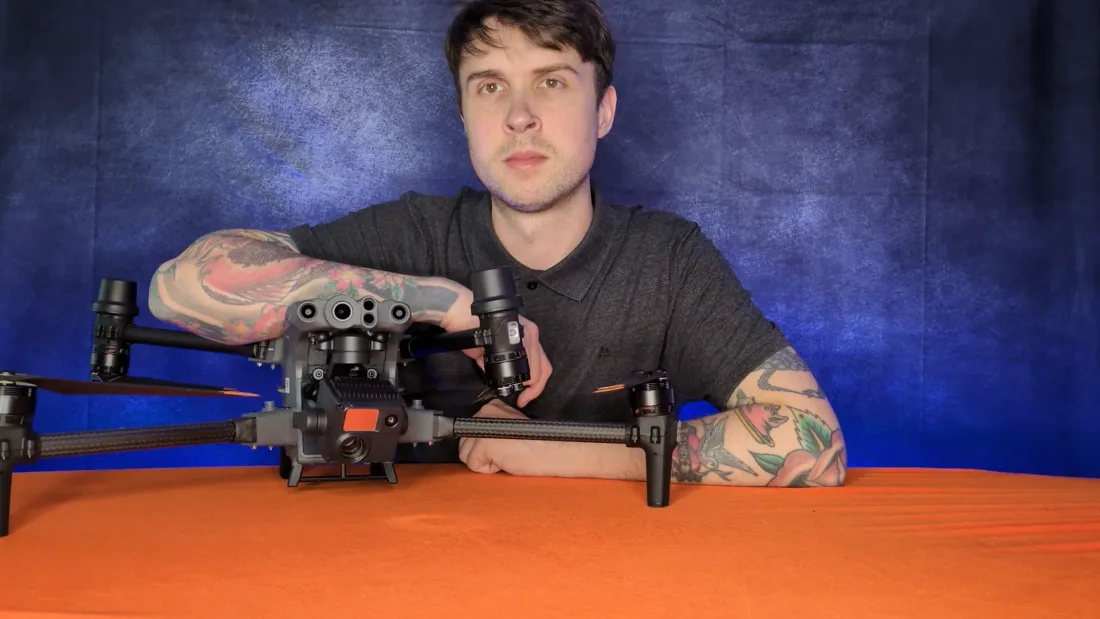
And if the honest answer is that you want the pictures rather than the hobby — for a single set of property shots, or one survey, owning is almost never the cheaper route — that is what the rest of this site is for. You can hire a qualified drone pilot who already owns the drone, the qualification and the insurance, and what that costs is usually less than the year-one bill above.
If a thousand pounds turns out to be more than you want to commit, the same exercise at half this budget reaches a different but equally specific answer. And if the camera is the entire point of the purchase, the full camera drone comparison goes deeper on sensors, log profiles and aperture than this one does.
Best drone under £1,000: the questions I get asked most
What is the best drone under £1,000 in the UK in 2026?
The DJI Mini 5 Pro. It is the cheapest drone you can buy with a one-inch camera sensor, and the only one that puts that sensor under the 250-gram line, which means no test and no certificate beyond the two basic registrations. It also costs noticeably less than the £1,000 it is being judged against, and what it leaves behind is close to what the registration, a second battery, filters and a card actually cost. Spend the whole budget instead and the DJI Air 3S is the most drone you can get under the line. Spend roughly a third of it and the DJI Flip gives up less than you would think.
Where do the gains actually stop when you spend more on a drone?
At the DJI Mini 5 Pro, on the current UK line-up. Up to that point every step buys something you can see: raw files and a real sensor on the DJI Flip, obstacle sensing in every direction on the DJI Mini 4 Pro, and then a one-inch sensor with roughly 1.7 times the light-gathering area. That last step is the smallest price rise on the whole ladder and the largest camera upgrade on it. Past it, the next step buys a second 70 mm lens and nine more minutes on the DJI Air 3S, and the step after that roughly doubles the bill again for a Four Thirds sensor and a variable aperture on the DJI Mavic 4 Pro. Both of those also add weight, and above 250 grams weight is what costs you legally rather than financially.
Do I need a licence for a drone under £1,000?
For most of them, no. Everyone needs two registrations with the Civil Aviation Authority: a Flyer ID, which is a free online theory test valid for five years, and an Operator ID, which costs £12.34 a year and goes on a label stuck to the drone. Any drone under 250 grams needs nothing else, and that covers the DJI Neo 2, Flip, Mini 3, Mini 4 Pro, Mini 5 Pro and the HOVERAir X1 PROMAX. Heavier drones need an A2 Certificate of Competence to fly near people — today that catches the Autel EVO Lite+ and the DJI Mavic 4 Pro, and from 1 January 2028 it also catches the DJI Air 3S, Avata 2 and Avata 360.
Is the DJI Air 3S worth the step up from the DJI Mini 5 Pro?
Only if you will genuinely use the second lens. Both have the same one-inch, 50-megapixel main camera at a 24 mm equivalent and the same 12 m/s wind rating. The Air 3S adds a 70 mm medium tele camera, nine more minutes of flight and a bigger battery, and it costs you the 250-gram line: at 724 grams it relies on a C1 class mark that stops working as a UK equivalent on 1 January 2028, after which it needs an A2 Certificate of Competence to fly near people. Its spare batteries and its filter set each cost close to twice what the Mini 5 Pro’s do, so it keeps charging you after the purchase as well.
What does a drone at this price really cost in the first year?
About 40 per cent more than the sticker, whichever one you buy. On top of the drone you are paying the £12.34 Operator ID, a second battery, a filter set, a memory card, hobby insurance and a small allowance for the crash you have not had yet. On my top pick that lands just inside £1,000 — the drone and everything it needs, with nothing left over. On the DJI Air 3S it lands a good way past it, because its batteries and its filters both cost close to twice as much. On the DJI Mavic 4 Pro year one comes to nearly two and a half times the budget this guide is about, plus an A2 Certificate of Competence whose price you cannot look up because providers set their own fees.
Should I spend more than £1,000 on a drone?
Only if someone is paying you for the pictures. Above £1,000 the next real step is a Four Thirds sensor with an aperture that moves, on the DJI Mavic 4 Pro. That is roughly 1.9 times the sensor area of a one-inch and it is a genuine upgrade in hard light — but it arrives at 1,063 grams with a C2 class mark, which means an A2 Certificate of Competence before you can fly it anywhere near people, and spares that cost getting on for three times what my top pick’s do. For a hobby, that is dynamic range you will never spend and paperwork you did not need.
The short version
If you read all of that and still want me to just say it: buy the DJI Mini 5 Pro and keep the change. It is the last upgrade that changes your pictures and the last one that leaves you under the 250-gram line, and what you do not spend on it covers the registration, the second battery, the filters and the card — which you are going to need whichever drone you buy.
Affiliate links · costs you nothing extra · full disclosure
This guide does not print prices, because drone prices move constantly and a figure typed here would be wrong within weeks — every link goes straight to the seller, where the current price is. The order of the list, and every relative comparison in it, was checked on 31 July 2026 against the DJI UK store, the HOVERAir UK store and the linked Amazon listings. Weights, flight times, sensors and class marks are from the manufacturers’ own specification pages. Regulatory detail from the UK Civil Aviation Authority. Comparison specifications from DroneCompare, licensed under CC BY 4.0. Amazon links are affiliate links.