DJI Mini 3 vs DJI Mini 4K: which one should you buy?
Both fold, both sit just under 250 grams, and both need a controller and a phone. One has four times the stills resolution behind a far wider lens, and that is most of the story.
 Written by Peter Leslie, GVC-qualified commercial drone pilot | Every figure checked against both DJI manuals | 3 Aug 2026
My short answer
I recommend the DJI Mini 3
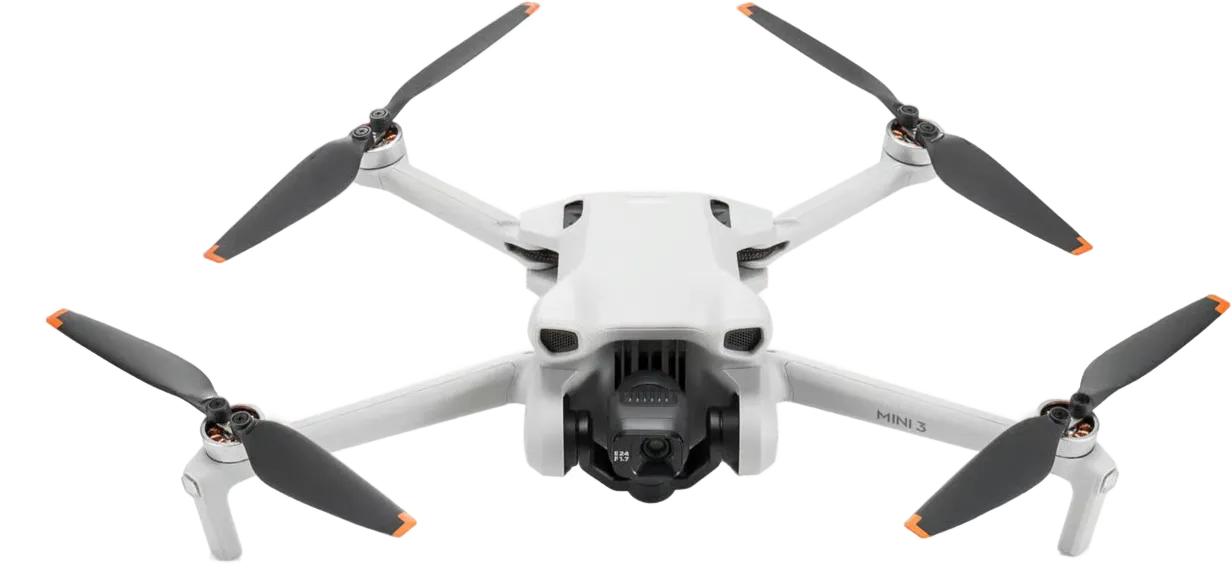
DJI Mini 3
The 2022 camera mini
Four times the stills resolution and a much wider lens. It also flies longer, works in frost and carries an actual class mark.
- 1/1.3-inch, 48 MP sensor against 1/2.3-inch, 12 MP
- Much wider f/1.7 lens against f/2.8
- 38 minutes against 31
- Rated to minus ten degrees, not zero
- C0 class marked
- 248 g leaves only two grams of margin
I recommend this if…
- You care how the footage actually looks
- You want the longest flights in this class
- You fly on cold mornings
- You want a class mark rather than legacy status
Only if price is the deciding factor
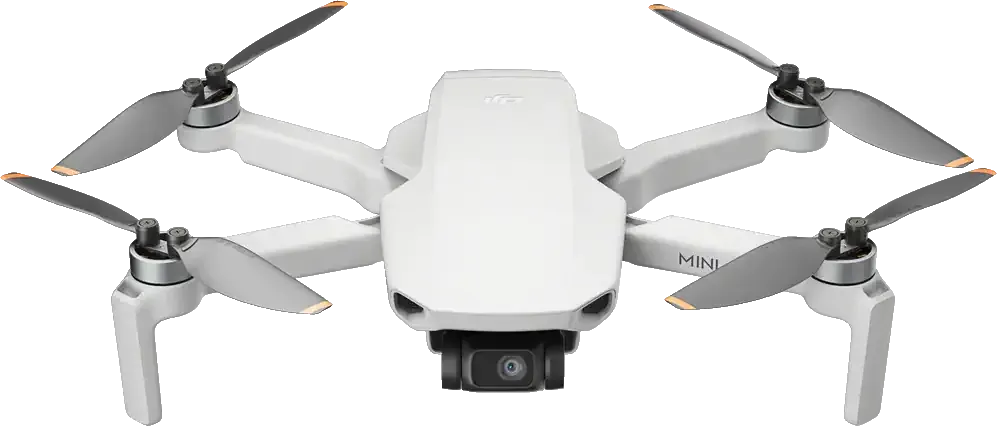
DJI Mini 4K
The 2024 budget folder
The cheaper way into a folding DJI drone. A much smaller sensor, a narrower lens and no class mark, but it is the budget option and it flies fine.
- 1/2.3-inch, 12 MP sensor only
- Narrower f/2.8 lens
- 31 minutes against 38
- Not rated below zero degrees
- No class mark — legacy
- 246 g, so four grams of margin rather than two
I recommend this if…
- Price is the deciding factor
- You want to learn to fly before spending more
- You fly in good light and mild weather
- You only need 12-megapixel stills
Both links are Amazon affiliate links. As an Amazon Associate I earn from qualifying purchases, at no extra cost to you — full disclosure.
One thing to know about both of them first
Neither of these drones can sense an obstacle in any direction, and it is the most important thing on this page.
The Mini 4K manual states it outright on page 13: the drone cannot sense obstacles on its route automatically, and the pilot should stay alert and steer around them.
The Mini 3 is no better. It has a downward vision system for hovering and landing, and nothing facing forwards or sideways.
Both also fly on bare propellers, so a clip is usually a repair rather than a bump. If that worries you, neither of these is the drone you want.
With that established, the comparison is really about the camera. Both appear in my best drones under 250g guide.
Five things that do not separate them
Clear these away first, because they cannot decide it.
-
Same three-axis gimbal
Tilt, roll and pan on both.
-
Same lack of obstacle sensing
Downward positioning only, on both.
-
Same lack of storage
A microSD card is compulsory on both.
-
Same UK paperwork
Flyer ID and Operator ID for both.
-
Same top video mode
4K at 30 frames a second on both.
-
So ignore all 5
None of it can tell you which to buy. The next four things can.
Both also need a controller with your phone clamped into it, and both reach 16 metres per second in Sport mode. Neither is a drone to bolt accessories to at these weights.
The four differences that actually matter
1. The Mini 3 has four times the stills resolution and a far wider lens
This is the difference the whole comparison rests on, and it is a large one.
The Mini 3 uses a 1/1.3-inch sensor at 48 megapixels. The Mini 4K uses a 1/2.3-inch sensor at 12.
The lens gap compounds it. The Mini 3 opens to f/1.7 where the Mini 4K sits at f/2.8, which is a substantial difference in how much light reaches the sensor at all.
Mini 3
48MP
1/1.3-inch sensor, f/1.7
Mini 4K
12MP
1/2.3-inch sensor, f/2.8
A bigger sensor with a wider lens is exactly what you want for overcast afternoons, which describes most of the British flying year.
Both cap out at 4K and 30 frames a second, so neither offers slow motion. That is one place the Mini 3 does not pull ahead.
Stills are where it does. 8064 by 6048 against 4000 by 3000 is the difference between a print and a phone screen.
Winner — DJI Mini 3
Four times the stills detail behind a much wider lens, on a physically larger sensor. If you are buying a camera drone rather than a toy, this section decides it.
In bright light, on a phone, the Mini 4K produces perfectly acceptable 4K. It is dull light and large output where it falls away.
Check the Mini 3 on Amazon2. The Mini 3 flies 38 minutes. It is the longest in this whole class
Seven minutes more than the Mini 4K, and the highest standard figure of any sub-250 gram DJI drone.
DJI rates the Mini 3 at 38 minutes in forward flight and 33 hovering. The Mini 4K is rated at 31.
Mini 3
38min
about 28 in reality
Mini 4K
31min
about 22 in reality
Both figures are laboratory numbers measured in still air with the battery run flat, so expect materially less on any real afternoon.
The Mini 3 also offers a Plus battery quoted at 51 minutes, but that takes it over 249 grams and out of the friendliest UK bracket.
So the honest comparison is 38 against 31, and the 51-minute figure belongs to a heavier drone with different rules.
Winner — DJI Mini 3
Seven extra minutes per battery from the longest-flying drone in the sub-250 gram class. Across a walk that is a genuine difference rather than a rounding error.
Buy a spare battery for either and the gap matters much less. Both charge over USB-C.
Check the Mini 3 on Amazon3. The Mini 3 works in frost. The Mini 4K is not rated below zero
A small specification with a real seasonal consequence, and one almost nobody checks.
The Mini 3 is rated for an operating temperature of minus ten to forty degrees. The Mini 4K is rated zero to forty.
Mini 3
-10°C
rated to fly in frost
Mini 4K
0°C
not rated below freezing
Frosty mornings are some of the best flying light of the year. Still air, low sun, sharp shadows.
One of these two is outside its rated range before you have got out of the car on those mornings.
Lithium batteries lose capacity in the cold regardless, so neither will hit its quoted flight time in January. But only one of them is rated to be there at all.
Winner — DJI Mini 3
Ten degrees of extra rated range, covering exactly the mornings that produce the best light. It is a specification you will not think about until the first frost.
If you only ever fly in summer, this line makes no difference to you whatsoever.
Check the Mini 3 on Amazon4. The Mini 3 carries a class mark. The Mini 4K carries none
Both are under 250 grams, but they are not equally documented.
The Mini 3 manual declares a C0 class mark on page 71. The Mini 4K manual contains no class marking of any kind, which makes it a legacy drone in the eyes of the rules.
Mini 3
248g
C0, 2 g under the limit
Mini 4K
246g
legacy, 4 g under the limit
Practically this changes very little today. A drone under 250 grams flies in the same open category whether it is classified or legacy.
Weight favours the Mini 4K slightly, at four grams of margin against the Mini 3’s two. Neither is comfortable, and both manuals warn against adding payload or unapproved parts.
The one time the Mini 3’s class mark could matter is travel, since some countries lean on class marks more heavily than the UK does. Check the country before you fly either.
Winner — DJI Mini 3
A declared C0 class mark is better documentation than none, and it costs the Mini 3 only two grams of margin against four. Neither difference will change a UK flight today.
If you want the larger weight margin and do not care about classification, the Mini 4K has two grams more room.
Check the Mini 3 on AmazonFour questions that will tell you which one to buy
Work down them and stop at the first one you can answer firmly. That is your drone.
Do you care how the finished footage looks?
Mini 3Do you want the longest flights in this class?
Mini 3Will you fly on cold mornings?
Mini 3None of the above, and price is what decides it?
Mini 4KThe Mini 3 wins three of the four, so unless the price gap is large this is straightforward. Worth knowing that neither can sense an obstacle — if that matters, the Neo 2 comparison and the Flip comparison both show what sensing actually buys you.
Two catches worth knowing before you order either one
Neither is a reason to avoid either drone. Both are things I would want to have been told before paying.
The Mini 3’s Plus battery takes it over 250 grams
The Mini 3 is quoted at 51 minutes with the Intelligent Flight Battery Plus, which is a headline figure worth understanding.
Its own manual notes on page 7 that the maximum takeoff weight exceeds 249 grams once that battery is fitted.
So the 51-minute claim and the sub-250 gram claim cannot both be true at the same time.
On the standard battery it is 38 minutes, which is still the longest in the class and is the number to compare.
Both need a card and a charged phone before they fly
Neither drone has any internal storage, so a microSD card is compulsory rather than optional.
Both controllers have no screen of their own. Your phone clamps in and becomes the display, so a flat phone is a cancelled flight.
The Mini 4K pipes a 720p live view over OcuSync 2.0, where the Mini 3 uses O2. You record in 4K either way; it is the framing view that differs.
Size, speed and ceiling
Three points that will not decide it.
The Mini 4K is the smaller package folded, at 138 by 81 by 58 millimetres against the Mini 3’s 148 by 90 by 62.
Top speed is identical at 16 metres per second in Sport mode, and both reach 4000 metres, which has no bearing on UK flying where you are held to 120 metres.
Wind resistance is effectively the same too, both quoted at 10.7 metres per second, or roughly 24 miles an hour.
So on the numbers people usually compare, these two are level. The differences are all in the camera and the paperwork.
Mini 3 vs Mini 4K: every specification side by side
| DJI Mini 3 | DJI Mini 4K | |
|---|---|---|
| Released | December 2022 | April 2024 |
| Weight | 248 g | 246 g incl. battery, props and card |
| Class mark | C0 (manual p71, model MT3PD) | None — legacy |
| Folds? | Yes, to 148 × 90 × 62 mm | Yes, to 138 × 81 × 58 mm |
| Propeller guards | No | No |
| Palm takeoff | No, controller required | No, controller required |
| Obstacle sensing | Downward vision system only | None — downward positioning only (manual p13) |
| Rated flight time | 38 min standard, 51 with the Plus battery | 31 min |
| Operating temperature | −10° to 40° C | 0° to 40° C |
| Gimbal | Three-axis (tilt, roll, pan) | Three-axis (tilt, roll, pan) |
| Camera sensor | 1/1.3-inch, 48 MP | 1/2.3-inch, 12 MP |
| Lens | f/1.7, 82.1° | f/2.8, 83° |
| ISO range | 100–3200 | 100–3200 |
| Max video | 4K at 30fps | 4K at 30fps |
| Max stills | 8064 × 6048 (48 MP) | 4000 × 3000 (12 MP) |
| Internal storage | None — microSD required | None — microSD required |
| Transmission | O2, 10 km | OcuSync 2.0, 720p live view |
| Battery | 2453 mAh standard, 3850 Plus | 2250 mAh |
| Max speed | 16 m/s | 16 m/s Sport, 10 Normal, 6 Cine |
| Wind resistance | 10.7 m/s (Level 5) | 10.7 m/s (Scale 5) |
| Ceiling | 4000 m standard, 3000 m on Plus | 4000 m |
| On Amazon | Check price | Check price |
Figures from the official DJI specification pages and both user manuals. Amazon affiliate links — disclosure.
Both drones need a Flyer ID and an Operator ID. Neither is exempt
You will read all over the internet that drones under 250 grams need no licence. For a camera drone in the UK that is simply wrong, and both of these are camera drones.
Any camera drone between 100 g and 250 g needs both of these before you fly it outdoors. At 248 g and 246 g, both sit in that bracket narrowly.
Flyer ID
Proves you know the rules. A free online theory test, valid five years.
Operator ID
Registers you as responsible for the drone. £12.34 a year, and the number must be labelled on the drone.
Neither needs a GVC or an A2 Certificate of Competence for ordinary recreational flying. The Mini 3 carries a C0 class mark and the Mini 4K carries none, but both fly in the same open category while under 250 g. There is more in do I need a licence for a sub-250g drone and UK class marking explained.
Why I pick the DJI Mini 3 over the DJI Mini 4K
Start from the fact that neither of these can see an obstacle. That is the honest baseline for both.
Given that, buy the one with the better camera, and by a wide margin that is the Mini 3. Four times the stills, a much wider lens, seven more minutes and it works in frost.
The Mini 4K is the cheaper way to find out whether you enjoy flying at all, and there is nothing wrong with starting there.
My recommendation — DJI Mini 3
DJI Mini 3
2022 — 248 g, C0 class mark
I recommend the DJI Mini 3 over the DJI Mini 4K because it has four times the stills resolution behind a far wider lens, and that is the whole reason to buy a camera drone. It also flies seven minutes longer and keeps working when there is frost on the car. The Mini 4K is cheaper and marginally lighter, which is its entire case. Neither can sense an obstacle, so buy the one with the better camera.
- 1/1.3-inch 48 MP sensor, f/1.7 lens
- 38 minutes, the longest here
- Rated down to minus ten degrees
- C0 class marked
- Three-axis gimbal, 48 MP stills
- O2 transmission
- Only two grams under the limit
- No internal storage, and no forward sensing
Amazon affiliate link — no extra cost to you.
The budget route
DJI Mini 4K
Buy this instead if price is what decides it, and you are content with a much smaller sensor in exchange.
Amazon affiliate links — disclosure.
Written by Peter Leslie — GVC-qualified commercial drone pilot
I fly compact DJI drones alongside enterprise survey kit, and I judge them on the footage and the safety margin they give me in real UK conditions.
Every figure here came out of the official DJI manuals or the CAA, not a press release. Where the manuals contradicted the marketing I went with the manuals.
Comparison you want covered next? peter@hiredronepilot.uk.
Sources