How to Change Video Resolution on the DJI Neo 2

Peter Leslie
21 May 2026
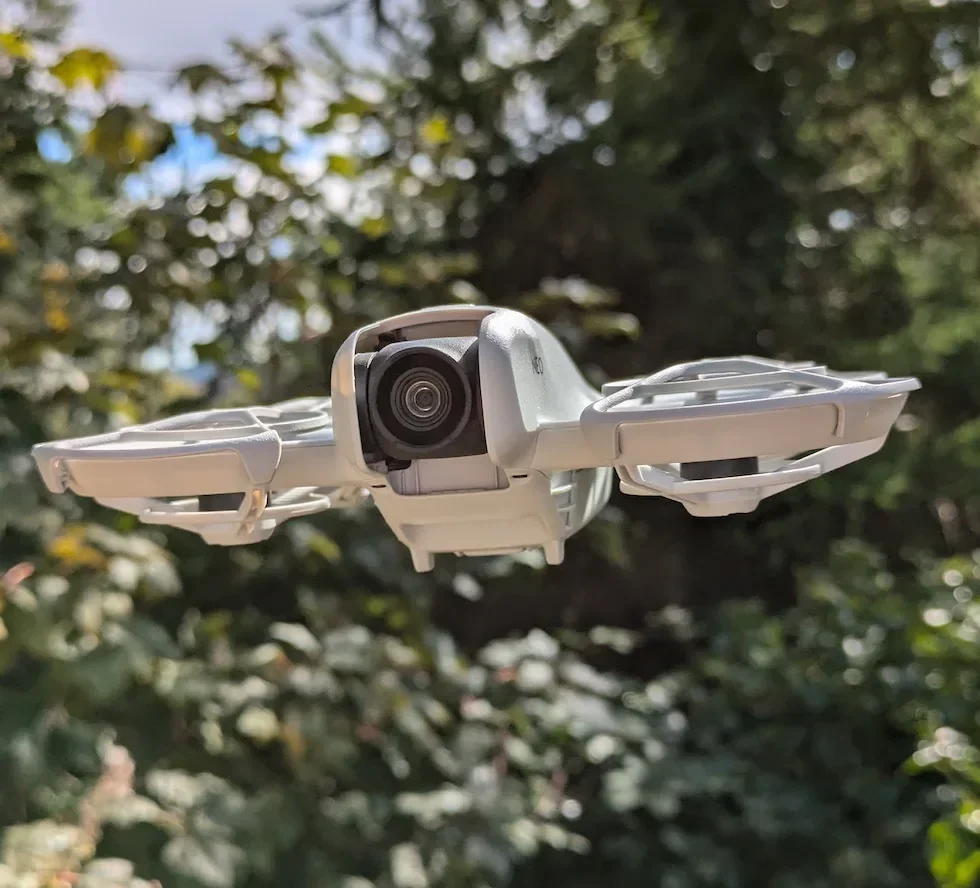
If you pulled the DJI Neo 2 out of the box, flew it, and noticed the footage looked softer than the marketing reel promised, the setting you are looking for is the video resolution chip on the camera view inside DJI Fly.
The DJI Neo 2 ships in Auto mode at 1080p — fine for social-media uploads, way short of what the sensor can actually do. Most drone pilots bump it to 4K for the first real shoot, drop to 2.7K when they want a vertical edit for Reels, and stay on 1080p when slow motion or storage is the priority.
Quick guide
To change the video resolution on the DJI Neo 2, go to DJI Fly → Camera view → Video mode → Resolution chip. Tap the chip and pick 4K for maximum detail, 2.7K for a vertical aspect ratio, or 1080p for high frame-rate slow motion and smaller files.
Step-by-step: How to Change Video Resolution on the DJI Neo 2
Follow these top to bottom the first time, and you will know the path off by heart the second time.
Open DJI Fly to the camera view with the DJI Neo 2 connected
Power the drone on, wait for DJI Fly to connect, and tap into the camera view. The live feed from the drone fills the centre of the screen and the shooting-mode controls run down the right-hand edge.
Switch the DJI Neo 2 into video shooting mode
Tap the shooting-mode icon on the right-hand control column and select Video from the list that slides out. The resolution chip only appears in video mode — in photo mode you get megapixel options instead, which is a common reason people cannot find the resolution control.
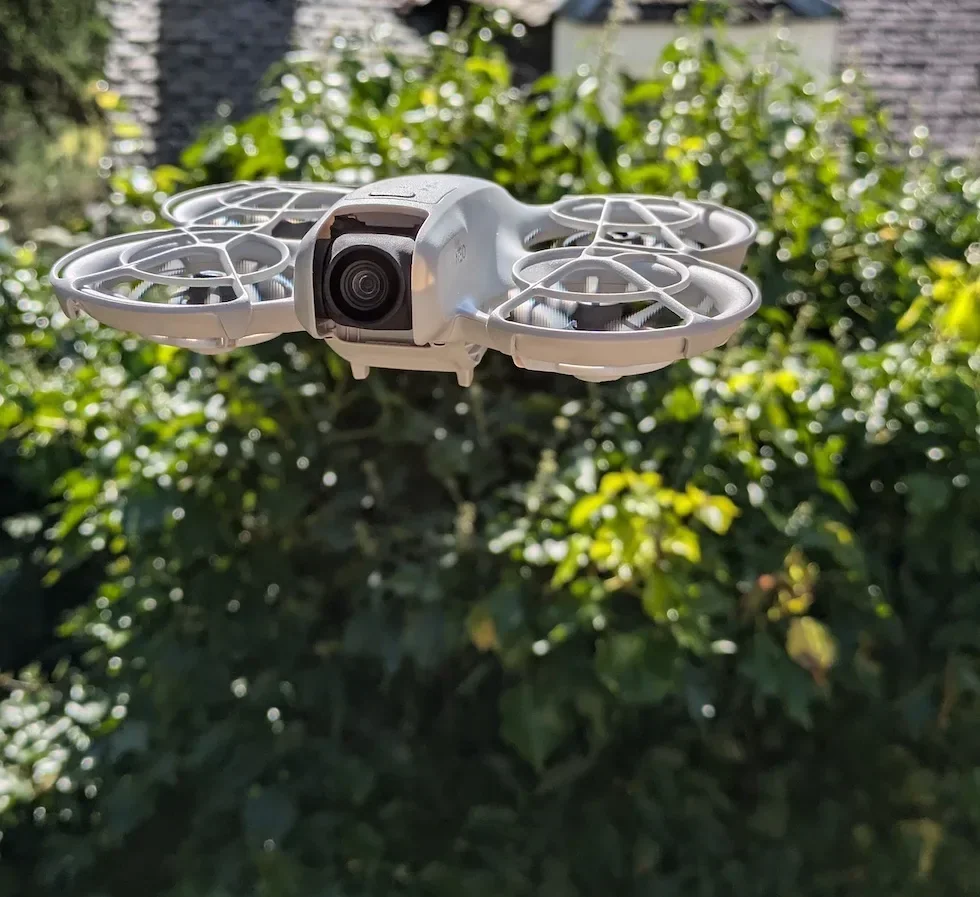
Find the resolution chip on the right-hand edge of the camera view
The current resolution shows as a small chip on the right-hand edge of the camera view, just below the shooting-mode icon. Out of the box it reads 1080p — that is the default the DJI Neo 2 starts at and the reason most first flights come out softer than expected.
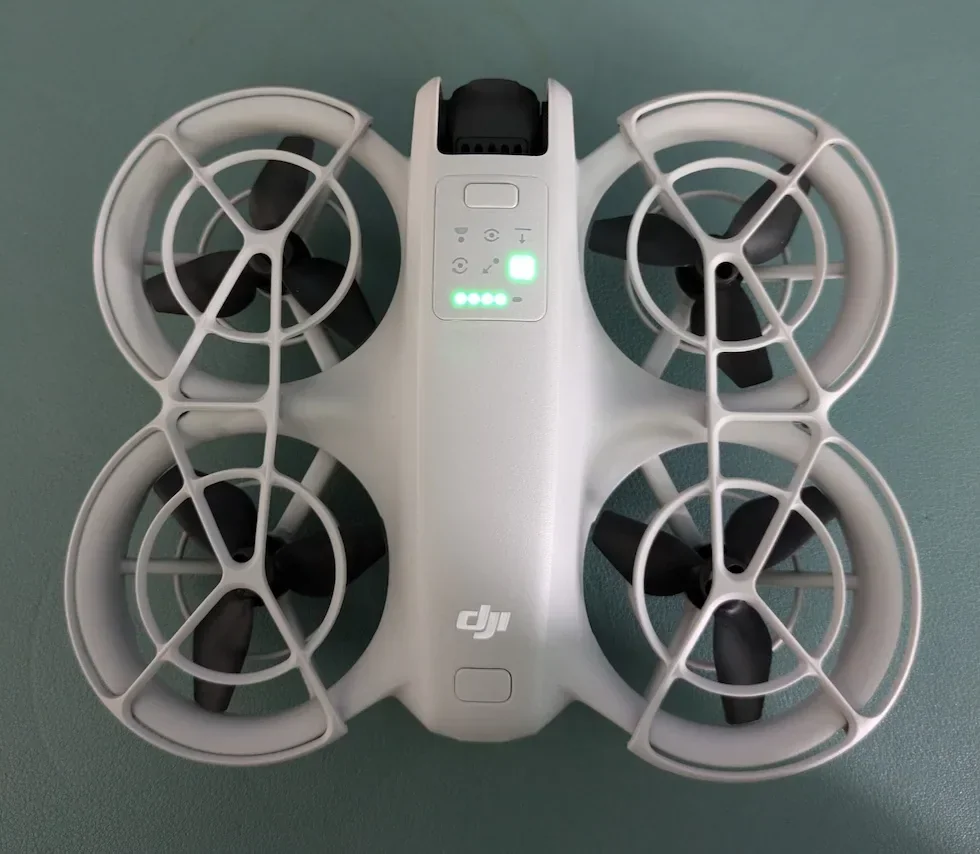
Tap the resolution chip to open the picker
Tap the chip once and the resolution picker slides out as a small panel. Three rows: 4K, 2.7K, and 1080p. The currently-selected value is highlighted in the brand yellow.
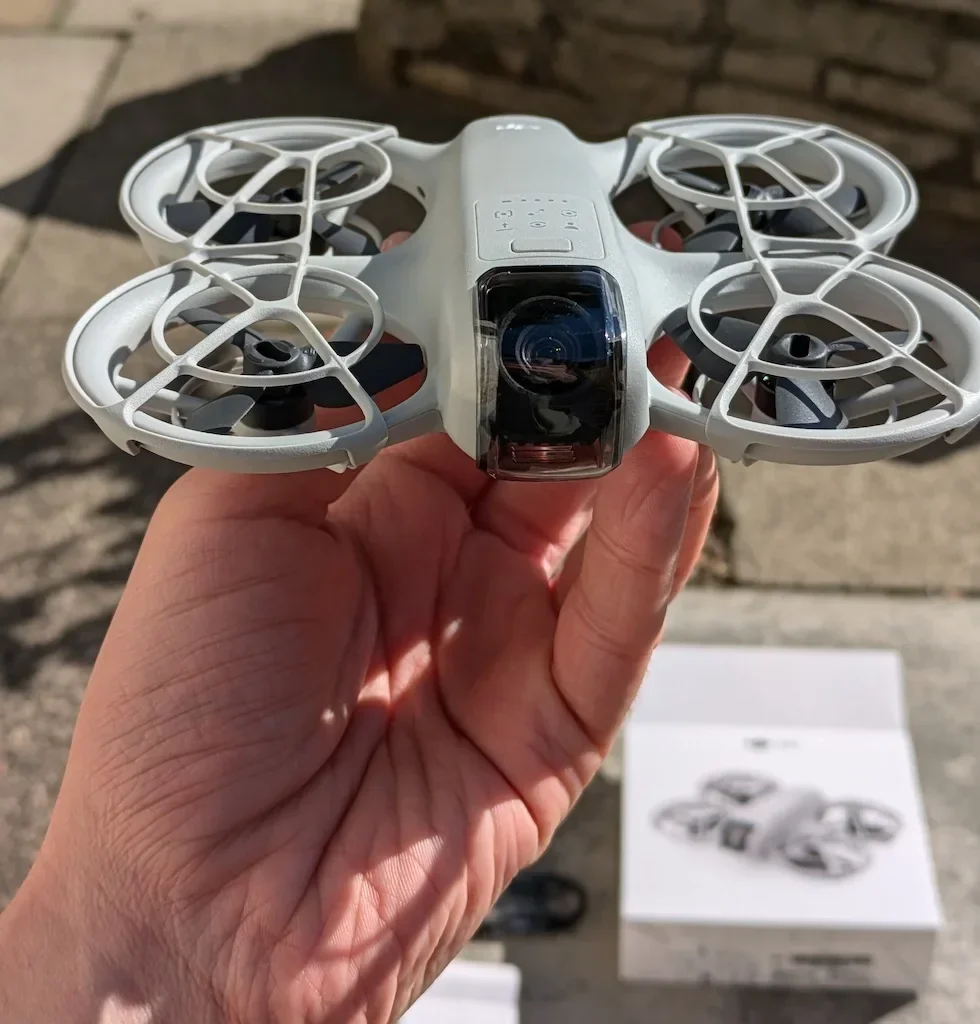
Pick 4K, 2.7K, or 1080p from the resolution picker
Tap the resolution you want. 4K records 3840 by 2160 at up to 100 frames per second with the remote controller paired. 2.7K shoots 1512 by 2688 in the vertical aspect ratio for social uploads. 1080p runs 1920 by 1080 at up to 100 frames per second with the smallest file sizes.
Confirm the chip on the camera view updated to the new resolution
The picker closes the moment you tap, and the chip on the right-hand edge updates to read the resolution you just picked. The selection is sticky — the DJI Neo 2 remembers the value across power cycles and uses it for every video clip until you change it.
Alternative route — change the resolution via Pro mode Preferences
Tap the Auto/Pro toggle in the top corner of the camera view to switch the DJI Neo 2 into Pro mode. Tap anywhere on the parameter row and the Preferences tab opens with the same 4K, 2.7K, and 1080p options — plus the frame-rate selector and the colour-profile control. Pick the resolution the same way.
Peter's tip
I leave the DJI Neo 2 on 4K for every horizontal client job and flip it to 2.7K for any vertical edit going straight to Reels or TikTok. The only flight I deliberately drop to 1080p is when I want slow motion — 100 frames per second through a 25 fps timeline is properly cinematic and the DJI Neo 2 sensor handles it cleanly.
| Resolution | When it works | Where it bites |
|---|---|---|
| 4K (3840 x 2160) | Horizontal client work, landscape edits, anything destined for a 4K television or a properly graded edit. Full sensor detail and headroom for cropping in post. | File sizes — a 4K clip eats roughly four times the storage of 1080p, and the 22 GB of DJI Neo 2 internal storage fills fast on a long shoot. |
| 2.7K (1512 x 2688) | Vertical edits for Reels, TikTok, and YouTube Shorts. Records natively in the 9:16 aspect ratio so you do not crop a horizontal frame down and lose half the pixels. | Horizontal delivery — a vertical clip in a 16:9 timeline either letterboxes with bars on the sides or crops to a thin strip. Pick this only when the final edit is vertical. |
| 1080p (1920 x 1080) | Slow motion at 100 frames per second, social-media-only deliveries, and any shoot where storage or battery transfer time matters. Smallest files, fastest QuickTransfer. | Detail-heavy footage — fine textures, distant subjects, and large screens all expose 1080p as soft compared to 4K. Not the resolution for a paid client deliverable. |
Frequently asked questions
What video resolutions does the DJI Neo 2 actually record?
4K, 2.7K, and 1080p. The 4K mode shoots 3840 by 2160 at up to 100 frames per second when the drone is paired with the DJI RC-N3 remote controller. The 2.7K option exists for vertical shooting at 1512 by 2688 at 60 frames per second. The 1080p mode runs all the way up to 100 frames per second and is the one to pick for fast tracking footage and slow-motion edits.
Does the DJI Neo 2 record 4K by default?
No. The DJI Neo 2 starts in Auto mode at 1080p out of the box. You have to switch the resolution chip to 4K manually the first time you fly — and the setting is sticky after that, so it stays on whatever you last picked until you change it again.
Is there a real quality difference between 4K and 2.7K on the DJI Neo 2?
On a phone screen, almost nothing — the sensor is 1 over 2 inch and the pixel pitch is the same regardless of the output resolution. On a 4K television or a properly graded edit, 4K pulls ahead on fine detail like leaves, fence wire, and skin texture. The bigger reason to drop to 2.7K is the vertical aspect ratio for social-media uploads, not the pixel count.
Why would I record at 1080p instead of 4K on the DJI Neo 2?
Three reasons. First, frame rate — 1080p tops out at 100 frames per second on the DJI Neo 2, which gives you proper slow-motion in a 30 or 25 fps timeline. Second, file size — 1080p clips are roughly a quarter the size of 4K, useful when you only have the 22 GB of internal storage to play with. Third, social platforms re-compress everything to 1080p anyway, so a clean 1080p master beats an over-compressed 4K one for Instagram and TikTok deliveries.
Can I change video resolution on the DJI Neo 2 while it is in the air?
Yes, but only between clips. The picker is greyed out while the drone is actively recording — you have to stop the clip, change the resolution, and start a new one. Switching resolutions mid-flight is fine; just expect a tiny pause as the drone reconfigures the camera before the next clip rolls.
Does Pro mode unlock any extra resolutions on the DJI Neo 2?
No. Auto mode and Pro mode share the same 4K, 2.7K, and 1080p options for video. Pro mode adds the Preferences tab where you can also pick the frame rate and the colour profile — Auto handles all of that for you automatically. If all you want is the resolution change, the camera-view chip is the faster route.
How long does a fully-charged DJI Neo 2 battery last when recording 4K?
Around 17 to 18 minutes of flight per battery, which translates to roughly 15 minutes of usable 4K recording once you allow for takeoff, framing, and landing. Recording resolution itself does not affect flight time meaningfully — the motors burn most of the power, not the encoder. Bring spare batteries for any shoot that needs more than one decent take.
What if the resolution chip is missing from the DJI Neo 2 camera view?
Two things to check. First, make sure the drone is in video shooting mode — the chip only renders when video is selected, not photo. Second, check that DJI Fly is fully connected to the drone; the chip stays hidden until the live feed loads. If both are right and the chip is still missing, force-quit DJI Fly and relaunch — a stale session sometimes hides the camera-view controls.
Resolution is one of the two settings most DJI Neo 2 owners never change after the first flight — and it costs them quality every time they hand a clip over to a client or a platform. Pick the right one deliberately for the delivery, not once and forgotten.
If you want a second opinion on which resolution to pick for a specific shoot, drop the details to peter@hiredronepilot.uk and I will come back to you directly. The video version of this walkthrough is on YouTube and the comments are open.
References
Primary source material for this article is the official DJI Neo 2 documentation and DJI Fly. External links open in a new tab.
- DJI Neo 2 — Technical specifications · 4K (3840 x 2160) up to 100 fps with the remote controller, 2.7K (1512 x 2688) vertical at 60 fps, 1080p (1920 x 1080) up to 100 fps, and the 80 Mbps maximum video bitrate.
- DJI Neo 2 — Downloads (User Manual, Quick Start Guide, firmware notes) · The video shooting modes available under Auto and Pro, the in-app Preferences tab, and the sticky-resolution behaviour across power cycles.
- DJI Fly — App download and release notes · The app where the camera-view resolution chip and the Pro-mode Preferences tab live. Release notes record menu changes between versions.
Peter Leslie
Founder & GVC Drone Pilot
Peter is the founder of HireDronePilot. With thousands of logged commercial flight hours, he writes about drone technology, commercial surveying tactics, and UK aviation compliance.
Connect on LinkedIn