Best Drone Under £500 in the UK 2026: What I’d Buy at This Price

Peter Leslie
31 July 2026 · 19 min read
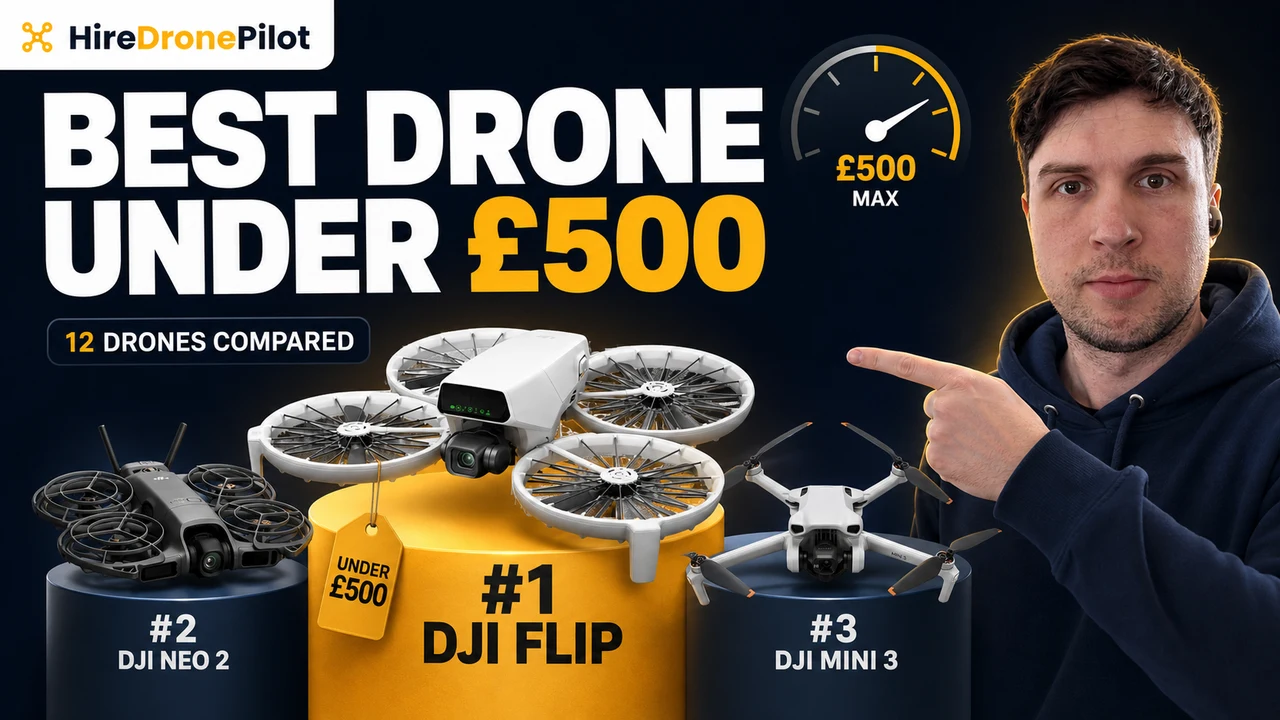
Five hundred pounds is a real decision. It is not pocket money, it is not a professional tool budget, and it is almost exactly the amount at which drone manufacturers stop giving you things and start taking them away.
Two questions decide this purchase, and neither of them is “which drone is best”. The first is how much of the £500 the drone itself should be allowed to eat — because the drone is not the last thing you buy. The second is whether the price you are looking at is the price that actually gets you into the air. On three of the drones below it is not, and the gap is large enough to break your budget on its own.
So the best drone under £500 in 2026 is the one whose running costs still fit inside the budget.
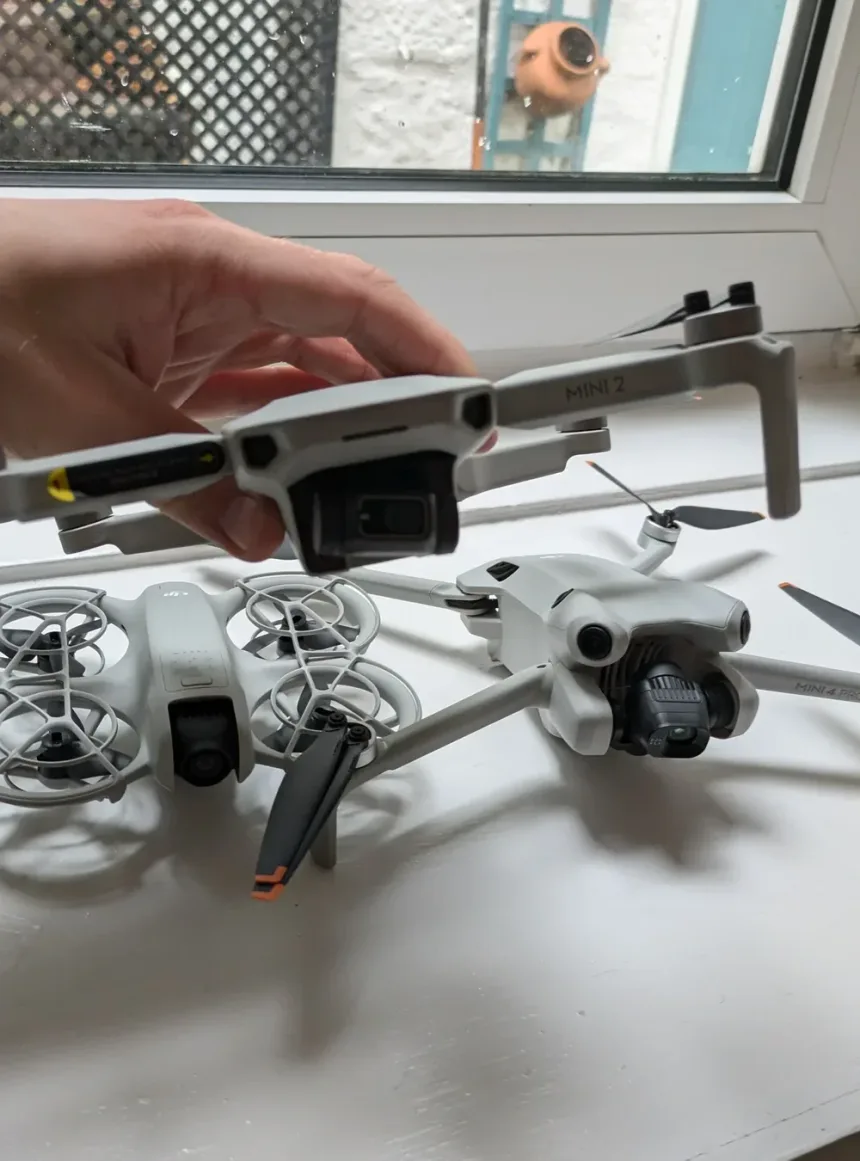
I have flown every DJI drone in this guide. What follows is not a ranking of specification sheets — it is a ranking of what £500 buys once the registration, the spare battery, the memory card and the missing controller have all been paid for.
So this guide does three things. It asks four questions and narrows twelve drones to the one that fits you. It shows exactly where the £500 ceiling bites, spec by spec, so you know what you are giving up and what you are not. And it spends the £500 three different ways, in full, so you can see a complete budget rather than a sticker price.
How I get paid: the Amazon links below are affiliate links, so if you buy through one I earn a small commission at no extra cost to you. It does not change what I recommend — my top pick is the fourth-cheapest of the twelve drones below, and one of them has no affiliate link at all because I could not verify what it costs in Britain.
The Best Drone Under £500 in 2026 Is the DJI Flip
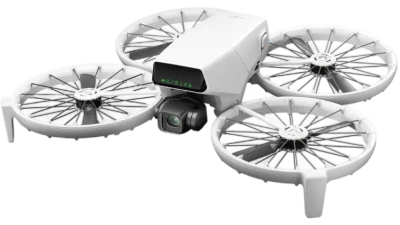
The £500 question is not which drone gets closest to the ceiling. It is which one leaves enough of your £500 to actually fly it.
- No test and no licence — just a £12.34 registration you do online.
- The largest class of camera sensor you can get under £500 — 48 megapixels on a 1/1.3-inch sensor, the same size as drones costing twice as much.
- Propeller cages built in, so it is the one I would hand someone who has never flown.
- It leaves you around two hundred pounds — which is almost exactly what the registration, a spare battery, filters and a card come to.
- Forward obstacle sensing only. It sees what is in front of it and nothing to the sides.
Affiliate link · costs you nothing extra · full disclosure
PART ONE
The DJI Flip above wins the guide outright. Here are the four that win their categories — and what is wrong with each of them, because at this money there is always something.
Best Cheap Drone With a Camera: DJI Neo 2
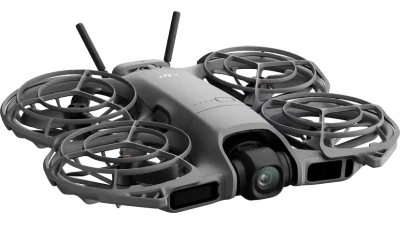
Obstacle sensing in every direction, plus a LiDAR, on one of the two cheapest drones in this guide.
- No test and no licence — just a £12.34 registration you do online.
- Palm takeoff and landing, so there is no controller to learn on day one.
- 12 megapixels on a 1/2-inch sensor, and 19 minutes a battery. The camera is the compromise.
Longest Flight Time Under £500: DJI Mini 3
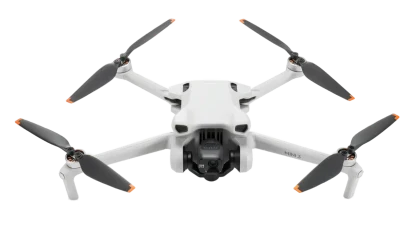
38 minutes a battery — longer than any drone on this page, including every one above the £500 line.
- No licence needed — at 248 g it is under the 250-gram line.
- The same 1/1.3-inch, 48-megapixel sensor as the DJI Flip.
- Downward obstacle sensing only, and the older O2 radio link. That is what pays for the flight time.
The Cheapest Drone I’d Still Recommend: DJI Neo
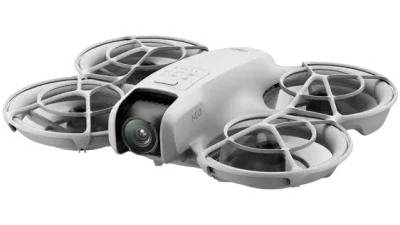
The cheapest thing in this guide by a wide margin, cages round every propeller, and it launches off your palm.
- No licence needed — at 135 g it is well under the 250-gram line.
- There is no remote controller in the cheapest box. You fly it from your phone.
- Rated to 8 m/s of wind, the weakest here. A breezy British afternoon is its limit.
Best FPV Drone Here — But It Breaks the Budget: DJI Avata 2
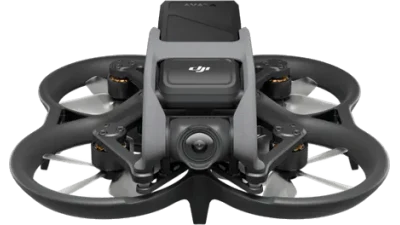
If you came here wanting an FPV drone under £500, the honest answer is that there isn’t one. This is the one to save for.
- The sticker price is the drone alone. The cheapest bundle you can fly costs a great deal more.
- UK rules require a second person stood next to you every single flight.
- From January 2028 it needs the A2 test to fly near people.
Affiliate links · costs you nothing extra · full disclosure
Take the quiz: find the best drone under £500 for you
Get a drone matched to your actual budget — not a generic top ten.
- Ranked on what gets you airborne, not on the sticker.
- Twelve drones, every DJI one of which I have flown myself.
- Tells you which ones bust your budget, and what you give up if you let them.
- About 20 seconds, and no email needed.
STEP 1 OF 4
12 of 12 still fit
All twelve, cheapest first, on what gets you airborne
-
DJI Neo
135 g · C0 · 1/2″ 12MP · 18 min · no controller in the box
The cheapest thing here that is genuinely a drone rather than a toy. It launches off your palm, it has cages round every propeller, and it is the only one here you would not be furious about crashing.
- No test and no licence — just a £12.34 registration you do online.
- The cheapest box has no remote controller in it. You fly it from your phone or off your palm.
- Rated to 8 m/s of wind — Level 4, the lowest here. Everything else manages 10.7 m/s.
-
DJI Neo 2
151 g · C0 · 1/2″ 12MP · 19 min · no test needed
The strangest bargain on this page. For the money it has an obstacle-sensing system that looks in every direction plus a forward LiDAR — hardware the DJI Flip does not have.
- No test and no licence — just a £12.34 registration you do online.
- Obstacle sensing in every direction plus a forward LiDAR. Nothing else near this price has it.
- A 12-megapixel camera on a small sensor. Brilliant object, ordinary pictures.
-
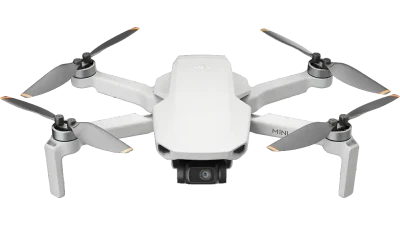
DJI Mini 4K DJI UK no longer lists it
246 g · 1/2.3″ 12MP · 31 min · no test needed
The cheapest way to get a proper folding drone with a three-axis stabilised camera and a real long-range controller. It is also the smallest sensor here, and DJI UK has stopped listing it.
- No licence needed — at 246 g it is under the 250-gram line.
- A three-axis stabilised camera and a proper 10 km controller, at the cheap end of this list.
- DJI UK no longer lists it, so you are buying remaining stock at whatever the shop asks.
-
DJI Flip
<249 g · C0 · 1/1.3″ 48MP · 31 min · no test needed
The same size sensor as drones at twice the money, wrapped in propeller cages, and a long way clear of the ceiling. It is the drone I would buy at this budget and it is not close.
- No test and no licence — just a £12.34 registration you do online.
- 48 megapixels on a 1/1.3-inch sensor — the largest class of sensor available under £500.
- Propeller cages built in, and it can take off from your hand.
-
DJI Mini 3
248 g · C0 · 1/1.3″ 48MP · 38 min · no test needed
Thirty-eight minutes in the air, which is longer than the DJI Mini 5 Pro manages. Everything it gives up to hit that price is on the radio and the sensing, not the camera.
- No test and no licence — just a £12.34 registration you do online.
- 38 minutes a battery, the longest flight time on this page at any price.
- Downward obstacle sensing only, and the older O2 radio link — 6 km against the Flip’s 8 km.
-
HOVERAir X1 PRO not a DJI
191.5 g · 1/2″ 12MP · 16 min · follows at 42 km/h · no test needed
Not really a drone at all — a camera that flies itself, folds flat and films you running, riding or skiing while nobody holds anything. Everything it has goes on doing that, and the camera behind it is one of the small ones here.
- No test and no licence — just a £12.34 registration you do online.
- The box is the drone and a cable, and there is nothing else you have to buy. No controller, no goggles, not even a phone.
- Sixteen minutes a battery, the shortest here, and it only senses backwards — nothing in front of it or below.
-
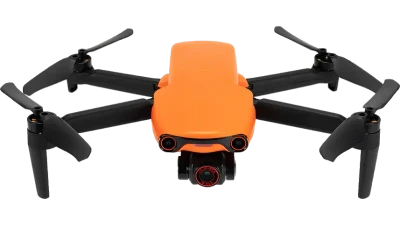
Autel EVO Nano+ no affiliate link — I could not verify a UK price
249 g · 1/1.28″ 50MP · 28 min · no test needed
Here so that nobody can call this list a DJI catalogue, and it is a genuinely good little camera. The problem is that I could not pin down what it costs in Britain, and in a guide about a price ceiling that is disqualifying.
no link- No licence needed — at 249 g it is under the 250-gram line.
- A 1/1.28-inch, 50-megapixel sensor — the same class as the DJI Flip’s, with 50 megapixels rather than 48.
- UK sellers quote wildly different figures for it — the dearest I found was close to half again the cheapest — so I have not given it a buy link.
-
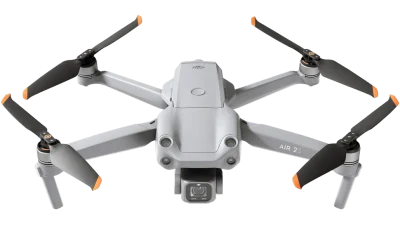
DJI Air 2S renewed stock only
595 g · legacy, no class mark · 1″ 20MP · 31 min
The only way to get a one-inch sensor under £500, and the reason I do not recommend it. At 595 grams you need a qualification before you can fly it anywhere near a house.
no link- Needs the A2 test to fly near people. Without it you stay 150 m from anything built-up.
- A proper one-inch, 20-megapixel sensor — nothing else under £500 has one.
- DJI UK does not sell it any more, so it is renewed and refurbished stock only.
-
DJI Avata 2 half again over the sticker to fly
377 g · C1 · 1/1.3″ 12MP · 23 min · observer required
The only drone here that makes you laugh out loud. It is also the clearest example of the trap in this whole guide: the box has no goggles in it, and it will not fly without them.
- The sticker price is the drone alone. The cheapest bundle you can actually fly costs a great deal more.
- UK rules require a second person watching the drone whenever you fly it through goggles.
- From January 2028 it needs the A2 test to fly near people — it is a C1 drone over 250 grams.
-
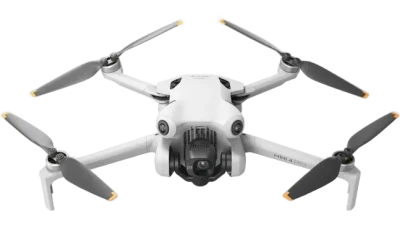
DJI Mini 4 Pro just misses the line
<249 g · C0 · 1/1.3″ 48MP · 34 min · no test needed
The drone everyone asks me about when they say “about five hundred pounds”. It is over the line, it has the same sensor as the Flip, and what the extra money buys is sensing rather than pictures.
- No test and no licence — just a £12.34 registration you do online.
- The cheapest drone with obstacle sensing in every direction using twin cameras — the real reason to want it.
- The same 1/1.3-inch, 48-megapixel sensor as the DJI Flip, for nearly twice the money.
-
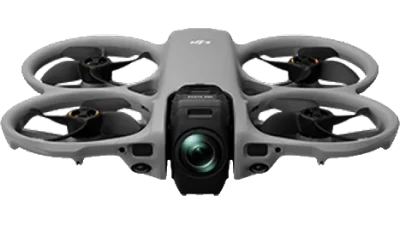
DJI Avata 360 double the sticker to fly
455 g · C1 · two 1/1.1″ sensors · 23 min · observer required
Two square sensors shooting 8K in every direction at once, so you choose the framing after you land. Fascinating, and a very long way outside a £500 budget once you add the bit you look through.
- The sticker price is the drone alone. The cheapest flyable configuration costs a great deal more.
- 8K in every direction at once, and you pick the framing after you land.
- From January 2028 it needs the A2 test to fly near people — it is a C1 drone at 455 grams.
-
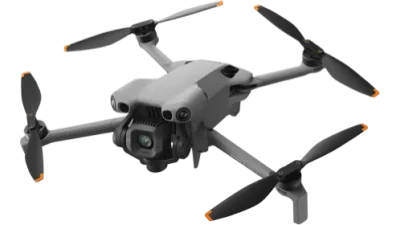
DJI Mini 5 Pro well over the line
249.9 g · C0 · 1″ 50MP · 36 min · no test needed
The drone the £500 ceiling is keeping you away from. A one-inch sensor under 250 grams, with no test to sit. If your budget is soft, this is the only thing above the line worth saving for.
- No test and no licence — just a £12.34 registration you do online.
- A one-inch, 50-megapixel sensor. Nothing under £500 comes close, new or used.
- Rated to 12 m/s of wind, the highest here. Do not buy the bigger battery: it takes the drone over 249 g.
The list runs cheapest first, and the order is set by what it actually costs to get each drone into the air rather than by the number on the shelf — for the two FPV drones that means the goggles are counted, because they will not fly without them, which is why both sit lower down the list than their stickers suggest. Two of the twelve are no longer listed by anyone who made them, so what you pay is whatever a shop has left and whatever it asks. I do not print prices here: they move weekly, and a figure typed next to a buy button is out of date before you read it. Tap through and Amazon will show you today’s. Check the listing carefully, because it is sometimes a different bundle from the configuration described in the row. Comparison specifications from DroneCompare, CC BY 4.0.
PART TWO
Where the £500 ceiling actually bites
Every buying guide tells you what a budget drone has. Almost none tell you what it stops having, or exactly where the line falls. So here is the honest version: five places where £500 runs out, ranked by how much each one will actually annoy you, and one place where it does not run out at all.
The useful thing about a price ceiling is that it is not a smooth curve. Drones do not get gradually better as you spend more. They get better in steps, and the steps are in inconvenient places.
1. The sensor stops at 1/1.3-inch, and the next step up costs more than my top pick does
This is the big one. The size of the sensor behind the lens is what decides whether a picture holds together when the light goes, and it matters far more than the megapixel number printed next to it.
Under £500 there is a hard stop. Every drone below the line tops out at the 1/1.3-inch class of sensor — roughly the size of the main camera in a good phone. The Autel EVO Nano+’s 1/1.28-inch is the same thing to within a rounding error. The DJI Flip has one. So does the Mini 3, which costs a little more, and so does the Mini 4 Pro, which costs roughly twice as much and sits above the line. Paying more inside this bracket buys you nothing whatsoever in sensor size — the cheapest drone here with the big sensor and the dearest one have exactly the same piece of glass and silicon behind the lens.
The next step up is a one-inch sensor, and it is the step that visibly changes pictures — roughly 116 mm² of light-gathering area against 69 mm². The cheapest new drone that has one is the DJI Mini 5 Pro, and the gap between it and my top pick is wider than the whole price of my top pick. You are paying more than the cost of the cheaper drone all over again, and you are paying it for one upgrade.
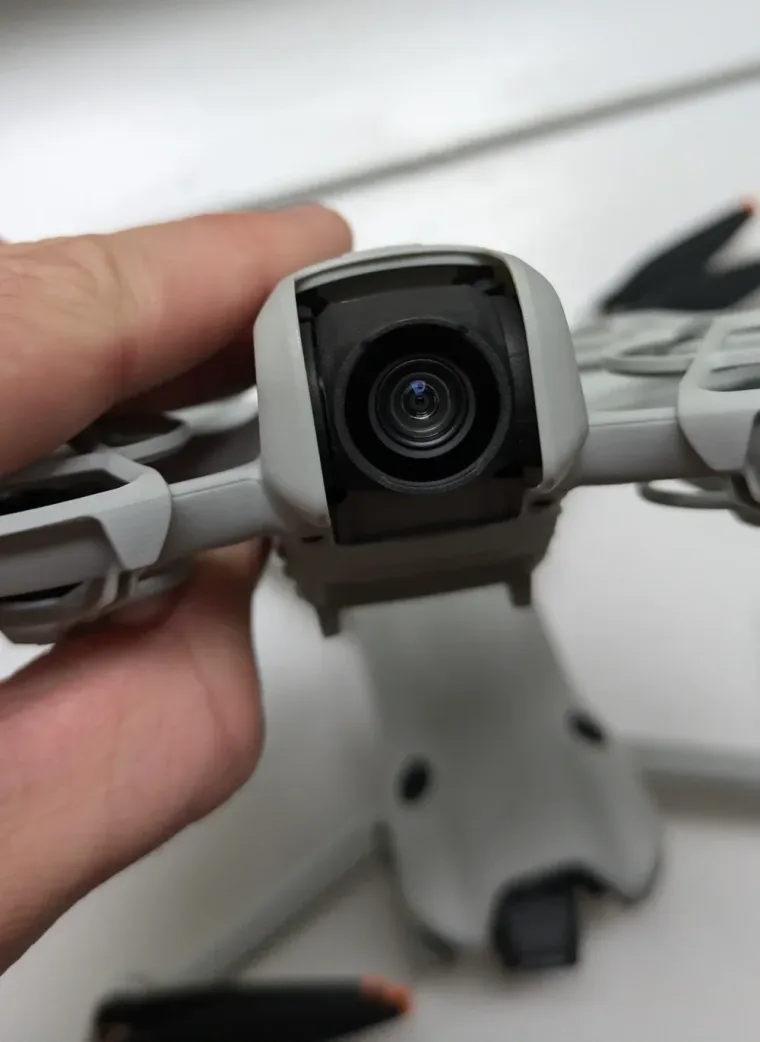
There is exactly one way under the line to a one-inch sensor, and it is the DJI Air 2S, bought renewed. Read the rest of that sentence before you get excited: it weighs 595 grams, it carries no class mark at all, and that combination means you need a qualification before you can legally fly it near anything built-up. More on that below. It is a bargain the way a cheap horse is a bargain.
SENSOR SIZE, AND WHERE THE £500 CEILING FALLS
← everything under £500 stops here
Sensor areas are the standard figures for those formats, not manufacturer measurements. The point is the ratio, not the third decimal place: a one-inch sensor gathers about 1.7 times the light of a 1/1.3-inch one. Notice where the ceiling falls. It does not land in the middle of a gentle slope — it lands directly underneath the largest single step on the chart.
2. Nothing under £500 can see sideways
Obstacle sensing is where budget drones are quietly worst, and it is the thing most likely to cost you the drone.
The DJI Flip has a forward-facing three-dimensional infrared system and downward sensors. It sees what is in front of it and it sees the ground. It does not see to the sides, behind, or above. The DJI Mini 3 is worse still — downward sensing only, which is to say it will keep itself off the grass and fly you straight into a tree. The HOVERAir X1 PRO is the odd one out here: it looks backwards and nowhere else, because the only thing it is really trying not to reverse into is whatever is behind it while it films you.
The system that reads obstacles in every direction using pairs of cameras — the one that will genuinely stop a drone before it hits a branch you did not see on a phone screen — starts at the DJI Mini 4 Pro, and the Mini 4 Pro is over the line. Not by a fortune, but over it. That is the single most defensible reason to break a £500 budget, and it is worth being honest that it is a safety upgrade rather than a picture one.
The exception nobody expects. The DJI Neo 2 — the second-cheapest drone in this guide — has omnidirectional sensing plus a forward-facing LiDAR. That is more sensing hardware than either the Flip or the Mini 3 carries, and both of those cost more than it does. It uses a single-camera system rather than paired cameras, so it is not the equal of the Mini 4 Pro’s, but it is a remarkable thing to find this far down the price list and it tells you a lot about where DJI is putting its engineering.
3. The radio link is where the money quietly went
Every drone talks to its controller over a proprietary radio link, and DJI names its generations O2, O3, O4 and O4+. This is not about how far you can fly — UK law requires you to keep the drone in sight at all times, which in practice means a few hundred metres, not kilometres. It is about how well the picture holds up when there is a block of flats, a phone mast and forty Wi-Fi networks between you and the drone.
Under £500 you get a mixed bag. The Flip and the Neo 2 have O4; the Mini 3 and the Mini 4K are on the older O2. On DJI’s own numbers that is 8 km against 6 km under the European rules our transmitters follow. What that actually means at ground level is in DJI’s own small print for the Flip: in strong interference, such as a city centre, expect roughly 1 to 2.5 km. A stuttering picture on a phone is how most first crashes start.
4. The sticker price is not the price — on three of these
This is the one that ruins budgets, and it is the reason the list above is ordered on what it costs to get airborne rather than on the number on the shelf.
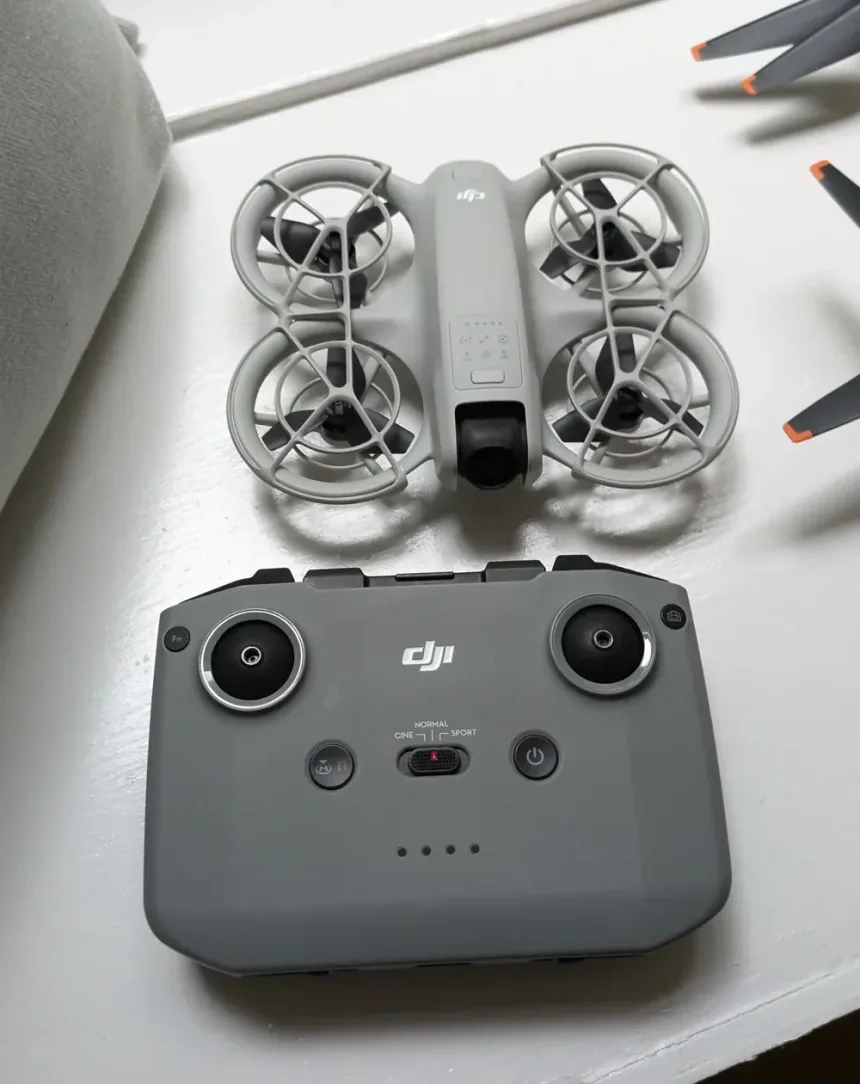
An FPV drone — one you fly by looking through goggles rather than at the drone — is sold as a drone on its own. The DJI Avata 2 has a sticker price that sits comfortably inside £500 at the DJI UK store, and every price comparison site in Britain will show you that number. There are no goggles in that box, there is no controller, and it cannot be flown without both. The cheapest configuration DJI UK sells that you can actually put in the air is the Fly Smart Combo, and it costs half as much again — which carries it over the £500 line. The DJI Avata 360 is worse. Its sticker is also inside the budget; its cheapest flyable version costs more than double that, and lands so far past £500 that it belongs in a different guide.
The DJI Neo plays the same trick at the other end of the scale. The cheapest configuration is called “No RC” because there is no remote controller in it — you fly it off your palm or from your phone, which is fine, right up until you want to fly it somewhere in particular.
STICKER PRICE VERSUS THE PRICE THAT FLIES
| DRONE | WHAT IS MISSING | WHAT THAT DOES TO THE STICKER |
|---|---|---|
| DJI Neo | A remote controller — the cheapest box has none | Nothing. The sticker is the price, but it buys a phone-and-palm drone |
| DJI Avata 2 | Goggles and motion controller | Half as much again — and that carries it over the £500 line |
| DJI Avata 360 | Goggles or a screen controller | More than doubles it, and puts it out of reach entirely |
Both Avatas have stickers that sit inside £500 and flying prices that do not, which is exactly why neither is my pick. Neither of them looks like that on a search results page, and no comparison site will tell you: the sticker is what gets indexed.
5. Wind, and the one drone that cannot handle a British afternoon
Wind is where a small drone stops being a camera and starts being a struggle. Almost everything in this bracket is rated to 10.7 m/s — that is Level 5 on the Beaufort scale, around 24 mph, which is a normal breezy day here. The Flip, the Neo 2, the Mini 3, the Mini 4K, the HOVERAir X1 PRO, the Mini 4 Pro, the Avata 2, the Avata 360 and the Air 2S all sit on that same number.
The exception is the DJI Neo at 8 m/s, which is Level 4. That is what you pay for a drone weighing 135 grams and costing less than anything else here, and it is worth knowing before you take it to a beach. For comparison the Mini 5 Pro, the dearest drone on this page, manages 12 m/s. So the ceiling costs you a little wind margin at the very bottom, and essentially nothing in the middle.
And where the ceiling does not bite at all
Flight time. This is the spec everyone shops on and it is the one where spending more gains you nothing.
The DJI Mini 3 flies for 38 minutes. The Mini 4 Pro, which costs roughly twice as much, manages 34. The Mini 5 Pro, dearer again, manages 36. The longest-flying drone on this entire page is the third-cheapest one with a real camera, and if a long afternoon in the air is what you are buying, the ceiling is not costing you a thing — spending more here actively buys you less.
Nor does it cost you much on video resolution. Almost everything here shoots 4K, and almost everything writes raw photo files you can actually edit. The gap between a drone at this budget and a professional one costing six or seven times as much, in 2026, is not resolution — it is sensor area, sensing, and how much of the flying the drone does for you.
The paperwork, in plain English
If you have never owned a drone, this is the part that catches people out after they have already paid. It is genuinely simple, and at this budget it is almost free.
Two registrations, one of which costs money
Every drone with a camera needs the same two things from the Civil Aviation Authority. A Flyer ID is a free online theory test that proves you know the basic rules; it lasts five years and you can take it in about half an hour. An Operator ID costs £12.34 a year, is renewed annually, and has to be written on a label stuck to the drone. One Operator ID covers every drone you own. You must be 18 or over to hold one — if the drone is for a child, a parent registers as the operator.
That is the whole cost of the paperwork for eleven of the twelve drones above — everything except the DJI Air 2S. Twelve pounds thirty-four, once a year. If you want the full detail, I have written it up separately in my guide to UK drone laws.
The 250-gram line is why budget drones look the way they do
Under 250 grams, a drone flies in the Over People (A1) sub-category and there is nothing else to do. Over it, you are into class marks, sub-categories and, for most interesting drones, a qualification called an A2 Certificate of Competence — a theory test of at least thirty multiple-choice questions, taken with a CAA-approved assessment centre, valid five years, at a price each provider sets itself.
Look back at the list and notice how many drones are 246 g, 248 g, 249 g or 249.9 g. That is not a coincidence, it is the entire product brief. Because manufacturers are designing to that line, the budget bracket is where the cleverest engineering happens — which is exactly why a drone at this budget can carry the same sensor as one costing nearly twice as much. If you want the full picture of that category, my guide to the best sub-250g drones goes further into it.
Here is the part the shops leave out. If you buy under 250 grams, the A2 Certificate buys you nothing — you already have better privileges than it grants. It only makes sense once you have decided you need a heavier drone. Decide the weight first, then the paperwork. Never the other way round.
The two exceptions in this guide
The DJI Air 2S. At 595 grams with no class mark, it is what the rules call a legacy drone, and legacy drones are governed by weight alone: under 2 kg you need an A2 Certificate to fly in the Near People (A2) sub-category. Without one, you are restricted to Far from People (A3) — 150 metres from any residential, commercial, industrial or recreational area. In most of Britain that means driving to a field. That is what the cheap one-inch sensor really costs.
The two FPV drones. Flying by goggles is legal, but the CAA requires an observer stood next to you who can talk to you continuously, and at least one of you must have the drone in direct sight and a clear view of the surrounding sky at all times. Goggles and phone screens do not count as direct sight. The observer needs no qualification of their own, but you do need to bring one. FPV is a two-person hobby in law.
One more date worth knowing. Until 31 December 2027 a drone carrying a European C class mark can be flown as though it held the equivalent UK class. From 1 January 2028 that stops, and it falls back to plain weight rules. For almost everything in this guide nothing changes, because almost everything here is under 250 grams. The two that lose privileges are the Avata 2 and the Avata 360 — both C1, both over 250 grams, both of which will need an A2 Certificate to fly near people from that date.
PART THREE
Three ways to spend £500, in full
A drone on its own is not a thing you can use. One battery gives you a single flight, there is no memory card in the box on most of these, and the registration is not optional. So rather than a sticker price, here are three complete kits — everything you would take to a field on the first Saturday — and, for each one, how much of the £500 is left standing at the end of it.
I have described each kit as a share of the budget rather than as a column of figures, for the same reason the list above carries no prices: accessory prices move as fast as drone prices do, and a total that is wrong by the time you read it is worse than no total at all. The shape is what matters here, and the shape is stable. Three of these lines are fixed no matter which drone you pick.
BUDGET ONE
“I want to spend as little as possible”
DJI Neo — the smallest sensible outlay that still leaves you a real drone
The drone is the cheapest thing in this guide, and in the “No RC” box it comes with no controller at all. The Flyer ID is free and lasts five years, so it never appears in a budget. The Operator ID is £12.34 a year and is the one line here nobody can shop around on. One spare battery — the Neo takes a small one, so this is the least painful spare in the guide, and it doubles your flying at a stroke. A 128 GB card, because there is nothing in the box to record onto.
No filters: this camera does not justify them. Set aside a little for a spare set of propellers all the same — they cost pennies and you will break some. All in, a first year on the Neo comes to a bit over a third of the £500.
Thirty-six minutes of total flying, no controller, and comfortably more than half of your £500 still in the bank. If you are not sure you will enjoy this, that is a very sensible way to find out.
BUDGET TWO — THE ONE I’D BUILD
“I want the best drone the £500 will buy”
DJI Flip — the top pick, kitted properly, and still under the line
The drone, in the box with the RC-N3 controller, takes a little over half the budget on its own. The Flyer ID is free again. The Operator ID is the same £12.34 it is for everybody. One spare battery, which on a drone this size costs not far off twice what the Neo’s did and is the single biggest extra on the list. An ND16/64/256 filter set: the aperture on this camera does not move, so filters are the only way to control exposure for video, and they cost roughly three-quarters of what the battery does. A 256 GB V30 card, fast enough to keep up with 4K without dropping frames, and the smallest line on the list bar the registration.
Leave something for propellers and a crash you have not had yet. All in, a first year on the Flip comes to about seven-eighths of the £500 — which is to say the extras add roughly half again on top of the drone.
The drone is really about half as much again once it is a kit you can actually use — and it still comes in under £500, with enough left for a bag and a landing pad. This is the answer to the question in the title.
BUDGET THREE
“I want the longest possible day out”
DJI Mini 3 — two batteries, seventy-six minutes, and no sensing worth the name
The shape is identical to the Flip kit and so, very nearly, is the total. The drone, with the RC-N1 controller, costs slightly more than the Flip does. The Flyer ID is free, the Operator ID is £12.34, and the spare battery, the ND16/64/256 filter set and the 256 GB V30 card are the same three purchases, and as it happens they come to the same as the Flip’s did. One warning: the filter set was out of stock at DJI UK when I last looked, so expect to buy that one third-party.
All in, a first year on the Mini 3 lands a whisker above the Flip kit and still comfortably inside the £500. The difference between the two is small enough that it should not decide anything.
A few pounds more than the Flip kit, for seventy-six minutes of air time instead of sixty-two — and you give up the forward sensing and the newer radio to get it. A fair trade if you fly over open country, a bad one if you fly near trees.
THE TWO THINGS YOU WILL DEFINITELY NEED
- Check price
A memory card, before the first flight
Most of these ship without one. V30 is the speed rating that keeps up with 4K without dropping frames.
- CAA, annual
The £12.34 Operator ID
Not something I can sell you. Register with the CAA, write the number on a label, stick it to the drone.
Affiliate link · costs you nothing extra · full disclosure
The pattern worth taking away is the ratio, and it barely moves: on all three of those kits the extras add somewhere around half again on top of the drone. The registration is the same for everyone, a card is a card, and a spare battery is the one accessory nobody should skip. So whatever you end up choosing, take the number you were going to spend on the drone and add half of it back on. Nothing on those lists is unreasonable — they are just never on the page where the price is.
PART FOUR
Two questions, and then the answer
Everything above reduces to two questions, and they are worth answering honestly before you look at another spec sheet.
Question one: is £500 a ceiling or a target?
If it is a ceiling — a limit you must not cross — then the number you should be shopping against is not £500. Take the £500, subtract a little over a hundred pounds for the registration, a second battery, filters and a card, and shop against what is left. That is the real ceiling. Shop against it and you will not be embarrassed at the till, and you will not get home with a drone you cannot fly twice in an afternoon.
If it is a target — a number you have in your head that you are willing to move — then the only thing above the line worth moving for is the DJI Mini 5 Pro, because it is the cheapest new drone with a one-inch sensor. Do not move for the Mini 4 Pro. More on that in a moment.
Question two: are you buying a drone, or a camera?
If you are buying a drone — something to fly, to follow you down a beach, to hand to a friend without wincing — then buy a DJI Neo 2 and stop. It is one of the two cheapest things here, the camera is ordinary, and everything else about it is astonishing for the money.
If you are buying a camera that happens to fly, then you want the biggest sensor you can get under the line, and that decides it.
There is now a third answer, and it is worth naming because the adverts for it are everywhere. The HOVERAir X1 PRO — which sits near the top of this bracket without leaving it — is neither of those things. It is a camera that flies itself. There is no controller, no goggles and nothing to learn: you unfold it, press a button, it lifts off your palm, follows you running or riding or skiing at up to 42 km/h, and lands back on your hand. At 191.5 grams the whole legal conversation is still the £12.34 registration and the free test.
I have not flown one, so treat this as judgement rather than experience: it is a specialist purchase, and most people reading this should not make it. What you get for most of the budget is a 1/2-inch, 12-megapixel camera — the same class of sensor as the cheapest drone in this guide, which costs about a quarter as much — and sixteen minutes of flight, the shortest on this page. The running costs are worse too: its spare batteries cost more than the Flip’s, and a filter set for it costs close to half again what the Flip’s does. Buy it if what you genuinely want is footage of yourself moving, hands free, and you have understood that you are paying for the automation and not for the picture. If you want a camera, buy the Flip.
And then there is the one that will annoy you. The HOVERAir X1 PROMAX is the same pocket-sized 192.5-gram body carrying the 1/1.3-inch, 48-megapixel sensor the X1 PRO should have had, shooting 8K and writing raw files — and on Amazon it lands just the wrong side of £500. Not by much. By less than a memory card costs, which is the most irritating near-miss in this guide. I have kept it out of the list, where the only drones above the line are the ones this guide argues with at length. But if your £500 is soft by even a little, it is a better buy than the X1 PRO by a distance, and it is the HOVERAir I would actually spend money on. One caveat: it was on promotion when I checked, discounted well below its list price, so of everything in this guide it is the price most likely to have moved by the time you read it — possibly in your favour, possibly not.
What I’d buy at this price
The DJI Flip, — the fourth-cheapest of the twelve. That is what I’d buy at this price with my own money, and I would not spend long deciding.
It has the largest class of sensor available under the line, and paying another two hundred pounds inside this bracket does not get you a bigger one. It stays under 250 grams, so the entire regulatory conversation is a £12.34 registration and a free test. It has cages round the propellers, which is the single most useful feature on a first drone and one that almost nothing else at this money offers. And — the part that actually settles it — it leaves enough of your £500 behind it to buy the battery, the filters and the card that turn a drone into a thing you can use.
A drone you can afford to fly beats a better drone you cannot afford to feed. That is the whole argument, and at £500 it is the only one that matters.
The two DJI drones that just miss, and why I am not bending the rule
The DJI Mini 4 Pro. Over the line, though not by a fortune, and the one people ask me about most when they say “around five hundred”. Here is why it is out. It has the same 1/1.3-inch, 48-megapixel sensor as the Flip — not a similar one, the same class of sensor — while costing very nearly twice as much. What that difference buys is obstacle sensing in every direction, the newer O4 radio and three more minutes of flight. Those are real things and I would not argue with anyone who bought it. But the difference between the two is roughly the price of the Flip all over again, and for a first drone I would rather have the Flip and spend that difference on batteries, filters, a card and a lesson in not flying into trees.
The DJI Mini 5 Pro. Well over the line — it costs more than twice what my top pick does — and the only drone on this page that is genuinely a different animal: a one-inch, 50-megapixel sensor at 249.9 grams, which five years ago did not exist at any price. If your £500 is soft, this is the thing to save three more months for. If it is not, buying it would mean flying it on one battery with no filters, and that is a worse drone than a fully kitted Flip.
And the one I would tell you to walk away from
The DJI Air 2S, bought renewed. It is the only way to a one-inch sensor under £500 and I still would not do it. It is 595 grams with no class mark, which means you need an A2 Certificate of Competence before you can fly it near anything built-up — and until you have one, you are restricted to 150 metres from any house, shop, factory or park. It is refurbished stock of a drone DJI stopped selling here. And the certificate costs money the £500 has not got.
If what you actually wanted was the picture rather than the hobby, there is a cheaper answer than any of this. For a single set of property photographs or a one-off survey, owning is rarely the economical route — you can hire a qualified drone pilot who already has the drone, the qualifications and the insurance, and our pricing page will tell you what that costs before you commit £500 to a hobby you have not tried.
Still deciding on the bracket itself? I have written the same analysis one step down in my guide to the best drones under three hundred pounds, one step up in best camera drone UK, and from a standing start in best beginner drones.
Best drone under £500: the questions I get asked most
What is the best drone under £500 in the UK in 2026?
The DJI Flip, which is the fourth-cheapest of the twelve drones in this guide. It has the largest class of camera sensor available under £500 — 48 megapixels on a 1/1.3-inch sensor — it stays under 250 grams so it needs no test or licence beyond the £12.34 registration, and it has propeller cages built in. It also leaves you around two hundred pounds of your £500, which is very close to what a spare battery, filters, a memory card and the registration actually cost. Spend less and the DJI Neo 2 is the best cheap drone with a camera. Spend more and you are buying a DJI Mini 5 Pro, which costs more than twice as much and is a different budget altogether.
Can you get a drone with a 1-inch camera sensor for under £500?
Not new. Every drone sold new in the UK under £500 tops out at the 1/1.3-inch class of sensor. The cheapest new drone with a 1-inch sensor is the DJI Mini 5 Pro, and it sits well above the line. The only way under it is a renewed DJI Air 2S, and that costs you more than money: at 595 grams with no class mark it needs an A2 Certificate of Competence before you can legally fly it anywhere near people.
Do I need a licence to fly a drone under £500 in the UK?
For almost everything in this bracket, no. You need two registrations with the Civil Aviation Authority: a Flyer ID, which is a free online theory test valid for five years, and an Operator ID, which costs £12.34 a year and goes on a label stuck to the drone. Any drone under 250 grams needs nothing else, and nearly every drone under £500 is deliberately built under 250 grams. The exceptions in this guide are the renewed DJI Air 2S at 595 grams, which needs an A2 Certificate of Competence, and the two FPV drones, which need a second person stood beside you every flight.
Why does a drone priced well under £500 not fit a £500 budget?
Because on some drones the sticker price is the drone alone. The DJI Avata 2 has a sticker that sits comfortably inside £500 at the DJI UK store, but that box contains no goggles and no controller, and an FPV drone cannot be flown without them. The cheapest bundle DJI UK sells that you can actually fly is the Fly Smart Combo, which costs half as much again and lands above the line. The same trap applies to the DJI Avata 360, whose cheapest flyable configuration costs more than double its sticker, and to the DJI Neo, which ships with no remote controller at all.
What does the £500 ceiling actually cost you?
Three things, in order of how much they matter. Sensor size: under £500 you stop at the 1/1.3-inch class, and stepping up to a 1-inch sensor costs more than my whole top pick does. Obstacle sensing: nothing under £500 has the omnidirectional binocular vision system that reads obstacles in every direction — the cheapest drone that does is the DJI Mini 4 Pro, which is over the line. And the radio link: the DJI Mini 3 uses the older O2 system at 6 km under CE rules, where the DJI Flip’s O4 manages 8 km. What the ceiling does not cost you is flight time — the DJI Mini 3 flies for 38 minutes, longer than the far dearer DJI Mini 5 Pro.
Is it worth stretching past £500 for a DJI Mini 4 Pro?
Only if you specifically want obstacle sensing in every direction. The DJI Mini 4 Pro is over the line, though not by a fortune, and it has the same 1/1.3-inch, 48-megapixel sensor as the DJI Flip while costing very nearly twice as much. What that difference buys is an omnidirectional binocular vision system, the O4 radio link and three more minutes of flight. That is a real upgrade in safety and nothing at all in picture quality, so for a first drone I would keep the difference and spend it on batteries, a card and filters instead.
The short version
If you read all of that and still want me to just say it: buy the DJI Flip. It has the largest class of sensor available under the line, it needs no licence beyond a £12.34 registration, and a complete kit — drone, spare battery, filters, card and registration — still leaves you change out of the £500. That is the whole £500 question answered, with enough left for a bag.
Affiliate links · costs you nothing extra · full disclosure
This guide does not print prices. Drone and accessory prices move week to week, a figure typed beside a buy button is stale the moment it is published, and Amazon’s own terms for publishers are that a price should be shown by Amazon rather than by me. Every judgement above is therefore made in relative terms — cheaper, dearer, twice the money, half again — and the current figure is one tap away on each listing. Check it before you buy, and note that an Amazon listing is sometimes a different bundle from the configuration described here. Regulatory detail from the UK Civil Aviation Authority. Comparison specifications from DroneCompare, licensed under CC BY 4.0. Amazon links are affiliate links.