UK Drone Laws: The 2026 Guide For Drone Pilots

Peter Leslie
Updated 16 Apr 2026
Key Takeaways
- UK drone law is built on the Air Navigation Order 2016 and the retained UK Regulations (EU) 2019/945 and 2019/947, split across Open, Specific, and Certified Categories
- Any drone with a camera, or any drone that weighs 250g or more, needs a labelled Operator ID and a Flyer ID for whoever flies it
- The 120-metre altitude ceiling, the 50-metre people buffer, and the Visual Line of Sight requirement apply across the whole Open Category
- Class marks UK0 to UK6 (and the retained C0 to C6) now set where a drone can fly, with the legacy transition period having ended on 1 January 2026
- Commercial work beyond the Open Category needs a qualification such as the GVC or an RPC, a written Operational Authorisation, and third-party insurance that meets Assimilated Regulation (EU) 785/2004
UK drone law looks complicated from the outside, but it is actually a fairly tidy stack. There is one legal foundation, three operating categories, a small handful of IDs and qualifications, and a short list of hard numbers that every drone operator has to know by heart. Everything else is detail hanging off that frame.
This guide is the hub. It walks through the structure the way I teach it to new drone pilots on site, and each section links out to a deeper article when you want the full treatment. The law quoted here is current for April 2026, after the transitional class-mark concessions ended in January.
UK drone law rests on three instruments, and the Drone Code is how the Civil Aviation Authority translates them into plain English
The legal foundation is the Air Navigation Order 2016, working alongside the retained UK Regulations (EU) 2019/945 (product standards and class marks) and 2019/947 (operating rules). Those three instruments set the offences, the categories, and the penalty framework. If you want the full regulatory walkthrough, the explainer on CAP 722 is the next step.
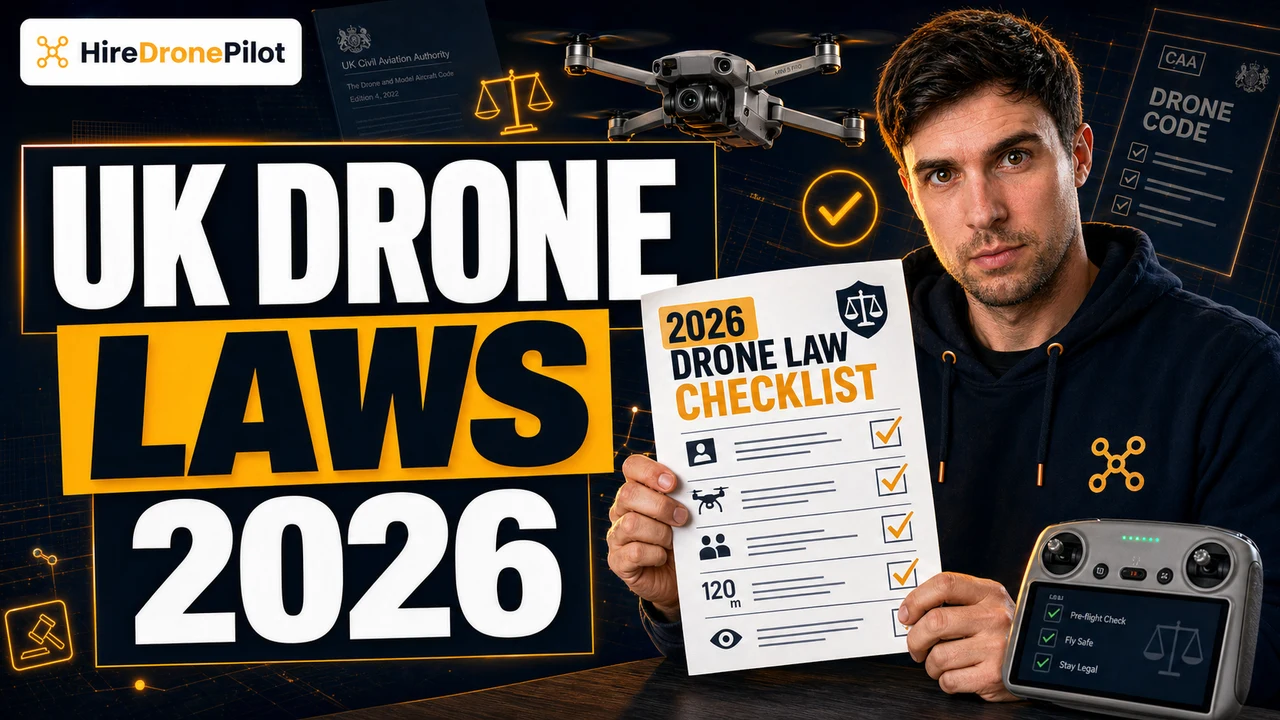
On top of that sits the Drone and Model Aircraft Code, also called the Drone Code or CAP2320. It is a plain-English summary of the rules broken into 39 numbered points, and it is the one document every drone pilot should read end to end.
The Drone Code does not replace the law. It distils it. Breaking any of its rules is a criminal offence under the Air Navigation Order, not a breach of guidance.
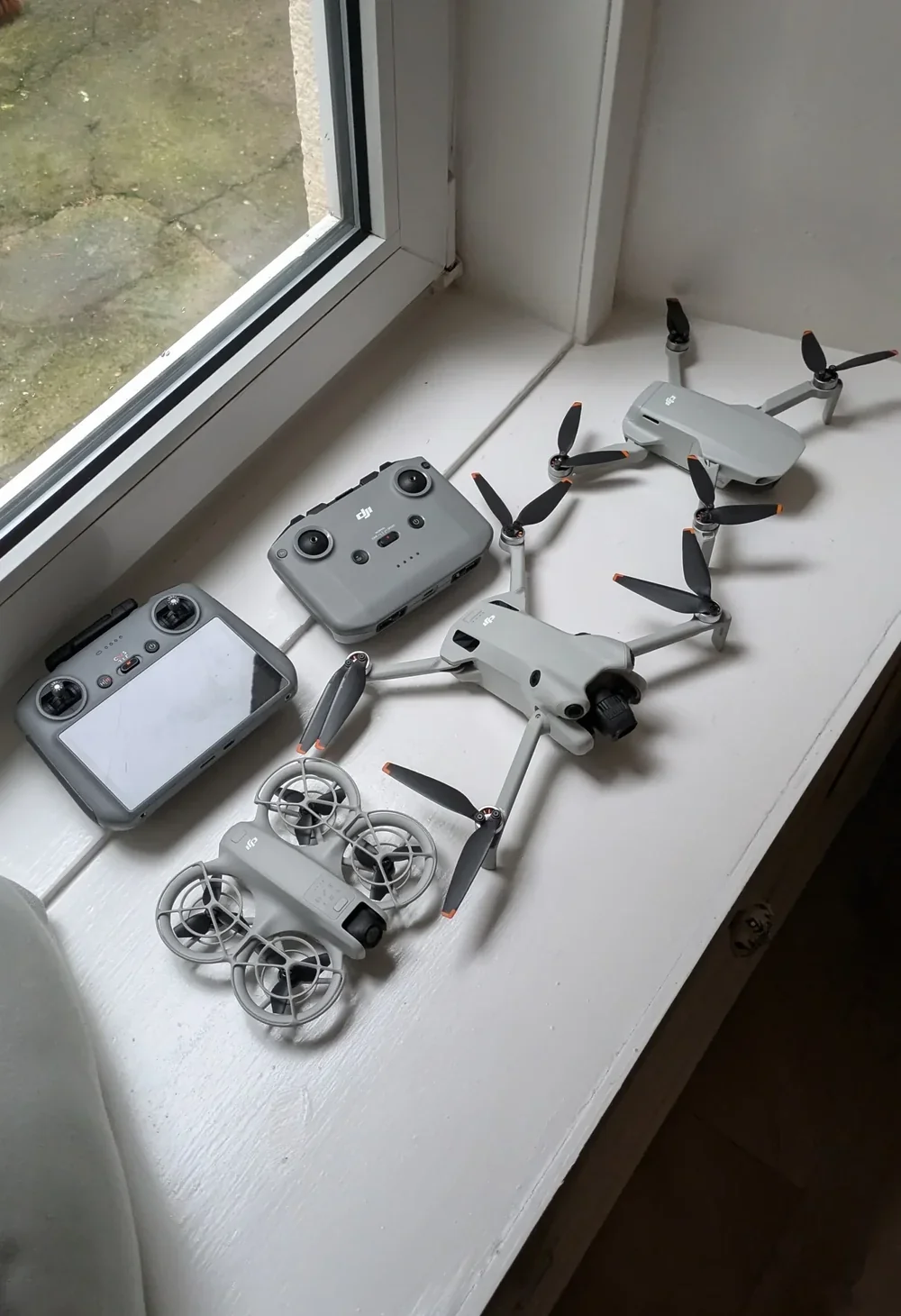
Every flight sits inside one of three categories, and most hobby and commercial work sits in the Open Category
The UK framework replaced the old PfCO at the end of 2020, and split everything into three risk-based categories. The Open Category covers low-risk flying under 25 kg, below 120 metres, within Visual Line of Sight, and away from crowds. No CAA permission is needed, but you still need to meet all the standing rules.
The Specific Category covers medium-risk operations — things like flying closer than the Open Category allows, working above crowds, or flying beyond visual line of sight. It needs a written Operational Authorisation from the CAA against a risk assessment. The Certified Category sits above that and behaves like manned aviation, with a type-certified drone, a licensed Remote Pilot, and an approved operator.
Inside the Open Category, three sub-categories decide the distances: A1 (Over People), A2 (Near People), and A3 (Far From People). The class mark on your drone, or its weight if it has no class mark, tells you which sub-category you are in.
Class marks UK0 to UK6 now drive where you can fly, and the legacy transition ended on 1 January 2026
Class marks are the single biggest change most drone operators are still adjusting to. Any new model placed on the UK market from 1 January 2026 must carry a UK class mark (UK0 to UK6). Retained European C class marks (C0 to C6) can still be flown as the equivalent UK class until 31 December 2027, after which they become legacy drones governed by weight alone.
The class mark decides which Open sub-category a drone belongs to — UK0 and UK1 sit in A1, UK2 sits in A2 (with the right qualification) or A3, and UK3 and UK4 sit in A3. UK5 and UK6 drones cannot fly in the Open Category at all; they need an Operational Authorisation.
| UK class mark | Maximum weight | Open sub-category |
|---|---|---|
| UK0 | Less than 250g | A1 — Over People |
| UK1 | Less than 900g | A1 — Over People |
| UK2 | Less than 4kg | A2 with A2 CofC, otherwise A3 |
| UK3, UK4 | Less than 25kg | A3 — Far From People |
| UK5, UK6 | Less than 25kg | Specific Category only |
If you are choosing a first drone, the sub-250g category is still the most permissive tier, because a UK0 drone unlocks A1 flying with a much lighter rule load than anything heavier. For the ranked list of options, see my best drones under 250g UK 2026 buying guide.
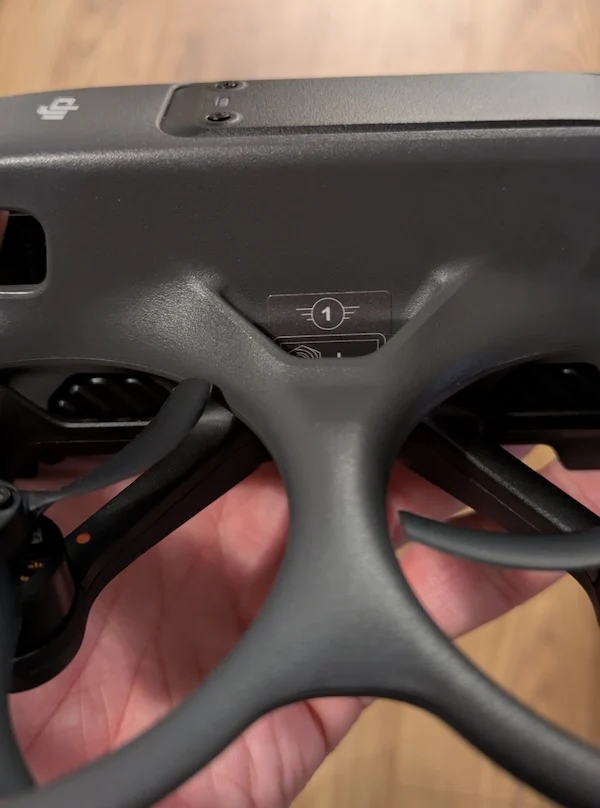
A Flyer ID, an Operator ID, and a Remote ID broadcast are the three identifiers every drone operator needs to track
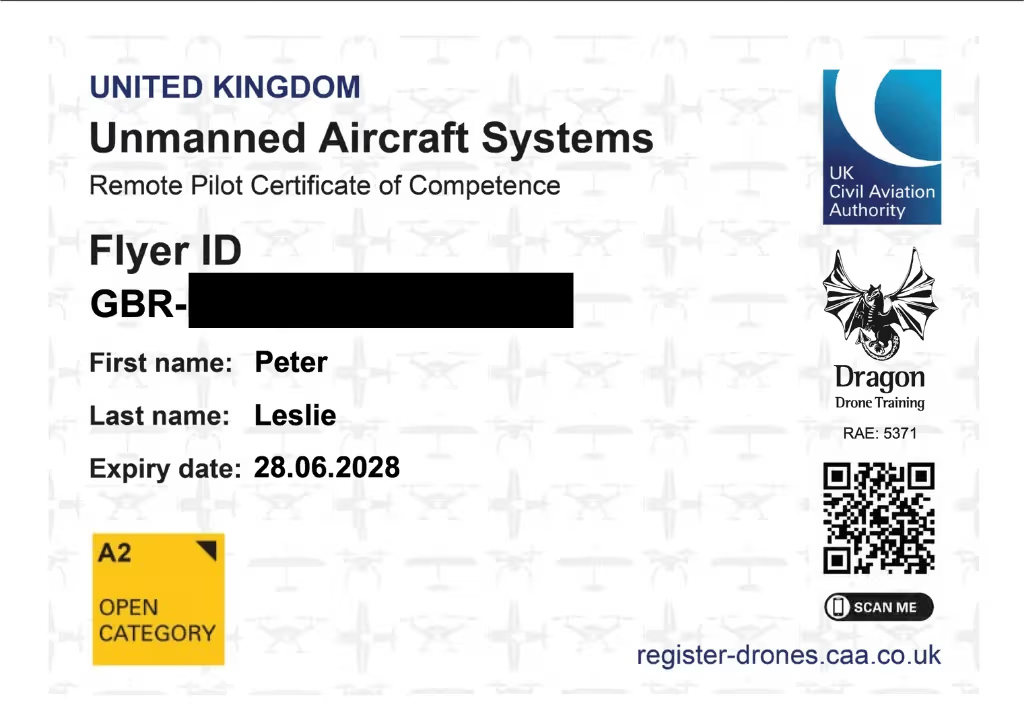
Three separate identifiers run in parallel, and most people conflate them. A Flyer ID is a free, five-year pass that proves you have passed the online theory test. Anyone flying a drone of 250g or more, or any drone with a camera that weighs 100g or more, needs one.
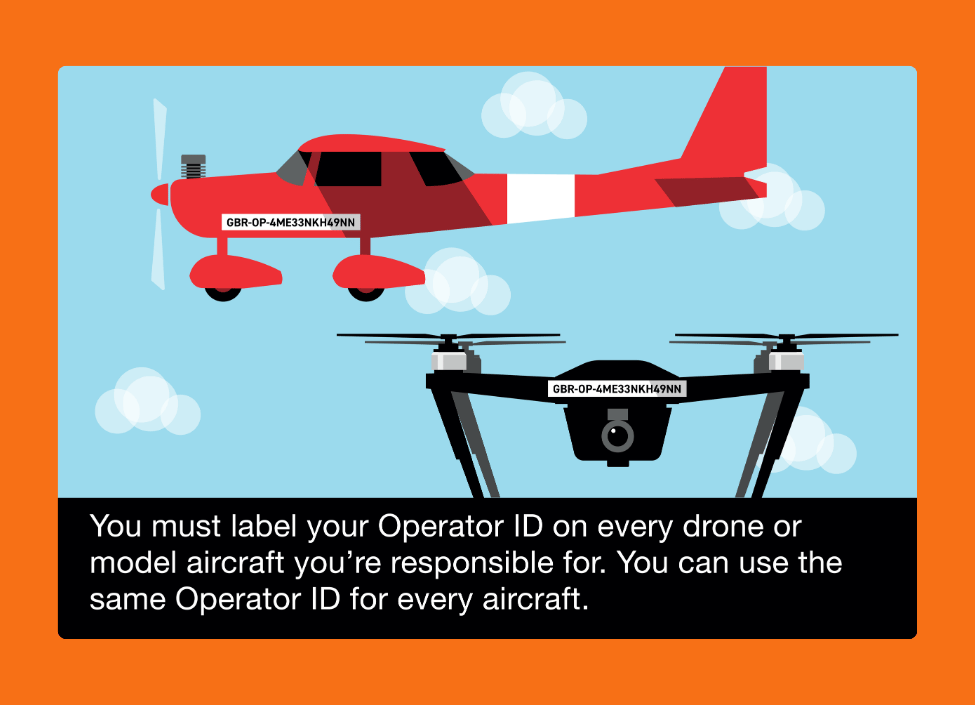
An Operator ID is a different beast. It costs £12.34 per year, you must be 18 or over to hold one, and it identifies the legal person responsible for the drone. That Operator ID must be physically labelled on every drone under it, in block capitals over 3 mm tall, on the main body, visible without tools.
Remote ID is the newest layer. From 1 January 2026, UK1, UK2, UK3, UK5, and UK6 drones must broadcast Remote ID whenever they fly. UK0 drones, legacy drones, and model aircraft have until 1 January 2028 to comply. Remote ID is generated automatically when you register as an operator, and the final three characters are a private key you must never write on the drone itself.
The Open Category standing rules come down to four numbers every drone pilot should know by heart
Underneath the category maze, Open Category flying reduces to four hard numbers. Get these wrong and the paperwork above them does not help you.
The altitude ceiling is 120 metres above the closest surface, measured continually during the flight — not above your take-off point. The horizontal buffer from uninvolved people is 50 metres in A2 and A3, scaling up above 50 metres of altitude under the people-buffer rule the Drone Code captures as the 1-to-1 rule.
You must maintain Visual Line of Sight at all times, which means seeing the drone clearly with your own eyes — no binoculars, no telephoto, no goggles without an observer holding the direct view. Beyond Visual Line of Sight flying is not permitted in the Open Category at all, and Extended Visual Line of Sight needs a Specific Category authorisation too.
The fourth number is crowds: zero. You cannot fly over an assembly of people in any Open Category sub-category, regardless of class mark. The question of whether a sub-250g drone can fly over crowds has the same answer — no, the crowd rule bites first.
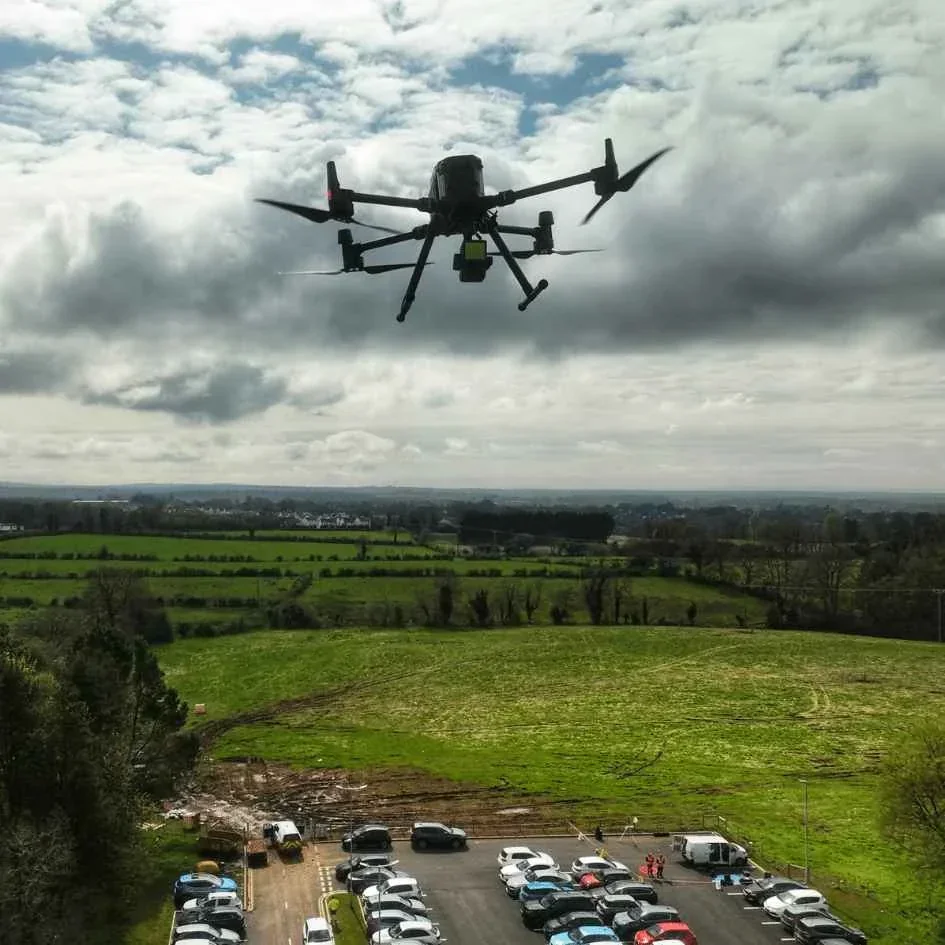
Commercial work usually means the Specific Category, and that means a GVC or RPC, an Operational Authorisation, and PDRA01
Plenty of paid drone work fits neatly inside the Open Category — a UK1 drone at a wedding, an A2-flown inspection in a commercial park. But the moment you need to fly closer than 50 metres from uninvolved people in built-up areas, you are outside Open and into the Specific Category.
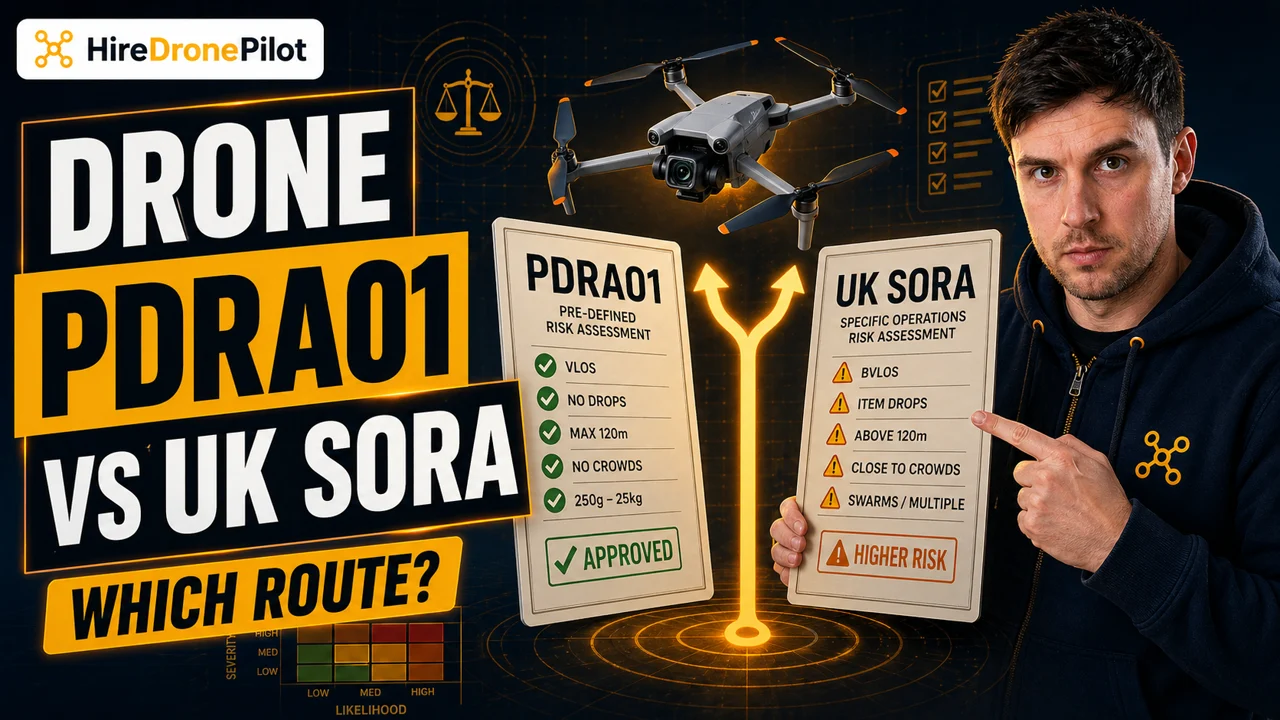
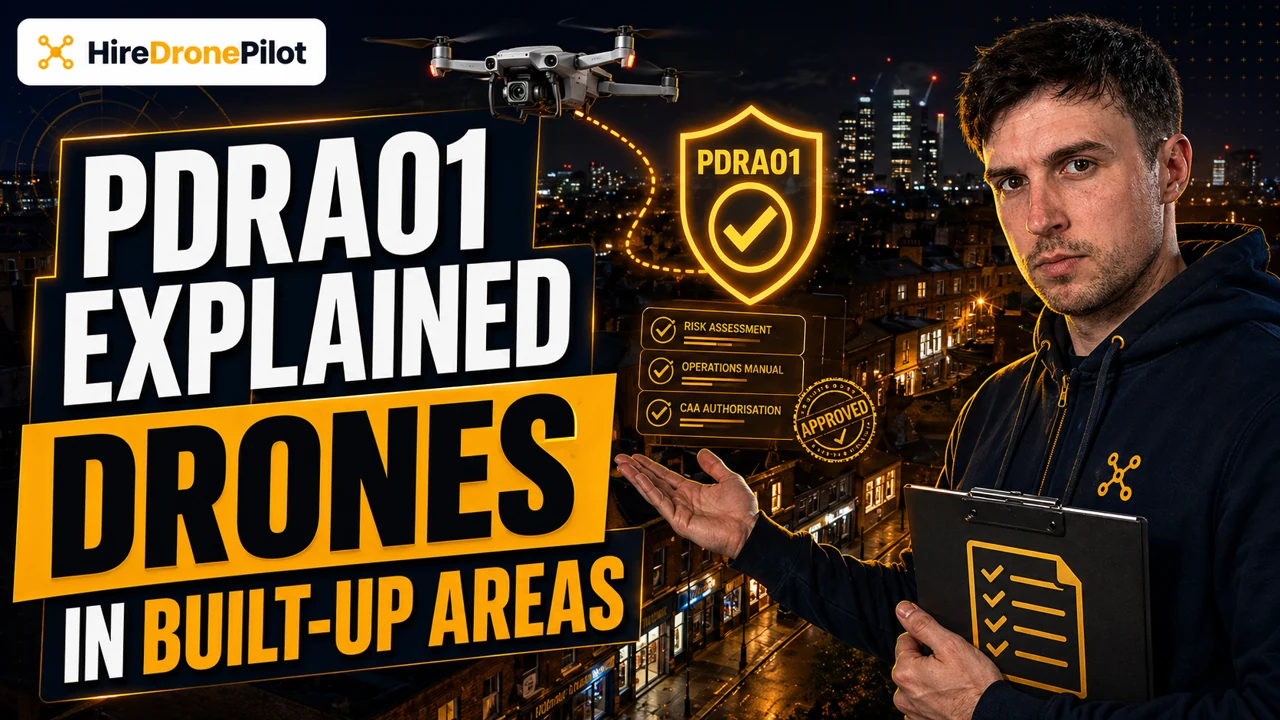
The most common route in is the PDRA01 — a pre-defined Operational Authorisation that unlocks flying inside residential, commercial, industrial, and recreational areas under set conditions. Those conditions include a 50-metre buffer from uninvolved people (reducing to 30 metres only during take-off and landing), a 500-metre range from the Remote Pilot, the same 120-metre ceiling, and the named 1-to-1 rule against assemblies. To hold a PDRA01 you need the General Visual Line of Sight Certificate (GVC) or an equivalent pilot qualification.
The GVC is one entry in the wider RPC framework. The Remote Pilot Certificate scale runs from RPC-L1 (basic VLOS operations, broadly comparable with the GVC — see the direct comparison in RPC-L1 vs GVC) through RPC-L2 (intermediate) and RPC-L3 (advanced, BVLOS) up to RPC-L4 (expert). For flying specifically in the A2 sub-category of the Open Category, the A2 Certificate of Competency is the lighter-touch qualification. The overview page on UK drone pilot qualifications puts the whole ladder in one place.
Holding the right certificate is only half of it. You also need the Operational Authorisation itself — the written CAA permission that ties your qualification, your drone, your Operations Manual, and your risk assessment together.
Insurance is mandatory for every commercial flight, and the cover has to meet Assimilated Regulation (EU) 785/2004
Recreational flying does not legally require insurance, although you are still personally liable for any damage you cause. The moment money changes hands — paid photography, video, surveys, deliveries, farm or estate work, any school or university use — third-party drone insurance becomes mandatory under the Civil Aviation (Insurance) Regulations 2005.
The cover itself has to comply with Assimilated Regulation (EU) 785/2004. That is not a product name you can tick on a hobby policy; ask the insurer to confirm compliance in writing. The policyholder name must match the name on your Operator ID. Typical annual premiums vary widely depending on weight, use, and endorsements — the piece on drone insurance cost has current figures.
Enforcement is handled by the police and the CAA, and the offences carry fines, confiscation, and up to five years in prison
Police powers over drones are substantial. Officers can order a drone to land, seize the drone, demand to see a Flyer ID or Operator ID, and arrest under the Air Navigation Order. The CAA handles licensing and formal prosecutions; the police handle the street-level response.
Routine breaches attract fines. Serious ones escalate fast. Endangering an aircraft in flight carries a maximum sentence of five years. Flying over a prison, a police station, or an active emergency services scene carries its own set of offences on top of the general restricted-location rules. Operators are traceable through registration — the explainer on how to identify a drone operator walks through that process.
For the full operator-side walk-through of the consequence ladder — the roadside stop, the drone being seized, the magistrates' court, and the collateral damage to your insurance and CAA register entry — see the deeper guide on what happens if you get caught flying a drone illegally in the UK.
Two common myths, both illegal. Shooting down a drone is an offence regardless of whose airspace it is in, and drone jammers are illegal for members of the public to own or operate.
Privacy, property, and airspace restrictions are separate legal layers on top of the Drone Code
The Drone Code deals with safety. Privacy is a separate layer under the Data Protection Act 2018 and the UK GDPR. If a drone captures identifiable people in a non-domestic context, the operator is a data controller with the duties that come with that — the overview on GDPR for drone operators is the starting point.
Property rights are also independent of the Drone Code. Flying over someone's garden at low height can trigger nuisance or trespass claims, which is why the pieces on a neighbour flying over your garden and stopping drones over your property exist. Questions about whether a drone can realistically see inside houses, or whether a drone that appears to be following you is legal, fit in here too.
Airspace restrictions are a third layer again. Flight Restriction Zones around airports are the most visible; temporary NOTAMs, prison exclusions, and military danger areas all need to be checked before take-off with a safety app like NATS Drone Assist.
Devolved nations and popular locations add their own layer of rules on top of the UK framework
The core framework is UK-wide, but land access and bylaws are devolved. Scotland has a different access regime under the Land Reform (Scotland) Act 2003, and a handful of local authorities have bylaws around parks and beaches that are not captured in the Drone Code.
Popular locations each come with their own overlay. London is dense with Flight Restriction Zones and Royal Parks bylaws. A beach flight needs a sub-category check and a tide awareness that the Drone Code does not spell out. Even flying in your own garden or a public park needs the class mark, sub-category, and airspace checks run first.
Weather and time-of-day rules sit on top of all of that: night flying has been legal in the Open Category since 2020, but from January 2026 a green flashing anti-collision light is mandatory after sunset. Rain flying and windy conditions are usually a manufacturer limit rather than a legal one, but the manufacturer limit is the one the CAA will point at if something goes wrong.
Good record keeping turns this whole framework from a worry into a checklist
Every commercial drone operator I know keeps the same core bundle on file: Operator ID certificate, Flyer ID certificate, qualification certificate (GVC, RPC, or A2 CofC), Operational Authorisation PDF, current insurance schedule, Operations Manual, maintenance log, and drone flight logs. Nothing fancy. A single folder per operator and a separate logbook per drone.
That bundle is what turns an enforcement conversation from "I think I was inside the rules" to "here are the documents that prove it". The difference in outcomes is enormous.
The whole framework is easier once you stop treating it as a single mass of rules and start treating it as four layers stacked on top of each other: the legal instruments, the categories, the IDs and qualifications, and the standing numbers. Each article linked above takes one piece of that stack and expands it.
If you are planning a specific flight and want a sanity check on which category and authorisation it needs, drop a note to peter@hiredronepilot.uk with the site, the drone, and what you are trying to capture, and I will come back to you directly. If you prefer the video version of this explainer, the comments are open on YouTube.
References
Primary source material for this article is the UK Civil Aviation Authority. External links open in a new tab.
- UK CAA — The Drone and Model Aircraft Code (CAP2320) · 39 numbered rules covering heights, distances, IDs, classes, and crowds
- UK CAA — UK Regulatory Framework for Drones · Air Navigation Order 2016, UK Regulations (EU) 2019/945 and 2019/947
- UK CAA — Where You Can Fly (A1, A2, A3 sub-categories) · Open Category distance and area rules
- UK CAA — Class marks · UK0 to UK6, C0 to C6, transition dates and legacy weight rules
- UK CAA — Flyer IDs and Operator IDs · duties, fees, ages, and labelling
- UK CAA — Remote ID · activation dates by class, number format, private key rules
- UK CAA — Insurance requirements · Assimilated Regulation (EU) 785/2004 and Civil Aviation (Insurance) Regulations 2005
Peter Leslie
Founder & GVC Drone Pilot
Peter is the founder of HireDronePilot. With thousands of logged commercial flight hours, he writes about drone technology, commercial surveying tactics, and UK aviation compliance.
Connect on LinkedIn