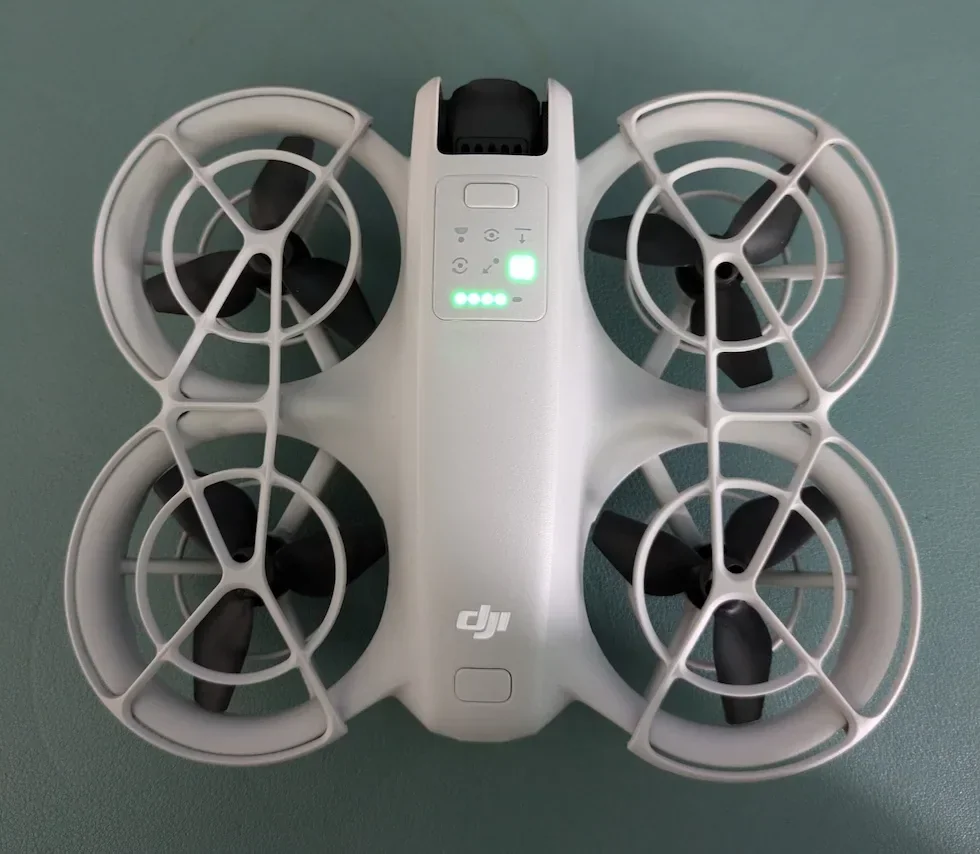
How to Make the DJI Neo 2 Follow a Car

Peter Leslie
22 May 2026
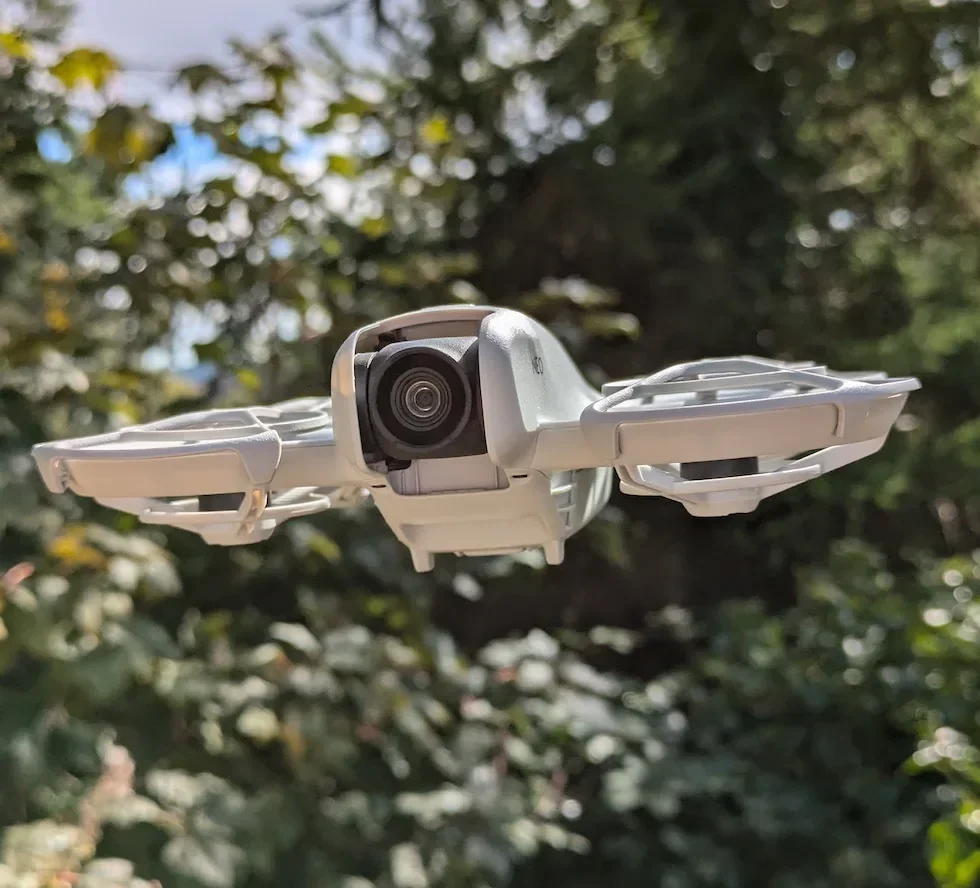
A drone chasing a car along an empty lane is one of the easiest cinematic shots to picture and one of the easiest to get wrong on a sub-250 gram airframe. On the DJI Neo 2, the shot is genuinely doable — the FocusTrack subject list now covers vehicles alongside people and boats, which the original DJI Neo never supported. Most drone pilots hitting this for the first time get the click path right and the legal framing wrong, which is the half that wastes a Saturday.
The setup is four taps in DJI Fly once the DJI Neo 2 is in the air, with vehicle-specific distance and height ranges and a hard twelve-metres-per-second cap on the car. The harder half of the brief is picking a road where the UK Drone Code lets the flight happen at all, because a public road with moving traffic almost always breaks the people-buffer rule. The rest of this guide is the click path, the framing options, and the legal lines that decide where the shot is legal in the first place.
Quick guide
To make the DJI Neo 2 follow a car, take off, frame the car in the camera view, then tap DJI Fly → FocusTrack icon → ActiveTrack → FocusTrack Settings gear → set distance and height inside the vehicle range and tap to start. Keep the car under twelve metres per second (roughly twenty seven miles per hour), and fly on a private track or a closed lane — a public road almost always breaks the UK Drone Code people-buffer rule.
Step-by-step: How to Make the DJI Neo 2 Follow a Car
Follow these top to bottom the first time, and you will know the path off by heart the second time. The order is in-air setup first, then the framing decisions that decide how the shot looks.
Climb the DJI Neo 2 to five to ten metres of altitude directly above the car
Take off, push the throttle up, and climb the DJI Neo 2 to between five and ten metres of altitude above the car before you do anything else. Starting in the chase-framing ballpark before you tap into ActiveTrack means the auto-detection fires on the first attempt rather than the DJI Neo 2 repositioning itself mid-handoff.
Frame the car in the centre of the DJI Fly camera view
Yaw the DJI Neo 2 until the car sits cleanly in the centre of the DJI Fly camera view on the phone. ActiveTrack reads the subject from the framed image, so a centred clean frame at the start makes the vehicle confirmation fire on the first try rather than picking up a hedge, a road marking, or the wrong end of the car.
Tap the FocusTrack icon on the left of the DJI Fly camera view
Tap the FocusTrack icon on the left of the DJI Fly camera view to open the subject-selection layer. The alternative entry point is dragging a selection box directly across the car on screen, which is faster once the car is comfortably framed and useful when DJI Fly has not auto-detected a vehicle yet.
Wait for DJI Fly to confirm the car as the FocusTrack subject
DJI Fly auto-detects the vehicle inside the framed region and confirms the subject with a coloured selection box around the car. If the confirmation box lands on the wrong vehicle, tap the right car directly to reassign. Remote-controlled cars are flagged as unsupported, so a clean lock on a full-size car body is what you want to see before moving on.
Pick ActiveTrack from the FocusTrack sub-mode selector
Choose ActiveTrack from the sub-mode selector that appears once the subject is confirmed. Spotlight keeps the gimbal pointed at the car while you fly manually, and Point of Interest orbits the car — only ActiveTrack runs the chase behaviour where the DJI Neo 2 keeps station on the moving subject. Picking the wrong sub-mode is the most common reason a first attempt does not look like the chase shot the searcher expected.
Tap the FocusTrack Settings gear icon to open the distance and height sliders
Tap the FocusTrack Settings gear icon next to the sub-mode selector to open the distance and height panel. Vehicles get a wider envelope than people on the DJI Neo 2 — four to fifty metres of horizontal distance and half a metre to fifty metres of height — so do not let the tighter people-range numbers shrink the framing in your head while you adjust the sliders.
Drag the distance slider between fifteen and twenty five metres for a country-lane chase
Set the horizontal distance to between fifteen and twenty five metres on the FocusTrack Settings slider for a forgiving chase framing. The DJI Neo 2 will fly to the supported distance and height range automatically if you start outside the window, but it is cleaner to start inside it. For a wider cinematic reveal of the car against the landscape, push the distance up to thirty or forty metres and lift the altitude.
Drag the height slider between five and ten metres above the car
Set the height slider to between five and ten metres above the car for a chase framing that keeps the registration plate centred and the headlights leading into the distance. Going lower than half a metre or higher than fifty metres pulls the DJI Neo 2 out of the supported vehicle envelope. The UK Drone Code people-buffer rule scales above fifty metres of altitude regardless, so there is no benefit to flying higher than the slider allows.
Brief the driver to hold the car under twelve metres per second through the chase
Twelve metres per second is roughly twenty seven miles per hour and is the hard cap on subject speed in ActiveTrack on the DJI Neo 2. A faster car will out-run the airframe and break the lock. Brief the driver to hold a steady twenty miles per hour or so through the chase, leave headroom for headwind on a blustery day, and pick a stretch of road where overtaking does not push the car past the cap.
Tap to start ActiveTrack and press the record button on the DJI RC-N3 or DJI RC 2
Tap to start ActiveTrack in DJI Fly. The DJI Neo 2 holds the chosen distance and height while the car drives. Press the record button on the DJI RC-N3 or DJI RC 2 once the lock is steady — ActiveTrack holds the framing, but it does not start the recording for you, and missing the record press is the most common reason a first run produces no usable footage.
Exit ActiveTrack with the FocusTrack icon or the Flight Pause button to drop the lock
To end the chase, tap the FocusTrack icon on the left of the DJI Fly camera view a second time, or press the Flight Pause button on the DJI RC-N3 or DJI RC 2 once. Either drops the lock and brings the DJI Neo 2 back to a clean hover. Stop the recording from the same controller before you bring the DJI Neo 2 home so the clip ends on the framing you wanted rather than the hover.
Peter's tip
The shot that breaks for me most often is the lead — the DJI Neo 2 flying ahead of the car looking back at the windscreen. It looks brilliant on a straight road and gets shaky the moment the road bends, because ActiveTrack has to predict the car's path and the prediction gets noisier with curvature.
If a lead is what you want, keep the lead distance shorter — ten to fifteen metres rather than twenty — and pick a road with one long straight section. Save the side-track for the bend and re-cut the two clips together later.
Chase, side-track, or lead — pick the framing before you start the track
ActiveTrack on the DJI Neo 2 holds whatever framing you start with. Three framings earn their keep on a car follow, and each one needs different distance and height settings. Pick before you take off — switching mid-chase is a guaranteed lock-loss.
| Framing | Recommended distance and height | When it works best |
|---|---|---|
| Chase | Fifteen to twenty metres behind, five to eight metres above | Easiest framing — the subject silhouette stays consistent and the tracker holds the lock for the longest |
| Side-track | Fifteen to thirty metres alongside, five to ten metres above | Cinematic side-profile shot — needs a clear strip of land alongside the road free of trees, hedges, and signs |
| Lead | Ten to fifteen metres ahead, five to eight metres above | Windscreen-on driving shot — only works on a long straight road, breaks fast on bends |
The UK Drone Code rules that decide where a car follow is legal
This is the section most tutorials skip and the one that decides whether the shot is legal. The UK Drone Code (CAP2320) sets a default fifty-metre horizontal distance from any uninvolved person. A public road with moving traffic is full of uninvolved people — every other driver, cyclist, and pedestrian on or near the road counts. Flying ten or fifteen metres above traffic does not satisfy that buffer.
The buffer also scales above fifty metres of altitude — the 1-to-1 rule means you cannot fix the problem by simply flying higher. The Open category altitude limit is one hundred and twenty metres regardless, and the DJI Neo 2 must stay within Visual Line of Sight for the entire flight. A car ActiveTrack run that takes the DJI Neo 2 around a bend and out of your direct view is a VLOS breach the moment the line of sight breaks.
The legal places to fly an ActiveTrack car follow with the DJI Neo 2 in the UK are the same places used for normal Open category flying. A private track, an estate road with permission, an empty industrial estate at a quiet hour, a closed lane on private land, or a track day venue with the operator's consent. The driver and any passengers are involved in the operation and do not count against the people-buffer rule, but anyone outside the car who has not consented to the flight does. The wider UK drone laws framework stitches the Drone Code, the Open Category, and VLOS into a single picture.
Frequently asked questions
Can the original DJI Neo follow a car?
No. The original DJI Neo can only ActiveTrack people. Vehicles were added to the supported subject list on the DJI Neo 2, alongside boats. If you draw a selection box around a car on the original DJI Neo, the lock either fails to confirm or drops the moment the car begins moving.
What is the maximum speed the DJI Neo 2 can follow a car at?
Twelve metres per second, which is roughly twenty seven miles per hour. Push the car past that cap and the DJI Neo 2 falls behind and loses the lock. In practice that makes the DJI Neo 2 a country-lane chase camera, not a motorway one — a car at twenty miles per hour is comfortably inside the envelope, a car at forty miles per hour is already past the limit.
How far away and how high should the DJI Neo 2 sit when following a car?
For a chase shot on a country lane, fifteen to twenty five metres of horizontal distance and five to ten metres of height is a forgiving framing. For a wider cinematic reveal, push the distance to thirty or forty metres and lift the altitude. The hard limits set inside the FocusTrack Settings panel are four to fifty metres of horizontal distance and half a metre to fifty metres of height for vehicles.
Is it legal to ActiveTrack a car on a UK public road with the DJI Neo 2?
Almost never. The UK Drone Code sets a default fifty-metre horizontal distance from any uninvolved person, and a public road with moving traffic is full of uninvolved people — every other driver, cyclist, and pedestrian counts. Flying ten or fifteen metres above traffic does not satisfy that buffer. The legal places to fly an ActiveTrack car follow are a private track, an estate road with permission, a closed lane on private land, or a track day venue with the operator's consent.
Does the driver count as an uninvolved person under the UK Drone Code?
No. The driver and any passengers inside the car are involved in the operation and do not count against the fifty-metre people-buffer. Anyone outside the car who has not consented to the flight does count, which is why a public road with other traffic almost always breaks the Drone Code even when the only car in the shot is yours.
Can the DJI Neo 2 follow the car around a bend that takes it out of sight?
Not legally. UK Open category flying requires Visual Line of Sight at all times, so the DJI Neo 2 chasing a car around a corner and out of your direct view is a VLOS breach the moment the line of sight breaks. On longer routes, station a spotter at the bend or shorten the chase to a single straight section.
Will the DJI Neo 2 dodge oncoming traffic while ActiveTracking a car?
No. The DJI Neo 2 vision system will bypass static obstacles when it is working normally, but it cannot avoid moving subjects such as people, animals, or other vehicles. That alone rules out flying near a public road with cars on it, because the DJI Neo 2 has no way to react to an oncoming car crossing its flight path.
What is the best framing for a DJI Neo 2 car follow?
The chase is the most forgiving — the DJI Neo 2 sits behind and slightly above the car at fifteen to twenty metres of distance and five to eight metres of height. The side-track is the cinematic one but needs a clear strip of land alongside the road free of trees and signs. The lead is the hardest because the tracker has to predict the car's path, so keep the lead distance shorter at ten to fifteen metres to give the DJI Neo 2 less reaction lag.
Can the DJI Neo 2 ActiveTrack a remote controlled car or a toy car?
No. DJI specifically calls out remote-controlled cars as an unsupported subject on the DJI Neo 2, even though full-size cars are supported. The vision system reads the silhouette and contrast the way it reads a person, and a small or atypical body shape confuses the lock fast enough that the manufacturer rules it out explicitly.
Why does the DJI Neo 2 keep losing the lock on the car mid-chase?
Three causes do most of the damage. Two similar vehicles passing close to each other can swap the lock onto the wrong one without warning, so pick a quiet road or a private track where you control the traffic. Large monochrome backgrounds like a black car on fresh tarmac or a white car on a snowy lane collapse the subject-to-background contrast the tracker reads. Extreme lighting below five lux or above one hundred thousand lux stresses the vision system, so mid-morning or mid-afternoon on an overcast day is the friendliest window.
The DJI Neo 2 makes the car-follow shot genuinely doable on a sub-250 gram body, and the click path is short once you know it — four taps, two sliders, and a steady driver under twelve metres per second. The half most readers get wrong is the legal framing, because a public road full of uninvolved people almost always breaks the UK Drone Code people-buffer before the DJI Neo 2 ever leaves the ground. Pick the road first, the framing second, and the menu path last.
Got a specific car-follow scenario you want covered — a private track booking, a corporate vehicle launch, a rural lane recce? Drop the details to peter@hiredronepilot.uk and I will come back to you directly. The video version of this walkthrough is on YouTube and the comments are open.
References
Primary source material for this article is the DJI Neo 2 User Manual, DJI Fly, and the UK Civil Aviation Authority. External links open in a new tab.
- DJI Neo 2 — Downloads (User Manual, Quick Start Guide, firmware notes) · FocusTrack and ActiveTrack subject list (vehicles and people), four-to-fifty metre horizontal distance and half-metre to fifty-metre height for vehicles, twelve metres per second subject speed cap, vision-system five lux and one hundred thousand lux limits, remote-controlled cars flagged as unsupported.
- DJI Fly — App download and release notes · The app where the FocusTrack icon, ActiveTrack sub-mode selector, and FocusTrack Settings distance and height sliders all live. Release notes record any layout changes between app versions.
- UK CAA — The Drone and Model Aircraft Code (CAP2320) · Fifty-metre horizontal distance from uninvolved people, one hundred and twenty metre Open category altitude limit, the 1-to-1 scaling rule above fifty metres, and the Visual Line of Sight requirement.
- UK CAA — Where You Can Fly · A1, A2, and A3 Open category sub-category rules underpinning where a sub-250 gram drone like the DJI Neo 2 is allowed to fly near uninvolved people.
Peter Leslie
Founder & GVC Drone Pilot
Peter is the founder of HireDronePilot. With thousands of logged commercial flight hours, he writes about drone technology, commercial surveying tactics, and UK aviation compliance.
Connect on LinkedIn