The Drone 1-to-1 Rule: What UK Law Actually Requires

Peter Leslie
12 Sept 2025
Key Takeaways
- The 1-to-1 rule is an American FAA phrase, not a named UK CAA regulation for the general Open Category drone pilot
- The Drone Code does require your horizontal distance from uninvolved people to match your altitude whenever you fly above 50 metres
- PDRA01 names the 1-to-1 rule explicitly, and applies it to horizontal separation from assemblies of people
- The real legal requirement across the Open Category is Visual Line of Sight, and a 1-to-1 ratio is simply the easiest way to hold it
- Breaking VLOS or the people-buffer is a criminal offence under the Air Navigation Order 2016, with fines, insurance invalidation, and up to five years in prison for endangering an aircraft
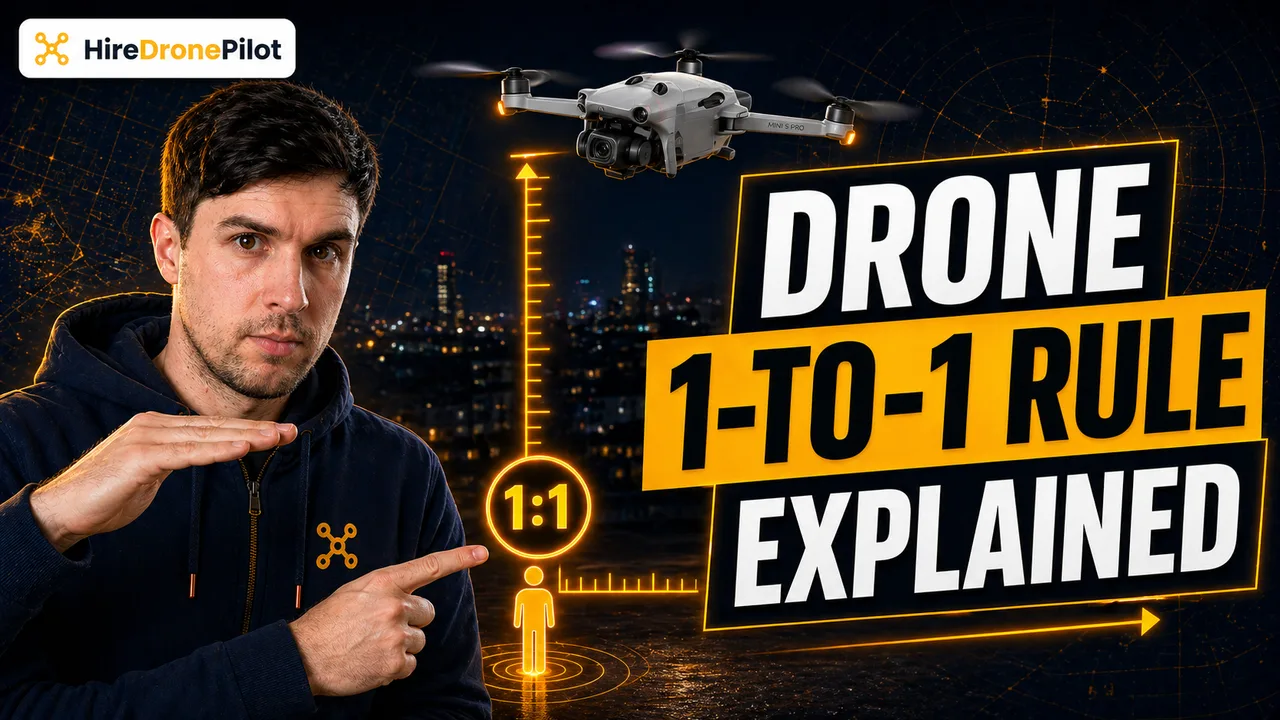
The 1-to-1 rule is something you will hear repeated at drone meet-ups, in training courses, and on most American drone pilot forums. The shorthand is simple: for every metre your drone climbs above the ground, keep it at least that many metres away from you horizontally.
What almost nobody mentions is that the phrase itself is American, and in UK law it is not a single rule at all. It is the overlap of two separate ones, and understanding where each comes from is what keeps you legal and insured.
The 1-to-1 rule is an American FAA phrase that has quietly become a British habit.
The ratio started life as guidance for United States drone pilots flying under FAA rules, where the focus was on keeping the aircraft in visual line of sight by holding it at a comfortable angle above the ground. UK drone pilots imported the habit because the geometry is sound, and because it happens to map cleanly onto rules the Civil Aviation Authority already enforces.
The phrase is not written into any UK regulation as a standalone rule for the general Open Category drone pilot. What is written into UK law are two separate rules — one in the Drone and Model Aircraft Code that binds anyone flying above fifty metres, and one inside the PDRA01 Specific Category authorisation that binds drone operators working close to groups of people. Both match the 1-to-1 pattern, which is why the phrase has stuck.
The Drone Code requires your horizontal distance from people to match your altitude whenever you fly above 50 metres.
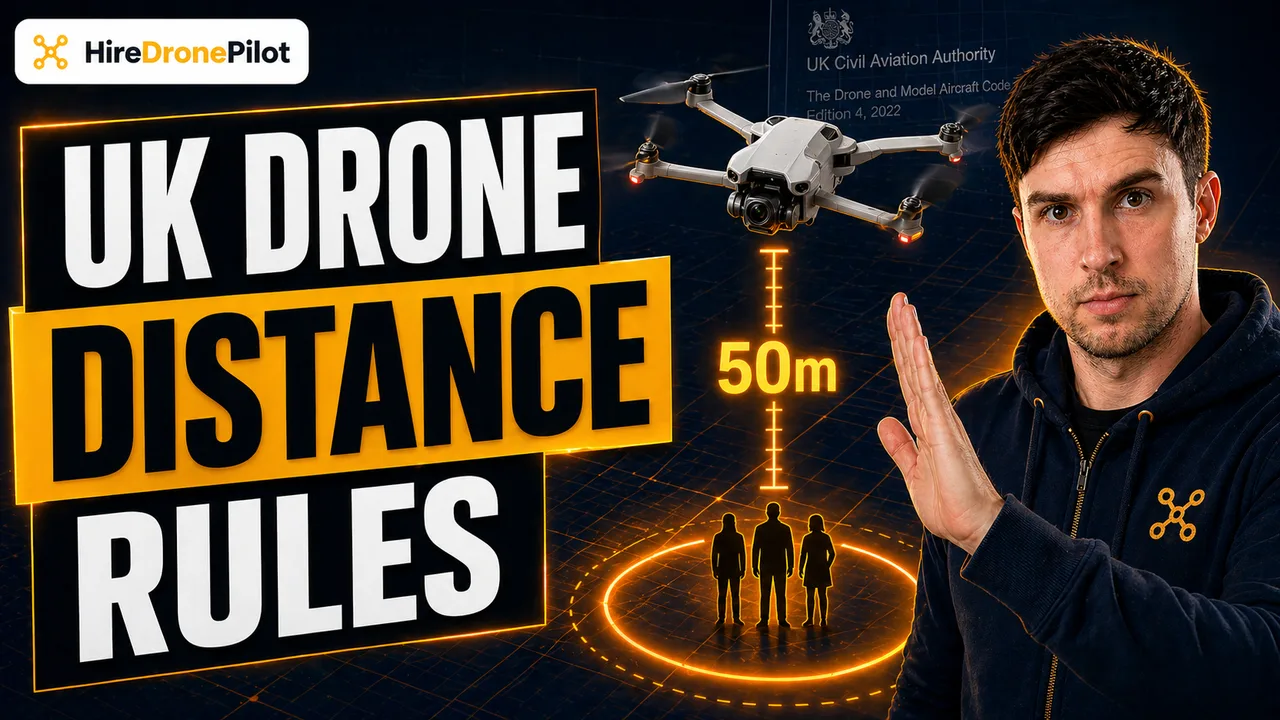
Start with the most common case. In the Open Category, the Drone Code sets a baseline minimum horizontal distance of fifty metres between your drone and any uninvolved person. That fifty-metre buffer is the floor, not the ceiling.
The moment your altitude climbs above fifty metres, the Code tells you to scale the horizontal distance up to match. Fly at eighty metres of altitude and you must keep at least eighty metres of horizontal distance from uninvolved people. Fly at the legal maximum drone height limit of 120 metres and the buffer becomes 120 metres. In poor weather, or at high flying speeds, the Code is clear that this buffer should grow further still, to give you the reaction time a harder day demands.
This is where the 1-to-1 pattern is hiding in plain sight. It is not a rule measured from you to the drone in the Code. It is a people-buffer rule that happens to scale exactly one-to-one with your altitude above fifty metres.
How the people-buffer scales with altitude
| Altitude | Minimum horizontal distance from uninvolved people |
|---|---|
| 50m (approx. 165ft) | 50m (approx. 165ft) |
| 80m (approx. 260ft) | 80m (approx. 260ft) |
| 100m (approx. 330ft) | 100m (approx. 330ft) |
| 120m (approx. 400ft) — legal maximum | 120m (approx. 400ft) |
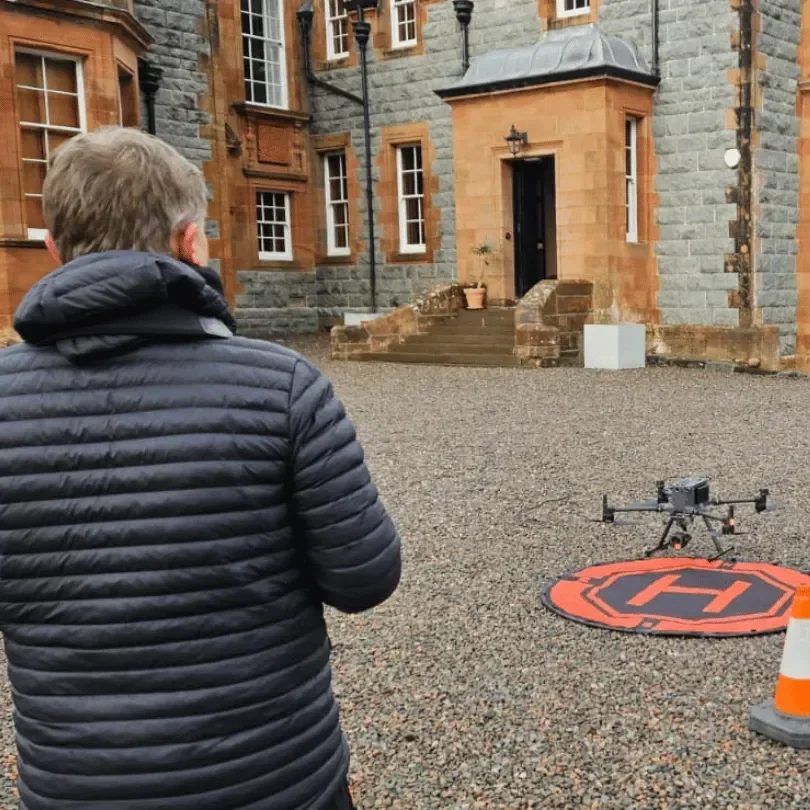
PDRA01 is the one place the CAA uses the phrase “1-to-1 rule” by name, and it governs separation from assemblies of people.
Step outside the Open Category and into the Specific Category, and the phrase appears in print. PDRA01 is the pre-defined operational authorisation the CAA issues to qualified operators. It unlocks flying inside residential, commercial, industrial and recreational areas — the places the Open A3 sub-category keeps you at least 150 metres away from by default.
Inside the PDRA01 conditions, the CAA writes this line: horizontal separation between the unmanned aircraft and any assembly of people must not be less than the height of the aircraft, and it names that condition as the 1-to-1 rule. Around it sit several others worth knowing: a fifty-metre buffer from uninvolved people that reduces to thirty metres only during take-off and landing, a hard 500-metre limit on how far the drone may be from the Remote Pilot, the same 120-metre altitude ceiling as the Open Category, and a total ban on overflying assemblies at any height.
Outside of PDRA01, this named rule does not bind you. It is a condition of the authorisation, not a general UK rule.
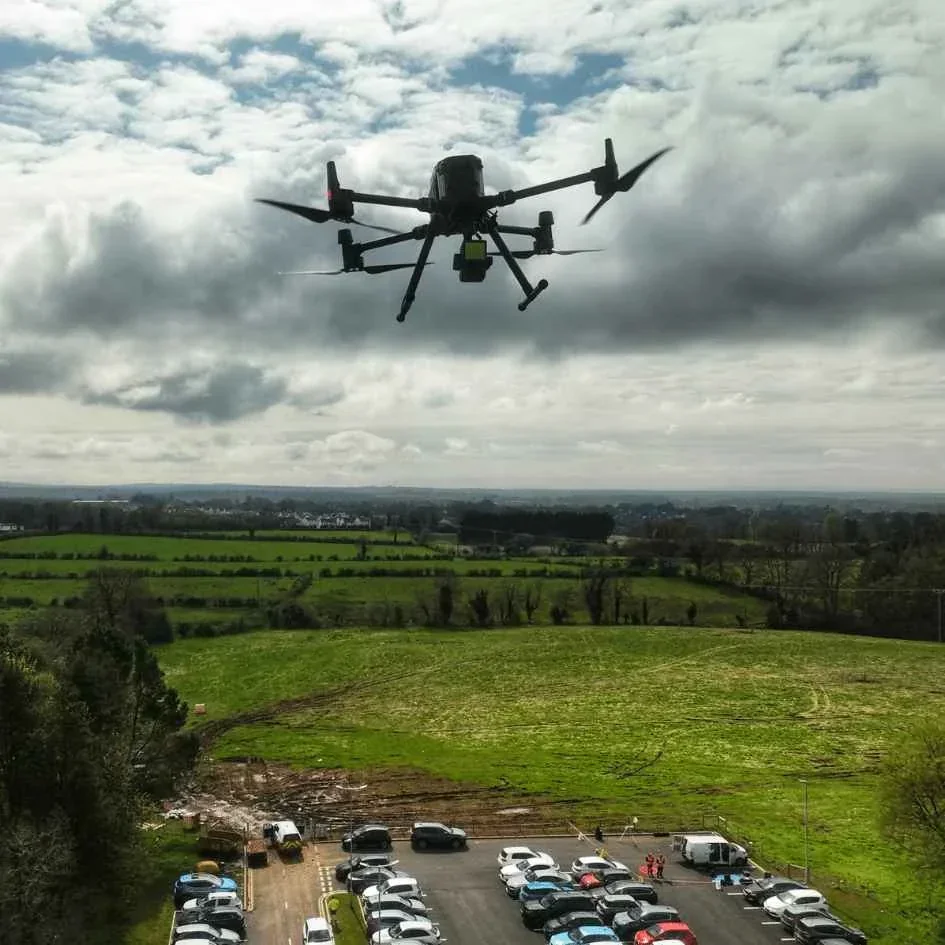
The rule that actually keeps you legal in the Open Category is VLOS, and a 1-to-1 ratio is simply the easiest way to hold it.
Underneath all of this sits the rule that catches everyone. Visual Line of Sight is the absolute requirement of the Open Category. You must be able to see your drone directly, with your own eyes, clearly enough to tell which way it is facing and clearly enough to spot other aircraft entering your airspace. No binoculars. No telephoto lens. No phone screen, tablet, or video goggles, unless you have an observer next to you holding the direct view instead.
This is where the 1-to-1 ratio earns its keep as a practical habit. A drone parked directly above you is the hardest object in the sky to track. Depth perception collapses, orientation becomes a guess, and the aircraft becomes a silhouette against a bright sky. Pushing it out so the horizontal distance is at least the altitude gives you a viewing angle that preserves every one of those cues.
First Person View flying is only legal with the co-located observer watching the drone directly. Beyond Visual Line of Sight is not permitted in the Open Category at all. It requires the Specific Category and an Operational Authorisation from the CAA.
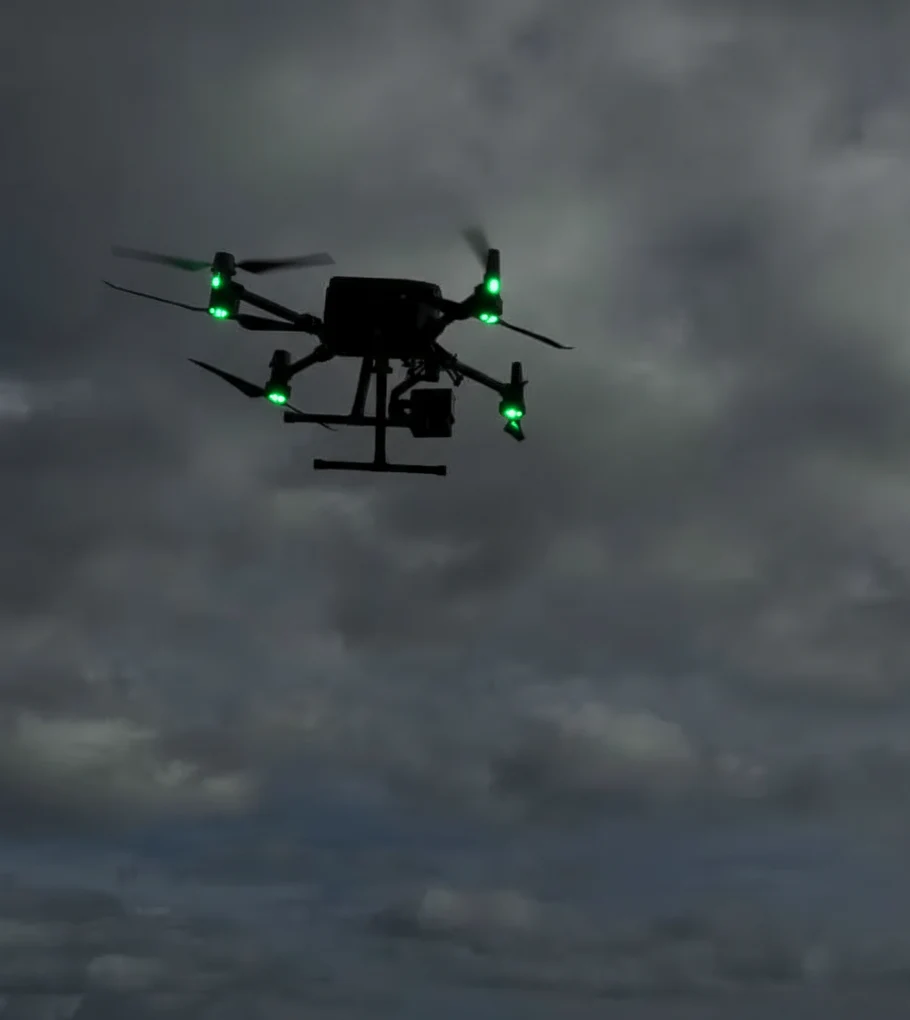
Breaking VLOS or the people-buffer is a criminal offence under the Air Navigation Order 2016.
The legal backbone here is the Air Navigation Order 2016, working alongside the UK Regulations (EU) 2019/945 and 2019/947. Breaking the rules in the Drone Code is not a civil matter or a breach of etiquette. It is a criminal offence, and the penalties scale with how badly the flight goes wrong.
Routine breaches can result in a fine. Serious cases can result in prison. Endangering an aircraft in flight carries a maximum sentence of five years. On top of the criminal penalties, flying outside the rules invalidates your third-party drone insurance, which turns any accident from an insurance claim into a direct personal liability. If you fly with commercial intent, losing your cover also ends the job and ends the client relationship, often before anyone has even asked for proof of the flight plan.
The 1-to-1 ratio is not a nice-to-have, and VLOS is not a suggestion. Holding the ratio is the cheapest possible way to stay inside both.
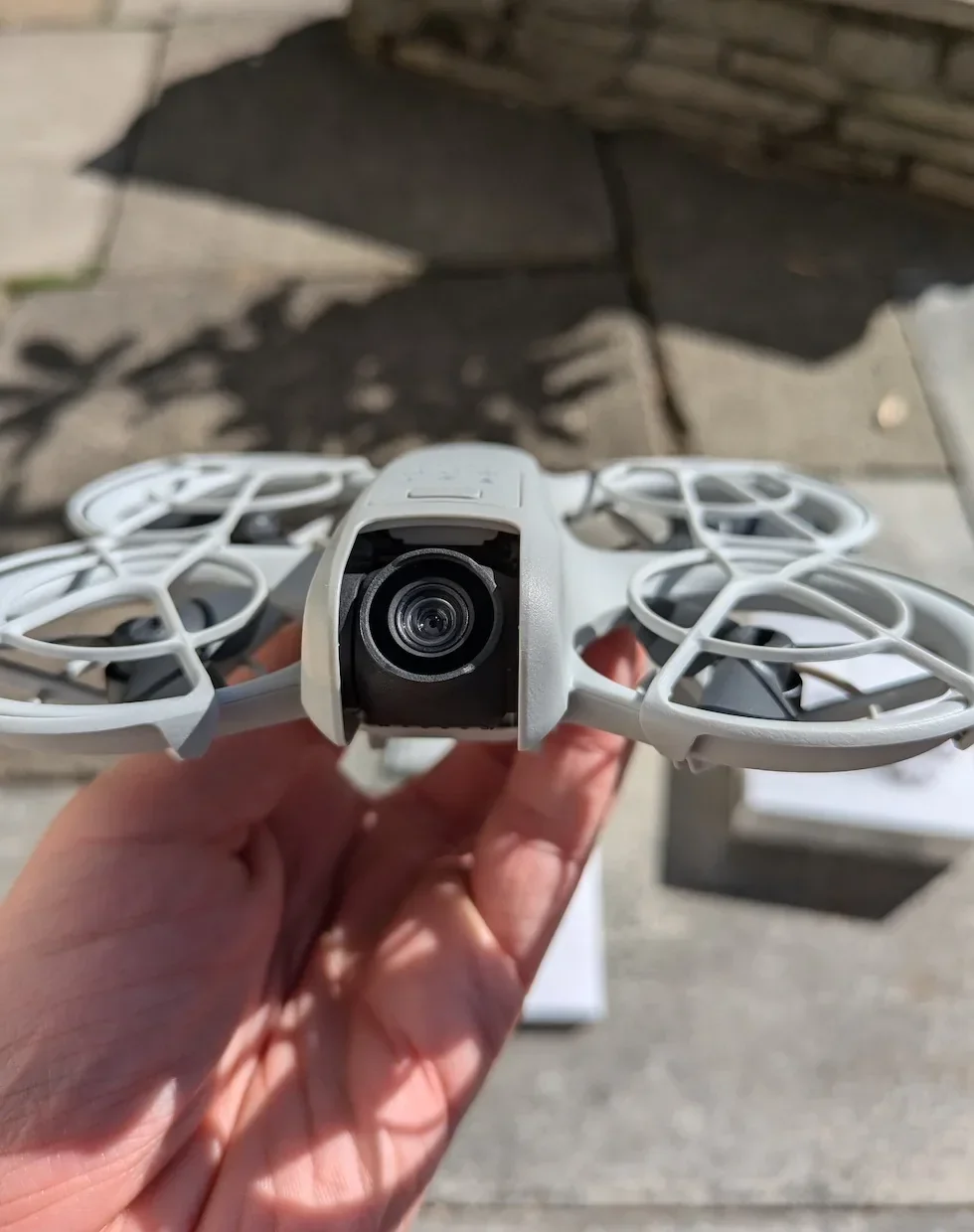
So the next time somebody tells you the 1-to-1 rule is a UK CAA regulation, you can correct them politely. It is a habit that matches two real rules — the people-buffer in the Drone Code, and the assembly-separation rule inside PDRA01 — and it is the easiest way to stay inside the Visual Line of Sight requirement that governs the whole Open Category.
For the full legal picture on that last point, our guide to Visual Line of Sight is the place to start next. And if you want a refresher on the bigger legal picture, the UK drone laws explainer stitches all of this together.
Got a specific scenario you want covered — an unusual shot, a borderline site, a PDRA01 question? Drop a note to peter@hiredronepilot.uk and I will come back to you directly. If you prefer the video version of this explainer, the comments are open on YouTube.
References
Primary source material for this article is the UK Civil Aviation Authority. External links open in a new tab.
- UK CAA — The Drone and Model Aircraft Code (CAP2320) · people-buffer rule above 50m, VLOS requirement, penalties
- UK CAA — PDRA01 Operational Authorisation Overview · named 1-to-1 rule for assemblies of people, 500m range, 120m ceiling
- UK CAA — Where You Can Fly (A1, A2, A3 sub-categories) · Open Category distance and area rules
- UK CAA — Beyond Visual Line of Sight (BVLOS) · BVLOS requires Specific Category and Operational Authorisation
- UK CAA — First Person View (FPV) · co-located observer requirement
- UK CAA — UK Regulatory Framework for Drones · Air Navigation Order 2016 and the UAS Regulations
Peter Leslie
Founder & GVC Drone Pilot
Peter is the founder of HireDronePilot. With thousands of logged commercial flight hours, he writes about drone technology, commercial surveying tactics, and UK aviation compliance.
Connect on LinkedIn