What Is Drone VLOS? Visual Line of Sight in UK Law Explained

Peter Leslie
19 May 2026
Key Takeaways
- Visual Line of Sight means keeping your drone in direct sight with your own unaided eyes throughout the flight — binoculars, telephoto lenses, phones, tablets and video goggles do not count
- You must see the drone clearly enough to tell which way it is facing and to scan the surrounding airspace for other aircraft
- First Person View is legal only with a co-located observer who holds the direct view and keeps constant two-way communication with you
- UK law sets no fixed distance for VLOS in the Open Category — effective range is bounded by your own eyesight, not your controller's transmission range
- Flying Beyond Visual Line of Sight in the Open Category is a criminal offence under the Air Navigation Order 2016, and getting there legally requires a Specific Category Operational Authorisation
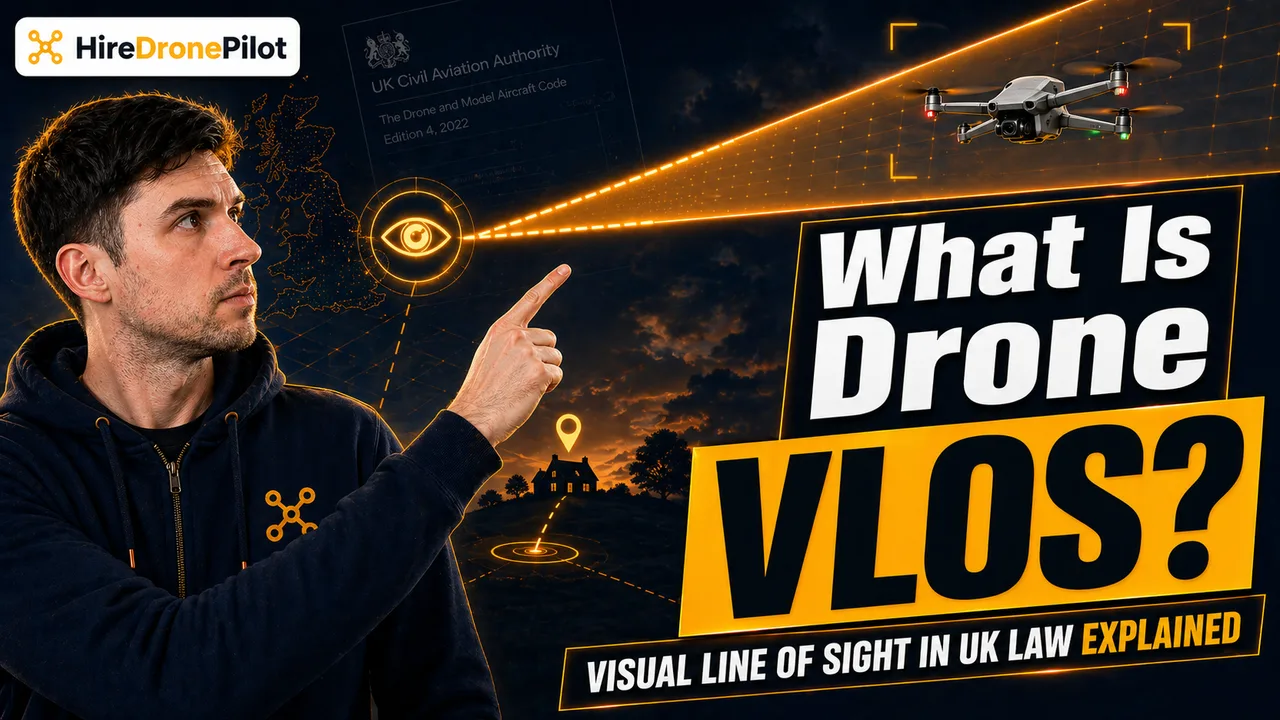
Visual Line of Sight — VLOS — is the rule that quietly holds up every other rule in the UK Open Category. It is the legal requirement to keep your drone in your own direct sight throughout the flight, close enough that you can tell which way it is facing and scan the airspace around it for other aircraft.
Almost every other rule in the Drone Code assumes you are holding VLOS. Lose it, and the whole framework collapses. It sounds simple. What the CAA actually writes down is tighter than most drone pilots realise, and it does not involve a single distance figure.
Visual Line of Sight is the legal requirement to keep your drone in direct sight with your own unaided eyes throughout the flight.
The rule sits in black and white as point 2 of the Drone and Model Aircraft Code (CAP2320), the CAA’s summary of the law that governs every Open Category flight. The framing is short: you must keep the drone in direct sight, and you must have a full view of the surrounding airspace.
“Direct sight” means your own eyes, unaided. Binoculars are out. Telephoto lenses are out. Phones, tablets and video goggles are out. Normal prescription glasses and contact lenses are explicitly fine, because they bring your vision up to standard rather than extending it artificially.
The point of the rule is not cosmetic. It is the mechanism by which you remain responsible for the flight. If you cannot see the drone, you cannot spot the air ambulance entering your airspace, you cannot see the walker who has wandered onto the field, and you cannot react before a problem becomes an incident.
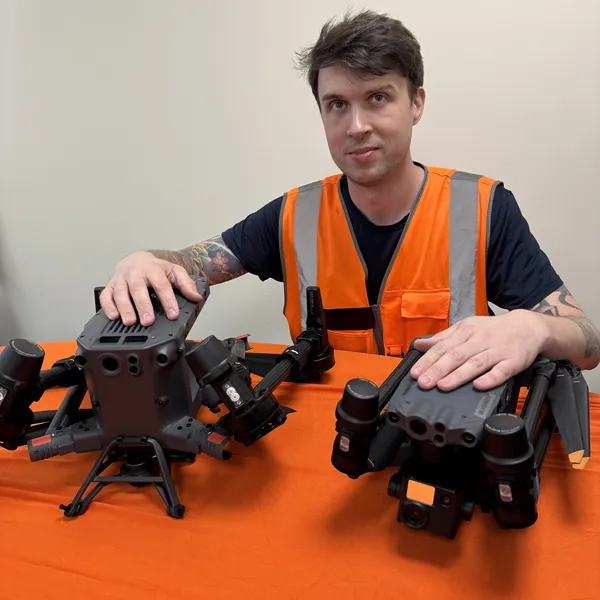
You must see the drone clearly enough to tell which way it is facing and to scan the airspace around it for other aircraft.
The Code adds a detail that catches a lot of newer drone pilots. Direct sight is not simply being able to see a dot in the sky. You must be able to see the drone clearly enough to read its orientation — which way the nose is pointing, whether it is banking, whether it is climbing or descending.
If the drone is so far out that it is a silhouette against a bright sky, and you are guessing its heading from the controller’s yaw reading, you are not holding VLOS. You are flying on telemetry, which the Code does not permit.
The second half of the rule is the airspace scan. You must have a full view of the surrounding airspace so that you can see low-flying air ambulances, police helicopters, gliders, paragliders or other drones, and react in time. The controller screen shows you what the drone sees. It does not show you what is about to fly into the drone. That is your job, and it is done with your eyes off the screen.
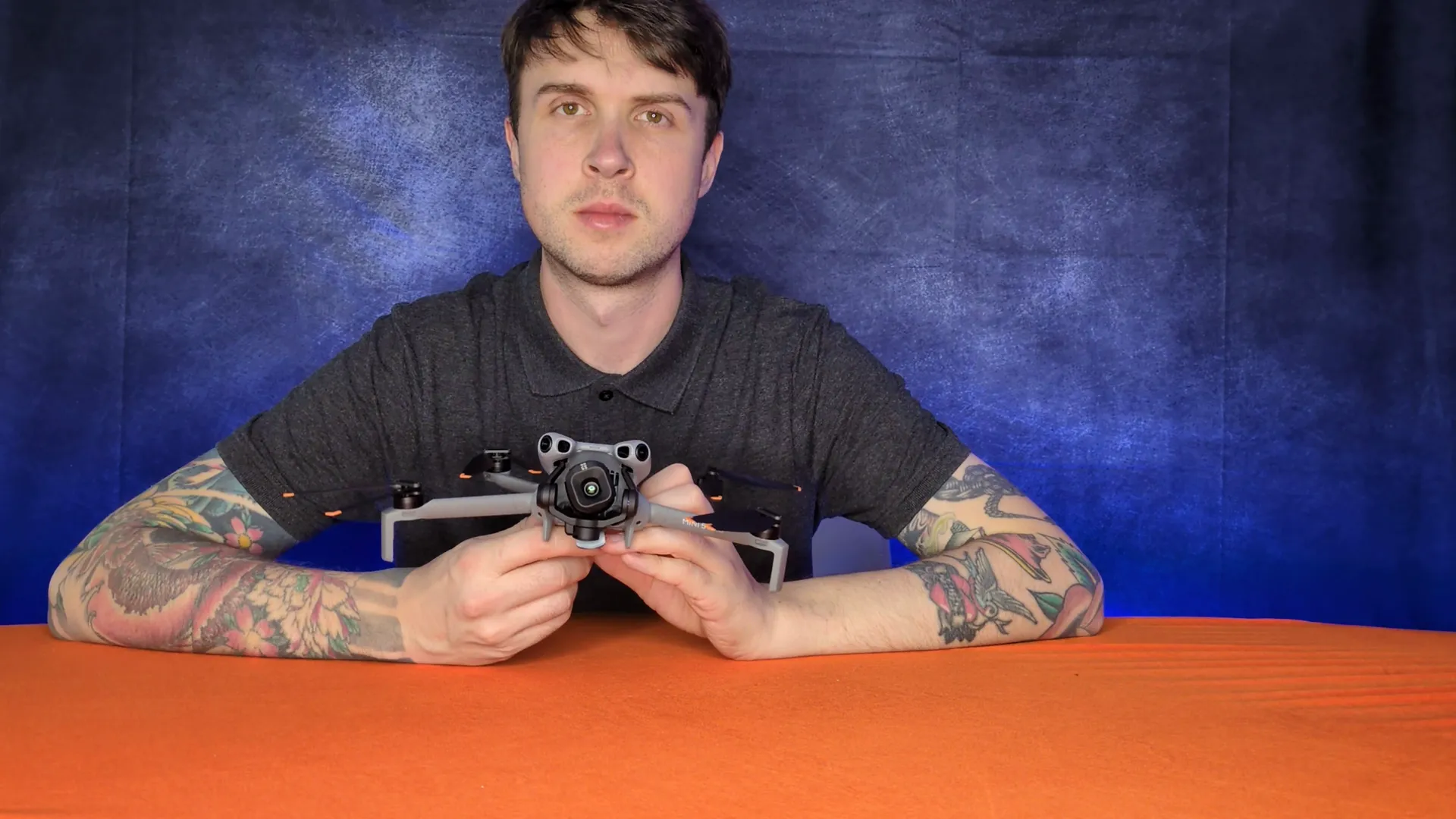
A co-located observer is the only way to fly First Person View legally, and one of you must always hold the direct view.
The moment you strap on video goggles or fix your eyes to a tablet feed, you have stopped holding VLOS yourself. The Code and the CAA’s First Person View guidance both say the same thing: FPV flight is legal only with an observer standing next to you. That observer must stay within conversational distance and keep constant two-way communication with you throughout the flight.
At any given moment, one of the two of you has to hold the direct visual and the full airspace view. The observer does not need a Flyer ID and does not need any Remote Pilot qualification, but the Code is clear that the Remote Pilot remains legally responsible for the flight. The observer shares the watch. They do not share the liability.
The reason the rule is this tight is geometric. Flying on a flat screen collapses depth perception and strips peripheral vision — the two cues you need most to judge distance, closure and obstacle clearance. Goggles do the same. The observer beside you is the legal and practical answer to that problem.
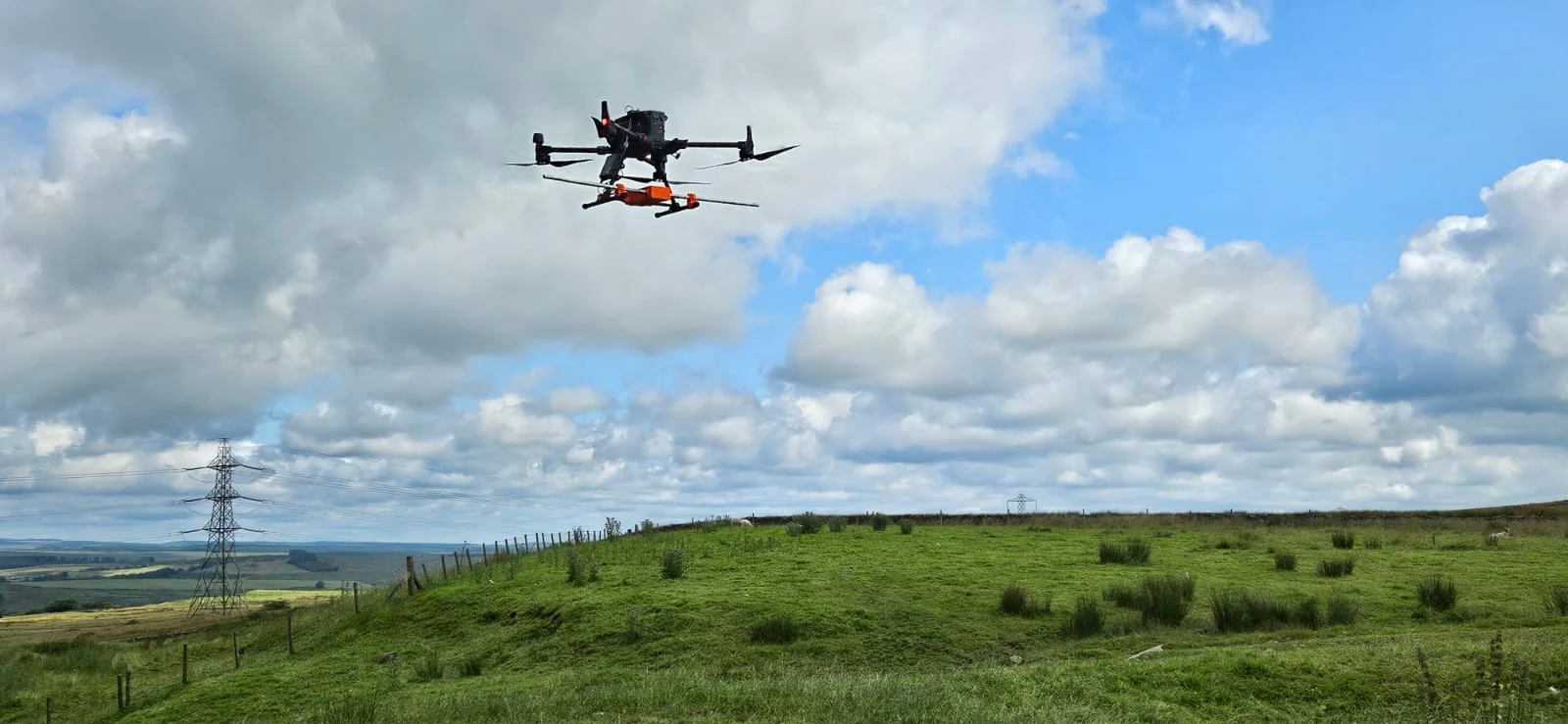
VLOS has no fixed distance in UK law — it ends where your eyes lose the drone, not where your transmitter does.
Here is where the most common myth breaks down. You will see “typical VLOS range of about 500 metres” quoted on forums and in drone-training marketing material. That figure is not in the Drone Code, it is not in the Open Category rules, and it is not a VLOS definition. The 500-metre number comes from a different rule entirely — the PDRA01 Specific Category authorisation, where it caps the distance between the Remote Pilot and the drone. In the Open Category, UK law gives you no distance figure for VLOS at all.
What the Code gives you instead is a test. You can fly as far as you can hold the direct sight, read the orientation, and scan the surrounding airspace. That distance shrinks and grows with everything around you.
| Factor | Effect on effective VLOS |
|---|---|
| Bright sky, sun glare | Shrinks range — the drone becomes a silhouette |
| Fog, rain, low light | Shrinks range significantly |
| Small, dark-coloured drone | Shrinks range — orientation harder to read |
| Cluttered backdrop (trees, buildings) | Shrinks range — drone blends into the scene |
| Larger drone with navigation lights | Extends range — easier to hold orientation |
| Clear sky, high contrast, steady eyes | Extends range |
The informal 1-to-1 ratio many drone pilots use is simply the easiest way to keep a viewing angle that preserves all of those cues. Night flying tightens the requirement further. From 1 January 2026, the Drone Code requires any drone flown at night in the Open Category to have a green flashing light switched on throughout the flight, specifically so that you can distinguish it from a manned aircraft and hold VLOS in low light.
VLOS is an eyes-on rule. It ends where your eyes lose the drone, not where your transmitter does.
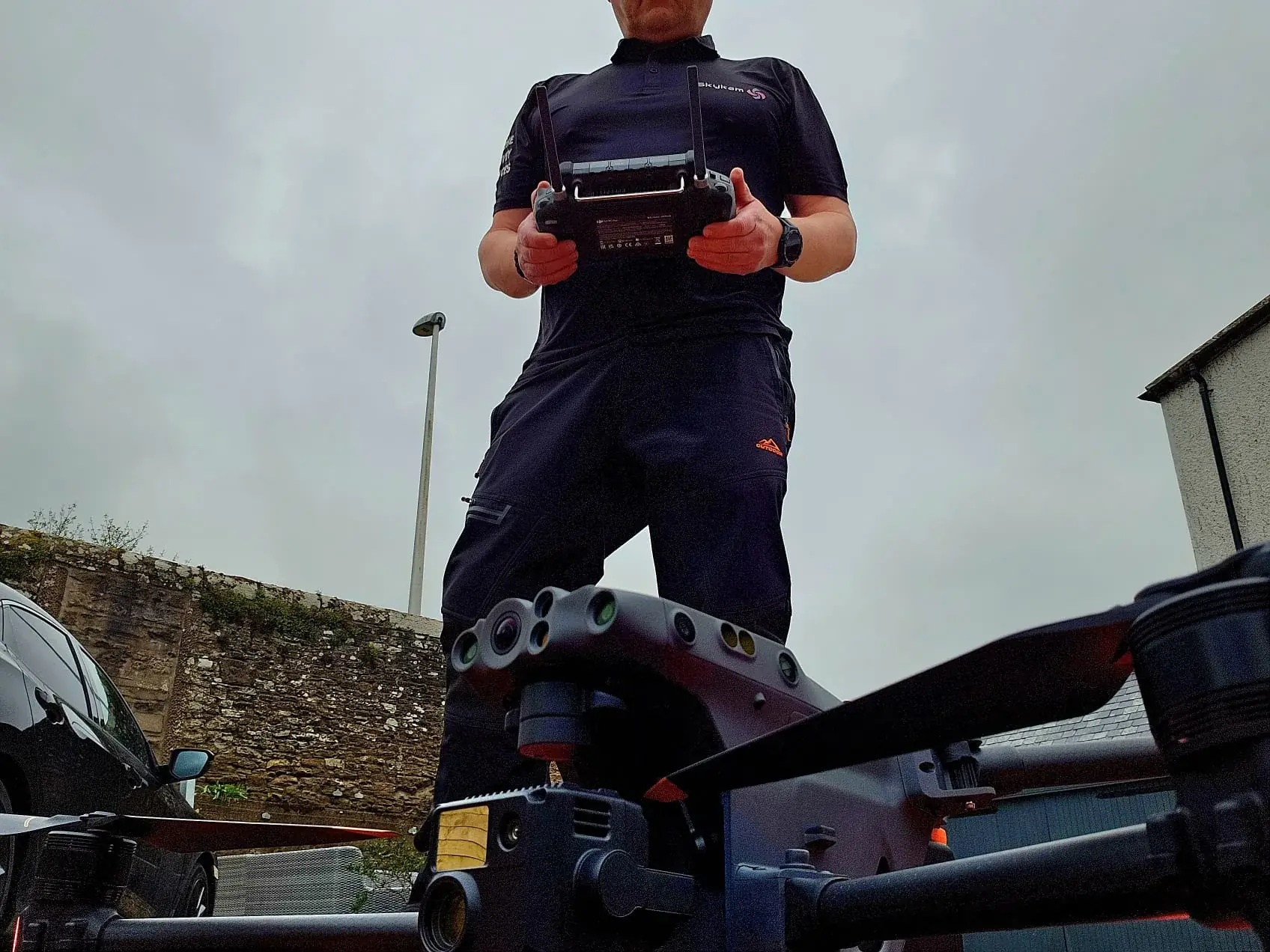
The Drone Code carves out exactly one exemption where you may lose direct sight of the drone.
The Drone Code names a single case where the VLOS requirement is relaxed. Point 37 of the Code covers follow-me mode, where the drone is set to track you within fifty metres. When follow-me is active and the drone is held within that fifty-metre radius, you do not have to keep it in direct sight. Every other rule in the Code still applies — you still cannot fly over people or crowds, you still cannot exceed the 120-metre altitude ceiling, and you still need full airspace awareness around you.
That is the only follow-me carve-out in the Open Category. Point 39 of the Code covers tall-structure work above 120 metres when the structure’s owner has tasked you, but it is a height exemption, not a VLOS exemption. You must still hold direct sight of the drone, and you must keep it within fifty metres horizontal and fifteen metres above the structure. Everything else — BVLOS, EVLOS, FPV without an observer — sits outside the Open Category entirely.
Drone pilots drift out of VLOS more often than they realise — here is where it usually happens.
The Code is written as a hard line, but in practice most VLOS breaches are accidental. The drone is still on the horizon, the flight feels normal, and the drone pilot has simply lost the orientation cue without noticing. A handful of situations cause most of those drifts:
- Long camera shots where the drone is 300 metres out, still visible as a speck, but you can no longer tell which way the nose is pointing.
- Brief passes behind a treeline, the corner of a building, or a hill crest — even a second of occlusion is technically a VLOS breach.
- Framing a shot on the controller screen for more than a glance. Your eyes leave the drone, and the airspace around it stops being scanned.
- Featureless backdrops — uniform water, a clear blue sky, a wide beach — where depth perception collapses and you start relying on the flight app to tell you how far out the drone is.
- The sun directly behind the drone, turning the drone into a silhouette you can see but cannot orient.
The fix is boring and it works. Keep the 1-to-1 ratio as a default. Pick a landmark on the ground before take-off so you know when the drone crosses it. Run an eye-up cadence — look at the drone, then glance at the screen, then back to the drone, on a beat. If you cannot read the orientation, bring the drone closer before you do anything else. VLOS is not a pass-fail moment at the end of the flight; it is a condition you hold continuously, and holding it is a habit, not a setting.
Flying outside VLOS is a criminal offence under the Air Navigation Order 2016 and pushes you into Specific Category territory.
Flying Beyond Visual Line of Sight — BVLOS — is not permitted in the Open Category at all. The CAA is explicit: BVLOS requires a Specific Category Operational Authorisation, granted case by case against a written operations manual and a risk assessment. You do not get there from a Flyer ID and a DJI drone.
The legal backbone is the Air Navigation Order 2016, working alongside the UK Regulations (EU) 2019/945 and 2019/947. Breaking the Drone Code, including breaking VLOS, is not a civil matter. It is a criminal offence. Routine breaches can result in a fine. Endangering an aircraft in flight carries a maximum sentence of five years. On top of the criminal penalty, flying outside the rules invalidates your third-party drone insurance, which turns any incident from an insurance claim into a direct personal liability.
The bridge between VLOS and BVLOS is Extended Visual Line of Sight — EVLOS — where a chain of trained observers along the flight path keeps the drone in someone’s direct sight at all times. EVLOS is also a Specific Category operation. It is not a workaround to fly further on a Flyer ID.
The shortest way to remember VLOS is this. It is not a distance. It is not your transmitter’s range. It is not a telemetry reading. It is your own eyes seeing the drone clearly enough to tell which way it is facing and to scan the airspace around it. Everything else in the Open Category — the fifty-metre people-buffer, the 120-metre height ceiling, the crowd rule — is built on top of that single requirement.
If the 500-metre myth surprised you, the 1-to-1 rule guide picks up exactly where this one leaves off. For the bigger legal picture, the UK drone laws explainer stitches the full framework together.
Got a specific scenario you want covered — an awkward site, a night-flying question, a mixed-team FPV setup? Drop a note to peter@hiredronepilot.uk and I will come back to you directly. If you prefer the video version of this explainer, the comments are open on YouTube.
References
Primary legal source material for this article is the UK Civil Aviation Authority. Supporting external links open in a new tab.
- UK CAA — The Drone and Model Aircraft Code (CAP2320) · VLOS requirement (rule 2), endangering-aircraft penalty (rule 7), night green light (rule 19)
- UK CAA — First Person View (FPV) · observer requirement and flat-screen depth limitations
- UK CAA — Beyond Visual Line of Sight (BVLOS) · Open Category prohibition, Specific Category Operational Authorisation
- UK CAA — Where You Can Fly (A1, A2, A3 sub-categories) · Open Category VLOS and distance rules
- UK CAA — Flying at Night in the Open Category · mandatory green flashing light from 1 January 2026
- UK CAA — UK Regulatory Framework for Drones · Air Navigation Order 2016 and the UAS Regulations
- Dundee & Angus Chamber — Drone Visual Line of Sight: What VLOS Really Means in UK Law · plain-English VLOS explainer for local businesses
Peter Leslie
Founder & GVC Drone Pilot
Peter is the founder of HireDronePilot. With thousands of logged commercial flight hours, he writes about drone technology, commercial surveying tactics, and UK aviation compliance.
Connect on LinkedIn