How to Switch the Map Between Map View and Radar on the DJI Neo 2

Peter Leslie
21 May 2026
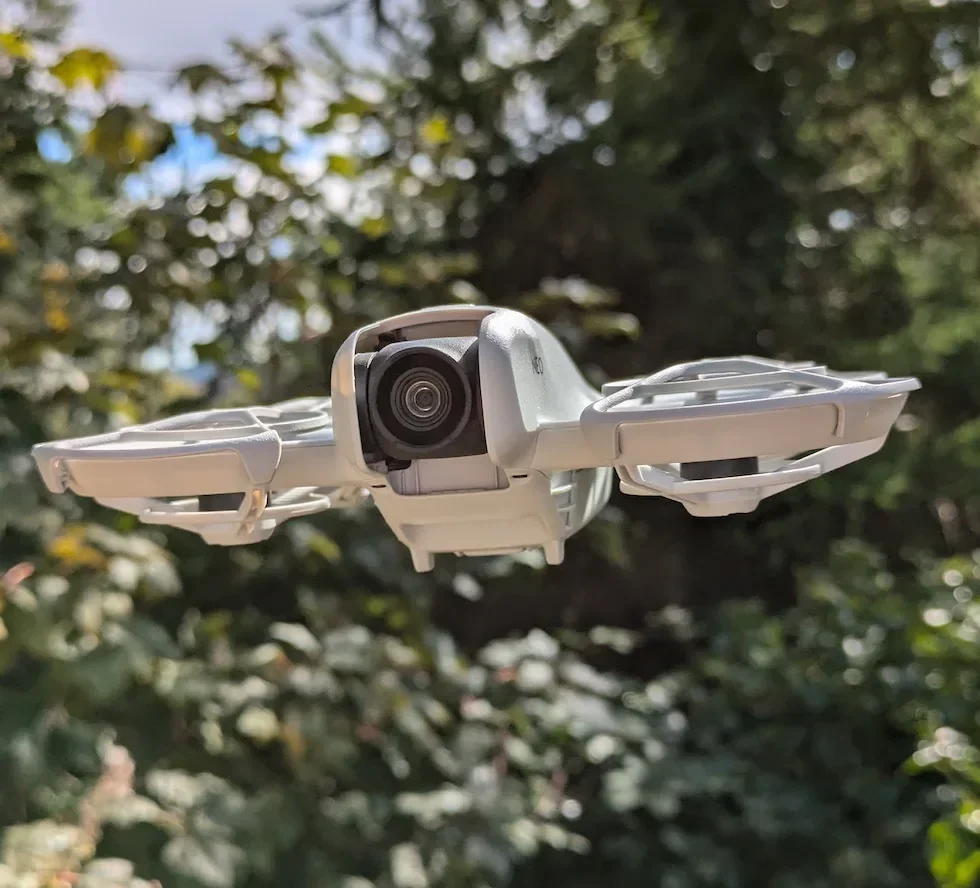
If you have been flying the DJI Neo 2 and you want the in-flight widget in the lower-left corner to show a radar dial instead of a top-down map — or the other way round — the switch is a single tap on the widget itself. Most drone pilots never notice the toggle exists because the icon is tucked inside the widget rather than on the main DJI Fly chrome.
Map view gives you the world around the drone — streets, terrain, the Home Point pin, GEO-zone overlays. Radar view gives you the drone relative to you — bearing line, distance ring, and a controller-centred dial. Different jobs, same widget, one tap to swap between them.
Quick guide
To switch the map widget on the DJI Neo 2, go to DJI Fly camera view → lower-left map widget → corner toggle icon. Tap the small icon in the corner of the widget to flip between Map view (geographic top-down) and Radar view (drone-relative dial).
Step-by-step: How to Switch the Map Between Map View and Radar on the DJI Neo 2
Follow these top to bottom the first time, and you will know the path off by heart the second time.
Open DJI Fly to the live camera view with the drone connected
Power on the DJI Neo 2, link the remote controller, and wait for the live camera feed to come up in DJI Fly. The map widget only appears once the drone is connected and reporting position to the app — a disconnected drone does not draw the panel.
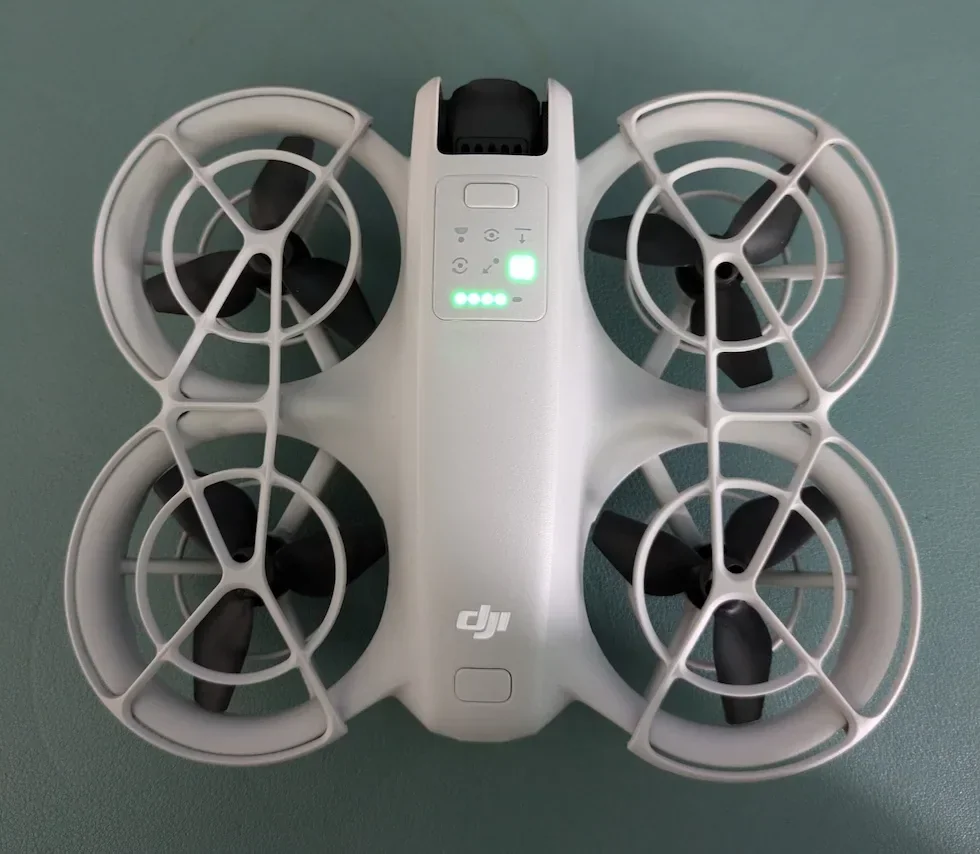
Locate the map widget in the lower-left corner of the camera view
The widget is a small square panel pinned to the bottom-left of the camera view, sitting just above the telemetry strip. It shows either a top-down map of the area around the drone, or a drone-centred radar dial — whichever mode it was left in.
Find the toggle icon in the corner of the map widget itself
Look at the corner of the widget panel, not the camera-view chrome around it. There is a small icon sat in the corner of the widget — it shows a map glyph when Radar is the current view, and a radar glyph when Map is the current view. That is the toggle.
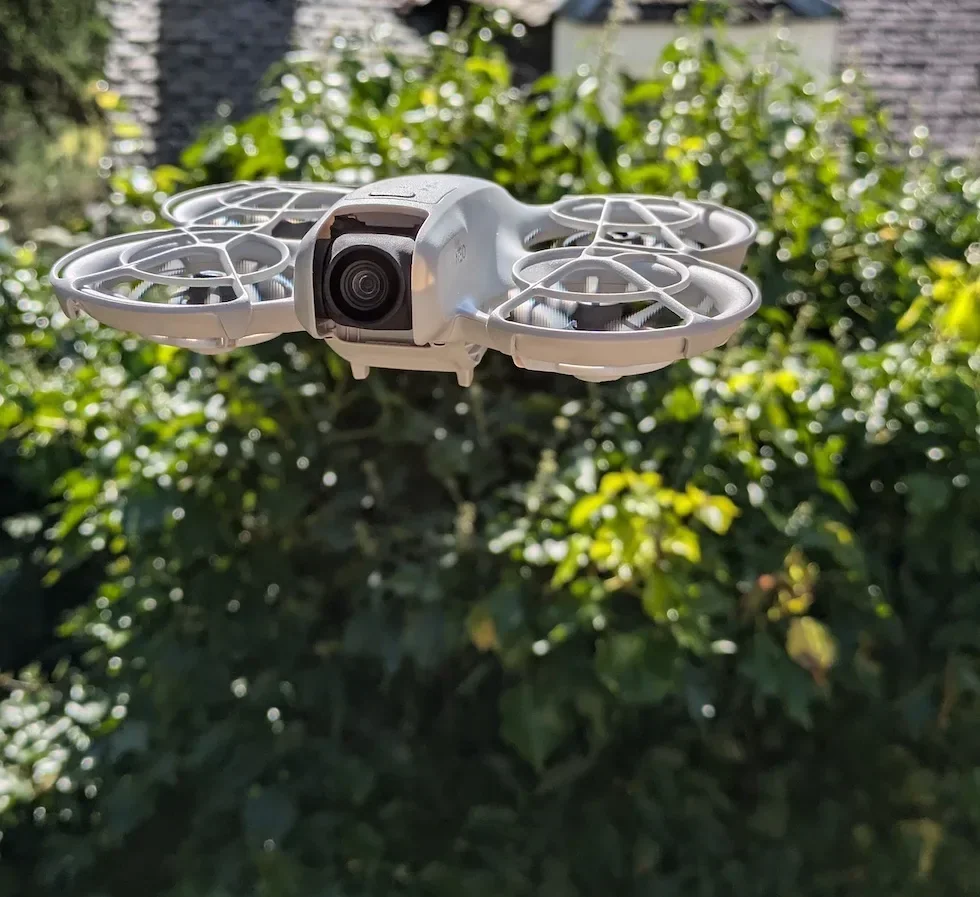
Tap the corner icon to flip between Map view and Radar view
A single tap on the icon flips the widget. Tap once to switch from Map view to Radar view; tap again to switch back. There is no confirmation prompt — the widget redraws straight into the new view.
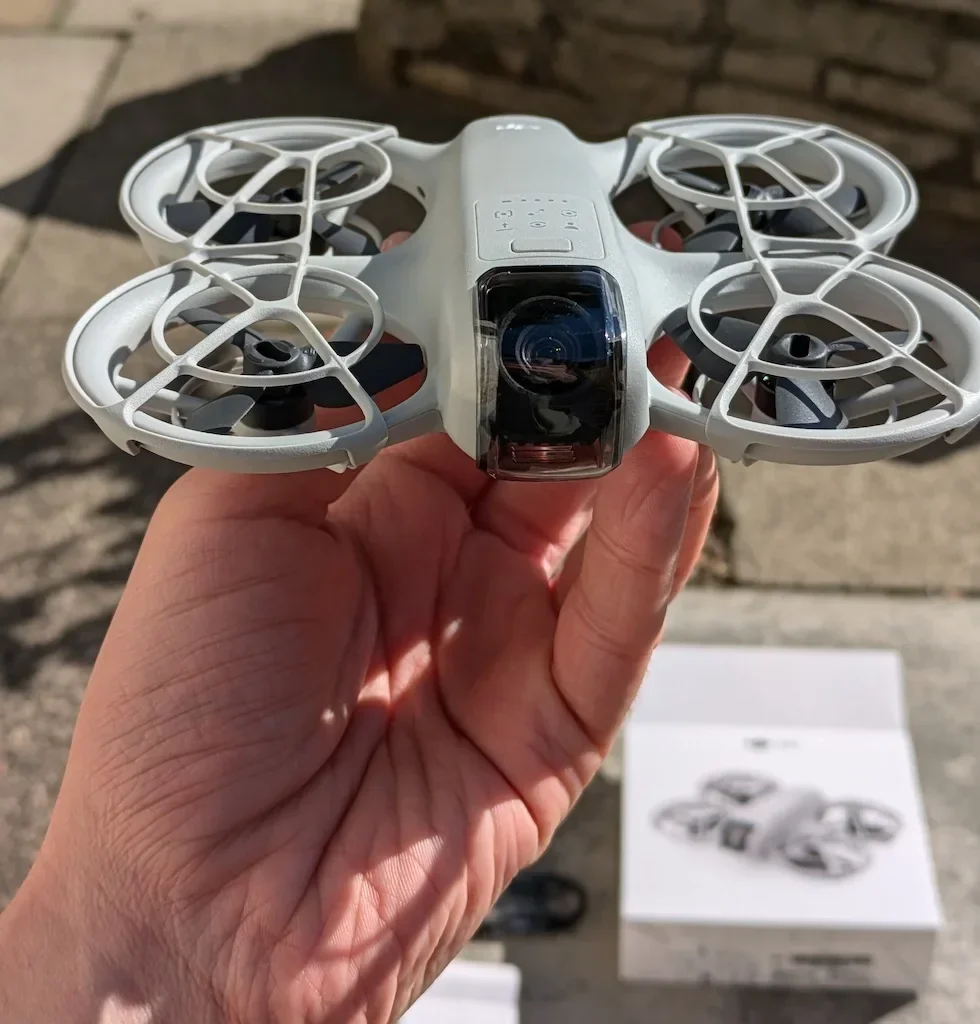
Confirm the new view is showing the information you need in flight
Map view shows the area around the drone — streets, terrain, the Home Point pin, and the drone marker pointing the way it is heading. Radar view shows a drone-centric dial with the controller at the centre, the bearing line out to the drone, and a distance ring around it.
Tap the widget to expand it to full screen when you need the detail
Tapping anywhere on the widget body — not the toggle icon — expands the panel to a full-screen view that covers the camera feed. Use the collapse control to drop it back down to the lower-left corner, and the Map-or-Radar toggle still works after the widget returns to its small size.
Peter's tip
I leave the DJI Neo 2 on Map view for the take-off and the first thirty seconds of any flight — that is when the Home Point pin and the GEO-zone overlays matter most. Once the drone is out and I am flying line-of-sight at distance, I flip the widget to Radar, because the bearing and distance dial is faster to read than a map when I have my eyes on the sky and only a half-glance for the phone.
| View | What the widget shows | Best for |
|---|---|---|
| Map view | A top-down geographic map with streets, terrain, the Home Point pin, the drone marker oriented to its heading, and any GEO-zone polygons that apply to the area. | Take-off, navigating around landmarks, checking the airspace beneath the drone, and showing a bystander where the drone is going. |
| Radar view | A drone-centric dial with the remote controller at the centre, a bearing line out to the drone, and a distance ring around it. No streets, no terrain, no GEO overlay. | Line-of-sight flying at distance, recovering visual contact after a turn, and any flight where the relationship between you and the drone matters more than the map underneath it. |
Frequently asked questions
What is the default view of the map widget on the DJI Neo 2?
Map view. The lower-left widget opens to a standard top-down map of the area on a fresh DJI Fly session, with the drone icon, the Home Point marker, and the surrounding terrain or street layout visible. The widget remembers your last selection within a session, so if you flip to Radar and land, it will still be on Radar when you take off again — until you close DJI Fly entirely.
What is the difference between Map view and Radar view on the DJI Neo 2?
Map view shows the world around the drone — a top-down map with streets, terrain, the Home Point pin, and the drone marker oriented to its heading. Radar view shows a drone-centric dial with the controller at the centre, a bearing line out to the drone, and a distance ring around it. Map view tells you where on the planet the drone is; Radar view tells you where the drone is relative to you.
When should I use Radar view instead of Map view on the DJI Neo 2?
Use Radar view whenever the relationship between you and the drone matters more than the map underneath it. Flying line-of-sight at distance, flying in a featureless area where the map adds no value, or recovering visual contact after a turn — Radar tells you the bearing and distance at a glance. Map view is the better choice for navigating around landmarks, planning a path, or showing someone where the drone is going.
Does the map widget show no-fly zones on the DJI Neo 2?
Yes, when Map view is active and the phone has loaded the GEO-zone data. Restricted, warning, and authorisation zones are overlaid on the standard map as coloured polygons, the same way they appear in the pre-flight checklist. Radar view does not render zone polygons — it is a relative-position indicator, not a geographic one — so plan the flight on Map view before switching to Radar in the air.
Can I expand the map widget to full screen on the DJI Neo 2?
Yes, tapping the widget itself expands it to a full-screen map view that covers the camera feed. Use the expand toggle to study the area around the drone or to plan a route, then tap the collapse icon to return to the standard lower-left panel. The Map-or-Radar toggle still works once the widget is collapsed back down.
Does switching to Radar view change the drone's behaviour on the DJI Neo 2?
No. Map view and Radar view are display modes for the in-flight widget only — neither one changes how the drone flies, what the failsafe does, or what data is recorded. The drone keeps the same position lock, the same Home Point, and the same Return to Home behaviour regardless of which view you have on screen.
Why is the map widget missing from the camera view on the DJI Neo 2?
The widget only appears once the drone is connected to the controller and reporting position to DJI Fly. If the lower-left of the camera view is blank, check that the drone is powered on, the controller is linked, and the camera feed is live. A weak GNSS lock at start-up can also delay the widget — give the drone a few seconds with a clear view of the sky.
Does the map widget toggle work the same way on the DJI Motion Controller 3?
Yes, the widget and the toggle icon are part of DJI Fly itself, not the controller. Whichever controller you have paired — the standard remote controller, the DJI Motion Controller 3, or the DJI Goggles N3 setup — the lower-left map widget and the corner Map-or-Radar toggle behave the same way. The view persists across controller types within the same DJI Fly session.
The Map-or-Radar toggle is one of those tiny DJI Fly affordances that nobody notices until it is pointed out — and then they cannot remember how they ever flew without it. Set it deliberately for what the flight needs, not once and forgotten.
If you are still not sure which view to fly with for a specific job, drop the details to peter@hiredronepilot.uk and I will come back to you directly. The video version of this walkthrough is on YouTube and the comments are open.
References
Primary source material for this article is the official DJI Neo 2 documentation and DJI Fly. External links open in a new tab.
- DJI Neo 2 — Downloads (User Manual, Quick Start Guide, firmware notes) · Camera view layout, the lower-left in-flight map widget, and the available Map and Radar display modes.
- DJI Neo 2 — Product page (UK) · Drone hardware overview and the OcuSync video link that the map widget renders position from.
- DJI Fly — App download and release notes · The app where the lower-left map widget and the corner Map-or-Radar toggle live. Release notes record any layout reshuffles between versions.
Peter Leslie
Founder & GVC Drone Pilot
Peter is the founder of HireDronePilot. With thousands of logged commercial flight hours, he writes about drone technology, commercial surveying tactics, and UK aviation compliance.
Connect on LinkedIn