How to Enable or Disable Vision Positioning and Obstacle Sensing on the DJI Neo 2

Peter Leslie
21 May 2026
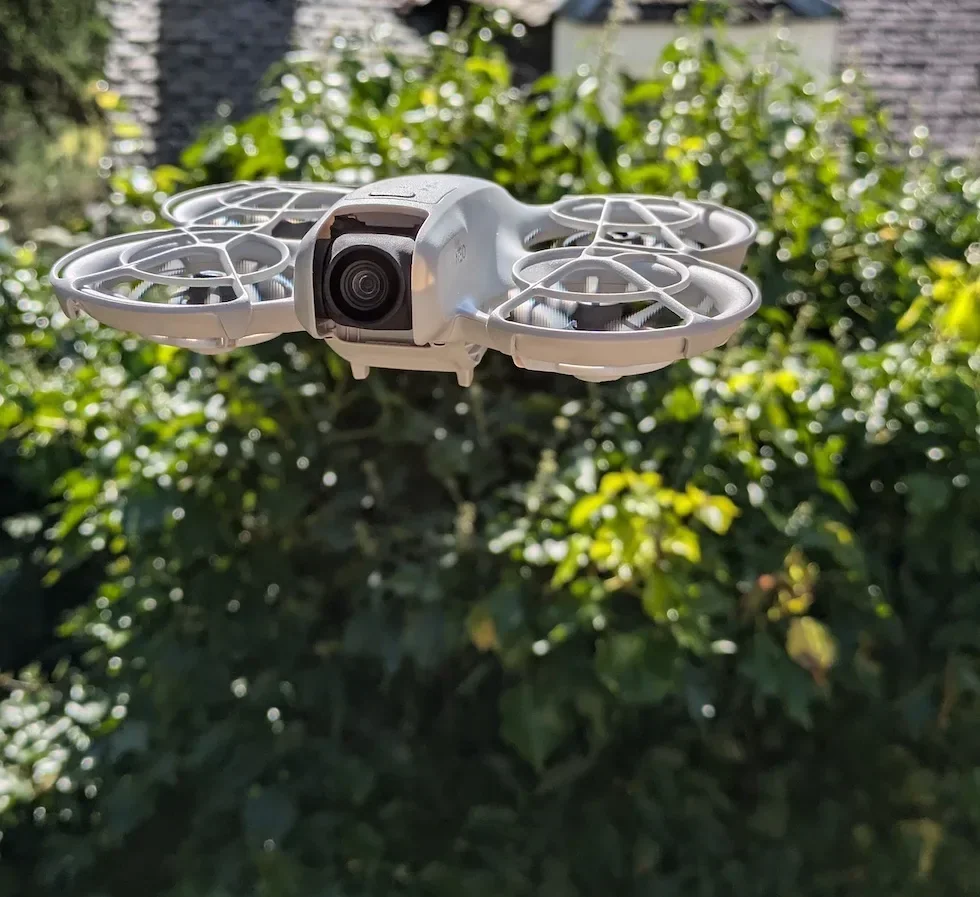
If your DJI Neo 2 is locking in place over fog, refusing to descend the last metre over water, or flagging an obstacle that you can clearly see is nothing, the toggle you are looking for is Vision Positioning and Obstacle Sensing inside DJI Fly. You might switch it off for a controlled FPV session over open water, or leave it on so the drone keeps its forward LiDAR and side cameras active during regular flying.
The toggle is buried two menus deep — Safety, then Advanced Safety Settings, then scroll to the bottom — and it resets to on every time you restart the drone. Most drone pilots never need to touch it, but knowing where it lives is the difference between troubleshooting a stuck hover in five seconds and rebooting the drone three times in a field.
Quick guide
To enable or disable Vision Positioning and Obstacle Sensing on the DJI Neo 2, go to DJI Fly → Settings → Safety → Advanced Safety Settings → Vision Positioning and Obstacle Sensing. On means the drone uses its cameras and LiDAR for hover, obstacle avoidance, and soft descent; off means GNSS only with no obstacle avoidance and no low-altitude auto-deceleration.
Step-by-step: How to Enable or Disable Vision Positioning and Obstacle Sensing on the DJI Neo 2
Follow these top to bottom the first time, and you will know the path off by heart the second time.
Open the DJI Fly Settings menu from the camera view
With the DJI Neo 2 powered on and the remote controller connected, tap the Settings icon in the top right of the camera view. The settings panel slides in from the right with the category tabs down the left.
Tap the Safety category in the Settings panel
Safety is the second tab down the left of the Settings panel, sitting below Control. Tap it and the right-hand pane updates to show the flight limits, RTH, and failsafe options for the DJI Neo 2.
Scroll all the way to the bottom of the Safety menu
Scroll past Max Altitude, Max Distance, the RTH Settings block, the Compass row, and the IMU row. Advanced Safety Settings is the last entry on the page, sat right at the bottom.
Tap the Advanced Safety Settings entry to open the sub-page
Tap the Advanced Safety Settings row and the sub-page replaces the Safety pane. This is the same screen that holds the Signal Lost Action selector at the top — the toggle you want is further down.
Scroll to the very bottom of the Advanced Safety Settings page
Scroll past Signal Lost Action, Emergency Propeller Stop, AirSense and the rest of the failsafe block. The Vision Positioning and Obstacle Sensing toggle sits at the foot of the page, on its own row.
Tap the Vision Positioning and Obstacle Sensing toggle to switch it on or off
A single tap flips the state. Green is on — cameras, forward LiDAR and downward infrared all feeding the drone. Grey is off — GNSS only, no omnidirectional obstacle avoidance, no auto-deceleration on descent.
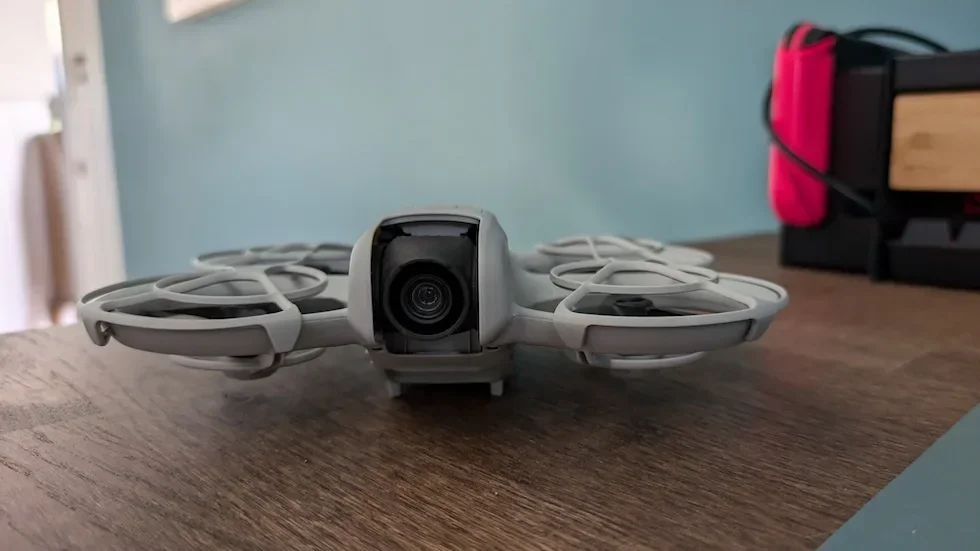
Close the Settings panel and check the camera view for a warning banner
DJI Fly drops a yellow caution strip across the top of the camera view whenever the sensing system is disabled. The banner stays put for the rest of the flight, which is your reminder that the drone is hovering on GNSS alone.
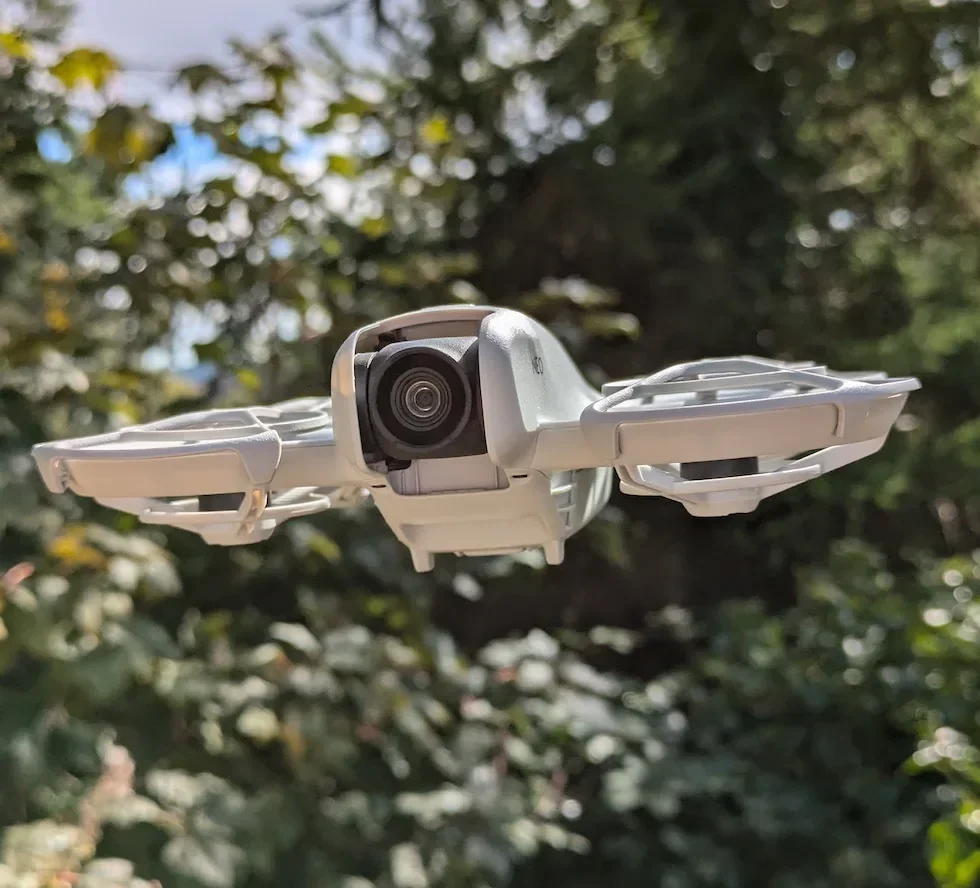
Peter's tip
I leave this toggle on for every commercial flight and every recreational flight that is not a deliberate FPV practice over open water. If the drone is locking up in fog or refusing to descend over a reflective surface, I land first, switch the toggle off, take off again, and switch it back on the second I am clear of the problem patch. It is a session tool, not a setting to leave alone.
Vision Positioning and Obstacle Sensing on vs off on the DJI Neo 2
Two states, two completely different drones. Pick from this table when you are deciding whether to flip the toggle for a specific flight.
| State | What the drone uses to fly | What you lose or gain |
|---|---|---|
| On (default) | Forward LiDAR, side and downward cameras, downward infrared, plus GNSS. The sensors keep the drone locked over a precise spot and feed the omnidirectional obstacle avoidance system in real time. | Steady hover even with a weak GPS fix, working obstacle avoidance, soft auto-deceleration on the last few metres of descent. |
| Off | GNSS only. The drone falls back to a satellite-driven hover, ignores anything the cameras and LiDAR are reporting, and treats every obstacle as invisible. | No omnidirectional obstacle avoidance, no auto-decel on descent, drift grows in line with the GPS lock. Useful only in fog, over featureless reflective ground, or for deliberate FPV practice. |
Frequently asked questions
Is Vision Positioning and Obstacle Sensing on by default on the DJI Neo 2?
Yes. The toggle ships in the on position out of the box and the drone resets to on every time you power-cycle, even if you flipped it off in your last session. The on default is deliberate — without it the DJI Neo 2 cannot use omnidirectional obstacle avoidance and cannot soft-decelerate during low descent.
What does turning Vision Positioning and Obstacle Sensing off actually do on the DJI Neo 2?
Three things change. The drone stops using its forward LiDAR and side and downward cameras to position itself and falls back to GNSS only. Omnidirectional obstacle avoidance is unavailable, so the drone will fly straight into anything in front of it that the GPS does not know about. And the soft auto-deceleration during low descent disappears, so the drone keeps the same vertical speed all the way down to the ground.
When should I switch Vision Positioning and Obstacle Sensing off on the DJI Neo 2?
Almost never. The honest answers are a handful of edge cases — flying in heavy fog or cloud where the sensors lock the drone in place, flying over a featureless reflective surface like water or fresh snow where the downward cameras refuse to release the descent, or running a controlled FPV practice in open space where you want raw GNSS behaviour. For every other situation leave it on.
Does disabling Vision Positioning and Obstacle Sensing affect Return to Home on the DJI Neo 2?
No. The disable only takes effect when you are flying manually. RTH, auto landing, and the Intelligent Flight Modes all force the sensing system back on for the duration of the routine, so the drone still uses its cameras and LiDAR to dodge obstacles and slow itself on the way down even when you have toggled them off for cruising.
Why does the DJI Neo 2 keep resetting Vision Positioning and Obstacle Sensing to on?
By design. The toggle is session-only — DJI Fly switches it back on every time the drone restarts so a new flight always starts with sensors active. There is no permanent off setting. If you need the sensors off in the next flight you have to flip the toggle again after powering on.
Is it legal to fly the DJI Neo 2 with Vision Positioning and Obstacle Sensing off in the UK?
Yes. The UK Drone Code does not mandate obstacle avoidance — it requires you to keep the drone in visual line of sight, stay below one hundred and twenty metres, and avoid uninvolved people. The sensing toggle is a manufacturer setting, not a regulatory one. That said, a drone pilot who switches off the sensing system and then flies into something has a much harder time arguing they took reasonable care.
Does the DJI Neo 2 still hover steadily with Vision Positioning and Obstacle Sensing turned off?
Only as steadily as the GNSS fix lets it. With the downward and side cameras off the drone has no visual reference to lock against, so a poor GPS lock translates directly into a drifting hover. In a wide open field with a strong satellite count the hover stays acceptable; under tree cover or close to buildings the drift becomes obvious almost immediately.
Vision Positioning and Obstacle Sensing is one of those DJI Neo 2 toggles that is best understood as a session-only escape hatch. Leave it on for everyday flying, flip it off only when the sensors are visibly working against you, and trust the drone to reset it the next time you power up.
If the toggle is doing something you do not expect — the warning banner refusing to clear, the drone still locking up over water with the sensors off, or obstacle avoidance kicking in mid-RTH after you disabled it — drop me a note at peter@hiredronepilot.uk with what DJI Fly is showing and I will come back to you directly. The video version of the walkthrough is on YouTube if you prefer to watch the menu path in real time.
References
Primary source material for this article is the official DJI Neo 2 documentation and DJI Fly. External links open in a new tab.
- DJI Neo 2 — Downloads (User Manual, Quick Start Guide, firmware notes) · Vision Positioning and Obstacle Avoidance behaviour, the GNSS-only fallback, the rule that disabling only applies in manual flight, and the reset-to-on-after-restart default.
- DJI Neo 2 — Product page (UK) · Sensor specification: forward LiDAR, side and downward monocular cameras, and downward infrared sensors that together make up the system this toggle controls.
- DJI Fly — App download and release notes · The app version under verification (v1.21.2). Release notes track any reshuffling of the Advanced Safety Settings menu between versions.
Peter Leslie
Founder & GVC Drone Pilot
Peter is the founder of HireDronePilot. With thousands of logged commercial flight hours, he writes about drone technology, commercial surveying tactics, and UK aviation compliance.
Connect on LinkedIn