Best Drone for Night Photography: What I Fly After Dark

Peter Leslie
31 July 2026 · 19 min read
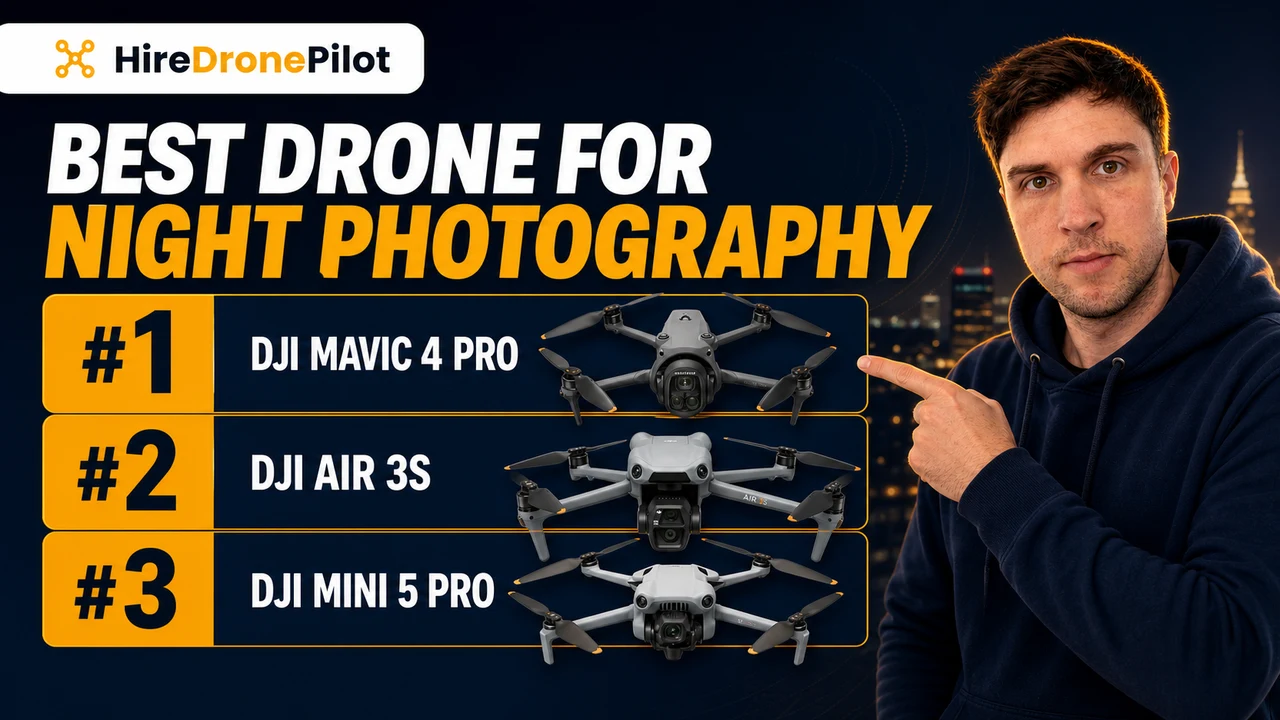
Start with the thing that sends most people away before they have bought anything. Flying a drone at night in the UK is legal. There is no permit to apply for, no form to fill in and nobody to ask. Since 1 January 2026 there is one extra condition — a green flashing light, switched on for the whole flight — and that is the entire difference between a daytime flight and a night one.
So the question is not whether you are allowed. It is which drone still produces a picture once the sun has gone, and that comes down to two numbers that almost no buying guide lists: how much light the sensor can collect, and how long the shutter is physically allowed to stay open. Get either wrong and you will own a drone that takes a lovely photograph of a car park at four in the afternoon and a grey smear at nine.
Which is why the best drone for night photography in 2026 is not simply the most expensive one on the shelf. It is the one whose sensor, shutter and paperwork all survive darkness at once — and there are far fewer of those than the marketing suggests.
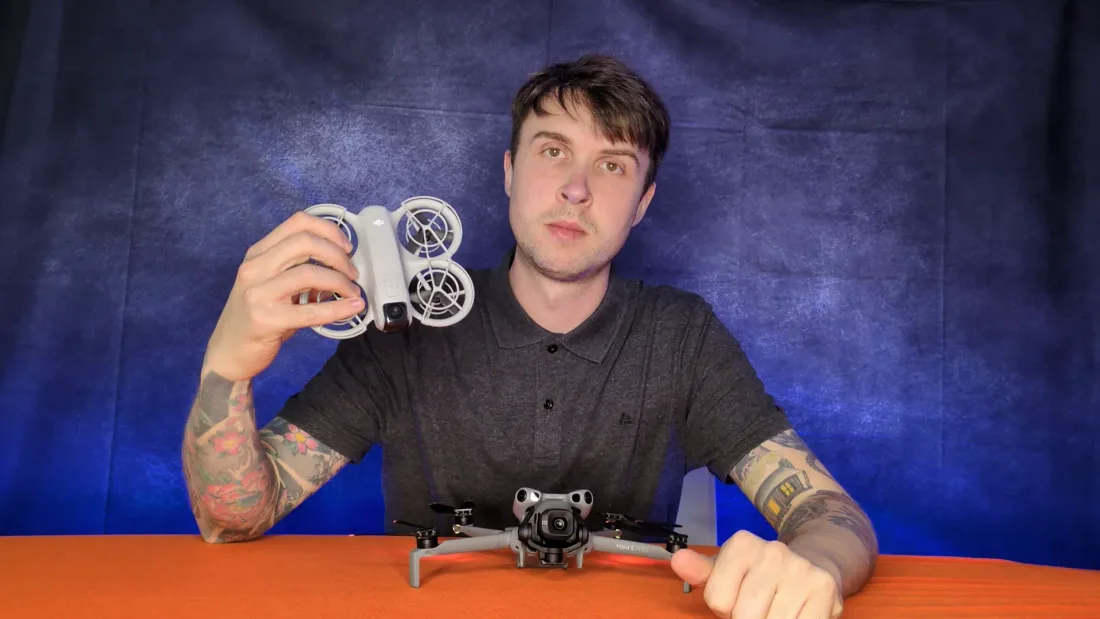
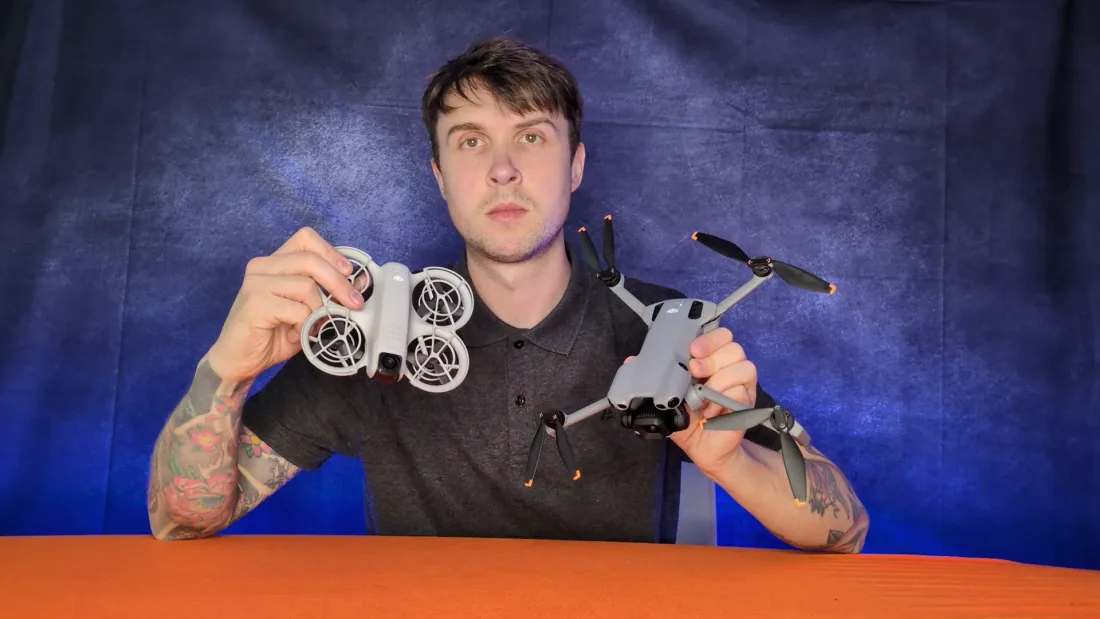
I have flown every DJI drone in this guide. The two in that photograph are the ends of the range: the little one cannot hold its shutter open for longer than a tenth of a second, and the one on the table has a sensor the size of a good compact camera. On a bright afternoon you would struggle to tell their pictures apart. Half an hour after sunset it is not close.
This guide does three things. It asks four questions about what you actually want to photograph after dark and narrows eleven drones to the one that fits. It then sets out the night flying rules properly — including the small, expensive detail about that green light that catches people who fly sub-250-gram drones. And it finishes with the three numbers that decide a night photograph, only one of which is ever printed on the box.
How I get paid: the Amazon links below are affiliate links, so if you buy through one I earn a small commission at no extra cost to you. It does not change what I recommend — two of the eleven drones here are ones I will spend several paragraphs talking you out of, and one has no affiliate link at all because I could not find it for sale in the UK.
The Best Drone for Night Photography in 2026 Is the DJI Mini 5 Pro
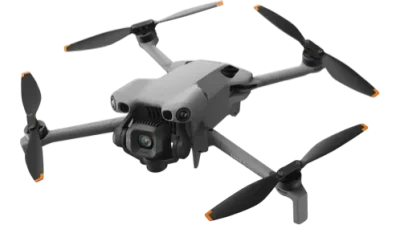
After dark the sensor does all the work. This is the only drone that puts a big one under the weight limit where no test applies.
- A one-inch, 50-megapixel sensor at f/1.8 — roughly 1.7 times the light-collecting area of the 1/1.3-inch sensors it competes with.
- Video to ISO 12800 in a standard colour profile — double what a Mini 4 Pro or a Flip will give you, and only 3200 the moment you switch to D-Log M.
- No test and no licence — just a £12.34 registration you do online.
- Two seconds of real exposure, and eight in DJI’s simulated long-exposure mode. For stars you would want more.
Affiliate link · costs you nothing extra · full disclosure
PART ONE
The Mini 5 Pro above wins the guide outright. Here are the four that win a category of their own — and what is wrong with each of them, because after dark every one of them gives something up.
Best Budget Drone for Night Photography: DJI Flip
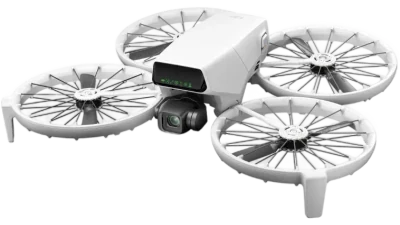
A real two-second exposure and a raw DNG file, at the cheapest end of this guide. That combination did not exist down here two years ago.
- No test and no licence — just a £12.34 registration you do online.
- Two seconds of real exposure, eight in simulated long exposure, and raw DNG files you can rescue.
- Select D-Log M and your video ISO ceiling falls from 6400 to 1600 — two stops, gone.
Best Drone for Astrophotography: DJI Mavic 4 Pro
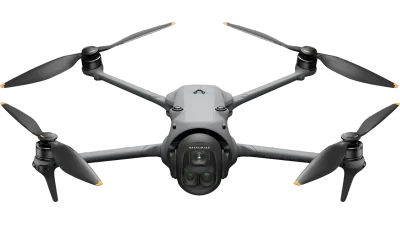
Stars need exposure time, and this is the only drone here that will give you sixteen seconds of it on a Four Thirds sensor.
- Needs the A2 test to fly near people.
- Sixteen seconds of exposure at 25 megapixels — the longest shutter of any drone in this guide.
- Switching to D-Log M costs it one stop of ISO, where everything else here gives up two.
Best Drone for City Lights and Skylines: DJI Air 3S
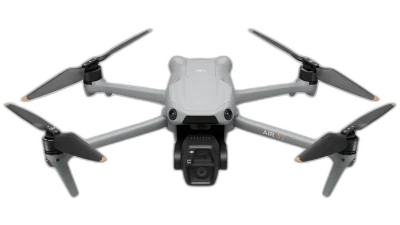
A lit skyline wants compression, not width. The 70 mm second camera is the reason this one is here, and it is worth being honest about what expires in 2028.
- No test needed today, but from January 2028 it needs the A2 to fly near people. You are buying about eighteen months of that freedom.
- A 70 mm second camera that compresses a lit skyline the way cropping a wide frame never will.
- The same one-inch, 50-megapixel main sensor as the Mini 5 Pro, for a good deal more money and 475 extra grams.
Best Drone for Night Video: DJI Mini 4 Pro
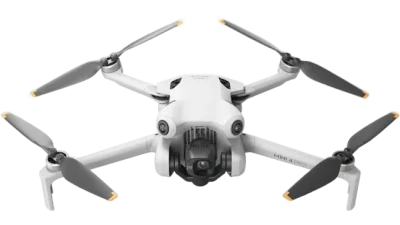
The only drone under 250 grams with a night video mode on its spec sheet, and it buys back a full stop of ISO you would otherwise not have.
- No test and no licence — just a £12.34 registration you do online.
- A dedicated Night video mode that lifts the ISO ceiling from 6400 to 12800.
- Raw DNG stills, two seconds of real exposure and eight in simulated long exposure.
Affiliate links · costs you nothing extra · full disclosure
Take the quiz: find your drone for shooting after dark
City lights, blue hour and stars are three different problems. Let us find out which one you have.
- Matched to what you actually shoot after dark, not a generic top ten.
- Judged on sensor area, maximum exposure time and raw files.
- Tells you which ones physically cannot take the photo you want.
- About 20 seconds, and no email needed.
STEP 1 OF 4
11 of 11 still fit
All eleven, and how each one behaves once the light goes
-
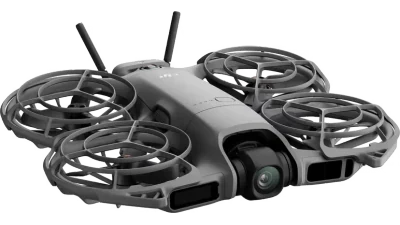
DJI Neo 2
151 g · 1/2″ 12MP · f/2.2 · shutter stops at 1/10 s · JPEG only
A lovely thing to throw off your palm in daylight. Its shutter will not stay open past a tenth of a second, so every photograph you came here for is out of reach.
- No test and no licence — just a £12.34 registration you do online.
- The shutter will not open for longer than a tenth of a second, so there is no long exposure at all.
- JPEG only. Whatever the camera decides about the shadows is what you are stuck with.
-
DJI Flip
<249 g · C0 · 1/1.3″ 48MP · f/1.7 · 2 s (8 s simulated) · DNG
The cheapest drone here that can genuinely do this. A real two-second exposure, raw files and ISO 6400, wrapped in propeller cages a beginner can bump into things with.
- No test and no licence — just a £12.34 registration you do online.
- Two seconds of real exposure, eight in simulated long exposure, and raw DNG files you can rescue.
- Select D-Log M and your video ISO ceiling falls from 6400 to 1600 — two stops, gone.
-
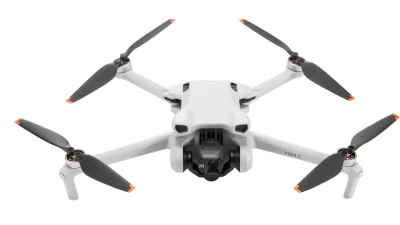
DJI Mini 3 Amazon lists the screen-controller version
248 g · C0 · 1/1.3″ 48MP · f/1.7 · 2 s · ISO capped at 3200
The same sensor as the Flip, and a hard ceiling of ISO 3200 for stills and video alike. In daylight you will never meet that ceiling. Twenty minutes after sunset you will hit it and stop.
- No test and no licence — just a £12.34 registration you do online.
- DJI caps it at ISO 3200 for stills and video alike, the lowest ceiling of anything here.
- No log profile at all, so there is nothing to grade — but also nothing to lose by shooting standard.
-
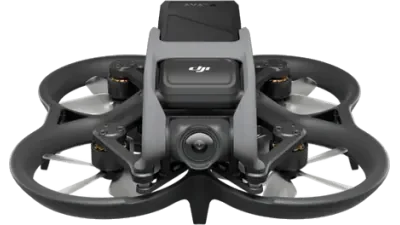
DJI Avata 2 loses privileges in 2028 · Amazon lists the Fly More Combo
377 g · C1 · 1/1.3″ 12MP · f/2.8 · shutter stops at 1/50 s · JPEG only
The most fun on this page and the least suited to it. A photo shutter that stops at one fiftieth of a second, JPEG files, and a legal requirement for a second person stood beside you.
- The law requires a second person watching the drone whenever you fly it through goggles.
- Its photo shutter will not open past 1/50 of a second, so a night still is not physically possible.
- From January 2028 it needs the A2 test to fly near people — one of only two here that lose that freedom.
-
DJI Mini 4 Pro
<249 g · C0 · 1/1.3″ 48MP · f/1.7 · night video to ISO 12800 · DNG
The only sub-250-gram drone whose specification sheet carries a separate night video mode, and it lifts the ceiling from 6400 to 12800. A whole stop that nobody advertises.
- No test and no licence — just a £12.34 registration you do online.
- A dedicated Night video mode that lifts the ISO ceiling from 6400 to 12800.
- Raw DNG stills, two seconds of real exposure and eight in simulated long exposure.
-
DJI Mini 5 Pro
249.9 g · C0 · 1″ 50MP · f/1.8 · video to ISO 12800 · DNG
A one-inch sensor at f/1.8, under the weight limit where no test applies. After dark, sensor area is the whole argument, and nothing else this light has this much of it.
- No test and no licence — just a £12.34 registration you do online.
- A one-inch, 50-megapixel sensor at f/1.8 — roughly 1.7 times the light-collecting area of a 1/1.3-inch.
- Video to ISO 12800 in standard colour, but only 3200 the moment you switch to D-Log M.
-
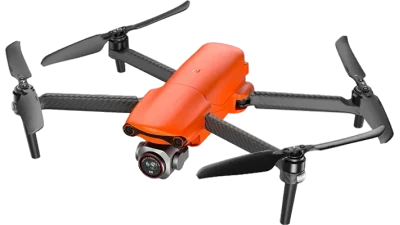
Autel EVO Lite+ no affiliate link — I could not find a UK listing
835 g · legacy · 1″ 20MP · f/2.8–f/11 · 8 s exposure · night mode to ISO 48000
The one drone here built expressly for this job, with an aperture that actually moves and Autel’s low-light processing behind it. Amazon UK sells its spare parts and not the drone, which tells you where the brand stands here.
no link- Needs the A2 test to fly near people.
- An eight-second exposure, an aperture that genuinely moves from f/2.8 to f/11, and a night scene mode Autel rates to ISO 48000.
- I could only find spare parts for it on Amazon UK, so there is no buy link.
-
DJI Air 3S loses privileges in 2028
724 g · C1 · 1″ 50MP + 1/1.3″ 70 mm · f/1.8 · video to ISO 12800
The same one-inch main camera as the Mini 5 Pro, plus a 70 mm lens — and a compressed skyline is a photograph no crop of a 24 mm frame will give you. Its legal position in 2028 is the catch.
- No test needed today, but from January 2028 it needs the A2 to fly near people. You are buying about eighteen months of that freedom.
- A 70 mm second camera that compresses a lit skyline the way cropping a wide frame never will.
- The same one-inch, 50-megapixel main sensor as the Mini 5 Pro, for a good deal more money and 475 extra grams.
-
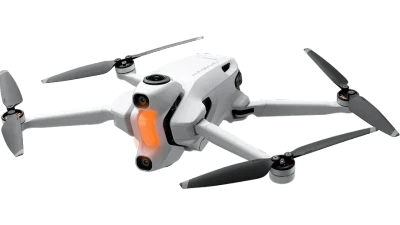
Antigravity A1 Amazon lists the Infinity Bundle
249 g · two 1/1.28″ sensors · 55MP · 8K 360° · 24 min
An 8K 360 camera that flies, and a genuinely clever object. After dark you are asking two small sensors to agree with each other along a seam that runs through the darkest part of the sky.
- No licence needed — but only on the standard battery. The high-capacity one advertises 39 minutes and takes it to 291 g, which loses that.
- Two 1/1.28-inch sensors stitched into a sphere, so twice as many places for noise to appear.
- Antigravity does not publish a maximum exposure time, so I cannot tell you what it will do on a night sky.
-
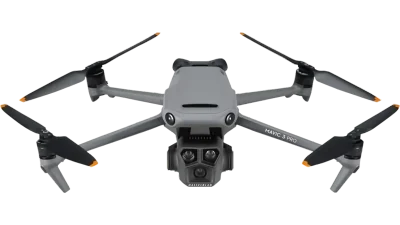
DJI Mavic 3 Pro Amazon lists the Fly More Combo
958 g · C2 · Four Thirds 20MP · f/2.8–f/11 · 8 s exposure · night video to ISO 12800
A true eight-second exposure on a Four Thirds sensor and a dedicated night video mode. On paper the most night-capable drone here for the money, and it costs you a qualification to fly it near anyone.
- Needs the A2 test to fly near people.
- A genuine eight-second exposure on a Four Thirds sensor, behind an aperture that stops down to f/11.
- A Night video mode running ISO 800 to 12800, though D-Log M still caps you at 1600.
-
DJI Mavic 4 Pro
1,063 g · C2 · Four Thirds 100MP · f/2.0–f/11 · 16 s exposure
Sixteen seconds of exposure, f/2.0 across a Four Thirds sensor, and the smallest log penalty of anything here. If you want the stars rather than the streetlights, this is the answer and the bill.
- Needs the A2 test to fly near people.
- Sixteen seconds of exposure at 25 megapixels — the longest shutter of any drone in this guide.
- Switching to D-Log M costs it one stop of ISO, where everything else here gives up two.
The list is ordered cheapest first, on the cheapest sensible configuration of each drone — the one its link points at, which is why a few rows carry a note saying which bundle Amazon is actually selling. I do not print the figures, because a price typed onto this page would be out of date by the time you read it and it is not the price Amazon is charging; every row has a link that shows you today’s. Camera figures from manufacturer specification pages. Comparison specs from DroneCompare, CC BY 4.0.
PART TWO
Night flying is legal in the UK — but since January 2026 you need a green flashing light
Almost everyone who searches for this believes night flying is banned, or that it needs some kind of permission. It does not. The rules you fly under after dark are the same Open Category rules you fly under at noon — that is the everyday set of rules for ordinary recreational and low-risk flying, and it is the one your drone almost certainly falls into. There is no application, no fee and nobody to notify.
There is exactly one thing that changes, and it changed recently enough that plenty of older articles have not caught up with it.
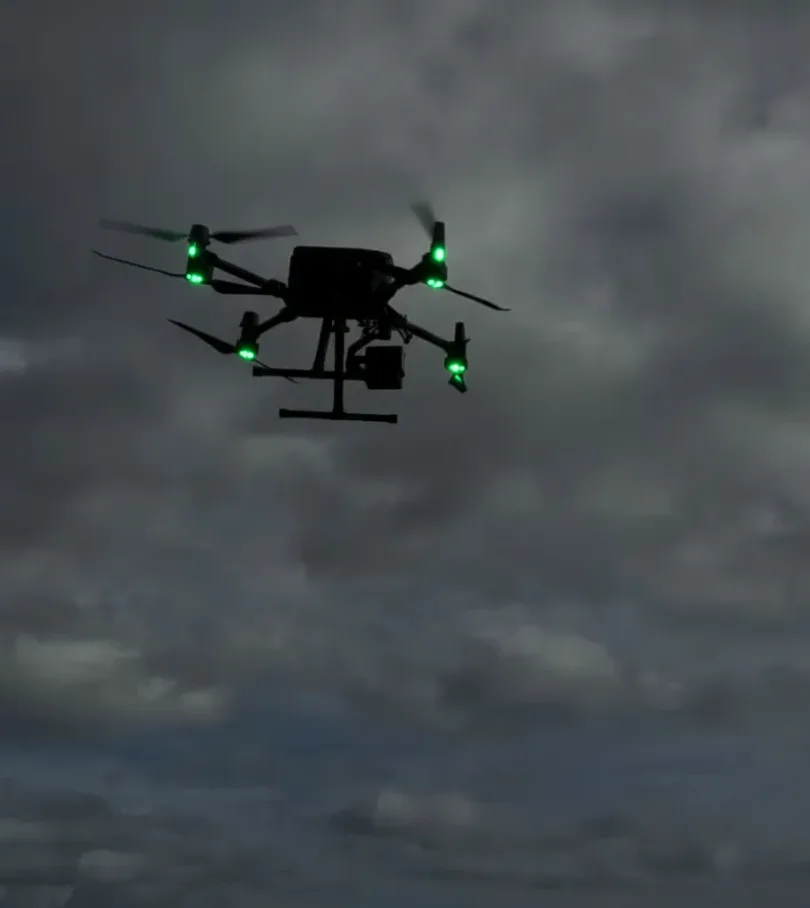
The green flashing light, and what the regulation actually says
From 1 January 2026, a drone flown at night in the Open Category must be fitted with a green flashing light, and that light must be switched on. The wording in UK Regulation (EU) 2019/947, at UAS.OPEN.060(2)(g), is that the remote pilot must “when operating at night, ensure that a green flashing light on the unmanned aircraft is activated”.
Two ordinary words in there are doing a lot of work. Green, not white and not red — the point is that somebody on the ground can tell your drone apart from a crewed plane or helicopter, which carry a specific pattern of red, green and white. And activated, meaning on. The CAA is explicit that the light has to stay active for the whole flight: if it switches itself off for any reason — and it names the example of a light that cuts out while the camera is recording — you have stopped complying, mid-air.
The remote pilot, which is to say you, is the person legally responsible for that. Not the manufacturer, not the shop.
Your drone probably does not have one, and the reason is in the class mark
Here is where the buying decision gets tangled up in the law. A class mark is a label the manufacturer puts on a drone — C0, C1, C2 and their UK equivalents UK0, UK1, UK2 — that says which set of design rules it was built to. It usually appears as a small sticker on the airframe or the box.
Regulation 2019/945 requires manufacturers to build in green flashing light functionality only for UK1, UK2, UK3, UK5 and UK6 drones. It is not a design requirement for UK0 or UK4. UK0 covers the very small drones — the sub-250-gram category almost everybody reading this is shopping in — and UK4 is mostly fixed-wing model flying. So the CAA says in as many words that C0, UK0, C4, UK4 and legacy drones “may therefore need to be fitted, or retrofitted, with a suitable green flashing light” before you fly them at night.
A legacy drone, incidentally, just means one with no class mark at all — anything made before the labelling scheme, like the Autel EVO Lite+ above.
I checked the DJI specification page for every drone in this guide. Not one of them lists a light of any kind. That is not proof that none of them has one, but it does mean you cannot assume, and the CAA adds its own warning that where lights are fitted as standard, their characteristics are a manufacturer design choice and “may not always be suitable to ensure compliance”. In other words: a drone that flashes red and white at you is not a drone that complies.
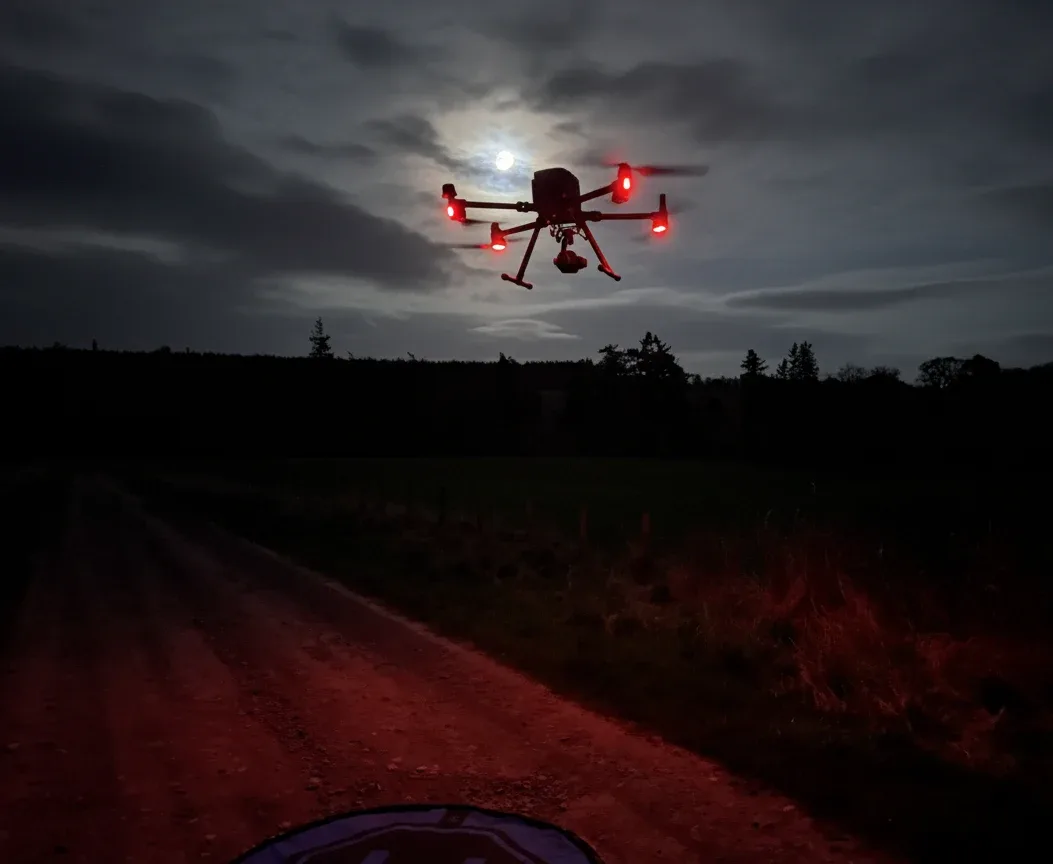
The 249-gram trap: a light that weighs nine grams costs you your sub-250g status
This is the part I have not seen written down anywhere, and it is the single most expensive detail in this article.
The CAA states that the weight of the green flashing light counts towards the overall weight of your drone, and that you must check whether that extra weight means different regulations apply. It goes further: if adding a light takes the drone over the maximum take-off mass of the sub-category you were flying in, “the operation must be adapted accordingly”.
Now do the arithmetic. The lightest clip-on green strobe I could find on Amazon UK weighs 8.85 grams. A DJI Mini 5 Pro weighs 249.9 grams. Together they are about 259 grams, and the whole reason you bought a Mini 5 Pro was that it sits under 250.
ADD A 8.85 G STROBE AND…
| DRONE | ALONE | WITH LIGHT |
|---|---|---|
| DJI Mini 5 Pro | 249.9 g | ~258.8 g |
| DJI Mini 3 | 248 g | ~256.9 g |
| DJI Mini 4 Pro · DJI Flip | <249 g | ~258 g |
| DJI Neo 2 | 151 g | ~159.9 g |
Drone weights from DJI specification pages; light weight from the manufacturer’s own Amazon listing. Only the Neo 2 has room to spare, and the Neo 2 cannot take the photograph.
So what does that actually mean for you on a Tuesday evening? It means that with the light fitted you are no longer flying a sub-250-gram drone, and you should not lean on the freedoms that weight bought you. Fly it as you would a heavier drone: keep it well away from uninvolved people rather than over them. Nothing is confiscated, nobody arrives at your door, and your registration is unaffected. But the honest position is that the light and the weight limit are in tension, the CAA has told you to work out the consequence yourself, and most shops selling you both will not mention it.
Two practical consequences follow. First, if you are choosing between similar drones and you genuinely intend to fly at night, a UK1 or C1 drone with the light already built in is worth more than it looks, because it does not force this trade at all. Second, if you are buying sub-250g anyway — which for most people is still the right answer — buy the lightest compliant light you can find and accept that on night flights you are flying a 259-gram drone.
Everything else about a night flight is unchanged, which is its own warning
The rest of the rulebook does not soften after dark. You still need a Flyer ID, which is a free online theory test valid for five years, and an Operator ID, which costs £12.34 a year and goes on a label stuck to the drone. You are still limited to 120 metres of height. And you must still keep the drone within visual line of sight — meaning you can see the actual drone with your own eyes, not the picture it is sending back.
That last one is the one that bites. In daylight you can pick out a small grey drone at a few hundred metres. At night you are tracking a flashing green dot against a sky full of other lights, and it is far easier to lose than you expect. The CAA's own guidance is blunt about it: reduced light makes distance and direction harder to judge, so keep the flight simple and keep the drone close. That is good advice and it is also the reason night flights make better photographs — you are forced to plan one shot rather than wander.
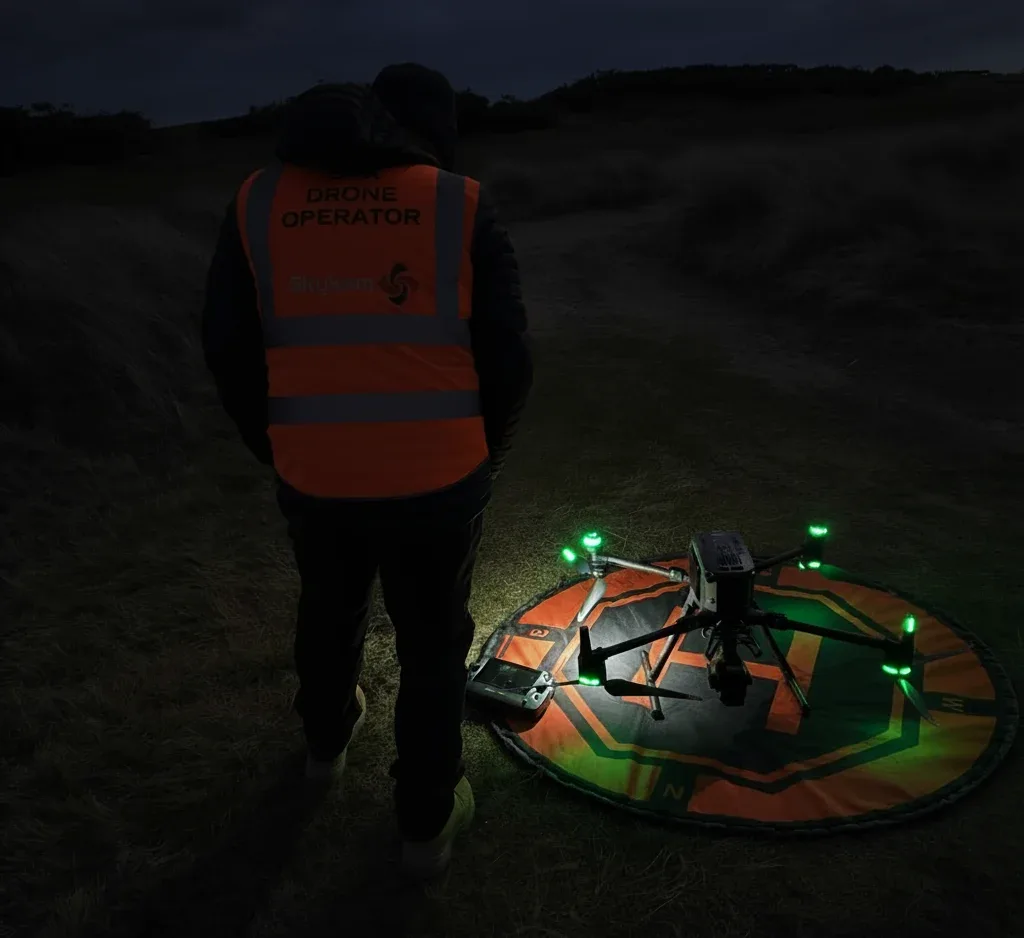
What flying at night legally costs you in year one
Small, and worth knowing before you start. This is the compliance bill on top of whichever drone you buy — not the cost of the drone itself.
Start with the part the CAA charges you for, because it is the shortest list. The Flyer ID is free and lasts five years — an online theory test, twenty minutes, nothing to pay at the end of it. The Operator ID is £12.34 a year, and that is the only compulsory payment in the whole exercise. If you are buying sub-250g, which most people reading this are, the A2 Certificate of Competence is another zero: you do not need it, so it does not enter the sum at all.
What actually costs you money is kit, and there are only three pieces of it. A green flashing light, which after dark is not optional, and which is by some distance the cheapest of the three. A second standard battery — the standard one, not the Plus, which would cost you the sub-250g status before the light had even gone on — and that is far and away the largest single line. And a bigger, faster memory card, because night work means bracketing everything and you will come home with three to five times as many frames as you shoot in daylight.
Add those three to the registration and the compliance bill lands somewhere around a hundred pounds on top of whatever the drone cost. It is real money and it is worth budgeting for, but it is a small fraction of any drone in this guide, and most of it does not change with which one you buy: the same registration, the same light and the same card whether you are flying the cheapest drone here or the dearest. Only the battery scales with the drone. The drone is the decision; this part is overhead. None of it includes insurance, which stays optional while you are flying for fun and becomes a legal requirement the moment anybody pays you for the pictures.
THE THREE THINGS A NIGHT FLIGHT ACTUALLY NEEDS
- Check price
A green flashing light
This one has a green flash mode and weighs 8.85 g. Compulsory after dark, and the lighter the better.
- Check price
A second standard battery
Not the Plus — that one costs you the sub-250g status before the light has even gone on.
- Check price
A 256GB V30 card
Night work means bracketing everything, so you shoot three to five times as many frames.
Affiliate links · costs you nothing extra · full disclosure
If you want the rules on their own rather than a shopping list, I have written them up separately in what the law actually says about flying drones at night, and the broader picture is in the UK drone laws guide.
PART THREE
Three numbers decide a night photograph, and only one of them is on the box
In daylight a drone camera has more light than it knows what to do with, and almost any of these will give you a good picture. Darkness removes that cushion, and what is left is arithmetic. Three numbers decide whether you get a photograph or a grey mess, and drone listings advertise the least important of the three.
One: sensor area, which matters more after dark than at any other time
A sensor is a bucket for photons. A bigger bucket collects more of them in the same second, so the picture it builds is made of more real signal and less guesswork. In bright light the bucket overflows either way and the difference is subtle. At night the small bucket is nowhere near full, and what fills the gap is noise.
The useful comparison here is not megapixels, it is area. A one-inch sensor is about 116 mm². A 1/1.3-inch is about 69 mm². A Four Thirds is about 225 mm². So the Mini 5 Pro collects roughly 1.7 times as much light per exposure as a Mini 4 Pro, and a Mavic collects roughly twice as much again. That is the entire reason the Mini 5 Pro wins this guide despite being the same weight, the same shape and from the same family as the drone below it.
And it is why you should ignore anyone who recommends a 1/2.3-inch or 1/2-inch drone for low light. The Neo 2’s sensor is about 31 mm². It is not a slightly worse night camera. It is a quarter of the bucket.
Two: how long the shutter is allowed to stay open
This is the number nobody quotes, and for night work it is decisive. Every camera has a maximum exposure time built into its firmware, and on drones it varies wildly — from sixteen seconds down to a fiftieth of a second, which is to say from astrophotography to nothing at all.
Some of these drones also offer a simulated long exposure, which is not the same thing. Instead of holding the shutter open for eight seconds, the drone takes a run of shorter frames and blends them. It works well on smooth water and moving traffic and it is a genuinely useful feature — but it is a computed image, and it will not build up faint starlight the way a real eight-second exposure does.
THE PROBLEM WITH LONG EXPOSURES FROM A DRONE
A hovering drone is not a tripod
On the ground, the answer to darkness is a tripod and a thirty-second exposure. In the air you do not have that option, and this is the thing that catches photographers moving over from a camera.
A drone holding position is not stationary. It is making hundreds of tiny corrections a second against the breeze, and the gimbal is smoothing what is left. Over a 1/500th-second frame that is invisible. Over two seconds it is a small, soft smear across every hard edge in the picture, and over eight seconds it is a write-off unless the air is genuinely still.
Which is why sensor area beats shutter length for almost everybody. In real UK conditions you will be shooting one- and two-second exposures rather than sixteen, so the drone that gathers more light in those two seconds is the drone that wins. Save the sixteen-second exposures for the rare, windless night that justifies them.
Three: the ISO ceiling you lose the moment you switch to log
Log is a flat, washed-out-looking video profile — DJI calls its version D-Log M — that records a wider range of brightness so you can grade the colour properly afterwards. Every guide tells you to shoot it. For night video, most of them are wrong.
Selecting log does not just change how the footage looks. The manufacturer drops the maximum ISO at the same time, because the profile cannot hold together at high sensitivity. And the drop is not small. Here are DJI’s own numbers.
VIDEO ISO CEILING, STANDARD COLOUR VS LOG
| DRONE | STANDARD | IN LOG | LOST |
|---|---|---|---|
| DJI Mavic 4 Pro | 12800 | 6400 | 1 stop |
| DJI Mini 5 Pro | 12800 | 3200 | 2 stops |
| DJI Air 3S | 12800 | 3200 | 2 stops |
| DJI Mini 4 Pro | 6400 | 1600 | 2 stops |
| DJI Flip | 6400 | 1600 | 2 stops |
| DJI Mavic 3 Pro | 6400 | 1600 | 2 stops |
Standard-profile and D-Log M ceilings from DJI specification pages, checked 31 July 2026. The Mavic 3 Pro and Mini 4 Pro also list a separate Night video mode, at 800–12800 and 100–12800 respectively.
Two full stops, on almost everything. You select the profile that is supposed to give you more latitude, and it takes away three quarters of your sensitivity at the exact moment you needed it. The Mavic 4 Pro is the one exception in this field, giving up a single stop.
The practical rule is simple and it is the opposite of the advice you will read everywhere else: shoot log while the light lasts, and switch back to a standard profile once it has gone. A clean standard-profile clip at ISO 6400 will grade further than a noisy log clip at ISO 1600 that you had to lift three stops in the edit.
And one number that is not negotiable: raw
A raw file — DNG, on these drones — is the sensor’s unprocessed reading. A JPEG is what is left after the camera has thrown most of it away and made your white balance and shadow decisions permanently. In daylight that is usually fine. At night it is the difference between a recoverable file and a ruined one, because the information you need is all down in the shadows, which is precisely where a JPEG has the least left.
Nine of the eleven drones here write DNG. The Neo 2 and the Avata 2 do not. For night stills, that alone settles it.
Every night-relevant spec, all eleven
| DRONE | SENSOR | AREA | APERTURE | MAX EXPOSURE | PHOTO ISO | RAW |
|---|---|---|---|---|---|---|
| Mavic 4 Pro | Four Thirds | 225 | f/2.0–11 | 16 s | 6400 | DNG |
| Mavic 3 Pro | Four Thirds | 225 | f/2.8–11 | 8 s | 6400 | DNG |
| Mini 5 Pro | 1-inch | 116 | f/1.8 fixed | 2 s (8 s sim.) | 6400 | DNG |
| Air 3S | 1-inch | 116 | f/1.8 fixed | 2 s (8 s sim.) | 6400 | DNG |
| EVO Lite+ | 1-inch | 116 | f/2.8–11 | 8 s | 6400 | DNG |
| Antigravity A1 | 1/1.28-inch ×2 | ~71 | — | — | — | DNG |
| Mini 4 Pro | 1/1.3-inch | 69 | f/1.7 fixed | 2 s (8 s sim.) | 6400 | DNG |
| Flip | 1/1.3-inch | 69 | f/1.7 fixed | 2 s (8 s sim.) | 6400 | DNG |
| Mini 3 | 1/1.3-inch | 69 | f/1.7 fixed | 2 s | 3200 | DNG |
| Avata 2 | 1/1.3-inch | 69 | f/2.8 fixed | 1/50 s | 25600 | JPEG only |
| Neo 2 | 1/2-inch | 31 | f/2.2 fixed | 1/10 s | 12800 | JPEG only |
Area in mm². Photo ISO is the highest ceiling the manufacturer lists for stills at any resolution. Figures from manufacturer specification pages, checked 31 July 2026. A dash means I could not verify it from a manufacturer source — Antigravity publishes no aperture, exposure or ISO range for the A1 — so I have left it blank rather than guess. Sensor areas are computed from published sensor dimensions.
PART FOUR
What I put in the bag when I go out after dark
The DJI Mini 5 Pro, with a green strobe taped to the top of it. That is what I fly after dark, it is what I would buy again tomorrow, and I would not spend long deciding.
The reasoning is the whole of Part Three in one line. Darkness is a light problem, sensor area is how you solve a light problem, and no other drone under 250 grams has this much of it. Everything else that gathers more light — the two Mavics, the EVO Lite+ — costs you a qualification, a kilogram, and a trip out to a field 150 metres from anything built-up before you can legally use it.
You are giving up two things and it is worth knowing what they are. The shutter stops at two seconds, so real astrophotography is out. And the aperture is fixed at f/1.8, which is a gift at night and a nuisance in daylight, when you will need filters to hold a sensible shutter speed.
How the flight actually goes
Not a settings tutorial, but the shape of it, because night flying rewards planning far more than daylight does. Arrive in the last of the light and fly one battery while you can still see the ground — that is your reconnaissance, and it is also when you shoot log, because the ISO ceiling has not bitten yet. Land, and fit the light before it gets properly dark rather than fumbling with it afterwards. Then fly one, at most two, short and simple flights: out, up, hold, bracket, home. Keep it close enough that you can see the actual drone rather than a hopeful green dot. Shoot raw, shoot brackets, and switch back to a standard colour profile the moment blue hour ends.
Spend less if that is the honest budget. The DJI Flip is the cheapest drone in this guide that can genuinely do the job, and it gives you a real two-second exposure, raw DNG files and ISO 6400 — which is genuinely enough for a city at blue hour. It will not hold up at true midnight, and you will see the noise. But for well under half what the Mini 5 Pro costs it does most of what the Mini 5 Pro does for the first hour after sunset, which is when most good night photographs are taken anyway.
Spend more only if you want stars. The Mavic 4 Pro is the dearest thing on this page by a wide margin, and the only one that will hold a shutter open for sixteen seconds on a sensor that big. It also loses one stop to log rather than two. If a genuinely dark sky is the shot you are chasing, nothing else here will do it, and no amount of saved money will change that. If it is not, you are paying several times the price of the Mini 5 Pro, plus a qualification and a kilogram, for a capability you will use twice.
The two I would leave at home
The DJI Neo 2 and the DJI Avata 2, and for once this is not a matter of taste. DJI’s own specification pages give the Neo 2 a photo shutter range that stops at 1/10 of a second and the Avata 2 one that stops at 1/50. There is no setting, no firmware update and no technique that gets you past that. Both write JPEG only, so there is not even a raw file to rescue.
I like both of these drones a great deal for what they are — the Neo 2 is the most fun per pound in the hobby and the Avata 2 is the only one on this list that makes you laugh out loud while flying it. They are simply daylight machines, and any guide that lists them under “low light” has not read the specification. The Avata 2 also carries the 2028 problem: from January of that year its C1 mark stops giving it the privileges it has today, and it will need an A2 Certificate of Competence to fly near people.
And if you want the picture more than you want the drone — a lit building, a single hero shot of a venue, one commissioned frame — owning is rarely the cheaper answer. That is what the rest of this site is for: our drone photography service covers this sort of work, or you can hire a qualified drone pilot who already owns the drone, the qualifications, the lights and the insurance.
If night is only part of what you want, the neighbouring guides go deeper on the rest: what to buy if stills are all that matters, which drones are worth it for video, and where the money runs out under £500.
Night flying and low light: the questions I get asked most
Can you fly a drone at night in the UK?
Yes. Night flying is permitted in the Open Category with no special permission, but since 1 January 2026 the drone must carry a green flashing light that is switched on for the whole flight. The rule is UK Regulation (EU) 2019/947, UAS.OPEN.060(2)(g), and the remote pilot is the person legally responsible for making sure the light stays on. Every other rule is unchanged: 120 metres maximum height, the drone in sight at all times, a free Flyer ID and the £12.34-a-year Operator ID.
What is the best drone for night photography in the UK in 2026?
The DJI Mini 5 Pro. It is the only drone that puts a one-inch, 50-megapixel sensor at f/1.8 under the 250-gram line, and sensor area is what decides how much noise you take home after dark. Spend less and the DJI Flip, the cheapest drone in this guide that can genuinely do the job, still gives you raw files and a two-second exposure. Spend more only for stars: the Mavic 4 Pro will hold a shutter open for sixteen seconds where the Mini 5 Pro stops at two, and it is the dearest drone here by a wide margin.
Does my drone already have the green flashing light, or do I need to buy one?
Probably not, and probably yes. Regulation 2019/945 requires manufacturers to build in a green flashing light only for UK1, UK2, UK3, UK5 and UK6 class drones. UK0 and UK4 drones are exempt from that design requirement, which covers almost every sub-250-gram drone people actually buy. C0, UK0, C4, UK4 and legacy drones may therefore need a light fitted or retrofitted. None of the DJI specification pages for the drones in this guide list a light at all, so check your own model before you take off.
Does adding a strobe light push a 249-gram drone over the limit?
It can, and this is the trap nobody mentions. The CAA is explicit that the weight of the light counts towards the weight of the drone, and that if the addition takes it over the maximum take-off mass of your sub-category, the operation must be adapted accordingly. The lightest green strobe I could find on Amazon UK weighs 8.85 grams. A DJI Mini 5 Pro weighs 249.9 grams. Add the two and you are at roughly 259 grams, which is no longer a sub-250-gram drone.
Why do log profiles make low-light footage worse?
Because the manufacturer drops the ISO ceiling the moment you select one, and by more than people expect. DJI’s own figures: the Mini 5 Pro records video to ISO 12800 in a standard profile and only ISO 3200 in D-Log M. The Mini 4 Pro and the Flip fall from 6400 to 1600. That is two full stops, taken away at exactly the moment you needed them. Shoot log while the light lasts, then switch back to a standard profile once it has gone.
Which drones simply cannot take a night photograph?
The DJI Neo 2 and the DJI Avata 2, and it is not a matter of opinion. DJI’s specification pages give the Neo 2 a photo shutter range of 1/8000 to 1/10 of a second, and the Avata 2 a range of 1/8000 to 1/50 of a second. Neither can hold the shutter open long enough for a dark scene, and both write JPEG only, so there is no raw file to rescue afterwards. They are daylight drones.
The short version
Night flying is legal. Fit a green flashing light, keep it on, keep the drone close, and buy the biggest sensor you can carry. That is the DJI Mini 5 Pro — the only one-inch camera that flies under 250 grams with no test to sit.
Affiliate links · costs you nothing extra · full disclosure
I do not print prices anywhere in this guide. Drone prices move week to week, a figure typed onto a page goes stale faster than the page does, and the number beside a button is rarely the number you would actually pay — so every drone here carries a link that shows you what it costs today instead. Camera and weight figures from manufacturer specification pages, checked 31 July 2026. Night flying rules and the green flashing light requirement from the UK Civil Aviation Authority and UK Regulation (EU) 2019/947. Comparison specifications from DroneCompare, licensed under CC BY 4.0. Amazon links are affiliate links.