Best Drone for Photography: What I’d Fly If Stills Were All That Mattered

Peter Leslie
31 July 2026 · 19 min read
Almost every drone guide is written for someone making videos. The specs that get argued over — bitrate, log profiles, frame rates, how many stops of neutral density you need bolted to the front — belong to moving pictures. If you already photograph things, and you want the aerial frame, most of that is noise.
So this one is written the other way round. Everything below is judged on a single still image: what comes off the card, whether you can edit it, and whether it holds up printed.
So this guide picks the best drone for photography in 2026 on stills alone, and nothing else.
Two numbers decide it, and neither is megapixels. The first is how much sensor you are buying, because that is the only spec that changes the picture rather than the file size. The second is what the drone weighs, because in the UK weight decides what you are legally allowed to do with it — and there is a hard line at 250 grams that separates “register it and go” from “sit a test first”.
Almost everything else you have learned behind a camera still applies. A few things do not, and those are the ones that will catch you out: the aperture does not move, the lens does not come off, and you cannot take a real long exposure. I will come back to all three.
Four questions, twelve drones, and by the end you will have one name, one honest picture of what it can and cannot photograph, and a clear idea of what it costs in the first year.
How I get paid: the Amazon links below are affiliate links, so if you buy through one I earn a small commission at no extra cost to you. It changes nothing about what I recommend. You will notice that two of the twelve have no link at all, that I spend a fair amount of this article arguing the expensive ones are not worth it, and that I tell you to buy a cheaper filter set than the one the shop will offer.
The Best Drone for Photography in 2026 Is the DJI Mini 5 Pro
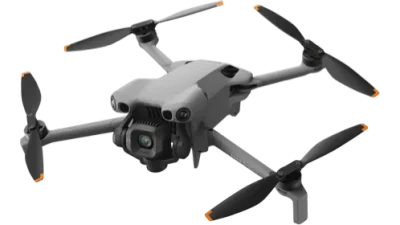
A sensor the size of a good compact camera’s, in something light enough that the law asks nothing of you beyond a registration you do online.
- A 1-inch, 50-megapixel sensor — roughly four times the area of the cheap drones, and the biggest you can get under 250 grams.
- Writes DNG raw files, so Lightroom, Capture One and Darktable open them with no plugin and no conversion.
- Shoots true vertical as well as landscape, because the gimbal rotates 225 degrees. Almost nothing else this small does.
- No test and no certificate — just a £12.34 registration, because it comes in at 249.9 grams.
- One fixed 24 mm lens and a fixed f/1.8 aperture, so there is no reach in it and no way to stop down. That is the honest flaw, and I would still buy it.
Affiliate link · costs you nothing extra · full disclosure
PART ONE
Here are the five that win their categories outright — and the honest flaw in each of them, because not one is without a caveat.
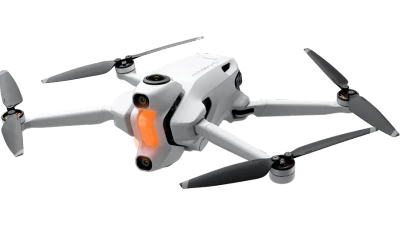
Best for Shooting in Tight Spots: DJI Mini 4 Pro
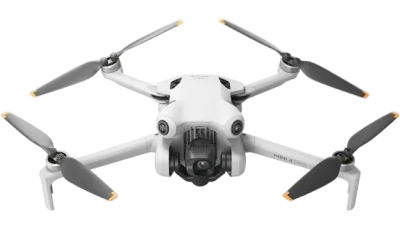
For the frames that need the camera in close — beside a cliff face, under a viaduct arch, in among trees — where the whole point is the position and the obstacles are the reason you cannot have it.
- Omnidirectional vision sensing: it watches every way at once, where the Flip sees only forwards and the Air 2S only four ways.
- 48 megapixels of DNG on a 1/1.3-inch sensor, under 249 grams, so no test and no certificate.
- The lens focuses no closer than 1 metre, so “close” here means a few metres, never a few centimetres.
- The same camera as the much cheaper Flip — you are paying for the sensing and the extra minutes, not for a better picture.
Best Budget Drone for Photography: DJI Flip
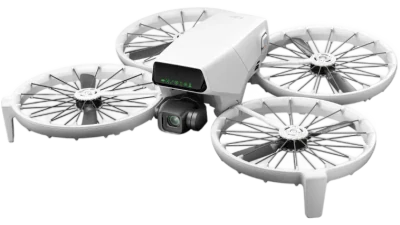
The cheapest DNG file worth editing, and the same sensor as a drone costing twice as much.
- 48 megapixels on a 1/1.3-inch sensor, writing raw, for a fraction of the price.
- Under 249 grams, so no test and no certificate.
- Around 60 per cent of the sensor area of the Mini 5 Pro, and you see that once the light goes.
Best for Landscapes and Big Prints: DJI Mavic 4 Pro
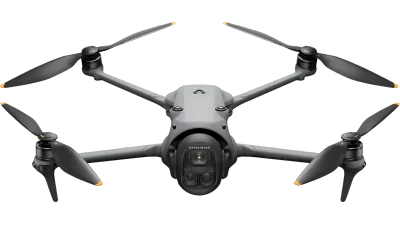
Twelve thousand pixels across, off a Four Thirds sensor, through an aperture you control.
- 100 megapixels at 12288×8192 — enough to print big and still crop.
- A genuine variable aperture, f/2.0 to f/11, which nothing else at this level here offers.
- 1,063 grams and an A2 Certificate of Competence before you may fly it near anyone.
Best for Distant Detail: DJI Air 3S
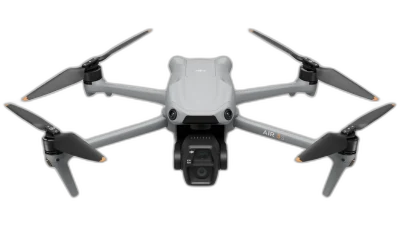
The cheapest way to get a second focal length that is a real camera rather than a crop.
- 24 mm and 70 mm, at 50 and 48 megapixels, both writing DNG.
- A 1-inch main sensor, the same as the Mini 5 Pro’s.
- From 1 January 2028 it needs the A2 test to fly near people, so you are buying about eighteen months of that freedom.
Best for Panoramas and 360 Stills: Antigravity A1
One frame, the whole sphere, in raw — and no stitch seams to repair afterwards.
- A 55-megapixel 360-degree still at 10486×5248, saved as DNG.
- 249 grams with the standard battery, so no test and no certificate.
- 24 minutes on that battery — the 39-minute one weighs 291 grams and puts you over the line.
Affiliate links · costs you nothing extra · full disclosure
Take the quiz: find the best drone for the photographs you actually take
Four questions about what you photograph — not a generic top ten.
- Matched to your subject, your budget and what happens to the file afterwards.
- Twelve drones, ranked on the still image rather than the video spec.
- Tells you honestly when a drone cannot give you a raw file.
- About 20 seconds, and no email needed.
STEP 1 OF 4
12 of 12 still fit
All twelve, and what each one gives you on the card
-
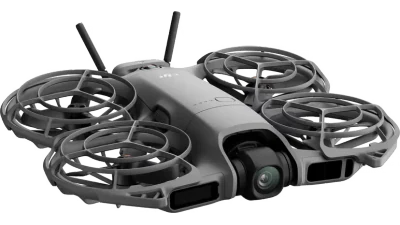
DJI Neo 2 no raw files
151 g · C0 · 1/2″ 12MP · f/2.2 · JPEG only · 19 min
A delightful little thing to fly and the wrong tool for this article. It hands you a finished JPEG and no way back.
- JPEG only. There is no raw file, so the camera decides your white balance and your highlights for you.
- The smallest sensor here by a distance — 12 megapixels on a 1/2-inch chip.
- No test and no certificate at 151 grams, and about 19 minutes in the air.
-
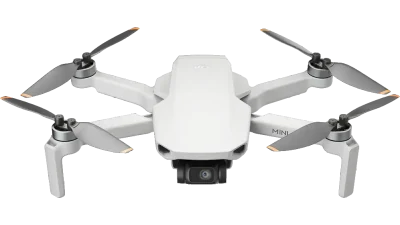
DJI Mini 4K DJI UK no longer lists it
246 g · 1/2.3″ 12MP · f/2.8 · JPEG + DNG · 31 min
The cheapest raw file in the sky. Twelve megapixels off a tiny sensor, but it is a real DNG and it edits like one.
- It does write DNG raw files — a lot of guides say otherwise, and DJI’s own manual says otherwise still.
- The smallest sensor of the raw shooters, with a photo ISO ceiling of 3200 and nowhere to go after that.
- DJI no longer lists it in the UK, so you are buying remaining stock rather than a current model.
-
DJI Flip
249 g max · C0 · 1/1.3″ 48MP · f/1.7 · JPEG + DNG · 31 min
The same size sensor and the same raw files as the Mini 4 Pro, for roughly half what the Mini 4 Pro asks. The quiet bargain of this whole list.
- 48 megapixels on a 1/1.3-inch sensor, writing DNG — the cheapest genuinely editable file here.
- No test and no certificate, because it comes in under 249 grams with the card in it.
- Propeller cages built in, which is why I hand this one to people who have never flown.
-
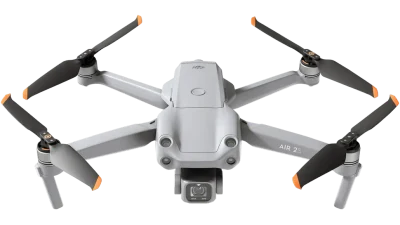
DJI Air 2S no affiliate link — the renewed listing has been delisted
595 g · no class mark · 1″ 20MP · f/2.8 · JPEG + DNG · 8 s shutter
A one-inch sensor for very little, and one of only two drones here that will hold a genuine eight-second exposure. It is also a discontinued drone I can no longer send you to buy.
no link- A proper one-inch sensor, which nothing else this cheap offers.
- Needs the A2 test to fly near people. Without it you stay 150 metres from anything built-up.
- Discontinued, sold renewed rather than new, and the renewed listing has now gone. The only live UK listing left is a four-figure third-party one, so there is no buy link for it here.
-
HOVERAir X1 PROMAX a camera that films you
192.5 g · C0 · 1/1.3″ 48MP · f/2.55 · JPEG + DNG · 1/30 s slowest shutter
A genuine 10-bit raw file off a decent sensor, bolted to a camera whose entire purpose is following you around. The only one here whose shutter will not open for longer than a thirtieth of a second.
- 48 megapixels on a 1/1.3-inch sensor in 10-bit DNG — the same sensor format as the Flip and the Mini 4 Pro.
- The shutter runs 1/30 s to 1/8000 s. Every DJI here reaches two seconds, and the Air 2S eight.
- No controller, a 16 mm-equivalent view and 16 minutes a battery. It is built to follow, not to be flown to a viewpoint.
-
DJI Mini 4 Pro
249 g max · C0 · 1/1.3″ 48MP · f/1.7 · JPEG + DNG · 34 min
For two years this was the obvious answer. The Flip now gives you the same camera for about half the money, and the Mini 5 Pro gives you a bigger one for only a little more.
- 48 megapixels on a 1/1.3-inch sensor with DNG raw files, and 34 minutes in the air.
- No test and no certificate at under 249 grams.
- Squeezed from both sides: the same camera as the much cheaper Flip, a smaller sensor than the Mini 5 Pro.
-
DJI Mini 5 Pro
249.9 g · C0 · 1″ 50MP · f/1.8 · JPEG + DNG · 8192×6144
A one-inch sensor under the 250-gram line, writing 50-megapixel DNGs, with a gimbal that rotates for true vertical frames. Five years ago that did not exist at any price.
- A 1-inch, 50-megapixel sensor writing 8192×6144 DNG files — the biggest sensor available under 250 grams.
- True vertical shooting, because the gimbal rotates 225 degrees rather than cropping a landscape frame.
- No test and no certificate — just the £12.34 registration, at 249.9 grams.
-
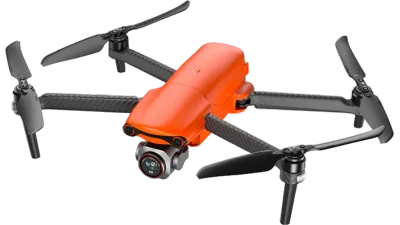
Autel EVO Lite+ no affiliate link — I could not confirm a UK listing
835 g · no class mark · 1″ 20MP · f/2.8–f/11 · JPG + DNG 12-bit · 8 s
The cheapest aperture on this page that actually moves, and a genuine eight-second shutter. Also a 2021 airframe I could not find a UK listing for.
no link- A variable f/2.8–f/11 aperture and 12-bit DNG on a 1-inch sensor, for well under half a Mavic.
- Needs the A2 test to fly near people, at 835 grams with no class mark.
- I could not confirm a live UK listing, so there is no buy link for it here.
-
DJI Air 3S loses privileges in 2028
724 g · C1 · 1″ 50MP + 1/1.3″ 48MP tele · 24 + 70 mm · JPEG + DNG
Two real focal lengths instead of one. If you think in compression rather than in wide angles, this is the cheapest drone that lets you.
- A 24 mm and a 70 mm, both writing raw at 50 and 48 megapixels. The tele is a real second camera, not a crop.
- No test needed today — but from 1 January 2028 its C1 mark stops counting and it needs an A2 Certificate of Competence to fly near people.
- The same 1-inch, 50-megapixel main sensor as the Mini 5 Pro, for a great deal more money and 474 grams heavier.
-
Antigravity A1
249 g · 360° 1/1.28″ · 55MP (10486×5248) · f/2.2 · DNG · 24 min
It photographs the entire sphere at once and lets you decide the framing afterwards. The most interesting object here and the hardest to justify.
- A 55-megapixel 360-degree still in one frame, in DNG, with no stitching and no parallax error.
- 249 grams with the standard battery, which is 24 minutes. The 39-minute battery takes it to 291 grams and over the line.
- Nothing comes off the card ready to look at — every frame needs reframing in software first.
-
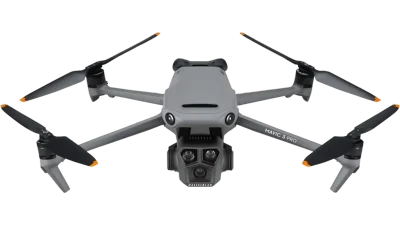
DJI Mavic 3 Pro out of stock in every configuration at DJI UK · Amazon lists the Fly More Combo
958 g · C2 · 4/3 20MP f/2.8–f/11 + 70 mm + 166 mm · JPEG + DNG
Twenty megapixels on a Four Thirds sensor means big, clean pixels rather than a big number. The best low-light stills camera here, if you can find one.
- A Four Thirds sensor at only 20 megapixels, which is the most light per pixel of anything on this page.
- Three focal lengths — 24 mm, 70 mm and 166 mm — and an aperture that stops down to f/11.
- Out of stock in every configuration at DJI UK, and it needs the A2 test to fly near people.
-
DJI Mavic 4 Pro
1,063 g · C2 · 4/3 100MP f/2.0–f/11 + 70 mm + 168 mm · 12288×8192
The best photographic tool in this size class, and the only one whose aperture you actually control. If somebody is paying for the pictures, this is the one.
- A 100-megapixel Four Thirds sensor producing 12288×8192 DNG files — roughly double the sensor area of a one-inch.
- The only variable aperture worth the name here, f/2.0 to f/11, with 70 mm and 168 mm cameras alongside it.
- Needs the A2 test to fly near people, and weighs more than a kilogram.
No prices printed here, deliberately: they move week to week, and the only figure worth having is the one on the listing when you click through. The rows run cheapest first, so where a drone sits in the list tells you what it costs relative to the rest — and where a row is flagged as a bundle rather than the bare drone, expect the link to be dearer than its position suggests. Camera specifications from manufacturer specification pages and user manuals; comparison data from DroneCompare, CC BY 4.0.
PART TWO
The three shots a drone takes that a camera cannot
Here is the part worth being honest about before you spend anything. On almost every measure that photographers care about — sensor area, lens choice, low light, depth of field, how long you can hold the shutter open — the camera you already own is better than every drone on this page. The dearest Mavic here has a smaller sensor than a second-hand APS-C body costing a fraction of it.
So the case for buying one is not that it takes better pictures. It is that it takes three specific pictures that nothing on a tripod can. Everything else a drone does, your camera does better. If none of these three shots is one you want, save your money.
One: the true top-down
Point a camera straight down from a ladder and you get a photograph of a ladder’s worth of height. Point one straight down from a helicopter and you get vibration, a door frame in shot, and a bill. The nadir frame — the lens pointing at the exact centre of the earth, horizon nowhere in it — is essentially unavailable to a person standing on the ground.
Every drone in this guide can do it, and it is a specification you can check: the gimbal on a DJI Mini 5 Pro has a controllable tilt range of −90° to 55°, and the Mini 4 Pro and Air 3S both reach −90° as well. Ninety degrees down is straight down, and the gimbal holds it level to a fraction of a degree while the drone drifts around it.
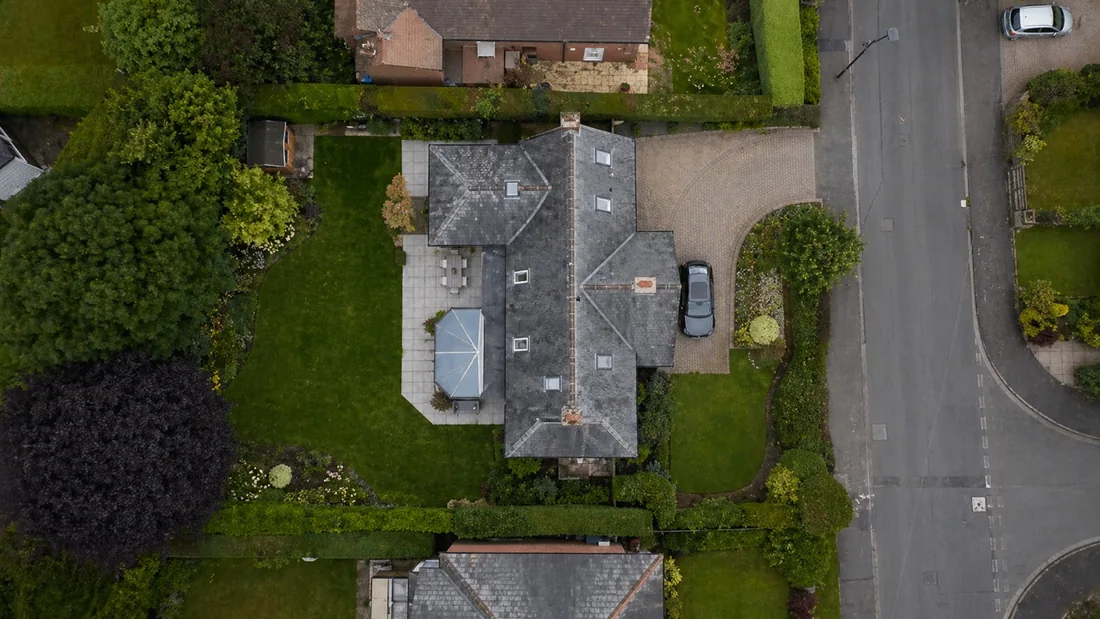
What makes it a photograph rather than a map is that the top-down view removes depth entirely. You are left with shape, tone and repetition — the graphic elements. Hedges become lines, a car park becomes a grid, a beach at low tide becomes a set of curves. It is the closest thing photography has to drawing, and it is the shot most new drone owners take once and then never think about properly.
How to actually shoot it. Use the full resolution rather than the binned 12-megapixel mode: everything in a nadir frame is at infinity, so nothing is soft for the reason a landscape usually is. Watch your own shadow — with the sun low it will be in the frame, and at midday it will be directly beneath you. And square the drone to something in the scene before you press the shutter, because a top-down frame that is two degrees off looks broken in a way an oblique never does.
Two: the standpoint that does not exist
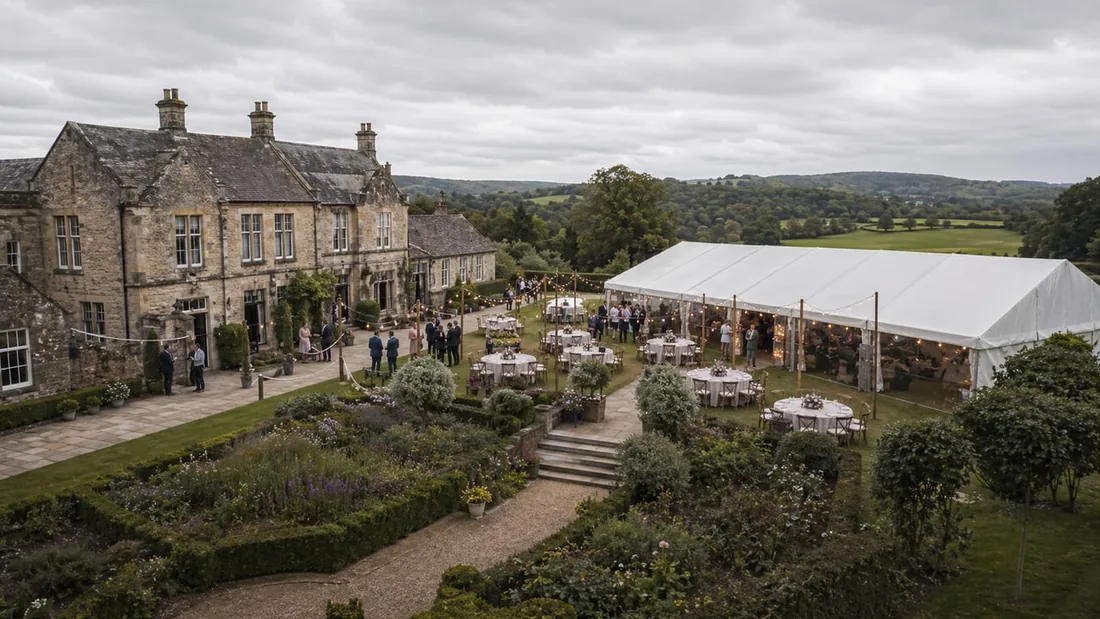
A tripod needs ground. That single fact rules out most of the viewpoints you have ever wished for: sixty metres out from a cliff edge, thirty metres above the middle of a loch, level with a church tower rather than beneath it, directly over the surf line at high tide.
This is the shot I would actually buy a drone for. Not height — a hill gives you height — but position. A drone lets you put the camera where there is nothing to stand on, and it is the one photographic capability that cannot be bought any other way.
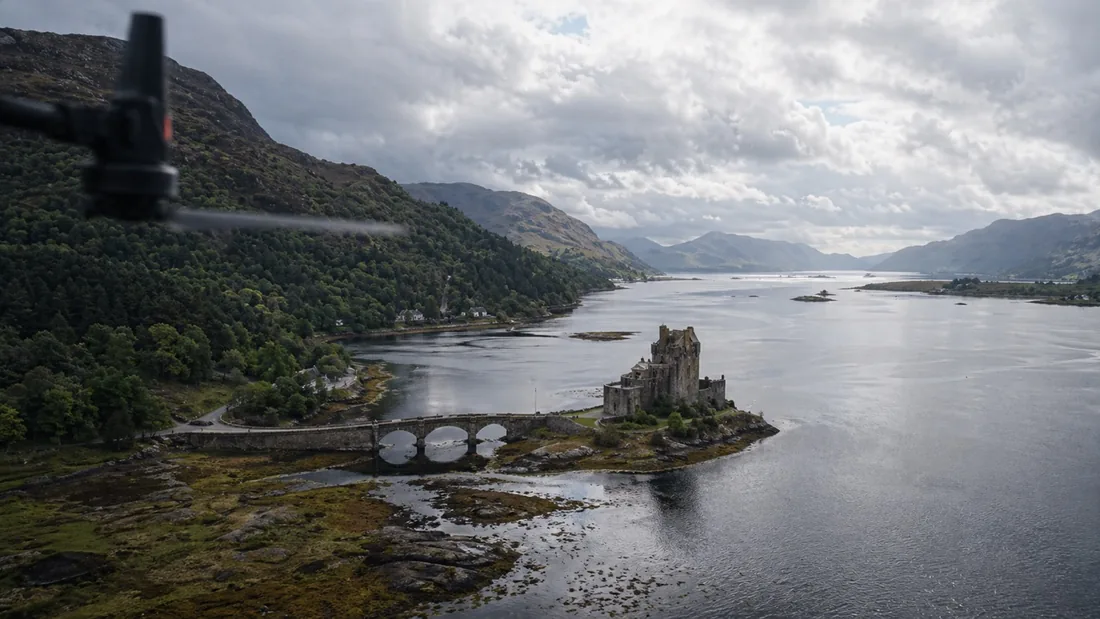
The frame above is taken from a position with nothing underneath it but water. On foot you would be on the shoreline, shooting the castle side-on past a car park. It is the same subject and a completely different photograph, and no lens would have got you there.
Two limits, and they are legal rather than technical. You may not go above 120 metres, which sounds high until you stand at the base of a cliff. And you must keep the drone in direct sight at all times — so “a mile out over the estuary” is not a shot you are permitted to take, however far the radio reaches. More on both of those in a moment.
Three: the panorama with nothing to go wrong
You have stitched a panorama on the ground. You know what breaks it: parallax. Rotate a camera around the tripod screw rather than around the lens’s entrance pupil, and near objects shift against far ones between frames, and the stitcher tears the join. That is what a nodal slide is for, and why panoramic heads cost what they do.
In the air the problem evaporates. There is no foreground within a hundred metres, so nothing shifts against anything. The drone holds a fixed point on satellite positioning and rotates about its own axis, and DJI’s panorama mode simply takes a set of frames and composites them into one. It is the least skilled panorama you will ever shoot and frequently the cleanest.
The Antigravity A1 takes this one step further and removes the stitch entirely: two lenses covering the whole sphere at once, a single 55-megapixel frame at 10486×5248, saved as DNG. You choose the framing afterwards in software rather than deciding it in the air. I have not flown one — it is not a DJI — but on the specification alone it is the only thing here that turns a panorama from a process into a single shutter press.
The catch, and it is a real one: an aerial panorama is a composite of frames taken over several seconds. Anything moving — traffic, waves, a flag, people walking — will ghost or double at the joins. Shoot them over still subjects, or accept the repair work.
WHAT NONE OF THE THREE NEEDS
Read those three back and notice what is missing from all of them. Not one is a shot that a bigger sensor unlocks. They are shots that a position unlocks. A DJI Flip reaches the same coordinates in the sky as a Mavic 4 Pro costing six times as much, and holds the gimbal at the same ninety degrees.
What the money buys is how well the file survives afterwards — how far you can push the shadows, how big you can print, how late in the evening you can still be shooting. That is a real difference and I will spend the next section on it. But if you are buying a drone because you want the three shots above, the cheap one already gives you all three.
Before the first flight: what the law wants from a photographer
This is the part that catches people who came from photography, because nothing about buying a camera prepares you for it. You cannot legally take the first frame until two registrations exist, and they are not optional, and they are not done at the shop.
Two registrations, and you need both
A Flyer ID belongs to the person doing the flying. It is a free online theory test, it takes an evening at most, and it lasts five years. Any drone of 100 grams or more needs one.
An Operator ID belongs to whoever owns the drone. It costs £12.34 a year, and the number it gives you has to go on a label stuck to the outside of the drone. Any drone of 100 grams or more with a camera needs one — which is every drone in this guide, obviously. You have to be 18 to register as an operator.
That is the whole of the paperwork for anything under 250 grams. Two registrations, twelve pounds and change, done online, and then you fly. If you buy a sub-250-gram drone there is genuinely nothing else.
The rules that actually constrain your compositions
Four of them will change how you shoot, and none is about weight:
- 120 metres, and no higher. That is the ceiling everywhere in the Open Category, whatever you are flying. If you want the mountain from above, you cannot have it.
- Keep it in direct sight. You must be able to see the drone itself, with a full view of the airspace around it, for the whole flight. Watching the screen does not count. Practically, that is a few hundred metres, not a few kilometres.
- Never over a crowd. Even the lightest drone in this guide is forbidden from flying over a crowd. Festivals, markets, packed beaches, the finish line of anything — not from the air, not legally.
- Respect people’s privacy. The CAA states it as a rule rather than a courtesy. A 50-megapixel sensor at 70 metres sees a great deal into gardens, and “I did not mean to” is not much of an answer.
The 250-gram line, and the test on the other side of it
Above 250 grams, weight and class marks start deciding where you may fly. A class mark is a label the manufacturer puts on the drone — C0, C1, C2 and so on — declaring which standard it was built to. It sets the sub-category you are allowed to operate in.
C0 and C1 drones fly in Over People (A1) with nothing more required. C2 drones — the two Mavics here — may only fly in Near People (A2) if you hold an A2 Certificate of Competence. Without one they drop to Far from People (A3), which means 150 metres from anything residential, commercial, industrial or recreational. In most of Britain that is a field, and it means driving to one.
The A2 Certificate itself is not difficult: a theory test of at least thirty multiple-choice questions, taken with a CAA-approved provider, valid five years. The CAA does not set the price — the providers do, so it is worth ringing round. But note the order of operations, because people get it backwards: if you buy under 250 grams, the A2 certificate buys you nothing you do not already have. Decide the weight first. The qualification follows the drone, never the other way about.
And the date that changes one drone in this guide
Until 31 December 2027, a drone carrying a European C class mark may be flown as though it held the equivalent UK class. From 1 January 2028 that stops. A C-marked drone becomes a legacy drone and falls back to plain weight rules: under 250 grams flies A1, under 2 kilograms needs the A2 certificate, under 25 kilograms is A3.
For most of this list nothing changes. The two Mavics already need the A2 and will carry on needing it. Everything under 250 grams stays exactly where it is. The one that moves is the DJI Air 3S: 724 grams, C1, flying Over People today with no qualification at all, and needing an A2 Certificate of Competence to fly near people from January 2028. If part of the appeal is that it needs no test, understand that you are buying about eighteen months of that.
PART THREE
What transfers from your camera, and what doesn’t
You already know how to make a photograph. The question is which parts of that knowledge survive the trip into the air. Most of it does. Four things do not, and every one of them surprises somebody.
The sensor, in units you already own
Forget the fractions. Sensor area is what gathers light, so here is every format in this guide against the cameras you can picture, in square millimetres.
| FORMAT | AREA | WHAT THAT IS, IN CAMERAS |
|---|---|---|
| Full frame your camera, probably | 864 mm² | Nothing that flies here comes close. |
| APS-C your other camera | 367 mm² | Still 60% more than the biggest drone sensor here. |
| Four Thirds Mavic 4 Pro, Mavic 3 Pro | 225 mm² | A Lumix G or OM System body, with wings. |
| 1-inch Mini 5 Pro, Air 3S, Air 2S, EVO Lite+ | 116 mm² | A Sony RX100 compact. Roughly half a Four Thirds. |
| 1/1.3-inch Mini 4 Pro, Flip, X1 PROMAX, and the Air 3S tele | 69 mm² | The main camera in a flagship phone. |
| 1/2.3-inch Mini 4K | 28 mm² | A pocket compact from about 2012. |
Areas computed from physical sensor dimensions rather than quoted from a manufacturer: Four Thirds 17.3×13.0 mm, 1-inch 13.2×8.8 mm, 1/1.3-inch 9.6×7.2 mm, 1/2.3-inch 6.17×4.55 mm, plus the nominal 23.5×15.6 and 36×24 for APS-C and full frame. The DJI Neo 2’s 1/2-inch sensor is left out because I had no sourced dimension for it.
The jump worth paying for is from 1/2.3-inch to 1-inch. That is roughly four times the area, and it is the difference between a picture that dies at dusk and one that holds through golden hour and just into blue. The jump from 1-inch to Four Thirds is only about double, and mostly buys you highlight and shadow room in hard light rather than a visibly better file at noon.
Megapixels are not the story and never were. The Mavic 4 Pro’s 100 MP and the Mavic 3 Pro’s 20 MP sit on the same size sensor. The 20-megapixel one has far bigger pixels and is the better low-light camera of the two. Pixel count buys print size and crop room. Sensor area buys the picture.
The aperture does not move — and for stills, that is fine
This is the one that catches photographers, and the one every video-led guide gets disproportionately excited about. On nine of the twelve drones here, the aperture is fixed. Not a default. Fixed. There is no ring, no dial, no menu item. The Mini 5 Pro and Air 3S sit at f/1.8, the Mini 4 Pro and Flip at f/1.7, the Mini 4K and Air 2S at f/2.8, the Antigravity A1 at f/2.2, the HOVERAir X1 PROMAX at f/2.55.
Three can stop down: the Mavic 4 Pro at f/2.0–f/11, the Mavic 3 Pro at f/2.8–f/11, and — the one nobody mentions — the Autel EVO Lite+ at f/2.8–f/11, for less than half the price of either Mavic.
Now the part that matters. For video a fixed aperture is a genuine problem, because holding a natural-looking shutter around 1/50s in daylight leaves you nothing to close and forces you into neutral density filters. For stills it barely matters at all. You can raise the shutter as far as you like — and at altitude your whole frame is at infinity anyway, so you are not stopping down for depth of field. There is no foreground thirty centimetres from the lens to keep sharp.
Which means the accessory the shop will push hardest — a set of strong ND filters — is close to useless if you only shoot stills. The filter that is worth having is a polariser, for exactly the reason it always was: cutting glare off water, wet roofs, glasshouses and car roofs, and putting some density back into a washed-out sky. Aerial work is full of reflective surfaces seen at an angle. It is the one piece of glass I would genuinely buy.
You cannot take a long exposure. Not really.
If your plan involved silky water or light trails, read this twice. The Mini 5 Pro, Mini 4 Pro, Flip and Air 3S all stop at a two-second shutter. DJI does offer a 2.5 to 8 second setting on several of them, and its own specification sheet labels it simulated long exposure — a composite of frames, not one continuous exposure, with all the artefacts that implies on moving water.
Two drones here will hold a genuine eight seconds: the DJI Air 2S and the Autel EVO Lite+. Both are heavy legacy drones needing the A2 certificate, which is a large price to pay for a shutter speed — and neither has a UK listing I am willing to send you to, which is why they are the two rows in the list with no buy link. And in practice, even a perfect eight-second frame from a hovering drone is softer than a 1/250 one, because the drone is holding position against wind rather than bolted to granite. Treat aerial stills as a fast-shutter discipline and you will be happier.
One goes the other way and is worth knowing about, because it is the only real disqualification on this page. HOVERAir publishes the X1 PROMAX shutter range as 1/30 s to 1/8000 s. Not two seconds. A thirtieth. That is a video camera’s shutter, chosen so the footage never stutters, and it means there is no exposure available to you at dusk beyond opening a fixed aperture and raising the ISO. Which brings me to the drones that are not really drones.
The self-flying cameras, and why one of them is here under protest
If you have been searching for this, you have seen them advertised: the palm-sized HOVERAir cameras that take off from your hand, follow you down a trail and land back in your palm, with no controller and no flying involved. They are the fastest-growing corner of the market and they are genuinely clever. They are also, for the thing this article is about, aimed somewhere else entirely.
Go back to Part Two. The whole case for buying a drone was position — putting the camera sixty metres out from a cliff, over the middle of a loch, level with a tower. A follow-me camera is designed to take that decision away from you: it holds a fixed relationship to your body and flies the frame itself. That is exactly right if the subject is you on a bike, and exactly wrong if the subject is a landscape you are standing in front of.
The HOVERAir X1 PROMAX is in the list anyway, and it is no toy: it asks roughly what a Mini 4 Pro asks. It is here because on paper it looks like a photographic contender and I would rather argue with it than pretend it does not exist. It is the only one of them that writes a real raw file — 48 megapixels of 10-bit DNG off a 1/1.3-inch sensor, the same sensor format as the far cheaper Flip. It weighs 192.5 grams, it carries a C0 mark, and its gimbal does reach a true −90° nadir. On the spec sheet that is a photography drone. I have not flown one, so take that as reading the numbers rather than reading the files.
Then you look at what the numbers actually buy. A fixed f/2.55 and no exposure longer than a thirtieth of a second, so the whole golden-to-blue-hour window that makes aerial landscapes worth taking is closed. A 16 mm-equivalent view, wider than anything else here, which pushes every distant subject further away still. Sixteen minutes a battery. And no controller in the box: you fly it from your phone, or from a Beacon wrist remote you buy separately, and HOVERAir’s own interference table puts a phone at 30 to 100 metres in a city centre. None of that is a way to place a camera precisely at a chosen point in the sky.
So it stays in the list and it wins nothing, and the quiz will not offer it to you whatever you answer. Its cheaper sibling, the X1 PRO, is not in the list at all: a 1/2-inch 12-megapixel sensor writing JPEG only, which is the same camera class as the DJI Neo 2 for roughly twice the money and fails this guide’s one non-negotiable. Buy either of them to film yourself doing something. Do not buy either of them to make photographs of places.
Three smaller ones, in descending order of annoyance
The lens does not come off, and it does not focus close. The Mini 5 Pro focuses from 0.5 m to infinity; the Mini 4 Pro, Flip and Mini 4K from 1 m; the Air 2S from 0.6 m. There is no macro, no fast fifty, no tilt-shift. Your only zoom is the crop, unless you buy one of the three drones with a second camera.
The high-resolution mode costs you a stop. Look carefully at the ISO ranges: the Mini 5 Pro shoots ISO 100–6400 at 12 MP but only ISO 100–3200 at 50 MP. Same on the Air 3S, same on the Mavic 4 Pro, same on the Flip and Mini 4 Pro at 48 MP. The full-resolution mode is a daylight mode. When the light goes, drop to the binned resolution and take the extra stop — you will get a better file, not a smaller one.
Everything is a 24 mm. Almost every main camera here is a 24 mm equivalent — the Mavic 4 Pro is 28 mm, the Autel 29 mm, and the two wide outliers are the Neo 2 at 16.5 mm and the HOVERAir X1 PROMAX at 16 mm. If you habitually shoot at 85 mm and compose by compressing distance, a drone will feel like a straitjacket until you buy an Air 3S or a Mavic and get a 70.
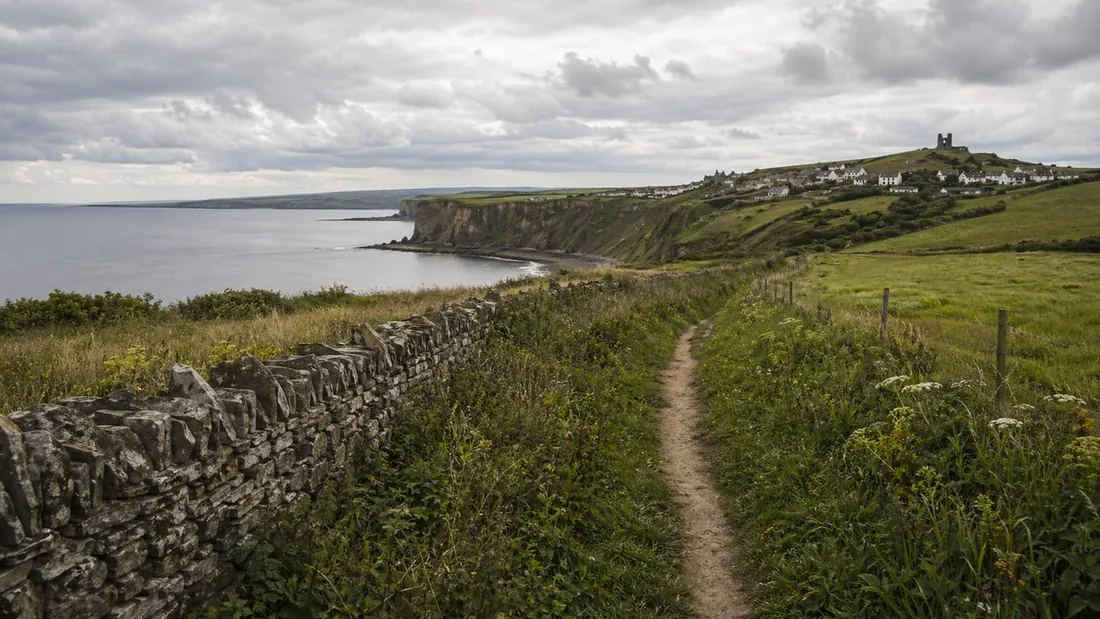
And here is the honest counterweight to all of it. That frame was taken standing on the path, with a camera, at head height. No drone would have improved it — the whole photograph is about the wall leading you in, and you need to be on the ground to have a foreground at all. Buying a drone does not retire your camera. It adds three shots to what you can do and takes nothing away.
What does transfer, entirely intact
Everything else, essentially. Raw files are raw files — every drone in this guide except the Neo 2 writes DNG, which Lightroom, Capture One and Darktable open natively with no plugin and no conversion step. Your histogram works the same way. Exposure compensation works the same way. Bracketing works the same way: the Mini 5 Pro will shoot three, five or seven frames at 0.7 EV steps, which is exactly the tool you already use for a sky four stops brighter than the land.
And composition transfers completely. Everything you know about leading lines, negative space and where to put a horizon still applies — it just applies to a viewpoint you have never had before. Photographers who take good ground pictures take good aerial ones almost immediately, which is not true in the other direction.
WHAT A STILLS SHOOTER ACTUALLY NEEDS TO BUY
- Check price
A second standard battery
The standard one, not the Plus — the bigger battery costs you the sub-250-gram status.
- Check price
A polariser — and skip the heavy NDs
A CPL earns its place on every reflective surface. Buy a set with one in it rather than NDs alone.
- Check price
A 256GB V30 card
A 50-megapixel DNG is a large file, and bracketing multiplies it by seven.
Affiliate links · costs you nothing extra · full disclosure
So what does year one cost? Exactly one number in it is firm, and it is not the drone: the £12.34 Operator ID, which the CAA sets and you renew every year. Everything else is worth thinking about as a proportion of the drone rather than as a total, because the drone is the overwhelming bulk of it. The three things above — a second standard battery, a 256 GB card and a polariser — come to something like a fifth on top of a Mini 5 Pro, and proportionally more on top of something as cheap as a Flip. Then leave an allowance for the crash you have not had yet: a set of propellers costs almost nothing, a gimbal does not. Notice what is not on that list: no A2 certificate, because at 249.9 grams you do not need one, and no heavy ND set, because you are photographing rather than filming. Those two omissions are most of what separates a stills budget from a video one.
PART FOUR
Buy the drone that matches the camera you already own
If stills were all that mattered — and for this article they are — I would fly the DJI Mini 5 Pro and nothing else. That is the answer, and I would not spend long arriving at it.
The reasoning is the same one that governs every camera purchase: buy the largest sensor you can live with carrying. Under 250 grams the largest available is one inch, the Mini 5 Pro is the only drone that puts one there, and going bigger means going over the line into class marks, certificates and a bag you have to plan around. I have flown it, and the 50-megapixel DNGs come off the card looking like files from a camera rather than files from a drone.
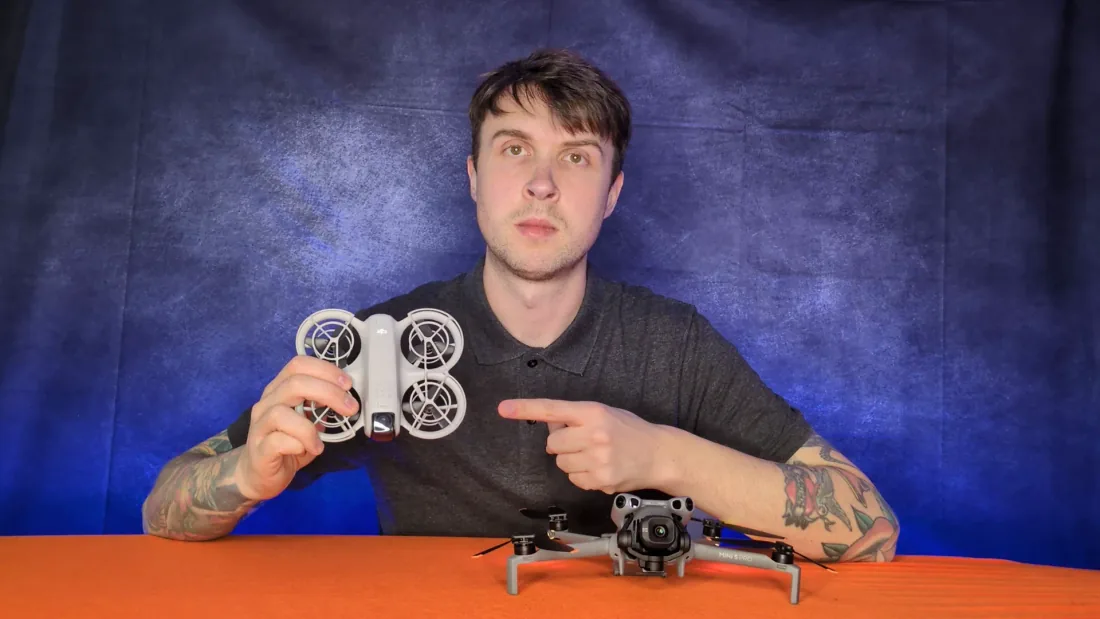
But “best” depends on what is already in your bag, so here is the useful version of the answer. Find yourself in one of these four and stop reading.
If your camera is your phone
Buy the DJI Flip and stop there. Its 1/1.3-inch sensor is about the size of the main camera in a flagship phone, so nothing about the files will shock you — except that they arrive as DNGs you can genuinely edit. It is under 249 grams, it has propeller cages, and it costs well under half what the top pick does, so if you discover that aerial photography is not for you after all, you have lost very little finding out.
If you shoot a mirrorless body for pleasure
Buy the Mini 5 Pro. You will find the one-inch sensor a step down from what you are used to and you will stop noticing within a week, because the pictures you take with it are pictures you could not take at all before. The vertical shooting is worth more than it sounds if you print or post portrait. Read the full Mini 5 Pro review if you want the flying rather than the camera.
If you think in 85 mm and compression
Buy the DJI Air 3S with your eyes open about January 2028. A 24 mm-only drone will frustrate you inside a month; the 70 mm second camera is a real 48-megapixel sensor rather than a crop, and it changes how you compose more than any sensor upgrade would. Budget for the A2 certificate in 2027 and treat it as part of the price.
If somebody pays you for photographs
Buy the DJI Mavic 4 Pro and do not agonise about the money. Twice the sensor area, an aperture you actually control, three focal lengths, and 12288×8192 files that survive a client asking for a crop and a two-metre print. If nobody is paying, you are buying dynamic range you will never spend, plus a qualification, plus a kilogram you have to carry up the hill.
The three ways to get this wrong
Almost every regret I hear about a drone purchase is one of these three, and all of them are avoidable in the shop.
- Buying megapixels instead of sensor area. The 100-megapixel Mavic 4 Pro and the 20-megapixel Mavic 3 Pro share a sensor size. The number on the box tells you how large you can print; the area tells you whether the picture is any good. If you are choosing between two drones, compare the fraction, not the megapixels.
- Accepting the upsell battery. Both the Mini 5 Pro and the Antigravity A1 are offered with a bigger battery and a much better flight-time number. On the Mini 5 Pro, DJI states the drone in the Fly More Combo is C0 while the one in the Combo Plus is C1. On the A1, the 39-minute battery takes maximum take-off weight from 249 g to 291 g. In both cases the extra minutes cost you the sub-250-gram bracket — and the CAA is explicit that a modification which increases take-off mass can move you into a stricter sub-category. Buy a second standard battery instead. More total airtime, same legal position.
- Buying the drone and nothing else. An expensive drone with a full 32 GB card, one battery and no polariser is a worse photographic tool than a cheap one with a proper card, a spare and a CPL. The accessories are not an upsell here, they are the difference between twenty usable minutes and an afternoon.
And if what you actually need is a set of finished photographs rather than a new hobby — for a property listing, a venue, a one-off commission — owning is rarely the cheaper answer once the registration, the qualification and the insurance are counted. That is what the rest of this site is for: you can commission professional drone photography or hire a qualified drone pilot who already has all three.
One line, if you want it
Buy the DJI Mini 5 Pro, a spare standard battery, a 256 GB card and a polariser. Register for a Flyer ID and an Operator ID before you fly it. Shoot 50-megapixel DNGs in daylight and drop to 12 when the light goes. That is the whole method, and the drone is nearly all of what it costs — the rest is a registration, a battery, a card and a piece of glass.
Affiliate link · costs you nothing extra · full disclosure
Best drone for photography: the questions I get asked most
What is the best drone for photography in the UK?
The DJI Mini 5 Pro. It is the only drone that puts a one-inch, 50-megapixel sensor under the 250-gram line, which means a sensor the size of a good compact camera’s with no test and no certificate to fly it. Spend less and the DJI Flip writes the same raw files from a smaller sensor for roughly half the money. Spend more and the DJI Mavic 4 Pro is the better photographic tool outright, with a Four Thirds sensor and the only aperture on this page that meaningfully moves.
Do drone cameras shoot RAW?
Most of them do. The Mini 5 Pro, Mini 4 Pro, Flip, Mini 4K, Air 2S, Air 3S, Mavic 3 Pro, Mavic 4 Pro, Autel EVO Lite+, Antigravity A1 and HOVERAir X1 PROMAX all write DNG, which Lightroom, Capture One and Darktable open without a plugin. The exception in this guide is the DJI Neo 2, which is JPEG only — the camera makes your white balance and highlight decisions for you and you live with them. If you edit, that rules it out on its own.
Can you change the aperture on a drone camera?
On almost none of them. The Mini 5 Pro and Air 3S are fixed at f/1.8, the Mini 4 Pro and Flip at f/1.7, the Mini 4K and Air 2S at f/2.8. Three drones here can stop down: the DJI Mavic 4 Pro at f/2.0 to f/11, the DJI Mavic 3 Pro at f/2.8 to f/11 and the Autel EVO Lite+ at f/2.8 to f/11. For stills a fixed aperture matters far less than photographers expect, because you can raise the shutter speed instead and at altitude everything is at infinity anyway.
How big is a drone sensor compared to my camera?
Smaller than you would like. A one-inch drone sensor is about 116 mm² of silicon; an APS-C body is about 367 mm² and a full-frame body about 864 mm². So the best sub-250-gram drone gathers roughly a third of the light of an APS-C camera. The Four Thirds sensor in a Mavic is about 225 mm², roughly double a one-inch. The jump worth paying for is from 1/2.3-inch to one-inch — about four times the area — not from 48 megapixels to 100.
Do I have to register a drone before I fly it in the UK?
Yes, and before the first flight, not after it. Any drone of 100 grams or more needs a Flyer ID for the person flying: a free online theory test, valid five years. Any drone of 100 grams or more with a camera also needs an Operator ID for whoever owns it: £12.34 a year, and the number goes on a label stuck to the drone. Every drone in this guide has a camera and weighs more than 100 grams, so both apply to all of them.
Can a drone take a long exposure?
Not a real one. The DJI Mini 5 Pro, Mini 4 Pro, Flip and Air 3S all stop at a 2-second shutter, and the 2.5 to 8 second setting DJI offers is labelled simulated long exposure — a composite, not one continuous exposure. The Autel EVO Lite+ and the DJI Air 2S will hold a genuine 8 seconds. The HOVERAir X1 PROMAX is the extreme case in the other direction: its shutter stops at 1/30 second, so it cannot make a long exposure at all. In practice it rarely matters, because a hovering drone drifts and even a perfect 8-second frame from the air is softer than a 1/250 one.
This guide does not print prices. They move constantly, and the only one that means anything is the figure on the listing at the moment you click through, so check it there before you buy. Camera specifications come from manufacturer specification pages and user manuals; the DJI Air 2S and Mini 4K figures are from DJI’s own user manuals, because DJI no longer serves usable UK specification pages for either. Regulatory detail from the UK Civil Aviation Authority. Comparison specifications from DroneCompare, licensed under CC BY 4.0. Amazon links are affiliate links. If you want the wider comparison that includes video, there is a full camera drone guide too.