Best Drone for Travel UK 2026: What I’d Put in Hand Luggage

Peter Leslie
31 July 2026 · 19 min read
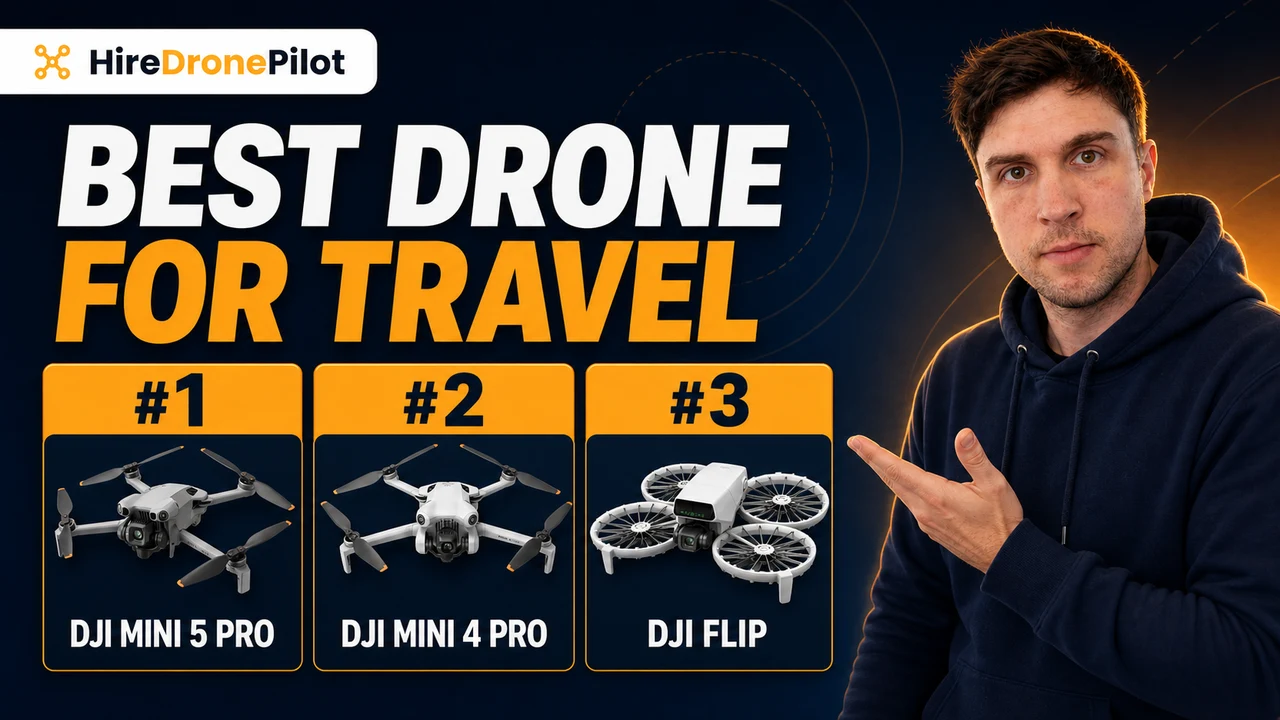
You have a trip booked. You want to come home with the shot you have already imagined — the one looking straight down at the coast road, or the one that pulls back off the balcony and reveals the whole bay. So you start looking at drones, and every guide you find ranks them on camera specs.
That is not the question. A drone you cannot carry is worth nothing, and neither is one that gets taken off you at bag drop.
Two things decide this purchase, and neither of them is the camera. What the drone weighs, because 250 grams is the line between “register it online and go” and “sit a test first”. And what the airline will let you board with, because the spare batteries that make the drone useful for a whole day out are the single item you are not allowed to put in the hold. Not on any airline. Anywhere.
So the best drone for travel in 2026 is settled by two things: what fits in a bag, and what clears bag drop.
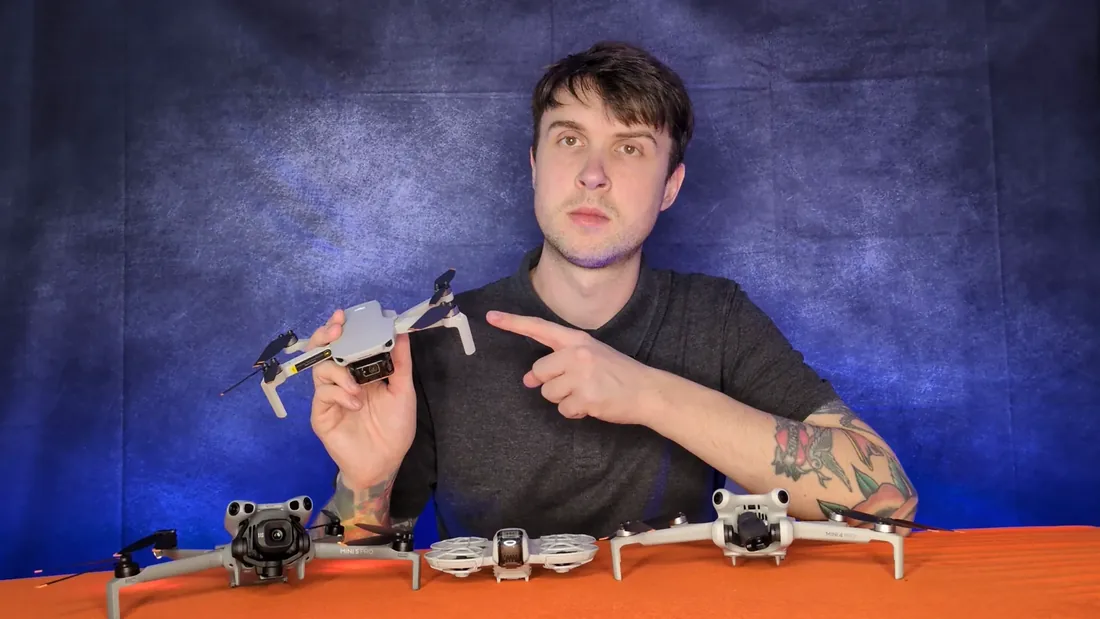
So this guide works backwards from the airport. It asks four questions about how you actually travel, then narrows thirteen drones to the one that fits your trip. Then it goes through the lithium battery rules properly — from the Civil Aviation Authority’s own published table, not from a forum thread — so you know before you pack rather than at the security desk. By the end you will know which drone I would put in hand luggage, and exactly what goes in the bag with it.
How I get paid: the Amazon links below are affiliate links, so if you buy through one I earn a small commission at no extra cost to you. It does not change what I recommend — I spend most of this article talking you out of the expensive ones, and one of the thirteen has no link at all because I could not find it in stock here.
The Best Drone for Travel in 2026 Is the DJI Mini 5 Pro
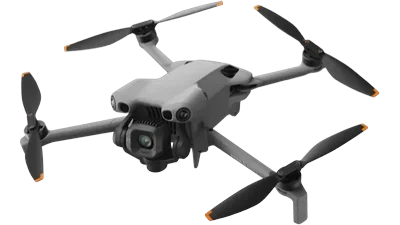
It folds to the size of a paperback, it weighs less than a can of drink, and its battery is a fifth of the airline limit. Nothing else here does all three with a one-inch camera on board.
- 249.9 g, so no test and no licence — just a £12.34 registration you do online.
- Folds to 157×95×68 mm — about a thick paperback, and it drops into a jacket pocket.
- A 19.52 Wh battery. Airlines start asking questions at 100 Wh, so nobody will.
- A 1-inch, 50-megapixel camera — the size you’d find in a good compact — in a drone this small.
- 36 minutes on the standard battery. Ignore the 52-minute figure — that needs the bigger battery, which pushes it over 249 g and costs you everything above.
Affiliate link · costs you nothing extra · full disclosure
PART ONE
Here are the five that win their categories outright — and what is wrong with each of them, because not one of them is perfect and you should know that before you pack it.
Best Travel Drone for Time in the Air: DJI Mini 3
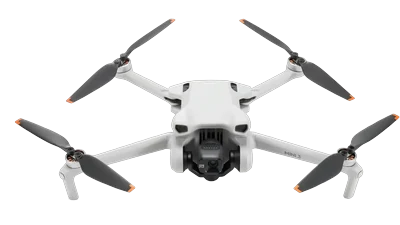
Your airline counts spare batteries, not minutes — so the number that decides your day is how long one battery lasts. Nothing under the weight limit lasts longer than this.
- No test and no licence — just a £12.34 registration you do online.
- 38 minutes on the standard battery, which is the longest of the sub-250-gram drones here.
- No forward obstacle sensing. On a strange coastline that is a real omission.
Best Budget Travel Drone: DJI Flip
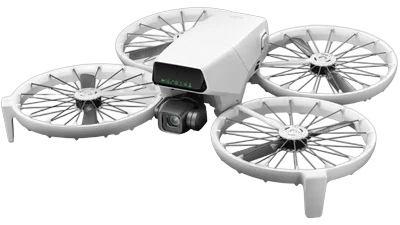
Cages built in, so it launches off your hand and survives being passed round.
- No test and no licence — just a £12.34 registration you do online.
- The same size sensor as the Mini 4 Pro (1/1.3-inch, 48 megapixels), for a lot less.
- The cages do not fold. At 165 mm tall it is the awkward one to pack.
Best Drone for Cabin-Bag-Only Travel: DJI Neo 2
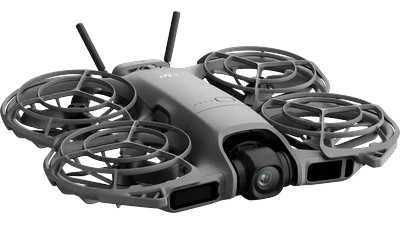
151 grams, no controller needed, and an 11.5 Wh battery nobody will ever query.
- No test and no licence — just a £12.34 registration you do online.
- An 11.5 Wh battery, the smallest here. No airline will look twice at it.
- About 15 minutes of real flying per battery, though DJI claims 19.
Best Travel Drone for Immersive Video: DJI Avata 2
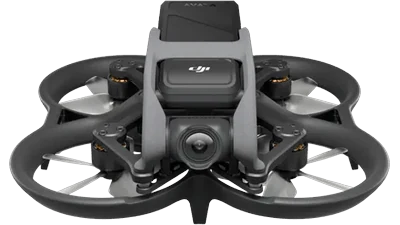
Footage that feels like being there, from the only drone here you fly through goggles.
- The law requires a second person watching the drone whenever you fly through goggles.
- Three items in the bag: drone, goggles and controller, each with its own battery.
- From January 2028 it needs the A2 test to fly near people — one of two here that lose that freedom.
Best Camera on a Travel Drone: DJI Air 3S
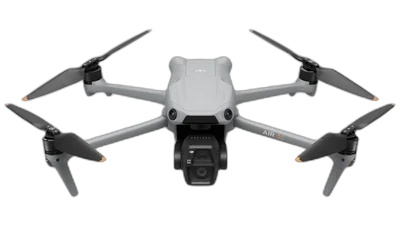
Two focal lengths, which changes how a landscape looks more than any sensor upgrade.
- No test needed today, but from January 2028 it needs the A2 to fly near people.
- Two real focal lengths, 24 mm and 70 mm, on a 1-inch main sensor.
- 62.5 Wh a battery and 724 g. It fits in the cabin bag; it just takes most of it.
Affiliate links · costs you nothing extra · full disclosure
Take the quiz: find the best travel drone for your trip
Matched to how you actually travel — not a generic top ten.
- Sorted by what fits your bag, not what wins on paper.
- Every battery here checked against the airline watt-hour limit.
- Tells you which ones need paperwork before you can fly them.
- About 20 seconds, and no email needed.
STEP 1 OF 4
13 of 13 still fit
All thirteen, and why each one might not suit your trip
-
DJI Neo 2
151 g · C0 · 11.5 Wh · 19 min · no test needed
The one you throw off your palm and catch again. It is one of only three here I would carry in a coat pocket rather than a bag, and I have done exactly that.
- No test and no licence — just a £12.34 registration you do online.
- An 11.5 Wh battery, the smallest here. No airline will look twice at it.
- About 15 minutes of real flying per battery, though DJI claims 19.
-
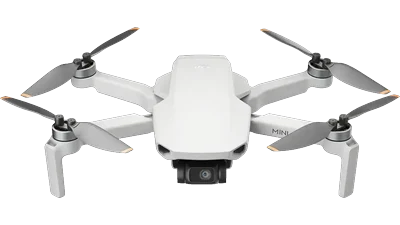
DJI Mini 4K DJI UK no longer lists it
246 g · 17.32 Wh · 31 min · no test needed
The cheapest way to get a properly stabilised aerial shot onto a memory card. Lovely first drone, genuinely poor camera, and both are true at once.
- No test and no licence — just a £12.34 registration you do online.
- Folds to 138×81×58 mm, the smallest folded footprint of any drone here you fly with a controller.
- DJI no longer lists it in the UK, so you are buying up whatever stock is left.
-
DJI Flip
<249 g · C0 · 22.3 Wh · 31 min · no test needed
Propeller cages built in, so it launches from your hand and survives the person you lend it to. The quiet bargain of this whole list.
- No test and no licence — just a £12.34 registration you do online.
- The same size sensor as the Mini 4 Pro (1/1.3-inch, 48 megapixels), for a lot less.
- Propeller cages built in. It is the one I would hand to a nervous first-timer.
-
DJI Mini 3
248 g · C0 · 18.1 Wh · 38 min · no test needed
The longest standard-battery flight time of any sub-250-gram drone here, at 38 minutes. It is three generations old and it still out-lasts everything under the line.
- No test and no licence — just a £12.34 registration you do online.
- 38 minutes on the standard battery, which is the longest of the sub-250-gram drones here.
- No forward obstacle sensing. On a strange coastline that is a real omission.
-
HOVERAir X1 PRO
191.5 g · C0 · 14.17 Wh · 16 min · no controller
There is no controller to pack because none is made for it, which is an argument no other drone in this guide can quite make. It is the one I would take on the trip where I am the subject rather than the scenery.
- Under 250 g and C0-marked, so no A2 test — but HOVERAir’s “no license required” still means a £12.34 UK registration and a free Flyer ID.
- No controller exists for it. It folds to a 105×149×34 mm slab and launches off your palm.
- 16 minutes a battery, the shortest here, on a 14.17 Wh pack — the second-smallest battery in this guide.
-
HOVERAir X1 PROMAX
192.5 g · C0 · 14.17 Wh · 16 min · 8K, no controller
The same slab of a body with a sensor three times the area and 8K on the card. It is the most camera you can pack without also packing something to fly it with.
- Under 250 g and C0-marked, so no A2 test — but HOVERAir’s “no license required” still means a £12.34 UK registration and a free Flyer ID.
- A 1/1.3-inch sensor shooting 8K and 48-megapixel stills, in a 192.5 g body with nothing to pack alongside it.
- The same 16 minutes on the same 14.17 Wh battery as the X1 PRO. Endurance is what the size costs you.
-
DJI Avata 2 loses privileges in 2028
377 g · C1 · 31.7 Wh · 23 min · observer required
The only drone here that makes you grin out loud, and I still do every time I fly it. Also three separate objects in your bag rather than one.
- The law requires a second person watching the drone whenever you fly through goggles.
- Three items in the bag: drone, goggles and controller, each with its own battery.
- From January 2028 it needs the A2 test to fly near people — one of two here that lose that freedom.
-
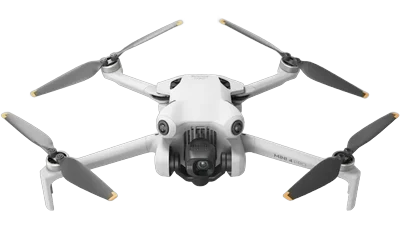
DJI Mini 4 Pro
<249 g · C0 · 18.96 Wh · 34 min · no test needed
For two years this was the obvious answer for anyone packing light. The Mini 5 Pro has since made it about a hundred pounds too expensive for what it is.
- No test and no licence — just a £12.34 registration you do online.
- Obstacle sensing in every direction, which is what you want somewhere unfamiliar.
- DJI does not sell the bigger battery in Europe, so 34 minutes a charge is what you get.
-
DJI Mini 5 Pro
249.9 g · C0 · 19.52 Wh · 36 min · no test needed
A one-inch camera under the 250-gram line, folded into something the size of a paperback. Five years ago that combination did not exist at any price.
- No test and no licence — just a £12.34 registration you do online.
- Folds to 157×95×68 mm and its battery is 19.52 Wh, a fifth of the airline limit.
- 36 minutes on the standard battery. Ignore the 52-minute figure — that needs the bigger battery, which pushes it over 249 g.
-
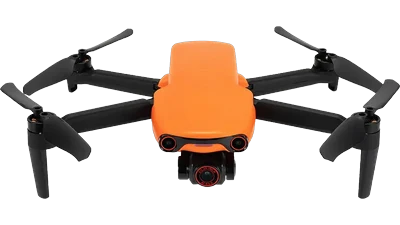
Autel EVO Nano+ no affiliate link — I could not find UK stock
249 g · 17.32 Wh · 28 min · no test needed
Here so nobody can accuse this list of being a DJI catalogue. On paper it is a proper travel drone; in practice I could not find one to link you to.
no link- Under 250 grams, so no licence needed — just the £12.34 registration.
- Folds to 142×94×55 mm on a 17.32 Wh battery, which is genuinely pocketable.
- I could not verify UK stock anywhere I trust, so there is no link and I will not rank it.
-
DJI Air 3S loses privileges in 2028
724 g · C1 · 62.5 Wh · 45 min · no licence today
Two usable focal lengths instead of one, which changes how a place looks more than any sensor upgrade. It is also nearly three Mini 5 Pros in weight.
- No test needed today, but from January 2028 it needs the A2 to fly near people. You are buying about eighteen months of that freedom.
- Two real focal lengths, 24 mm and 70 mm, which is the most useful thing you can add to a travel kit.
- 62.5 Wh a battery. Still under the 100 Wh line, but three of them is most of your cabin bag.
-
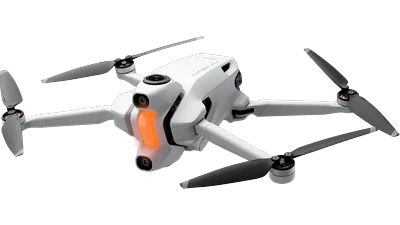
Antigravity A1
249 g · 16.9 Wh · 24 min · no test needed
An 8K 360-degree camera that flies, under 250 grams, with goggles. The most interesting object on this list and the hardest one to justify packing.
- Under 250 grams on the standard battery, so no licence needed.
- 24 minutes on that standard battery. The advertised 39 needs the high-capacity one, which takes it to 291 g and over the line.
- It shoots in every direction at once and you choose the framing afterwards.
-
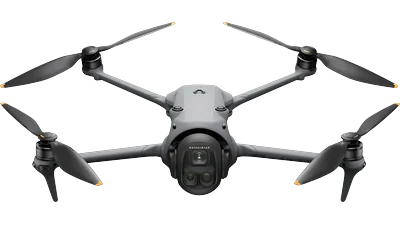
DJI Mavic 4 Pro
1,063 g · C2 · 95.3 Wh · 51 min · A2 licence needed
The best flying camera you can buy in a bag this size, and I have carried it up more hills than I would like. For a holiday it is the wrong answer, and I will explain why below.
- Needs the A2 test to fly near people, here and in most of Europe.
- 95.3 Wh a battery — under the 100 Wh line, but with less margin than anything else here.
- A 100-megapixel Four Thirds sensor and the only aperture on this page that actually moves.
Specifications checked 31 July 2026, and every link points at the cheapest configuration that actually flies — so the Avata 2 link is the bundle that includes the goggles, because the drone on its own will not take off without them. The rows are ordered cheapest to dearest, which is the ordering the quiz uses when two drones score level. I do not print prices here: they move week to week, and a stale number beside a buy button is worse than no number at all — the link shows you what each one costs right now, on the day you are actually buying. Watt-hours, weights and folded sizes are manufacturer specifications; the Autel EVO Nano+ has no UK stock I could verify, so it carries no link and the quiz will never recommend it. Comparison specifications from DroneCompare, CC BY 4.0.
PART TWO
Airline lithium rules: what you can actually board with
This is the part that catches people, and it is the reason I put this section before the camera talk rather than after it. Get it wrong and the trip starts with a bin at security.
Everything below comes from the UK Civil Aviation Authority’s published table of what passengers may carry, and from an airline’s own dangerous-goods page. I have not used a forum post anywhere in this section, and where I could not confirm a number I have said so rather than made one up.
Rule one: spare batteries cannot go in the hold. Ever.
Start here, because everything else follows from it. In the CAA’s table, the row for spare lithium batteries for portable electronic devices reads “No” under checked baggage and “Yes (see restrictions)” under carry-on. That is not a recommendation. There is no version of this where your spares travel in the hold.
And the restriction on the carry-on side is specific. Each spare must be “individually protected so as to prevent short circuits (by placement in original retail packaging or by otherwise insulating terminals, e.g. by taping over exposed terminals or placing each battery in a separate plastic bag or protective pouch)”.
Loose in a pocket with your keys is exactly what that sentence exists to stop. The CAA’s own drone guidance goes further and asks you to carry drone batteries in hand luggage in separate LiPo-safe battery bags, and recommends discharging them to roughly 50% before you travel.
The practical consequence is the one most people miss: because the batteries must be in the cabin, the whole drone effectively travels in the cabin. There is no point checking a drone into the hold and keeping the batteries with you — you have just split a fragile object from the things that make it work, for no gain.
Rule two: the number on the battery is watt-hours, not milliamps
Airlines regulate lithium batteries by watt-hours (Wh), which is how much energy the cell holds. Manufacturers have been required to print that figure on lithium-ion batteries since 2009, so it is almost always moulded into the label on the battery itself. If only milliamp-hours are shown, the CAA gives you the arithmetic: divide the mAh by 1,000 to get amp-hours, then multiply by the voltage.
Three bands, and they are the same on every airline because they come from the international rules:
THE THREE BANDS
| RATING | WHAT HAPPENS |
|---|---|
| Up to 100 Wh | Carried in the cabin with no permission needed. Every drone battery in this guide is here. |
| 100–160 Wh | Requires approval from the airline, and no more than two spares per person. |
| Over 160 Wh | Not allowed in passenger baggage at all. It has to travel as freight. |
One more line worth knowing: if the watt-hour rating cannot be determined from the battery, it cannot be accepted. A no-name replacement battery with a blank label is a battery you may be asked to leave behind.
So where does every drone here actually sit?
Comfortably inside the first band, is the honest answer. I went through the manufacturer specification for every drone in this guide and put the numbers side by side, because I had never seen anyone do it and I half expected a nasty surprise.
| BATTERY | CAPACITY | WATT-HOURS | OF THE 100 WH LIMIT |
|---|---|---|---|
| DJI Neo 2 | 1,606 mAh | 11.5 | 12% |
| HOVERAir X1 PRO & PROMAX same battery in both | 1,920 mAh | 14.17 | 14% |
| Antigravity A1 standard | 2,360 mAh | 16.9 | 17% |
| DJI Mini 4K | 2,250 mAh | 17.32 | 17% |
| Autel EVO Nano+ | 2,250 mAh | 17.32 | 17% |
| DJI Mini 3 | 2,453 mAh | 18.1 | 18% |
| DJI Mini 4 Pro | 2,590 mAh | 18.96 | 19% |
| DJI Mini 5 Pro | 2,788 mAh | 19.52 | 20% |
| DJI Flip | 3,110 mAh | 22.3 | 22% |
| Antigravity A1 high-capacity | 4,345 mAh | 31.11 | 31% |
| DJI Avata 2 | 2,150 mAh | 31.7 | 32% |
| DJI Air 3S | 4,276 mAh | 62.5 | 63% |
| DJI Mavic 4 Pro | 6,654 mAh | 95.3 | 95% |
Figures from manufacturer specification pages and user manuals, checked 31 July 2026. Percentages are mine, rounded.
Look at the top and the bottom of that table. The Neo 2’s battery is 11.5 Wh. The Mavic 4 Pro’s is 95.3 Wh. They are governed by exactly the same rule, and both are legal — but one of them has five per cent of headroom and three of them in a bag is 286 Wh of lithium sitting under the seat in front of you. If a manufacturer ever pushes a flagship battery past 100 Wh, that drone becomes a phone call to the airline before every single flight. It has not happened yet. It is closer than most people think.
A trap worth naming. If you go looking for “high capacity” or “Plus” batteries to squeeze out more flight time, check what they do to the weight as well as to the watt-hours. DJI states that fitting the Intelligent Flight Battery Plus to a C0-certified Mini 5 Pro means it “can no longer be operated as a C0/UK0” drone. Antigravity says the same about the A1’s high-capacity pack, which takes it from 249 g to 291 g. Both batteries are fine on the plane. Both cost you the paperwork-free status that made the drone worth taking.
Rule three: how many spares? Nobody can tell you a single number
This is where most articles quote a figure with total confidence, and where I am going to disappoint you slightly by not doing that.
The international rule that the CAA reproduces caps you at two spare batteries — but read the small print, and that cap applies to the batteries that need airline approval in the first place, the ones between 100 and 160 Wh. For batteries under 100 Wh, which is every drone battery in this guide, the regulator does not set a number. Your airline does.
So you have to check yours. To give you one concrete data point, easyJet’s dangerous-goods declaration — the one you tick at check-in — says: “For cameras, laptops, mobile phones, power banks, vaping devices, etc — a maximum of two spare batteries are permitted in carry-on baggage.”
Two spares. Sit with that for a second, because it has a direct effect on what you buy. The bundles that make a drone genuinely useful for a whole day out are the three-battery ones — DJI literally names one of the Avata 2 bundles the Fly More Combo (Three Batteries). One of those three sits in the drone, so it is not a spare at all; it is a battery installed in a device, which is a different row in the CAA’s table with its own rules. The other two are spares. On easyJet you are therefore exactly at the limit with a three-battery kit, and over it the moment you buy a fourth.
I could not verify equivalent published figures for every UK carrier. British Airways’ restricted-items page would not load for me on repeated attempts, and I am not going to quote a number for it second-hand when the subject is what you are allowed to carry onto a plane. Check your own airline’s dangerous goods page, by name, before you pack. It takes two minutes and the answer is binding.
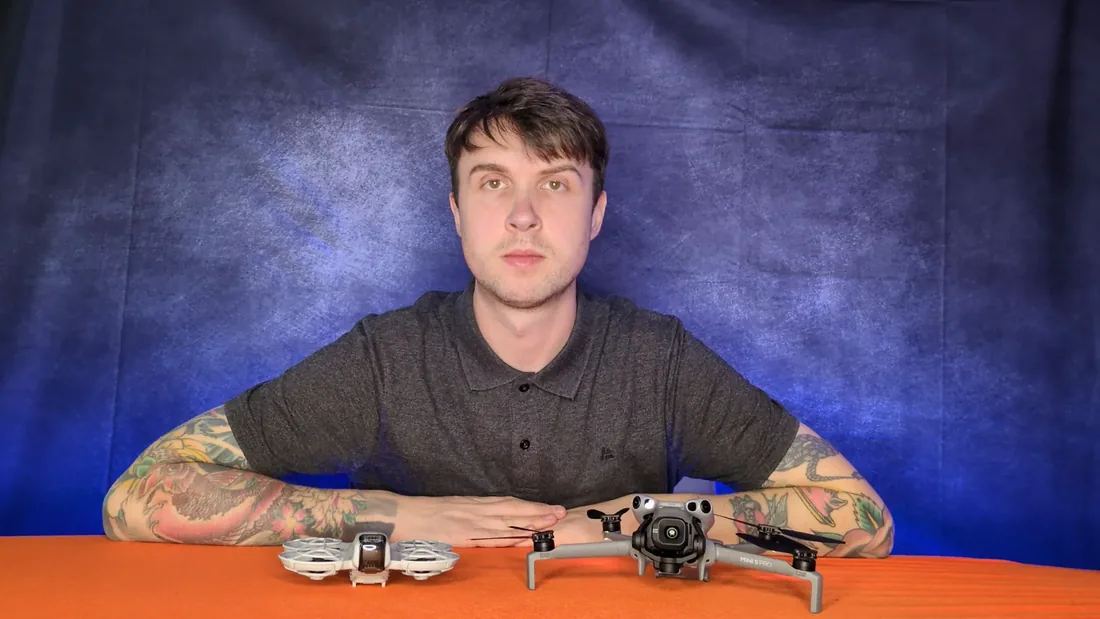
Rule four: power banks changed in March 2026
If you last flew with a drone a couple of years ago, this one will be new to you. From 27 March 2026, following an international rule change, power banks are treated separately from spare batteries and carry their own restrictions. The CAA lists them plainly:
- Carry-on only — never in the hold.
- Individually protected against short circuits when not in use.
- Must not be recharged on board, and should not be used to charge anything on board.
- A maximum of two power banks per person.
That last pair matters for a travel drone specifically. The obvious plan — charge a drone battery off a power bank during a long flight so you land with a full set — is not available to you. Charging happens at the hotel, not at 35,000 feet. Plan your first evening around a socket.
Rule five: do not switch it on in the terminal
This one is not about batteries at all, and it is the single easiest way to turn a smooth trip into a very long conversation. The CAA’s guidance on travelling with a drone is unambiguous: never turn your drone or its controller on while you are going through an airport, because it may set off the airport’s drone detection systems.
Most major airports now run detection. Powering up a drone airside to check the firmware updated, or to show someone the camera, is enough. Land, get out, then check it over physically — looking at it is fine, switching it on is not.
THE FIVE-LINE PACKING CHECK
- 1. Every battery out of the hold bag and into the cabin bag.
- 2. Every spare in its own pouch or with the terminals taped.
- 3. Discharged to roughly 50%, as the CAA recommends.
- 4. Count your spares against your airline’s own published limit, not mine.
- 5. Drone and controller stay off from the front door to the hotel room.
PART THREE
What actually fits: folded size against a free cabin bag
Now the physical question. I measured this against the smallest allowance I could find on a UK airline’s own website: easyJet’s free under-seat cabin bag, a maximum of 45 × 36 × 20 cm including handles and wheels. If a drone works inside that, it works everywhere.
Here is the finding, and it surprised me: every single drone in this guide fits, and it is not close. Even the Mavic 4 Pro folds to roughly 26 × 12 × 10 cm. The drone is never the problem.
| DRONE | FOLDED (L×W×H) | WEIGHT |
|---|---|---|
| HOVERAir X1 PRO & PROMAX no controller | 105×149×34 mm | 191.5 / 192.5 g |
| DJI Mini 4K | 138×81×58 mm | 246 g |
| Antigravity A1 | 141×96×81 mm | 249 g |
| Autel EVO Nano+ | 142×94×55 mm | 249 g |
| DJI Mini 3 | 148×90×62 mm | 248 g |
| DJI Mini 4 Pro | 148×94×64 mm | <249 g |
| DJI Mini 5 Pro | 157×95×68 mm | 249.9 g |
| DJI Neo 2 does not fold | 147×171×41 mm | 151 g |
| DJI Flip cages do not fold | 136×62×165 mm | <249 g |
| DJI Avata 2 does not fold | 185×212×64 mm | 377 g |
| DJI Air 3S | 214×101×89 mm | 724 g |
| DJI Mavic 4 Pro | 258×125×103 mm | 1,063 g |
Folded dimensions without propellers where the manufacturer gives both. The Neo 2 and Avata 2 do not fold at all, so those figures are the size of the whole object; the Flip folds, but its propeller cages do not collapse, which is why it is the tall one. Manufacturer specifications, checked 31 July 2026.
So what does fill the bag?
Everything else. This is the part nobody photographs, and it is where a “compact” drone quietly becomes a piece of luggage:
- The controller. The DJI RC-N3 that ships with a Mini 5 Pro is 104×150×45 mm and about 320 g, with a 9.36 Wh battery inside it. That is a second drone-sized object.
- Goggles, if you bought a first-person drone. The Avata 2’s DJI Goggles 3 are 470 g and 170×109×112 mm with the antennas folded, and the battery that powers them is another 21.6 Wh.
- Two spare batteries in individual pouches. Non-negotiable, per the rules above.
- A charger, a hub and cables. The hub is usually bigger than a battery.
- Spare propellers. Two grams each and the difference between a holiday and a paperweight.
Add that up for a Mini 5 Pro and you have something around the size of a large paperback plus a phone. Add it up for an Avata 2 and you have three rigid objects with three separate batteries, none of which nest inside each other. That is why a first-person drone scores badly on the hand-luggage question in the quiz above, despite being under 400 grams.
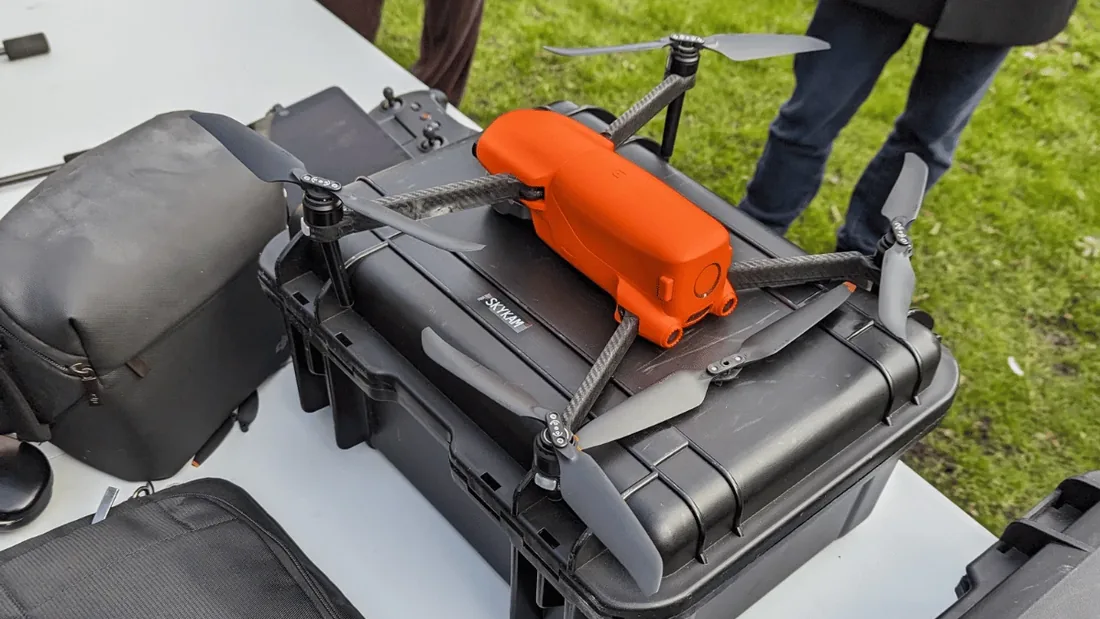
And this is what the other end looks like. That is a working kit for a job, and it is a perfectly sensible thing to own — it is what I take to a paid shoot. It is also a hard case and a backpack, which on a family holiday means you have brought a second suitcase and volunteered to guard it for a fortnight.
The exception: what happens when you delete the controller
There is one way out of that arithmetic, and three drones here offer it. The DJI Neo 2 is one — you can fly it off your palm with only a phone, which is most of why it takes the cabin-bag award above. The other two go further. The HOVERAir X1 PRO and the HOVERAir X1 PROMAX are self-flying cameras rather than drones you pilot, and no controller is made for either. You press a button, hold the thing flat on your palm, and it lifts off, flies a preset shape around you and lands back in your hand. HOVERAir sells a wrist Beacon and a pair of joysticks as accessories; the camera flies its patterns without them.
On a hand-luggage-only trip that is not a small saving. It is most of the bag. Take the list above and delete the controller: you have removed 320 grams, a 104×150×45 mm object and a battery of its own. What is left, in the HOVERAir’s case, is a 105×149×34 mm slab weighing 191.5 grams, a 14.17 Wh battery — 14 per cent of the airline limit, and the second-smallest number in the watt-hour table above — and nothing else. It also folds, which the Neo 2 does not, and at 34 mm thick it is the flattest object in this guide.
What you pay for that is endurance and control. Sixteen minutes a battery is the shortest flight time here, under half what a Mini 5 Pro gives you, so you buy spares and you are immediately back to counting them against your airline’s limit. And these fly patterns around a person; they are not drones you place on a horizon and hold there. If what you want home is the coast road seen from above, this is the wrong tool at any price. If what you want home is you on the coast road, nothing else here is close — and on the PROMAX you are getting it on a 1/1.3-inch sensor shooting 8K, which is a better camera than the size of the thing suggests.
THE THREE THINGS THAT ACTUALLY GO IN THE BAG
- Check price
A fireproof battery pouch
The CAA asks for LiPo-safe bags in hand luggage. This is the cheapest rule to comply with.
- Check price
One spare standard battery
The standard one, not the Plus — that one costs you the sub-250-gram status.
- Check price
A 256GB V30 card
V30 is the rating that keeps up with 4K. Buy it at home; airport prices are cruel.
Affiliate links · costs you nothing extra · full disclosure
The paperwork: at home, and at the other end
Two of the quiz questions need no explaining. How you travel and what you spend are things you already know. The licence question is the one that catches people, because most people buying a first drone do not know that registration exists at all.
In the UK: two registrations, and one weight limit
Everyone flying a drone with a camera in the UK needs the same two things. A Flyer ID, which is a free online theory test valid for five years — it is the bit that proves you know the rules. And an Operator ID, which costs £12.34 a year, must be renewed annually, and goes on a label stuck to the outside of the drone. You have to be 18 or over to register as the operator; one Operator ID covers every drone you own.
After that, weight takes over. Under 250 grams and you are in the sub-category the CAA calls Over People (A1), with nothing further to do. Over it, and you are into class marks, sub-categories and, for most interesting drones, a qualification. That single line is why ten of the thirteen drones above sit under it with nothing further to do, and why each of the three that sit over it comes with a condition attached — an A2 test today for the Mavic 4 Pro, and one arriving in 2028 for the other two.
It is also why the sub-250-gram category is where all the clever engineering has gone. A one-inch sensor at 249.9 grams is not a coincidence; it is the entire product brief. For travel it happens to be the right answer twice over, because a drone light enough to skip the paperwork is also a drone light enough that you keep taking it out of the bag.
The A2 Certificate of Competence, and why you probably do not want one
The A2 Certificate of Competence is a theory test of at least thirty multiple-choice questions, taken with a CAA-approved Recognised Assessment Entity. It lasts five years and the providers set their own fees, so it is worth ringing round.
What it buys you is the Near People (A2) sub-category for a C2-marked drone like the Mavic 4 Pro. Without it, that drone is restricted to Far from People (A3): 150 metres from residential, commercial, industrial or recreational areas. On holiday, that is not a nuisance — it is a disqualification. The entire reason you took a drone to a coastal town is that there is a coastal town in the shot.
And here is the part the shops leave out: if you buy under 250 grams, the A2 CofC buys you nothing. You already have better privileges than it grants. Decide the weight first, then the paperwork. Never the other way round.
Your UK registration stops at the border
This is the one that genuinely surprises people, and it is worth reading twice. The CAA states it plainly: UK Flyer IDs and Operator IDs are not valid outside the UK. You must meet the national requirements of wherever you are going, and you should check with that country’s regulator before you travel.
In practice, for an EU member state, you will usually need to register as an operator in that state — a separate registration, in their system, with their fee. There are exceptions, which is exactly why the CAA tells you to check rather than assume.
Nothing about the drone changes when you land. The rules around it change completely. Some countries require a permit; some ban drones outright; some will confiscate at the border. A sub-250-gram drone attracts the lightest paperwork almost everywhere, which is another point in the Mini 5 Pro’s favour — but “lightest” is not “none”, and it is not a defence if you did not look.
And then there is 1 January 2028
One more date, because if you are spending serious money on a drone this year it should change your mind. Until 31 December 2027, a drone carrying a European C class mark can be flown as though it held the equivalent UK class. From 1 January 2028 that stops. A C-marked drone becomes a legacy drone and falls back to plain weight rules: under 250 g flies A1, under 2 kg needs an A2 CofC, under 25 kg is A3.
For most of this list nothing changes. Everything under 250 grams stays exactly where it is. The C2 Mavic already needs an A2 CofC and will carry on needing one. But two drones here fall off the cliff, and they are both C1 and both over 250 grams:
WHAT CHANGES ON 1 JAN 2028
| DRONE | TODAY | FROM 2028 |
|---|---|---|
| DJI Air 3S 724 g, C1 | Over People (A1), no qualification | Near People (A2), A2 CofC required |
| DJI Avata 2 377 g, C1 | Over People (A1), no qualification | Near People (A2), A2 CofC required |
Nothing gets confiscated and nothing becomes illegal to own. But if you buy an Air 3S in 2026 partly because it needs no qualification, understand that you are buying eighteen months of that privilege rather than a permanent one — and that this is a UK timetable, which tells you nothing about the country you are flying to.
PART FOUR
The drone I’d put in hand luggage
The DJI Mini 5 Pro. That is what goes in my hand luggage, and I would not spend long deciding. It is not the cheapest drone here and it is nowhere near the dearest — four of the thirteen cost more — and it beats both ends of the list at the job this guide is about.
Work through the three things that actually govern this and it wins all three. It weighs 249.9 grams, so at home there is no test, no certificate and no sub-category to think about, and abroad it sits in whatever the local equivalent of the lightest category is. It folds to 157×95×68 mm, which disappears into a bag you were carrying anyway. And its battery is 19.52 Wh — a fifth of the line at which anyone starts asking questions, so the only limit you will ever meet is your airline’s count of spares.
Then there is the part that makes it worth the money rather than merely convenient. It has a one-inch, 50-megapixel sensor, which is the size you would find in a good compact camera. Until this drone existed, crossing that threshold meant crossing the 250-gram line too, and accepting a qualification you would then have to think about in every country you visited. I have flown it, and the honest summary is that it is the first drone where the travel compromise stopped costing you the picture. Buy it, register it, pack it.
Spend less if you can. The DJI Flip costs well under half what the Mini 5 Pro does, has the same class of sensor as the Mini 4 Pro, stays under 250 grams, and its built-in cages mean you can launch it off your hand on a beach and hand it to someone else without wincing. It is 165 mm tall and it does not collapse, so it is the awkward one to pack — but that is a packing problem, not a flying one, and it is the only drone here I would hand to somebody who has never flown. If this is your first drone and you want to find out whether you enjoy flying before committing to the top pick, buy the Flip.
Spend more for exactly one reason. The DJI Air 3S costs a good deal more than the Mini 5 Pro and gives you a second focal length, and a 70 mm lens changes what a coastline looks like more than any sensor upgrade will. If someone else is carrying the bag, or you are travelling specifically to photograph a place, it is the better camera. Go in knowing it is 724 grams, close to three times the weight of the top pick; that its batteries are more than three times the size, so three of them is most of your cabin bag; and that its no-qualification status expires on 1 January 2028, which is the only thing here you cannot buy your way out of.
The one I’d actively tell you not to take
The DJI Mavic 4 Pro — and it pains me, because it is the best flying camera in this size class and I have shot some of my favourite work with it.
But look at what a holiday does to it. It is 1,063 grams, which puts it in C2 and means you need an A2 Certificate of Competence to fly it anywhere near people — and without one you are 150 metres from anything built up, which abroad usually means the whole reason you went. Its batteries are 95.3 Wh, the closest thing on this page to a limit you can actually hit, and you will be carrying three of them plus a hard case. Every one of those is fine on a job. On a fortnight away, each one is a small tax you pay every single day.
If you already own one, take it. If you are choosing one for travel, you are buying dynamic range you will never spend and paperwork you did not need, and you will end up leaving it in the hotel.
And if what you actually want is one really good set of aerial shots of somewhere specific, rather than a new hobby — owning is rarely the cheaper answer. You can hire a qualified drone pilot who already has the drone, the qualifications and the insurance, and who does not have to put any of it through a scanner.
Best drone for travel: the questions I get asked most
What is the best drone for travel in 2026?
The DJI Mini 5 Pro. It weighs 249.9 g, so it needs no test and no certificate to fly in the UK, it folds to 157×95×68 mm, and its battery is 19.52 Wh — a fifth of the 100 watt-hour line above which you need the airline’s permission. Spend less and the DJI Flip does the same job for well under half the money, with a smaller camera and cages that do not fold. Spend more only if somebody else is carrying the bag.
Can you take a drone on a plane in hand luggage?
The drone itself can normally go in either bag, but its spare batteries cannot. The UK Civil Aviation Authority lists spare lithium batteries as forbidden in checked baggage and permitted in carry-on only, individually protected against short circuits. Because the batteries have to be in the cabin with you, in practice the whole drone travels in the cabin too. Never switch the drone or its controller on inside a terminal — airports run drone detection systems and you will set them off.
How many drone batteries can I take on a plane?
There is no single number, and that is the honest answer. The international rule caps you at two spares only for batteries rated between 100 Wh and 160 Wh. Every drone battery in this guide is under 100 Wh, and for those the quantity is set by your airline rather than by the regulator. easyJet publishes a limit of two spare batteries in carry-on baggage. Check your own airline’s dangerous goods page before you pack, because they do not all say the same thing.
What is a watt-hour rating and where do I find it?
A watt-hour (Wh) rating is how much energy a battery holds, and it is the number airlines regulate by. Since 2009 manufacturers have had to print it on lithium-ion batteries, so it is usually moulded into the label on the battery itself. If only milliamp-hours are marked, divide the mAh by 1000 to get amp-hours and multiply by the voltage. The CAA warns that if the watt-hour rating cannot be determined, the battery cannot be accepted.
Does my UK drone registration work abroad?
No. The CAA states plainly that UK Flyer IDs and Operator IDs are not valid outside the UK, and that you must meet the national requirements of the country you are travelling to. To fly in an EU member state you will usually need to register as an operator in that state. Sub-250-gram drones attract less paperwork almost everywhere, but “less” is not “none” — check the local regulator before you travel.
Do I need a licence to fly a travel drone in the UK?
Not for anything under 250 grams. You still need the two registrations everyone needs: a Flyer ID, which is a free online theory test valid five years, and an Operator ID, which costs £12.34 a year and goes on a label stuck to the drone. Above 250 grams you get into class marks and, for most interesting drones, an A2 Certificate of Competence. Ten of the thirteen drones in this guide are under the line.
The short version
If you read all of that and still want me to just say it: buy the DJI Mini 5 Pro. It is the only drone here with a proper one-inch camera that stays under 250 grams, folds smaller than a hardback and carries a battery nobody at a bag drop will ever query. Put a spare in a fireproof pouch, keep both in the cabin, and leave it switched off until you are out of the terminal.
Affiliate links · costs you nothing extra · full disclosure
Specifications checked 31 July 2026 against manufacturer sources. I do not print prices anywhere in this guide: they change from week to week, and the only figure worth trusting is the one on the listing at the moment you click through, so that is where I send you for it. Every link points at the cheapest configuration of that drone that will actually fly. Battery, weight and dimension figures are from manufacturer specification pages and user manuals. Dangerous-goods detail is from the UK Civil Aviation Authority and, where an airline is named, from that airline’s own published page. Airline limits vary and change — always check yours before you fly. Comparison specifications from DroneCompare, licensed under CC BY 4.0. Amazon links are affiliate links. Further reading: my full camera drone guide and how to charge drone batteries safely.