What Is A Drone Operator ID: The UK Registration Explained

Peter Leslie
16 Apr 2026
Key Takeaways
- The Operator ID is the CAA annual registration for the person or organisation legally responsible for a drone, and it costs £12.34 a year
- It is the camera that triggers the requirement as often as the weight — any drone of 100g or more with a camera needs an Operator ID, regardless of whether it sits under 250g
- The ID must be labelled on the main body of every drone you own, in clear block capitals taller than 3mm, visible from the outside or inside a tool-free compartment
- You must be 18 or over to hold an Operator ID, and organisations register separately with a named accountable manager
- The Operator ID is not the same as a Flyer ID — the Operator ID identifies the responsible party, the Flyer ID certifies the person at the controls, and most drone flights need both
- Your CAA-issued Remote ID is generated alongside the Operator ID, and must be broadcast by every UK1, UK2 and UK3 class drone from 1 January 2026 onward
The Operator ID is the piece of UK drone registration that most newcomers underestimate. It is the annual record the Civil Aviation Authority keeps of who is legally responsible for a drone — and because it is tied to the drone rather than the person flying it, it is also the piece that most often catches people out when they buy a sub-250g model with a camera and assume nothing needs doing.
This guide walks through who actually needs one, the £12.34 annual fee, the labelling rules, how the registration interacts with Remote ID, and why it sits alongside — not instead of — the Flyer ID you may also have heard about. If you want the bigger legal picture first, the UK drone laws explainer stitches everything together.
An Operator ID is the CAA annual registration for whoever is legally responsible for a drone
Strip away the acronyms and the Operator ID is simple. It is a registration number the CAA issues to the person or organisation responsible for a drone, recorded against an email address and renewed once a year. The CAA calls this person or organisation the operator, and the definition is important: the operator is whoever manages and maintains the drone and ensures it is flown safely, not necessarily whoever is holding the controller on the day.
That distinction matters as soon as a drone has more than one user. If you own the drone and let a family member fly it, you are still the operator and your Operator ID still goes on the drone. If a school or business owns a fleet, the organisation is the operator and a named accountable manager carries the responsibility.
The Operator ID does not give you permission to fly. It identifies you as the responsible party. To fly most drones yourself, you also need a Flyer ID — the competency credential that sits next to it.
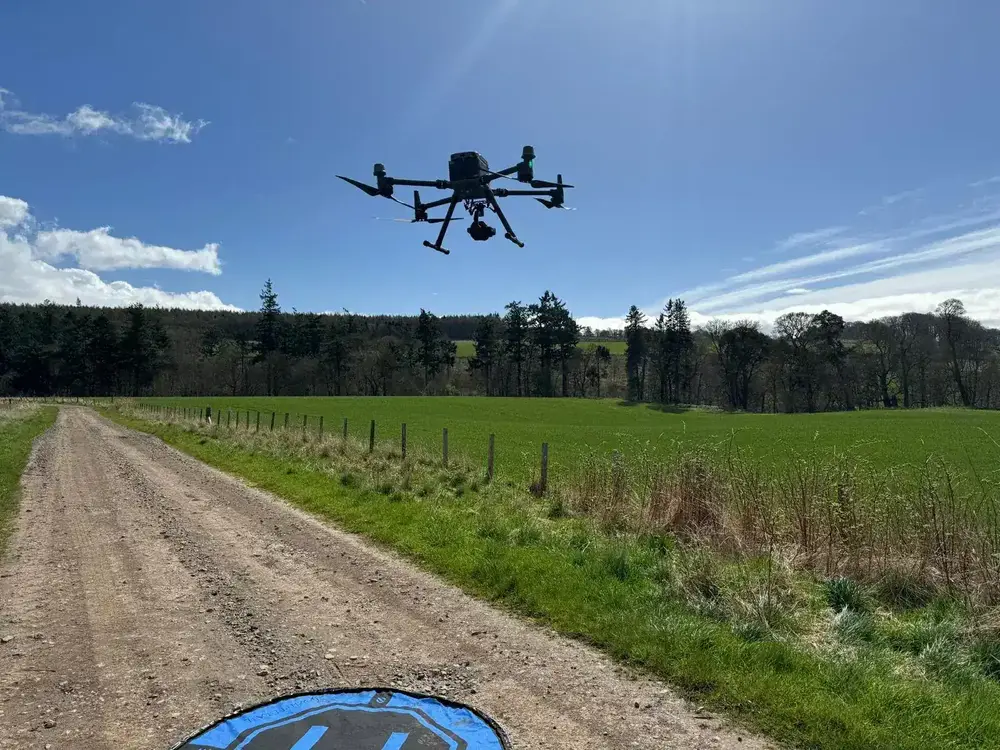
A camera triggers the Operator ID requirement every bit as much as the weight does
This is the myth that needs killing first. The sub-250g weight class is often sold as no registration required, and for a very specific pocket of the market that is still true — a naked sub-100g toy without a camera needs no Operator ID and no Flyer ID at all. The moment you add a camera, the rules change.
Under the Drone and Model Aircraft Code, you must register for an Operator ID if you own or are responsible for a drone that weighs 250g or above, or weighs 100g or above and carries a camera. Almost every consumer drone with a lens on the front — including the sub-250g camera drones marketed as the easy entry-point — falls inside that rule. The camera does the work, not the gram count.
The threshold table most people need to memorise looks like this.
| Drone weight and camera | Flyer ID | Operator ID |
|---|---|---|
| Under 100g | Recommended | Optional |
| 100g to under 250g, no camera | Required | Optional |
| 100g to under 250g, with camera (UK0) | Required | Required |
| 250g to under 25kg (UK1/UK2/UK3/UK4) | Required | Required |
If you plan to fly over people with a sub-250g drone, or to work through the sub-250g drone laws in detail, those articles run through the weight threshold specifically. On this page, the key point is simpler: if your drone can record, assume registration is required.
Registration costs £12.34 a year and covers every drone you are responsible for
Registration happens through the CAA's online portal. You supply an email address, a debit or credit card, and details of any drone insurance if you need it. The individual Operator ID costs £12.34 and is valid for one year, renewable through the My registration self-service area on the same portal.
One Operator ID covers your whole fleet. If you own five drones, you pay once and label every one of them with the same number. Buy a sixth the following week and it goes onto the label list without a second registration. The ID belongs to the responsible party, not to the equipment.
Two age rules sit behind the registration. You must be 18 or over to hold an Operator ID. If the drone belongs to somebody under 18, a parent or guardian registers as the operator on their behalf — the child can still fly the drone as long as they hold a Flyer ID, but the legal responsibility sits with the adult whose name the Operator ID is in.
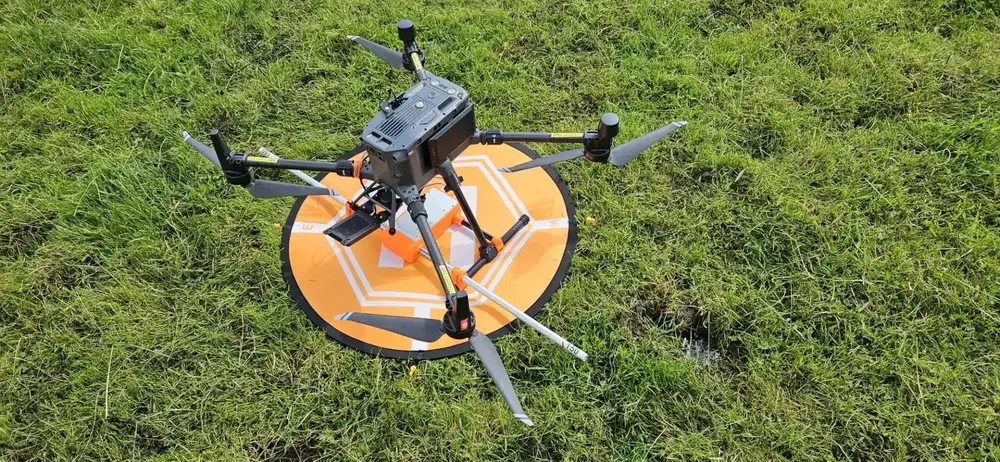
Organisations register separately and must name an accountable manager
Any business, school, college, university, charity, club or voluntary body that is responsible for a drone must register its own Operator ID through the organisation flow — not through an individual account. The same £12.34 annual fee applies, and the organisation's name is what goes on the drone.
Every organisation must name an accountable manager — a specific individual who carries the legal responsibility for safe and lawful operation. That name has to be kept current, and the organisation can change it at any time by updating the registration. The accountable manager's home address and contact details, together with the organisation's registered company or charity number, are what you need to hand before you start the flow.
One useful point of detail. Holding an Operational Authorisation from the CAA, or a flight permission from an airport, does not replace the Operator ID. The Operator ID is the baseline that sits underneath every other permission you may accumulate.
The Operator ID has to be labelled on the drone in block capitals taller than 3mm
Labelling is where the paperwork meets the physical drone. Once you have the number, you must mark it on every drone you are responsible for, and the rules for how you do that are prescriptive.
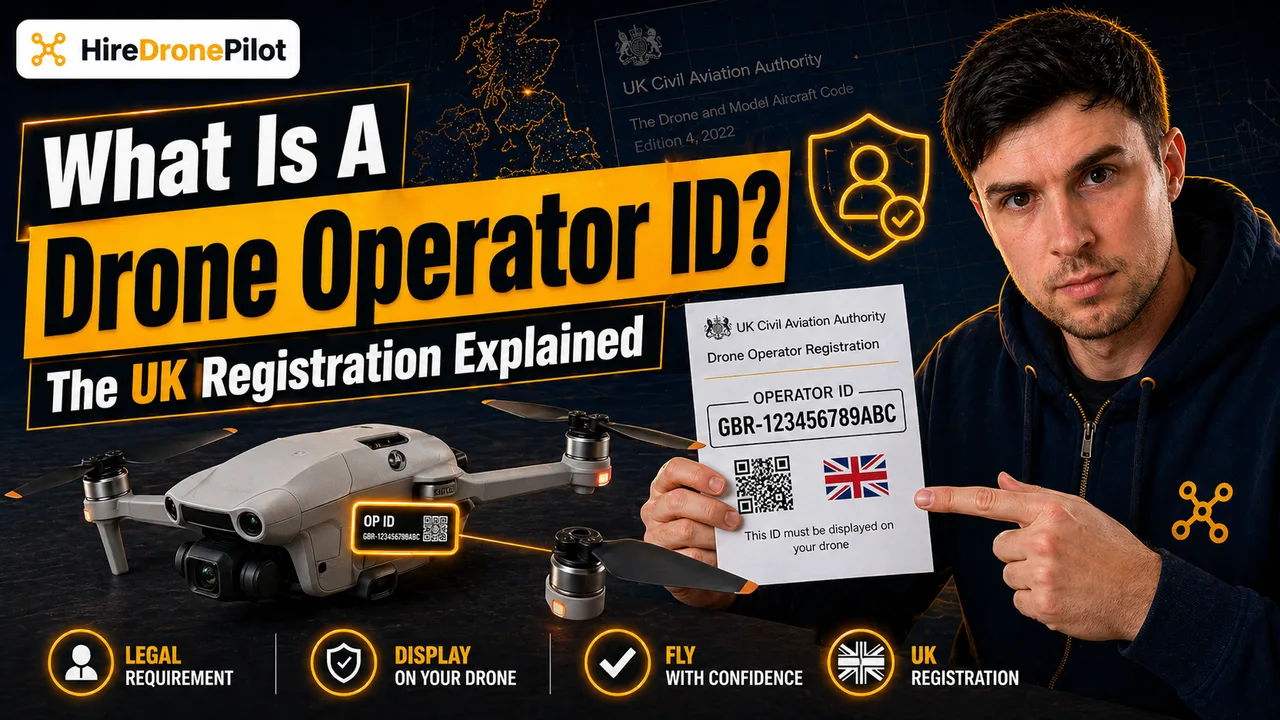
Your Operator ID must be on the main body of the drone, in clear block capitals taller than 3mm, secure against damage, and visible from the outside — or inside a compartment that can be opened without using a tool. A battery bay that pops open under a thumbnail counts. Anything that needs a screwdriver does not.
You label with the Operator ID, not the Flyer ID. The two numbers mean different things, and the label is the one that tells an investigator who is on the hook if something goes wrong. In practice most drone pilots use a small printed sticker on the underside of the shell; some slip a label inside the battery bay so the exterior paint stays clean. Either route is legal, as long as the ID itself meets the size and legibility rules.
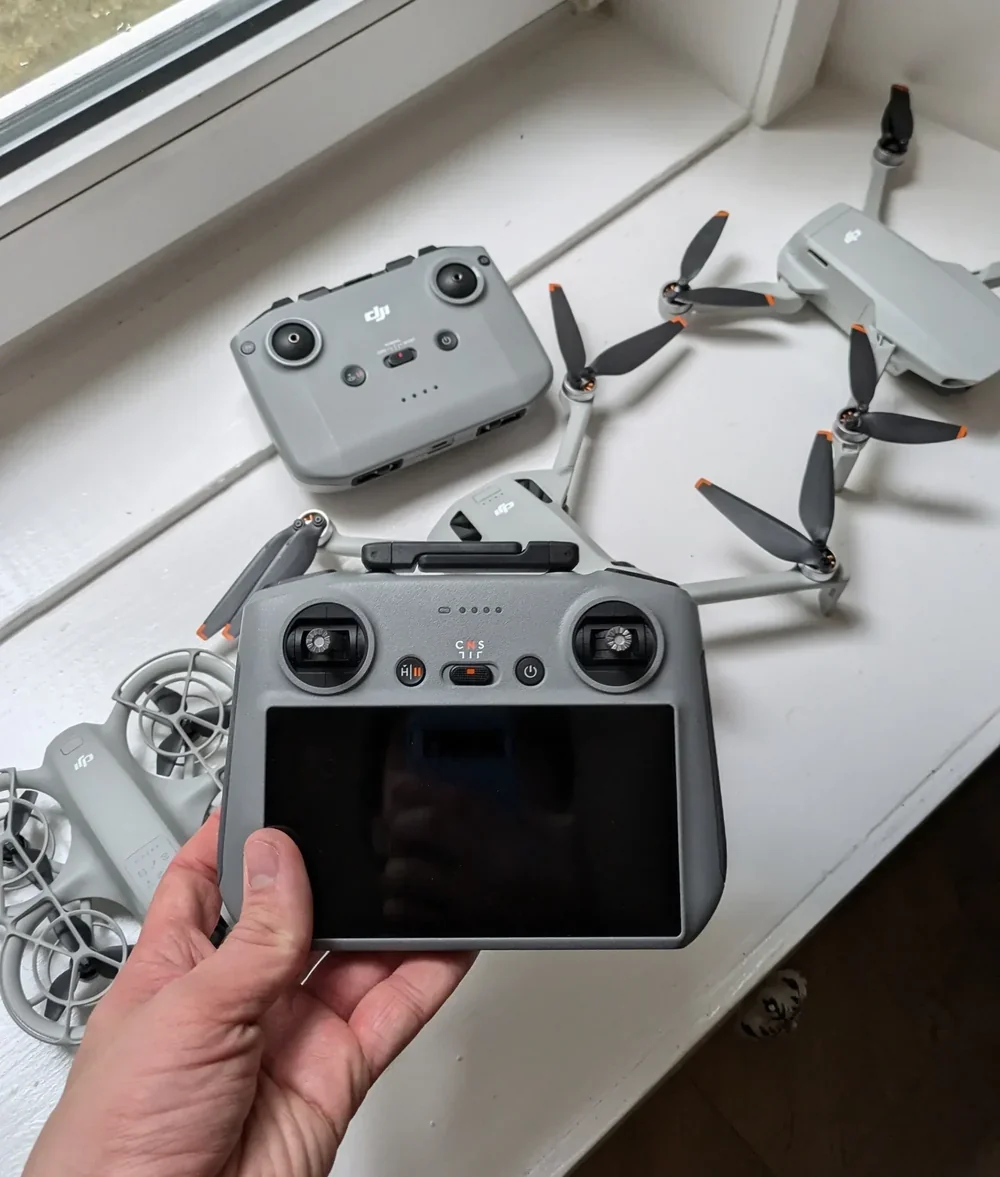
Your Operator ID is separate from Remote ID, but the two are issued together
When you register for your Operator ID, the CAA also generates your Remote ID. These are not the same number. The Operator ID is the short registration reference you label on the outside of the drone. The Remote ID is a longer, case-sensitive identifier that your drone's firmware broadcasts over the air during every flight.
From 1 January 2026, every UK1, UK2 and UK3 class drone flown in the UK must broadcast Remote ID with the function switched on. From 1 January 2028, the requirement extends to UK0 camera drones of 100g or more, UK4 model aircraft, and legacy aircraft in the same weight-and-camera bracket. You enter the Remote ID into your drone's control system using the manufacturer's instructions, and then switch the broadcast on before every flight.
The broadcast carries your Operator ID, the drone's serial number, its height and position, your own position as the remote pilot, and an emergency-status flag such as a low battery. Personal identifying information is not broadcast — only the CAA and authorised organisations can link the Operator ID back to a name. That matters both for your own privacy and for any member of the public who tries to identify a drone operator using an off-the-shelf Remote ID receiver.
One final warning. The last three characters of the Remote ID are your private key. They are sensitive, like a PIN. The CAA guidance is explicit: never write the private key on the drone itself, and never share it alongside the Operator ID label.
An Operator ID identifies the equipment owner — a Flyer ID certifies the person flying
This is the distinction that sits at the heart of the UK registration system. The Operator ID and the Flyer ID are two separate credentials that do two different jobs, and for most drone flights you need both.
The Operator ID identifies who is legally responsible for the drone. It is paid, annual, restricted to adults over 18, and labelled on the drone. The Flyer ID certifies that the person at the controls has passed the CAA theory test. It is free, valid for five years, and attached to an individual — even a child under 13, with a parent or guardian present during the test.
Most drone pilots end up holding both. The only common exception is the adult registering as an operator on behalf of a younger relative who owns the drone — the adult holds the Operator ID without needing a Flyer ID if they will not personally fly.
The penalty for flying without an Operator ID is criminal, not administrative
Flying without the IDs you are legally required to hold is a criminal offence under the Air Navigation Order 2016 and the UK UAS Regulations. The penalties scale with how badly the flight goes, from fines for a routine breach up to imprisonment for the most serious cases — and endangering an aircraft in flight carries a maximum of five years inside.
There are two practical consequences on top of the legal one. Flying outside the rules typically invalidates your third-party drone insurance, which turns any accident from an insurance claim into a direct personal liability. And if you fly commercially without a current Operator ID, you lose the paperwork trail that lets any client verify you are registered — the CAA runs a public lookup portal specifically so that contracting parties can check.
Renewing the ID on its twelve-month cycle, and keeping your contact details current if you move, is therefore less optional than the low fee makes it sound. If the registration lapses, you are back to flying without one.
So the Operator ID is the shortest entry on your compliance checklist. Register once, pay £12.34, label every drone with the same number in block capitals taller than 3mm, renew it each year, and treat the Remote ID that arrives alongside it as separate and more sensitive. For most drone pilots the whole process takes about twenty minutes. What it unlocks — legally and practically — is far bigger than the fee implies.
If you want the next pieces of the compliance picture, the drone pilot qualifications overview covers the Flyer ID, A2 CofC, GVC and the wider ladder.
Got a specific scenario you want covered — an organisation registering its first drone, a sub-250g camera model, or an old drone without a class mark? Drop a note to peter@hiredronepilot.uk and I will come back to you directly. If you prefer the video version of this explainer, the comments are open on YouTube.
References
Primary source material for this article is the UK Civil Aviation Authority. External links open in a new tab.
- UK CAA — Flyer IDs and Operator IDs · Operator ID definition, £12.34 annual fee, age 18 requirement, operator duties
- UK CAA — Get an Operator ID (individual) · individual registration flow, portal URL, required inputs
- UK CAA — Get an Operator ID for an organisation · accountable manager rule, organisation categories, company/charity registration number requirement
- UK CAA — Labelling your drone or model aircraft · block capitals taller than 3mm, main body, visible/tool-free compartment
- UK CAA — Registering to fly drones and model aircraft · weight and camera thresholds for when Operator ID is required
- UK CAA — Remote ID (RID) · 1 January 2026 start date for UK1/UK2/UK3, broadcast data, private key guidance
- UK CAA — The Drone and Model Aircraft Code (CAP2320) · rules 30–36 on operator registration, labelling, Remote ID, annual renewal
Peter Leslie
Founder & GVC Drone Pilot
Peter is the founder of HireDronePilot. With thousands of logged commercial flight hours, he writes about drone technology, commercial surveying tactics, and UK aviation compliance.
Connect on LinkedIn