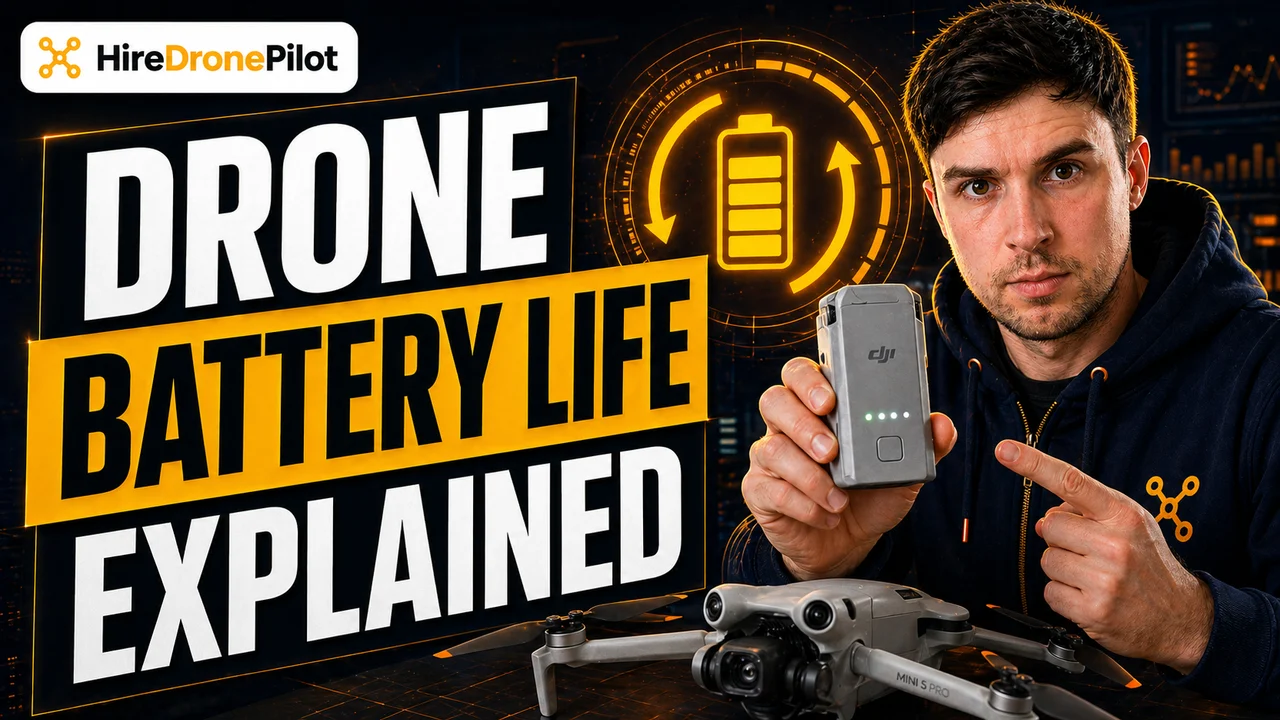
Can I Charge a Drone Battery Overnight? The Honest Answer

Peter Leslie
28 Oct 2025
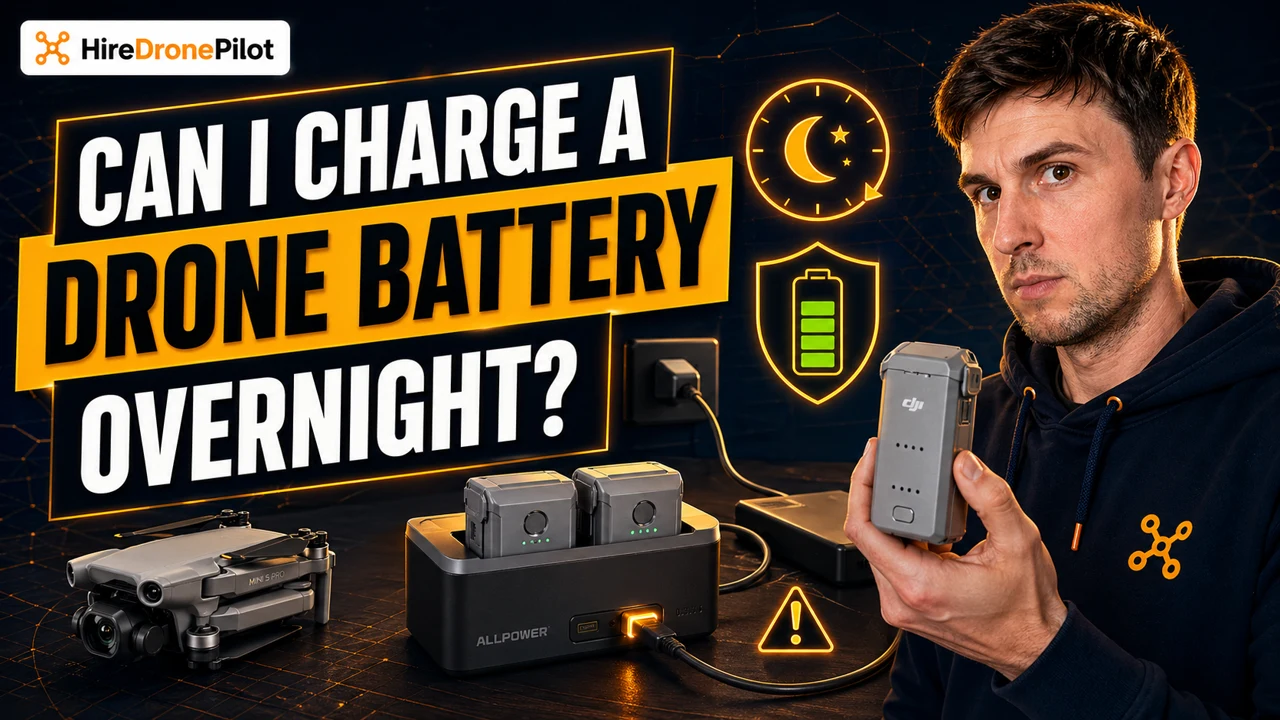
Key Takeaways
- Charging a drone battery overnight unattended is the single most common cause of lithium-polymer drone fires, because you cannot respond to warning signs while asleep
- A damaged or overcharged LiPo drone battery can enter thermal runaway — a rapid chemical chain reaction that progresses to fire without external ignition
- Smart chargers reduce the risk but do not eliminate it; a defect, power surge, or component failure can bypass the built-in cut-off and continue delivering current
- Charge during the day on a non-flammable surface, in a LiPo-safe bag or fire-rated container, with nothing combustible within arm's reach
- Unplug promptly once the charge cycle completes, because continuous top-up at full voltage accelerates long-term capacity loss on lithium-polymer cells
The question can I charge my drone battery overnight has a one-word answer: no. The long answer is that every safety-conscious drone operator I know — including every GVC-qualified drone pilot running commercial jobs under UK drone law — charges during the day, on a non-flammable surface, inside a LiPo-safe bag, and never out of the room.
The reason is not superstition. It is that the lithium-polymer chemistry inside a drone battery has a specific, well-documented failure mode called thermal runaway, and a battery going into thermal runaway makes noise, heat, and eventually flame before it becomes a full fire. None of those warnings help if you are asleep upstairs.
Overnight unattended charging is the single most common cause of drone battery fires in UK homes
The problem is not that charging a LiPo drone battery is inherently dangerous — it is that an unattended LiPo battery removes your ability to catch a problem while it is still small. A drone battery that is failing will usually give you warnings before it fails catastrophically. It will feel hotter than normal to the touch. It may hiss or pop quietly. It may swell or deform visibly. A smell of chemical vapour is another late-stage signal.
Every one of those warnings is useless if nobody is in the room. By the time the fire alarm triggers, the drone battery has already moved past the point where unplugging the charger would have helped.
The second problem is what is around the drone battery when it fails. A drone battery ignited on a wooden desk or near soft furnishings will pass heat into flammable material within seconds. The fire spreads outward from the battery, not the other way around, which is why both the charging surface and the surrounding space matter. The same pre-flight discipline that drives safe planning around the 120-metre height ceiling applies to how the drone battery is handled on the ground.
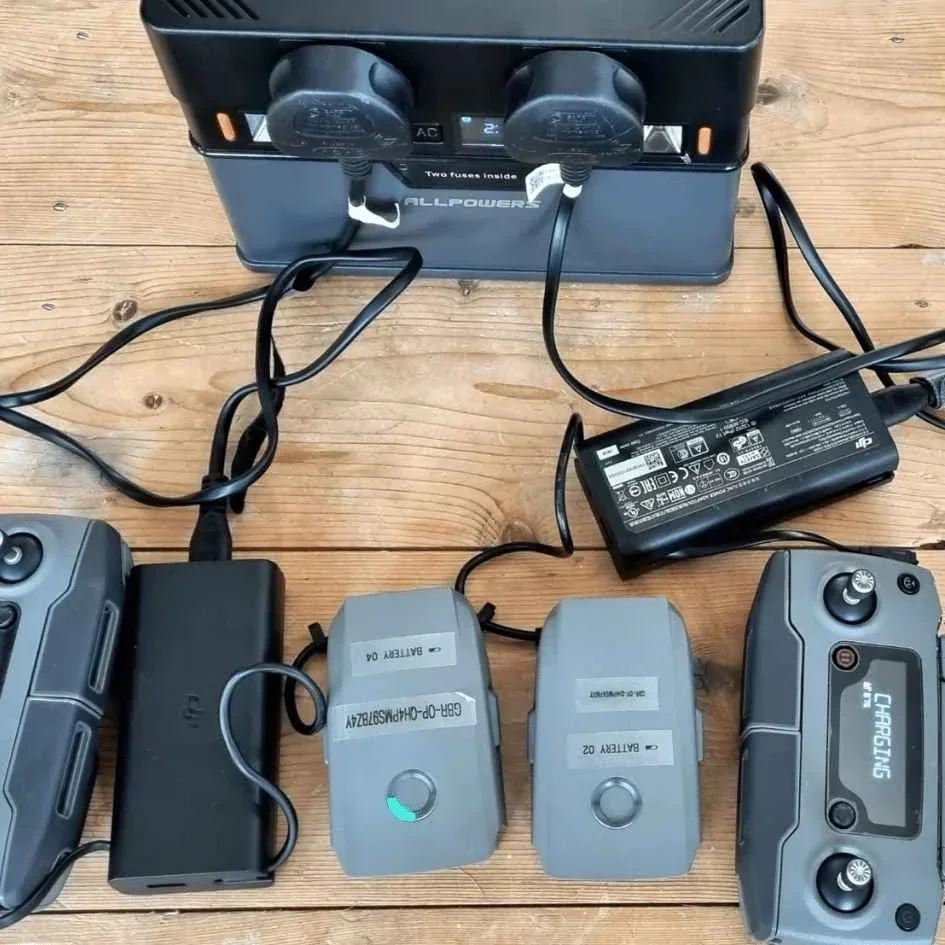
LiPo chemistry can enter thermal runaway when overcharged or damaged, and the process is self-sustaining
Thermal runaway is the technical name for what happens when a LiPo cell fails internally. The cell heats up, internal chemistry accelerates, the rising temperature triggers further reactions, and the whole process becomes self-sustaining.
Once one cell enters runaway, it transfers heat to adjacent cells in the same pack. Those cells then begin their own runaway, and the process cascades through the pack. The result is a fire that cannot be cooled easily because the energy source is internal — pouring water on it will not stop the chemistry, only contain the damage.
Overcharging is the classic trigger. A drone battery taken past its design voltage, or a damaged cell that has developed an internal short, is where thermal runaway starts. Smart chargers are designed to prevent the first of these, but they do not detect the second.
The symptoms are visible well before the fire stage — swelling, hissing, vapour release, pack deformation. The moment any of them appear, the drone battery should be disconnected, moved to a non-flammable open space, and not touched again until it has cooled completely. If it is visibly damaged, it should be taken to a licensed battery-recycling facility rather than disposed of in domestic waste. Understanding this failure mode is why commercial drone pilot qualifications cover battery safety so explicitly.
Even modern smart chargers are not a complete fail-safe
The most common justification for charging overnight is that modern smart chargers handle the cut-off automatically. They do — when they are working. The problem is that a charger is an electronic device with a finite failure rate, and the consequence of failure on a LiPo drone battery is not a minor inconvenience.
A charger can fail three ways. A manufacturing defect can bypass the protection circuitry in a small percentage of units. Component wear over time can degrade the cut-off behaviour. And an external event — a power surge, a mains spike, lightning-induced noise — can temporarily override the cut-off while current continues to flow.
None of those are common. But the residual risk is real enough that every professional drone operator I know treats the smart charger as a safety net rather than an absolute. The drone battery is the expensive component; the charger is the backup. Unattended charging turns the backup into the only line of defence.
The safe charging setup is simple — daytime, non-flammable surface, LiPo-safe bag, nothing combustible within arm's reach
The operational habits that make charging safe are not complicated and do not require specialist equipment beyond a decent LiPo-safe bag or a vented metal container.
Charge during the day, in a room you are using. That keeps a human in earshot of any early warning sign. Use a hard, non-flammable surface — concrete, ceramic tile, a steel workbench. Avoid wood, carpet, bedding, or anything with foam or fabric. Keep curtains, paper, and flammable liquids well clear.
Use a LiPo-safe charging bag or a fire-rated ammunition-style box for the drone battery while it charges. Those containers are designed to contain the energy release from a failing cell, not to extinguish it — which is the correct design goal, since LiPo fires are difficult to cool externally.
Always use the manufacturer's charger or an equivalent approved alternative. Off-brand chargers that omit balance functions or temperature monitoring are a cost-saving that trades directly against fire risk.
Unplug promptly once the charge cycle completes to protect long-term capacity
Even on a healthy drone battery with a healthy charger, leaving the pack connected at one hundred per cent state of charge for hours after the cycle completes accelerates chemical ageing. The cell chemistry prefers to rest at a middle state of charge, not at full voltage.
Over several hundred cycles — which is roughly the lifespan of a consumer LiPo drone battery — the difference between prompt unplug and habitual overnight charging shows up as noticeably reduced flight time. A pack that originally delivered twenty-five minutes may give you twenty minutes much sooner than it should, and a shorter usable flight time directly limits how far your drone can safely travel on any single mission.
The overall battery life guide has more on cycle counts and storage practice, but the short version is that unplug-when-full is both the safe habit and the longest-life habit.
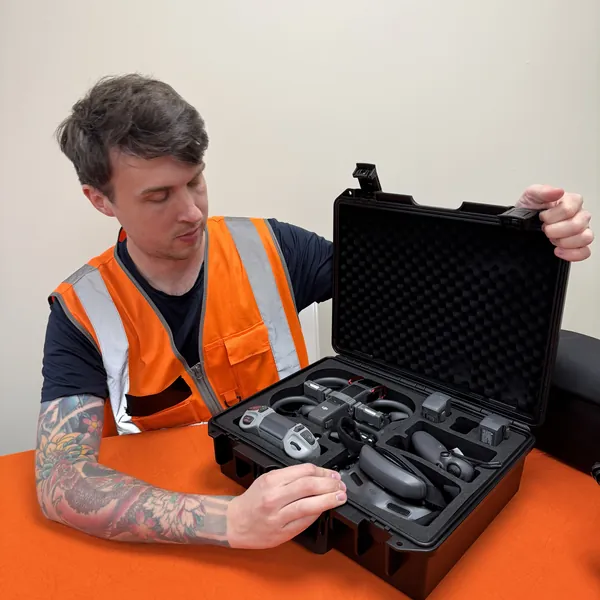
Store drone batteries at a middle state of charge, not fully charged or fully discharged
The same chemistry that makes overnight top-up ageing also makes long-term storage at full charge a mistake. LiPo drone batteries store best at a middle voltage — typically forty to sixty per cent capacity — and many smart batteries will automatically discharge themselves to that level after a few days of inactivity.
If you are putting drones away for a month or more, discharge each pack to the storage level before you put it in the drawer. Store in a cool, dry place at moderate temperature, and keep the packs inside a LiPo-safe container if the storage location is shared with anything flammable. Commercial operators working under the GVC framework should treat this as a documented element of their maintenance routine.
Never store a fully discharged drone battery. A pack taken to zero volts and left there for weeks can drop below the minimum cell voltage, which permanently damages the pack and makes it unsafe to reuse even if it appears to charge again.
Warning signs that mean the drone battery should be retired, not recharged
A drone battery that shows physical or electrical warning signs should not go back into service. Retire and responsibly dispose of any pack that exhibits any of the following.
- Visible swelling or deformation. Even slight puffing is a sign of internal gas production and permanent damage.
- Hissing, popping, or chemical smell during charge or use.
- Excessive heat that is well above normal for the pack and does not resolve with a rest.
- Cell-voltage imbalance visible in the charger's balance display or in the drone's app.
- Sudden drop in flight time that is not explained by cold weather or strong wind.
Licensed battery recyclers will accept retired LiPo packs. Domestic waste is not appropriate — the chemistry still carries fire risk even at low state of charge, and the metals inside should be reclaimed rather than landfilled.
The short, honest answer is to charge during the day, watch the cycle, and treat the drone battery as the single most dangerous part of the kit
Every professional drone operator eventually settles into the same habits because the consequences of getting battery management wrong are severe and the habits themselves are not onerous. Charge during the day. Watch the cycle. Use a LiPo-safe bag on a non-flammable surface. Unplug when the pack is full. Retire anything that looks, smells, or behaves wrong.
Those habits are the same whether the drone is a consumer unit doing hobby flights or a commercial rig paying the drone pilot's mortgage. The chemistry does not care about the application.
Got a scenario — a specific charger, an unusual storage setup, a flight that drew the battery hard and left it hot — you want a second opinion on? Drop a note to peter@hiredronepilot.uk and I will come back to you directly. If you prefer the video version of this explainer, the comments are open on YouTube.
References
Manufacturer guidance and CAA operational material. External links open in a new tab.
- DJI Support — Mini 4 Pro (Intelligent Flight Battery guidance) · Manufacturer charging and storage recommendations for a representative consumer LiPo pack
- UK CAA — The Drone and Model Aircraft Code · Pre-flight checks and safe operating habits including battery condition
- UK CAA — Safety advice · Technical failures, human factors, and collision avoidance
Peter Leslie
Founder & GVC Drone Pilot
Peter is the founder of HireDronePilot. With thousands of logged commercial flight hours, he writes about drone technology, commercial surveying tactics, and UK aviation compliance.
Connect on LinkedIn