What Drives a Drone Pilot Quote: The Seven Factors Clients Miss

Peter Leslie
2 Oct 2025

Key Takeaways
- A professional UK drone pilot quote is almost never an hourly rate — it is a half-day or full-day price that absorbs planning, airspace checks, and post-flight data work
- Project complexity, equipment grade, and deliverable format drive the single biggest swings on the headline number
- A qualified drone operator with a GVC and an Operational Authorisation legitimately costs more than someone working in the Open A1 sub-category, because the paperwork overhead is real
- Travel, overnight stays, and site access logistics should be itemised on the quote — if they are buried, the final invoice is going to surprise you
- Urgent rush bookings typically carry a surcharge of roughly twenty-five to fifty per cent over a standard quote, because the drone pilot is rearranging other work for you
A drone pilot quote is not an hourly rate with a bit of padding. It is a full-service price that covers the flight, every hour of planning that happens before the flight, and every hour of data work that happens after it. If you walk into a quote expecting to pay per airborne minute, the number will always look too high.
The same brief can honestly land at three hundred pounds or at five thousand, and the difference is not greed — it is a stack of real cost drivers that clients rarely see. This piece walks through the seven factors that actually move a UK drone pilot quote up or down, so you can read any proposal you receive and tell the difference between a fair price and a lazy one.
Project complexity is the single biggest lever on the headline number
Every drone quote starts from the job shape. A drone pilot flying twenty minutes over a semi-detached house to produce a handful of edited stills is pricing a different job to a drone pilot stitching a twenty-hectare orthomosaic with ground control points.
The simple version — basic drone photography for a property listing or a small commercial site — is at the low end because the planning, flight, and delivery are all compressed. The complex end — cinematic production, precision drone surveys, or a multi-building roof inspection — needs a full mission plan, multiple flights, often multiple batteries, and a defined deliverable stack at the end.
The pitfall I see most often is underestimating what goes into a simple shot. A smooth orbit around a house that looks identical to a hobbyist clip takes far more planning, rehearsal, and post-production than a single high-altitude photo. Always discuss the deliverable in full before comparing quotes — a lower number that delivers a raw MP4 is not comparable to a higher number that delivers a colour-graded, music-cut marketing video.
Equipment grade is a real cost driver, not a marketing pose
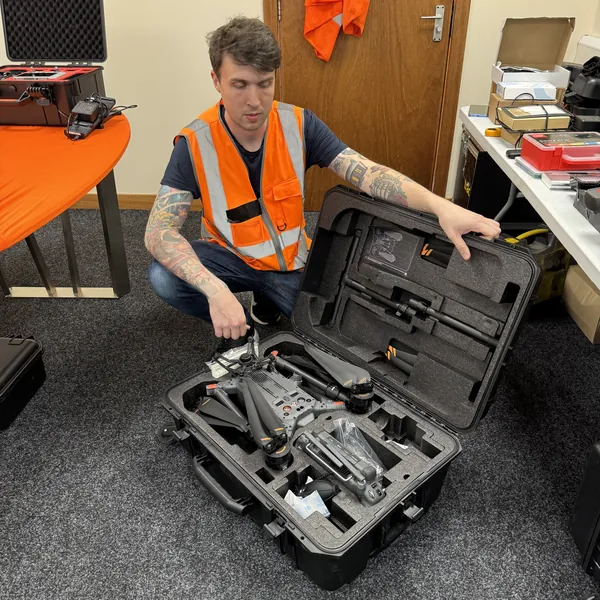
Drone pricing is bracketed by the platform on the day. A basic consumer drone worth a few hundred pounds is a very different insurance and replacement-cost profile to a survey-grade dual-gimbal system worth twenty-five thousand. Clients pay the difference because the drone operator is absorbing the difference.
Specialist sensors move the number further. A thermal payload, a LiDAR module, a multispectral camera, or a real-time kinematic setup are each several thousand pounds of kit on top of the drone, and each one requires training, calibration, and software licensing to operate. Quotes that involve those payloads are always higher, and they should be — the client is not just paying for airtime, they are paying for a sensor package that a generalist cannot provide.
A good drone pilot will also fly every site with at least one backup drone. The cost of arriving with a single drone and discovering a firmware glitch on the tarmac is a failed day and an apologetic email; the cost of a second drone in the kit bag is trivial by comparison.
Qualifications and insurance overhead justify a non-trivial part of the number
Every UK drone operator flying for money has to meet a baseline competency requirement. The minimum for most commercial work is either the A2 Certificate of Competency or the GVC — and for any job that requires flight close to buildings, people, or in a built-up area, the GVC plus an Operational Authorisation is what the CAA actually wants to see.
That paperwork is not free. A CAA Operator registration, an Operational Authorisation, third-party insurance under the UK Civil Aviation (Insurance) Regulations 2005, and annual qualification renewals are all sitting underneath the day rate. Drone pilots also pay for their own flight logs, ongoing currency, and — where applicable — specialist competencies like thermography or night rating.
If a quote looks implausibly cheap, the first thing to check is whether the drone pilot is actually carrying the qualifications and insurance the job requires. A rate that undercuts the market by fifty per cent is almost always a rate that does not reflect the full regulatory overhead.
Location, access, and travel costs should always be itemised on the quote
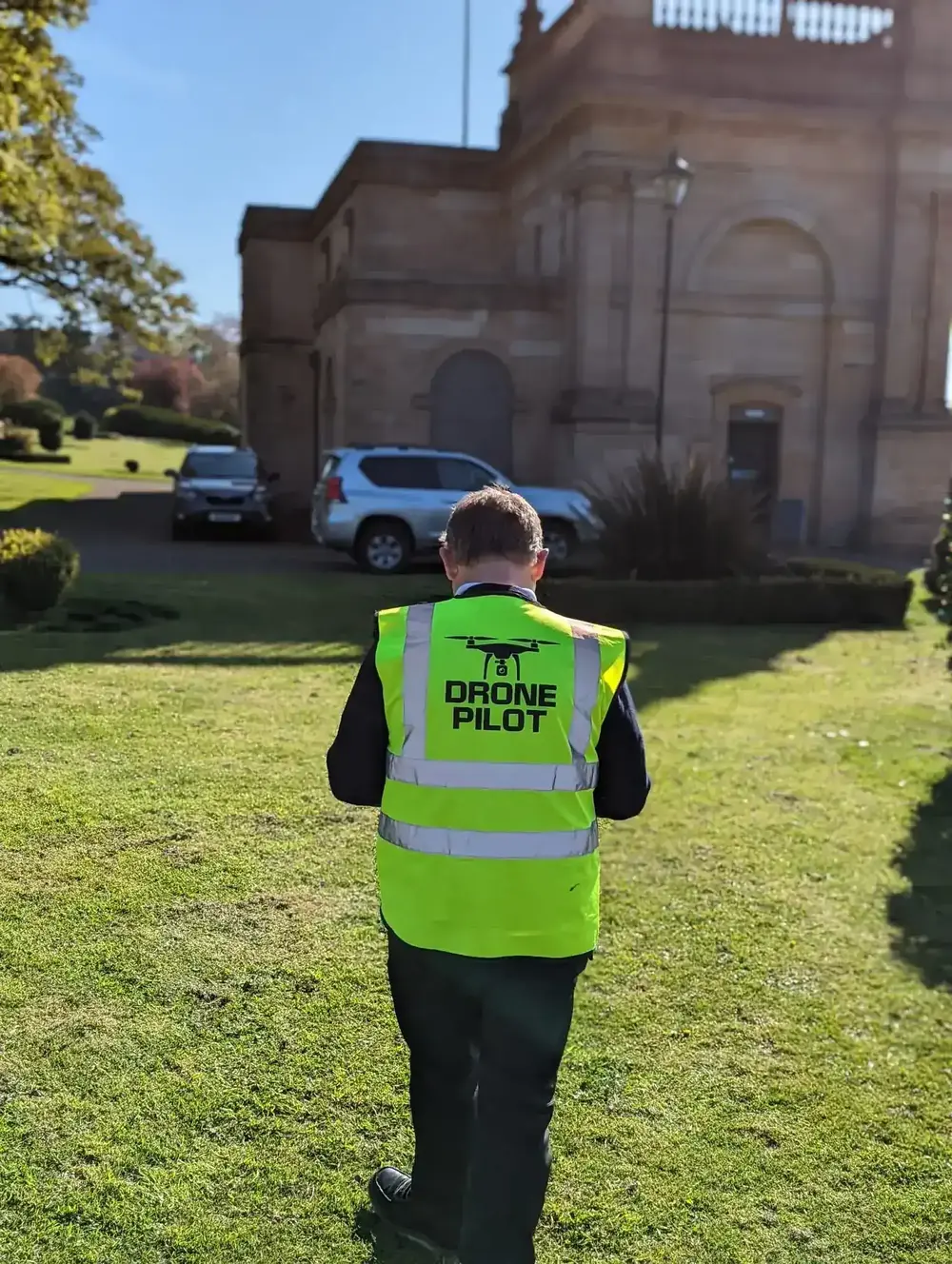
Rural and remote jobs often look cheaper on the headline number because rural day rates tend to be lower, but add hours of drive time and sometimes an overnight stay and the total can equal or exceed a city-based booking.
A good quote itemises three things on this front. The day rate itself. Travel — either mileage, portal-to-portal time, or a fixed travel line. Accommodation and subsistence for multi-day jobs. If any of those are rolled into a single line, the client cannot tell which drone pilots are close to the site and which ones are driving two hundred miles.
London and other dense urban areas typically sit at the top of the range for a different reason — the airspace is restricted, the planning time goes up, and the insurance tail on an urban flight is higher than on a rural one.
My rule is to always itemise travel separately on the quote. A surprise on the final invoice destroys the client relationship faster than any other cost. Ask for the itemisation upfront and expect a drone pilot who cannot provide it to be burying something.
The flight is usually the shortest part of the day the quote is pricing
Clients who price drone work against flight time massively underestimate the true shape of the day. A thirty-minute flight sits inside a four-hour on-site commitment — travel, setup, pre-flight checks, airspace confirmation, the flight itself, equipment breakdown, and site debrief.
Around that, another one to three hours disappears into the pre-flight phase, which happens on a different day. Site survey, airspace analysis, Operational Authorisation confirmation, risk assessment, and method statement all happen before the drone pilot ever arrives on site.
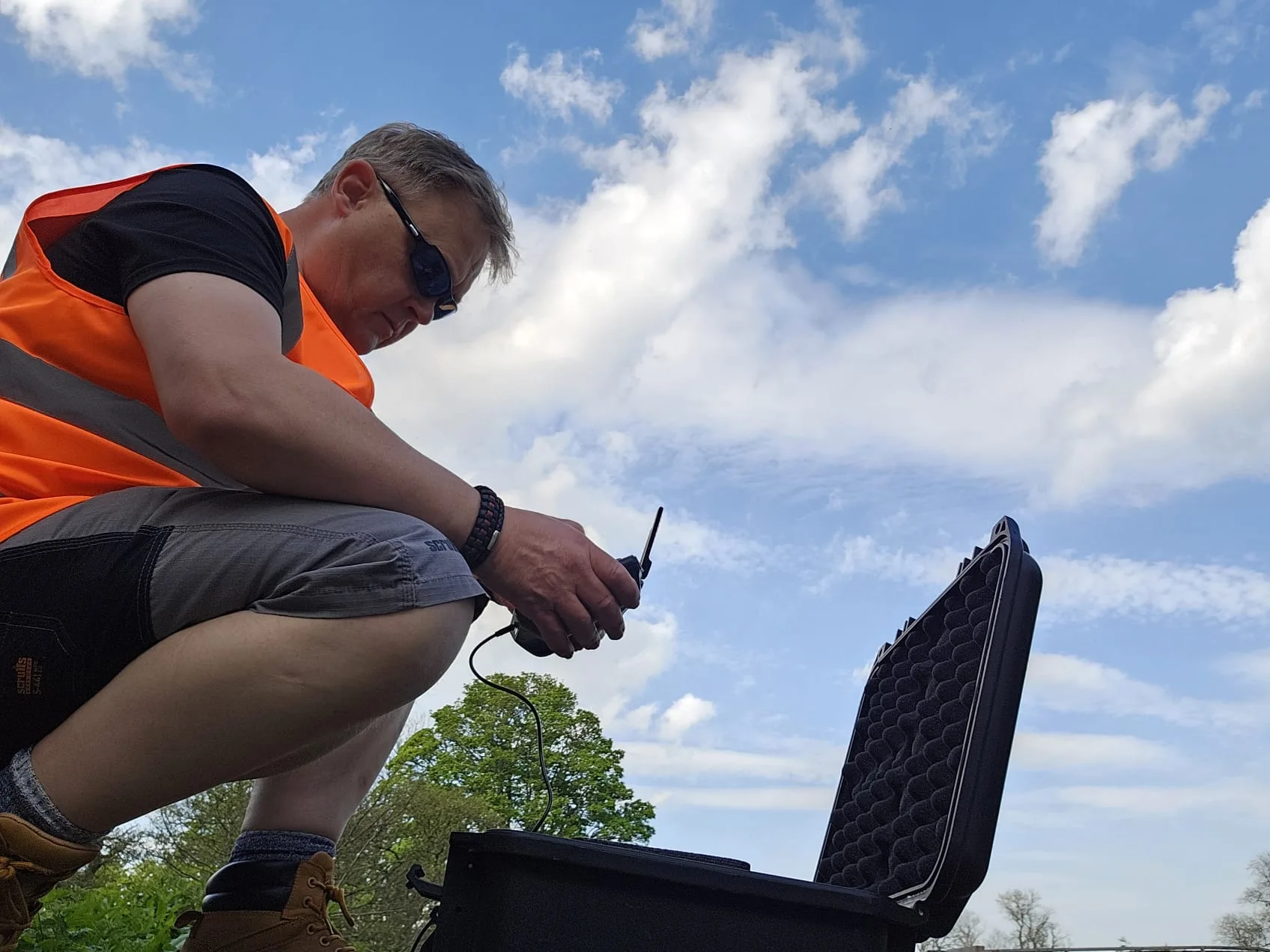
The post-flight phase eats further hours. A basic photo job needs colour and cropping. A video needs edit, grade, and delivery. A survey needs processing, quality control, and export into the format the client's engineering team uses. That is why day rates — not hourly rates — are the standard UK professional model. They stop the client watching the clock on a shoot and stop the drone pilot cutting corners on the planning phase.
Data processing and final deliverables can outweigh the flight itself on technical jobs
On any job that produces a dataset rather than a picture, the post-processing is where the real hours live. Photogrammetry, thermal analysis, point-cloud registration, and orthomosaic stitching are computer-intensive processes that can take days of machine time and require licensed software most hobbyists do not own.
A detailed drone survey or a thermal fault report can reasonably have more post-flight hours than on-site hours, and the quote should reflect it. If a client expects raw footage, the number is lower; if the client expects a georeferenced deliverable ready for BIM integration, the number is much higher and fairly so.
Be as specific as you can when you send a brief. Asking for the video files is different to asking for a two-minute graded marketing video with music and brand overlays. The more specific the request, the more accurate the quote, and the fewer surprises down the line.
Rush jobs, restricted airspace, and high-risk sites carry real premiums for real reasons
Two things move a quote upward without any change to the deliverable. The first is urgency — a last-minute booking typically runs twenty-five to fifty per cent above a standard quote, because the drone pilot is reshuffling existing work, doing the planning phase in compressed time, and often working outside business hours.
The second is risk. Inspecting a tall structure, flying in restricted airspace, operating in a Flight Restriction Zone near an airport, or working close to people requires a more detailed risk assessment, potentially additional CAA permissions, and higher insurance limits. Quotes that touch these conditions are legitimately higher, and the quote should explain why.
Weather dependency also factors in. A drone pilot quoting a weather-sensitive outdoor shoot has to price in the probability of a reshoot, either by quoting for two site visits or by building contingency into the day rate.
The best way to compare drone pilot quotes is by deliverable, scope, and itemisation — not by raw number
Pulling all of this together, the highest-value thing a client can do when comparing drone pilot costs is ignore the raw headline number for a moment and read the quote. A good quote will list the day rate, the deliverable, the travel, the equipment grade, the insurance position, and any CAA permissions required for the specific job.
A bad quote will give you a single number and nothing else. It is not always dishonest — sometimes the drone pilot just does not document their work well — but it makes it impossible for you to compare it to a competing quote that does itemise.
If you want me to review a brief before you put it out to quote, or walk through a proposal you have already received, drop a note to peter@hiredronepilot.uk and I will come back to you directly. If you prefer the video version of this breakdown, the comments are open on YouTube.
References
Primary source material for this article is the UK Civil Aviation Authority. External links open in a new tab.
- UK CAA — Flying drones for work · What commercial use means, operator responsibilities, insurance requirement
- UK CAA — GVC, RPC-L1, L2 and L3 · GVC framework for commercial VLOS operations
- UK CAA — A2 Certificate of Competency · Entry-level commercial qualification for Near People (A2) work
- UK CAA — UK Regulatory Framework for Drones · Legal basis for commercial drone insurance and Operator ID
Peter Leslie
Founder & GVC Drone Pilot
Peter is the founder of HireDronePilot. With thousands of logged commercial flight hours, he writes about drone technology, commercial surveying tactics, and UK aviation compliance.
Connect on LinkedIn