Flying a Drone in London: Why It Is the Hardest City in the UK

Peter Leslie
16 Apr 2026
Key Takeaways
- Central London sits inside the Heathrow and London City Flight Restriction Zones, so almost every flight inside the M25 needs written air traffic control permission before take-off
- The eight Royal Parks — including Hyde Park, Richmond Park, Regent's Park and Greenwich Park — ban drone take-off and landing by default under their own byelaws, regardless of what the Drone Code allows
- Central Westminster is covered by a tight network of restrictions protecting Parliament, Downing Street, Buckingham Palace and the City financial district, and the Metropolitan Police treat unauthorised drone flights there as a counter-terror matter
- Serious professional work along the Thames is possible, but only through the Specific Category with an Operational Authorisation, a full site survey and agreement from the relevant landowner
- A recreational drone pilot who wants to actually fly is better off heading to the edges of the capital — Lee Valley, the Epping Forest fringes, or open ground beyond the M25 — rather than trying to thread a flight through zone one
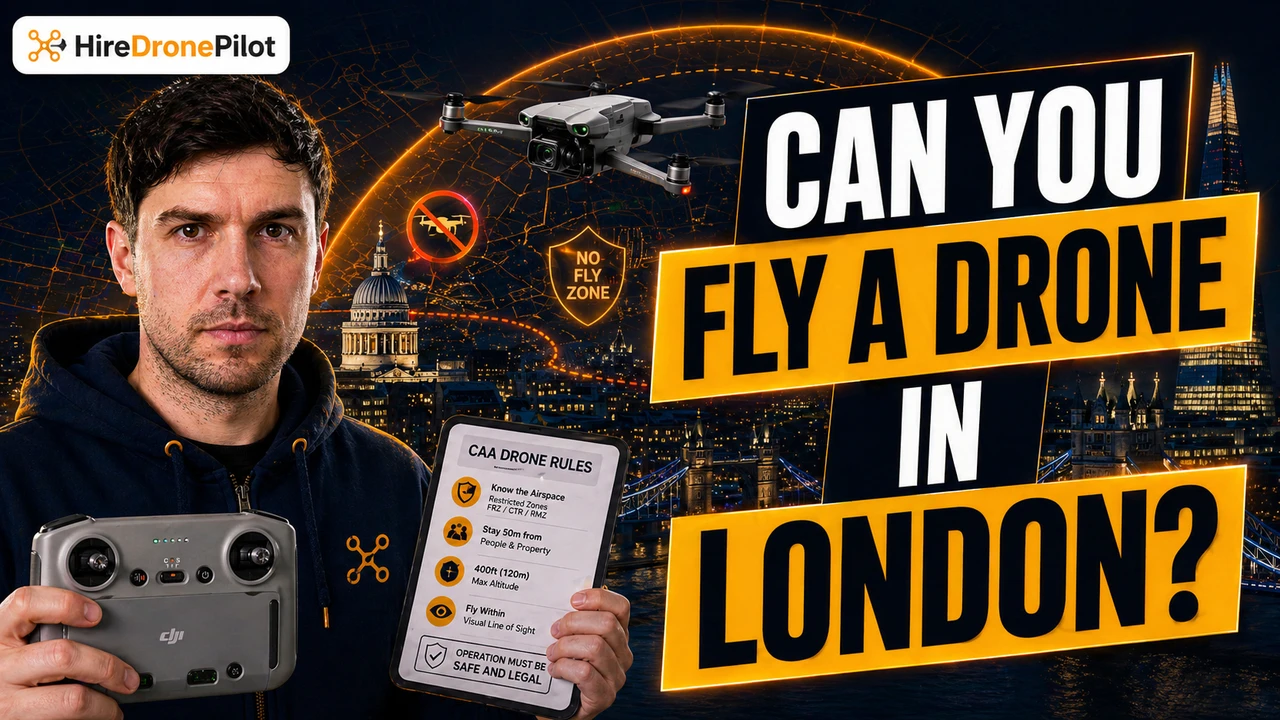
London is the single hardest city in the UK to fly a drone legally. The combined weight of two Flight Restriction Zones, a network of central-London restrictions, eight Royal Parks that ban flying under their own byelaws, and a police service that treats drones as a counter-terror concern means that most of the map inside the M25 is simply off-limits without written permission.
This guide walks through why the capital is locked down the way it is, how the few legal professional routes actually work, and — if you are a hobbyist with a sub-250g drone and a free afternoon — where you can realistically go to put it in the air without breaking any UK drone laws.
London sits under two of the UK's largest Flight Restriction Zones, and that single fact closes most of the capital to recreational flying
Every licensed aerodrome in the UK is ringed by a Flight Restriction Zone. It extends as a two-and-a-half-nautical-mile cylinder from the airfield to a height of two thousand feet, with runway extensions that stretch a further five kilometres off each end of the runway up to a height of two thousand feet. You cannot fly a drone of any weight inside an FRZ without permission from the aerodrome's air traffic control.
London has two of the largest FRZs in the UK stacked on top of each other. Heathrow's FRZ covers most of west London — from Feltham and Hounslow across to Ealing, Acton and large stretches of Hammersmith. London City's FRZ covers the eastern financial district and the Thames from the Isle of Dogs out towards Woolwich. Between the two, you can cross large sections of zones one, two and three without ever leaving controlled airspace.
On top of the two main airports, London has a dense lattice of licensed heliports and hospital helipads — Battersea Heliport, the Royal London, St Thomas's, the air ambulance pads on top of several central hospitals. Each one carries its own airspace considerations that you must plan around, and the Remote ID transmission from your drone is expected to be on whenever your drone is capable of it.
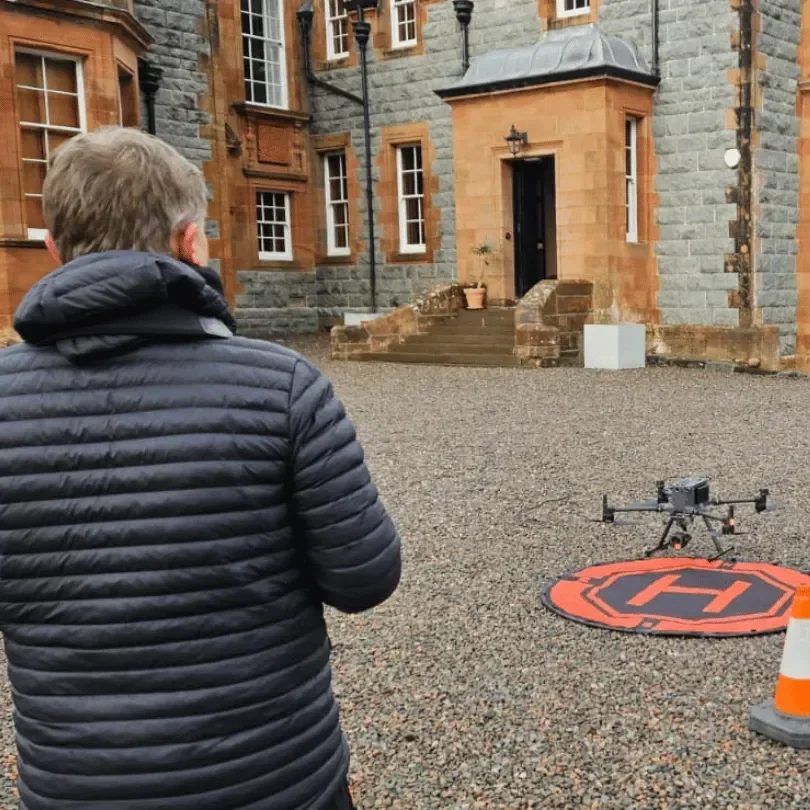
Central Westminster, the Royal Parks and the City are covered by a network of restrictions that effectively bans casual flying across zone one
Above and beyond the FRZs, central London carries a tight cluster of standing restrictions protecting sites of national importance. Parliament, Downing Street, Buckingham Palace, the Mall, Trafalgar Square, the Tower of London and the City financial district all sit under published restrictions that run from ground level up to altitudes well above the normal 120-metre ceiling.
Alongside the airspace layer, the Royal Parks have their own byelaws. The eight Royal Parks — Hyde Park, Green Park, St James's Park, Regent's Park including Primrose Hill, Kensington Gardens, Richmond Park, Bushy Park, and Greenwich Park — prohibit take-off and landing of powered model aircraft and drones as standard. A park warden can and will ask you to leave, and if you refuse, you are committing a byelaw offence on top of any airspace issue.
From a drone pilot's perspective, this is the bit most people underestimate. It is entirely possible for a flight to be legal under the Drone Code and still be illegal on the ground because the landowner has not given you take-off and landing permission. In central London that landowner is almost always the Royal Parks, the Crown Estate, Historic Royal Palaces, a Transport for London authority, a Westminster or City of London borough, or a private landlord with a strict no-drones policy.
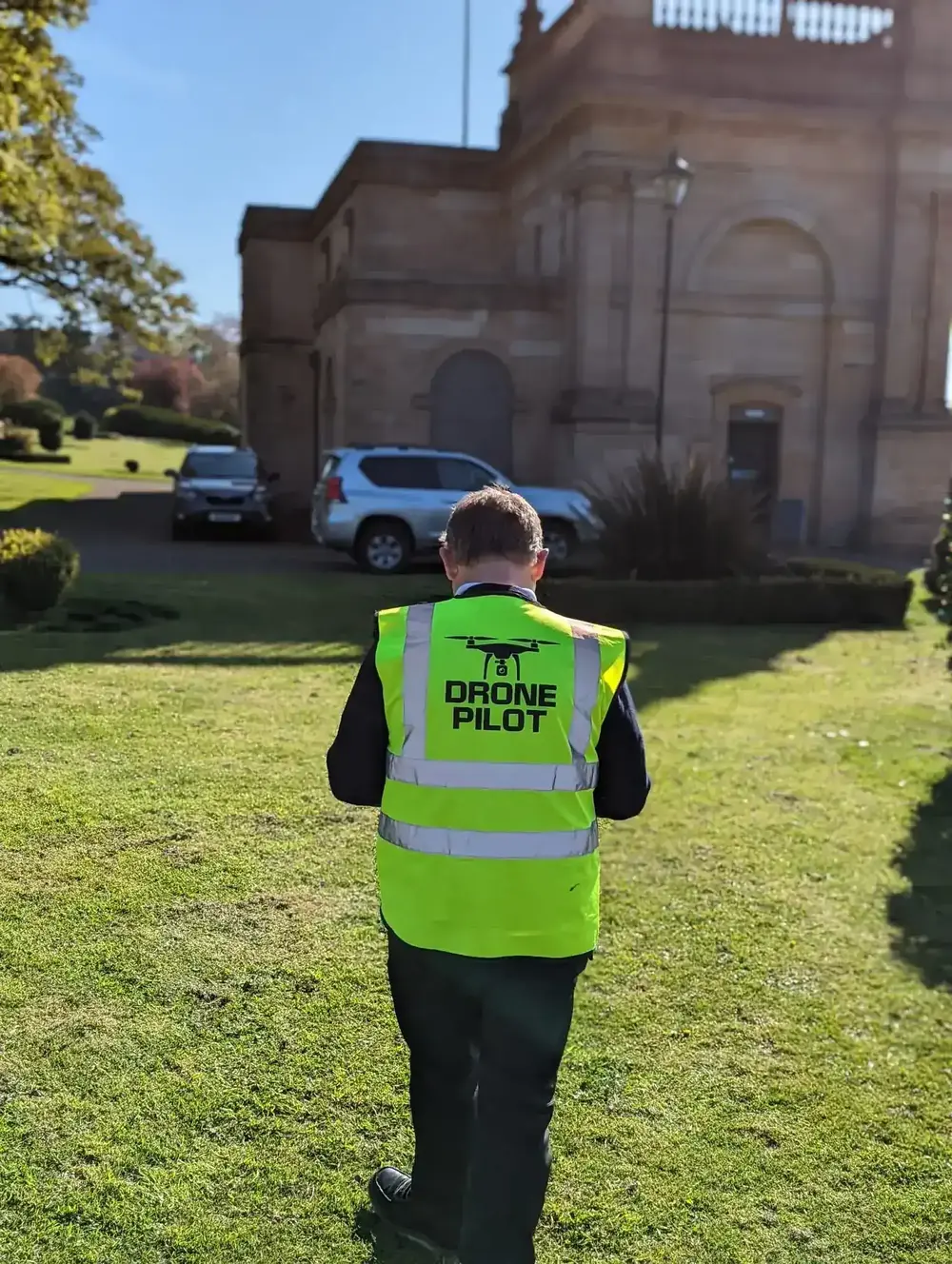
The Metropolitan Police treat unauthorised drone flights across central London as a security matter, not a licensing one
If somebody reports a drone flying near a government building, a stadium, a royal residence or a crowded Thames-side event, the call is not going to the Civil Aviation Authority. It is going to the Metropolitan Police, and in the wrong location it is going to Specialist Firearms Command. In central London, a drone in the sky that has not been pre-notified to air traffic control is an unknown object, and the response scales with the sensitivity of the site underneath it.
This is the layer that catches visiting drone pilots out. A tourist who has read the Drone Code, registered for an Operator ID, and flown a 249g drone without issue in a quiet field back home will land in Hyde Park and assume the same rules apply. They do not. Police powers over drones under the Air Navigation Order allow an officer to order you to land, seize the drone, and take you in for questioning if the circumstances warrant it.
This is why I tell every client the same thing on the first call: in London, the paperwork is the job. Getting the drone in the air safely is the easy part. Getting the permissions, risk assessments, landowner sign-off and ATC clearance lined up in advance is where ninety per cent of the professional effort goes.
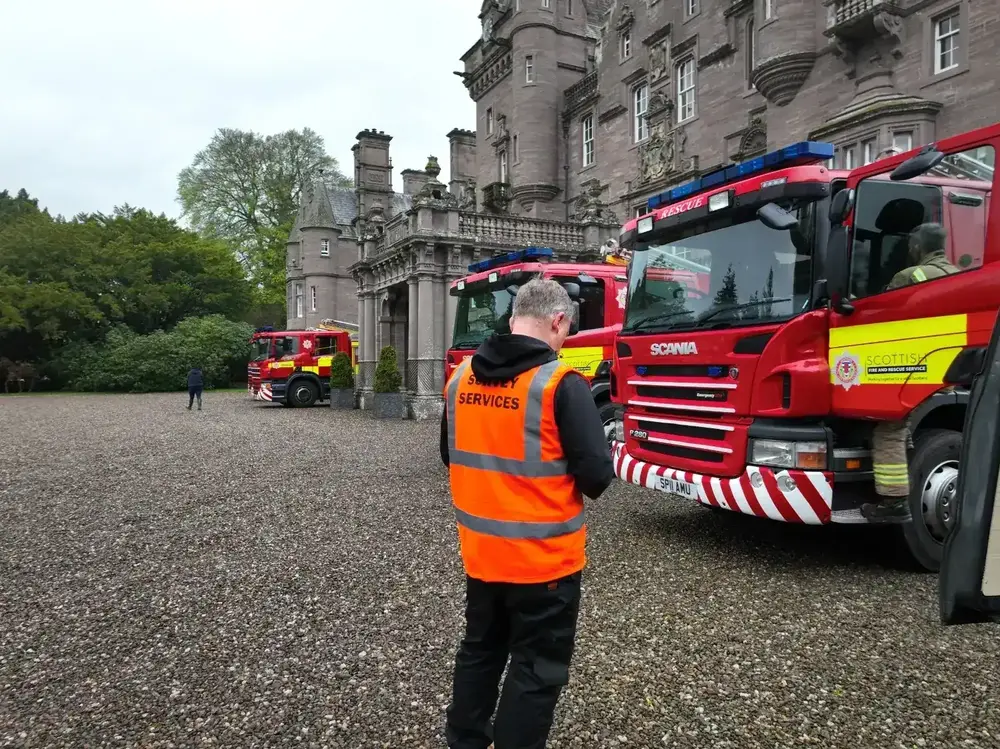
Serious professional work along the Thames is possible, but only through the Specific Category with a full Operational Authorisation
For professional drone photography, film and survey work along the Thames, the legal route is the Specific Category. Open Category rules do not give you enough flexibility to fly around uninvolved people and buildings in the densest parts of the city — you need an Operational Authorisation from the CAA, granted against a specific operations manual and risk assessment.
In practice, the pipeline for a Thames-side commercial job looks something like this. The drone pilots on the job hold either a GVC or a higher-level RPC framework qualification and fly under an Operational Authorisation written against PDRA01 or a bespoke permission. The operator writes a site-specific risk assessment, gets landowner permission for take-off and landing, lodges an airspace coordination request with Heathrow or London City if the site sits in their FRZ, and agrees a time window that works for the airport.
Lead time matters. Plan on at least three weeks between first enquiry and flight day for a straightforward Thames-side job, and expect the clock to start again if you need to change the location, the time window or the flight profile. Valid drone insurance to EC 785/2004 is a hard gate — no landowner or airport will engage with an operator who cannot produce a schedule up front.
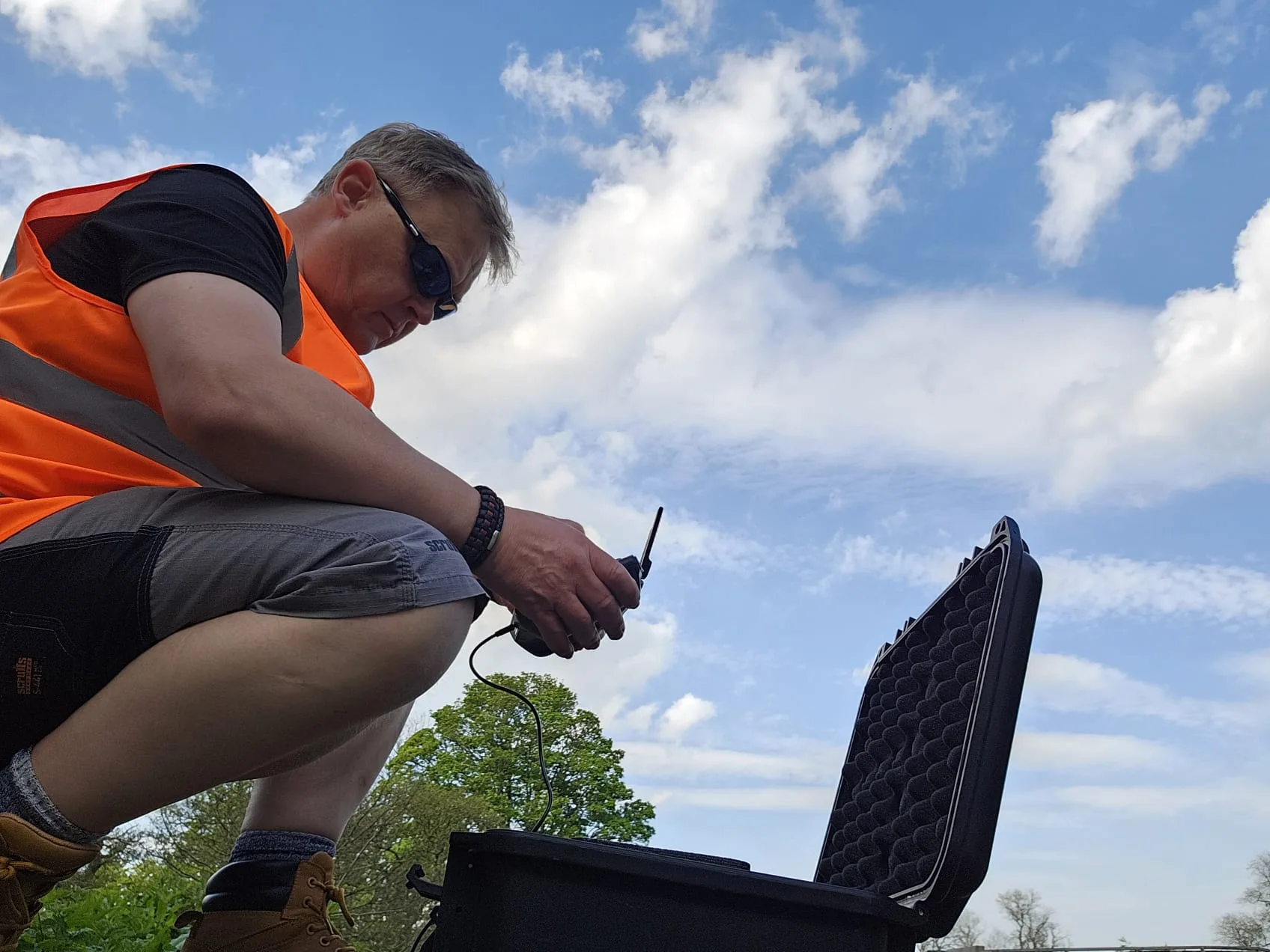
A realistic answer for a recreational drone pilot is to head for the edges of the capital, not the centre
If you are a hobbyist asking “where can I actually fly my drone in London?”, the honest answer is that central London is not the place and the Royal Parks are not the place. What is left is the edge of the map.
Lee Valley Regional Park, running up the River Lea from Tottenham out towards Waltham Abbey, has open ground and less density of people than any equivalent site in zone one. The Epping Forest fringes to the north-east, the Thames marshes at Rainham, and the open farmland and commons beyond the M25 on the Kent, Surrey and Hertfordshire sides, all give you somewhere you can legally hold the 50-metre distance from people rule and the 120-metre altitude ceiling without threading through a dozen restrictions.
Two caveats. First, check every site in the Drone Assist app before you travel — Lee Valley contains pockets of overlapping restriction and a few Natural England sensitivities, and the M25 fringe is still clipped by the outer edges of Heathrow's influence on the west side. Second, public park flying is a landowner question: the local borough has the final say, and “no drones” signage is common even outside the Royal Parks.
Common London flying scenarios and the legal route through each one
It helps to see the main scenarios laid out side by side. The table below maps the most common requests I get about flying in London onto the category and the realistic answer.
| Where you want to fly | Legal route | Realistic answer |
|---|---|---|
| Hyde Park, Regent's Park, Greenwich Park | Royal Parks byelaw permission | Refused as standard |
| Westminster / Parliament Square | ATC clearance + landowner + Met Police pre-notification | Production-only; not hobbyist |
| Thames-side commercial shoot | Specific Category + Operational Authorisation | Achievable with 3+ weeks' lead time |
| Heathrow or London City FRZ | Written permission from the aerodrome ATC | Case-by-case, never casual |
| Lee Valley / Epping Forest fringe | Open Category + landowner permission | The realistic hobbyist answer |
The Drone Assist app from NATS is the standard first check for any UK site, and in London it earns its keep more than anywhere else. Red zones tell you the level of planning required. Amber zones show caution areas where you need a plan for other airspace users. Ground hazards flag schools, hospitals and emergency services sites on the ground beneath you.
Penalties in London are not theoretical, and a drone seizure in zone one is a realistic outcome
Flying outside the rules in London carries the same legal framework as anywhere in the UK, but the probability of being caught is much higher. Breaches of the Drone Code sit under the Air Navigation Order 2016, alongside UK Regulations (EU) 2019/945 and 2019/947, which govern the Open / Specific / Certified framework.
Routine breaches can result in a fine. Serious cases can result in prosecution. Endangering an aircraft in flight — which includes flying unauthorised near a commercial airliner on approach to Heathrow — carries a maximum sentence of five years in prison. On top of the criminal exposure, flying outside your permissions invalidates your insurance cover, which turns any incident into a direct personal liability.
This is the part I lean on with clients who want to cut corners. London is not the place to find out how the enforcement framework works in practice. If the flight is worth doing, it is worth doing on full permissions — and if full permissions are not achievable in the time available, the honest answer to the client is that the job cannot go ahead on that date.
London is a working city for professional drone operators, and it is essentially closed to casual recreational flying. The Drone and Model Aircraft Code gives you the national baseline, but in the capital the real constraints are the FRZs, the Royal Parks byelaws, the central restrictions and the landowner mosaic on the ground. Plan for the paperwork first, the flight second.
If you are a client with a London site in mind, the fastest way to a yes-or-no answer is to send me the location. Drop a note to peter@hiredronepilot.uk with the postcode, the date window and what you are trying to capture, and I will come back with the realistic route to getting it done. If you prefer the video version of this explainer, the comments are open on YouTube.
References
Primary source material for this article is the UK Civil Aviation Authority. External links open in a new tab.
- UK CAA — The Drone and Model Aircraft Code (CAP2320) · people-buffer rule, 120m ceiling, VLOS, landowner permission
- UK CAA — Airspace restrictions and aerodromes · Flight Restriction Zone structure around licensed aerodromes
- UK CAA — PDRA01 Operational Authorisation Overview · Specific Category route used for professional Thames-side work
- UK CAA — Remote ID · broadcast identification requirement for drones over central London
- UK CAA — Where You Can Fly (A1, A2, A3 sub-categories) · Open Category distance rules and landowner permission
- UK CAA — UK Regulatory Framework for Drones · Air Navigation Order 2016 and the UAS Regulations
Peter Leslie
Founder & GVC Drone Pilot
Peter is the founder of HireDronePilot. With thousands of logged commercial flight hours, he writes about drone technology, commercial surveying tactics, and UK aviation compliance.
Connect on LinkedIn