Longest Flight Time Drone UK 2026: What I’d Buy for the Most Time in the Air

Peter Leslie
31 July 2026 · 19 min read
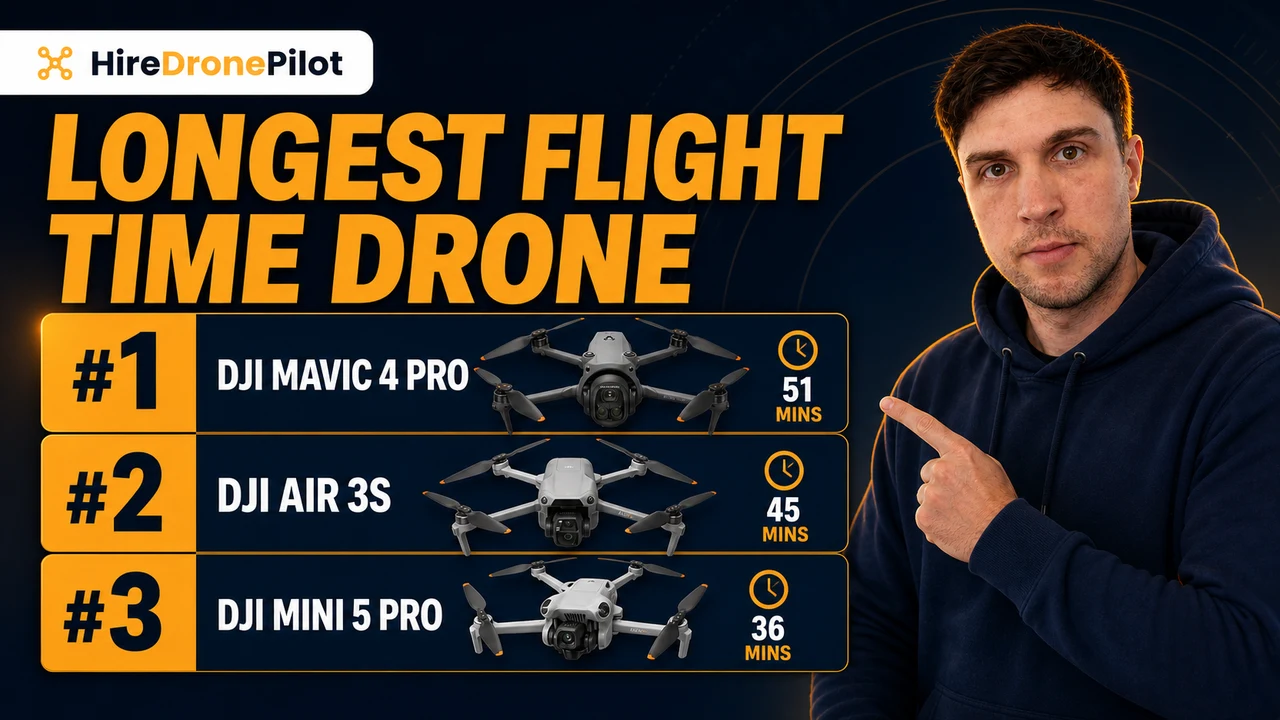
Every drone box in the shop carries a flight time. Fifty-two minutes. Fifty-one. Forty-five. Almost none of those numbers is a number you will ever put on a timer, and a few of them belong to a battery you cannot legally or practically buy in this country.
That is not me being cynical about marketing. It is written in the manufacturers’ own footnotes, underneath the figure, in grey type. Two things decide how long you really stay up: which battery the figure was measured with, and what the weather is doing to you. Get the first one wrong and you are comparing a drone you can buy against one you cannot.
Which is why the longest flight time drone in 2026 is not the one with the biggest number printed on it. It is the one whose number survives being read properly.
So this guide does three things. It reads the small print on twelve drones and prints the claimed figure next to the one you should actually plan around. It asks four questions about how you fly and narrows those twelve to the one that suits you. And it shows you the upsell that turns a drone you can fly anywhere into one that needs a qualification — which is the single most expensive mistake in this whole category, and nobody selling you the battery will mention it.
I have flown every DJI drone on this page. Where the number is mine, I say so. Where it is the manufacturer’s, I quote them and tell you what it was measured under.
How I get paid: the Amazon links below are affiliate links, so if you buy through one I earn a small commission at no extra cost to you. It does not change what I recommend — the drone I land on is the fourth cheapest here, one of the twelve has no buy link at all, and I spend a whole section talking you out of the battery the shops most want to sell you.
The Longest Flight Time Drone Most People Should Buy in 2026 Is the DJI Mini 3
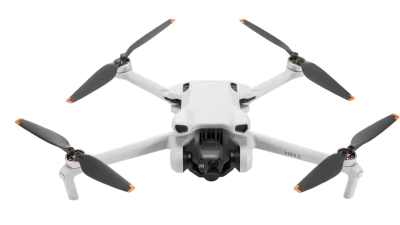
Thirty-eight minutes on the battery that comes in the box — two more than the newer, dearer drone that replaced it, and you need no licence to fly either.
- No test and no licence — just a £12.34 registration you do online.
- 38 minutes claimed and 33 hovering on the standard battery. The DJI Mini 5 Pro manages 36, the Mini 4 Pro 34. Newer is not longer.
- Expect around 30 minutes of that in real British air, landing with something in reserve.
- The 51-minute version needs a Plus battery DJI sells “only in selected countries and regions” — and it would take the drone to about 290 g, over the 249 g line.
Affiliate link · costs you nothing extra · full disclosure
PART ONE
Here are the five that win their categories outright — and the honest problem with each, because there is no drone here without one.
Longest Flight Time Outright: DJI Mavic 4 Pro
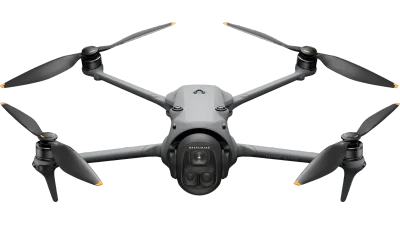
Fifty-one minutes on the battery in the box. No optional pack, no footnote, no country restriction.
- Needs the A2 test to fly near people, and at 1,063 g there is no way round that.
- 51 minutes claimed and 45 hovering — the only drone here whose headline number needs no explaining.
- A single spare battery costs nearly as much as an entire DJI Neo 2, and you will want two of them.
Best Cheap Flight Time: DJI Flip
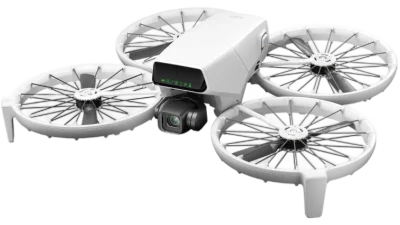
Thirty-one minutes, propeller cages, and a current product with a warranty. The cheapest drone here I would tell a friend to buy.
- No test and no licence — just a £12.34 registration you do online.
- 31 minutes claimed and 28 hovering, which is a narrow gap and a good sign.
- The cages that make it safe indoors also catch the wind, so it loses more of its time on an exposed day than the Minis do.
Best Flight Time You Can Still Fly Near People: DJI Air 3S
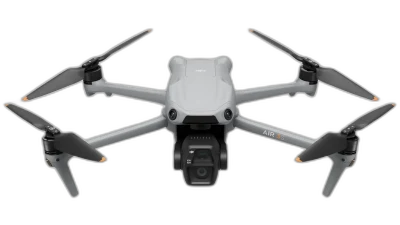
Forty-five honest minutes and a C1 mark, which today means no qualification at all. Read the third bullet before you decide that is a bargain.
- 45 minutes claimed and 41 hovering, on the only battery DJI makes for it.
- Rated to 12 m/s of wind, so more of that time survives a real British day.
- From January 2028 it needs the A2 test to fly near people — one of only two here that lose that freedom.
Best Flight Time in Wind: DJI Mini 5 Pro
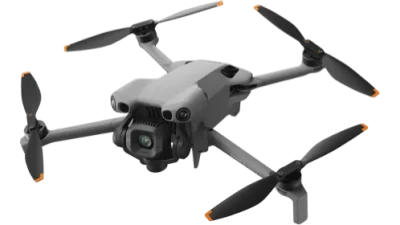
Not the longest number under 250 grams, but the one that gives the least of it back when the wind gets up.
- No test and no licence — just a £12.34 registration you do online.
- Rated to 12 m/s of wind, against 10.7 for every other sub-250-gram drone here that publishes a figure. That difference is where flight time actually goes.
- 36 minutes claimed, and DJI’s own “typical” figure in a breeze is 21 — the most honest number any manufacturer prints on this page.
Least Flight Time Lost to Hovering: DJI Neo 2
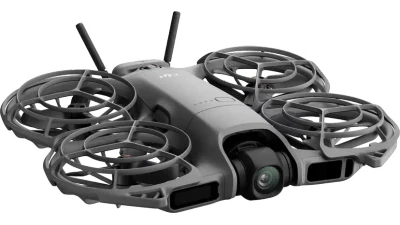
Every drone here flies for less time the moment you stop cruising and hold still over a subject. This one gives up a single minute.
- No test and no licence — just a £12.34 registration you do online.
- 19 minutes claimed and 18 hovering. That one-minute gap is the narrowest of any drone here that publishes both figures, and hovering is what quietly eats the rest.
- DJI makes no bigger battery for it, so there is no footnote, no 249-gram problem and no headline number you cannot reach in this country.
- It is still the shortest flight on this page by a distance, and fitting the propeller guards drops DJI’s own figure to 17 minutes.
Affiliate links · costs you nothing extra · full disclosure
Take the quiz: find the drone that stays up longest for you
Four questions, and you get the drone that gives you the most usable air time.
- Scored on the minutes you can actually reach, not the box figure.
- Twelve drones, every flight time checked against the maker’s own spec page.
- Tells you which ones need a qualification before you can fly them near anyone.
- About 20 seconds, and no email needed.
STEP 1 OF 4
12 of 12 still fit
All twelve, shortest flight time first
-
DJI Neo 2
151 g · C0 · 19 min claimed · ≈15 min real · no test needed
The shortest flight here by a distance, and the one that bothers me least about it. You throw it off your palm, it films you, you catch it.
- No test and no licence — just a £12.34 registration you do online.
- 19 minutes claimed, 18 hovering, and about 15 in my hands. Fit the propeller guards and DJI’s own figure drops to 17.
- Spare batteries are the cheapest of any drone here, which is genuinely how you fly this one for an hour.
-
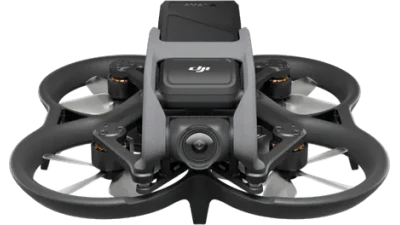
DJI Avata 2 loses privileges in 2028
377 g · C1 · 23 min claimed · ≈18 min real · observer required
The most fun per minute and the fewest minutes. Flying through goggles also means somebody has to stand next to you and watch it, every single flight.
- 23 minutes claimed, 21 hovering, and you will fly it hard, so call it 18.
- The law requires a second person watching the drone whenever you fly it through goggles.
- From January 2028 it needs the A2 test to fly near people — one of only two here that lose that freedom.
-
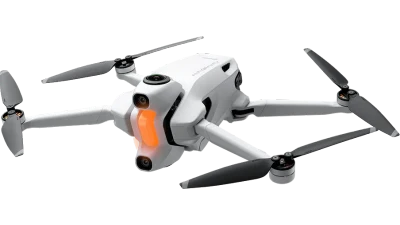
Antigravity A1 worst air time for the money
249 g · C0 · 24 min claimed · ≈19 min real · no test needed
An 8K camera that films in every direction at once, strapped to 24 minutes of battery. The most interesting object on this page and the one I would not buy for air time.
- No licence needed — but only on the standard battery, which is the 24-minute one.
- The advertised 39 minutes needs the high-capacity pack, which Antigravity’s own footnote says is “not sold in European regions” and which takes the drone to 291 g.
- The link points at the Infinity Bundle with the goggles, which is the configuration everything said here describes.
-
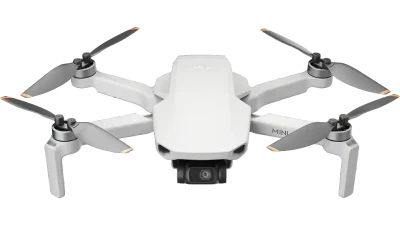
DJI Mini 4K DJI UK no longer lists it
246 g · under 250 g · 31 min claimed · ≈24 min real · no test needed
Thirty-one minutes from one of the two cheapest drones on the page is the best raw airtime bargain here. The catch is that DJI has stopped selling it.
- No test and no licence — just a £12.34 registration you do online.
- 31 minutes claimed, so about 24 in practice, from the cheapest drone here that does more than hover in front of you.
- DJI UK lists every configuration as unavailable, so you are buying remaining stock and there is no warranty story I would rely on.
-
DJI Flip
<249 g · C0 · 31 min claimed · ≈24 min real · no test needed
Thirty-one minutes, built-in propeller cages and a current product with a warranty behind it. The cheapest drone here I would actually tell a friend to buy.
- No test and no licence — just a £12.34 registration you do online.
- 31 minutes claimed and 28 hovering, which is unusually honest arithmetic for a drone this cheap.
- Propeller cages built in, so it is the one I hand to a nervous beginner.
-
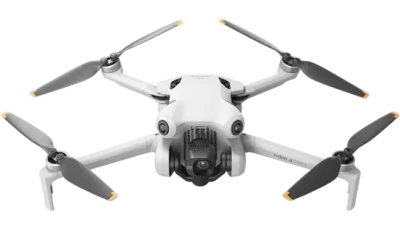
DJI Mini 4 Pro
<249 g · C0 · 34 min claimed · ≈27 min real · no test needed
Obstacle sensing in every direction and 34 minutes, which for two years was the sensible answer. The 45-minute figure on its own spec page is not one you can reach here.
- No test and no licence — just a £12.34 registration you do online.
- 34 minutes claimed and 30 hovering. Call it 27 with a landing reserve.
- DJI advertises 45 minutes on the Intelligent Flight Battery Plus and then states, in the footnote, that the Plus battery “is not sold in Europe”.
-
DJI Mini 5 Pro
249.9 g · C0 · 36 min claimed · ≈28 min real · 12 m/s wind
The best sub-250-gram drone in the world and, on the box figure, not the longest-flying one. What it does hold is its time when the wind gets up.
- No test and no licence — just a £12.34 registration you do online.
- 36 minutes claimed on the standard battery. DJI’s own “typical” figure for the same battery, measured in a breeze, is 21.
- The 52-minute figure needs the Intelligent Flight Battery Plus, which DJI says takes it past the C0 threshold so it “can no longer be operated as a C0/UK0” drone.
-
DJI Mini 3
248 g · C0 · 38 min claimed · ≈30 min real · no test needed
The longest flight time of any drone here that you can fly with no qualification at all — and it is four years old and cheaper than the two Minis above it. What it gives up is sideways obstacle sensing, which is the real reason the newer Minis exist: for open flying I have never missed it, around a building I would.
- No test and no licence — just a £12.34 registration you do online.
- 38 minutes claimed and 33 hovering, both from DJI’s spec page. That beats the Mini 5 Pro’s 36 and the Mini 4 Pro’s 34.
- The 51-minute version needs the Intelligent Flight Battery Plus, which DJI sells “only in selected countries and regions” and which takes the drone to about 290 g.
-
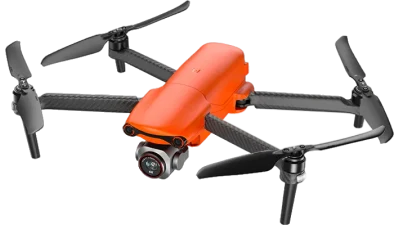
Autel EVO Lite+ no affiliate link — no UK listing I could find
835 g · legacy, no class mark · 40 min claimed · ≈31 min real
Here so nobody can call this a DJI catalogue, and because Autel markets it squarely on endurance. I could not find a UK listing to send you to.
no link- Needs the A2 test to fly near people. Without it you stay 150m from anything built-up.
- 40 minutes claimed, measured by Autel flying at 8 m/s in no wind “until the battery reaches 0% capacity”.
- I could not find UK stock at all, so there is no buy link for it and nothing here I would stand behind on availability.
-
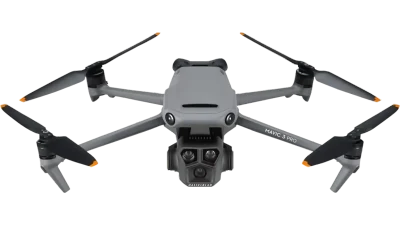
DJI Mavic 3 Pro out of stock in every configuration at DJI UK
958 g · C2 · 43 min claimed · ≈34 min real · A2 CofC needed
Forty-three minutes and three cameras, from a drone DJI has effectively stopped selling here. You are buying old stock at a price the Mavic 4 Pro makes look silly.
- Needs the A2 test to fly near people.
- 43 minutes claimed and 37 hovering, so about 34 with a reserve.
- The link points at the Fly More Combo with the DJI RC Pro screen controller, which is the configuration described here — and every DJI UK configuration is out of stock.
-
DJI Air 3S loses privileges in 2028
724 g · C1 · 45 min claimed · ≈35 min real · 12 m/s wind
Forty-five minutes with no optional battery and no small print, which is rare enough on this page to be worth saying twice. Its legal position in 2028 is the catch.
- 45 minutes claimed and 41 hovering, on the one battery DJI sells for it. No Plus pack, no footnote, no catch on the number itself.
- Rated to 12 m/s of wind, so it keeps more of that time on an exposed day than a 249-gram drone will.
- No test needed today, but from January 2028 it needs the A2 to fly near people. You are buying about eighteen months of that freedom.
-
DJI Mavic 4 Pro
1,063 g · C2 · 51 min claimed · ≈40 min real · A2 CofC needed
The longest genuine flight time you can buy in the UK, with no optional battery and no asterisk. It also weighs more than a kilogram and needs a qualification.
- Needs the A2 test to fly near people.
- 51 minutes claimed and 45 hovering, both on the standard battery. Nothing else here is close without small print.
- One spare battery costs nearly as much as a whole DJI Neo 2, which is the sort of thing nobody mentions until you own one.
Claimed flight times are the manufacturer’s own maximum on the standard battery, taken from their specification pages and checked 31 July 2026. Figures marked ≈ are my working estimate at 78 per cent of the claim — the middle of the 75–80 per cent band explained below — and are estimates, not measurements. Every link points at a specific configuration, named in that drone’s bullets where it matters; the current price is the one Amazon shows you when you get there. Comparison specifications from DroneCompare, CC BY 4.0.
PART TWO
Claimed versus real, and the upsell battery that voids your class mark
You have your shortlist. Now the part the spec sheets are worst at, and the part that decides whether the number you paid for is a number you get.
How the number on the box is measured
DJI does not hide this. Under every flight time on its specification pages there is a footnote, and it says the figure was
“Measured in a controlled wind tunnel environment under conditions equivalent to windless operation and sea-level altitude, with the aircraft flying forward at a constant speed of 21.6 kph … until a forced landing due to battery depletion.” DJI, specification footnote, DJI Mini 3 and DJI Mini 5 Pro
Read that as a description of a flight. No wind. Sea level. Twenty-one and a half kilometres an hour, in one direction, in a tunnel, at a laboratory temperature of 25 °C — until the battery is empty and the drone puts itself down whether you like it or not.
Autel says the same thing in its own words: its 40-minute figure is measured “under conditions with no wind… The aircraft flies continuously at 8 m/s at sea level until the battery reaches 0% capacity.” Antigravity’s is measured “in a controlled windless environment at 25 °C” with video recording turned off.
Nobody flies like that. You take off, climb, hover while you decide what the shot is, turn round, come back into wind, hover again, land. Every one of those things costs more power than cruising forwards in a straight line, and you land with charge left because you are not insane. The claimed figure is not a lie. It is a measurement of something you will never do.
The second number they publish and nobody quotes
Here is the useful bit. DJI publishes a maximum hovering time for the same drone on the same battery, and it is always lower — because holding still in the air is harder work than flying forwards, where the propellers get some help from the airflow. It sits just under the headline figure on the same page, and I have never seen it quoted in a buying guide.
WHAT THE MAKER CLAIMS, AND WHAT I PLAN FOR
| DRONE | CLAIMED | HOVERING | PLAN FOR |
|---|---|---|---|
| DJI Neo 2 | 19 min | 18 min | ~15 min |
| DJI Avata 2 | 23 min | 21 min | ~18 min |
| Antigravity A1 | 24 min | — | ~19 min |
| DJI Mini 4K | 31 min | — | ~24 min |
| DJI Flip | 31 min | 28 min | ~24 min |
| DJI Mini 4 Pro | 34 min | 30 min | ~27 min |
| DJI Mini 5 Pro | 36 min | 21 min* | ~28 min |
| DJI Mini 3 | 38 min | 33 min | ~30 min |
| Autel EVO Lite+ | 40 min | — | ~31 min |
| DJI Mavic 3 Pro | 43 min | 37 min | ~34 min |
| DJI Air 3S | 45 min | 41 min | ~35 min |
| DJI Mavic 4 Pro | 51 min | 45 min | ~40 min |
All figures on the standard battery — not the Plus battery or high-capacity pack, whose numbers get their own table further down, because two of them are not sold here at all. A dash means the maker publishes no hovering figure. * The Mini 5 Pro row is not a hovering time — DJI publishes no hovering figure for it, but does publish a typical flight time of 21 minutes, measured “at sea level in a breezy environment”. It is the most candid number on this page. The “plan for” column is mine, at 78 per cent of the claim.
So how long do drones fly, really? Plan on 75 to 80 per cent of the claimed maximum. That is the band I use and it has not let me down: the Mini 5 Pro’s 36 minutes is about 28 in my hands, the DJI Neo 2’s 19 is about 15. It is not a rule of physics, it is what falls out of two things. First, everything you do that is not cruising forwards costs more power. Second — and this is most of it — you should be landing at 20 to 25 per cent, not at zero. The manufacturer measured to empty. You never will.
Which means the gap between the box and your timer is mostly the safety margin you ought to be keeping anyway. The exception is the Mini 5 Pro, where DJI’s own breezy-day figure of 21 minutes is well below even that band — a useful reminder that on a bad day the honest answer is lower than any rule of thumb.
Wind and cold take the rest
Wind is the big one, and it is not really about being blown backwards. A drone holding position in a breeze is flying forwards into it and standing still relative to the ground, so it burns cruise power while covering no distance. Then it has to come home, and if the wind got up while you were out, it comes home slowly.
That is why the wind rating on the spec sheet is a flight time spec in disguise. Every sub-250-gram drone here whose maker publishes a figure — the DJI Mini 3, Mini 4 Pro, Flip, Neo 2 and the Antigravity A1 — is rated to 10.7 m/s, about 24 mph. The exception is the DJI Mini 5 Pro at 12 m/s. On a still day that difference buys you nothing. On a coastal afternoon it is the difference between coming back with a shot and coming back early. If most of your flying is exposed, it is worth reading what a wind rating actually means for a 249-gram drone before you spend anything.
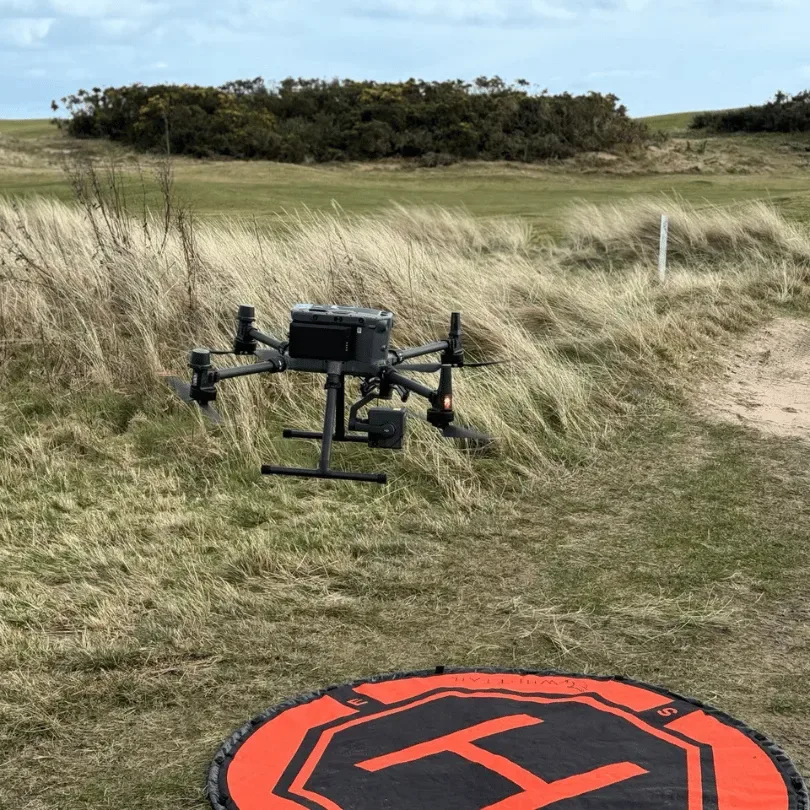
Cold does something different and less obvious. Every one of these drones is rated to operate from −10 °C to 40 °C, and every flight time on this page was measured at 25 °C. A cold lithium pack has more internal resistance, so its voltage sags harder under load, and the drone reads that sag as a lower state of charge. Nobody who makes these drones publishes a cold-weather flight time, so treat any exact percentage you read online as a guess — including mine. What I do is keep the batteries in an inside pocket until the moment I fly, and land earlier than the app suggests. There is more on what winter does to a drone battery if you fly through it.
And then the upsell that costs you your class mark
Now the part that matters more than any of it, and the reason this article exists.
Four drones on this page advertise a much bigger number than the one I have given them. The DJI Mini 5 Pro says 52 minutes. The DJI Mini 3 says 51. The DJI Mini 4 Pro says 45. The Antigravity A1 says 39. Every one of those figures requires an optional bigger battery, and every one of them comes with a footnote on the manufacturer’s own page that the box never mentions.
THE FOUR BIG NUMBERS, AND WHAT THEY COST
| DRONE | STANDARD | ADVERTISED | WHAT THE MAKER SAYS ABOUT THE BIGGER BATTERY |
|---|---|---|---|
| DJI Mini 5 Pro | 36 min | 52 min | Sold here, and dearer than a spare standard pack. Fitting it to the C0 drone means it “exceeds the C0/UK0 MTOM threshold and can no longer be operated as a C0/UK0” drone. You lose the class mark. |
| DJI Mini 3 | 38 min | 51 min | “Sold separately and only in selected countries and regions.” DJI UK lists it as unavailable. It would take the drone to about 290 g. You cannot buy it here. |
| DJI Mini 4 Pro | 34 min | 45 min | “The Intelligent Flight Battery Plus is not sold in Europe.” With it, “the aircraft will weigh more than 249 g”. You cannot buy it here. |
| Antigravity A1 | 24 min | 39 min | Weight “will exceed 249 g when using a high-capacity model, which is not sold in European regions” — 291 g, and C1 rather than C0. Both problems at once. |
Quotations are from DJI’s and Antigravity’s own specification and product pages, read 31 July 2026. The Antigravity page markets the high-capacity battery with a buy button on the same screen as the footnote saying it is not sold in European regions.
Take a moment with that table, because it is the whole category in one place. Two of those four headline numbers belong to a battery you cannot buy in this country. A third, the Mini 5 Pro’s 52 minutes, you can reach — DJI does sell the Plus battery here — but only by turning a drone that anybody may fly over people into one that cannot be flown as a C0 drone at all. And the fourth does both things at once.
In plain English: the upsell battery takes a drone you can fly with a free online test and a £12.34 registration, and turns it into a drone that needs a qualification. It costs you more than a spare standard pack would, for sixteen extra minutes, and it puts you in a legal position you did not have to be in. That is not a close call. It is the worst-value accessory in consumer drones.
The third-party packs are the same trap with worse odds
Here is what happens when a manufacturer refuses to sell you something. Search Amazon UK for a Mini 3 battery today and most of the front page is third-party packs of 3,850 mAh, several of them advertising “51 Mins Max Flight Time” and at least one calling itself an “Intelligent Flight Battery Plus” outright. DJI’s own standard Mini 3 pack is 2,453 mAh; 3,850 mAh is the Plus capacity exactly.
So the battery DJI will not sell you here is on sale anyway, from somebody else, sold on the fifty-one-minute number. I have not weighed one and I am not going to pretend to know what a particular third-party pack weighs. What I do know is what DJI says about its own Plus battery at that capacity: it takes the drone to about 290 grams. If a replacement pack holds the same energy in roughly the same chemistry, it is not going to be lighter by an amount that matters.
The rule I would give a friend: on a sub-250-gram drone, never fit a battery bigger than the one it came with. Not DJI’s, not anybody’s. The 250-gram line is the only thing standing between you and a test, and a battery is a silly thing to lose it for.
Extra standard batteries beat one bigger battery. Every time.
The upgrade the shops offer you solves the wrong problem. You do not need one longer flight. You need more flights. Nobody has ever stood in a field wishing their single sortie had run thirteen minutes longer; they wish they had another battery in the bag.
Do the arithmetic on the Mini 3. The Plus battery buys you one flight of 51 claimed minutes, in a country where you cannot buy it, and it asks more than a spare standard pack does. One spare standard battery takes you to 76 claimed minutes across two flights — more total air time, less money, the drone still at 248 grams, and fifteen seconds to swap. Two spares is 114 minutes, nearly two hours, which is more flying than I have ever done in one outing.
There is a second reason, and DJI says it out loud: “Increase in aircraft weight can affect flight propulsion. When the aircraft is using the Intelligent Flight Battery Plus, do not mount additional payloads like a propeller guard or third-party accessories.” A bigger battery does not just add minutes. It uses some of them up carrying itself.
What the 250-gram line, a class mark and 2028 actually mean
I have used words like C0 and A2 CofC a dozen times now. If you have never owned a drone, here is all of it in plain English, because it is the part of buying a drone that blindsides people.
Two registrations, and everybody needs both
Whatever you buy, you need a Flyer ID — a free online theory test, valid five years — and an Operator ID, which costs £12.34 a year and goes on a label stuck to the drone. The Operator is whoever is responsible for the drone; if the flyer is under 18, an adult has to register as the Operator. That is the whole of it. Most people do both in one sitting on the CAA website.
Then weight takes over
Under 250 grams and you are in Over People (A1) with nothing further to do. That is why so much clever engineering happens at 249 grams, and why every drone in this guide under that line says “no licence needed”.
Above it, a class mark decides where you may fly. C0 and C1 drones fly in Over People (A1). A C2 drone needs an A2 Certificate of Competence to fly in Near People (A2); without one it drops to Far from People (A3), which means 150 metres from anything residential, commercial, industrial or recreational. In most of Britain that means driving to a field. A drone with no class mark at all — a legacy drone, like the Autel here — falls back to weight: under 250 g is A1, under 2 kg needs the A2 CofC, under 25 kg is A3.
The A2 CofC itself is a theory test of at least thirty multiple-choice questions taken with a CAA-approved assessment provider, valid five years. Providers set their own fees, so it is worth ringing round. And the thing nobody tells you: if you buy under 250 grams it buys you nothing you do not already have.
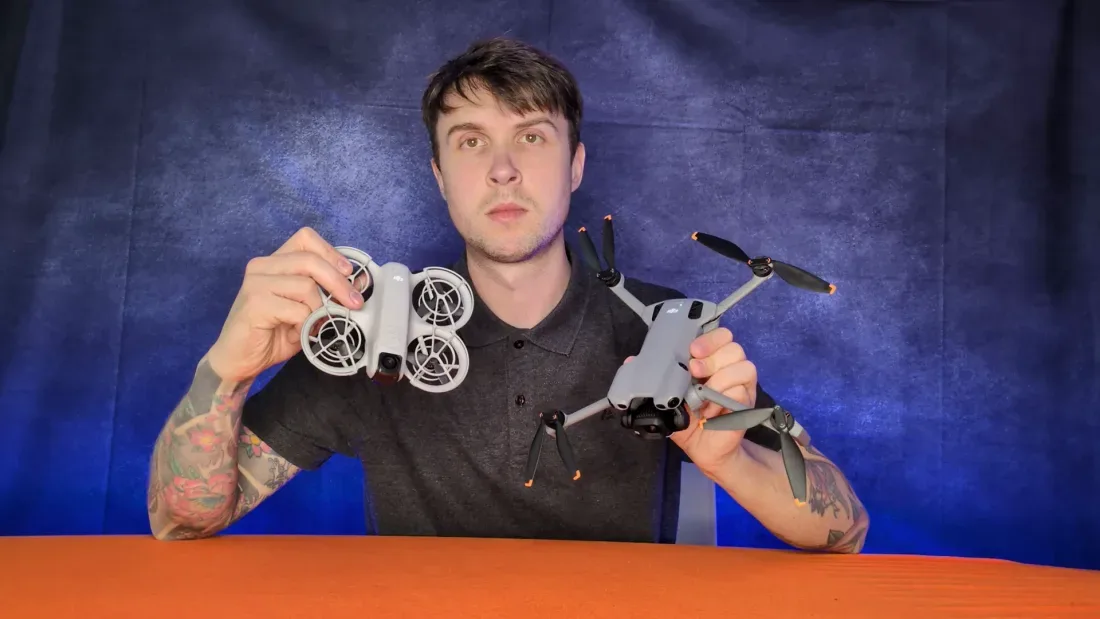
And then 1 January 2028
Until 31 December 2027 a drone carrying a European C class mark may be flown as though it held the equivalent UK class. From 1 January 2028 that stops. It becomes a legacy drone and falls back to plain weight rules.
For most of this list nothing changes. Everything under 250 grams stays exactly where it is, and the C2 Mavics already need the A2 CofC. But two drones here fall off a cliff, and both are C1 drones weighing more than 250 grams: the DJI Air 3S at 724 g and the DJI Avata 2 at 377 g. Both may be flown near people today with no qualification. From January 2028 both need the A2 CofC.
Nothing gets confiscated and nothing becomes illegal to own. But if the Air 3S’s 45 minutes appeals partly because it needs no test, understand that you are buying about eighteen months of that, not a permanent arrangement.
PART THREE
How to actually get an hour in the air
Everything above is about one battery. Nobody flies one battery. So the real question — the one that decides whether you enjoy owning a drone — is what an hour of air time costs, and that is a different ranking from the one on the box.
Spare batteries are not priced in proportion to the drone. They are priced in proportion to how much they hold, and the drones with the longest flights have the most expensive packs.
Line the drones up by what a spare standard pack costs and you get almost exactly the list you would get by lining them up by weight. The DJI Neo 2 takes the cheapest pack here by a clear margin, which is genuinely why you can fly that one for an hour without thinking about it. The DJI Mini 3, Mini 4 Pro and Flip all sit in the same band a step above it, and the Mini 5 Pro’s is a little dearer again. Then it jumps: an Air 3S pack costs roughly twice what a Mini pack does, and a Mavic 4 Pro pack roughly three times.
That is not the interesting ranking, though. Divide each pack by the minutes it actually adds and the order rearranges itself. The Mini 3 is the cheapest minute of air time on this page. The Mini 4 Pro is next, then the Neo 2, then the Flip and the Mini 5 Pro all but level with each other. The Air 3S costs nearly twice as much per minute as the Mini 3 does. And the Mavic 4 Pro — the longest genuine flight time you can buy — costs more than twice as much per minute to repeat. Its fifty-one minutes are real. Every one of them after the first battery is the most expensive minute in this guide.
That is the ranking nobody puts on a box, and it is the one that decides whether you fly for twenty minutes or ninety. Four drones are missing from it: DJI UK no longer lists spare packs for two of them, and for the Antigravity A1 and the Autel I could not verify a UK pack at all. Where I cannot check the pack, I will not rank the drone.
Three batteries is the answer, and it is not close
Two spares takes the Mini 3 from 38 claimed minutes to 114, or from about 30 real minutes to about 90. Ninety minutes is a morning. It is more consecutive flying than almost anyone does, it costs a fraction of what the drone itself did, and the drone stays at 248 grams throughout.
Get a two-way charging hub as well. It charges the packs one after another from a single cable rather than making you sit there swapping them, and it can discharge them too, which matters more than people realise: a lithium pack left sitting at full charge for months loses capacity permanently, and capacity is flight time. Charging the night before and running the packs down again if the trip is cancelled is the cheapest thing you can do to keep the minutes you paid for.
And carry them properly. Loose lithium packs in a rucksack with keys and coins is how you find out what a thermal runaway smells like. A fireproof pouch is one of the cheapest things you will ever put in a drone bag, and the only one on this list that is there to stop a fire.
THE THREE THINGS THAT ACTUALLY BUY YOU AIR TIME
- Check price
A two-way charging hub
Charges your spares in sequence and drops them to storage charge afterwards.
- Check price
A fireproof battery pouch
For the bag and for charging. Cheap insurance against the one bad pack.
- Check price
A 256GB V30 card
Ninety minutes of air time fills a small card. V30 is the rating that keeps up with 4K.
Buy the spare standard batteries from DJI direct — the Amazon results for the Mini 3 are dominated by 3,850 mAh third-party packs, which is the Plus capacity, and that is the one thing you must not fit. Affiliate links · costs you nothing extra · full disclosure
What ninety minutes of air time costs in year one
Say the quiz left you with the Mini 3, as it does for most people who answer honestly. The number in your head is whatever the Amazon page said when you looked. Here is everything else that leaves your account in the first twelve months if you want to fly it properly rather than once.
The paperwork is the easy part and it is nearly free. The Flyer ID costs nothing and lasts five years. The Operator ID is £12.34 a year and that is the only fixed fee in the whole exercise. Because the Mini 3 is under 250 grams there is no A2 CofC to pay for either — that line is zero, and on an Air 3S or a Mavic it would not be.
Then the things that actually add up, in the order I would buy them. Two spare standard batteries — not the Plus, never the Plus — and they are the largest line after the drone itself. A two-way charging hub, which costs well under what one of those batteries does. A 256 GB V30 card, because ninety minutes of 4K fills a small one, at about what one of those batteries costs. A fireproof pouch, which is loose change beside all of it.
And then the two lines people leave off and then meet anyway: hobby third-party insurance, optional unless somebody is paying you, and an allowance for the crash you have not had yet — propellers, a gimbal, an excess. Neither is large on its own. Together they are about the price of the charging hub and the card put together, and pretending they are zero is how a budget goes wrong.
Add the lot up and plan for something not far short of double what the drone cost you by the end of year one. Roughly a fifth of that total is batteries and charging — and that fifth is the entire difference between a drone that flies for half an hour and one that flies for an hour and a half. It is the best money in this article. It is also the exact opposite of the Plus battery, which buys a Mini 5 Pro sixteen minutes and costs it the right to fly over people.
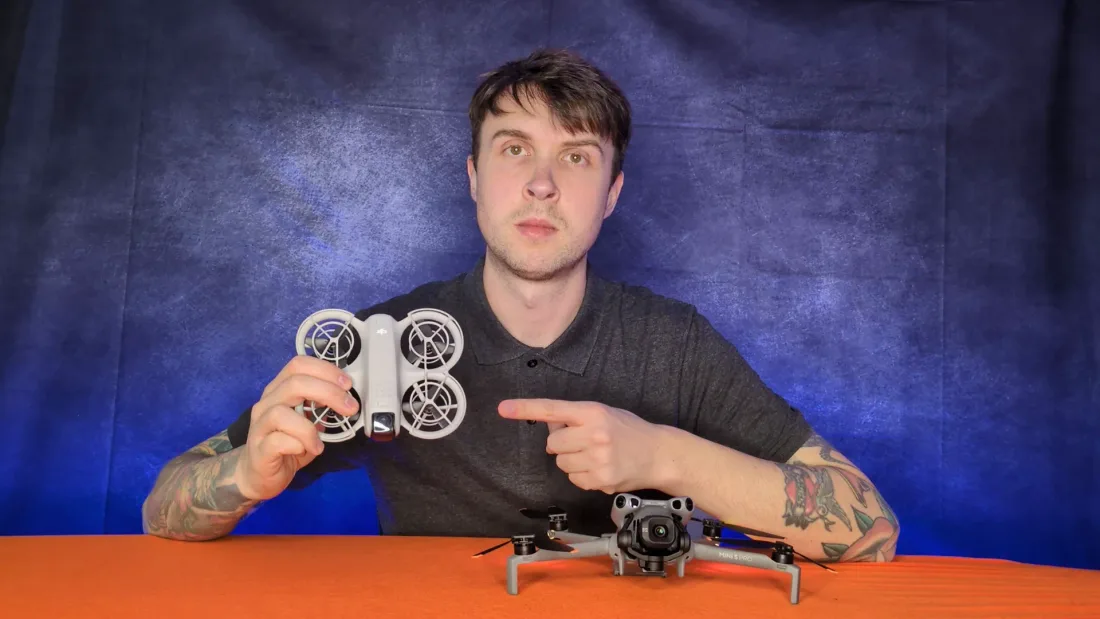
PART FOUR
The drone I’d buy for the most time in the air
The DJI Mini 3, with two spare standard batteries. That is what I’d buy for the most time in the air, and I would not spend long deciding.
Thirty-eight claimed minutes is the longest of any drone you can fly in this country with no test, no certificate and no paperwork beyond a £12.34 registration. It beats the Mini 5 Pro that replaced it, it beats the Mini 4 Pro that came between them, and it does it while costing less than either. It is also the cheapest minute of air time on the page — nothing here repeats a minute for less — which is what actually decides whether you fly for twenty minutes or ninety.
The honest thing it gives up is sideways obstacle sensing, which the newer Minis added and which I would want if I were flying around a building for money. For open country, coast, hills and holidays — where you go because you want to be up for a long time — I have never once missed it.
Spend less if you want to. The DJI Flip gives up seven claimed minutes for meaningfully less money, adds propeller cages, and is a current product with a warranty behind it. If this is your first drone and the honest answer is that you want to find out whether you enjoy it, buy the Flip.
Spend more for one reason only. The DJI Mavic 4 Pro is the longest genuine flight time you can buy in the UK: 51 minutes on the battery in the box, no optional pack, no footnote, nothing sold only in selected countries. If you need one flight to last the best part of an hour, it is the answer and there is no second candidate. Just go in knowing it weighs 1,063 grams, that you will need the A2 CofC, and that every spare battery you buy for it costs about three times what a Mini pack does.
The one I’d not buy for flight time
The Antigravity A1. I have not flown it, so take this as judgement rather than experience — but the numbers are the manufacturer’s own and they are not close.
It is marketed on 39 minutes. That figure needs the high-capacity pack, and Antigravity’s own footnote says the weight “will exceed 249 g when using a high-capacity model, which is not sold in European regions”. So what a UK buyer actually gets is 24 minutes — from the Infinity Bundle linked here, which costs nearly double what the dearest of the other sub-250-gram drones on this page does. That is less air time than the DJI Mini 4K manages, and the Mini 4K is one of the two cheapest drones here. It is the worst airtime-per-pound on the page by a wide margin.
Buy it if you want an 8K camera that films in every direction at once, because nothing else does that. Do not buy it because a page told you it flies for 39 minutes, because here it does not.
And if what you actually need is one job done well rather than a drone in a cupboard — a set of property photographs, a roof looked at, a site recorded — owning is rarely the cheaper answer. You can hire a qualified drone pilot who already owns the batteries, the qualification and the insurance, and see what that costs before you commit to a first year of owning one.
Two more things worth reading before you buy. If distance matters to you as much as duration, the numbers behave the same way and the small print is worse — a 20 km transmission figure is not 20 km of legal flying. And if you want the camera rather than the clock, the ranking changes completely: the best camera drone in the UK is a different drone from this one.
Longest flight time drone: the questions I get asked most
What is the longest flight time drone in the UK in 2026?
On the battery that comes in the box, the DJI Mavic 4 Pro at 51 minutes. It is also the heaviest drone here at 1,063 g and it carries a C2 class mark, so you need an A2 Certificate of Competence to fly it anywhere near people. If you want the longest flight time you can have without any qualification at all, it is the DJI Mini 3 at 38 minutes — which is two minutes more than the newer, dearer DJI Mini 5 Pro manages on its standard battery.
How long do drones actually fly compared to the claimed figure?
Plan on about 75 to 80 per cent of the claimed maximum. The claimed figure is measured in a wind tunnel at a constant speed with no wind, at 25 °C, flying in one direction until the battery is flat and the drone forces itself down. DJI publishes a lower hovering figure for the same drones, and for the Mini 5 Pro it publishes a “typical” figure of 21 minutes against a 36-minute maximum. Since you should be landing with 20 to 25 per cent left, the difference between the number on the box and the number on your timer is mostly the reserve you ought to be keeping anyway.
Which drone has the longest flight time without a licence?
The DJI Mini 3, at 38 minutes claimed on its standard battery and around 30 minutes in real British air. Every drone under 250 g flies in Over People (A1) with no test beyond the free Flyer ID, so the whole sub-250 g field is licence-free — and inside it the Mini 3 beats the DJI Mini 5 Pro’s 36 minutes, the DJI Mini 4 Pro’s 34 and the DJI Flip’s 31. The newest drone is not the longest-flying one.
Is the bigger Plus battery worth it?
On a sub-250 g drone, no. DJI’s own specification page says that fitting the Intelligent Flight Battery Plus to a C0-certified DJI Mini 5 Pro means it “exceeds the C0/UK0 MTOM threshold and can no longer be operated as a C0/UK0 UAS”. For the DJI Mini 4 Pro, DJI states the Plus battery “is not sold in Europe”; for the DJI Mini 3 it is “sold separately and only in selected countries and regions”. So of the three drones advertising 52, 45 and 51 minutes on a Plus pack, two cannot be bought here at all and the third costs you the class mark that made the drone licence-free.
Do extra batteries beat one bigger battery?
Yes, on every count that matters. A DJI Mini 3 with one spare standard battery gives you 76 claimed minutes across two flights, and the spare standard pack costs less than the Plus pack that buys you a single 51-minute flight — more total air time for less money, and the drone stays under 249 g. A swap takes about fifteen seconds. A bigger battery also makes the drone heavier, which is why DJI tells you not to fit propeller guards alongside its Plus packs. The only thing a bigger battery buys you is a longer single flight, and almost nobody actually needs one.
How much does cold weather cut drone flight time?
Nobody who makes these drones publishes a figure, so treat any exact percentage you read as a guess. What the manufacturers do publish is that the flight times are measured at 25 °C and that the drones are rated to operate from −10 °C to 40 °C. In practice a cold pack sags under load and the drone reads that as a lower state of charge, so the flight ends sooner. Keep the batteries in an inside pocket until the moment you fly, expect a British winter flight to be noticeably shorter than a summer one, and land earlier than the app tells you to.
The short version
If you read all that and still want me to just say it: buy the DJI Mini 3 and two spare standard batteries. It is the longest flight time you can have with no qualification, the cheapest minute of air time here, and it stays under 249 grams for as long as you resist the bigger battery.
Affiliate links · costs you nothing extra · full disclosure
Flight times, weights and class marks from the manufacturers’ own specification pages (dji.com/uk, antigravity.tech, autelrobotics.com), read 31 July 2026. No prices are quoted here: they move constantly, and the only figure worth trusting is the one on the page the link takes you to. Where a comparison is made in relative terms, it was made against UK prices as they stood that day. Regulatory detail from the UK Civil Aviation Authority. Comparison specifications from DroneCompare, licensed under CC BY 4.0. Amazon links are affiliate links.