Best Drone for Windy Conditions: What I’d Fly When the Forecast Turns

Peter Leslie
31 July 2026 · 20 min read
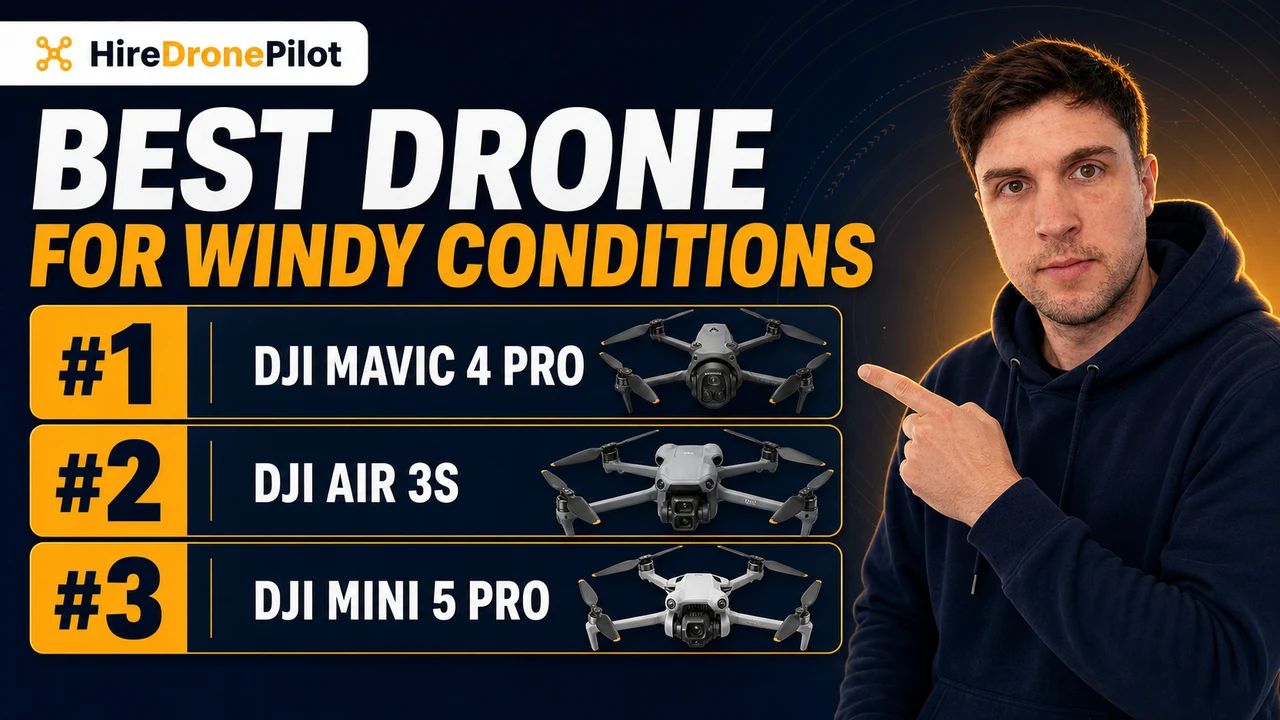
Britain has about forty genuinely calm days a year and they are never the ones you booked off. So the honest version of this question is not “which drone handles wind” — it is “which drone will still be flying on the Saturday I actually have free, when the forecast says 22 mph and the trees are already moving”.
Every drone on this page prints a wind figure on its specification sheet. Eleven drones, three different numbers between them: 8 m/s, 10.7 m/s and 12 m/s. Those numbers are real, published and worth reading. They are also the single most misunderstood line on any drone spec sheet, and by the end of Part Two you will know exactly what they promise and what they quietly do not.
Two things decide this purchase and neither of them is the camera. The first is mass, because a drone holds still in wind by leaning into it, and how hard it can lean is set by how much it weighs. The second is the 250-gram line, because staying under it is what keeps UK paperwork simple — and it is also the exact thing that makes a drone worse in wind. You cannot have both, and anyone who tells you otherwise has not flown a 249-gram drone off a Scottish headland.
Which is why the best drone for windy conditions in 2026 is not the one with the biggest number on the box. It is the one whose number has enough drone behind it to mean something on a day you would actually want to fly.
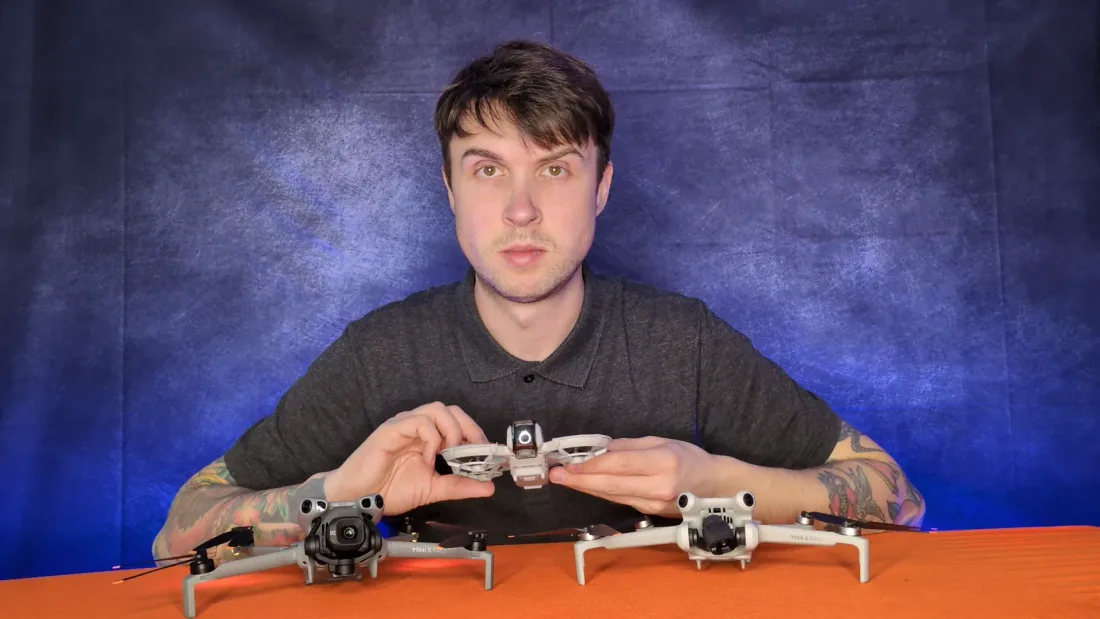
This guide does three things. It asks four questions about where and when you actually fly, and narrows eleven drones to the one that fits — including the two I will not recommend to anyone. Then it takes the wind ratings apart properly: what the Beaufort scale is, which force each manufacturer’s number corresponds to, and the arithmetic that shows what a 249-gram airframe can physically push against. Then it walks through what actually goes wrong when the wind wins, in the order it goes wrong, because that order is what should decide how much drone you buy.
How I get paid: the Amazon links below are affiliate links, so if you buy through one I earn a small commission at no extra cost to you. It does not change what I recommend — two of the eleven drones here are ones I would steer you away from, one of those has no buy link at all, and the drone I would actually buy is not the cheapest thing on the page.
The Best Drone for Windy Conditions in 2026 Is the DJI Air 3S
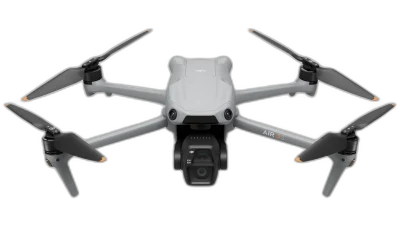
The cheapest drone here that puts real mass behind a 12 m/s rating — a Force 6 strong breeze — and still needs no exam to fly. In my hands it is the one that stops feeling nervous when the grass starts moving.
- 724 grams behind a 12 m/s wind rating — the same figure DJI prints on a 249.9-gram Mini 5 Pro, and about 526 grams of sideways push against that Mini’s 195.
- 45 minutes of flight time, which is the reserve you spend flying home into a headwind.
- C1 class mark, so today it flies in the same easy category as a sub-250-gram drone with nothing further to sit.
- From January 2028 that C1 mark stops helping and it needs the A2 test to fly near people.
Affiliate link · costs you nothing extra · full disclosure
PART ONE
Here are the five that win their categories. Each one carries what is wrong with it, because in this category every drone is a compromise between grams and paperwork and none of them escapes it.
Best Drone for a Gusty Day Near Trees and Buildings: DJI Mini 4 Pro
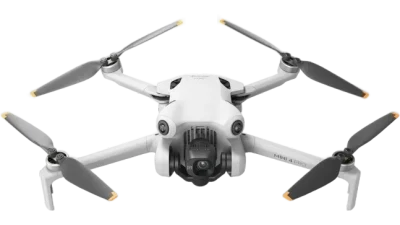
Sheltered ground is not calm ground. The wind arrives in shoves from between things you can hit, and that is a different problem from a headland.
- Omnidirectional sensing, so it is still watching the direction a gust shoves it in rather than only the one you asked it to fly.
- Under 249 grams and C0-marked, so nothing to sit today and nothing to do in 2028.
- Rated 10.7 m/s, the top of Force 5, and allowed 35 degrees of lean — about 174 grams of sideways push, the smallest figure in my table. Fly it on the sheltered side of the hill.
- 34 minutes on the standard battery. The 45-minute Plus battery DJI quotes is, by its own footnote, not sold in Europe.
Best Sub-250g Drone for Windy Conditions: DJI Mini 5 Pro
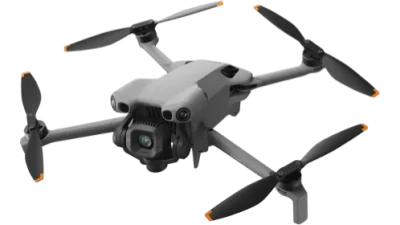
If the 250-gram line is not negotiable, this is the only drone under it that DJI rates at 12 m/s.
- Rated 12 m/s — a Force 6 strong breeze — which no other drone under 250 grams here claims.
- Allowed 38 degrees of lean, which works out at roughly 195 grams of sideways push. An Air 3S makes about 526.
- 36 minutes on the standard battery. DJI advertises 52, but only on the Plus battery that takes it over 249 g.
Best Cheap Drone for a Breezy Day: DJI Flip
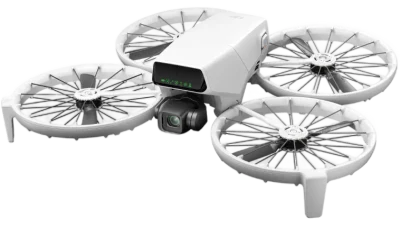
A full Level 5 rating, a proper 48-megapixel sensor and half an hour in the air, at the cheap end of this guide. Nothing else here gives you that combination for so little.
- Under 249 grams and C0-marked, so it flies in the easiest category with nothing further to sit.
- Rated 10.7 m/s (Level 5) with 31 minutes of flight time — the best endurance-per-pound here.
- The propeller cages are moulded in and cannot be removed, so you carry that extra area into every gust.
Best Drone for the Longest Time in the Air: DJI Mini 3
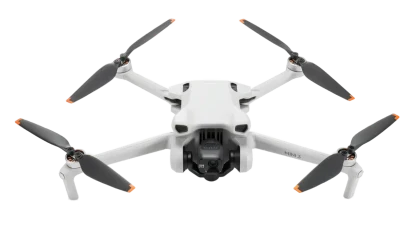
Wind is paid for in minutes, and no other drone under 250 grams gives you as many of them on a standard battery.
- 38 minutes on the standard battery. The Plus battery quoting 51 minutes is sold only in selected regions, and DJI’s manual says it takes the drone over 249 g.
- Rated 10.7 m/s (Level 5) with a 40-degree maximum pitch angle, the steepest lean published for any drone here.
- 248 grams and C0-marked, so no exam, no certificate and nothing to do in 2028.
Best Drone for Exposed Coastal and Hill Sites: DJI Mavic 4 Pro
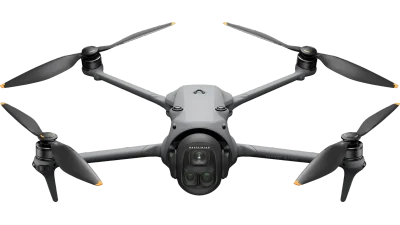
The same printed rating as a Mini, with four and a quarter times the drone standing behind it. This is what buying margin looks like.
- 1,063 grams behind the same 12 m/s rating a 249.9-gram Mini 5 Pro carries — roughly 744 grams of sideways push against 195.
- 51 minutes on one battery, the longest here, which is exactly what a headwind spends.
- C2-marked, so it needs an A2 Certificate of Competence to fly near people today, not in 2028.
Affiliate links · costs you nothing extra · full disclosure
Take the quiz: find the drone that suits your wind
Four questions, starting with where you stand rather than what you want to film.
- Built around exposure and mass, because those are what wind actually cares about.
- Eleven drones, from a 135-gram palm launcher to a 1,063-gram Mavic.
- Uses each maker’s own published wind figure, mapped to a Beaufort force.
- About 20 seconds, and no email needed.
STEP 1 OF 4
11 of 11 still fit
All eleven, cheapest first, with the wind figure their maker publishes
-
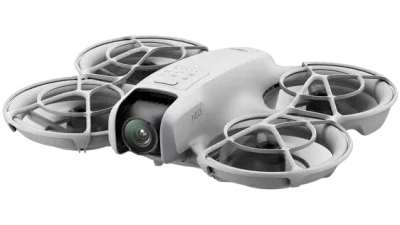
DJI Neo weakest wind rating here
135 g · C0 · 8 m/s (Level 4) · 18 min · 1/2″ 12MP
A lovely thing that I would not buy for this. DJI rates it at Level 4 — a moderate breeze — which is the only rating on this page that a normal British afternoon can beat.
- 135 grams and C0-marked, so no test and no 2028 problem — the paperwork is genuinely the easy part.
- DJI rates it at 8 m/s, which it labels Level 4. Every other drone here is rated Level 5 or better.
- Around 18 minutes per battery, and wind eats that faster than anything else you can do to it.
-
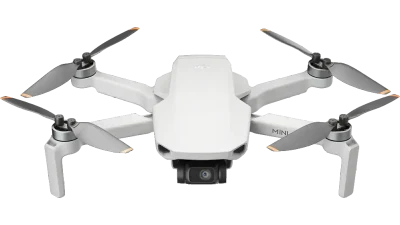
DJI Mini 4K DJI UK is not selling it
246 g · no class mark · 10.7 m/s (Scale 5) · 31 min · 40° tilt
The cheapest genuinely Force-5-rated drone in Britain, and the one whose manual quietly calls it “Scale 5” instead of “Level 5”. Same number, same scale, different proof-reader.
- 246 grams with a 40-degree maximum tilt, which is as far as any drone here is allowed to lean into wind.
- Rated 10.7 m/s — the top of Force 5 — for well under half the price of a Mini 5 Pro.
- DJI UK has stopped selling it, so you are buying third-party stock, and it carries no class mark at all.
-
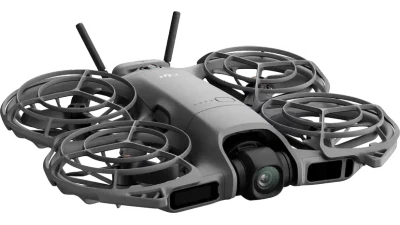
DJI Neo 2
151 g · C0 · 10.7 m/s (Level 5) · 19 min · palm launch
The most interesting number on this page: DJI rates 151 grams at exactly the same wind speed as an 835-gram Autel. I have flown it and it does hold on — but it holds on by working very hard indeed.
- 151 grams without the transceiver, 160 with it, and C0-marked either way — no test, and nothing changes in 2028.
- Rated 10.7 m/s (Level 5), the same figure DJI prints on a 249-gram Flip.
- Around 19 minutes per battery, or 17 with the propeller guards fitted — the shortest useful endurance here.
-
DJI Flip
<249 g · C0 · 10.7 m/s (Level 5) · 31 min · 1/1.3″ 48MP
The cheapest way to buy a full Level 5 rating, a proper 48-megapixel sensor and 31 minutes, all in the same box. Its full propeller cages are the trade: brilliant for safety, extra surface for the wind to lean on.
- Under 249 grams and C0-marked, so it flies in the easiest category with nothing further to sit.
- Rated 10.7 m/s (Level 5) with 31 minutes of flight time — the best endurance-per-pound here.
- The propeller cages are moulded in and cannot be removed, so you carry that extra area into every gust.
-
DJI Mini 3 Amazon lists the screen-controller version
248 g · C0 · 10.7 m/s (Level 5) · 38 min · 40° tilt
Thirty-eight minutes on the standard battery, which is more than any other sub-250-gram drone here, and 40 degrees of allowed lean. An old design that is still the best endurance answer under the line.
- 38 minutes on the standard battery. The Plus battery quoting 51 minutes is sold only in selected regions, and DJI’s manual says it takes the drone over 249 g.
- Rated 10.7 m/s (Level 5) with a 40-degree maximum pitch angle, the steepest lean published for any drone here.
- 248 grams and C0-marked, so no exam, no certificate and nothing to do in 2028.
-
DJI Mini 4 Pro
<249 g · C0 · 10.7 m/s · 34 min · 35° tilt
Everything the Mini 5 Pro does except the two numbers this article cares about: it is rated 10.7 rather than 12, and it is allowed to lean 35 degrees rather than 38. In still air you would struggle to tell them apart.
- Under 249 grams with a C0 mark, and omnidirectional sensing that keeps working when you are busy fighting the wind.
- Rated 10.7 m/s and allowed 35 degrees of lean, both a step behind the Mini 5 Pro.
- 34 minutes on the standard battery. The 45-minute Plus battery DJI quotes is, by its own footnote, not sold in Europe.
-
DJI Mini 5 Pro
249.9 g · C0 · 12 m/s · 36 min · 38° tilt · 1″ 50MP
The only drone under 250 grams that DJI rates at 12 m/s, and the one I have flown most in weather I should probably have scrubbed. It is genuinely better in wind than any other Mini — and it still only weighs 249.9 grams.
- Rated 12 m/s — a Force 6 strong breeze — which no other drone under 250 grams here claims.
- Allowed 38 degrees of lean, which works out at roughly 195 grams of sideways push. An Air 3S makes about 526.
- 36 minutes on the standard battery. DJI advertises 52, but only on the Plus battery that takes it over 249 g.
-
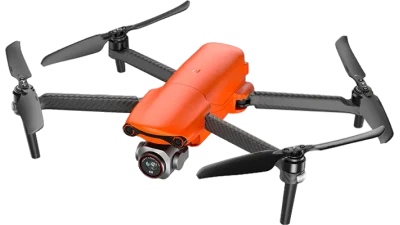
Autel EVO Lite+ no affiliate link — I could not find a UK listing
835 g · no class mark · 10.7 m/s · 40 min · 33° tilt
Here as evidence rather than as a recommendation. Autel rates 835 grams at the same 10.7 m/s as a 151-gram DJI Neo 2, and its own specification page footnotes that figure as applying “in fixed-wing mode” — on a drone with four propellers and no wing.
no link- Searching Amazon UK returned only propellers, cables and cases, so there is no buy link on this row.
- 835 grams with no class mark, which means an A2 Certificate of Competence before you fly it near anybody.
- 40 minutes of quoted flight time, which only the Air 3S and the Mavic 4 Pro beat here.
-
DJI Air 3S loses privileges in 2028
724 g · C1 · 12 m/s · 45 min · 36° tilt · 1″ 50MP
The point where the printed number starts having something behind it. Nearly three times the mass of a Mini for the same 12 m/s rating, 45 minutes to get home on, and today it still needs no exam.
- 724 grams behind a 12 m/s rating — about 526 grams of sideways push, against a Mini 5 Pro’s 195.
- 45 minutes on one battery, which is the single most useful thing you can have when the flight home is uphill into wind.
- C1-marked, so from January 2028 it needs an A2 Certificate of Competence to fly near people.
-
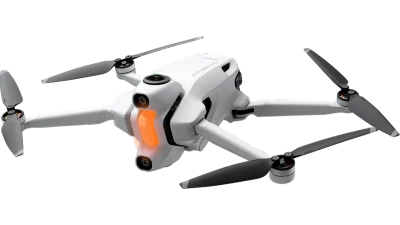
Antigravity A1 Amazon lists the Infinity Bundle
249 g standard battery · C0 · 10.7 m/s (Level 5) · 24 min
A 360-degree camera that flies, under 250 grams, and rated at exactly the same Level 5 as the cheapest Mini in this guide. Fascinating object, wrong answer to a wind question, and the most expensive way here to be rated Force 5.
- 249 grams on the standard battery and EU C0; the high-capacity battery takes it to 291 g and EU C1.
- Rated 10.7 m/s (24 mph), which Antigravity itself labels Level 5 — the same claim as a DJI Flip.
- 24 minutes on the standard battery. The 39-minute figure on the Amazon bundle is the high-capacity battery, which Antigravity’s own page says is not sold in European regions.
-
DJI Mavic 4 Pro A2 test needed today
1,063 g · C2 · 12 m/s · 51 min · 35° tilt · 100MP 4/3″
The most drone per printed rating on this page. Four and a quarter times a Mini 5 Pro’s mass behind the identical 12 m/s figure, and 51 minutes to spend on the way back. The bill is a theory exam, and a lot of money.
- 1,063 grams behind the same 12 m/s rating a 249.9-gram Mini 5 Pro carries — roughly 744 grams of sideways push against 195.
- 51 minutes on one battery, the longest here, which is exactly what a headwind spends.
- C2-marked, so it needs an A2 Certificate of Competence to fly near people today, not in 2028.
Wind, weight, tilt and flight-time figures are each manufacturer’s own published values, checked 31 July 2026. Every row links to the exact configuration its figures describe, which for the DJI Mini 3 is the screen-controller version — DJI UK sells an RC-N1 version separately if you would rather use your phone, and it is the cheaper of the two. Where a maker no longer sells a drone here in the configuration Amazon lists, the row says so on its flag and you are buying third-party stock. I do not print prices on this page: they move week to week and the Amazon link shows you today’s. Sideways-push figures are my own arithmetic from published take-off weights and maximum pitch angles; the working is in Part Two.
PART TWO
Wind ratings are marketing: Beaufort against a 249-gram airframe
Every drone in this guide publishes a line called maximum wind speed resistance. It is the line every buyer in this category goes looking for, and it is the line that tells you least, because almost nobody explains what it is measuring. So here it is properly: where the number comes from, which weather it actually describes, and what happens to it when you put it behind 249 grams.
The “Level” in brackets is the Beaufort scale
Start with a detail almost every review skips. On the DJI Flip, the Neo 2 and the Mini 3, DJI writes the figure as “10.7 m/s (Level 5)”. On the DJI Neo it writes “8 m/s (Level 4)”. Antigravity writes “10.7 m/s (24 mph) (Level 5)” for the A1. The DJI Mini 4K’s user manual writes the same number as “10.7 m/s (Scale 5)”, which is DJI disagreeing with itself about what to call it in the same product line.
That level is a Beaufort force. The Beaufort scale is what the Met Office uses in its marine forecasts, and it describes wind intensity by what the wind is visibly doing rather than by an instrument reading. It runs from 0 (calm) to 12 (hurricane). Britain lives most of the year somewhere between 3 and 6.
Line the drone figures up against the Met Office’s own table and they stop being arbitrary:
WHAT EACH RATING ACTUALLY MEANS
| FORCE | SPEED | ON THE GROUND | RATED HERE |
|---|---|---|---|
| 4 Moderate breeze | 6–8 m/s13–18 mph | Dust and paper lift, small branches move. | DJI Neo (8 m/s) |
| 5 Fresh breeze | 9–11 m/s19–24 mph | Small trees in leaf begin to sway. | Neo 2, Mini 4K, Flip, Mini 3, Mini 4 Pro, Antigravity A1, Autel EVO Lite+ (10.7 m/s) |
| 6 Strong breeze | 11–14 m/s25–31 mph | Large branches move, wires whistle overhead. | Mini 5 Pro, Air 3S, Mavic 4 Pro (12 m/s) |
| 7 Near gale | 14–17 m/s32–38 mph | Whole trees move, hard to walk into it. | Nothing on this page |
Two things fall straight out of that. First, 10.7 m/s is the top of Force 5 almost exactly — 20.8 knots against a band that ends at 21. It is not a claim to handle a strong breeze; it is a claim to survive the strongest fresh breeze. Second, and this is the interesting one: 12 m/s is the Met Office’s mean wind speed for Force 6, and next to that number DJI prints no level at all. The bracket that says “Level 5” on a Flip is simply absent from the Mini 5 Pro, the Air 3S and the Mavic 4 Pro.
The tell: the number does not move with the drone
Here is the thing that should make you stop treating the figure as physics. If maximum wind resistance described the airframe, it would change when the airframe changed. It does not.
10.7 m/s is printed on a 151-gram DJI Neo 2 and on an 835-gram Autel EVO Lite+. That is five and a half times the mass, on two drones from different manufacturers, carrying the identical claim. 12 m/s is printed on a 249.9-gram DJI Mini 5 Pro and on a 1,063-gram DJI Mavic 4 Pro — four and a quarter times the mass, same company, same number.
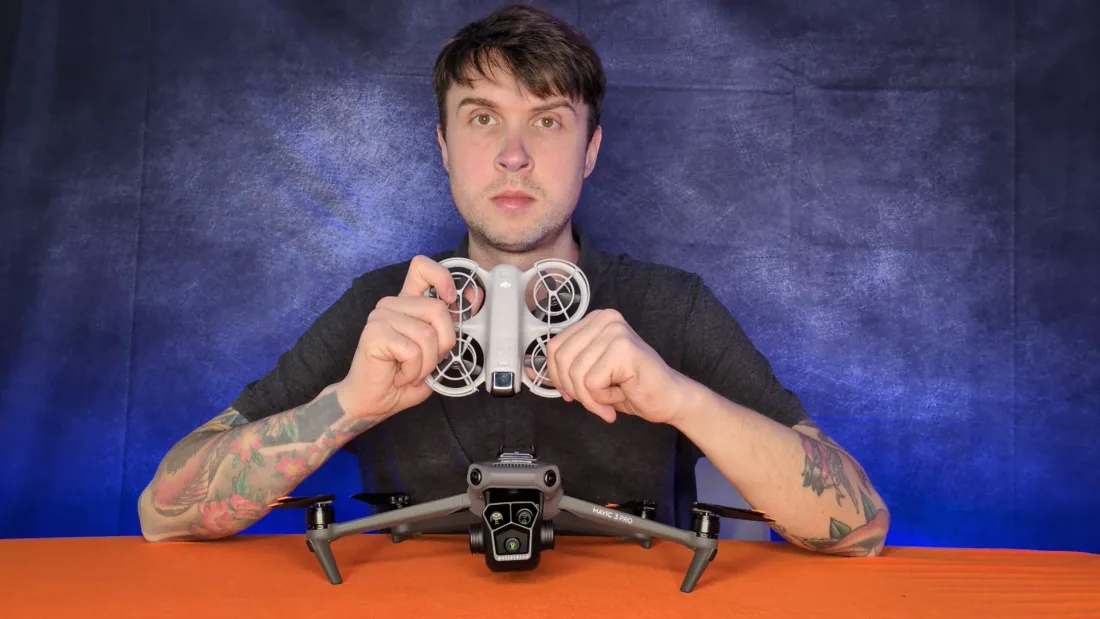
You do not need a wind tunnel to know those two objects behave differently in weather. Pick them both up, as I have, and the difference is obvious before either one leaves the ground. What the rating really is, is a pass mark: a threshold each manufacturer tests its drones against and reports as met. It is a ranking, and a coarse one, with three values across eleven products.
Autel makes the point for me by accident. Its EVO Lite+ specification page lists maximum wind speed resistance as 10.7 m/s, and a footnote on the same page explains that this “refers to the maximum wind speed the UAV can withstand in fixed-wing mode”. The EVO Lite+ has four propellers and no wing. Nobody caught it, because nobody expects that line to be read closely.
What a drone can actually push against
So do the arithmetic the spec sheet will not do for you. It is genuinely simple, and once you have seen it you will never read a wind rating the same way.
A drone holds still in wind by tilting into it. Tilting points some of its thrust sideways, and that sideways push is what cancels the wind trying to move it. How much thrust it can point sideways depends on two things: how much it weighs, and how far its firmware lets it lean. Both are published. The sideways force available, in grams, is simply the drone’s take-off weight multiplied by the tangent of its maximum pitch angle.
SIDEWAYS PUSH, FROM THE MAKERS’ OWN FIGURES
| DRONE | WEIGHT | MAX LEAN | SIDEWAYS PUSH | RATED |
|---|---|---|---|---|
| DJI Mini 4 Pro | 249 g | 35° | 174 g | 10.7 m/s |
| DJI Mini 5 Pro | 249.9 g | 38° | 195 g | 12 m/s |
| DJI Mini 3 | 248 g | 40° | 208 g | 10.7 m/s |
| DJI Air 3S | 724 g | 36° | 526 g | 12 m/s |
| Autel EVO Lite+ | 835 g | 33° | 542 g | 10.7 m/s |
| DJI Mavic 4 Pro | 1,063 g | 35° | 744 g | 12 m/s |
Read the last two columns together. A DJI Mini 5 Pro and a DJI Mavic 4 Pro carry the identical 12 m/s rating, and the Mavic can push sideways almost four times as hard. The Mini 3, rated a whole Beaufort force lower than the Mini 5 Pro, can actually push slightly harder than it, because DJI lets it lean two degrees further.
Now the part that finishes the argument. If the Mavic were also four times the size, all that extra push would be spent on its own extra drag and you would be back where you started. It is not. DJI publishes the dimensions: unfolded, a Mavic 4 Pro is 328.7 × 390.5 × 135.2 mm without its propellers, and a Mini 5 Pro is 304 × 380 × 91 mm with them on. Call it half as big again in the face it turns to the wind — and that comparison flatters the Mini, because its figure includes the propellers and the Mavic’s does not. Half as much again in size, against four times the push. Almost all of that difference is spare capacity, and spare capacity is the entire product.
My arithmetic, not DJI’s. The weights and pitch angles are published; the sideways-push column is weight × tan(pitch), which is what holding station in wind requires. It assumes the motors can sustain the maximum lean, ignores propeller efficiency and how slippery each body shape is, and treats a gusty hillside as if it were steady air. Take it as a comparison between drones, which is exactly how I am using it. DJI publishes no maximum pitch angle for the Flip, the Neo or the Neo 2, and Antigravity publishes none for the A1, so those four are not in the table.
Four things the rating is not
It is not a gust rating. Beaufort is a mean-wind scale — the Met Office table has one column headed “mean wind speed” and another headed “limits of wind speed”. A UK forecast gives you a mean and a separate gust figure for a reason, and it is the gust that puts horizon in your frame. If you want the working rule I use for turning a forecast into a go or no-go, I have written that up separately in how I make the wind call before a flight.
It is not measured in your air. Every headline figure DJI publishes carries the same footnote — measured in a controlled wind tunnel, at sea level, in conditions equivalent to windless operation. Smooth, steady, level airflow at a known temperature. A Cornish clifftop in March is none of those things.
It is not a constant. DJI states plainly in its own user manuals that reduced battery capacity in low temperatures reduces the drone’s wind-speed-resistance performance. So the printed number is a warm-battery number. Fly the same drone on a cold January morning and the figure on the box is quietly no longer the figure you have.
And it is not the wind your drone is actually in. The CAA’s Drone Code puts this in one line: “wind on the ground is often very different to the wind at height”. DJI says the same thing from the other direction — its manuals warn that where there is a large gap between your current altitude and your return-to-home altitude, remaining power cannot be calculated accurately “due to wind speed differences at different altitudes”. You are standing in a hedge-sheltered field judging a wind that your drone, 100 metres up, is not in.
Read all of that as a buying rule
Use the printed number to rank drones against each other, never as a ceiling to fly up to. Between two drones with the same rating, the heavier one is the better wind machine, every time, and by a margin the spec sheet does not show you. That is the whole of it. Everything else in this article is detail.
The UK rules that decide how heavy you can go
Everything above says buy heavier. UK law is the reason you might not, so here it is from scratch, assuming you have never registered anything — because most people reading this have not.
There are two registrations and neither is a licence. A Flyer ID is a free theory test you sit online; it lasts five years and anyone flying a drone of 100 grams or more needs one. An Operator ID costs £12.34 a year, you must be 18 to register for it, and the number goes on a label stuck to the outside of the drone. Every drone of 100 grams or more with a camera needs one, which means every drone on this page.
After that, weight and class mark decide where you may fly. Under 250 grams puts you in Over People (A1), the easy category, with nothing further to do — that is eight of the eleven drones here. A C1 mark also gets you A1 today, which is how the 724-gram Air 3S currently sits alongside them. A C2 mark, like the Mavic 4 Pro’s, needs an A2 Certificate of Competence — a theory exam of at least 30 questions with a CAA-approved provider — before you may fly it near people at all. Without one you are in Far from People (A3): 50 metres from anyone, 50 metres from individual buildings and 150 metres from anything residential, commercial, industrial or recreational.
The 835-gram Autel EVO Lite+ carries no class mark at all, so it is governed by weight alone and lands in exactly the same place: A2 certificate, or a big empty field.
The bit the Drone Code adds when it is windy
Two clauses in the CAA’s Drone Code exist specifically for the weather, and almost nobody who has not sat the test knows about the second one.
The first is the weather rule itself. It tells you not to fly if the weather could affect your flight, and it names strong winds first: they “could blow your drone … off course or make it difficult to fly safely”. The same rule is where that line about wind at height comes from. The pre-flight rule on battery levels is the companion to it — you are told to check that your battery will last the flight including what you might need in an emergency or for flying in difficult weather such as windy conditions.
The second is the one that surprises people. The Drone Code’s separation rule says that where poor weather means there could be a greater risk to people, you must fly further away from them, and it gives “if it’s very windy” as its own worked example. So the separation distance you would normally keep is a calm-day floor, not a windy-day figure. On a breezy beach with dog walkers about, the legal answer is further back than you think, and it is your judgement that has to produce the number.
And then there is 1 January 2028
This matters here because it is the deadline attached to the drone I am recommending. Until 31 December 2027, a drone carrying a European C class mark may be flown as though it held the equivalent UK class. From 1 January 2028 that stops. A C-marked drone becomes legacy and falls back to plain weight rules: under 250 g flies A1, under 2 kg needs an A2 CofC, under 25 kg is A3.
For the eight sub-250-gram drones here nothing changes at all. For the 724-gram, C1-marked Air 3S, it means the exam you can skip today is one you will be sitting in 2027. Nothing gets confiscated and nothing becomes illegal to own — but if part of the appeal is that it needs no qualification, understand that you are buying about eighteen months of that. Either plan for the A2 CofC, or stay in the sub-250-gram category and accept that you have chosen the paperwork over the weather.
Two more that catch people out on windy days in particular. You need the landowner’s permission to take off and land, which is a conversation rather than a technicality, and matters more when the wind means you may not land where you took off. And third-party insurance is optional for recreation and a legal requirement the moment anybody pays you for the footage. My own view: flying a drone in weather its own manufacturer rates it below is not a story I would want to be telling a claims handler.
PART THREE
What the wind takes first, and why it decides what you buy
People imagine losing a drone to wind as a single dramatic event: it goes, and that is that. It is not like that. It is a sequence, it happens in a reliable order, and the useful thing about knowing the order is that every step in it is bought off by the same thing — grams and minutes. That is the buying argument, so here is the sequence.
1. You lose the shot long before you lose the drone
The first casualty is not control, it is footage. A drone leaning into wind is a drone whose camera is being shaken, and DJI says so in the manual: “if there are strong winds, the gimbal may vibrate while recording”. Photographs go next. On the Mini 5 Pro, the automatic scene-blending mode that gives you the good dynamic range is quietly disabled when the drone “is unable to hover stably due to high wind speeds”, so you get flat, unblended frames without being told why.
This is the step almost everyone actually experiences, and it is why “it flew fine, the footage was rubbish” is the most common windy-day report. The drone was inside its rating. Your shot was not.
2. It stops going as fast as you asked
Next, the firmware starts overruling you. DJI’s manuals state that the drone “will restrict its speed to maintain image stabilization”, and that “in high wind conditions, flight speed will be further limited”. So the headline top speed on the box is not available on the day you most want it — which is the day you are trying to make progress against a headwind.
That is the moment the distance you flew out becomes a problem. You went out downwind, quickly and easily, further than you meant to. Now the same distance costs three times the minutes.
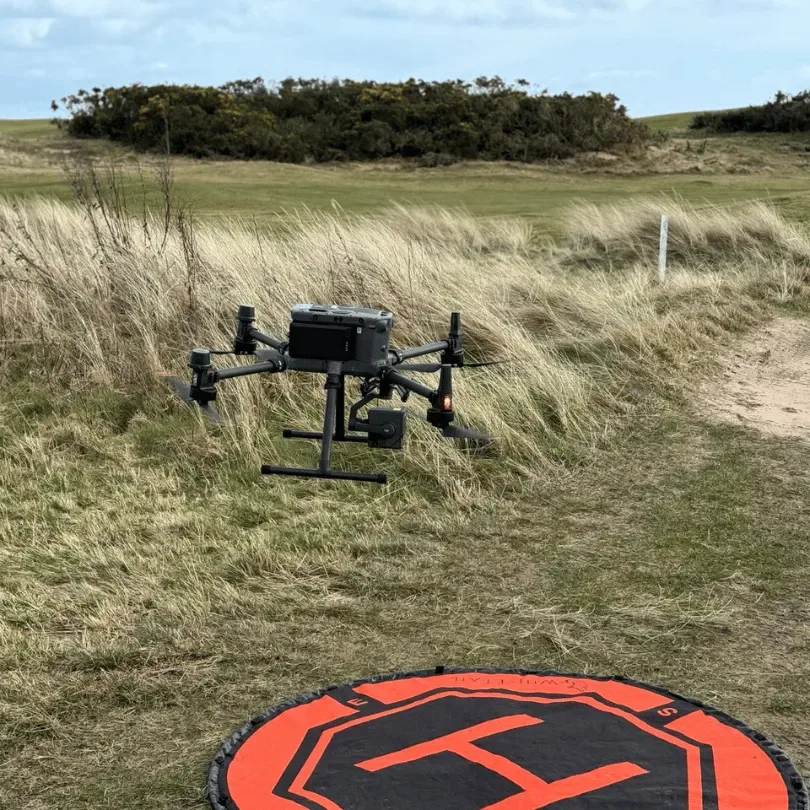
3. The battery numbers stop meaning anything
Every flight time in this guide — 18 minutes, 31, 36, 45, 51 — was measured flying forward at a constant speed in a wind tunnel with no wind in it. That is not a criticism; it is the only way to make the numbers comparable. But it does mean the figure is a ceiling you will never see outdoors, and the gap widens with the wind.
Worse, the estimate the app shows you can be wrong in a specific way. DJI warns that where there is a big difference between your current altitude and your return-to-home altitude, the power needed “cannot be calculated accurately due to wind speed differences at different altitudes”. The percentage on your screen was computed for air the drone is not in.
4. Return to home is not a rescue
This is the one I would most like every first-time buyer to read. Return to home is a wonderful feature and people treat it as an insurance policy against exactly this situation. It is not. DJI’s own manuals for the Mini 5 Pro and the Air 3S carry the same warning in the same words: the drone “may not be able to return to a Home Point if the wind speed is too high”.
Think about what return to home actually does. It climbs to a set height — often into faster air — and flies a straight line at a speed the drone chooses, with a battery reserve calculated in still conditions. Advanced return-to-home modes do adjust speed for wind, but they cannot manufacture thrust the drone does not have. If the headwind is stronger than the drone’s forward speed at its maximum lean, the drone is not coming home, and the fact that it is trying does not change the outcome. It is the single strongest argument for understanding what return to home does before you rely on it.
5. And if the satellites go, so does the hover
The last step is the one nobody plans for. If the positioning systems drop out — poor satellite reception, a compass upset near metal, a low sun confusing the downward cameras — the drone falls back to a basic attitude mode in which it holds its angle and nothing else. DJI is blunt about what that means: environmental factors such as wind can push it sideways, it will not hover or brake automatically, and you should land as soon as possible.
In still air that is a manageable inconvenience. In a Force 5 it is a drone travelling downwind at walking pace and accelerating, with no autopilot left to argue with it.
What all five steps have in common
Every one of them is bought off by mass and minutes. Mass buys you the sideways push to hold a frame steady, to make progress into a headwind, and to have anything left when the positioning drops out. Minutes buy you the reserve to be wrong about the wind and still get home.
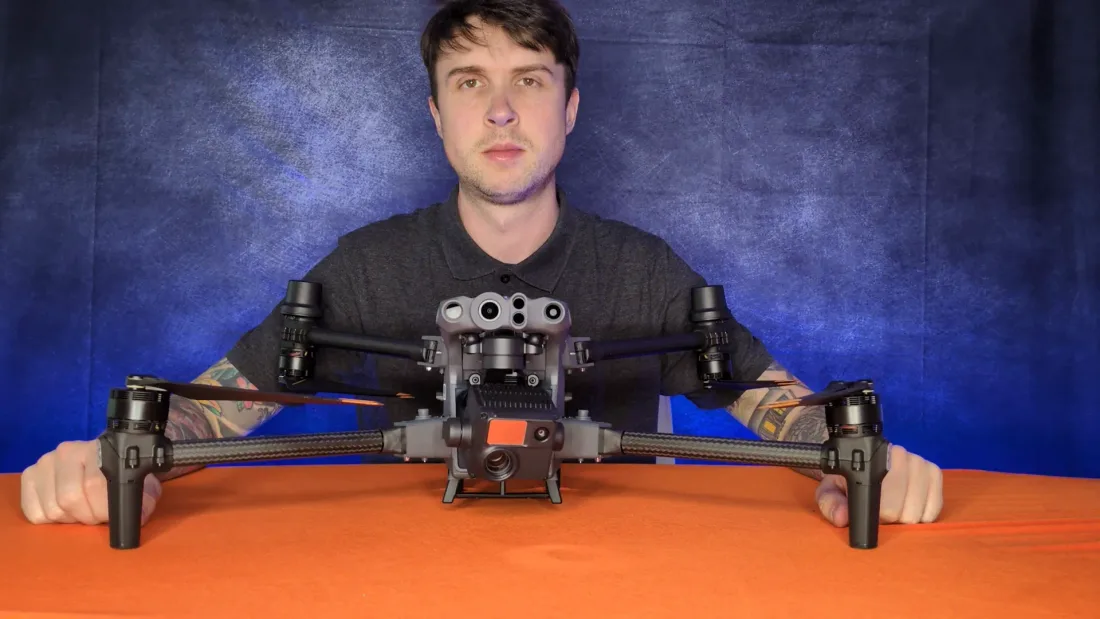
There is a version of this argument that keeps going: the commercial platforms I fly for paid work weigh several kilograms, and they are on jobs in weather that would ground everything on this page. You do not need one and you almost certainly should not buy one. But it explains why the answer to “which drone handles wind” keeps coming out as “the heavier one”, all the way up the ladder, and why the sub-250-gram bracket is a legal category rather than an aerodynamic one. And if what you actually need is one shot on one exposed site on one bad day, you can hire a pilot who already owns the heavy thing — and what that costs is usually less than the drone you were about to buy for one job.
PART FOUR
What I’d fly when the forecast turns
The DJI Air 3S. That is what I would buy today with my own money if the weather were the thing I was buying for, and I would not spend long deciding. It is neither the cheapest drone on this page nor the most expensive; it is the point where the two things this article cares about stop fighting each other.
It wins because it is the cheapest point on this page where the printed rating has something behind it. 724 grams and 36 degrees of lean give it roughly 526 grams of sideways push, against 195 for a Mini 5 Pro carrying the identical 12 m/s figure. Its 45 minutes are the reserve you spend on the flight home, and a one-inch, 50-megapixel sensor means you are not paying for the weather with the picture. And the C1 mark means that today, right now, you can buy it, register, and fly it in the same Over People category as a 249-gram Mini without sitting anything.
In my hands the difference is not subtle. I have flown every DJI drone on this list, and there is a specific moment on a breezy day when a Mini starts visibly hunting — nudging, correcting, nudging again — and the Air 3S simply does not do it yet. That gap is worth more than any camera specification on the page.
Be clear-eyed about the bill, though: from 1 January 2028 that C1 mark stops carrying you and the Air 3S needs an A2 Certificate of Competence to fly near people. You are buying about eighteen months of easy paperwork, then a theory exam.
If the 250-gram line is not negotiable — and for a lot of people it genuinely is not — buy the DJI Mini 5 Pro, which costs comfortably less than an Air 3S. It is the only drone under the line DJI rates at 12 m/s, it leans further than any other Mini Pro, and nothing about 2028 ever applies to it. Just do not read that 12 m/s as meaning the same thing it means on an Air 3S, because 195 grams of push is not 526.
If you are shopping at the cheap end of this list, the DJI Flip buys you a genuine Level 5 rating and 31 minutes, which is more wind margin per pound than anything else here — a fraction of what an Air 3S costs, one Beaufort force lower. Fly it on the sheltered side of the hill and accept that its propeller cages are extra surface for the wind to work on.
If you fly on cliffs, headlands or open moor and you are willing to sit an exam, the DJI Mavic 4 Pro is the honest answer, and 51 minutes is a different kind of confidence. It costs roughly twice what an Air 3S does, and 744 grams of sideways push against 526 is what the difference buys. The A2 Certificate of Competence is not optional for it — that is today’s rule, not 2028’s.
The two I’d steer you away from
The DJI Neo, for this purpose only. It is 135 grams, it is the cheapest thing on this page by a distance, it is genuinely delightful, and I have flown it a great deal. It is also the only drone on this page rated at Level 4 — a moderate breeze, 13 to 18 mph — which is a wind Britain produces on an ordinary Tuesday. If you have read this far because you are worried about wind, this is the drone your worry is about. Buy it for a garden and a calm evening, not for the forecast.
And the Autel EVO Lite+, which I have left in the list without a buy link because I could not find a UK listing worth pointing you at — searching Amazon UK returns propellers, cables and cases, and no drone. I would not go hunting for one. At 835 grams with no class mark it needs the A2 test to fly near people today, and I would not spend that effort on a wind figure its own maker has footnoted as applying to a mode the drone does not have.
One last thing, said plainly because it is the most valuable sentence in this article. No drone here is safe in wind. They are only differently unsafe, and the number on the box is a ranking rather than a permission. The pilots who never lose one are not the ones with the best rating; they are the ones who turn back first.
Drones and wind: the questions I get asked most
What is the best drone for windy conditions in the UK in 2026?
The DJI Air 3S. It is rated to 12 m/s, which is a Force 6 strong breeze, and unlike the Mini it has 724 grams behind that number rather than 249. It carries a C1 class mark, so today it flies in the same Over People category as a sub-250-gram drone with no extra test, and its 45 minutes give you a real reserve for the flight home into a headwind. Spend less and the DJI Mini 5 Pro is the only drone under 250 grams that DJI rates at 12 m/s, though it is a Mini and it weighs what a Mini weighs. Spend more and the DJI Mavic 4 Pro has more than four times the Mini’s mass behind the same figure, and asks for an A2 Certificate of Competence in return.
What does a drone’s wind resistance rating actually mean?
Less than it looks. It is a steady-airflow figure measured in a wind tunnel, and where DJI writes a level beside it — 10.7 m/s (Level 5), 8 m/s (Level 4) — that level is the Beaufort force. It describes a mean wind, not the gusts inside it, and it does not move with the airframe: 10.7 m/s is printed on a 151-gram DJI Neo 2 and on an 835-gram Autel EVO Lite+, and 12 m/s is printed on a 249.9-gram DJI Mini 5 Pro and on a 1,063-gram DJI Mavic 4 Pro. DJI also states that reduced battery capacity in cold weather reduces a drone’s wind-resistance performance, so the number is a warm, sea-level, steady-flow best case. Treat it as a ranking between drones, never as a ceiling you can fly up to.
Will a 249-gram drone blow away?
It is the most likely of the drones here to lose the argument, yes. A drone holds position in wind by leaning into it, and the sideways push it can produce is its weight multiplied by how far it is allowed to lean. Using DJI’s own published take-off weights and maximum pitch angles, a DJI Mini 5 Pro leaning as far as its firmware permits makes about 195 grams of sideways force; a DJI Mavic 4 Pro makes about 744. The Mavic is not four times the size — unfolded it is 328.7 by 390.5 mm against the Mini’s 304 by 380 mm — so almost all of that extra push is spare capacity against the same wind. Both are rated at 12 m/s.
Is the wind stronger at 100 metres than on the ground?
Usually, and the CAA says so directly. The UK Drone Code’s weather rule tells you that “wind on the ground is often very different to the wind at height”. DJI’s own user manuals say the same thing from the other side: when there is a large gap between your current altitude and your return-to-home altitude, the drone cannot calculate its remaining power accurately “due to wind speed differences at different altitudes”. The wind you are standing in is not the wind your drone is in, and nothing on the drone tells you the difference until the battery numbers stop adding up.
Does return to home work in strong wind?
Not reliably, and DJI says so in the manual. The Mini 5 Pro and Air 3S manuals both warn that the drone “may not be able to return to a Home Point if the wind speed is too high”. Return to home is a straight-line flight at a fixed speed with no idea how hard the headwind is, and the battery estimate behind it was calculated in still air. The CAA’s Drone Code separately tells you to carry extra battery reserve for flying in windy conditions. Treat return to home as a convenience, not a rescue, and turn back long before you need it.
Do UK drone rules change when it is windy?
Yes, in two places most people miss. The Drone Code tells you not to fly if the weather could affect your flight, and names strong winds first: they “could blow your drone … off course or make it difficult to fly safely”. It also says that where poor weather creates a greater risk to people you must fly further away from them, giving “if it’s very windy” as its own example — so the 50-metre separation you would normally keep is a floor on a calm day, not a windy one. And the pre-flight rule on battery levels explicitly tells you to allow extra for flying in difficult weather such as windy conditions.
The short version
Buy the DJI Air 3S. It carries the same 12 m/s rating as a Mini with nearly three times the drone behind it, and today it needs no exam. If you cannot cross the 250-gram line, the DJI Mini 5 Pro is the best there is under it — just do not read its rating as meaning what the Air 3S’s means.
OR, IF YOUR SITUATION SAYS OTHERWISE
Staying under 250 g — DJI Mini 5 Pro Cliffs and open moor — DJI Mavic 4 ProAffiliate links · costs you nothing extra · full disclosure
Specifications checked 31 July 2026 against each maker’s own UK pages. I deliberately do not quote prices anywhere on this page: they move week to week, and the only figure worth acting on is the one Amazon shows you when you click. Wind, weight, tilt and flight-time figures come from DJI, Autel and Antigravity specification pages and from the user manuals held in this repository. Beaufort forces and wind-speed limits from the Met Office Beaufort wind force scale. Regulatory detail from the UK Civil Aviation Authority’s Drone Code (CAP 2320) and its class-mark guidance. Amazon links are affiliate links. Related reading: what to carry up a hill, flying abroad and what airlines allow, the stills argument and how the camera drones compare.