Best Drone for Cold Weather: What I Fly Once the Ground Freezes

Peter Leslie
31 July 2026 · 20 min read
Most people who search this have had the same afternoon. Clear sky, no wind, hard frost, the sort of light you only get in January. The drone went up on a battery reading nearly full, and four or five minutes later it was warning you and coming home on its own. Nothing was broken. It was cold, and that was enough.
Two things decide which drone survives a British winter, and neither is printed on the box. The first is how much flying time you have spare once the cold has taken its share. The second is whether you will actually do the ninety seconds of preparation that stops it taking so much in the first place — and that part is free, which is why it is the part nobody sells you.
Which is why the best drone for cold weather in 2026 is not the one with the best camera, or even the one with the longest number on the box. It is the one that still has something left when the temperature has finished helping itself.
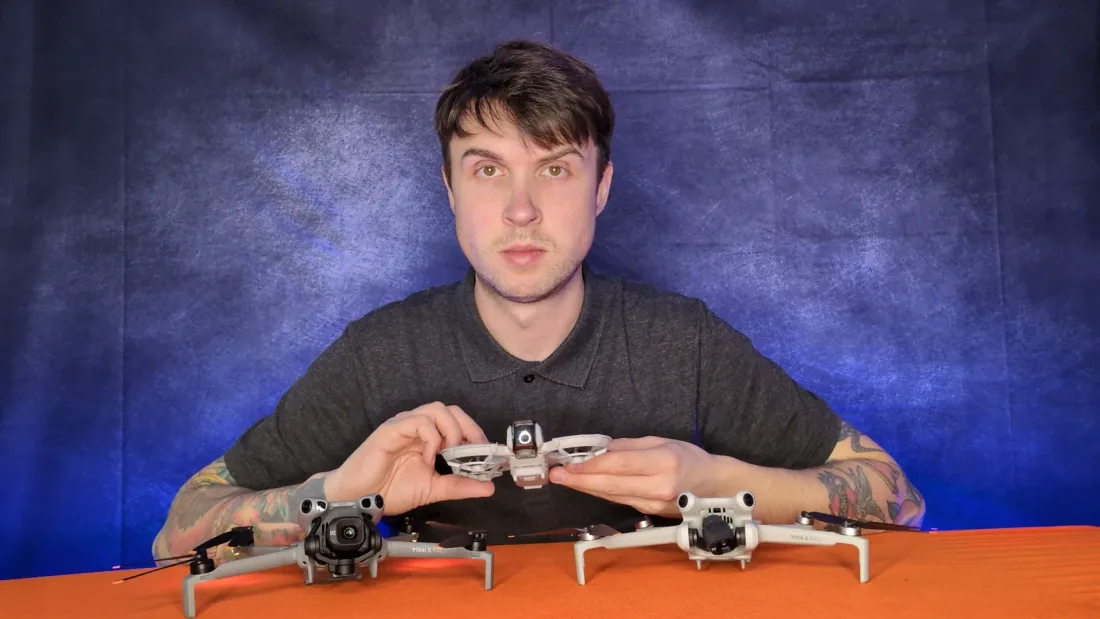
So this guide does three things a ranking on its own cannot. It asks four questions about how cold it actually gets where you fly, and narrows eleven drones to the one that fits you. It then explains what the cold is doing inside the battery, and gives you the pre-flight that turns a nervous winter flight into an ordinary one. And it ends with what a winter drone really costs in year one, because the number on the box is never the number you pay.
One thing I will not do is give you a percentage. You will find blogs telling you a lithium battery loses thirty or forty per cent of its capacity in the cold. DJI publishes no such figure for any drone in this guide, so I am not going to invent one and dress it up as a specification. What DJI does say, in its own manuals, is more useful anyway — and it is quoted in full further down.
How I get paid: the Amazon links below are affiliate links, so if you buy through one I earn a small commission at no extra cost to you. It does not change what I recommend — one of the eleven drones below has no affiliate link at all, and I have kept it in because leaving it out would have made the comparison less honest.
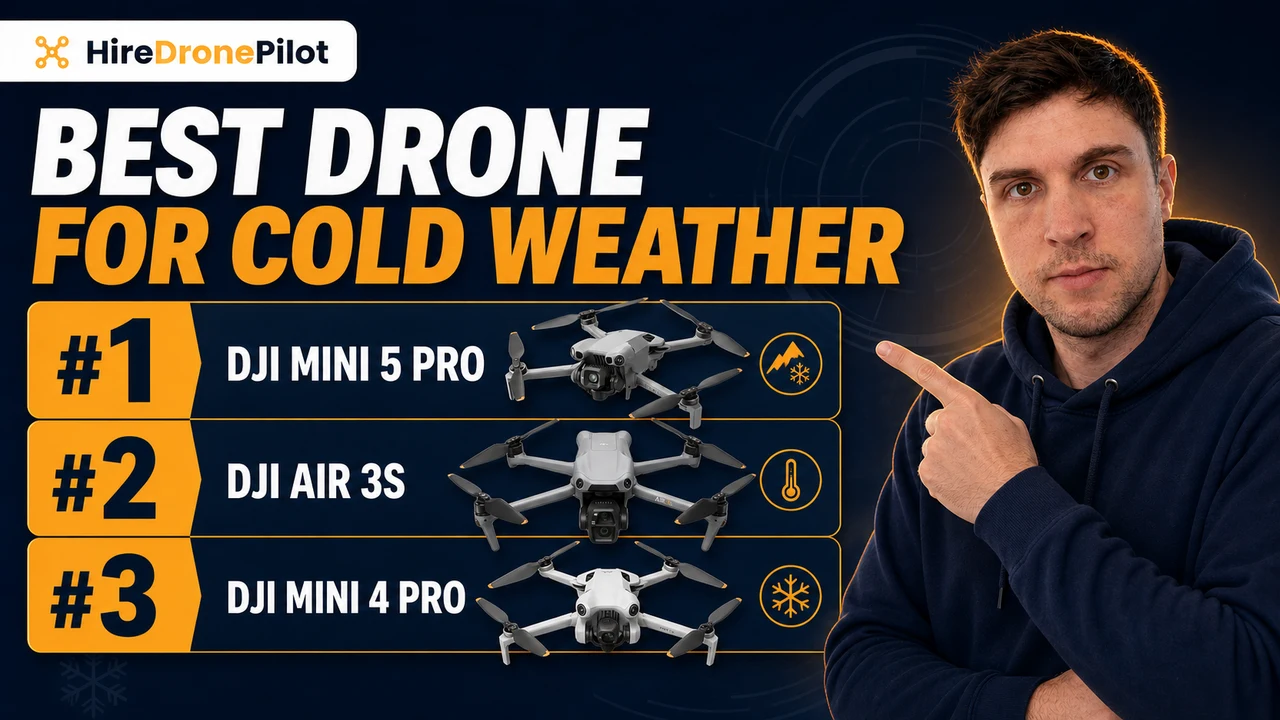
The Best Drone for Cold Weather in 2026 Is the DJI Mini 5 Pro
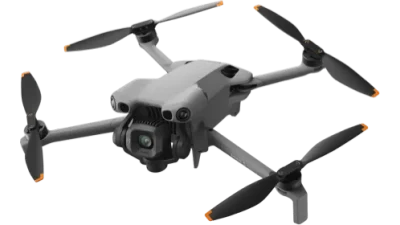
Cold takes your wind margin before it takes anything else. This is the only drone under 250 grams that starts with more of it than everything around it.
- No test and no licence — just a £12.34 registration you do online.
- DJI rates it to −10 °C, and to 12 m/s of wind, where everything else here under 250 grams stops at 10.7. The cold eats into wind resistance first.
- 36 minutes on paper, measured warm and windless. Lose a real chunk of that to a frost and you still have a flight worth making.
- Its honest weakness in the cold is a small 19.5 watt-hour battery, which loses its heat quickly. Carry a second one warm in an inside pocket and the problem goes away.
- Do not buy the bigger Plus battery. DJI states that fitting it means the drone can no longer be operated under C0, which is the status keeping you licence-free.
Affiliate link · costs you nothing extra · full disclosure
PART ONE
Here are the five that win their categories outright — and what is wrong with each of them, because winter is not kind to any of them.
Best Drone Under 250 Grams for the Longest Winter Flight: DJI Mini 3
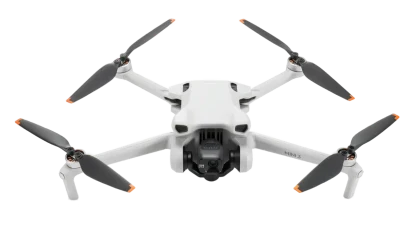
The cold does not empty your battery so much as spend your headroom — and this older Mini starts with more of it than anything else here under 250 grams.
- No test and no licence — just a £12.34 registration you do online.
- 38 minutes quoted, the longest of any drone here under 250 grams and longer than the Mini 5 Pro’s 36. On a frost you give a share of that away and still have a flight left.
- An 18.1 watt-hour battery in a light airframe, so it comes back up to temperature quickly during the hover before you fly anywhere.
- Only 10.7 m/s of rated wind and no obstacle sensing to the sides. It buys you minutes, not margin, and the cold takes wind margin first.
Best Cold-Weather Drone on a Budget: DJI Flip
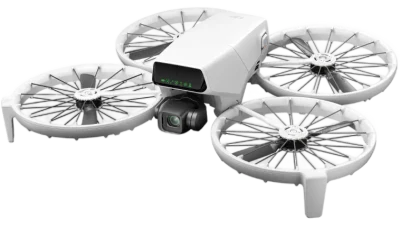
The largest battery of any sub-250-gram drone here, wrapped in cages you can hold with gloves on.
- No test and no licence — just a £12.34 registration you do online.
- A 22.3 watt-hour battery, larger than the Mini 5 Pro’s, so it holds its warmth longer once it is flying.
- Only 10.7 m/s of rated wind, and no obstacle sensing to the sides. It is a fair-weather winter drone, not an all-weather one.
Best Drone for a Hard Frost: DJI Air 3S
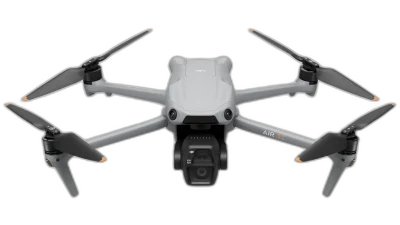
Three times a Mini’s battery energy and 45 minutes of quoted headroom. On the coldest morning of the year, this is the one I would rather be holding.
- A 62.5 watt-hour battery weighing about 247 grams — more than a whole Mini. Mass is what keeps it warm.
- Rated to 12 m/s of wind, and no qualification needed to fly it near people today.
- From January 2028 it needs the A2 test to fly near people. You are buying about eighteen months of that freedom.
Best Drone for a Short Winter Afternoon: DJI Neo 2
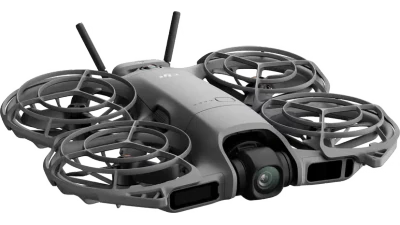
When the light will be gone in forty minutes, the drone that flies without a controller setup wins. It launches off your palm.
- No test and no licence — just a £12.34 registration you do online.
- Palm take-off with no controller to pair, which is the difference between flying and standing in a field with cold hands.
- The smallest battery here at 11.5 watt-hours and 19 quoted minutes. It goes cold faster than anything else in this guide.
Best Drone for Working Through Winter: DJI Mavic 4 Pro
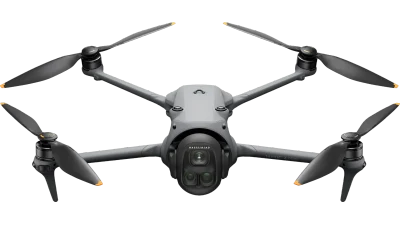
If somebody is paying you to be outside in February, this is the one that keeps working after the third battery change.
- A 95.3 watt-hour battery, the largest here. Thermal mass is the whole reason it shrugs off a cold morning.
- 51 minutes quoted and 12 m/s of rated wind, so a bad January day still leaves you a real flight.
- Needs the A2 test to fly near people, and it is over a kilogram. This is a work drone, not a walk-in-the-snow drone.
Affiliate links · costs you nothing extra · full disclosure
Take the quiz: find your winter drone
Four questions about how cold it really gets where you fly — then one drone, not a top ten.
- Scored on rated temperature range, battery size and wind margin.
- Every DJI drone here is one I have flown myself.
- Tells you which ones the makers do not rate below freezing.
- About 20 seconds, and no email needed.
STEP 1 OF 4
11 of 11 still fit
All eleven, and what the cold does to each one
-
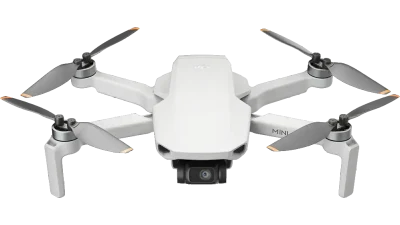
DJI Mini 4K rated only to 0 °C
246 g · no class mark · 17.3 Wh · 31 min · 10.7 m/s · 0 °C
A lovely cheap first drone that DJI does not rate below freezing. On the one morning this guide is about, you are outside what the maker says it is for.
- DJI rates this one 0 °C to 40 °C, not −10 °C. It is the only drone here the maker does not sign off below freezing.
- Its own manual starts the low-temperature warning at 0 °C to 5 °C, where every other manual here starts at −10 °C.
- DJI no longer lists it in the UK, so you are buying up remaining stock.
-
DJI Neo 2
151 g · C0 · 11.5 Wh · 19 min · 10.7 m/s · −10 °C
The smallest battery in the guide by a distance, which makes it the fastest to go cold. Wonderful for a twenty-minute walk in the frost and nothing longer.
- No test and no licence — just a £12.34 registration you do online.
- An 11.5 watt-hour battery, the smallest here. It warms in seconds and cools just as fast.
- 19 minutes on paper in the warm, so a cold flight is genuinely short. Take three batteries or accept the walk was the point.
-
DJI Flip
<249 g · C0 · 22.3 Wh · 31 min · 10.7 m/s · −10 °C
The biggest battery of any sub-250-gram drone here, in the cheapest body. Built-in propeller cages mean you can handle it in gloves without shredding anything.
- No test and no licence — just a £12.34 registration you do online.
- A 22.3 watt-hour battery, larger than the Mini 5 Pro’s. More energy in the pack means it holds its warmth longer once it is up.
- Propeller cages built in, which is the difference between handling it in gloves and taking them off in a frost.
-
DJI Mini 3
248 g · C0 · 18.1 Wh · 38 min · 10.7 m/s · −10 °C
The longest quoted flight time of anything here under 250 grams, from an older and slower airframe. More headroom to lose is exactly what a cold morning wants.
- No test and no licence — just a £12.34 registration you do online.
- 38 minutes quoted, the longest of any drone here under 250 grams. That headroom is what the cold spends.
- An 18.1 watt-hour battery in a light airframe, so it warms quickly once you are hovering.
-
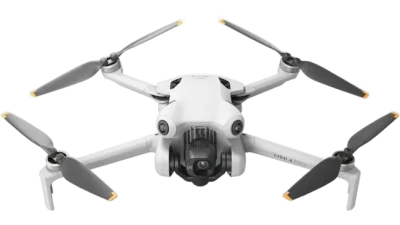
DJI Mini 4 Pro
<249 g · C0 · 19 Wh · 34 min · 10.7 m/s · −10 °C
Obstacle sensing in every direction, which matters more in winter than in summer because you are flying in worse light and thicker gloves. The Mini 5 Pro has made it hard to justify at the price.
- No test and no licence — just a £12.34 registration you do online.
- Obstacle sensing all the way round, which is what you want when the light is poor and your hands are slow.
- DJI does not sell the bigger battery in Europe, so 34 minutes in the warm is the ceiling and the cold comes out of that.
-
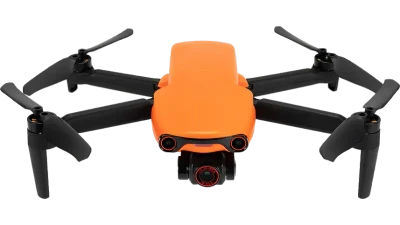
Autel EVO Nano+ no affiliate link — no UK stock I could find
249 g · 28 min · level 5 wind · operating range not published
Here so this is not purely a DJI catalogue, and it is the one I would not buy for winter. Autel does not publish an operating temperature range I could find, which for this particular guide is the whole question.
no link- Autel does not publish an operating temperature range on the pages I could reach, so nobody can tell you what it is rated for.
- Autel’s own store does say to warm the battery to 15 °C before use in the cold, which at least confirms the problem is not a DJI quirk.
- I could not find UK stock, so there is no buy link for it.
-
DJI Mini 5 Pro
249.9 g · C0 · 19.5 Wh · 36 min · 12 m/s · −10 °C
The only drone under 250 grams here rated to 12 metres per second of wind. Since the cold reduces exactly that, starting with more of it is the whole argument.
- No test and no licence — just a £12.34 registration you do online.
- Rated to 12 m/s of wind, where everything else here under 250 grams stops at 10.7. Cold takes wind resistance away, so start with more.
- Do not buy the bigger Plus battery. DJI states that fitting it means the drone can no longer be operated under C0, which is the status keeping you licence-free.
-
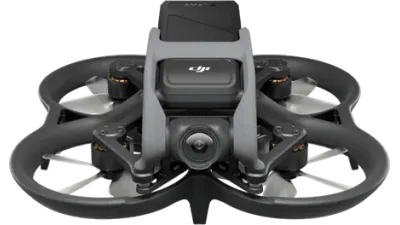
DJI Avata 2 loses privileges in 2028
377 g · C1 · 31.7 Wh · 23 min · 10.7 m/s · −10 °C · observer required
A big, heavy battery in a small body, which is genuinely good news in the cold. The bad news is goggles fogging, gloves on a motion controller, and a second person who has to stand there with you.
- The law requires a second person watching the drone whenever you fly it through goggles. In January that is a real ask of a friend.
- A 31.7 watt-hour pack, nearly three times the Neo 2’s. Heavy batteries lose their heat more slowly, which is the one thing FPV has going for it in winter.
- From January 2028 it needs the A2 test to fly near people — one of only two drones here that lose that freedom.
-
DJI Air 3S loses privileges in 2028
724 g · C1 · 62.5 Wh · 45 min · 12 m/s · −10 °C
Three times the battery energy of a Mini and 45 minutes of quoted headroom. On the coldest morning of the year this is the one I would rather be holding, and its legal position in 2028 is the price of that.
- No test needed today, but from January 2028 it needs the A2 test to fly near people. You are buying about eighteen months of that freedom.
- A 62.5 watt-hour battery weighing about 247 grams — more than a whole Mini. That mass is why it stays warm through a flight.
- 45 minutes quoted and 12 m/s of wind. Nothing cheaper than this gives you that much to lose.
-
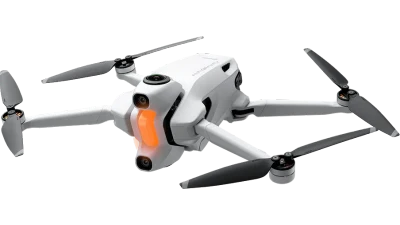
Antigravity A1
249 g / 291 g · C0 / C1 · 16.9 Wh · 24 min · 10.7 m/s · −10 °C
An 8K 360 camera that flies, rated to the same −10 °C as everything else. I have not flown one, so treat this as judgement rather than experience: 24 minutes on the standard pack is not much to give away to a frost.
- Rated −10 °C to 40 °C, and it charges up to 45 °C where DJI stops at 40.
- 24 minutes on the standard 16.9 watt-hour battery. The 39-minute figure belongs to the bigger pack, which takes it to 291 grams and out of C0.
- Antigravity’s own page says the high-capacity battery is not sold in European regions, so plan around 24 minutes.
-
DJI Mavic 4 Pro
1,063 g · C2 · 95.3 Wh · 51 min · 12 m/s · −10 °C
The largest battery here by a wide margin and the least bothered by a cold morning of anything in this guide. It also needs the A2 test before you may fly it near anyone, which is a real cost.
- Needs the A2 test to fly near people, in every season.
- A 95.3 watt-hour battery weighing about 332 grams. It is the slowest thing here to go cold, by some distance.
- 51 minutes quoted and 12 m/s of wind, so even a bad-tempered January morning leaves you a real flight.
Each link points at a specific configuration, and it is worth knowing which. The Avata 2 link is the Fly More Combo that includes the goggles it needs to fly at all, so it is not the cheapest way the drone is listed — it is the cheapest one that flies. The Antigravity link is the Infinity Bundle its Amazon listing sells; Antigravity’s own store also carries a C0 Standard Bundle, which is the cheaper way in if you do not want the goggles. The Neo 2 link is likewise the Fly More Combo, and DJI’s own store lists a plain drone-only Neo 2 for less if you already have a controller. DJI no longer lists the Mini 4K in the UK at all, so that row is remaining retail stock. Wh is battery energy, m/s is the maker’s rated wind resistance, and the temperature is the bottom of the maker’s stated operating range, all checked 31 July 2026. Comparison specifications from DroneCompare, CC BY 4.0.
PART TWO
What cold does to lithium, and the pre-flight that prevents a flyaway
This is the section that actually decides whether you have a good winter or a short one, and it is worth reading even if you have already picked a drone. Almost every cold-weather horror story I hear comes back to the same misunderstanding: people think the cold drains the battery. It does not, or at least that is not the part that hurts you.
A cold battery is not empty. It is stiff
A lithium battery makes electricity by moving ions through a liquid, and cold liquids are sluggish. Chill the pack and its internal resistance rises, which means that the moment the motors ask for a big gulp of current — a climb, a gust, a fast yaw — the voltage at the terminals sags. The energy has not gone anywhere. It simply cannot come out fast enough.
That matters because a drone does not have a fuel gauge. It has a voltmeter and a guess. When it sees the voltage drop under load, it reasons the way it was designed to: the pack must be nearly done. So the percentage on your screen falls off a cliff, and it falls fastest at exactly the moment you were asking the drone to work hardest. Then, because you are a long way out and it has decided you have minutes rather than tens of minutes, it starts making decisions for you.
Here is DJI’s own wording, from the low-temperature notice in the Mini 5 Pro manual. Word for word, the same paragraph appears in the Neo 2 and Flip manuals:
“Batteries cannot be used in extremely low-temperature environments of lower than −10° C (14° F).”
“Battery capacity is significantly reduced when flying at low temperatures from −10° to 5° C (14° to 41° F). Make sure to fully charge the battery before takeoff.”
“It is recommended to warm up the battery to at least 10° C (50° F) before takeoff when flying in low-temperature environments. The ideal temperature to warm up the battery is above 20° C (68° F).”
DJI Mini 5 Pro User Manual, section 5.8, Low-Temperature Notice. The same list also tells you to hover the drone in place for a while after take-off to warm the battery up, and says that reduced capacity in the cold reduces the drone’s wind-resistance performance too.
Read that last line again, because it is the one everybody skips. Cold does not just shorten your flight. It lowers the wind the drone can fight. The 12 m/s on the Mini 5 Pro’s specification sheet is a warm, healthy-battery number. On a frozen morning you have less than that, and DJI does not tell you how much less. That is the single biggest reason I would rather start from 12 than from 10.7, and it is why this guide weighs wind rating so heavily for a topic that is ostensibly about temperature.
Notice what DJI does not say. There is no percentage anywhere in that notice, and there is none on the specification page either. “Significantly reduced” is as precise as the manufacturer is willing to be, and any guide quoting you a neat figure has got it from somewhere other than DJI. If you want a way to think about it, use flight time as a budget and assume the cold takes a share you cannot predict — which is an argument for buying headroom, not for buying a number.
It is not a DJI-only phenomenon either, in case you were wondering whether this is a quirk of one manufacturer. Autel’s own store, answering a question about its EVO Nano series, says that battery life is reduced in a low-temperature environment and recommends warming the battery to 15 °C before use. Two competitors, the same instruction, five degrees apart.
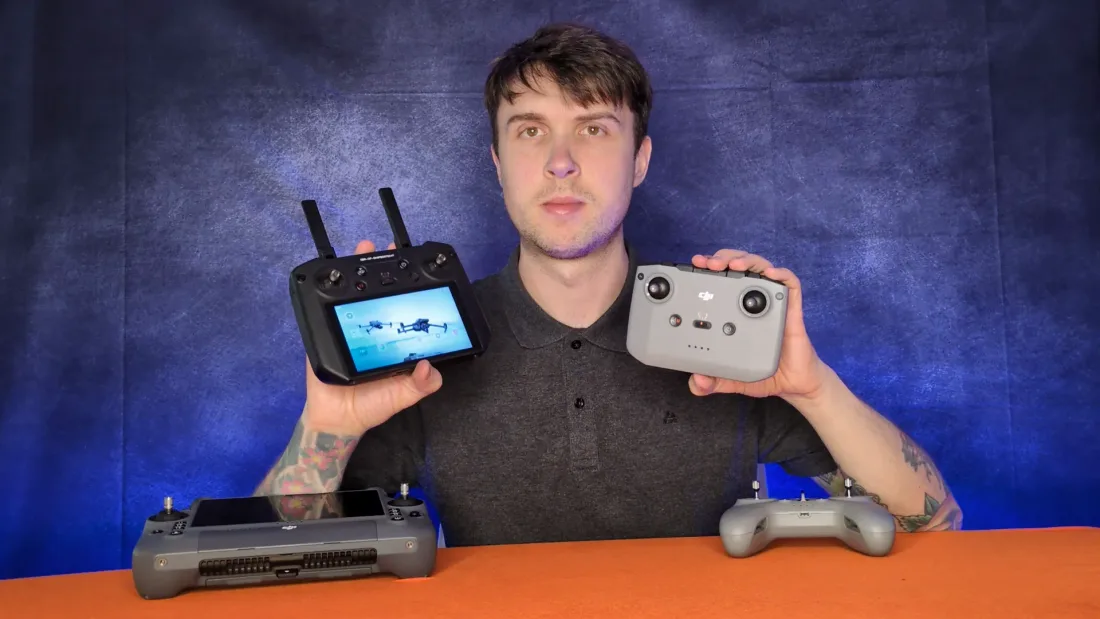
How a cold battery becomes a flyaway
“Flyaway” is a word people use loosely, so let me be precise about the version that cold actually causes. It is not the drone flying off to the horizon. It is the drone deciding, three hundred metres away and a hundred metres up, that it has to come down now, and then not quite managing to get back to you.
The sequence is documented in the manual, and it is worth knowing before it happens to you. First the drone warns you that it has only enough charge to reach the home point and starts a countdown. Ignore or cancel that, and it will land automatically once the remaining charge is only enough to descend from its current height. That automatic landing cannot be cancelled — you can steer horizontally and change how fast it descends, but you cannot make it climb again.
And if you keep trying, DJI is unusually blunt about what follows. Delaying, it says, will initiate “progressive thrust decay, potentially escalating to uncontrolled descent upon total depletion.” That is a manufacturer describing a crash.
Now put the cold into that sequence. Your voltage sags early, so the low-battery warning arrives far sooner than the app’s time estimate led you to expect. Return to home begins, and it flies into the same wind it came out with — except its wind resistance is now reduced too, so the journey back takes longer than the journey out did. Meanwhile every metre it climbs to clear the return altitude is another big current draw and another voltage sag. That is how a perfectly ordinary winter flight ends with a drone in a hedge four fields away, and none of it required anything to break.
If you want the general version of that failure, I wrote about when the power goes mid-flight separately. The winter version is just the same physics with a shorter fuse.
The ninety-second pre-flight that prevents all of it
None of the above needs a better drone to fix. It needs about ninety seconds, most of which happens before you leave the house. This is what I do between roughly November and March, and I have never had a cold-weather incident doing it.
THE COLD-MORNING PRE-FLIGHT
-
1. Charge them the night before, indoors
DJI’s charging range is 5 °C to 40 °C. A battery left in a cold car overnight may simply refuse to charge, and the manual tells you to fully charge before take-off in the cold, so this is the one step you cannot do on site.
-
2. Carry the batteries against your body, not in the bag
An inside coat pocket keeps them near enough to the 20 °C DJI calls ideal. The bag in the boot of the car does the exact opposite. This one habit is worth more than any drone in this guide.
-
3. Fit the battery and power up on the ground for a minute or two
The drone draws a small idle current and the pack warms itself. DJI says outright to warm the battery to at least 10 °C before take-off; the Mini 4K manual puts the same instruction even more plainly, telling you to insert the battery and turn the drone on to warm up before taking off.
-
4. Hover at head height for thirty seconds before you go anywhere
Hovering pulls real current, which warms the pack far faster than idling does. This is DJI’s own instruction: hover in place for a while to warm the battery after take-off.
-
5. Watch voltage behaviour, not the percentage
If the percentage drops several points during that hover and then steadies, the pack was cold and is now warming. If it keeps stepping down in chunks, land and swap. A cold pack that is not recovering will not recover at height either.
-
6. Fly out into the wind, come back with it, and turn for home early
Standard practice all year, and non-negotiable in winter because the return leg is the expensive one. In the cold I turn back at 50 per cent rather than the 30 I would accept in July.
Two of those steps are things DJI tells you to do and almost nobody does. Steps 3 and 4 together cost you about ninety seconds and they are the difference between a battery that behaves and a battery that panics. If you take one thing from this article, take those.
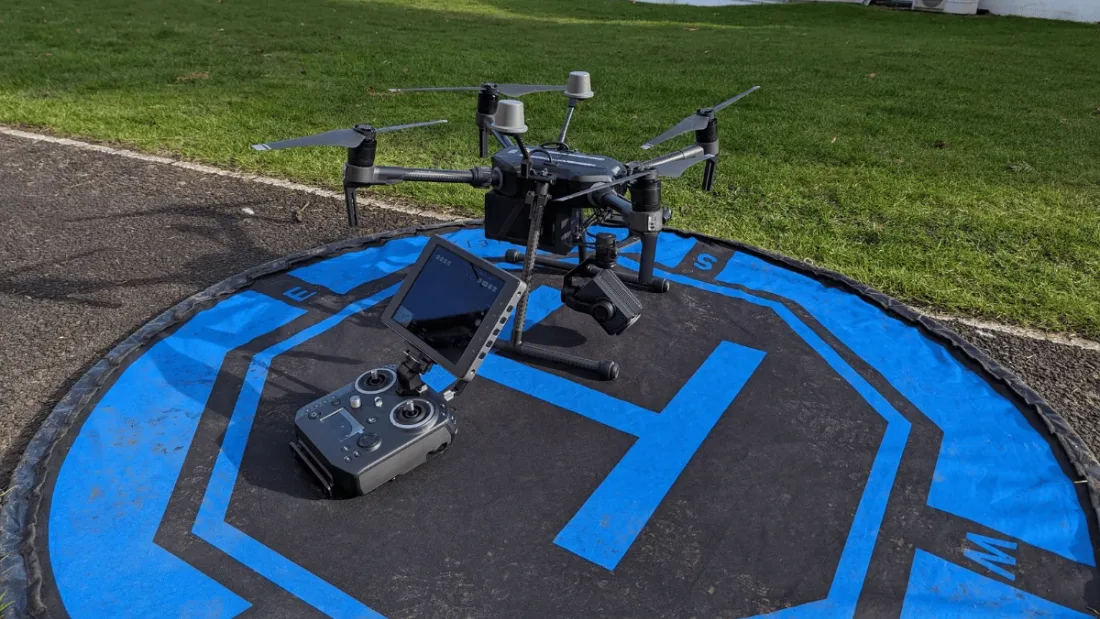
The other direction: what happens when you bring it back inside
Everything above is about getting a cold drone safely into the air. The damage that actually ruins equipment usually happens forty minutes later, in your kitchen.
Take something that has been sitting at −2 °C and carry it straight into a warm, humid room and the warm air meets cold surfaces and gives up its moisture onto them. You get it on the lens, where you will see it, and on the circuit boards and battery contacts, where you will not. Do that repeatedly through a winter and you are running your electronics through a condensation cycle every weekend. DJI’s manual says plainly not to use the drone in humid environments, and to keep temperature and humidity suitable for the camera in use and in storage.
The fix is free and takes no effort at all: leave it in the closed bag when you get in. The bag warms slowly, the air inside it warms with the kit rather than against it, and an hour later everything is at room temperature and dry. Do not open it to check. Do not put the drone on a radiator. And do not put a cold battery on charge — you are outside DJI’s 5 °C to 40 °C charging window, and on a Mini 4K the manual explicitly says the charger stops if the cell temperature is out of range. If you are unsure whether leaving batteries on charge is safe in the first place, that is a separate question with its own answer.
The same logic applies going out, incidentally, which is why I never take a drone straight from a warm house into freezing air and launch immediately. Give it a couple of minutes on the ground to equalise. That is also, conveniently, exactly how long the battery wants to warm itself up.
PART THREE
The winter flying window, and the rule that catches a 249-gram drone
Cold is only half of what winter does to you. The other half is that the good light and the legal light both run out in the middle of the afternoon, and the two do not run out at the same moment.
In late December, sunset across most of Britain falls somewhere in the middle of the afternoon, and earlier the further north you go. What that really means for a drone is that the golden hour you would have to get up at five for in June is handed to you at lunchtime — and then taken away again about ninety minutes later. Winter is the best light of the year for aerial work. It is just served in a very short sitting.
You may fly at night. There is no curfew
Let us clear this one up, because it is the single most common misunderstanding I get asked about in winter. There is no rule stopping you flying a drone after dark in the UK. The CAA’s own guidance for pilots states that there are no specific prohibitions on flying at night within visual line of sight, and that the ordinary rules still apply.
“The ordinary rules still apply” is doing a lot of work in that sentence, though, and two of them tighten considerably once the sun is down.
Rule one: you must still be able to see it, properly
The Drone Code requires you to keep the drone in direct sight and to have a full view of the surrounding airspace. Its wording is specific in a way that matters at dusk: you must be able to see it clearly enough to tell which way it is facing, and you must be able to do that without binoculars, a telephoto lens, or electronic viewing equipment such as a phone, a tablet or video goggles. Ordinary glasses and contact lenses are fine.
Sit with that for a second. At 3.30pm on a grey January afternoon, a grey 249-gram drone eighty metres away against a grey sky is already at the edge of that standard, and the phone screen in your hand does not count towards meeting it. The legal limit on how far you can fly in winter is very often your own eyesight, not your battery and not your transmitter. If you fly a lot in poor light, it is worth reading about how far a drone can legally go as opposed to technically go, because the gap between the two is enormous.
Rule two: the green flashing light — and the trap inside it
The Drone Code is unambiguous here. If you fly at night, the drone must have a green flashing light turned on. If it does not have one built in, you must securely fit a specialist drone green flashing light.
And then comes the sentence that catches people who bought carefully. The Drone Code states that the weight of the light add-on counts towards the overall weight of the drone, and that you must therefore check whether that weight means different regulations now apply to your flight.
THE ONE NOBODY MENTIONS
A 249-gram drone plus a light is not necessarily a 249-gram drone
The whole point of buying under 250 grams is that you fly in the Over People (A1) sub-category with nothing more than the two registrations. That status is a weight test, and the Drone Code tells you to include the light in the weight.
A DJI Mini 5 Pro is 249.9 grams. There is not one gram of room in that number. Bolt a clip-on strobe to it in December and, on the Drone Code’s own arithmetic, you have to ask yourself whether you are still flying the drone you thought you bought.
Two clean ways out. Fly a drone with the light built in, or do your night flying with something that has grams to spare — a Neo 2 at 151 grams can carry a light and still be nowhere near the line. What you should not do is bolt one to a 249-gram drone and assume nothing has changed, because the Drone Code says something might have.
I have written the full version of the night rules separately, including what counts as night and what the CAA expects of you — the rules once the light goes is the article for that. And if what you actually want to shoot is the dark rather than merely survive it, there is a whole guide to which drones can shoot after sunset.
Rule three, unofficially: the Drone Code has a cold-weather section, and almost nobody has read it
Point 15 of the Drone Code is headed “Do not fly if the weather could affect your flight”, and it is more specific about winter than most drone owners expect. It lists rain, snow and cold weather as things that could stop parts of the drone working; it warns that cold or wet weather could affect your own ability to control it safely; and under a heading telling you to make sure your drone will work if the temperature is low, it tells you to follow the manufacturer’s guidance on safe temperatures to fly at, noting that some types of battery do not hold their charge as long in cold weather and that this may reduce the amount of time you can fly.
That is the CAA pointing straight back at the manufacturer’s figure — which is why the DJI Mini 4K’s 0 °C rating in the list above is not a footnote. It is the CAA telling you to read that number, and DJI telling you the number is zero.
The same point also flags that wind on the ground is often very different from wind at height, which in winter tends to be the difference between a still-looking field and a drone leaning hard into it at a hundred metres. That deserves its own treatment, and it gets one in which drones actually hold position when it blows.
PART FOUR
What I fly once the ground freezes
The DJI Mini 5 Pro, with a second battery in my inside pocket. That is what I fly once the ground freezes, and I would not spend long deciding.
Here is the reasoning, stripped of everything else. Every current drone in this guide is rated by its maker to the same −10 °C, so the rated floor does not separate them — with the single exception of the Mini 4K, which is rated only to 0 °C and which I will come back to. What separates them is what the cold takes, and it takes flight time and wind margin. The Mini 5 Pro has the joint-highest wind rating in the guide at 12 m/s and the only one of those you can fly with no test and no certificate. Its flight time is not the longest here — the older Mini 3 quotes 38 minutes to its 36 — but no other drone under 250 grams combines that much headroom with that much wind margin.
Its honest weakness in the cold is the battery itself: 19.5 watt-hours is small, and small packs lose their heat quickly. That is a solved problem, though, and the solution is a spare pack kept warm against your body rather than a different drone. I have flown a Mini 5 Pro in weather that had a Mini 4 Pro visibly working harder to hold station, and in my hands the extra 1.3 m/s of rated wind is not a spec-sheet difference. It is the difference between a usable hover and a shot you delete.
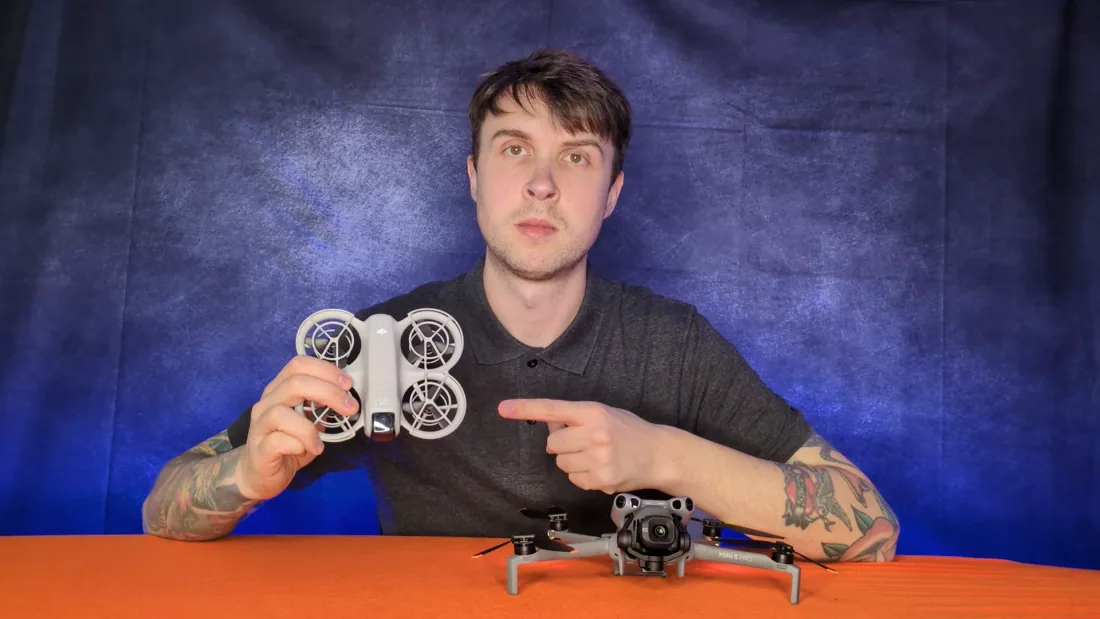
Spend less if you can. The DJI Flip costs well under half what the Mini 5 Pro does and still has the largest battery of any sub-250-gram drone in this guide — 22.3 watt-hours, more than the Mini 5 Pro’s own — and its propeller cages mean you can pick it up, fold it and put it away without taking your gloves off. If your winter flying is an hour in a local field rather than a day on a hill, that is the better-value answer and I would not argue with you.
Spend more for one reason only: mass. The DJI Air 3S is a clear step up in money, and what that money buys is a 62.5 watt-hour battery weighing more than an entire Mini 5 Pro. A big warm lump of lithium is the most effective cold-weather feature you can buy. Go in with your eyes open, though: it is a C1 drone over 250 grams, so from 1 January 2028 you will need the A2 Certificate of Competence to fly it near people. You are buying about eighteen months of that freedom, and then a qualification.
The one I would leave at home in a frost
The DJI Mini 4K, and only because of winter. In every other respect it is a decent cheap first drone and I have recommended it before.
But DJI rates it at 0 °C to 40 °C, where every other current drone in this guide is rated to −10 °C. Its own manual begins its low-temperature warning at 0 °C to 5 °C rather than −10 °C to 5 °C. Point 15 of the Drone Code tells you to follow the manufacturer’s guidance on safe temperatures, and on the exact morning this article is about, that guidance says no. Nothing dramatic will necessarily happen if you fly it at minus two. You are simply outside what the maker will stand behind, and if it goes wrong you have no argument to make. For a little more money, the Flip is rated for the conditions you are actually in.
What a winter drone actually costs in year one
The number in your head is the one on the drone’s own product page. It is not the number that leaves your account, and winter puts its own small surcharge on top of the usual first-year bill.
The fixed parts are easy, because they are set by the regulator rather than by a retailer. A Flyer ID — the free online theory test every drone pilot needs, valid five years — costs nothing. An Operator ID, the registration that goes on a label stuck to the drone, is £12.34 a year, and that is the only figure in this section I can promise will still be right when you read it. No A2 Certificate of Competence is needed at 249.9 grams, so that line is zero as well.
Then come the ordinary extras nobody puts in the basket at first: a second battery, a fast card large enough that you are not deleting clips in a field, a set of ND filters if you care about how the footage moves, and an honest allowance for the crash you have not had yet. That last one is not pessimism. It is the line that turns a broken arm into an annoyance rather than the end of the hobby.
Winter adds three more. A third battery, because in the cold two packs is one useful flight and a disappointment. A charging hub, so the pack you just flew is not the pack you are standing about waiting on. And thin liner gloves that work with a touchscreen — comfortably the cheapest thing on this list, and the one you will be gladdest of at eight o’clock on a February morning.
Put the whole lot together and a Mini 5 Pro flown properly through a British winter costs roughly half as much again as the drone itself in its first year. The spare batteries are the largest single line in that, and the three winter-only additions together come to less than the ordinary extras do — which is the useful part, because it means the cold is the cheap problem to solve and the flying time is the expensive one. Add optional third-party hobby insurance, which stops being optional the moment anybody pays you, and it climbs a little past that again. Every line except the CAA fee is an estimate and I have said so. None of them are unreasonable. They are just never on the page where the price is.
And if the honest answer is that you want the shot rather than the hobby — a frosted roofline, a snow-covered site, one set of pictures in the best light of the year — owning all of that is rarely the cheaper route. You can hire a drone pilot who already owns the winter kit, along with the qualifications and the insurance, and who has done the ninety-second pre-flight a few hundred times.
Flying a drone in winter: the questions I get asked most
What is the best drone for cold weather in 2026?
The DJI Mini 5 Pro. DJI rates it down to −10 °C like the rest of its current range, but it is the only drone here under 250 grams also rated to 12 m/s of wind, and wind margin is the thing cold quietly takes away from you. Spend less and the DJI Flip, one of the cheapest drones in the guide, carries the largest battery of any sub-250-gram drone here. Spend more and the DJI Air 3S has roughly three times the Mini 5 Pro’s battery energy, which is the single best defence against a cold morning — as long as you accept that its class mark stops counting on 1 January 2028.
How cold is too cold to fly a drone?
DJI’s manuals say the batteries cannot be used below −10 °C, and every current DJI drone in this guide is rated for −10 °C to 40 °C. The Antigravity A1 is rated the same. The exception here is the DJI Mini 4K, which DJI rates at 0 °C to 40 °C — so on a frosty morning you are already outside what the maker says it is for. In practice the number that bites first is not the air temperature but the battery temperature, and DJI recommends warming the battery to at least 10 °C before take-off, ideally above 20 °C.
Why does my drone battery die so fast in winter?
Because a lithium battery in the cold cannot deliver current as easily, so its voltage sags under load — and a drone reads voltage, not fuel. DJI’s own wording is that battery capacity is “significantly reduced” when flying between −10 °C and 5 °C. DJI does not publish a percentage, and neither will I. What you should plan for is that the flight time on the box was measured in a warm, windless test, and that the reserve you have left is smaller than the app suggests.
How do I warm a drone battery before flying?
Keep the batteries in an inside pocket against your body on the way to the site, fit one and power the drone up on the ground for a minute or two before take-off, then hover low for another thirty seconds or so before you fly anywhere. That sequence is DJI’s own advice, not mine: the manual says to warm the battery to at least 10 °C before take-off, ideally above 20 °C, and to hover in place for a while afterwards to warm it further. Autel says the same thing about its own drones, recommending 15 °C.
Can I fly a drone in the dark in winter?
Yes, but with two conditions. The CAA’s Drone Code says that if you fly at night your drone must have a green flashing light turned on, and if it does not have one built in you must securely fit one. You must also still be able to see the drone clearly enough to tell which way it is facing, without binoculars, a phone screen or goggles. The trap for a sub-250-gram drone is that the Drone Code states the weight of a clip-on light counts towards the total weight — so a 249-gram drone plus a light may no longer be a sub-250-gram drone.
Does condensation damage a drone?
It can, and the risk is highest on the way home rather than out. A cold drone carried straight into a warm room collects moisture on and inside cold surfaces, including the lens and the battery contacts. DJI’s manual tells you not to use the drone in humid environments and to keep temperature and humidity suitable for the camera. The fix costs nothing: leave the drone in its bag when you get in and let it come up to room temperature slowly with the bag closed, and never charge a battery that is still cold — DJI’s charging range is 5 °C to 40 °C.
The short version
If you read all of that and still want me to just say it: buy the DJI Mini 5 Pro, carry a spare battery in your inside pocket, and hover for thirty seconds before you fly anywhere. It has the most wind margin of any drone here you can fly with no test and no certificate, and the cold takes wind margin first.
Affiliate links · costs you nothing extra · full disclosure
This guide does not print prices. Drone prices move constantly and the configurations behind them move with them, so the only figure worth trusting is the one on the retailer’s own page at the moment you look — check it before you buy. Operating temperatures, battery energy figures and wind ratings are from manufacturer specification pages and user manuals, checked 31 July 2026 against the DJI UK store and, for the Antigravity A1, its own GB store. Regulatory detail from the UK Civil Aviation Authority, principally The Drone and Model Aircraft Code (CAP2320, March 2026) and CAP722. Comparison specifications from DroneCompare, licensed under CC BY 4.0. Amazon links are affiliate links.