Best FPV Drone UK 2026: What I’d Fly, and Who Stands Next to Me

Peter Leslie
31 July 2026 · 19 min read
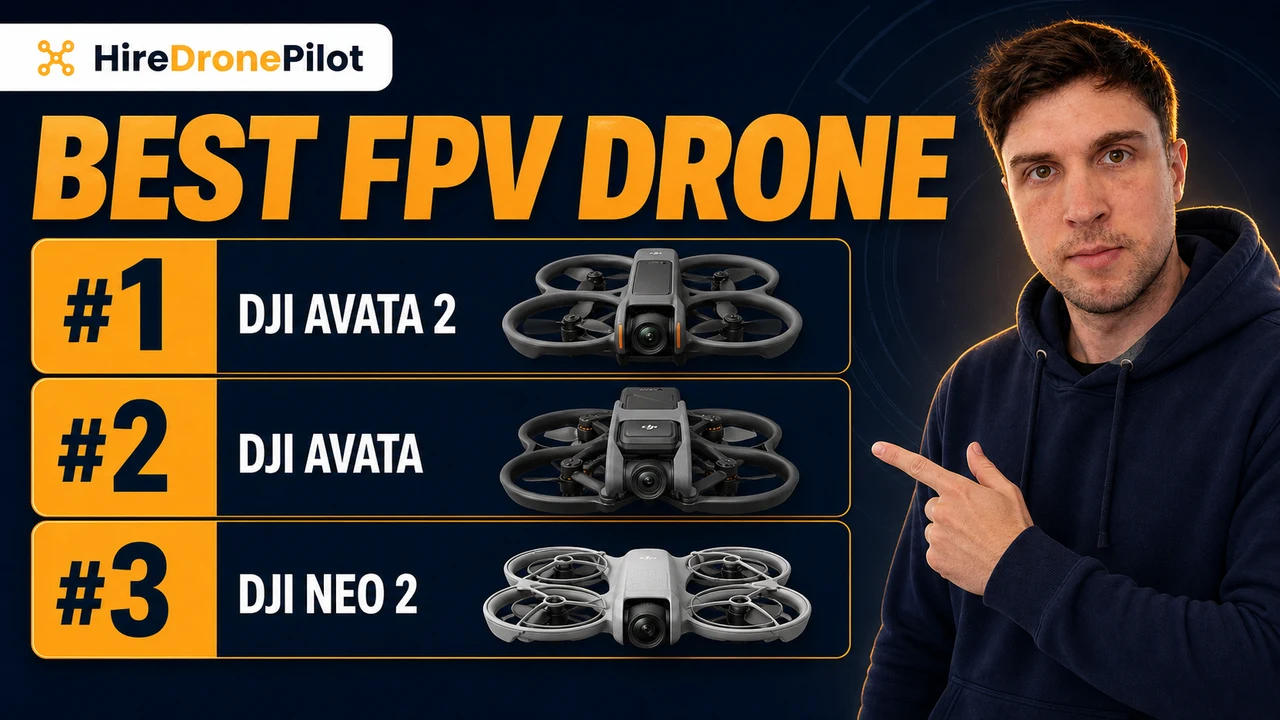
You have seen the clip. Something drops off a cliff edge, rolls, threads a gap in a stone wall and comes out the other side still accelerating, and the whole thing is one unbroken take. There is no cut, because there could not be a cut. That is FPV, and it is the only kind of flying that makes grown adults laugh out loud on the first flight. I know, because it did that to me.
Then there is the sentence nobody puts in the advert. In the UK, you are not allowed to do it on your own. Not as a matter of etiquette or best practice — as a matter of the rules you agreed to when you registered. Put the goggles on and the law needs a second person stood beside you, watching the drone with their own eyes, for the whole flight.
So two things decide this purchase, and neither of them is a camera specification. The first is whether you can reliably produce another human being on a Saturday morning. The second is what you actually want to come home with — because an FPV drone gives you a single continuous take and almost nothing else. It cannot hover and compose. It cannot hand you a photograph.
Which is why the best FPV drone UK buyers can fly in 2026 is not the fastest one on this page, or the one with the biggest sensor. It is the one you will still be flying in October, on the days you can get someone to come with you.
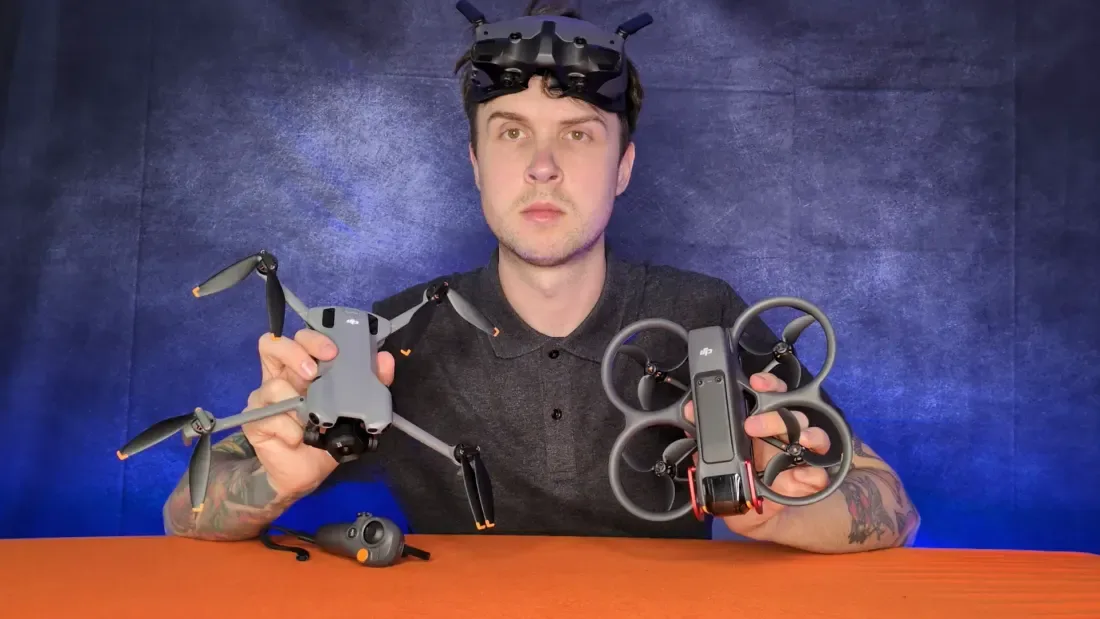
This guide does three things. It asks four questions about how you will really fly and narrows eleven drones to the one that fits you — and for a good number of readers the honest answer at the end is not an FPV drone at all, which is a result the other guides will not give you. Then it takes the observer rule apart properly: what the CAA actually requires, what your second person has to be able to do, and why the goggles can never be the thing that satisfies it. Then it is straight about what FPV footage is and is not, so you are not disappointed on day two.
How I get paid: the Amazon links below are affiliate links, so if you buy through one I earn a small commission at no extra cost to you. It does not change what I recommend — two of the eleven drones here are ones I would tell you to walk away from, and one of those has no buy link at all, and a fair share of readers will be sent to a drone that is not FPV.
The Best FPV Drone in 2026 Is the DJI Avata 2
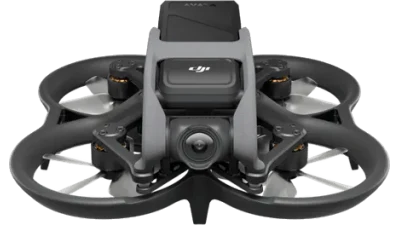
The only FPV drone I would hand to somebody who has never flown anything — immersive flying that a first-timer can survive. It arrives with the goggles, the controller and its own propeller cage, and it forgives you.
- The Fly More Combo includes DJI Goggles 3 and the RC Motion 3 controller — the bare drone cannot fly without them.
- The law requires a second person stood next to you every time the goggles go on. That never changes.
- Propeller guards moulded into the body, so a clipped branch usually ends the flight rather than the drone.
- 377 grams and C1-marked. From January 2028 that needs the A2 test to fly near people.
Affiliate link · costs you nothing extra · full disclosure
PART ONE
The overall winner is the DJI Avata 2 above. Here are the four that win the other categories — including one that is not an FPV drone at all, because for a large share of readers that is the true answer. Each one carries what is wrong with it, because none of them is perfect.
Best Budget FPV Drone: EMAX EZ Pilot
The drone, the goggles and the radio in one box, for about a fifth of what the Avata 2 costs. It is the cheapest honest way to find out whether you like this at all.
- Goggles and a transmitter are in the box, so there is nothing else to source before you fly.
- Analog video, 600 lines, into a small screen. It looks like 1998, and I would rather you heard that from me.
- Around four minutes a battery, it records nothing worth keeping, and the goggles still mean an observer stood beside you.
Best FPV Drone Under 250 Grams: DJI Neo 2
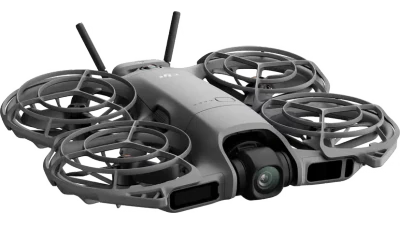
The one that stays in the easiest weight bracket and still lets you put goggles on. Nothing changes for it in 2028.
- 151 grams and C0-marked, so nothing changes for it in 2028 and no A2 test is ever needed.
- Omnidirectional obstacle sensing — the only goggle-flown drone here that actively avoids things.
- Around 19 minutes per battery, or 17 with the propeller guards fitted.
Best 360 FPV Drone: DJI Avata 360
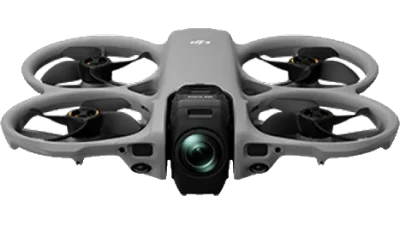
One-take flying where you no longer have to nail the framing on the take. It films every direction and you point the camera later.
- Two 1/1.1-inch sensors covering 360 degrees, so the framing is a decision you make in the edit.
- Goggles N3 and the RC Motion 3 are included in the Motion Fly More Combo.
- 455 grams and C1-marked, so from January 2028 it needs the A2 test to fly near people.
Best Drone If You Will Always Fly Alone: DJI Mini 5 Pro
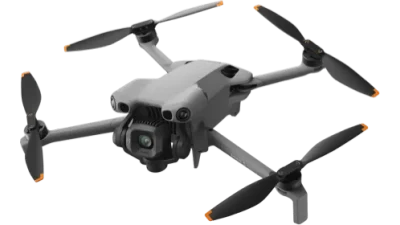
Not an FPV drone, and that is the award. If nobody is coming with you, this is the machine that gives you the aerial shots legally, alone, this weekend.
- No goggles, so no observer required — you can fly it alone, legally, any morning you like.
- A one-inch, 50-megapixel sensor that writes raw files, under the 250-gram line.
- Around 36 minutes per standard battery. DJI advertises 52, but only on the bigger battery that pushes it over 249 g.
Affiliate links · costs you nothing extra · full disclosure
Take the quiz: find the right FPV drone for you
Four questions, starting with the one every other FPV guide skips.
- Built around who is standing next to you, because UK law is.
- Eleven drones, from a bargain analog starter kit to an 8K 360 machine.
- Will tell you when the honest answer is not an FPV drone at all.
- About 20 seconds, and no email needed.
STEP 1 OF 4
11 of 11 still fit
All eleven, and why each one might not suit you
-
EMAX EZ Pilot observer required
analog video · 600TVL camera · ~4 min · goggles and radio included
The cheapest honest answer to “would I even enjoy this?”. Everything about it is worse than a DJI, and that is rather the point — you find out for roughly a fifth of what the Avata 2 costs, rather than committing to the whole thing first.
- Goggles and a radio in the box, so there is nothing else to buy before you fly.
- Analog video into a 480×272 screen. It looks like 1998, and that is the honest starting point.
- Around four minutes per battery, which is normal at this size and still a shock the first time.
-
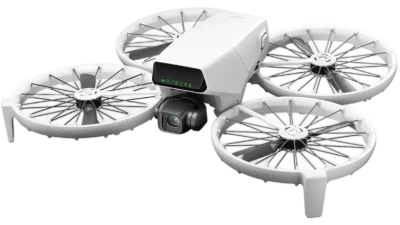
DJI Flip not an FPV drone
249 g · C0 · 1/1.3″ 48MP · 31 min · no observer needed
Here for one reason: if you cannot produce a second person, this is the cheap answer to what you probably wanted in the first place. It hovers, it frames, it takes a photograph.
- No goggles, so no observer requirement — you can fly it entirely on your own.
- Under 249 grams with a C0 mark, so no test and no certificate beyond the £12.34 registration.
- Propeller cages built in and a proper 48-megapixel camera on a 1/1.3-inch sensor.
-
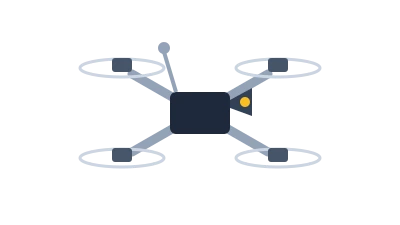
EMAX Tinyhawk 3 Plus observer required
analog video · ready-to-fly kit with goggles and radio · no weight I could source
The proper hobby route in a box: a real freestyle quad, a real radio, and the acceptance that when you break it you will be the one soldering it back together. The people who learn on one of these rarely go back.
- A ready-to-fly kit: quad, radio and goggles, with nothing left to source.
- No self-levelling to hide behind, which is exactly why people who learn on these can fly anything.
- I could not find a published takeoff weight for it anywhere, so you cannot look up which UK weight bracket it sits in.
-
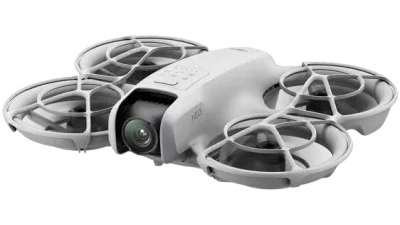
DJI Neo observer required · Amazon has dropped the goggles combo
135 g · C0 · 1/2″ 12MP · 18 min · Goggles N3 + RC Motion 3
The cheapest way into DJI goggles, and the lightest FPV drone here by a distance. DJI UK still sells the goggles combo, but Amazon has dropped that configuration entirely, so there is nothing here for me to point you at.
no link- 135 grams with a C0 mark, so the 2028 change and the A2 test never apply to it.
- Amazon no longer lists the Motion Fly More Combo — the version with Goggles N3 and the RC Motion 3 — so there is no buy link here. The drone-only listing that remains cannot fly FPV at all.
- DJI has replaced it with the Neo 2, which is the one I would buy now.
-
DJI Neo 2 observer required
151 g · C0 · 1/2″ 12MP · 19 min · Goggles N3 + RC Motion 3
The only drone here that gives you goggles, obstacle sensing and a weight that keeps you out of the class-mark argument entirely. It is the sensible one, and I mean that kindly.
- 151 grams and C0-marked, so nothing changes for it in 2028 and no A2 test is ever needed.
- Omnidirectional obstacle sensing — the only goggle-flown drone here that actively avoids things.
- Around 19 minutes per battery, or 17 with the propeller guards fitted.
-
DJI Mini 5 Pro not an FPV drone
249.9 g · C0 · 1″ 50MP · 36 min · no observer needed
If you always fly alone, this is the drone the FPV footage made you want without you realising it. A one-inch camera under the 250-gram line, and you never have to ask anyone to come with you.
- No goggles, so no observer required — you can fly it alone, legally, any morning you like.
- A one-inch, 50-megapixel sensor that writes raw files, under the 250-gram line.
- Around 36 minutes per standard battery. DJI advertises 52, but only on the bigger battery that pushes it over 249 g.
-
DJI Avata 2 observer required · loses privileges in 2028
377 g · C1 · 1/1.3″ 12MP · 23 min · Goggles 3 + RC Motion 3
The one that made me laugh out loud in a field. It is the most forgiving way to fly properly immersed, and the goggles it comes with are the only pair here that let you glance at the real world without taking them off.
- Goggles 3 and the RC Motion 3 are in the box. The drone on its own will not fly.
- Propeller guards are part of the airframe, so clipping a branch usually ends the flight rather than the drone.
- 377 grams and C1-marked, so from January 2028 it needs the A2 test to fly near people.
-
DJI Avata 360 observer required · loses privileges in 2028
455 g · C1 · two 1/1.1″ 64MP · 23 min · Goggles N3 + RC Motion 3
It records everything around it at once and you choose where to point the camera afterwards, which for one-take FPV is close to a cheat code. Heavier than the Avata 2, and the same 2028 problem.
- Two 1/1.1-inch sensors covering 360 degrees, so the framing is a decision you make in the edit.
- Goggles N3 and the RC Motion 3 are included in the Motion Fly More Combo.
- 455 grams and C1-marked, so from January 2028 it needs the A2 test to fly near people.
-
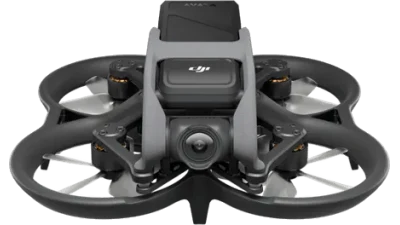
DJI Avata observer required · DJI UK no longer sells it
410 g · no class mark I can verify · 1/1.7″ · 18 min · Goggles Integra + RC Motion 2
The drone that started this category, now sold only by third parties asking more than a new Avata 2 costs. A good machine at a price nobody should pay.
- DJI UK lists it as not available, so every unit you see is old stock at a third-party price.
- 410 grams with no class mark I could verify, which puts it under weight rules: the A2 test to fly near people, today, not in 2028.
- 18 minutes per battery, and the Explorer Combo pairs it with the older Goggles Integra.
-
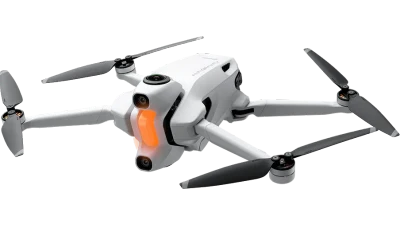
Antigravity A1 observer required
249 g standard battery · no class mark · 8K 360 · 24 min · Vision Goggles included
A 360 camera that flies, under 250 grams, flown through its own goggles. The most interesting object on this list and the hardest to justify at the price.
- 249 grams on the standard battery, so it stays in the easiest weight bracket — but the high-capacity battery takes it to 291 grams and out of it.
- Its goggles have a see-through mode with a 93-degree horizontal view, which is still a screen and still not direct sight.
- Around 24 minutes on the standard battery, 39 on the high-capacity one you should probably not fit.
-
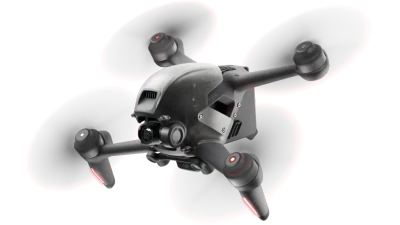
DJI FPV no affiliate link — I could not find UK stock
795 g · no class mark · 1/2.3″ 12MP · 20 min · discontinued
The 2021 machine that convinced everyone this category was going mainstream. DJI UK says it is not available in your country or region, and I would not chase one down.
no link- DJI UK no longer sells it and I could not find a listing worth linking to, so there is no buy link here.
- 795 grams with no class mark, which means the A2 test to fly it near people, today.
- Listed here only so you know what it was and why it is not the bargain it looks like second-hand.
The list is ordered cheapest to dearest, and every link points at the cheapest configuration that actually flies — which for every DJI drone here means one that includes the goggles, not the bare airframe. I do not print prices: they move week to week, and a stale number sat beside a buy button is worse than no number at all, so the link shows you what each one costs right now. Specifications checked against manufacturer pages on 31 July 2026. The DJI Neo row was re-checked on 1 August 2026: DJI UK still sells the goggles combo, but Amazon has dropped that listing, which is why that row has no buy link. DJI Avata and DJI FPV specifications from DroneCompare, CC BY 4.0.
PART TWO
The observer rule: FPV is a two-person hobby in law
Every guide to this category mentions the observer in a sentence and moves on. That sentence is the single most consequential fact about owning an FPV drone in Britain, so here it is properly: what the rule says, what your second person actually has to be able to do, and why the goggles on your face can never be the thing that satisfies it.
The rule is one sentence, and it is broader than goggles
Start with what FPV means, because the definition is wider than most people assume. The CAA describes it as flying by watching a live video feed from a camera on the drone, on “devices such as smart phones, tablets and video goggles”. Goggles are the obvious case. A phone clipped to a controller is the same thing, if you are flying by looking at it rather than at the drone.
Then the requirement: if you want to fly using First Person View, you must have an observer with you. That is the whole rule. There is no length of flight, no height, no “unless you are in a field” and no exemption for small drones. The Neo weighs 135 grams and needs one exactly as much as a 795-gram DJI FPV does. The requirement follows the goggles, not the weight.
Four conditions come with it, and they are worth reading slowly, because each one rules out something people do:
WHAT THE RULE ACTUALLY REQUIRES
-
They stand next to you.
Not at the far end of the site with a better view. Next to you.
-
You can always talk to each other.
Continuously, and in both directions. That rules out a radio handover across a valley, and it rules out them wandering off to film you.
-
At all times at least one of you keeps the drone in direct sight — clearly enough to tell which way it is facing.
Not “can see a dot”. Can tell the front from the back.
-
At all times at least one of you has a full view of the surrounding airspace.
The drone is only half the job. The other half is everything that might arrive near it.
Why goggles can never satisfy it, even the clever ones
Look again at the third condition. Direct sight has a definition, and it is exclusionary: it means seeing the drone without binoculars, without a telephoto lens, and without “electronic viewing equipment, such as a smart phone, tablet or video goggles”. Normal glasses and contact lenses are fine.
So while the goggles are on your face, you are not merely failing to watch the drone. You are structurally disqualified from being the person who does. The phrase “at least one of you” reads like a rota you can share. It is not. For as long as you are flying immersed, it can only ever be the other person, continuously, for the entire flight.
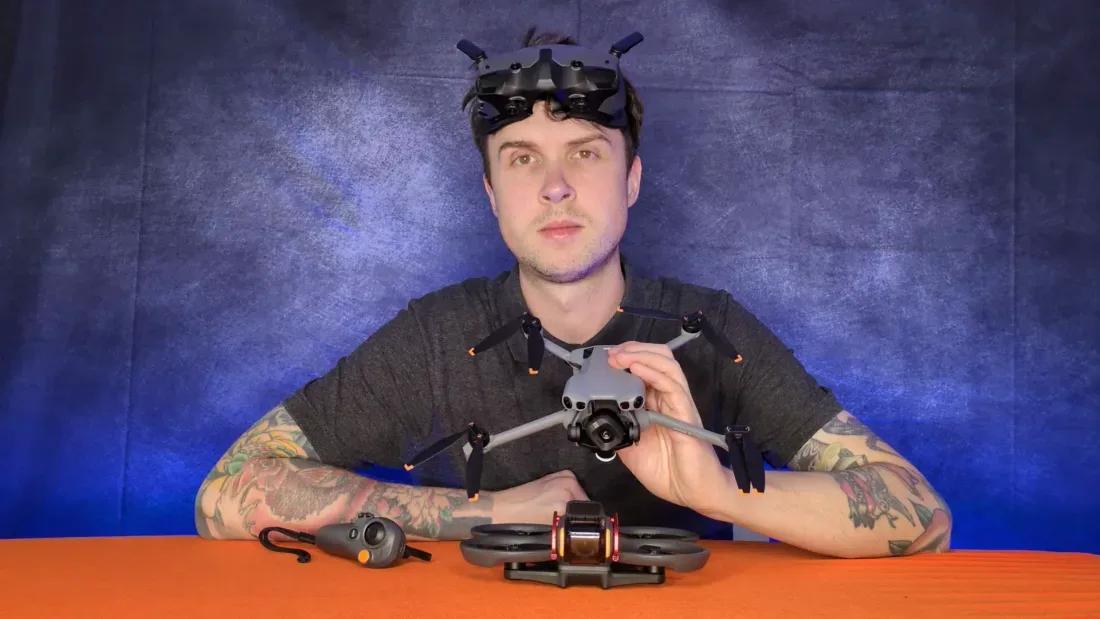
Now the part that catches careful people. DJI Goggles 3, the pair that comes with the Avata 2, have a forward-facing camera and a feature called Real View: press a button and the room in front of you appears inside the goggles, so you can find your take-off spot or pick the drone up without lifting anything off your head. It is genuinely useful and I use it constantly.
It is also, unambiguously, a screen. It is electronic viewing equipment showing you a camera feed. It does not turn you back into the person keeping direct sight, and it never will, however good the picture gets. The cheaper DJI Goggles N3 that ship with the Neo, Neo 2 and Avata 360 do not have it at all — DJI’s specification sheet says plainly “Real View not supported”. Antigravity’s Vision Goggles have their own see-through mode with a 93-degree horizontal field. Same answer: a camera, a screen, not your eyes.
And it is worth knowing quite how much of the world the goggles remove, because the manufacturers publish the number and nobody quotes it. The field of view of a single Goggles 3 screen is 44 degrees. The Goggles N3 manage 54 degrees. The Antigravity Vision Goggles are 65 degrees horizontally. A human being sees something close to 200 degrees horizontally once peripheral vision is counted. Strapping a 44-degree window to your face does not just stop you seeing your drone. It removes roughly four-fifths of everything else, which is the honest reason the fourth condition — a full view of the surrounding airspace — has to belong to somebody else.
The CAA gives its own reasoning and it is the same reasoning: watching a flat screen limits your depth perception and your peripheral vision, which makes speed and distance hard to judge and makes it difficult to notice what is happening around the drone in time to avoid it.
What a “competent” observer actually means
Here is where people expect a qualification and there is not one. Your observer does not need a Flyer ID, does not need an A2 certificate, does not need to register for anything and does not need to have flown a drone in their life. A friend, a partner, a parent, a colleague standing in a car park: all legally acceptable, today, with no paperwork.
Which means competence is not a grade somebody awards them. It is a practical standard, and the responsibility for meeting it sits with you: the CAA is explicit that you must tell them what to look out for, and that you remain responsible for keeping the flight safe. They share the watch. They do not share the liability. If it goes wrong, it is your name on the Operator ID.
So the real test is whether the person beside you can do four specific things, and it is worth walking through them once before you spend anything at all on goggles.
Can they tell which way it is facing?
This is the condition that quietly sets your range, and it is much harsher than it sounds. Seeing the drone is easy. Seeing it well enough to say “it is pointing back at us now” is a different visual task altogether.
Put a number on it. A DJI Avata 2 is 212 mm across — DJI publishes the dimensions. Do the arithmetic and at 200 metres that whole drone occupies the same slice of your vision as something 0.6 mm wide held at arm’s length: about the thickness of a pencil line. You will see that it is there. Neither of you will have the faintest idea which way it is facing. Somewhere well inside that distance the fourth condition quietly stops being met, and no transmission specification changes it.
Practical version: brief them on the shape and the lights before the first flight, agree a working distance you can both live with, and treat the point where orientation becomes guesswork as your actual maximum range — not the 13 kilometres printed on the box.
Are they watching the sky, or watching the drone?
Most volunteers get this exactly backwards. They lock onto the drone like a spectator at a tennis match, which feels attentive and is close to useless. The drone is the one object in the sky whose position you already know: you are flying it. What you cannot see is the microlight on approach, the buzzard that has decided your quad is a rival, the dog walker coming over the rise, or the child who has run out of the car park behind you.
A good observer spends most of the flight looking at everything except your drone, glancing back to confirm it. That is not intuitive and you have to say it out loud. It is also why standing with a hedge or a building at your back is a bad choice: the condition is a full view of the surrounding airspace, not a view of the part you happen to be facing.
Have you agreed the words?
You are wearing a blindfold with a video feed in it. For the length of that flight your entire picture of the real world arrives through one person’s voice, and vague words cost you seconds you do not have at 16 metres per second.
Agree short unambiguous ones in advance and rehearse them on the ground. Mine, for what it is worth: “stop” means brake and hover now, no discussion. “up” means climb, immediately, without asking why. “lost it” means they can no longer see the drone, which they must say the instant it happens rather than after they have hunted for it. And “land” means the flight is over and we talk about it afterwards. Four words, agreed before the goggles go on, and the whole arrangement works.
Have you briefed them at all?
The rule says you must tell them what to look out for. This is my briefing, and it takes ninety seconds:
- This is the drone. This is the front. These are the lights, and this is what it looks like when it is coming towards you.
- I am going roughly there, roughly that high, and I will not go past that tree.
- Your job is the sky, not the drone. Tell me about anything that moves.
- These four words mean these four things. Say them, do not explain them.
- If you lose sight of it, say so immediately. I would rather land than guess.
- If anyone walks up to us, talk to them. I cannot see them and I should not take the goggles off mid-flight.
That last one surprises people. Somebody will come over — a curious dog walker, a farmer, once a police officer — and you are the one person on site who cannot make eye contact. Your observer is the site’s entire public face while you are flying.
FPV does not buy you distance
One more thing worth saying flatly, because the marketing invites the opposite conclusion. The Avata 2 advertises a 13-kilometre transmission range. That is a radio specification, not a permission. The CAA states it directly: using FPV equipment does not mean you can fly beyond visual line of sight in the Open category, which is the category all recreational flying happens in.
So your legal range is not what the video link can do. It is the distance at which your observer can still tell which way the drone is facing while keeping an eye on everything else. On a bright day with a 377-gram drone against clear sky, that is a couple of hundred metres at the outside, and considerably less against trees. Everything past that point is a rule you are breaking rather than a feature you have bought.
Read all of that as a buying rule
You are not buying a drone. You are buying a plan involving another person. Before you spend anything, answer honestly: who is that, and how often can they genuinely come out? If the answer is “nobody, most weekends”, then an FPV drone is an expensive object you will fly three times and then feel guilty about. Buy a camera drone, fly it alone and legally, and enjoy it far more.
That is not a consolation prize. Most of the aerial shots you admire were taken by a camera drone anyway — and if you want the full argument on which one, I have written up how the camera drones compare on sensor and paperwork separately. The FPV drone is a specialist tool for a specific, glorious kind of shot, and that shot costs two people’s Saturday.
The rest of the UK rules for FPV, in plain words
Assume you have never registered anything, because most people reading this have not. There are two registrations, and then weight takes over.
A Flyer ID is a free theory test you sit online. It lasts five years and anyone flying a drone of 100 grams or more needs one. An Operator ID costs £12.34 a year, you must be 18 to register for it, and it goes on a label stuck to the outside of the drone. Every drone of 100 grams or more with a camera needs one. Your observer needs neither.
After that, weight and class mark decide what you may fly near. Under 250 grams and you are in Over People (A1), the easy category, with nothing further to do — that is the Neo at 135 grams, the Neo 2 at 151 grams and the Antigravity A1 at 249 grams on its standard battery. A C1 mark also gets you A1 today, which is how the 377-gram Avata 2 and the 455-gram Avata 360 currently sit alongside them.
Go heavier with no class mark and it changes fast. The 410-gram DJI Avata and the 795-gram DJI FPV are governed by weight alone, which means an A2 Certificate of Competence — a theory exam of at least 30 questions taken with a CAA-approved provider — before you can fly them near people at all. Without it you are in Far from People (A3): 50 metres from anyone, 50 metres from individual buildings and 150 metres from anything residential, commercial, industrial or recreational. Which is a field, and a drive to get to it.
And then there is 1 January 2028
This is the part nobody selling you an Avata will mention. Until 31 December 2027, a drone carrying a European C class mark may be flown as though it held the equivalent UK class. From 1 January 2028 that stops. A C-marked drone becomes legacy and falls back to plain weight rules: under 250 g flies A1, under 2 kg needs an A2 CofC, under 25 kg is A3.
For the small ones nothing changes. The Neo and Neo 2 are under 250 grams and stay exactly where they are. But the two best FPV drones on this page are both C1 and both well over the line:
WHAT CHANGES ON 1 JAN 2028
| DRONE | TODAY | FROM 2028 |
|---|---|---|
| DJI Avata 2 377 g, C1 | Over People (A1), no qualification | Near People (A2), A2 CofC required |
| DJI Avata 360 455 g, C1 | Over People (A1), no qualification | Near People (A2), A2 CofC required |
Nothing gets confiscated and nothing becomes illegal to own. But if part of the appeal of an Avata 2 in 2026 is that it needs no qualification, understand that you are buying roughly eighteen months of that. Either accept you will sit the A2 CofC in 2027, or buy under 250 grams — where the whole sub-250-gram category never has to think about it again.
Two more that catch people. You need the landowner’s permission to take off and land, which includes most parks and is a conversation rather than a technicality. And third-party insurance is optional for recreation and a legal requirement the moment anybody pays you for the footage. I would add one thought of my own: a flight without an observer is not a legal flight, and I would not want to be the person finding out what that does to a claim.
PART THREE
What FPV footage actually is, and the four things it cannot do
Assume the observer question is solved and you are buying. The next disappointment, and it arrives on about day two, is discovering what this kind of drone will and will not hand you. None of it is a fault. It is what the design is for. But nobody says it before you pay.
1. It cannot hold a still frame
Take the specification apart. The Avata 2 records photographs as single JPEG frames at 12 megapixels, through a lens fixed at f/2.8 with a 155-degree field of view. There is no raw file. There is no bracketing. There is no aperture to close. The equivalent focal length is 12 mm, which is wider than almost any lens you have used, so faces distort, straight lines bow and everything looks further away than it was.
Then the part that really decides it: the gimbal is a single-axis mechanical mount that tilts and nothing else. It cannot pan. It cannot roll to level the horizon independently of the drone. On a camera drone the gimbal is a separate head that stays pointed where you tell it while the drone does whatever it likes; on an FPV drone the camera is bolted to the front of the thing you are flying. Framing is flying. If you want the shot two degrees to the left, you fly two degrees to the left.
Which is why an FPV drone cannot deliver a photograph in any sense a photographer would accept. If somebody is expecting stills — a property, a wedding, a landscape print — this is the wrong machine and no amount of skill fixes it. That is a job for a camera drone, or for somebody who does aerial photography for a living.
2. It cannot give you a second take
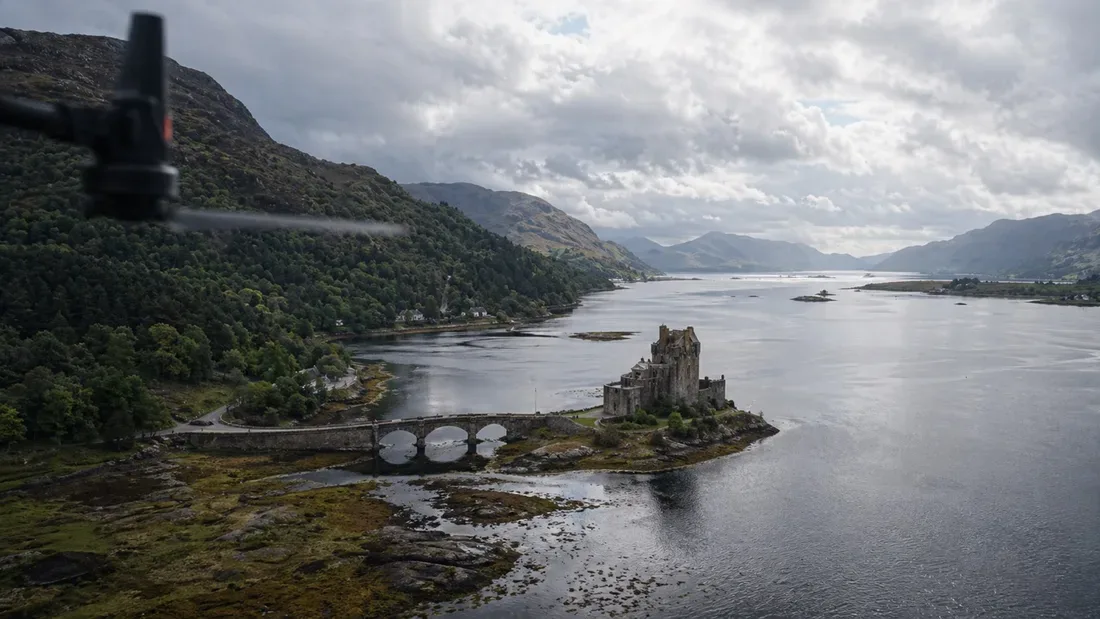
The dive you have seen is one continuous move, and it is one continuous move because a cut would destroy it. That means every FPV clip is a performance. You do not compose it, review it and adjust. You commit, you fly it, and you find out afterwards whether the line was any good.
In practice you will fly the same run repeatedly and keep one. Which collides with the battery numbers in a way worth understanding: DJI quotes about 23 minutes for the Avata 2, and its own footnote says that figure was measured in a controlled wind tunnel at a constant speed. Its hovering figure is 21 minutes. FPV flying is nothing like either — you are on and off the throttle constantly, which is the most expensive thing you can do to a battery. Plan around packs rather than minutes, and buy the combo with three of them.
3. It will not fly itself, once you turn off the help
There is a ladder here, and where you stop on it decides what your footage looks like. DJI publishes the speeds, which makes the three rungs unusually easy to see on the Avata 2:
| MODE | MAX SPEED | WHAT IT DOES |
|---|---|---|
| Normal | 8 m/s | Holds position, levels itself, brakes when you let go. |
| Sport | 16 m/s | Still levels itself, but lets you carry real speed. |
| Manual | 27 m/s19 m/s in the EU | Nothing is levelled for you. This is the mode the footage you admire was shot in. |
Normal and Sport are flown with the motion controller and are, genuinely, easy — squeeze the trigger, tilt your wrist, the drone does the rest. Manual mode is a different sport. Nothing self-levels, the drone holds whatever angle you leave it at, and if you take your thumbs off it does not stop; it falls out of the sky at whatever angle it was last in. Every extraordinary clip you have watched was flown that way, and there is no shortcut into it: it is stick hours, most of which should be spent in a simulator where crashing costs nothing.
This is the honest case for a cheap kit like the EMAX Tinyhawk. It has no self-levelling to hide behind and it costs a fraction of an Avata to break, so an hour a week on one buys you a skill the motion controller will never teach you. It is also the only route that leads to the freestyle footage rather than an imitation of it.
4. It cannot be quiet, or subtle
The Avata 2’s own certification statement lists a sound power level of 81 dB, and small ducted propellers spinning at up to 51,430 rpm make a noise with a character that carries. This matters more than the number suggests, because FPV flying is close-range flying: you are threading gaps at head height rather than sitting at 100 metres, so people hear you, notice you and form an opinion about you.
Add the fact that the drone is invariably somewhere interesting — a bridge, a barn, a derelict building — and you can see why the observer’s public-relations job matters as much as the watching. Pick sites where nobody has to wonder what you are doing. The rules for where you can fly are unchanged from any other drone, and I have written them up in the general UK drone rules guide if you want them in one place.
What it does do, better than anything
None of that is an argument against buying one. It is an argument against expecting it to be a camera drone with goggles bolted on. What FPV gives you is a sense of motion nothing else produces: the drone rolls, the horizon rolls with it, the ground rushes past a metre from the lens, and the viewer feels it in their stomach. A camera drone glides. This dives. You will not get one shot in a hundred that a client wants, and you will get one shot in ten that makes somebody say “how did you do that”.
PART FOUR
What I’d fly, and who stands next to me
The DJI Avata 2 Fly More Combo — the configuration with DJI Goggles 3 and the RC Motion 3 controller in the box — with somebody stood next to me who has been told to watch the sky rather than the drone. That is the honest answer to both halves of the question in the headline, and I would not spend long on either.
The Avata 2 wins because it is the only machine here that lets a complete beginner fly properly immersed and come home with the drone intact. The guards are part of the airframe rather than a bolt-on, so glancing a branch usually ends the flight and not the drone. The combo includes the goggles and the controller, which matters more than it sounds — there is a drone-only listing sitting well below it in the search results, at roughly half the money, and it cannot leave the ground at all. Goggles are not an upgrade you add later on this drone; they are the controller. People buy the cheaper listing by mistake constantly, and then have to buy the goggles anyway. And Goggles 3 are the only pair here with Real View, which is the difference between finding your take-off spot yourself and having your observer talk you onto it.
It is also the one I have actually flown most, and the thing I did not expect is how quickly the motion controller stops feeling like a compromise. Squeeze, tilt, and it goes where you looked. You will be flying inside ten minutes, which is not true of a radio and two sticks.
Spend less if the person is uncertain. The EMAX EZ Pilot puts goggles on your face and a radio in your hands for roughly a fifth of what the Avata 2 combo costs. The picture is analog and it records nothing you would keep — but a fortnight of it tells you whether you and your observer will really do this twice a month, which is the only question that matters before you spend several times as much on the drone you actually want.
This used to be where I sent you to the DJI Neo Motion Fly More Combo, and if you are willing to buy direct it is still the cheapest way into DJI goggles by a clear margin. Amazon has now dropped that configuration — only the drone on its own is listed, and without the goggles and the motion controller it cannot fly FPV at all — so I have left the Neo in the list above with no buy link rather than send you somewhere you would have to work it out yourself. If you want a Neo with goggles from a link on this page, buy the Neo 2.
Spend more for exactly one reason. The DJI Avata 360 removes the hardest part of FPV, which is nailing the framing while you are also flying. It records every direction at once and you decide where the camera was pointing afterwards. The step up from the Avata 2 is small — a fraction of what the Avata 2 itself costs, not a different class of purchase — so if you have tried this and kept throwing away good flights with bad framing, it is the cheapest fix available to you. What it costs you instead is weight: 455 grams against 377, and the same 2028 problem.
If nobody is coming with you
Then buy the DJI Mini 5 Pro for the one-inch sensor and the raw files, or the DJI Flip — less than half the money, and the cheapest thing on this page that will hand you a photograph — if the budget is tighter. Then enjoy every minute of it without once looking over your shoulder for a second person. I am not being polite about this. An FPV drone you are not legally able to fly is worth less to you than a camera drone you are, and the number of people who buy the first and end up wanting the second is the reason this section exists.
The two I’d tell you to walk away from
The DJI Avata, the original. It is a good drone and it was the first one that made this feeling affordable. But DJI UK now lists it as not available, so every unit on sale is old stock at a third-party price — and the ones I found were being offered for more than a brand new Avata 2 costs. At 410 grams with no class mark I can verify, it also needs the A2 test to fly near people today, not in 2028. You would be paying a premium for a worse legal position.
And the DJI FPV from 2021, which I have left in the list without a buy link precisely because I could not find UK stock worth pointing you at. DJI UK returns “not available in your country or region”. It is 795 grams with no class mark, which is the A2-or-A3 bracket, and it is fast enough to hurt something. If you inherit one, fine. Do not go hunting.
And if what you actually need is one particular shot rather than a new hobby — a single swooping pass over a building, a venue, a coastline — then owning any of this is the expensive way to get it. You can hire a qualified drone pilot who already has the drone, the qualification, the insurance and, not least, a second person; and what that costs is usually less than the goggles.
Best FPV drone UK: the questions I get asked most
What is the best FPV drone in the UK in 2026?
The DJI Avata 2 Fly More Combo. Buy that configuration and not the bare drone: it includes DJI Goggles 3 and the RC Motion 3 controller, which is the whole point — the drone on its own cannot fly. It has built-in propeller guards, a 155-degree lens and Real View, and it is the version of FPV that a complete beginner can actually get airborne. Spend far less and the EMAX EZ Pilot puts a drone, goggles and a radio in one box, though the picture is analog and it records nothing you would keep. Spend a little more and the DJI Avata 360 records everything around it at once and lets you frame the shot afterwards.
Do you need two people to fly an FPV drone in the UK?
Yes. The CAA’s wording is that if you want to fly using First Person View, you must have an observer with you. They must stand next to you, you must be able to talk to each other at all times, and at least one of you must keep the drone in direct sight — clearly enough to tell which way it is facing — and have a full view of the surrounding airspace. Direct sight specifically excludes video goggles, phones and tablets, so while the goggles are on your face that person can only be the observer. There is no solo version of FPV in UK law.
Can you take photographs with an FPV drone?
Barely. The DJI Avata 2 shoots single JPEG frames at 12 megapixels through a fixed f/2.8 lens with a 155-degree field of view, and there is no raw file, no bracketing and no aperture to change. Its gimbal is a single-axis tilt mount, so the camera cannot pan or level itself independently of the drone — the framing is whatever the drone is pointing at. An FPV drone cannot hold a still frame the way a camera drone can. If you want photographs, buy a camera drone and fly it separately.
Do I need a licence to fly an FPV drone in the UK?
Not a licence, but you do need to register, and the observer requirement applies regardless. Anyone flying a drone of 100 grams or more needs a Flyer ID, which is a free online theory test valid for five years, and every drone of 100 grams or more with a camera needs an Operator ID, which costs £12.34 a year and goes on a label stuck to the drone. After that it is weight and class mark. The DJI Neo and Neo 2 stay under 250 grams and need nothing further. The DJI Avata 2 and Avata 360 carry a C1 mark, which today also needs nothing further — until 2028.
What happens to the DJI Avata 2 in 2028?
Until 31 December 2027 a European C class mark can be flown as its UK equivalent. From 1 January 2028 that stops, and the drone becomes legacy, governed by weight alone: under 250 g flies A1, under 2 kg needs an A2 Certificate of Competence, under 25 kg is A3. The Avata 2 is 377 grams with a C1 mark, so from that date it needs an A2 CofC to fly near people. The Avata 360 at 455 grams is in exactly the same position. The Neo and Neo 2 are unaffected because they are under 250 grams.
Is there an FPV drone under 250 grams?
Yes — the DJI Neo at 135 grams and the DJI Neo 2 at 151 grams both fly through DJI Goggles N3 with an RC Motion 3 controller, and both carry a C0 class mark. The Antigravity A1 is 249 grams on its standard battery, though its high-capacity battery takes it to 291 grams and out of that bracket. Being under 250 grams removes the class-mark question and the 2028 problem entirely. It does not remove the observer requirement, which follows the goggles, not the weight.
The short version
Buy the DJI Avata 2 Fly More Combo — the version with the goggles and the motion controller in the box, because the bare drone will not fly. Then find the person who is going to stand next to you, because in the UK that part is not optional. If you cannot find them, buy a camera drone instead and enjoy it more.
Affiliate links · costs you nothing extra · full disclosure
Specifications checked against manufacturer pages on 31 July 2026, and every buy link points at the cheapest configuration that actually flies — goggles included, because none of these fly without them. I do not print prices here: drone prices move constantly, and a stale figure beside a buy button is worse than no figure at all, so use the link to see what each one costs today. Regulatory detail from the UK Civil Aviation Authority. Goggle and drone specifications from manufacturer specification pages and user manuals; comparison figures for the discontinued DJI Avata and DJI FPV from DroneCompare, licensed under CC BY 4.0. Amazon links are affiliate links. Related reading: drones for filming yourself, what £500 buys you and which DJI goggles work with the Neo 2.