Drone Battery Life Explained: Flight Time, Cycles, and What Really Shortens It

Peter Leslie
12 Sept 2025
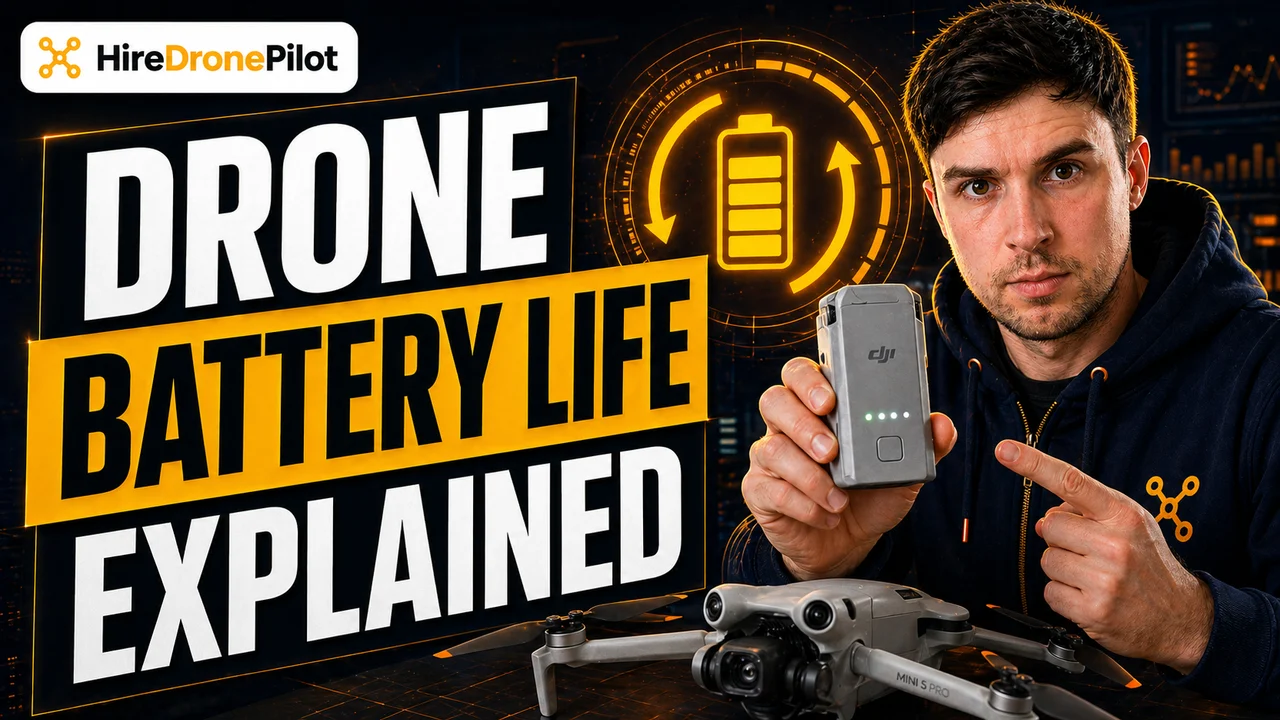
Key Takeaways
- Consumer drone batteries typically deliver twenty to forty minutes of flight time per charge, with premium models reaching the top of that band
- Battery capacity measured in milliampere-hours correlates directly with flight time, but heavier packs also cost you lift efficiency
- Wind, cold, aggressive flying, and payload weight routinely cut the advertised flight time by ten to thirty per cent
- A LiPo drone battery typically delivers two hundred to three hundred full charge cycles before capacity drops noticeably below original
- Storage state of charge, charging temperature, and cool-down time between flights are the three habits that most lengthen a drone battery's usable life
Drone battery life is three numbers, not one. The first is per-charge flight time — how long the drone stays airborne before you land. The second is cycle count — how many charge-and-discharge cycles the pack will tolerate before its capacity noticeably drops. The third is effective lifespan — how long the battery stays usable as a reliable commercial or recreational tool.
Any serious drone pilot — commercial or recreational — eventually learns that the advertised flight-time number on the box is the theoretical ceiling, and the real-world number depends on wind, temperature, payload, and flying style. This guide walks through how each of the three numbers works, what shortens them, and the operational habits that keep them where they should be. The rules that govern how your drone can operate on that battery are set by UK drone law, and the flight reserve you plan around them depends on a predictable pack.
Most consumer drone batteries deliver twenty to forty minutes of flight time per charge
Consumer drones sold today cluster around a twenty to forty-minute advertised flight time. Entry-level models sit towards the lower end. Premium DJI, Autel, and Skydio platforms reach the upper end. Professional survey-grade drones with larger packs can reach longer still, particularly on dual-battery systems designed for continuous operation.
That advertised number is a ceiling measured under calm laboratory conditions — hover mode, moderate temperature, no payload, no wind. Real-world flying almost always comes in under it, because every factor that increases motor load also increases power draw.
A disciplined approach is to treat the last twenty to thirty per cent of the drone battery as return-and-land buffer, not extra airtime. Pushing a drone battery to its absolute limit is where fly-aways, hard landings, and insurance claims happen. Planning to land at twenty-five to thirty per cent is what keeps commercial work repeatable.
If a project needs more continuous airtime than a single drone battery provides, the answer is almost always additional packs with quick-swap, not a longer-life single battery. Three standard batteries keep the drone lighter on each flight and give you a built-in redundancy if one pack fails mid-day.
Capacity in milliampere-hours drives flight time, but heavier packs trade lift for airtime
The simplest rule in drone battery spec is that capacity — measured in milliampere-hours — correlates directly with flight time. A three-thousand-mAh pack will typically deliver more airtime than a two-thousand-mAh pack in the same drone.
What the spec sheet does not always make explicit is that larger packs weigh more, and the additional mass raises hover power consumption. There is a point — different for every platform — where adding capacity stops increasing flight time and starts decreasing it, because the motors burn the extra energy just holding the heavier drone in the air.
Manufacturer-listed pack options are the tested optima for a given drone. Fitting a third-party pack with significantly higher capacity is rarely a performance gain and often causes thermal or balance problems that shorten both the flight and the pack.
Why LiPo chemistry is what drones actually run on
Most consumer and commercial drones ship with lithium-polymer (LiPo) packs rather than the lithium-ion cells found in phones and laptops. The reason is power density — LiPo can deliver the high discharge rates a drone's motors need during aggressive manoeuvring, where lithium-ion would sag in voltage.
The trade-off is that LiPo is more sensitive to handling. Charging, storage, and temperature all affect both short-term safety and long-term pack health. The overnight charging guide covers the safety side; this article focuses on how the chemistry interacts with flight time and cycle count.
A LiPo pack that has just finished a hard flight will be warm to the touch. That warmth is normal — it is the energy the pack has just discharged — but it is also a sign that the cells need a fifteen to twenty minute cool-down before going back on the charger. Charging a hot pack accelerates ageing and pushes cycle count down faster than any other common habit.
Wind, cold, aggressive flying, and payload routinely cut advertised flight time by ten to thirty per cent
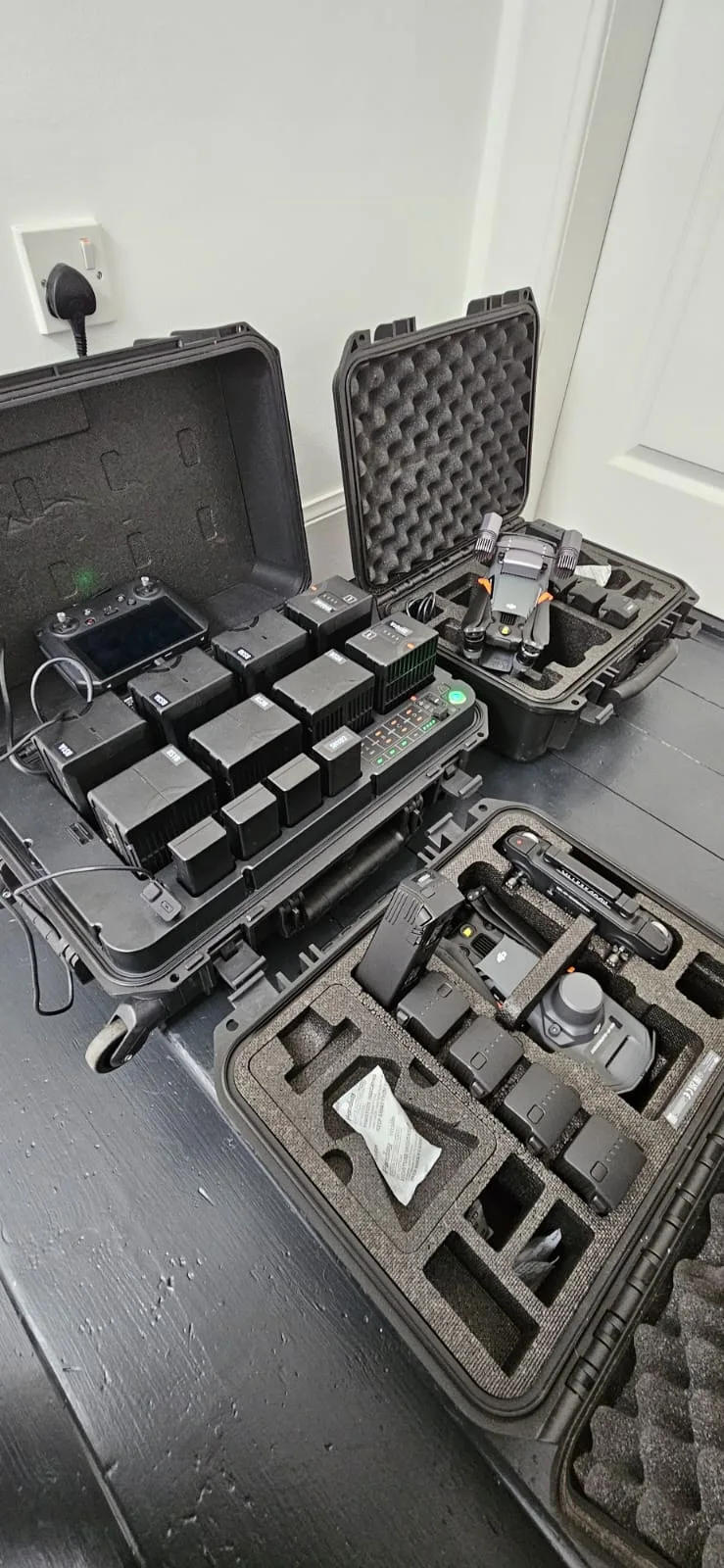
The variables that pull flight time down in the real world are consistent across drones. Wind is usually the largest. A drone holding position in a fifteen-mile-per-hour breeze is running the motors harder than one hovering in still air, and the penalty on flight time can hit thirty per cent before the drone even moves anywhere.
Cold is the second. LiPo chemistry slows below ten degrees Celsius, cell voltage sags faster under load, and a drone battery that should have delivered twenty-five minutes on a summer day can give you eighteen in February. Keeping spare packs in an inside jacket pocket before flying is the cheap operational habit that mitigates it.
Aggressive flying — rapid accelerations, sharp turns, high-speed sport mode — consumes far more power than steady hovering or smooth forward flight. Payload weight from an added sensor or a landing-pad weight counts too, as does recording in 4K versus 1080p.
| Factor | Mechanism | Typical flight-time hit |
|---|---|---|
| Strong wind (15+ mph) | Higher motor output to hold position | 15–30% |
| Cold (below 10°C) | Slower LiPo chemistry, higher voltage sag | 10–25% |
| Aggressive flying | High current draw for manoeuvres | 20–40% |
| Additional payload | Increased lift requirement | 5–15% |
A commercial drone survey flight plan worth paying for accounts for these explicitly. The drone pilot plans the mission knowing the real-world flight time, not the box number.
A LiPo drone battery typically lasts two hundred to three hundred full charge cycles before capacity drops below eighty per cent
Rechargeable batteries age. For LiPo drone packs, that ageing is normally counted in full charge cycles — each cycle being a complete discharge and recharge, regardless of whether it happened in a single flight or over several partial cycles combined.
Two hundred to three hundred cycles is the typical point at which a consumer LiPo drone battery has dropped to roughly eighty per cent of its original capacity. A pack that once gave you twenty-five minutes of flight may now give you twenty. Beyond that, capacity decline tends to accelerate, and cell balance can start to drift — which is why commercial drone operators typically retire packs from billable client work once they pass a hundred and fifty to two hundred cycles, and keep them only for practice.
Most modern drones expose cycle count in the companion app. Tracking it over time is the best early warning system a drone pilot has — a drone battery whose cycles are climbing fast but whose flight time is dropping fast is a pack on its way out. For any operator flying under GVC-level competence, tracked cycle counts are also part of the audit trail behind a clean Operational Authorisation.
Proper charging habits and storage practice extend both cycle count and individual pack life
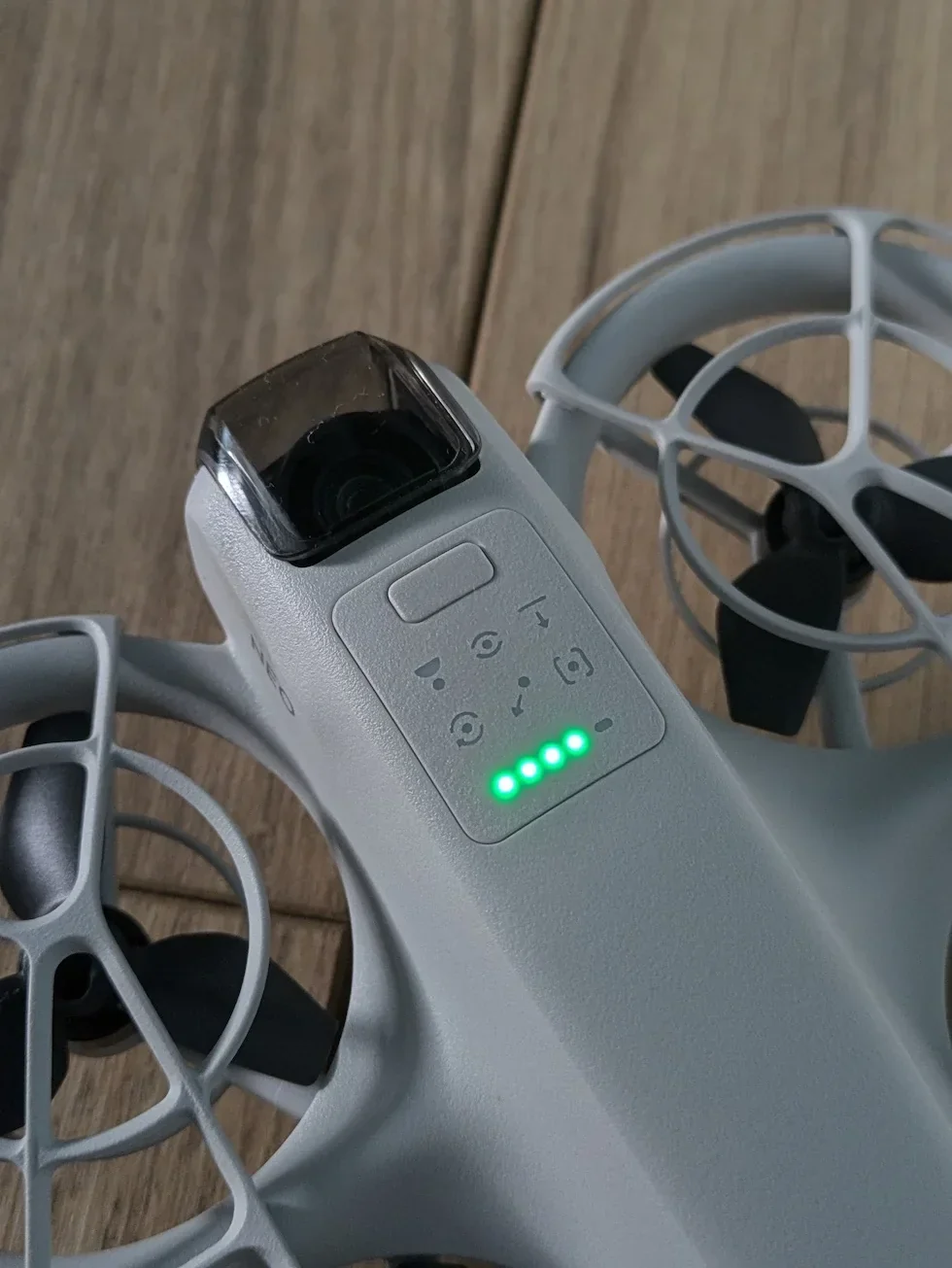
The habits that most extend drone battery lifespan are well-established and not onerous. Store packs at a middle voltage — roughly forty to sixty per cent — rather than at one hundred per cent or zero. Keep storage temperature moderate, between roughly four and twenty-one degrees Celsius, and away from direct sunlight.
Never leave packs fully discharged for weeks — cell voltage can drop below the minimum safe level and cause permanent damage. Conversely, do not leave packs at full charge sitting in a drawer for months — the chemistry ages fastest at high voltage.
Use the manufacturer's charger or an equivalent approved alternative. Off-brand chargers that skip balance functions or temperature monitoring are a cost saving that usually shows up as shorter pack life, not shorter charge time. And always let packs cool to ambient temperature after a flight before recharging.
| Situation | Recommended state of charge | Key tip |
|---|---|---|
| Long-term storage | 40–60% | Cool, dry place, moderate temperature |
| Before flying | 100% | Charge just before the session |
| After flying | Whatever it landed at | Let the pack cool before recharging |
| Disposal | Below 30% | Tape terminals, take to an e-waste facility |
How to charge a DJI drone battery safely using the manufacturer's hub
Most modern DJI consumer drones ship with a two-way charging hub that charges up to three packs sequentially. The standard workflow looks like this.
- Insert packs one to three into the hub's slots until each one clicks into place.
- Connect the hub to mains via the manufacturer's USB-C charger, or an equivalent approved power delivery unit.
- Let the hub sequence the packs. The hub typically charges the highest-charge pack first so the drone operator has one ready to fly as soon as possible.
- Monitor the LED pattern. Each pack's LEDs indicate charge level; when solid green turns off, that pack is full and the hub moves on to the next.
- Check gold contacts. Before each session, give the contacts on the pack and the hub a quick visual check — dust or grime can interfere with a proper connection.
If the LEDs blink rapidly or in an unusual pattern, that is a charging error — usually temperature-related or a damaged cell. Let the pack return to ambient temperature, retry once, and if the error repeats, consult the manufacturer's support documentation before continuing. Do not force a charge on a pack that is throwing an error.
The honest summary on UK drone battery life is to plan for the real-world number, not the box number
Every drone battery has three lives — its per-flight airtime, its cycle count, and its effective usable lifespan. Advertised airtime is the ceiling, not the expected case. Cycle count tells you when to retire the pack from client work. Effective lifespan is the outcome of the charging, storage, and temperature habits a drone operator actually keeps.
For recreational flying, the worst that happens with sloppy habits is shorter flights and more frequent replacements. For commercial work, the operational range and the 120-metre ceiling both depend on predictable battery behaviour, because the return-and-land plan is built around a known reserve.
Got a specific battery workflow you want reviewed — a flight plan that keeps running into reserve-level early, or a pack that is behaving oddly — drop a note to peter@hiredronepilot.uk and I will come back to you directly. If you prefer the video version of this explainer, the comments are open on YouTube.
References
Manufacturer guidance and CAA operational material. External links open in a new tab.
- DJI Support — Mini 4 Pro · Manufacturer battery, charging hub, and storage guidance for a representative consumer pack
- UK CAA — The Drone and Model Aircraft Code · Pre-flight checks including battery condition and reserve planning
- UK CAA — Safety advice · Human factors, technical failures, winter flying guidance
Peter Leslie
Founder & GVC Drone Pilot
Peter is the founder of HireDronePilot. With thousands of logged commercial flight hours, he writes about drone technology, commercial surveying tactics, and UK aviation compliance.
Connect on LinkedIn