What Happens If Your Drone Loses Power Mid-Flight

Peter Leslie
23 Apr 2026
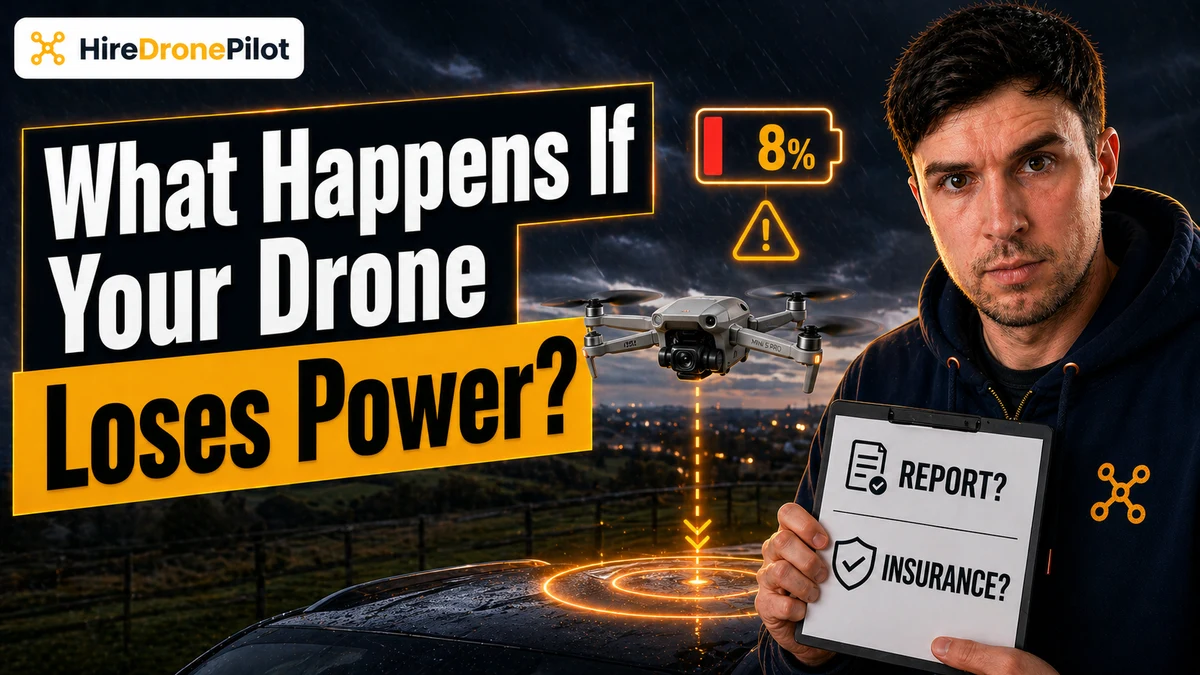
Key Takeaways
- A healthy drone does not simply drop — it fires a warning, climbs into Return-to-Home, and forces a controlled landing only as a last step
- The biggest Return-to-Home failure mode is a bad recorded home point, not a flat battery
- Cold, wet and windy conditions triple the rate of battery-related failures in winter according to CAA safety data
- UK Drone Code Rules 10 and 11 make the drone pilot, not the drone, legally responsible for a power-loss crash
- Battery failure is a mandatory-reporting occurrence, and the AAIB accepts no weight threshold for reportable accidents
- Third-party insurance is mandatory for commercial flights and strongly advisable for hobby flyers, because you are personally liable either way
A drone does not usually "lose power" the way a car running out of petrol loses power. It steps through a ladder. First a low-voltage warning. Then an automatic Return-to-Home. Then a forced landing wherever it happens to be. The drone battery tells the flight controller it is running out of volts long before the motors quit, and the controller spends the final minutes of the flight trying to get the drone on the ground safely.
What happens next, legally and financially, depends almost entirely on what the drone hits in the last ten seconds of that ladder. Here is how the chain actually plays out, and what the law expects of you at every rung.
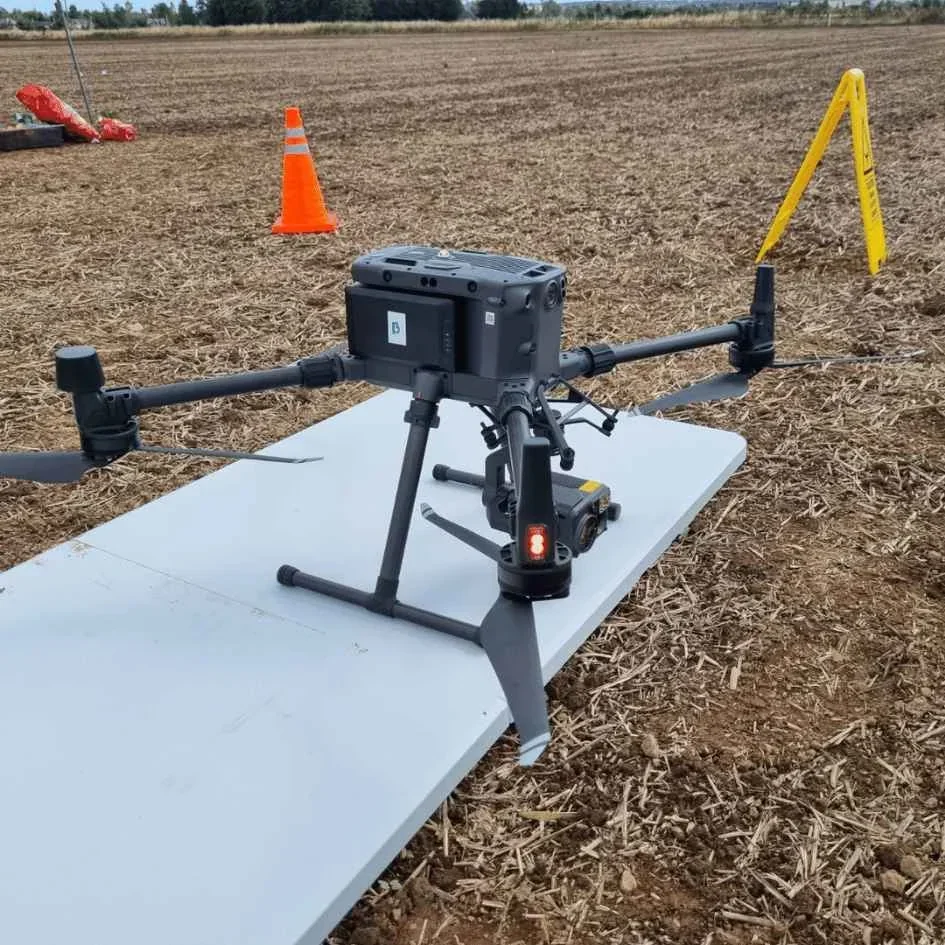
A healthy drone never "just falls" — the battery fires a three-stage warning before it cuts
Every modern consumer drone tracks cell voltage in real time and fires a tiered warning before it runs out. Stage one is a soft notification on the controller, usually when the pack drops below the reserve you set — commonly twenty or twenty-five per cent. Stage two triggers an automated Return-to-Home, and the drone decides for itself that it is time to come back. Stage three is a forced landing, and the drone sets itself down wherever it is currently hovering, whether that is your launch pad, a neighbour's roof, or a pond.
The single most useful habit on every flight is to treat the last twenty to thirty per cent of the battery as return-and-land buffer, not extra airtime. Most consumer packs advertise twenty to forty minutes of flight time, but that figure assumes still air, full charge and a warm pack. In practice you want to be on the ground, battery cooling, well before stage two ever fires.
If stage two does fire, this is the moment your settings matter. The drone is about to make decisions without you.
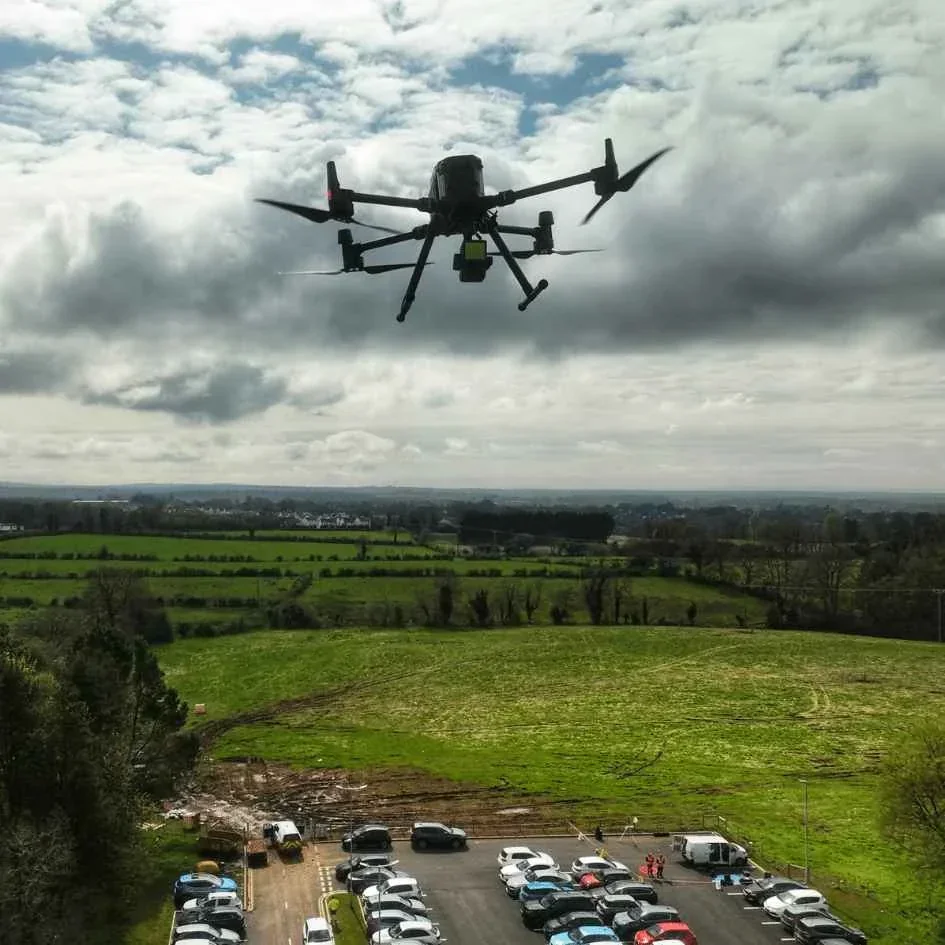
Return-to-Home is a failsafe, not a flight plan, and a bad home point is the single biggest reason it fails
Return-to-Home is triggered in three situations: you press the button, the drone loses signal with the controller, or the battery passes the critical low-voltage threshold. In all three it climbs to a preset altitude, flies a straight line back to its recorded home point, and descends.
That word "straight" is the trap. The drone does not know there is a tree, a mast or a chimney in the way unless it has active obstacle sensors scanning the return path — and even then those sensors struggle in low light, rain, or heavy backlight. The failsafe assumes the return corridor is clear. It is on you to set the Return-to-Home altitude higher than anything between the drone and the launch site.
The single biggest reason Return-to-Home ends badly is a wrong home point. If the GPS lock fixed onto the wrong spot at take-off, or you walked half a kilometre down the field and never updated it, the drone will fly to the place it thinks is home. That might be a river, a road, or the field next door. The second the drone is out of range you have lost every opportunity to cancel the failsafe — Return-to-Home simply runs to completion.
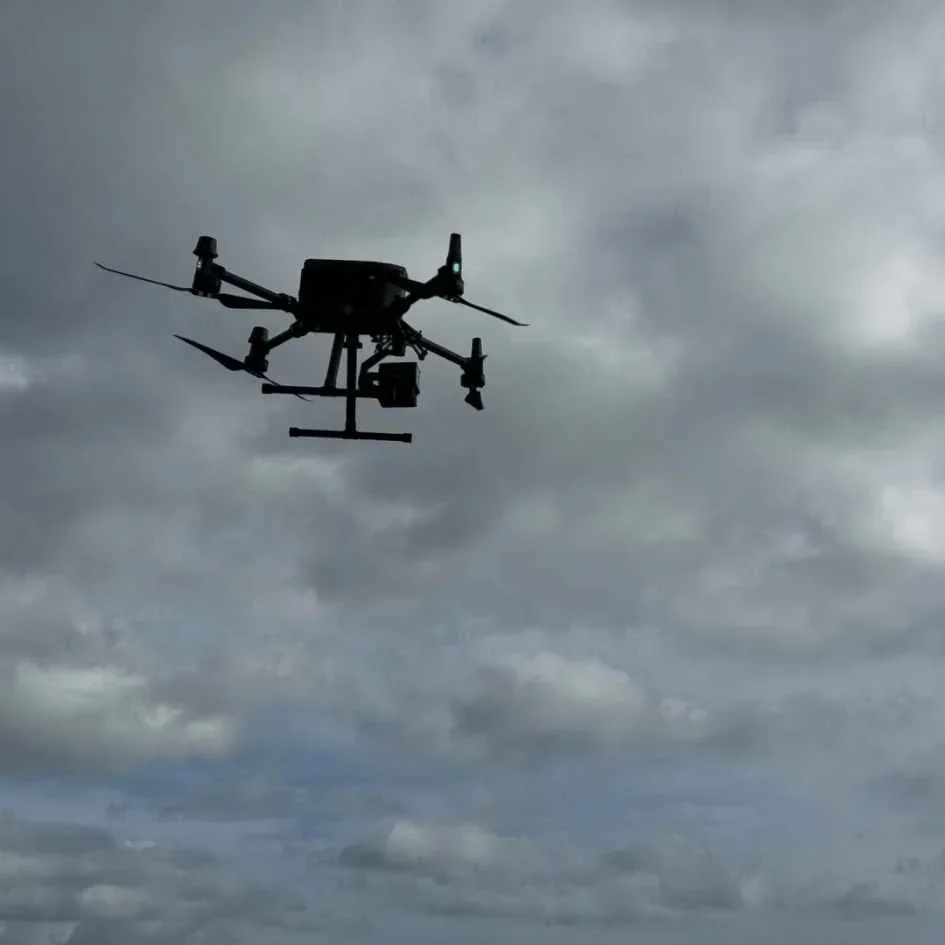
Cold air, wet air and headwind shrink the power budget far faster than the flight timer admits
The on-screen flight timer is an estimate based on still air and a warm pack. Real weather punishes that estimate. CAA safety data reports that battery-related failure incidents triple in frequency between December and February compared with the annual average. Cold cells deliver less usable capacity, voltage sags harder under load, and the drone can cut out at an indicated thirty per cent rather than the five per cent you were planning to land at.
Flying in windy weather does the same thing from a different angle. A headwind leg on the way home forces the motors to draw more current to hold the same ground speed, so the pack empties faster on the return than it did on the outbound. Rain compounds the problem: on top of wetting the electronics, rain chills the pack mid-flight and drags range down further still.
The practical rule is that the flight timer is an optimistic guide, not a failsafe. The failsafe is your own reserve discipline — and the colder or wetter the day, the earlier you trigger manual Return-to-Home rather than waiting for the drone to call it.

UK Drone Code Rules 10 and 11 make the drone pilot, not the drone, responsible for a power-loss crash
When a power-loss crash is investigated, the authorities do not ask what the drone did. They ask what you did before take-off. The Drone and Model Aircraft Code sets two rules that bite here. Rule 10 requires you to know how far your drone can fly before running low on power, and to know how to set and update its lost-connection and Return-to-Home behaviour. Rule 11 treats firmware as part of fit-to-fly — out-of-date firmware is a defect, and the legal starting point is that the drone should not have been in the air.
Professional drone pilots build a pre-flight routine around those two rules because they are the first thing an insurance loss adjuster or an investigator will ask about. The routine is not complicated: confirm the firmware is current, confirm the Return-to-Home altitude clears the tallest obstacle between the drone and home, confirm battery health is above eighty-five per cent, confirm the home point is set where you are standing, not where you started the app.
Losing signal and then losing Visual Line of Sight because the drone wandered off is not a legal defence. The flight is still a criminal offence under the Air Navigation Order 2016, and the wider UK drone laws treat "the drone did it" as a drone pilot failure to prepare.
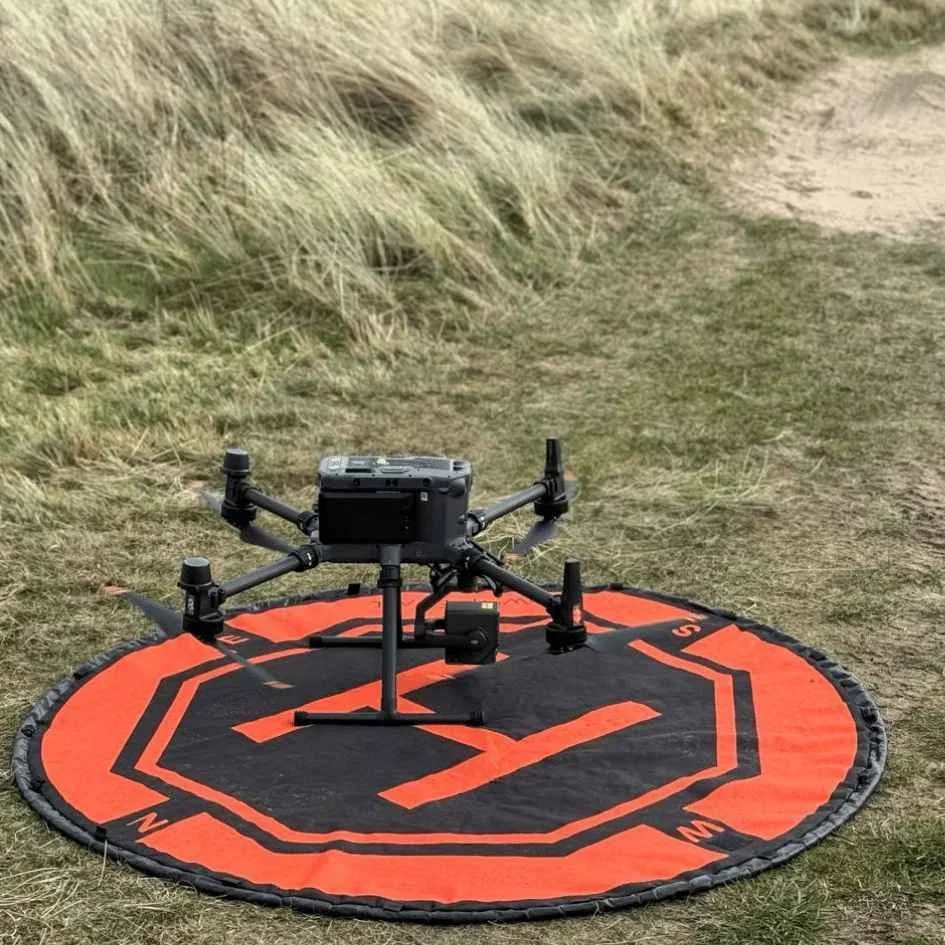
If a power-loss crash injures someone or damages property, you report it — even if you are flying recreationally
Battery failure and loss of the command-and-control link are both explicitly listed as mandatory-report occurrences in the UK regime. There is no weight exemption. A sub-two-hundred-and-fifty-gramme drone that comes down in a flat battery event and damages a parked car is still a reportable occurrence, and the Air Accidents Investigation Branch accepts no weight threshold for accidents and serious incidents.
Two separate channels matter here. Safety-related occurrences go to the CAA through the ECCAIRS 2 portal. Accidents and serious incidents — anything that injures a person, damages property beyond a trivial amount, or endangers another aircraft — are reportable to the AAIB, and the duty to report sits on anyone with knowledge of the event, not just the drone operator.
Serious injury has a specific legal definition, not a common-sense one: hospitalisation for more than forty-eight hours, any bone fracture other than a simple finger or toe break, or second or third-degree burns affecting more than five per cent of body surface area. If the injury hits any of those thresholds the reporting duty is not optional.
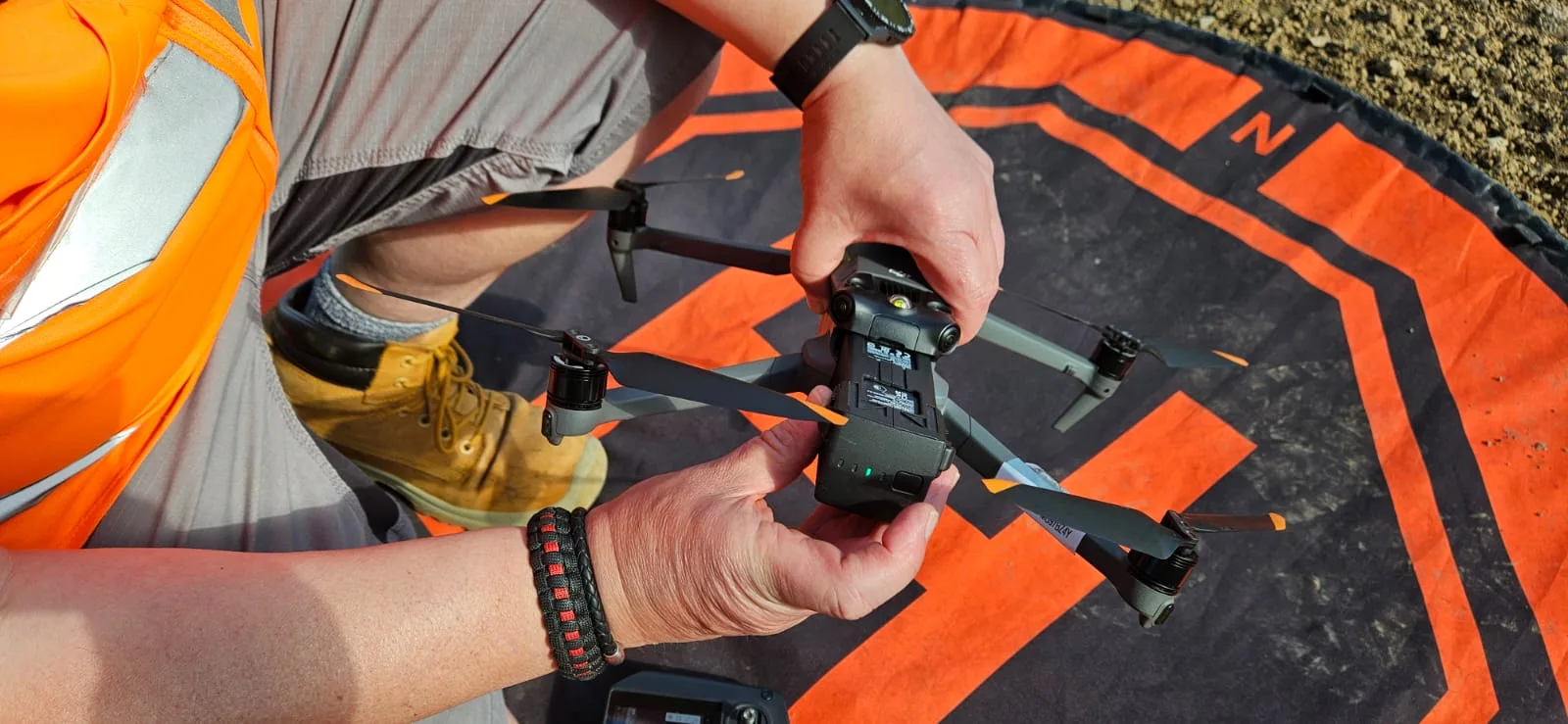
Third-party insurance is mandatory for commercial flights and strongly advisable for hobby flyers — because you are personally liable either way
The financial side of a power-loss crash runs on a completely separate track from the safety reporting. If the flight was commercial, third-party insurance compliant with Assimilated Regulation (EU) 785/2004 is mandatory regardless of drone weight, and the cost of cover is small relative to the cost of an uninsured claim — our guide to what drone insurance costs runs the numbers.
Recreational, sport and hobby flying under twenty kilogrammes is not legally required to carry third-party cover, but the operator is still personally liable in full for every penny of damage or injury the drone causes. That includes a cracked car windscreen, a broken greenhouse pane, a neighbour's cat, or something worse involving a person.
Operators working under a PDRA01 Operational Authorisation have an additional engineering requirement on top of the financial one: the drone must be equipped with a mechanism that causes it to land in the event of a disruption to, or failure of, any of its control systems. Checking that mechanism works is part of pre-flight. A power-loss event is exactly the scenario that requirement was written for.
So the short answer to "what happens if my drone loses power" is: warning, Return-to-Home, forced landing, paperwork. The drone does most of the work on the first three rungs. You do all of the work on the fourth. Setting the home point, setting the Return-to-Home altitude, keeping firmware current, and holding a real battery reserve is what keeps you off the fourth rung in the first place.
Got a specific power-loss scenario you want me to walk through — a forced landing on a neighbour's garage roof, a signal-loss Return-to-Home that went wrong, or an insurance claim after a fly-away? Drop a note to peter@hiredronepilot.uk and I will come back to you directly. If you prefer the video version of this explainer, the comments are open on YouTube.
References
Primary source material for this article is the UK Civil Aviation Authority. External links open in a new tab.
- UK CAA — The Drone and Model Aircraft Code (CAP2320) · Rules 10 and 11 on power, firmware and lost-connection behaviour
- UK CAA — Safety advice for drone operators · battery-related failures triple in frequency December to February
- UK CAA — Report a drone incident or safety occurrence · battery failure and loss of command-and-control are mandatory-report occurrences
- Air Accidents Investigation Branch — UAS accident reporting · AAIB accepts no weight threshold for reportable accidents and serious incidents
- UK CAA — Drone insurance · Assimilated Regulation (EU) 785/2004 commercial cover requirement
- UK CAA — PDRA01 Operational Authorisation Overview · control-system-failure auto-land requirement for Specific Category operators
- UK CAA — UK Regulatory Framework for Drones · Air Navigation Order 2016 and the UAS Regulations
Peter Leslie
Founder & GVC Drone Pilot
Peter is the founder of HireDronePilot. With thousands of logged commercial flight hours, he writes about drone technology, commercial surveying tactics, and UK aviation compliance.
Connect on LinkedIn