Switchblade Drone Cost: What a Loitering Munition Actually Is

Peter Leslie
1 Oct 2025
Key Takeaways
- The Switchblade is a family of US military loitering munitions — effectively a one-way drone carrying a warhead — made by AeroVironment, not a commercial drone
- There are two main variants in service: the man-portable Switchblade 300 for anti-personnel use and the heavier Switchblade 600 for anti-armour roles
- The Switchblade is not available to civilians in the United States or the United Kingdom — it is an International Traffic in Arms Regulations controlled item sold government-to-government
- Public reporting places per-unit costs in the tens of thousands of US dollars, with the heavier 600 materially more expensive than the 300, though official unit prices vary by contract
- For UK readers, the only lawful context for discussing the Switchblade is as a defence-sector topic — it has no civilian, commercial, or hobbyist use case
The Switchblade is one of the most frequently searched drone names on the internet, and almost none of those searches come from people who can legally buy one. It is a US military loitering munition — a one-way flying weapon carrying a warhead, designed to circle a target area and then dive on a target the operator selects. It is made by the American defence company AeroVironment.
This article is an explainer, not a buyer's guide. There is no UK civilian market for the Switchblade, no hobbyist angle, and no commercial use case. If you are a commercial drone operator looking at real civilian platforms, the right place to start is the UK drone laws explainer and the UK-available hardware our drone pilots actually fly.
The Switchblade is a US military loitering munition, not a commercial or civilian drone
The Switchblade family is designed and manufactured by AeroVironment, an American defence contractor. The name is a nod to the platform's folded-wing design — the wings spring out after it launches from a tube. The category it belongs to is a loitering munition: a weapon that can fly, loiter in an area for minutes at a time, be commanded onto a target, and then crash into it as its warhead detonates.
That puts it on the defence end of the spectrum, not the drone end. A mapping drone comes home. A Switchblade does not. The hardware, the control software, and the export framework around it are all built for government customers — primarily the United States military and allied forces.
For the UK reader, this distinction matters because the only people in a position to buy or operate a Switchblade are defence departments. It is not available through any civilian channel.
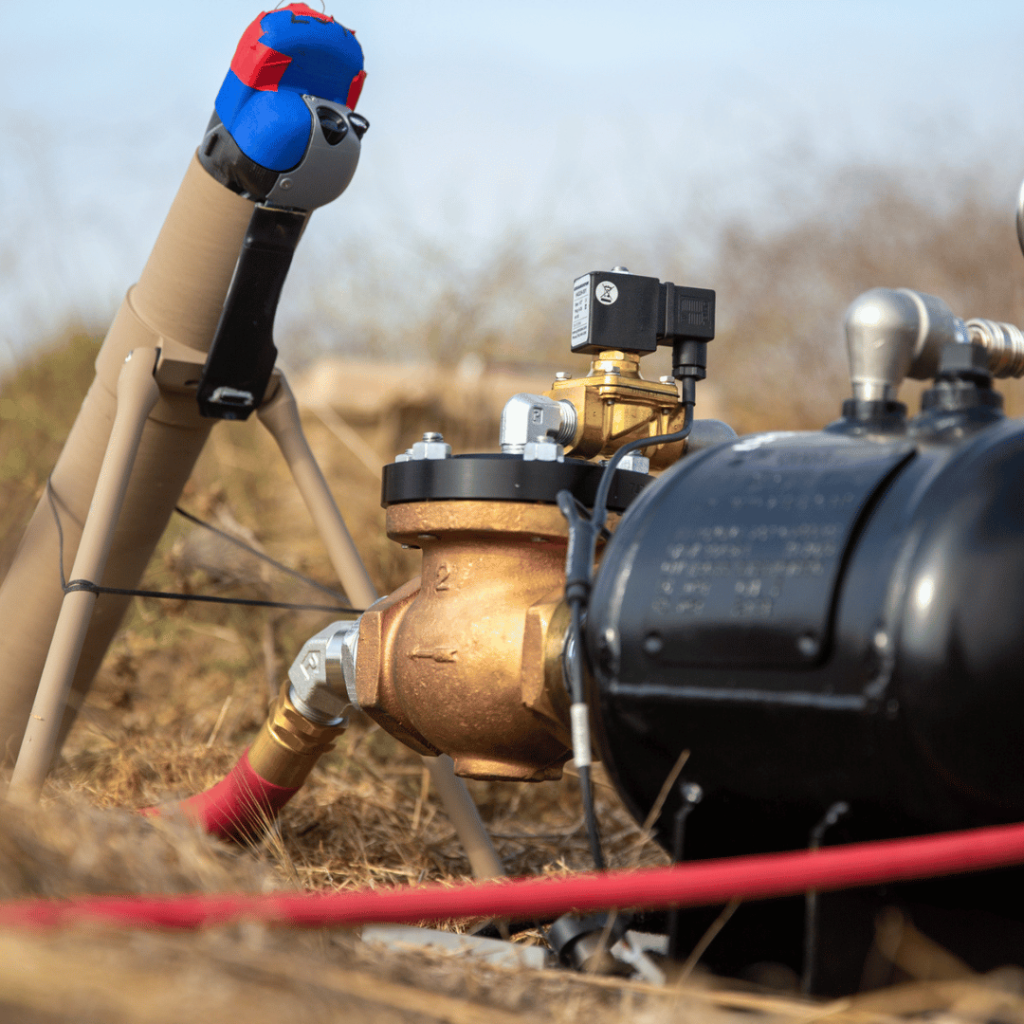
The family has two main variants in service — the Switchblade 300 and the Switchblade 600
The two Switchblade variants cover different roles. The Switchblade 300 is the smaller, man-portable model — a soldier can carry the whole launch system in a backpack. It is designed against personnel and light, unarmoured targets, with a relatively short range measured in kilometres and an endurance measured in minutes.
The Switchblade 600 is the heavier anti-armour variant. It is larger, heavier, and carries a significantly bigger warhead derived from anti-tank missile technology. The 600 has a longer range and longer endurance, and the manufacturer markets it as an anti-armour precision strike system.
Both share the general concept: a soldier or operator launches the munition from a tube, it unfolds its wings, it flies to a designated area, it loiters, and on operator command or autonomous target recognition it dives into the target. That is the full operating profile.
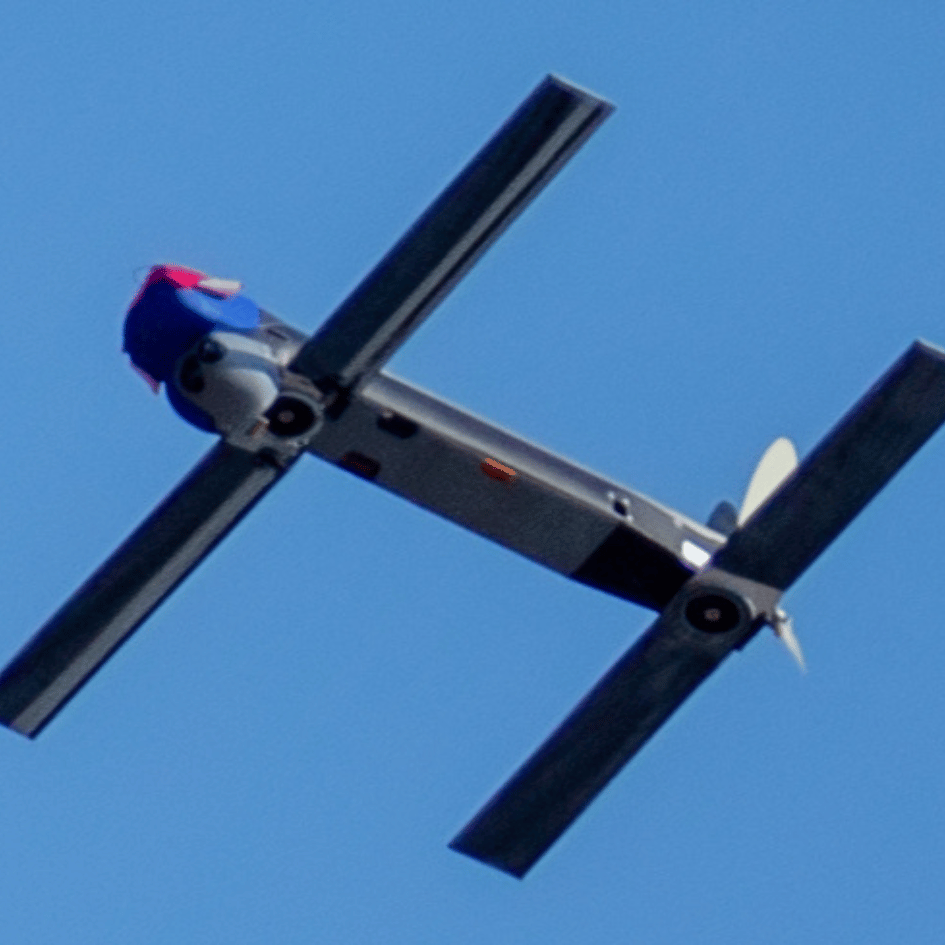
Public reporting puts per-unit cost in the tens of thousands of US dollars, with the 600 materially more expensive than the 300
Official unit prices for the Switchblade are not published as a single catalogue figure — they are negotiated contract by contract, bundled with launch hardware, training, and support, and they vary between customers. What is publicly known comes mostly from US Department of Defense procurement announcements and press reporting around aid packages.
Widely cited figures put the Switchblade 300 in the range of tens of thousands of US dollars per round, with the Switchblade 600 materially higher — reported figures for the 600 sit around an order of magnitude above the 300 in several public sources. Because both figures depend on the contract, the batch size, and the support package included, treat any precise headline number with caution.
The headline takeaway is simple. This is expensive, single-use defence hardware. It has nothing in common with the per-unit cost of the consumer and commercial drones UK drone pilots actually fly, which typically sit in the low thousands of pounds for a capable commercial drone.
The Switchblade is export-controlled and not lawfully available to civilians in the UK or the US
The Switchblade is a controlled defence article. In the United States, that means it is governed by the International Traffic in Arms Regulations — a legal framework that restricts export of defence hardware to foreign militaries only, under government-to-government contracts.
For UK readers, the practical implication is blunt: you cannot buy a Switchblade, at any price, through any civilian channel. There is no hobby variant. There is no demilitarised version on the secondary market. If the Switchblade is operated in the UK at all, it is by the Ministry of Defence or allied forces under appropriate authority, not by private individuals or businesses.
Attempting to import, own, or use a weapon of this nature would engage firearms and explosives legislation long before drone-specific rules became relevant. This is not a border case — it is firmly outside the entire civilian drone regime that the Civil Aviation Authority publishes.
For UK drone operators, the Switchblade is a defence-sector curiosity with no relevance to commercial flying
If you are here because you are curious about military drones after seeing coverage of Ukraine or the wider defence press, that is entirely fair. The Switchblade has become one of the most publicly visible loitering munitions of the past decade, largely through US aid packages and manufacturer briefings.
But if you landed here looking for a platform to fly commercially in the UK, the answer is straightforwardly somewhere else. Commercial UK drones sit under the Civil Aviation Authority framework — the Open Category, the Specific Category, and, at the top, the Certified Category. Hardware in those categories is designed, sold, and flown for transport, mapping, photography, inspection, and surveying — not for strike.
So the short answer to the question in the title is this. The Switchblade is a US military loitering munition, the 300 variant costs in the tens of thousands of US dollars per round and the 600 materially more, and neither is available to civilians anywhere. For anyone reading this as a UK commercial operator, it is a defence story — not a buying guide.
Got a defence-sector drone question, or want to know more about the civilian commercial market that UK regulation actually covers? Drop a note to peter@hiredronepilot.uk and I will come back to you directly. If you prefer the video version of this explainer, the comments are open on YouTube.
References
Primary sources for this article. External links open in a new tab.
- AeroVironment — Switchblade loitering munition · manufacturer product page for the Switchblade 300 and 600 variants
- Wikipedia — AeroVironment Switchblade · aggregated public reporting on variants, use, and cited per-unit costs
- US State Department — International Traffic in Arms Regulations (ITAR) · export-control framework governing Switchblade sales
- UK CAA — UK Regulatory Framework for Drones · the civilian regime that does NOT apply to defence hardware of this type
Peter Leslie
Founder & GVC Drone Pilot
Peter is the founder of HireDronePilot. With thousands of logged commercial flight hours, he writes about drone technology, commercial surveying tactics, and UK aviation compliance.
Connect on LinkedIn