UK Drone Open Category Explained: What It Covers in 2026

Peter Leslie
16 Apr 2026
Key Takeaways
- The Open Category is the default low-risk tier every UK recreational and small-commercial drone flight starts in, and it needs no CAA operational authorisation before take-off
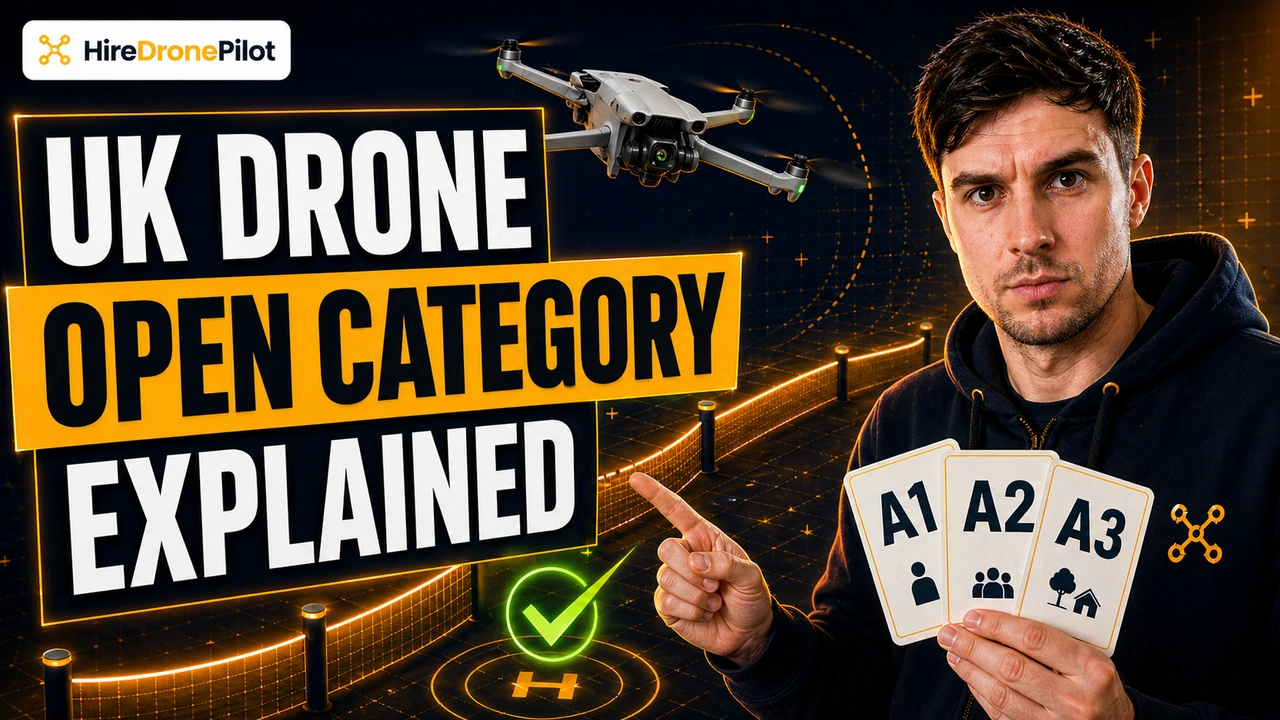
- It splits into three sub-categories: A1 Over People, A2 Near People, and A3 Far from People, each keyed to your drone's class mark or weight
- Every Open Category flight is capped at 120 metres of altitude, must stay within Visual Line of Sight, and may not overfly crowds, carry dangerous goods, or drop items
- Class marks UK0 to UK4 and the C0 to C4 equivalents decide which sub-category your drone can legally fly in — UK5, UK6, C5, and C6 drones need an Operational Authorisation
- The moment you need to fly above 120 metres, beyond line of sight, over crowds, or with a drone of 25 kilograms or more, you leave the Open Category and need the Specific or Certified Category instead
The Open Category is where every UK drone flight begins. It is the UK drone laws tier the Civil Aviation Authority built for basic, low-risk flying — recreational flights, garden videos, estate-agent stills, a quick roof inspection — and it is deliberately designed so you can fly without applying for anything beyond your Flyer ID and Operator ID.
What confuses most drone pilots is how strict the boundary is. Step outside one of its limits — height, distance, weight, line of sight — and the flight is no longer legal in the Open Category, no matter how sensible it feels. This guide walks through what the category actually covers in 2026, what each sub-category requires, and the cliff-edges that push a flight into the Specific or Certified tiers.
The Open Category is the default low-risk tier where no CAA operational authorisation is required before take-off
UK drone regulation is organised into three risk-based tiers: Open, Specific, and Certified. The Drone and Model Aircraft Code calls the Open Category low-risk, simple flying, which is the entire point of the tier — if your flight fits inside its boundaries, you do not need to apply to the CAA, you do not need an operations manual, and you do not need a Remote Pilot Competency Certificate beyond the standard Flyer ID test.
That is why the vast majority of recreational flights, DJI Mini and Neo videos, short estate-agent shoots, and small commercial jobs all happen here. The framework gives you space to fly without paperwork, provided the drone is under 25 kilograms, it stays in Visual Line of Sight, and it respects the sub-category rules covered below.
You still need to be registered. A drone weighing 100 grams or more, or any drone with a camera that weighs 100 grams or more, requires both a Flyer ID and an Operator ID. That registration step is what the CAA treats as the price of entry into the Open Category — the authorisation piece, the operations manual, and the risk assessment are the parts you skip.
A1 Over People covers the smallest drones and lets you fly close to uninvolved people without overflying crowds
The A1 sub-category is the most permissive of the three when it comes to proximity. It is designed for the lightest, lowest-energy drones, where an unexpected fall is unlikely to injure anyone on the ground.
A1 allows drones with a UK0 or UK1 class mark, a C0 or C1 class mark, or legacy drones weighing less than 250 grams. If your drone sits in that bracket you can fly closer than 50 metres to uninvolved people and, in some cases, over them. That is what makes A1 the natural home for sub-250g drones used for travel videos, social content, and discreet photography jobs.
The one limit A1 does not relax is the crowd ban. You may never fly over assemblies of people in any Open Category sub-category, regardless of how small the drone is. The separate question of whether a 249-gram drone can legally overfly a packed crowd is covered in the sub-250g drones over crowds guide, and the short answer there is no, not in the Open Category.
A2 Near People lets a UK2 or C2 drone fly within 30 metres of uninvolved people if you hold an A2 Certificate of Competence
A2 is the middle sub-category and the one most commercial drone operators rely on. It unlocks flying close to people — but only if your drone is the right class and you have a specific qualification.
With a UK2 class drone, or a C2 class drone flown under the transition period, the minimum horizontal distance from uninvolved people drops to 30 metres. If the drone has a certified low-speed mode that cuts forward speed to 3 metres per second, that distance reduces further to 5 metres. Legacy drones that weigh less than 2 kilograms but do not carry a UK2 or C2 class mark fall back to a 50-metre buffer under A2.
Flying in A2 requires an A2 Certificate of Competence, awarded by a CAA-recognised training provider. The A2 CofC is separate from the Flyer ID — think of the Flyer ID as proof you know the basic rules, and the A2 CofC as proof you can apply them near built-up areas and uninvolved people.
Without the A2 CofC, a UK2 or C2 drone legally drops into the A3 sub-category — it is still legal to fly, but only at the more restrictive distances covered next.
A3 Far from People is the default for heavier drones and keeps you 150 metres from built-up areas
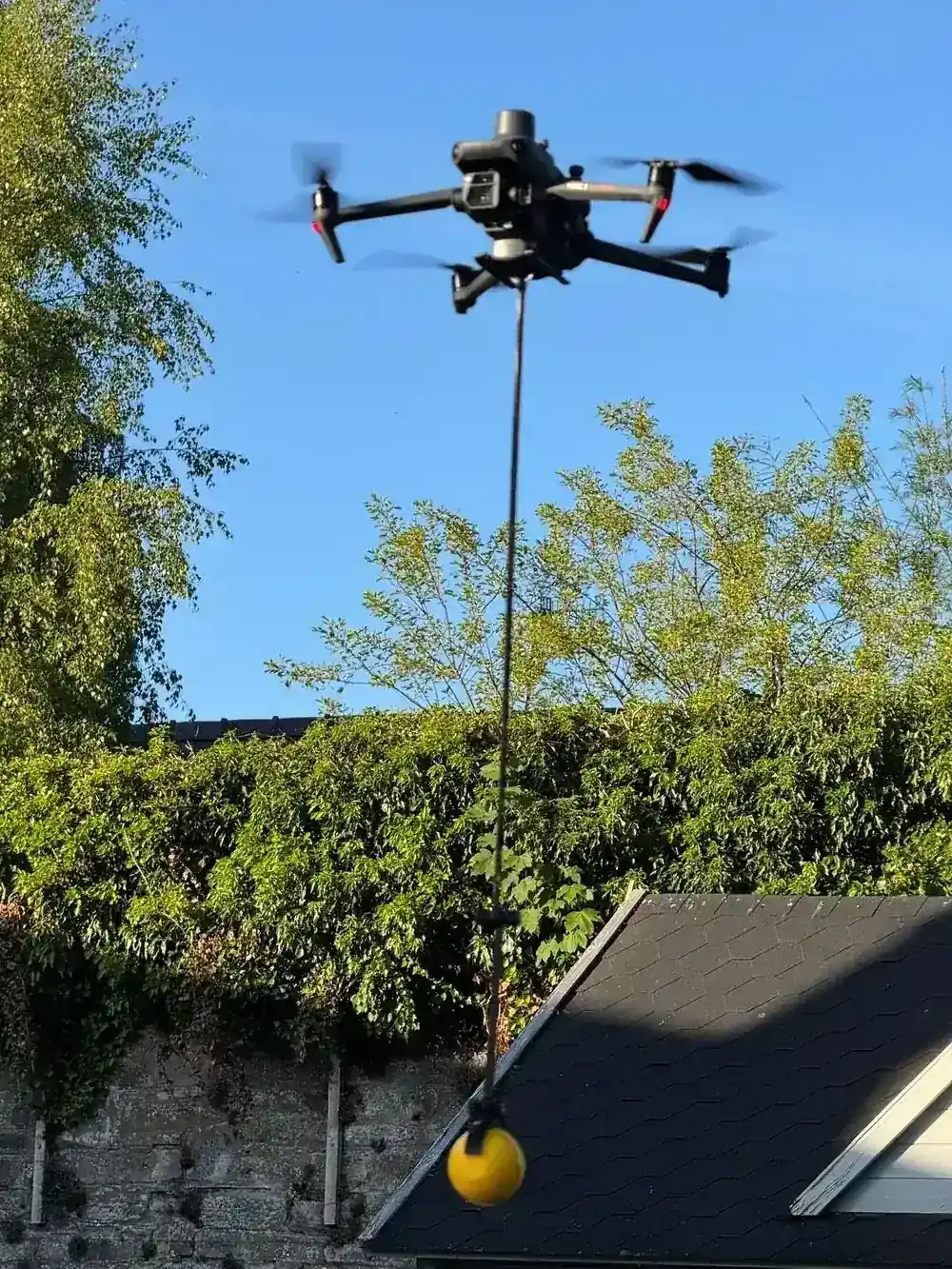
A3 is where most heavier drones live — a DJI Mavic 3, a Mavic 4 Pro, or any legacy drone between 250 grams and 25 kilograms without a UK2 or C2 class mark. It is the widest permission by aircraft weight and the narrowest by location.
Under A3, you must stay at least 50 metres horizontally from any uninvolved person, at least 50 metres from individual buildings, and at least 150 metres from any residential, commercial, industrial, or recreational area. That last number is the one that shapes the job. 150 metres rules out most urban photography and everything involving a town centre.
A3 covers UK2, UK3, and UK4 class drones, their C2, C3, and C4 equivalents, and legacy drones under 25 kilograms. Recreational and sport flying, open countryside mapping, farm inspections, and rural surveys all sit comfortably inside A3. The moment the job moves into a built-up area, you either need A2 with the right drone and qualification, or you step out of the Open Category entirely and apply for an Operational Authorisation.
Every Open Category flight is capped at 120 metres altitude and must stay inside Visual Line of Sight
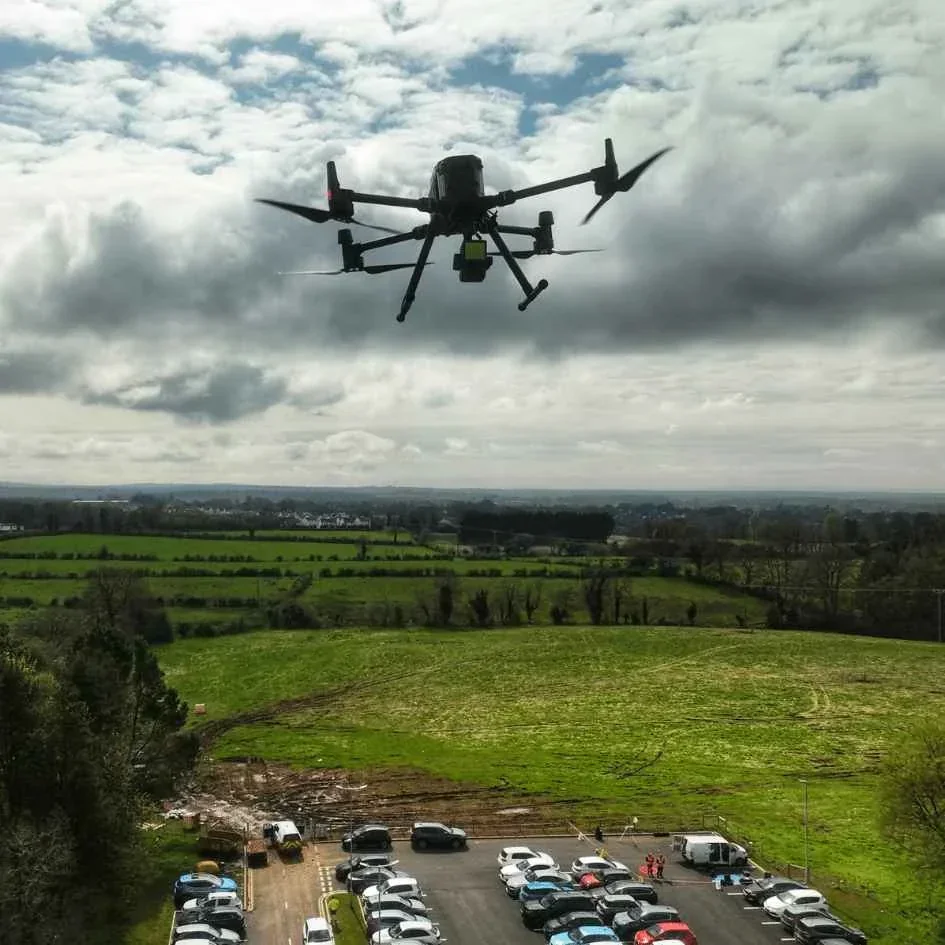
Regardless of which sub-category you fly in, two limits apply to every single flight. The first is the 120-metre altitude ceiling. Measured from the closest point of the earth's surface — so the limit rises with the terrain when you fly in hills and over cliffs — it is a hard ceiling in every Open Category sub-category, with one narrow exemption for tall structures over 105 metres when you have been tasked by the structure's owner.
The second is Visual Line of Sight. You must be able to see the drone directly, with your own eyes, clearly enough to see which way it is facing and to scan the surrounding airspace for other aircraft. No binoculars, no telephoto lenses, no video goggles, unless you are flying alongside an observer standing next to you and maintaining that direct view instead.
VLOS is what makes the 1-to-1 rule a practical habit in the UK. The Drone Code also scales the distance-from-people buffer up whenever you fly higher than 50 metres — at 80 metres of altitude you keep 80 metres of horizontal distance from uninvolved people, at the 120-metre legal maximum the buffer grows to match.
On top of those two, the Open Category prohibits flying over crowds at any altitude, carrying dangerous goods, dropping items from the drone, and flying in restricted airspace without permission. Every one of those is a non-negotiable condition of the tier.
Class marks decide which sub-category your drone can fly in — and the transition window is closing
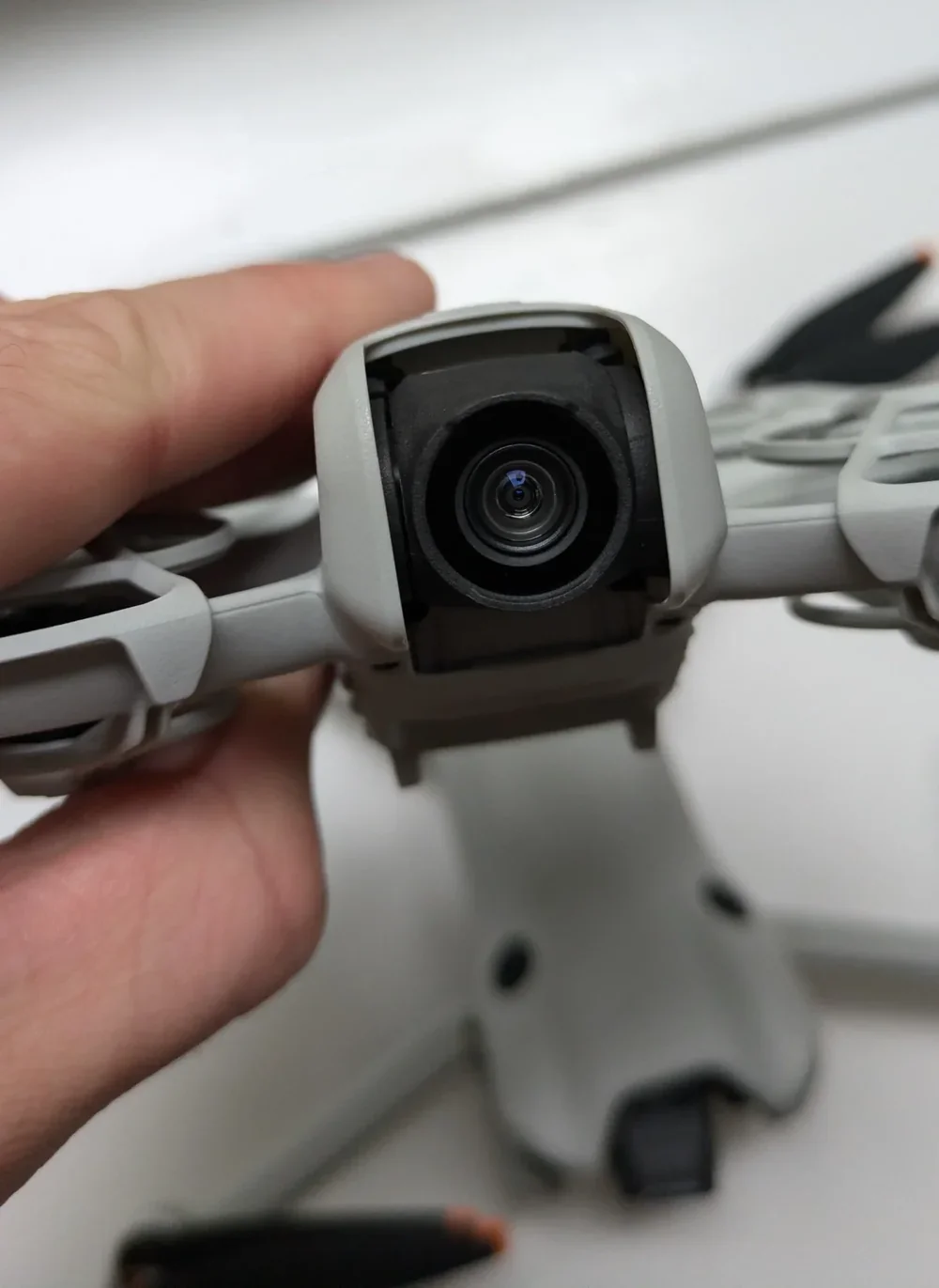
From 1 January 2026, every new drone model placed on the UK market must carry a UK class mark. The UK system runs from UK0 through UK6, and it maps cleanly onto the European C0 through C6 marks that most drones manufactured for the European market already carry. The table below is how the class mark drives the Open Category sub-category.
| Class mark | Weight | Open sub-category |
|---|---|---|
| UK0 / C0 | Less than 250g | A1 Over People |
| UK1 / C1 | Less than 900g | A1 Over People |
| UK2 / C2 | Less than 4kg | A2 Near People (with A2 CofC) or A3 Far from People |
| UK3 / C3 | Less than 25kg, less than 3m dimension | A3 Far from People |
| UK4 / C4 | Less than 25kg | A3 Far from People |
| UK5, UK6 / C5, C6 | Less than 25kg | Operational Authorisation required — outside the Open Category |
The European C marks remain valid during a transition window. Until 31 December 2027 you can fly a C-class drone as if it were the equivalent UK class — a C0 flies as UK0, a C1 as UK1, and so on. From 1 January 2028 that equivalence ends, and C-class drones drop to legacy status, meaning you use the weight-based rules instead.
Legacy drones without either mark still fit the Open Category based on weight. Less than 250 grams maps to A1, less than 2 kilograms maps to A2 with the A2 CofC, less than 25 kilograms maps to A3.
You leave the Open Category the moment you need altitude, line-of-sight, crowd, or weight relief
The boundaries are clean, and that is deliberate — the whole point of having three tiers is so that the CAA can tell where one ends and the next begins. The four cliff-edges are worth knowing by heart.
Fly above 120 metres, fly beyond visual line of sight, fly over crowds, or fly a drone of 25 kilograms or more, and you are no longer in the Open Category. The route into those operations is the Specific Category, which is built for moderate-risk operations and requires an Operational Authorisation from the CAA before you fly.
The most common Specific Category authorisation is PDRA01, a pre-defined risk assessment that unlocks flying inside residential, commercial, industrial, and recreational areas with a drone under 25 kilograms. PDRA01 requires a qualified Remote Pilot — usually a GVC holder under the legacy naming, or an RPC-L1 holder under the current RPC framework — plus an operations manual and third-party insurance.
The Certified Category sits above Specific and is reserved for the highest-risk operations — think drone deliveries over urban areas, passenger-carrying aircraft, and large-scale BVLOS networks. The Certified tier treats drones more like manned aircraft, with type certification, operator certification, and remote pilot licensing. For most readers of this article, Certified is a distant future rather than a current consideration.
If you are flying recreationally, filming your own property, doing discreet photo work with a sub-250 gram drone, or running short inspection flights on rural sites, the Open Category is almost certainly where your job belongs. Keep inside 120 metres of altitude, keep the drone in sight, respect the sub-category distances and the crowd ban, and the framework asks nothing more of you beyond your Flyer ID and Operator ID.
Got a specific scenario you want covered — an edge case at the A2/A3 boundary, a class-mark question, a commercial job that might have slipped into the Specific Category? Drop a note to peter@hiredronepilot.uk and I will come back to you directly. If you prefer the video version of this explainer, the comments are open on YouTube.
References
Primary source material for this article is the UK Civil Aviation Authority. External links open in a new tab.
- UK CAA — Where You Can Fly (A1, A2, A3 sub-categories) · Open Category sub-category distances and permissions
- UK CAA — The Drone and Model Aircraft Code (CAP2320) · 120m altitude ceiling, VLOS requirement, crowd ban, dangerous goods prohibition
- UK CAA — Class Marks · UK0–UK6 and C0–C6 class mark weight bands, transition dates
- UK CAA — Introduction to More Advanced Flying · three risk-based tiers (Open, Specific, Certified), A2 CofC requirement
- UK CAA — Specific Category Overview · when an Operational Authorisation is required, PDRA01 and UK SORA
- UK CAA — UK Regulatory Framework for Drones · Air Navigation Order 2016 and the UAS Regulations 2019/945 and 2019/947
Peter Leslie
Founder & GVC Drone Pilot
Peter is the founder of HireDronePilot. With thousands of logged commercial flight hours, he writes about drone technology, commercial surveying tactics, and UK aviation compliance.
Connect on LinkedIn