UK Drone Specific Category Explained: When You Need It

Peter Leslie
30 Oct 2025
Key Takeaways
- Specific Category is the middle tier of the UK drone regime and is where any operation that exceeds Open Category limits has to move
- You cannot fly in Specific Category without a CAA Operational Authorisation, which is granted via either a Pre-Defined Risk Assessment or a full UK SORA risk assessment
- PDRA01 is the only Pre-Defined Risk Assessment currently published and is the shortcut for VLOS drone work in residential, commercial, industrial and recreational areas
- UK SORA replaced the older Operating Safety Case method on 23 April 2025 and is the route for BVLOS, overflight of crowds, heavier drones near people, swarm flights and operations above 120 metres
- The qualification stack is GVC or RPC-L1 for VLOS work, RPC-L2 for BVLOS in ARC-a airspace, and RPC-L3 for more complex BVLOS up to ARC-c
- PDRA01 costs £524 per year and is valid for twelve months, with reapplication opening 28 days before expiry
Specific Category is the label the CAA attaches to any drone operation that is more complex than the hobby rules of the Open Category, but not dangerous enough to need the manned-aviation treatment of the Certified Category. In plain terms, it is where almost every commercial drone pilots job in the UK lives.
You cannot step into it by buying a bigger drone and ticking a box. You need a CAA Operational Authorisation, and that authorisation is granted through one of two routes — a Pre-Defined Risk Assessment, or a full UK SORA risk assessment. This article walks through what pushes a flight into Specific Category, which route fits which mission, and what qualifications you need before you can apply.
Specific Category is the middle tier of the UK drone regime and is defined by what it is not
The UK drone framework has three categories. The Open Category is the hobby and low-risk commercial tier, with no individual CAA authorisation required as long as you stay within a published set of rules. At the far end, the Certified Category is the manned-aviation equivalent — type-certified drones, formal crew licensing, full aircraft operator certificate. Specific Category sits in between, covering everything that is too risky for Open but not yet at Certified levels of risk.
The CAA's definition is deliberately residual. Check the Open Category first. If your planned operation fits inside A1, A2 or A3 with the right class mark and qualification, you fly there. If it does not, Specific Category is the next step, and you will need an Operational Authorisation before you take off.
The legal backbone here is the same as for the rest of the drone regime — the Air Navigation Order 2016, working alongside UK Regulation (EU) 2019/947 (the UAS Implementing Regulation) and UK Regulation (EU) 2019/945 (the UAS Delegated Regulation). The Specific Category-specific duties for operators and remote pilots are pinned to points UAS.SPEC.050 and UAS.SPEC.060 inside 2019/947.
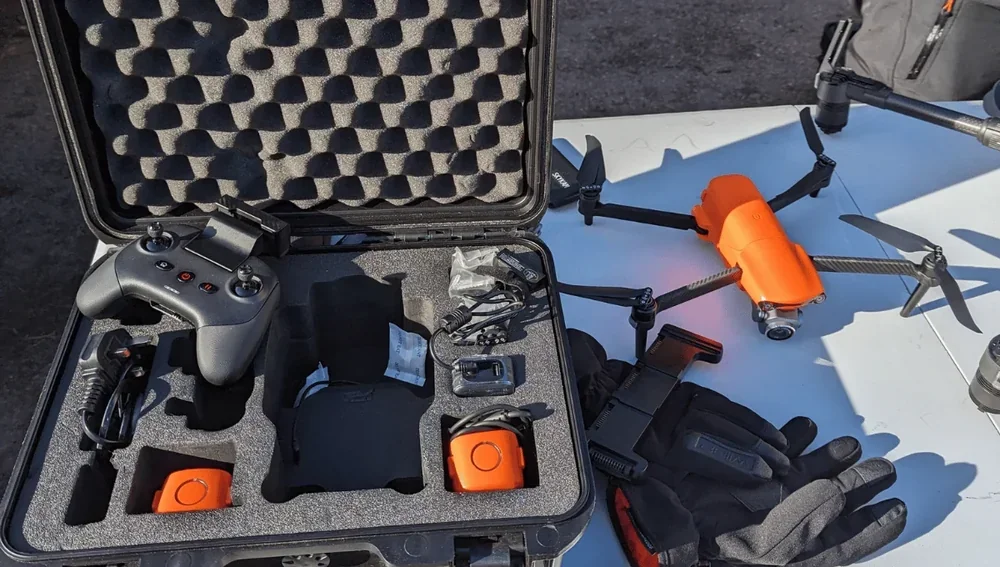
A handful of flight parameters will push you out of Open Category and into Specific
Most drone operators do not choose to move into Specific Category for fun. They land there because one of the parameters of their job pushes past what Open Category allows. The triggers are worth knowing by heart, because missing one turns a routine flight into an unlawful one.
The most common trigger is flying closer than 150 metres to residential, commercial, industrial or recreational areas with a drone over 250 grams. Open A3 is the rural sub-category and is designed to keep you clear of those spaces by default. Move inside that 150-metre buffer and you need a Specific Category authorisation, most often a PDRA01.
Other triggers sit alongside it. Beyond Visual Line of Sight operations are not permitted in the Open Category at all. Flights above the 120-metre altitude ceiling are Specific-only. Dropping articles from the drone, carrying dangerous goods, swarm operations, and flying close to crowds are all Specific. Flying drones weighing 500 grams or more close to uninvolved people, or any drone over 25 kilograms, also lives in Specific.
That list is not exhaustive, but it catches the majority of real-world cases where operators find they have run out of Open Category headroom.
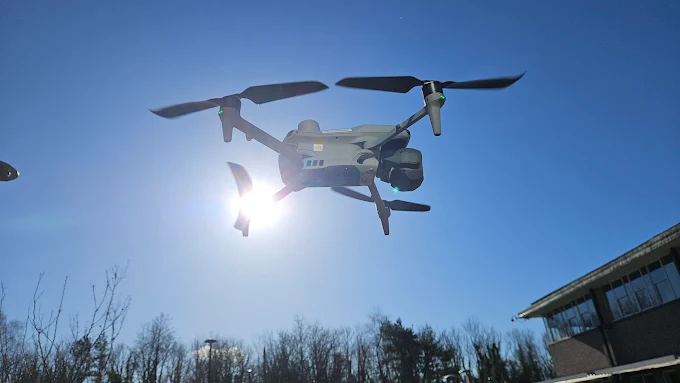
PDRA01 is the shortcut and will cover most standard commercial jobs
There are two routes to an Operational Authorisation, and the easier one is the PDRA01. PDRA stands for Pre-Defined Risk Assessment, and PDRA01 is currently the only PDRA published in the UK. The CAA has already done the risk assessment for you — you accept the pre-set conditions, submit an application, and fly inside those conditions.
PDRA01 authorises drones between 250 grams and 25 kilograms, within VLOS, at any UK location subject to airspace restrictions. It unlocks flying inside the residential, commercial, industrial and recreational areas that Open A3 keeps you out of. The typical uses are roof inspections, building photography, and site surveys.
Inside PDRA01 you must hold 50 metres of horizontal separation from uninvolved people, reduced to 30 metres during take-off and landing only. The same altitude ceiling of 120 metres applies. The drone must stay within 500 metres of the remote pilot. Articles must not be dropped, dangerous goods cannot be carried, and any overflight of assemblies of people is flatly prohibited.
PDRA01 at a glance
| Item | Detail |
|---|---|
| Drone weight | 250g to 25kg MTOM |
| Flight type | VLOS only |
| Altitude ceiling | 120 metres from the closest point of the surface of the earth |
| Maximum range from remote pilot | 500 metres |
| Cost | £524 per year, no VAT |
| Validity | 12 months |
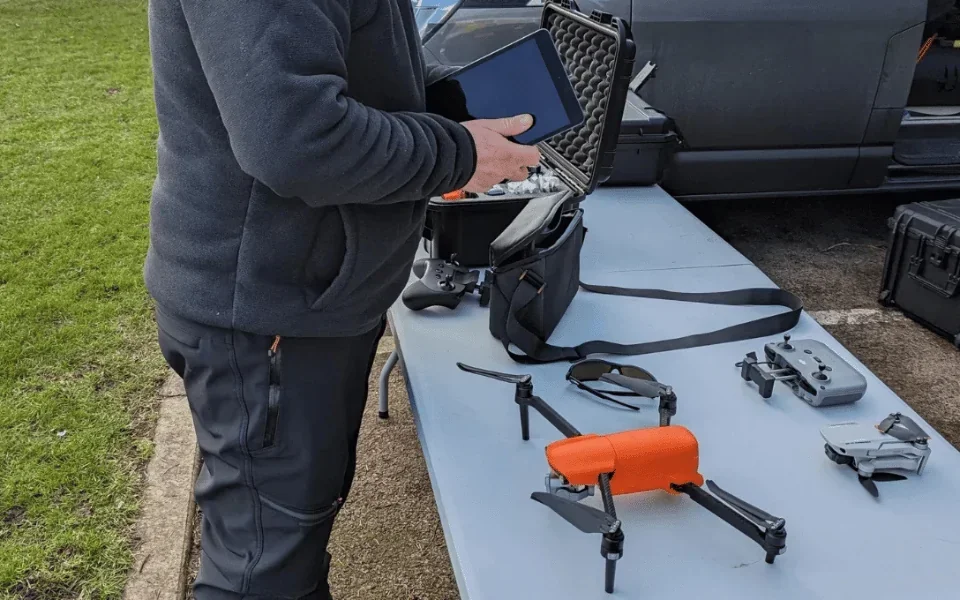
UK SORA is the full risk-assessment route and replaced the Operating Safety Case in April 2025
If your operation does not fit inside PDRA01, you need the other route — UK SORA, which stands for Specific Operations Risk Assessment. UK SORA replaced the older Operating Safety Case method on 23 April 2025, and from that date the OSC application service closed. Any existing OSC-based authorisation remains valid until its expiry date, but most holders will have moved to UK SORA for renewal by now.
UK SORA is the route for the operations that sit outside PDRA01's pre-defined envelope. That includes BVLOS, dropping items from the drone, flying close to crowds, flying close to people with drones weighing 500 grams or more, increased heights above ground level, swarm operations, and any flight above the 120-metre ceiling. It is also the route for drone operators who want authorisation at multiple locations, or across multiple drone models, under a single authorisation.
The application itself is considerably heavier than PDRA01. Applicants have to calculate a Specific Assurance and Integrity Level (SAIL) for the operation, define an operational volume, a ground risk buffer and an adjacent area, and set containment levels proportionate to the SAIL. Flightworthiness evidence is drawn either from the drone's own class mark or from an assessment by a Recognised Assessment Entity for Flightworthiness (RAE(F)).
Your Operational Authorisation that comes out the other end is bespoke — it lists the exact scope, conditions and limits the CAA is prepared to accept for that specific operation.
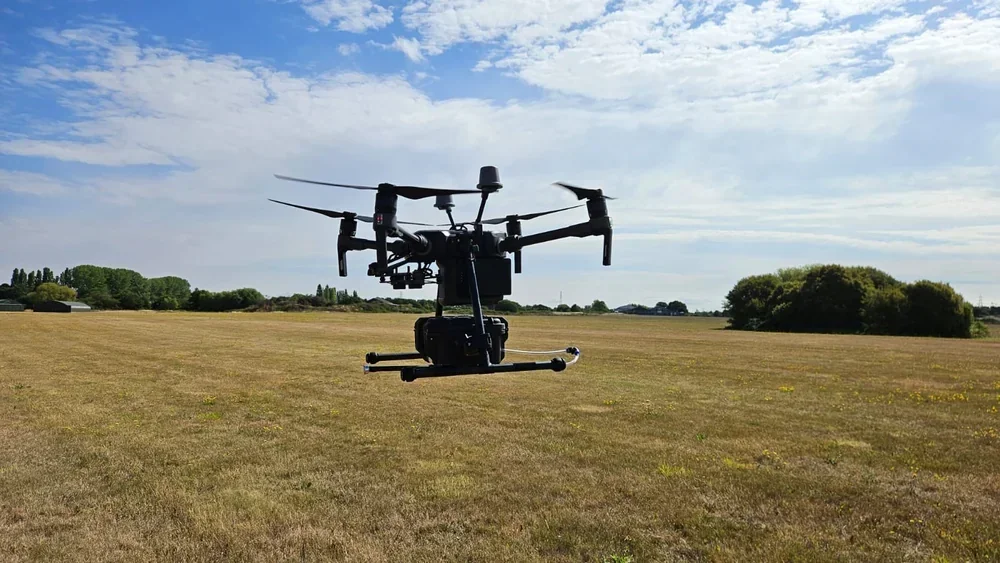
The qualification stack starts with GVC for VLOS and climbs through RPC-L2 and RPC-L3 for BVLOS
Specific Category has its own ladder of drone pilot qualifications, and the one you need depends on what kind of operation your authorisation covers.
For VLOS work under PDRA01, the remote pilot must hold a valid Flyer ID plus either an General Visual Line of Sight Certificate (GVC) or a Level 1 Remote Pilot Certificate (RPC-L1). The GVC is VLOS-only, has no minimum age, and is valid for five years. The RPC-L1 is the newer VLOS-only qualification, also valid for five years, and a valid GVC exempts a candidate from the RPC-L1 theory test.
For BVLOS work, the ladder continues. RPC-L2 is the intermediate BVLOS qualification — minimum age 18, requires a same-category RPC-L1 and at least 50 logged flight hours, covers BVLOS in ARC-a airspace (environments with no other air traffic), and is valid for three years. RPC-L3 is the advanced BVLOS qualification for more complex environments up to ARC-c, requires RPC-L2 plus at least 50 logged BVLOS hours plus a LAPL medical certificate, and is also valid for three years. Beyond that sits the RPC-L4 expert level.
One point that catches people out — GVC does not cover BVLOS. It is a VLOS-only certificate. Anyone telling you their GVC clears them to fly BVLOS is either misinformed or blending GVC with a separate Operational Authorisation that their company holds.
The Operational Authorisation has to be renewed every year and the reapplication window opens 28 days before expiry
PDRA01 is valid for 12 months. So is the majority of UK SORA-based Operational Authorisations — the exact validity can vary because UK SORA issues bespoke authorisations, but annual renewal is the baseline you should plan around.
You can reapply for PDRA01 from 28 days before the expiry date, and reapplying before expiry preserves the anniversary of your authorisation with no break in cover. If you let the authorisation lapse, you must not carry out Specific Category operations until you have reapplied and been issued a fresh one. The CAA aims to issue PDRA01 authorisations within 24 hours of application.
Alongside the annual fee, the standing duties continue year-round. The operator must maintain a current Operations Manual, the remote pilot must stay current and qualified, insurance must meet UK Regulation (EU) 785/2004 requirements, and records of every flight made under the authorisation must be kept and made available to the CAA on request. Any occurrence — accident, serious incident, or near miss — must be reported under UK Regulation (EU) 376/2014 and CAP 722 section 2.7.
You may be audited at any time, and failure to meet any condition can result in suspension or revocation of the authorisation.
Specific Category is the tier that does the real work in UK drone operations. It is where the residential roof inspection, the commercial site survey, the infrastructure BVLOS flight, and the close-to-people cinematography all live. PDRA01 is the common-case shortcut; UK SORA is the bespoke route for everything beyond. Either way, you are inside a regulated envelope with a remote pilot qualification, an Operations Manual, an insurance floor, and an annual renewal cycle.
If you are still mapping the wider framework, our UK drone laws guide stitches Open, Specific and Certified together end-to-end.
Got a specific scenario you want covered — a borderline Open-or-Specific case, a PDRA01 question, or a UK SORA application you are sizing up? Drop a note to peter@hiredronepilot.uk and I will come back to you directly. If you prefer the video version of this explainer, the comments are open on YouTube.
References
Primary source material for this article is the UK Civil Aviation Authority. External links open in a new tab.
- UK CAA — Specific Category Overview · definition of Specific Category and the two authorisation routes
- UK CAA — PDRA01 Operational Authorisation Overview · PDRA01 conditions, 250g–25kg, 500m range, £524 fee, 12-month validity
- UK CAA — Manage or Reapply for Your PDRA01 · 28-day reapplication window and authorisation anniversary rules
- UK CAA — UK SORA-based Operational Authorisations · UK SORA application lifecycle, SAIL and containment
- UK CAA — Moving from OSC to UK SORA · 23 April 2025 replacement date and transition arrangements
- UK CAA — Level 1, 2 and 3 Remote Pilot Certificates and GVC · GVC, RPC-L1, RPC-L2 and RPC-L3 entry conditions and validity periods
- UK CAA — UK Regulatory Framework for Drones · Air Navigation Order 2016, UK Regulations (EU) 2019/945 and 2019/947
Peter Leslie
Founder & GVC Drone Pilot
Peter is the founder of HireDronePilot. With thousands of logged commercial flight hours, he writes about drone technology, commercial surveying tactics, and UK aviation compliance.
Connect on LinkedIn