Best DJI Drone UK 2026: The Whole Ladder, and the Rung I’d Buy

Peter Leslie
31 July 2026 · 21 min read
Neo. Neo 2. Flip. Lito 1. Mini 4K. Mini 2 SE. Mini 3. Mini 4 Pro. Mini 5 Pro. Avata 2. Avata 360. Air 3S. Mavic 4 Pro. That is the DJI line-up a British buyer faces this morning, and the names are close to useless — two of them are the same airframe with a different video ceiling, three of them take the same photograph, and one of them you do not so much fly as throw off your palm and let get on with it.
It is a ladder. Every rung is real, and the rungs are not evenly spaced. Two questions decide which one you get off at, and neither of them is “which DJI is best”. The first is where the picture stops improving in a way you would actually notice, which happens much lower down than the price list implies. The second is whether the drone stays under 250 grams — the one line in the whole range that changes what you are legally allowed to do with it.
Which is why the best budget DJI drone in 2026 is not the cheapest DJI, and the best DJI drone in the UK in 2026 for most people is not the most expensive one. They are, as it happens, one rung apart.
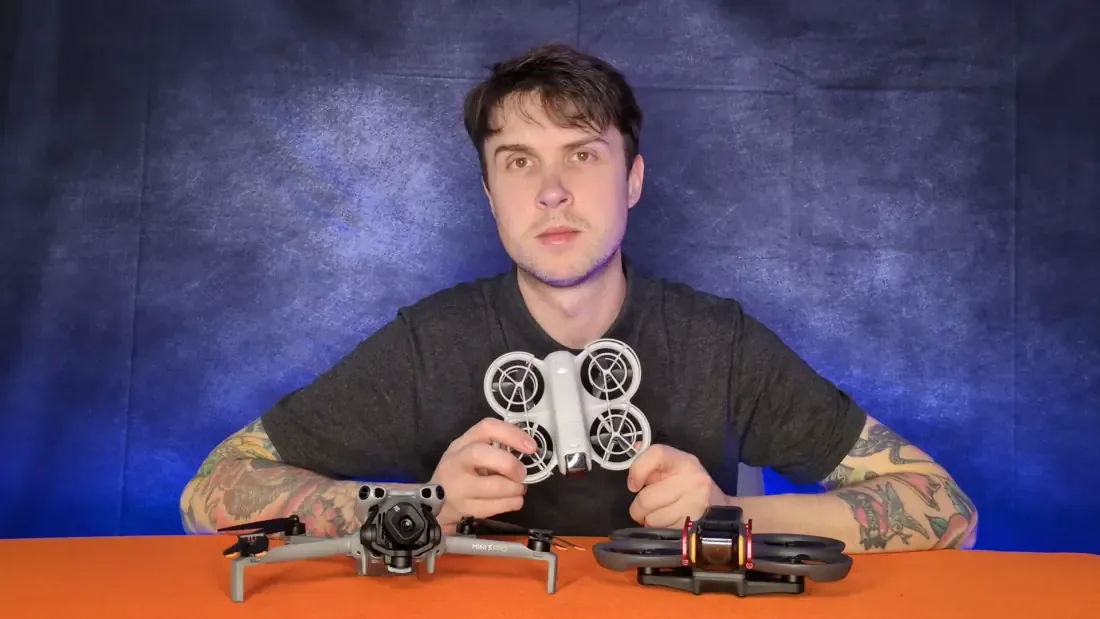
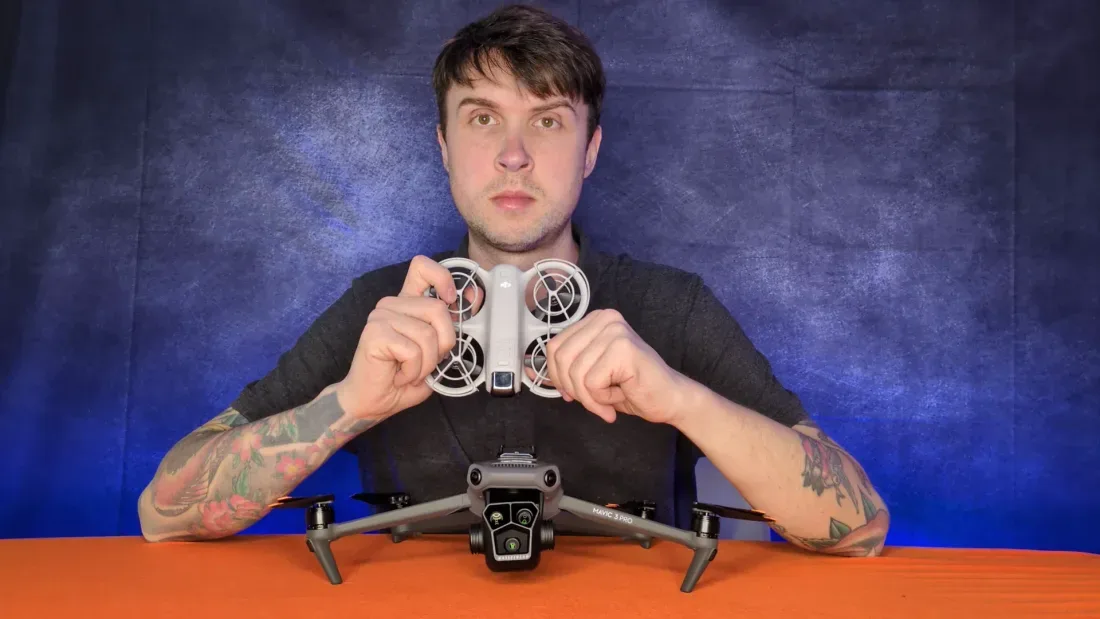
I have flown every drone on this page. Not held one at a trade stand — flown them, in British weather, off my own palm and off a landing pad, and put the footage through an edit afterwards. That is the only reason I am comfortable telling you that three of these thirteen models are, from where you are sitting, the same camera.
So this guide does three things. It asks four questions and narrows twelve drones down to the one that suits you. It then takes the ladder apart rung by rung, so the names stop being noise and start telling you what you are paying for. And it decodes the four DJI numbers that are not what they look like — starting with the flight time on every small drone in the range, which belongs to a battery most British buyers should not fit.
How I get paid: the Amazon links below are affiliate links, so if you buy through one I earn a small commission at no extra cost to you. It does not change what I recommend — my top pick is the sixth-cheapest of the twelve, one drone here has no buy link at all because I could not verify a UK listing for it, and the most expensive drone on the page is one I only recommend to people who are being paid to fly it.
The Best DJI Drone in 2026 Is the DJI Flip
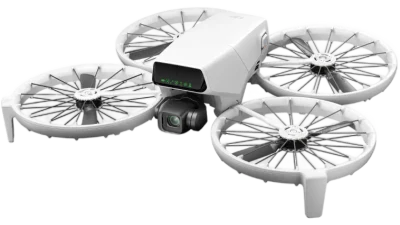
The DJI ladder is built so you keep climbing. The Flip is the rung where it stops handing you things you will notice.
- Exactly the same camera hardware as the Mini 4 Pro two rungs up — a 1/1.3-inch sensor, 48 megapixels, f/1.7, 24 mm equivalent.
- Under 250 grams, so there is no licence to get — the whole legal conversation is a free test and the £12.34 registration you do online.
- Propeller cages built into the airframe, and it takes off from your palm. It is the DJI I hand to people who have never flown.
- Forward sensing only. It sees what is ahead of it and nothing to the sides or behind, and there is no tracking that works in every direction. That is the honest price of the rung.
Affiliate link · costs you nothing extra · full disclosure
PART ONE
Here are the five that win their categories outright — and what is wrong with each of them, because there is always something and the spec sheet will never tell you what.
Best Budget DJI Drone: DJI Neo 2
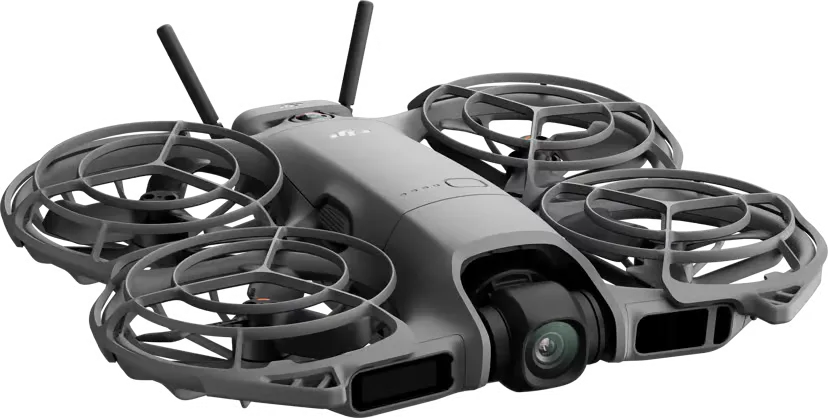
The cheapest DJI I would actually own, and the one with the most surprising hardware in the whole range.
- Obstacle sensing in every direction plus a forward LiDAR, at the second rung from the bottom.
- Palm takeoff and landing, so there is no controller to learn on day one.
- Twelve megapixels on a 1/2-inch sensor and 19 minutes a battery. The camera is the compromise.
Best DJI Drone for the Camera: DJI Mini 5 Pro
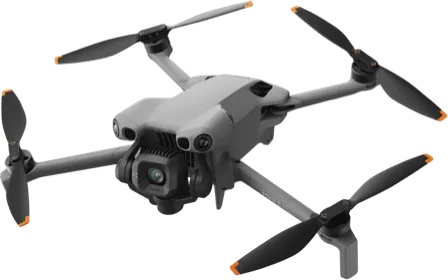
A one-inch sensor at 249.9 grams — the only rung above the Flip that changes the pictures rather than the flying.
- Roughly 1.7 times the light-gathering area of every drone below it in the range.
- No licence needed — it is built to sit just inside the 250-gram line.
- Do not fit the Plus battery: DJI states it pushes the C0 drone past its weight threshold.
Best DJI Drone for Flying Through Goggles: DJI Avata 2
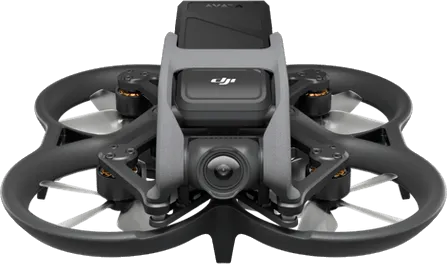
The side branch of the family, and the most fun I have had with a DJI product by a distance.
- Cages round every propeller, so it survives the contact that FPV flying inevitably involves.
- UK rules require a second person stood beside you on every single flight.
- From January 2028 it needs the A2 Certificate of Competence to fly near people.
Best DJI Drone Above the 250-Gram Line: DJI Air 3S
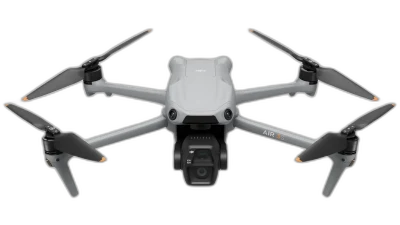
The first rung above the line, and the only drone here that crosses it for the pictures rather than for the paid work.
- Two cameras — a one-inch wide and a medium telephoto — so you can change the framing without moving the drone. No Mini can do that.
- Forty-five minutes a battery, and it sits still in wind in a way a 249-gram drone physically cannot.
- At 724 grams you cross the line the rest of the range is designed around. That is the whole decision.
- From 1 January 2028 it loses its C1 privileges and needs the A2 Certificate of Competence to fly near people.
Best DJI Drone If You Do This for a Living: DJI Mavic 4 Pro
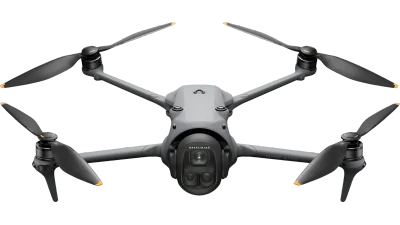
The top of the ladder, and the only rung that changes what a client can reasonably ask you for.
- A Four Thirds, 100-megapixel main camera and two more lenses beside it.
- Fifty-one minutes a battery, which is what turns a site visit into one flight instead of three.
- It needs the A2 Certificate of Competence before you can fly it near people. Buy the exam first.
Affiliate links · costs you nothing extra · full disclosure
Take the quiz: which DJI drone should you buy?
Four questions, and the DJI range stops being thirteen names you cannot tell apart.
- Twelve DJI drones, every one of which I have flown myself.
- Tells you which rung you are on, and what the next one up would actually add.
- Says out loud when a model is being retired, and when the paperwork changes.
- About 20 seconds, and no email needed.
STEP 1 OF 4
12 of 12 still fit
The whole ladder, cheapest rung first
-
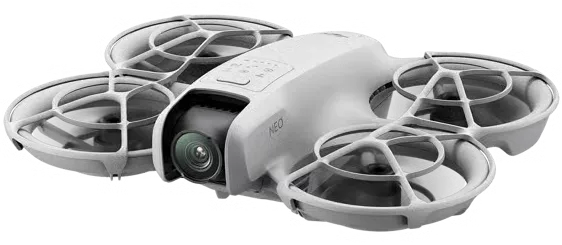
DJI Neo
135 g · C0 · 1/2″ 12MP · 18 min · no controller in the box
The bottom rung, and still a proper DJI rather than a toy. It launches off your palm, every propeller sits inside a cage, and it is the only drone here I would not mind crashing.
- No test and no licence beyond the £12.34 registration — at 135 g it is nowhere near the 250-gram line.
- There is no remote controller in this box. You fly it off your palm, from your phone, or you buy a controller separately.
- Rated to 8 m/s of wind, which is Level 4 — the weakest here. Everything else on this page manages 10.7 m/s or better.
-
DJI Neo 2
151 g · C0 · 1/2″ 12MP · 19 min · palm takeoff
The strangest bargain DJI sells. It has obstacle sensing that looks in every direction plus a forward-facing LiDAR — hardware the drone two rungs above it does not have — wrapped around an ordinary camera.
- No test and no licence beyond the £12.34 registration — it weighs 151 g, or 160 g with the optional radio transceiver fitted.
- Obstacle sensing in every direction plus a forward LiDAR, which nothing else near this rung has at all.
- Twelve megapixels on a 1/2-inch sensor, and 19 minutes a battery. Brilliant object, ordinary pictures.
-
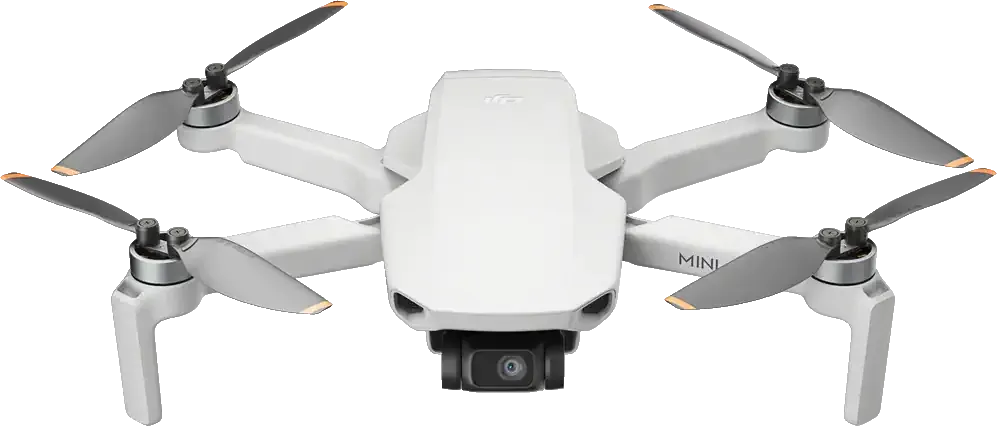
DJI Mini 4K retired — replaced by the Lito 1
246 g · C0 · 1/2.3″ 12MP · 31 min · older O2 radio
The cheapest way into a proper folding DJI with a three-axis stabilised camera and a real long-range controller. DJI UK has stopped selling it, and its replacement is better in every way that matters.
- No test and no licence beyond the £12.34 registration — at 246 g it is under the 250-gram line.
- A three-axis stabilised camera and a proper 10 km-class controller, at the bottom of the folding range.
- DJI UK no longer sells it, and the DJI Lito 1 that replaced it has a bigger sensor, a newer radio and obstacle sensing.
-
DJI Mini 2 SE no buy link — no UK listing I could verify
246 g · C0 · 1/2.3″ 12MP · 31 min · 2.7K video, not 4K
Here because DJI UK still lists it, and to make a point. It is the same airframe as the Mini 4K with a lower video ceiling, it costs more, and I could not find a single Amazon UK listing for the drone itself.
no link- No test and no licence beyond the £12.34 registration — at 246 g it is under the 250-gram line.
- It shoots 2.7K, not 4K. The otherwise identical Mini 4K does shoot 4K and costs less.
- I could not verify an Amazon UK listing for the drone itself, so I have given it no buy link.
-
DJI Lito 1 new name, replaces the Mini 4K
249 g · C0 · 1/2″ 48MP · 36 min · obstacle sensing
A brand new rung, and the most confusing name in the range — DJI’s own listing calls it the updated version of the Mini 4K. Longer in the air than anything else this cheap, and it finally gives the entry level obstacle sensing.
- No test and no licence beyond the £12.34 registration — DJI quotes a 249 g standard take-off weight.
- Thirty-six minutes a battery, which is longer than the flagship Mini manages.
- The bigger battery DJI advertises with it is not supported on this drone in the EU or the UK, so 36 minutes is the number you get.
-
DJI Flip
<249 g · C0 · 1/1.3″ 48MP · 31 min · propeller cages
The rung where the camera stops improving. It carries exactly the sensor and lens of the Mini 4 Pro two rungs up, inside a caged body that takes off from your hand. This is the DJI I would buy and it is not close.
- No test and no licence beyond the £12.34 registration — DJI quotes it at under 249 g.
- A 1/1.3-inch, 48-megapixel sensor at f/1.7 — the identical camera specification to the Mini 4 Pro two rungs above.
- Propeller cages built in, palm takeoff, and 4K at up to 100 frames a second.
-
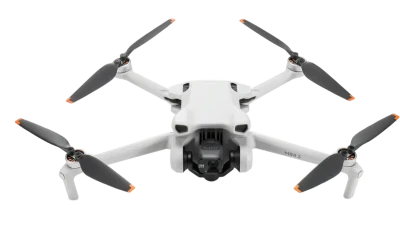
DJI Mini 3 last of the old Mini line
248 g · C0 · 1/1.3″ 48MP · 38 min · downward sensing only
Thirty-eight minutes a battery, longer than any other drone on this page at any price. Everything it gave up to reach that number is on the radio and the sensing, and both of those are a generation behind now.
- No test and no licence beyond the £12.34 registration — DJI quotes 248 g.
- Thirty-eight minutes a battery, the longest flight time on this page at any price.
- Downward obstacle sensing only, and DJI’s older O2 radio — 6 km under European rules against 8 km for the Flip.
-
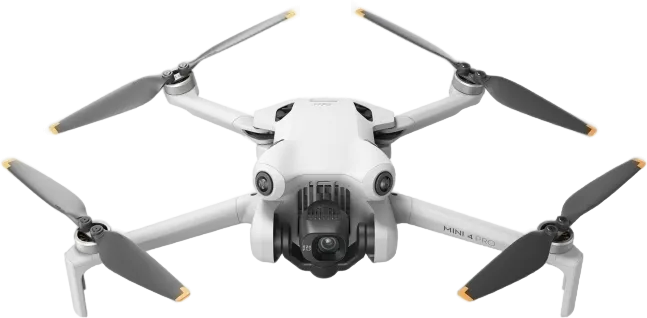
DJI Mini 4 Pro
<249 g · C0 · 1/1.3″ 48MP · 34 min · sensing in every direction
The safety rung. Its camera is the same as the Flip’s, and what the extra money buys is a pair of cameras looking in every direction that will genuinely stop the drone before it hits a branch you never saw.
- No test and no licence beyond the £12.34 registration — DJI quotes it at under 249 g.
- Binocular obstacle sensing in every direction, which is the real reason to want this rung.
- The same 1/1.3-inch, 48-megapixel camera as the DJI Flip. You are not buying a better picture.
-
DJI Mini 5 Pro
249.9 g · C0/C1 · 1″ 50MP · 36 min · forward LiDAR
The top of the small range, and the only rung above the Flip that changes the picture rather than the flying. A one-inch sensor at 249.9 grams is a thing that simply did not exist a few years ago.
- No test and no licence beyond the £12.34 registration — DJI quotes 249.9 g, give or take 4 g.
- A one-inch, 50-megapixel sensor. Nothing else under 250 grams has one, and it is the biggest single jump in the range.
- Rated to 12 m/s of wind, the highest of any small DJI. Do not fit the Plus battery: DJI says it takes the drone past the C0 weight threshold.
-
DJI Avata 2 not a rung — a side branch
377 g · C1 · 1/1.3″ 12MP · 23 min · observer required
The only drone here that makes you laugh out loud. You fly it by looking through goggles, which is a completely different hobby, and the law treats it as one too — you need a second person stood beside you every single flight.
- UK rules require an observer stood next to you, able to see the drone directly, whenever you fly through goggles.
- From 1 January 2028 it loses its C1 privileges and needs the A2 Certificate of Competence to fly near people.
- The bare drone is sold without goggles or a controller and cannot fly without them, so the cheapest real configuration is a combo.
-
DJI Air 3S
724 g · C1 · 1″ 50MP + tele · 45 min · A2 test from 2028
The first rung where you give up the 250-gram line on purpose, and you get two cameras for it — a one-inch wide and a proper medium telephoto, which is a framing choice no Mini can offer.
- Two cameras — a one-inch wide and a 1/1.3-inch medium telephoto — so you can change the framing without moving the drone.
- From 1 January 2028 it loses its C1 privileges and needs the A2 Certificate of Competence to fly near people.
- Rated to 12 m/s of wind, and it feels far more planted than anything under 250 grams.
-
DJI Mavic 4 Pro
1,063 g · C2 · 4/3″ 100MP · 51 min · A2 test needed now
The top of the ladder, and the only drone here that changes what you can be paid to do. Three cameras, a Four Thirds main sensor, and a qualification you have to sit before you can fly it near anybody.
- A Four Thirds, 100-megapixel main camera plus two more lenses. This is the only genuine picture jump above the one-inch rung.
- It needs an A2 Certificate of Competence — a paid theory exam with a CAA-approved provider — before you can fly it near people.
- Fifty-one minutes a battery and a 12 m/s wind rating, which is what a working day actually needs.
The ladder runs cheapest rung first, and every buy link goes to the exact configuration described in the row — no drone-only listing standing in for a bundle you would actually have to buy. The DJI Mini 2 SE has no link because I could not find an Amazon UK listing for the drone itself. Prices move constantly, so I do not print them here; the link will show you today’s. Specifications are from DJI’s own UK specification pages, checked 31 July 2026, and the rules from the UK Civil Aviation Authority.
PART TWO
DJI’s product ladder, decoded
DJI does not sell you thirteen drones. It sells you a staircase with six landings, and it has arranged the names so that you cannot see which landing you are standing on. Once you can, the whole range collapses into about four real decisions.
Here is the ladder, bottom to top, and what each rung actually buys.
THE SIX RUNGS
-
1
Neo — the one that flies off your hand
Neo, Neo 2. Small, caged, no controller needed. Buys you: a drone that films you, with almost no learning curve. Stops at: a 1/2-inch sensor and under 20 minutes in the air.
-
2
Lito — the folding entry level, freshly renamed
Lito 1, and the Mini 4K and Mini 2 SE it replaces. Buys you: a proper folding drone, a three-axis stabilised camera and a long-range controller. Stops at: a small sensor and basic sensing.
-
3
Flip — where the camera stops improving
Flip. Buys you: the 1/1.3-inch, 48-megapixel camera that DJI also fits to drones at more than twice the price, plus propeller cages. Stops at: forward-only sensing.
-
4
Mini — where the drone starts flying itself
Mini 3, Mini 4 Pro, Mini 5 Pro. Buys you: sensing in every direction, tracking that holds a subject, and at the top of the rung a one-inch sensor. Stops at: 250 grams, deliberately.
-
5
Air — where you give up the 250-gram line
Air 3S. Buys you: a second camera with a longer lens, a much more planted feel in wind, and 45 minutes a battery. Costs you: the simplest version of the rules, from 2028.
-
6
Mavic — where it becomes a job
Mavic 4 Pro, and the Mavic 3 Pro it replaced. Buys you: a Four Thirds sensor, three lenses and 51 minutes. Costs you: a paid exam before you can fly it near anybody.
The Avata drones sit off to one side rather than on the ladder at all. They are covered below.
Rungs 1 and 2: the drones that film you
The Neo and Neo 2 are not really camera drones and they are not pretending to be. You hold one flat on your palm, press a button, and it lifts off, flies a pre-set move around you and lands back in your hand. There is no controller in the cheapest Neo box at all. In my hands the Neo 2 is the more likeable of the two by a wide margin — it holds a subject far better and it is rated to 10.7 m/s of wind against the original Neo’s 8 m/s, which in Britain is the difference between flying and not.
The genuinely odd thing about the Neo 2 is its sensing. It has obstacle detection looking in every direction plus a forward-facing LiDAR — a laser rangefinder that measures distance directly. That is more sensing hardware than the DJI Flip a rung above it, and it tells you something about where DJI is putting its engineering effort now. If following a subject is the whole point for you, the same logic runs through my guide to the best follow-me drones.
Rung two is where the names have just changed under everybody’s feet. For two years the entry-level folding DJI was the Mini 4K, with the Mini 2 SE beside it as a cheaper, lower-resolution version. Both share one airframe and one specification page on DJI’s own site: 246 grams, a 1/2.3-inch 12-megapixel camera, 31 minutes, the older O2 radio. The Mini 4K shoots 4K; the Mini 2 SE tops out at 2.7K and, absurdly, costs more at DJI UK.
Both have now been superseded by the DJI Lito 1, whose own Amazon listing describes it as the “updated version of Mini 4K”. It is a better drone at almost the same money: a 1/2-inch, 48-megapixel sensor rather than a 1/2.3-inch 12-megapixel one, the newer O4 radio, obstacle sensing, and 36 minutes a battery. If you are shopping at the bottom of the range, that is the one to look at.
Rung 3: the DJI Flip, and the point everyone climbs straight past
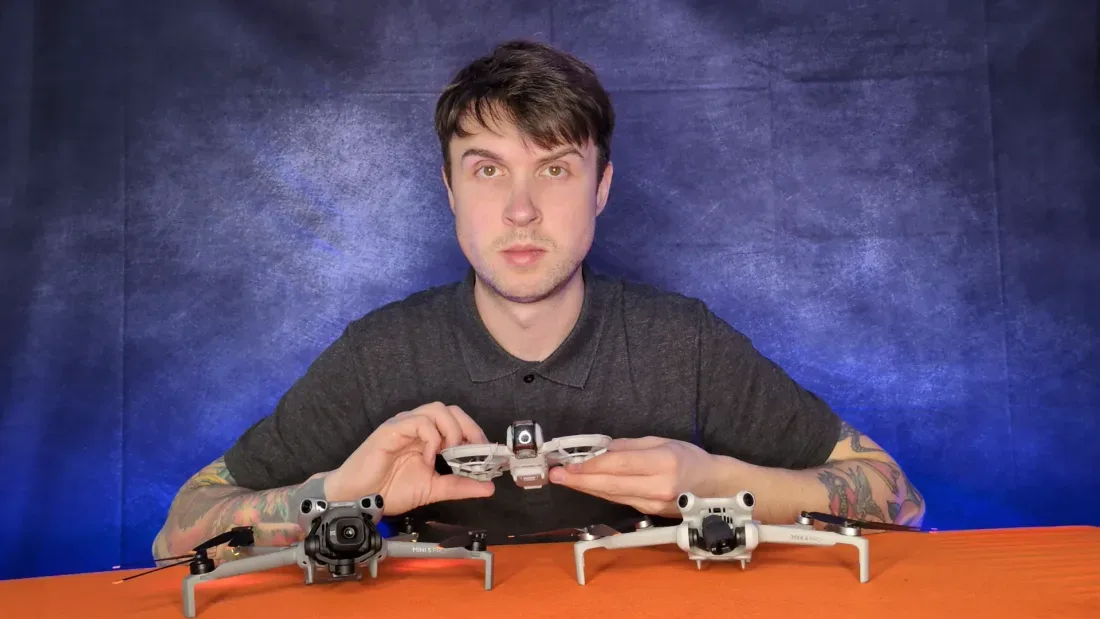
This is the most useful fact in the guide, so I am going to state it plainly. The DJI Flip and the DJI Mini 4 Pro have the same camera. Not a similar one — the same specification, item for item, on DJI’s own pages: a 1/1.3-inch sensor, 48 megapixels, an f/1.7 aperture and a 24 mm equivalent lens. The DJI Mini 3 has it too.
So three drones take, in decent light, materially the same photograph — and the dearest of the three costs more than twice what the cheapest does. Everything you pay above the Flip inside that group buys sensing, radio range and flight time. Those are real things. They are not pictures.
What the Flip adds at its own rung is a cage. The propellers are enclosed by the airframe rather than sticking out of it, which is why it is the DJI I put in the hands of people who have never flown one. The first flight of any drone ends with a landing you did not quite plan, and a caged drone survives that.
The word “Pro” means nothing here. It does not indicate a bigger sensor, a class mark, or a qualification. The Mini 4 Pro and the Mini 3 share a sensor; the Mini 5 Pro has a much larger one. “Pro” is DJI’s word for “the better one in this generation” and nothing more. Judge the sensor size, not the suffix.
Rung 4: the Minis, and the only real camera jump under 250 grams
The Mini rung is where the drone starts doing the flying. Binocular obstacle sensing — pairs of cameras working out distance the way your two eyes do — arrives on the Mini 4 Pro, and it is the single most valuable safety feature on any small drone. It is also the honest reason to spend past the Flip if you do not care about picture quality.
The Mini 5 Pro is the top of this rung and the only drone in the small range with a genuinely different camera: a one-inch sensor with 50 megapixels, which gathers roughly 1.7 times the light of the 1/1.3-inch sensor everything below it uses. It manages that at 249.9 grams, which is a piece of engineering I still find slightly ridiculous. It is also rated to 12 m/s of wind, the highest of any small DJI, and it adds a forward-facing LiDAR on top of the binocular sensing. I have written about that drone on its own in my DJI Mini 5 Pro review, and compared it directly with the rung below in Mini 5 Pro versus Mini 4 Pro.
The Mini 3 is the odd one out and deserves a sentence of its own. It flies for 38 minutes on its standard battery, which is longer than anything else on this page at any price — longer than the flagship of the small range. What it gives up for that is the older O2 radio and sensing that only looks downwards. It is a fine drone in an open field and a poor one anywhere near trees.
Rungs 5 and 6: what you buy when you stop caring about 250 grams
Everything below this point in the range is designed around one number. The Air 3S and the Mavic 4 Pro are what DJI builds when it stops.
The Air 3S is 724 grams and carries two cameras: a one-inch wide and a 1/1.3-inch medium telephoto. That second lens is the point. It lets you change how compressed a landscape looks without flying the drone somewhere else, which no drone under 250 grams can do. It also flies for 45 minutes and holds position in wind in a way that a 249-gram drone physically cannot.
The Mavic 4 Pro is 1,063 grams, has a Four Thirds 100-megapixel main camera and two more lenses beside it, and flies for 51 minutes. It is the drone I reach for on paid aerial photography work where a client is going to look at the files at full size. It also carries a C2 class mark, which changes the rules in a way I will explain in a moment, and that is not a detail you can leave until after the parcel arrives.
And the Avatas, which are not on the ladder at all
The Avata 2 and the Avata 360 are a different hobby that happens to share a manufacturer. You fly them by looking through goggles, from the drone’s point of view, and the sensation is genuinely nothing like flying a Mini. The Avata 2 is 377 grams with a 1/1.3-inch 12-megapixel camera and about 23 minutes in the air; the Avata 360 adds two square sensors that record in every direction at once so you choose the framing after you land.
Two things follow from that, and both are legal rather than technical. Goggles are not direct sight, so a second person has to be stood next to you every time you fly. And the bare drone is sold without goggles or a controller, which means the advertised price is not a price you can fly for. If this is the branch you want, the whole of it is in my guide to the best FPV drones in the UK.
Which rungs are quietly being taken away
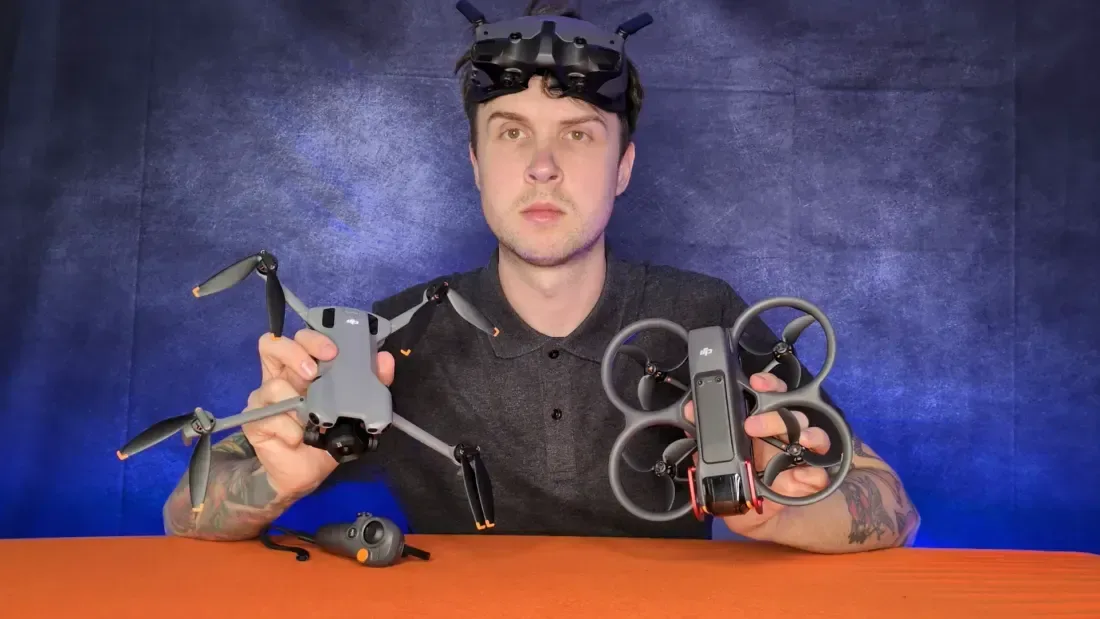
Three models in this guide are on their way out, and none of them says so on the box.
The Mini 4K is no longer for sale on the DJI UK store — the listing exists, the buy button does not — and the Lito 1 has replaced it. The Mini 2 SE is still listed and still purchasable at DJI UK, but there is no Amazon UK listing for the drone itself, only cases and spare propellers, which is usually what a product looks like on its way off the shelf. And the Mavic 3 Pro, which is not in the list above for exactly this reason, is out of stock in every single configuration at DJI UK — from the bare drone right up to the Cine Premium Combo, which is more than twice the money. The Mavic 4 Pro is what you buy instead.
Buying a retired model is not automatically a mistake. It is a mistake to do it without knowing, because a discontinued drone means shrinking accessory stock, no more firmware features, and a price set by whatever a shop has left rather than by DJI.
The paperwork, in plain English
If you have never owned a drone, this is the part nobody mentions until after you have paid. There is no such thing as a drone licence for normal flying. There is registration, and for eleven of the twelve drones above it costs £12.34 a year and nothing else.
Two registrations, one of which costs money
A Flyer ID is a free online theory test that proves you know the basic rules. It takes about half an hour, it lasts five years, and you renew it by sitting the test again. An Operator ID registers you as the person responsible for the drone. It costs £12.34 a year, has to be written on a label stuck to the drone, and one ID covers every drone you own. You must be 18 or over to hold one, so if the drone is for a child, a parent registers as the operator.
Every drone in this guide has a camera and weighs more than 100 grams, so both are required. There is no DJI you can buy that skips this. The full detail is in my guide to UK drone laws.
The 250-gram line, and why so much of the range sits just under it
Look back at the weights in the list: 246 g, 248 g, 249 g, under 249 g, 249.9 g. That is not coincidence, it is the entire design brief for two thirds of DJI’s range.
Under 250 grams, a drone flies in the Over People (A1) sub-category and there is nothing else to arrange. Over it you are into class marks, sub-categories and, for most interesting drones, an A2 Certificate of Competence — a theory test of at least thirty multiple-choice questions, sat with a CAA-approved assessment centre, valid five years, at a price each provider sets for itself. The category itself I have covered separately in my guide to the best sub-250g drones.
A class mark is a label on the drone declaring which European standard it was built to: C0, C1, C2 and so on. C0 and C1 fly in Over People (A1). C2 flies in Near People (A2) if you hold an A2 Certificate, and Far from People (A3) — 150 metres from any residential, commercial, industrial or recreational area — if you do not.
The part the shops leave out. If you buy under 250 grams, an A2 Certificate buys you nothing — you already have better privileges than it grants. It only starts to matter once you have decided you want a heavier drone. Decide the weight first, then the paperwork. Never the other way round.
Where this bites in the DJI range
The Mavic 4 Pro is the only drone in the list that needs a qualification today. At 1,063 grams with a C2 class mark, flying it near people means holding an A2 Certificate first. Without one you are restricted to 150 metres from anything built up, which in most of Britain means driving to a field. Budget for the exam at the same time as the drone, not afterwards.
The Avata 2 and the Air 3S change on 1 January 2028. Until 31 December 2027 a drone carrying a European C class mark can be flown as though it held the equivalent UK class. From 1 January 2028 that stops and it falls back to plain weight rules. For everything under 250 grams here, nothing changes at all. For the Avata 2 at 377 grams and the Air 3S at 724 grams, both C1, it means an A2 Certificate will be needed to fly them near people. If you are choosing between rungs and expect to keep the drone for years, that date is worth putting in the decision.
Flying through goggles needs a second person, always. The CAA requires an observer stood next to you who you can talk to continuously, and at least one of you must keep the drone in direct sight with a full view of the surrounding sky. Goggles and phone screens do not count as direct sight. The observer needs no qualification of their own, but you do have to bring one.
PART THREE
Four DJI numbers that are not what they look like
DJI does not lie in its specifications. It does something subtler and more effective: it quotes the best number the hardware can reach, in a footnote you have to go looking for. Four of those numbers will change what you buy.
1. The flight time on every Mini belongs to a battery you should not fit
This is the big one, and it is now true of four separate drones in the range. DJI sells a larger “Plus” battery for several of its small models, and the headline endurance in the marketing is the Plus figure, not the figure for the battery that comes in the box.
On the DJI Mini 5 Pro the Plus battery takes it from 36 minutes to 52. DJI’s own specification page then says, in as many words, that fitting the Plus battery to the C0-certified drone means it “exceeds the C0/UK0 MTOM threshold and can no longer be operated as a C0/UK0” drone. In plain English: the extra 16 minutes costs you the class mark you bought the drone for.
The other three are simpler and worse. On the Mini 4 Pro the Plus battery would give 45 minutes, and DJI states it is not sold in Europe. On the Mini 3 it would give 51 minutes, and DJI states it is sold only in selected countries and regions. On the brand-new Lito 1 it would give 52 minutes, and DJI states it is not supported in the EU or the UK.
THE ADVERTISED MINUTES VERSUS THE MINUTES YOU GET
| DRONE | HEADLINE | IN THE BOX | WHY |
|---|---|---|---|
| DJI Mini 5 Pro | 52 | 36 | Plus battery takes it past the C0 weight threshold |
| DJI Lito 1 | 52 | 36 | Plus battery not supported in the EU or the UK |
| DJI Mini 3 | 51 | 38 | Plus battery sold only in selected countries and regions |
| DJI Mini 4 Pro | 45 | 34 | Plus battery not sold in Europe |
All eight figures and all four caveats come from DJI’s own UK specification pages, checked 31 July 2026. Minutes are wind-tunnel figures at a constant speed; on a real British afternoon expect meaningfully less.
The practical upshot is short. Plan around 36, 36, 38 and 34 minutes. Then plan around less than that, because those are laboratory numbers. And if you want more time in the air, buy a second battery rather than a bigger one — it is cheaper, it does not touch your class mark, and swapping takes ten seconds.
2. “Fly More Combo” does not mean what you think, and sometimes there is no controller
DJI names its bundles in a way that would embarrass a mobile phone contract. The same two words attach to boxes that differ by hundreds of pounds, and on two drones in this guide the cheapest box will not fly at all on its own.
The DJI Neo’s cheapest configuration is called “No RC”, because there is no remote controller in it. You fly it off your palm or from your phone, which is genuinely fine until you want the drone to go somewhere specific. The Avata 2 is worse: the bare drone is sold on its own, it needs goggles and a motion controller to fly, and neither is in the box. So the advertised price of an Avata is never the price of a flying Avata — you are looking at a combo or you are looking at an ornament.
The rule I use: ignore the bundle name entirely and read the parenthesis. “(DJI RC-N3)” and “(DJI RC 2)” are the two controllers, and the second one has a screen, which is why it costs more. “Drone Only” means exactly that.
3. The transmission range is a number you will never legally use
DJI quotes video transmission distances of 10, 13, 15 or 20 kilometres. Those are American or Canadian regulatory figures. Under the European rules our transmitters follow, the same drones are rated at 6, 8 and 10 km. And it does not matter anyway, because UK law requires you to keep the drone in direct sight, which in practice is a few hundred metres.
What the radio generation actually buys you is a picture that does not stutter when there is a block of flats and forty Wi-Fi networks between you and the drone. DJI is unusually honest about this in its own small print: for the Flip, in strong urban interference, it quotes roughly 1 to 2.5 km. That is the number that matters. If range genuinely is your interest, I have taken it apart properly in my guide to long-range drones and what VLOS really allows.
4. “Under 249 g” is a designed number, not a measured one
DJI quotes the Mini 5 Pro at 249.9 grams and then adds, in the footnote, “give or take 4 grams”. The Flip and the Mini 4 Pro are quoted only as “under 249 g”. The Lito 1 is quoted twice: 249 grams as standard, and 340 grams with the propeller guards and a memory card fitted.
This is not DJI being shifty; it is a manufacturing tolerance being stated honestly. But it does mean two things for you. Do not add anything to a drone that is designed to land on 249 grams — guards, mounts, strobes, a heavier battery — without checking what it does to the weight. And when the box arrives, look for the physical class label on the airframe. That label, not the listing, is what decides how you are allowed to fly.
PART FOUR
Which rung to get off at
A ladder is designed to be climbed. Every rung of this one is built so that the next one up looks like a small step, and the whole thing works: people who set out to buy the cheapest folding DJI routinely arrive at the flagship of the small range — nearly three times the money — having agreed with every individual increment along the way.
So here is how I would decide where to stop, in the order the decisions actually matter.
First: are you buying a drone or a camera?
If you are buying a drone — something to fly, to follow you down a beach, to hand to a friend without flinching — then get off at rung one. The DJI Neo 2 has sensing hardware that has no business being that far down the ladder, and a camera that is exactly as good as it needs to be for the group chat.
If you are buying a camera that happens to fly, then the only two numbers that matter are the sensor size and the 250-gram line, and they point at two drones.
The rung I’d buy
The DJI Flip, rung three. That is the rung I’d buy with my own money, and I would not spend long deciding.
It has the camera that DJI also fits to a drone at more than twice the price, and no amount of money spent inside the small range gets you a better picture until you reach the Mini 5 Pro. It stays under 250 grams, so the entire regulatory conversation is a free test and a £12.34 registration. It has cages round the propellers, which is the single most useful feature on a first drone and something almost nothing else in the range offers. And it leaves enough money over to buy the second battery, the filters and the card that turn a drone into something you actually take out.
What year one actually costs
A drone on its own is not a usable object. One battery is one flight, most of these ship without a memory card, and the registration is not optional. So the figure that decides whether you can afford a rung is not the one on the listing — it is what you have spent by the time the drone has turned into something you take out of the house rather than something you keep meaning to.
Exactly one item on that list is a number I can print, because it is a government fee rather than a product: the Operator ID, at £12.34 a year, identical whichever DJI you buy. The rest are purchases, they all move, and every one of them scales with the rung you got off at. Here is the shape of the bill, in the order it arrives.
WHAT YEAR ONE ADDS TO THE DRONE
-
Registration — £12.34 a year, and the same on every rung
The Operator ID, paid to the CAA and renewed annually. The Flyer ID theory test that goes with it is free and lasts five years. This is the only line here that does not change with the drone, and the only one you cannot skip.
-
A spare battery — the one accessory I would call compulsory
One battery is one flight, and on these drones that is between nineteen and thirty-eight minutes before you are standing in a field with an ornament. DJI prices its packs by the size of the drone, so this lands somewhere between a tenth and a quarter of what the drone itself cost, wherever you got off the ladder.
-
A memory card — the cheapest line, and the one everybody forgets
A 256 GB V30 card is the smallest item on the list and the reason a lot of first flights do not happen. Only the Neo and Neo 2 have usable internal storage, and even there you will want the card.
-
ND filters — only if you are shooting video, and only on some rungs
They cost less than a spare battery and they are what stops moving footage looking stuttery in bright light. DJI sells a set for the Flip and for the Mini 5 Pro. It does not sell one for the Neo 2 at all, which tells you what that rung is for.
-
An allowance for the first crash — smaller than you fear, on the right drone
On an uncaged drone the first bad landing usually means a set of propellers, and occasionally a gimbal, which is the expensive one. On the Flip and the Neos the cage takes the hit and very often the answer is nothing at all. That is a real part of the first-year figure, and it is the argument for a caged drone that nobody puts in a spec table.
Add those up and the proportion is what surprises people, not the total. Expect the first year to run somewhere between a fifth and a good half again on top of whatever the drone cost — and note that the proportion is worst at the cheap end, because a card and a battery weigh far more heavily against an entry-level drone than against a flagship. The Flip is the clearest case: by the time it is genuinely usable it has cost about half as much again as the listing said it would. Budget for that before you pick the rung, not after.
The one rung worth climbing to
The DJI Mini 5 Pro, rung four. It is the only drone in the small range with a genuinely different camera, and a one-inch sensor under 250 grams did not exist at any price a few years ago. If pictures are the reason you are buying, save up and skip straight to it — the paperwork does not change, the flying does not get harder, and you miss out a rung you would otherwise resent.
What I would not do is stop at the Mini 4 Pro on the way. It is a good drone and its sensing is the best safety feature in the range, but stepping up to it from the Flip costs you more than the Flip did in the first place and buys no change in picture quality whatsoever. Buy it for the sensing or do not buy it.
And the rung I’d actively tell you to skip
The DJI Mini 2 SE. DJI UK still sells it, and the otherwise identical Mini 4K — same airframe, same weight, same sensor, same 31 minutes — shoots 4K where the Mini 2 SE tops out at 2.7K, and costs less. On top of that I could not find an Amazon UK listing for the Mini 2 SE at all, only cases and propellers, which is why it is the one drone on this page with no buy link. There is no version of this decision where it is the right answer.
If what you actually needed was the picture rather than the hobby, there is a cheaper answer than any of this. For one set of property photographs or a single survey, owning is rarely the economical route — you can hire a qualified drone pilot who already owns the top of this ladder, along with the qualifications and the insurance, and our pricing page will tell you what that costs before you commit to a hobby you have not tried.
Coming at this from a different angle? I have written the same analysis by budget in what five hundred pounds actually buys, by camera in best camera drone UK, and from a standing start in best beginner drones.
Best DJI drone: the questions I get asked most
What is the best DJI drone to buy in the UK in 2026?
The DJI Flip. It carries the same 1/1.3-inch, 48-megapixel camera as the DJI Mini 4 Pro two rungs above it, which costs more than twice as much, it stays under 250 grams so the only paperwork is a free test and a £12.34 registration, and it has propeller cages built in. Nothing DJI sells between it and the Mini 5 Pro improves the picture at all — the money in between buys obstacle sensing and radio range instead. If your budget is smaller, the DJI Neo 2 is the cheapest DJI I would actually own. If the camera is the whole point, the Mini 5 Pro is the only rung above the Flip worth climbing to.
What is the best budget DJI drone?
The DJI Neo 2, if you want the cheapest DJI worth owning, and the DJI Flip if you want the cheapest DJI with a serious camera. The Neo 2 is remarkable value: obstacle sensing that looks in every direction plus a forward-facing LiDAR, at a rung where nothing else has either. Its camera is the compromise — 12 megapixels on a 1/2-inch sensor. The original DJI Neo is cheaper still, but there is no remote controller in the box and it is rated to only 8 m/s of wind, which is a modest British afternoon.
Which DJI drones are being discontinued?
Three in this guide are on the way out. The DJI Mini 4K is no longer for sale on the DJI UK store and has been replaced by the DJI Lito 1, which DJI’s own listing calls the updated version of the Mini 4K. The DJI Mini 2 SE is still listed at DJI UK but has no Amazon UK listing I could verify and only shoots 2.7K video. And the DJI Mavic 3 Pro is out of stock in every single configuration at DJI UK, from the bare drone to the Cine Premium Combo, having been superseded by the Mavic 4 Pro. Buying a retired model is not automatically a bad idea, but you should know you are doing it.
Do I need a licence to fly a DJI drone in the UK?
There is no such thing as a drone licence for normal flying, but there is registration. Every DJI drone in this guide has a camera and weighs more than 100 grams, so you need two things from the Civil Aviation Authority: a Flyer ID, which is a free online theory test valid for five years, and an Operator ID, which costs £12.34 a year and goes on a label stuck to the drone. Every DJI up to and including the Mini 5 Pro needs nothing beyond that. The DJI Mavic 4 Pro is the exception here — it is a C2 drone at 1,063 grams, so flying it near people needs an A2 Certificate of Competence, which is a paid theory test with a CAA-approved provider.
What is the Plus battery on a DJI Mini, and should I buy one?
It is a bigger battery DJI sells for several of its small drones, and on every one of them the advertised headline flight time belongs to it rather than to the battery in the box. In the UK you should almost always ignore it. On the DJI Mini 5 Pro, DJI states that fitting the Plus battery to the C0-certified drone means it exceeds the C0/UK0 weight threshold and can no longer be flown as a C0 drone. On the DJI Mini 4 Pro the Plus battery is not sold in Europe at all. On the DJI Mini 3 it is sold only in selected countries and regions. On the DJI Lito 1 DJI says it is not supported in the EU or the UK. So the numbers to plan around are 36 minutes on the Mini 5 Pro, 34 on the Mini 4 Pro, 38 on the Mini 3 and 36 on the Lito 1.
Is the DJI Mini 5 Pro worth the extra money over the DJI Flip?
Only if you care about the camera specifically, and then yes, genuinely. The Mini 5 Pro is the cheapest drone DJI sells with a one-inch sensor, which gathers roughly 1.7 times the light of the 1/1.3-inch sensor in the Flip, and it does that at 249.9 grams so the paperwork does not change. It also adds obstacle sensing in every direction, a forward-facing LiDAR and a 12 m/s wind rating against the Flip’s 10.7. What it does not add is any change to the rules you fly under. If you are buying a drone to enjoy flying rather than to make pictures with, paying two and a half times the Flip’s price buys you very little.
The short version
If you read all of that and still want me to just say it: buy the DJI Flip. It is the rung where DJI stops improving the picture, it stays under the 250-gram line so the paperwork is a free test and the annual registration, and the propeller cages mean the first landing you get wrong does not end the hobby. Spend less and you are buying a drone rather than a camera; spend more and you are buying sensing, not pictures.
Affiliate links · costs you nothing extra · full disclosure
I do not print prices in this guide. They move week to week, and a figure printed beside a buy button is out of date the moment it goes stale — so where the argument depends on cost I have written the relationship instead of the number, and the link will show you what the drone is today. Every buy link points at the exact configuration described, goggles and controllers included where the drone needs them. The DJI Mini 2 SE has no link because I could not find an Amazon UK listing for the drone itself. Specifications are taken from DJI’s own UK specification pages, checked 31 July 2026. Regulatory detail is from the UK Civil Aviation Authority. Amazon links are affiliate links.