Best Drone for Weddings 2026: The One I’d Fly at a Real Booking

Peter Leslie
31 July 2026 · 19 min read
A wedding is the hardest thing you can point a drone at in this country. Not because the shot is difficult — it isn’t — but because it stacks up every restriction UK law has, all on the same afternoon, in front of a hundred and twenty people, with no second take.
Money changes hands, so the flight is legally commercial work. The guests are packed together, so most of the day is a crowd in the CAA’s sense of the word. The venue is a building surrounded by other buildings, which is congested ground. And somebody else owns it. Four separate problems, and only one of them is solved by buying a better camera.
So the best drone for weddings in 2026 is not the one with the biggest sensor. It is the one the law will actually let you fly at the venue — and once you look at it that way, the answer stops being the expensive drone and starts being a specific, cheap, deliberately under-engineered one.
I should say what I am not going to do. I am not going to tell you a wedding is a good first booking, because it is not. If you are reading this because you have never owned a drone and somebody has asked you to film their day, the honest answer is further down the page and you will not enjoy it.
What this guide does is work through four questions about the job you have actually been asked to do, narrow eleven drones down to the one that fits, and then spend the second half on the three things that will bite you on the day — the noise, the insurance, and the fact that the venue can say no even when the CAA has said yes.
How I get paid: the Amazon links below are affiliate links, so if you buy through one I earn a small commission at no extra cost to you. It does not change what I recommend — the drone I end up picking is the sixth most expensive of the eleven, and two of them have no link at all.
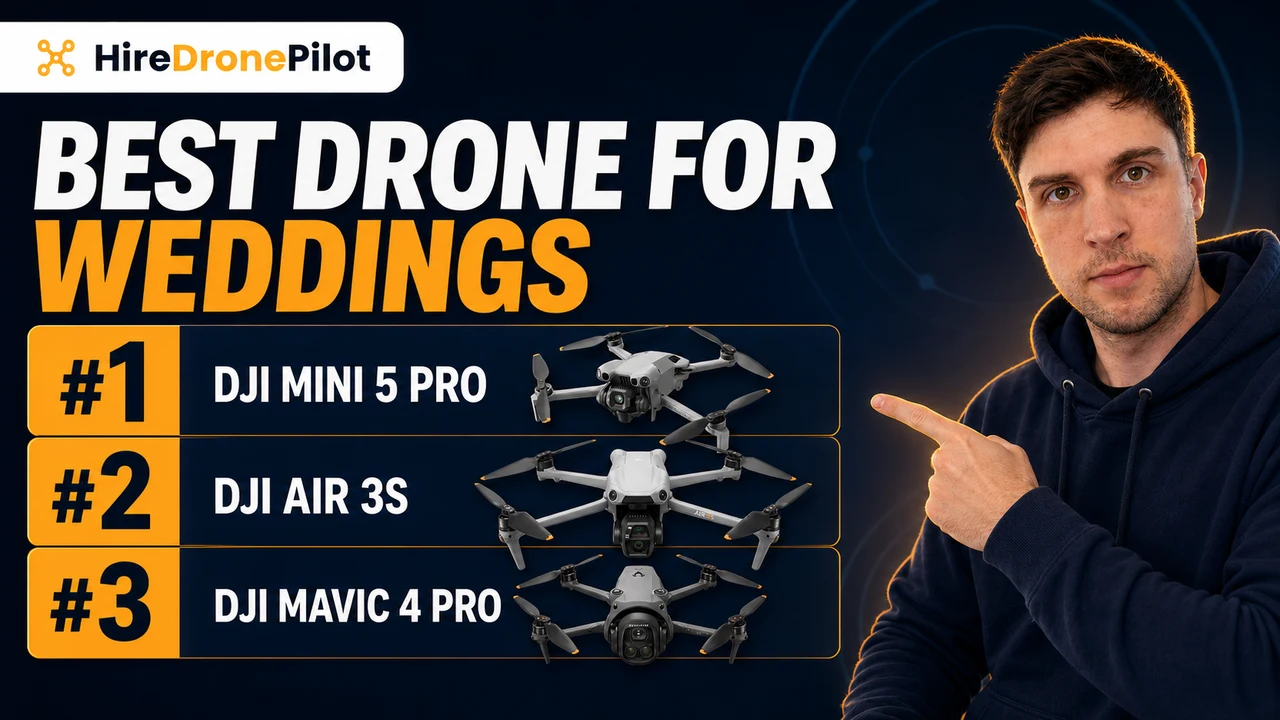
The Best Drone for Weddings in 2026 Is the DJI Mini 5 Pro
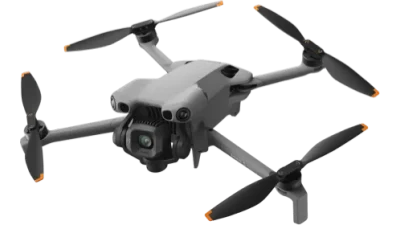
At a wedding, the small drone is not the compromise. It is the only one the rules let anywhere near the place.
- Under 250 grams, so you may fly it inside the grounds of a venue and close to people — no test, no certificate, no CAA authorisation.
- A 1-inch, 50-megapixel camera. The footage cuts alongside a proper wedding film rather than looking like a phone from the sky.
- Around 28 minutes of real flying per battery, so the arrival, the venue and the golden-hour portraits fit into two packs. DJI advertises 52, but only on the bigger battery that costs you the sub-category.
- Nothing changes for it on 1 January 2028, when heavier drones lose the freedom they have today.
Affiliate link · costs you nothing extra · full disclosure
PART ONE
Here are the five that win their categories — and the honest problem with each, because at a wedding every one of them has one.
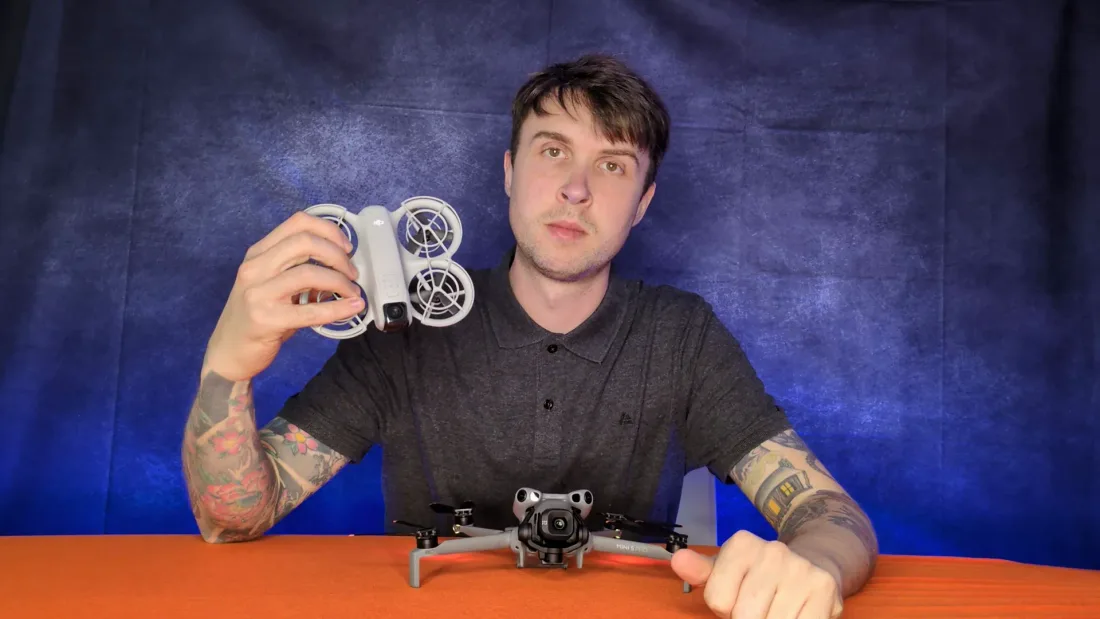
Best Drone for Getting Yourself in the Footage: DJI Neo 2
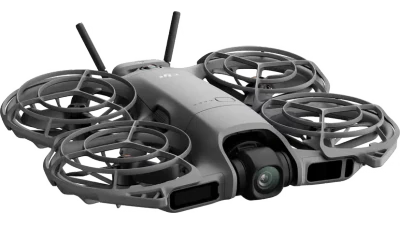
At a small wedding the two people who want the aerial are the two standing in it. This is the one that follows them rather than needing one of them on the ground flying it.
- Takes off and lands from your palm and picks its shot from a button and a screen on the drone itself — no controller, no phone, no free hand.
- 151 grams, or 160 with the digital transceiver fitted — the lightest drone here, and comfortably inside the no-test sub-category either way.
- A fully enclosed propeller cage and obstacle sensing in every horizontal direction, which is what a marquee needs and an open field does not.
- 12 megapixels, JPEG only, and 17 minutes with the guards fitted. This is footage for the couple’s phone, not for a film anybody is paying for.
Best Budget Drone for Weddings: DJI Flip
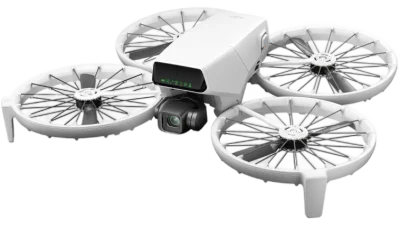
The one to buy if it is your own wedding: caged propellers, under the weight line, and the cheapest thing here that still makes a picture.
- 249 grams with the cages fitted, so it keeps the no-test sub-category and still has guarded propellers.
- The same class of sensor as the Mini 4 Pro (1/1.3-inch, 48 megapixels) for the least money on this list.
- Noisier per gram than it looks, and the sensor gives up as soon as the light does.
Best Second Drone for a One-Chance Day: DJI Mini 4 Pro
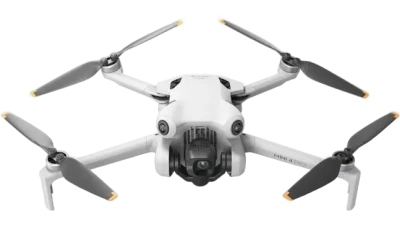
There is no second ceremony. A backup body that flies the same legal profile is the cheapest insurance on the list.
- 249 grams, so if the main drone dies you carry on under exactly the same rules.
- 48 megapixels on a 1/1.3-inch sensor, with raw files you can grade to match.
- A visibly smaller sensor than the Mini 5 Pro, so the two do not intercut invisibly in low light.
Best Drone for Large Venues and Estates: DJI Air 3S
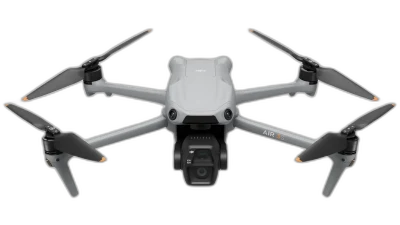
The 70 mm lens is the only telephoto here you can currently fly near people without a certificate. At a wedding, distance is the whole game.
- 24 mm and 70 mm from one hover, so you fill the frame from the far side of the lawn.
- 45 minutes a pack, the longest of any drone here you can fly without the A2 test.
- 724 grams and C1. From January 2028 that mark stops counting and it needs the A2 test to fly near people.
Best Drone for a Venue’s Own Film: DJI Mavic 4 Pro
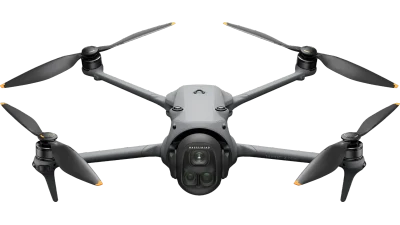
Commissioned by the venue, shot on a closed day with nobody about. That is the job this drone is right for.
- A 100-megapixel Four Thirds sensor and a real aperture (f/2.0–f/11) for hard midday light.
- 51 minutes a pack and three focal lengths, so one flight covers the whole estate.
- 1,063 grams and C2: even with the A2 test it must hold 30 metres from every guest, and it may never fly over one.
Affiliate links · costs you nothing extra · full disclosure
Take the quiz: which drone fits the wedding work you actually do?
Four questions about the booking, not about megapixels.
- Matched to the job — your own wedding, a paid day, a venue’s marketing film or an event.
- Weighted for the paperwork you are willing to do, because that is what rules drones in and out.
- Eleven drones, each link pointing at the exact bundle I judged it on — and two of them with no link I would send you to.
- About 20 seconds, and no email needed.
STEP 1 OF 4
11 of 11 still fit
All eleven, and why each one might not survive the day
-
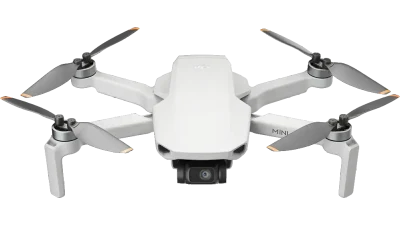
DJI Mini 4K DJI UK no longer lists it
246 g · no class mark · 1/2.3″ 12MP · 31 min · A1, no test
The cheapest way to be legally allowed at a venue. It is also the cheapest way to hand a couple footage they will not use.
- Under 250 grams, so it may fly inside a venue’s grounds with no test and no certificate.
- 12 megapixels on the smallest sensor here. It will not cut with a paid wedding film.
- No obstacle sensing, and DJI no longer lists it in the UK — you are buying remaining stock.
-
DJI Neo 2
151 g · C0 · 1/2″ 12MP · 19 min · A1, no test
Launches off your palm and follows you about. Genuinely lovely at a garden party, and completely out of its depth on a paid booking.
- 151 grams, or 160 with the digital transceiver fitted — comfortably inside the no-test sub-category either way.
- A 12-megapixel 1/2-inch camera and JPEG only. There is nothing to grade afterwards.
- 19 minutes on paper, and 17 with the propeller guards fitted — which is how you would fly it near guests.
-
DJI Flip
249 g · C0 · 1/1.3″ 48MP · 31 min · A1, no test
Full propeller cages and a phone-sized sensor for the least money on this list. If you are filming your own wedding, stop reading and buy this one.
- 249 grams with cages fitted, so it stays in the no-test sub-category and still has guarded propellers.
- The same class of sensor as the Mini 4 Pro (1/1.3-inch, 48 megapixels) for the least money on this list.
- The one I would hand somebody who has never flown before and is doing it at their own wedding.
-
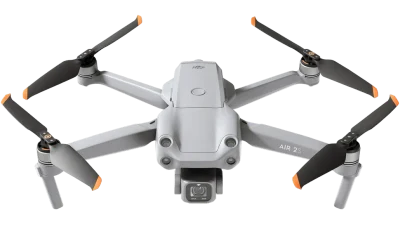
DJI Air 2S no affiliate link — the renewed listing has been pulled
595 g · no class mark · 1″ 20MP · 31 min · A2 test needed
A one-inch sensor for less than anything else here, until you try to buy one. The renewed listing this row used to point at has gone, and the weight rules it out at a venue anyway.
no link- Needs the A2 test before you may fly it near people at all.
- A proper one-inch sensor, which is the only reason it was ever on this list.
- Discontinued and renewed-only, and the renewed listing has now been pulled — so there is no buy link for it, and the one live listing left is a third-party seller at several times the sensible money.
-
DJI Mini 4 Pro
249 g · C0 · 1/1.3″ 48MP · 34 min · A1, no test
The obvious second body. It flies the same legal profile as the Mini 5 Pro, holds the same batteries in your head if not in your bag, and costs a hundred pounds less.
- 249 grams, so it flies the same no-test profile as the pick above.
- 48 megapixels on a 1/1.3-inch sensor, with raw files you can actually grade.
- 34 minutes a charge, and DJI does not sell the bigger battery in Europe, so that is the honest number.
-
DJI Mini 5 Pro
249.9 g · C0 · 1″ 50MP · 36 min · A1, no test
A one-inch camera inside the only sub-category that may legally be at a wedding without paperwork. That combination did not exist three years ago at any price.
- Under 250 grams, so you may fly it inside the grounds of a venue and close to people with no test and no certificate.
- A 1-inch, 50-megapixel camera. The footage cuts alongside a proper wedding film.
- Around 28 minutes of real flying per battery. DJI advertises 52, but only with the bigger battery that pushes it over 249 g and out of the sub-category you bought it for.
-
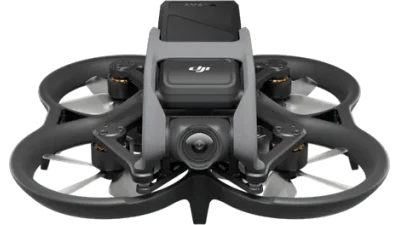
DJI Avata 2 loses privileges in 2028
377 g · C1 · 1/1.3″ 12MP · 23 min · observer required
The drone every couple asks for after they have seen one dive through a stairwell on Instagram. It is also the one I would refuse to fly at a wedding.
- Flown through goggles, so the law requires a second person stood beside you watching it, every flight.
- 12-megapixel video from a very wide lens, JPEG stills only, and 23 minutes a pack.
- From January 2028 it needs the A2 test to fly near people — one of only two drones here that lose that freedom.
-
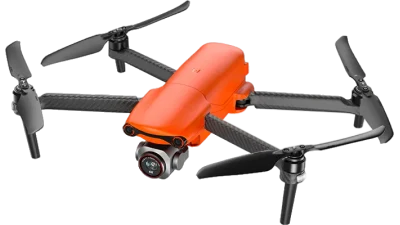
Autel EVO Lite+ no affiliate link — I could not find UK stock
835 g · no class mark · 1″ 20MP · 40 min · A2 test needed
Here so nobody can call this list a DJI catalogue. It is the credible non-DJI option and it is still not the one I would take to a booking.
no link- Needs the A2 test before you may fly it near people.
- A one-inch, 20-megapixel camera and 40 minutes on paper — the longest here.
- I could not find UK stock, so there is no buy link for it.
-
DJI Air 3S loses privileges in 2028
724 g · C1 · 1″ 50MP + 70 mm tele · 45 min · A1 until 2028
The 70 mm lens is a stand-off lens. You frame the couple tight from the far side of the lawn, which at a wedding is worth more than any sensor upgrade.
- Two real focal lengths, 24 mm and 70 mm. The long one lets you stay far away and still fill the frame.
- 45 minutes a pack, which is the difference between one battery change and three.
- No test needed today, but from January 2028 its C1 mark stops counting and it needs the A2 to fly near people. You are buying about eighteen months of that freedom.
-
DJI Mavic 4 Pro
1,063 g · C2 · Four Thirds 100MP + two tele · 51 min · A2 test needed
The best flying camera in a bag this size, and the one that makes every legal problem on this page harder. Buy it for the venue film, not for the day itself.
- Needs the A2 test before it may go near a guest, and even then it must hold 30 metres back and never fly over anyone.
- A 100-megapixel Four Thirds sensor and the only aperture on this page that actually moves (f/2.0–f/11).
- 51 minutes a pack and three focal lengths, which is what a venue is paying for when it commissions a film.
-
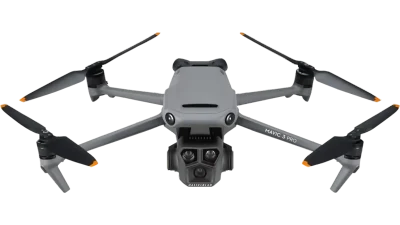
DJI Mavic 3 Pro out of stock in every configuration at DJI UK
958 g · C2 · Four Thirds 20MP + two tele · 43 min · A2 test needed
A superb three-camera drone that DJI has stopped selling here. The only configuration still on the shelf costs a thousand pounds more than a brand-new Mavic 4 Pro.
- Needs the A2 test to fly near people, exactly like the Mavic 4 Pro.
- A Four Thirds sensor plus two telephoto cameras, which is a lot of framing choice from one hover.
- Out of stock in every configuration at DJI UK. The bundle still on sale is the Fly More Combo with the RC Pro controller, which is why the price looks the way it does.
Every link points at the exact bundle the row is judged on, checked 31 July 2026 — where a drone is only sold as a combo, that is the combo being described. Two rows have no link because I could not find UK stock I would send you to. Weights, class marks and flight times from the manufacturers’ own specification pages; Autel EVO Lite+ figures from DroneCompare, CC BY 4.0.
PART TWO
Noise, insurance, and the venue’s permission
Three things decide whether a wedding drone booking goes well, and not one of them appears on a specification sheet. In roughly this order of how often they go wrong: the noise, the insurance, and whoever owns the lawn.
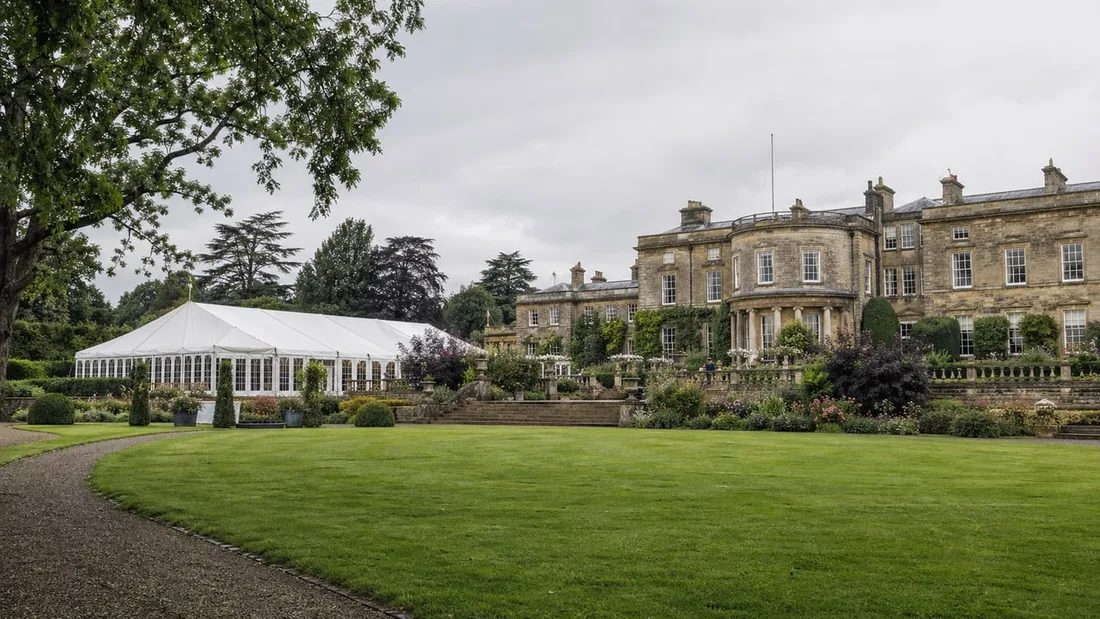
1. The noise, which is the objection you will actually get
Nobody at a wedding objects to a drone on privacy grounds. They object because it sounds like a hairdryer being flown at a funeral, and it happens during the one sentence of the day that everybody came to hear.
Here is the first genuinely useful thing to know, and it took me some digging to be sure of it: DJI does not publish an acoustic figure for a single drone in this guide. Its UK specification pages list transmitter power in dBm — a radio measurement that has nothing to do with how loud the thing is — and nothing else. So when a shop tells you a drone is “quiet”, there is no number behind it. There is no manufacturer figure to compare.
What is reliable is the physics. Sound falls away sharply with distance, so the only two controls you genuinely have are height and standoff. A drone that is intrusive at fifteen metres is background at fifty and effectively gone at a hundred. Our own measurements of drone noise put consumer machines somewhere between a vacuum cleaner and a lawnmower up close, and barely audible over ambient sound at the legal height ceiling.
Which leads to the rule I actually fly to, and it is a scheduling rule rather than a gear one:
WHEN THE DRONE FLIES, AND WHEN IT DOES NOT
- Before anyone arrives. The venue, the drive, the marquee, the empty ceremony set. Ninety per cent of the aerial footage that ends up in the final film is shot when the site is empty, and none of it annoys anybody.
- Never during the vows, the readings or the speeches. Not high, not far away, not “just for ten seconds”. This is the one that gets you a bad review, and it is the easiest thing on this whole page to get right.
- The gap between things. Guests moving from ceremony to drinks, the couple walking away from the group for portraits, the light going gold at eight o’clock. Nobody is listening to anything, and the shots are better anyway.
- Brief the registrar and the celebrant, not just the couple. They have heard a drone ruin a ceremony before and they will tell you exactly where their line is.
One piece of kit does help, and it is cheap enough to be worth mentioning: several DJI models have a low-noise propeller set sold separately at DJI UK — there is one for the Air 3 series and a slightly dearer one for the Mavic 3 series. Both cost a small fraction of a spare battery. They are not silent, they are quieter, and on a job where the noise is the whole objection that is the cheapest problem you will solve all day. There is no equivalent set for the sub-250-gram Minis, largely because at 249 grams there is very little air being moved in the first place.
2. The insurance, which is not optional and not the same as your camera cover
This is the part where hobbyists get caught out, and the CAA could not be clearer about it. If you fly for any reason other than recreation, sport or hobby, you must have third-party insurance as a minimum. Being paid to take pictures or record video is the first example the CAA gives.
That means the flight becomes commercial the moment money is involved, and the amount does not matter. Filming your cousin’s wedding for two hundred pounds and a meal is commercial flying. Filming it for nothing, as a genuine favour, is not — but if you are a wedding photographer and the drone footage is part of what the couple booked, then it is part of a paid service and you are in the first category whether you itemised it or not.
Four details worth having straight before you buy a policy:
| The standard it must meet | Assimilated Regulation (EU) 785/2004. The CAA’s own advice is to ask your insurer to confirm the policy complies with it — ordinary public liability cover often does not. |
|---|---|
| Who is responsible | The operator, not the pilot. If you own the drone and someone else flies it for you, the duty is still yours. |
| Whose name is on it | The policyholder name should match the name on your Operator ID. Register as a sole trader and insure in your personal name and you have a mismatch a claims handler will find. |
| What venues ask for | Most commercial clients want to see at least a million pounds of third-party public liability on the certificate before you are allowed on site, and some ask for five. |
There is no such thing as a commercial drone licence in the UK any more — the old Permission for Commercial Operations was withdrawn at the end of 2020 and nothing replaced it. What replaced it is exactly this: register, insure, and stay inside the sub-category your drone qualifies for. If you want the full picture on cover, we have a separate piece on what UK drone insurance law actually demands.
3. The venue’s permission, which air law does not give you
This is the one that ruins bookings, because people assume that being legal in the air means being allowed on the ground. They are two entirely separate permissions and neither implies the other.
The CAA’s position is plain: you must make sure the person or organisation that owns the land where you want to fly allows you to take off and land from their property. Your Flyer ID does not grant that. Your insurance does not grant that. A venue may lawfully tell you no for no reason at all, and plenty do — country houses, cathedrals and heritage estates frequently run blanket no-drone policies on their own land, and a local authority park may have byelaws of its own on top.
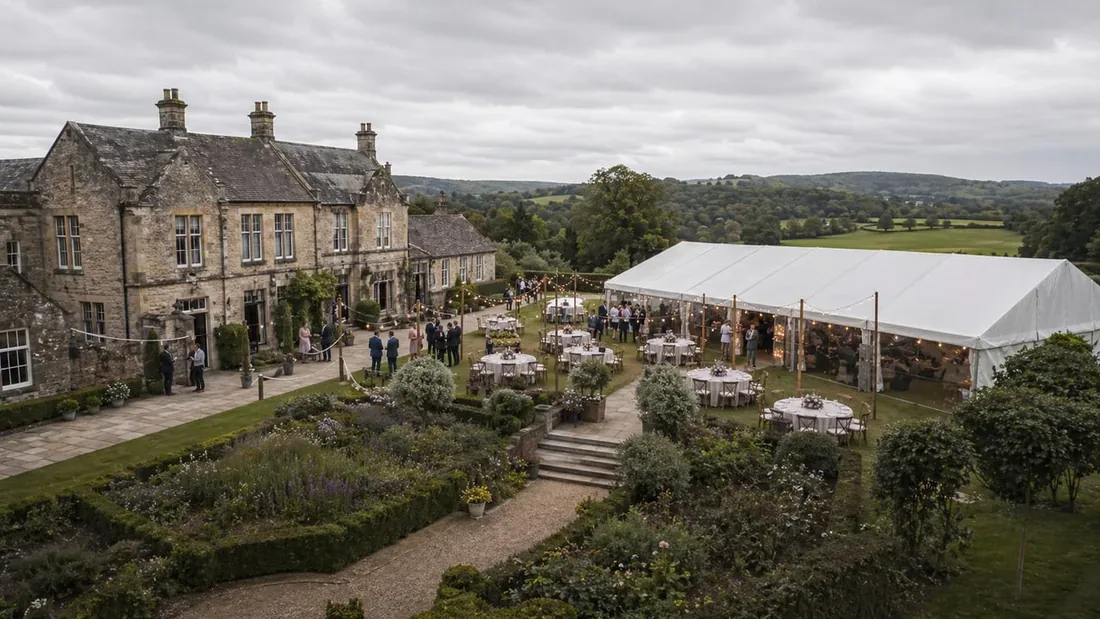
So ask early and ask in writing. The email I send before I quote asks four things, and I have never once regretted the ten minutes:
THE FOUR QUESTIONS TO ASK THE VENUE
- Do you permit drone flights on the estate at all? If the answer is no, everything else is academic and you have found out in July rather than on the day.
- Where may I take off and land? You want a spot away from guests, away from parked cars, and ideally out of sight. Get it agreed rather than assumed.
- What is your insurance requirement? Ask for the figure. If they want five million pounds of cover and your policy stops at one, you need to know now.
- Is anything else happening on the grounds that day? A second wedding on the other lawn changes where the crowds are, and crowds are the thing that decides where you may fly.
Add a fifth for the couple, not the venue: tell them, in writing, that you will not fly over the seated guests and why. Managing that expectation before the booking is far easier than explaining it during the confetti line.
Two smaller things belong here. There is no privacy exemption for weddings — a drone with a camera puts you in scope of data-protection duties the same as any other camera, and the CAA’s own code asks you to respect people’s privacy and not cause a nuisance. And if any part of the day runs after dark, a drone flown at night in the Open category must have a green flashing light turned on. Sparkler exits are a night flight.
PART THREE
What you may actually fly over at a wedding
Everything above was preamble. This is the section that decides which drone you buy, and it is the part that no camera review will ever tell you.
First, the four words this section keeps using
If you have never owned a drone, none of the following will mean anything yet, and every one of them matters more than the camera.
- Flyer ID
- A free online theory test you sit on the CAA’s website. It takes about half an hour, you can retake it, and it lasts five years. Everyone flying a drone of 100 grams or more needs one. It is not a licence and it does not cost anything.
- Operator ID
- A registration number for whoever owns the drone, renewed yearly at £12.34. You print it on a label and stick it to the drone. If you trade as a business, the business registers rather than you personally — and that name needs to match your insurance.
- Class mark
- A little label on the drone reading C0, C1 or C2 — smaller number, lighter drone, more freedom. It decides which sub-category you fly in. A drone with no label at all is called legacy, and legacy drones are judged on weight alone.
- A2 Certificate of Competence
- A second, harder theory test — at least thirty multiple-choice questions, taken with a CAA-approved training provider, valid five years. Providers set their own fees. It is what a drone over 250 grams needs before you may fly it anywhere near people. Buy under 250 grams and it buys you nothing you do not already have.
The word that governs the whole day: crowd
The CAA’s Drone Code (CAP2320) defines it in one sentence, and it is worth reading twice:
“A crowd is any group of people who cannot move away quickly because of the number of other people around them.” And: “Never fly over crowds, no matter what size of drone you have.” The examples the CAA gives include religious gatherings, and parties, carnivals and fêtes.
Read that against a wedding day and the answer falls out immediately. A seated ceremony is a crowd. A confetti line is a crowd. The group photograph — a hundred and twenty people arranged shoulder to shoulder specifically so they all fit in frame — is the most textbook crowd on the entire site.
There is no drone, no certificate and no authorisation you can buy that changes this. Not the £12.34 registration, not the A2 Certificate of Competence, not a £524-a-year operational authorisation from the CAA. Overflight of an assembly of people is outside all of it. Anybody selling you the shot where the drone hovers directly above the confetti is either operating outside the rules or has a bespoke authorisation that took months and does not come with a Mavic.
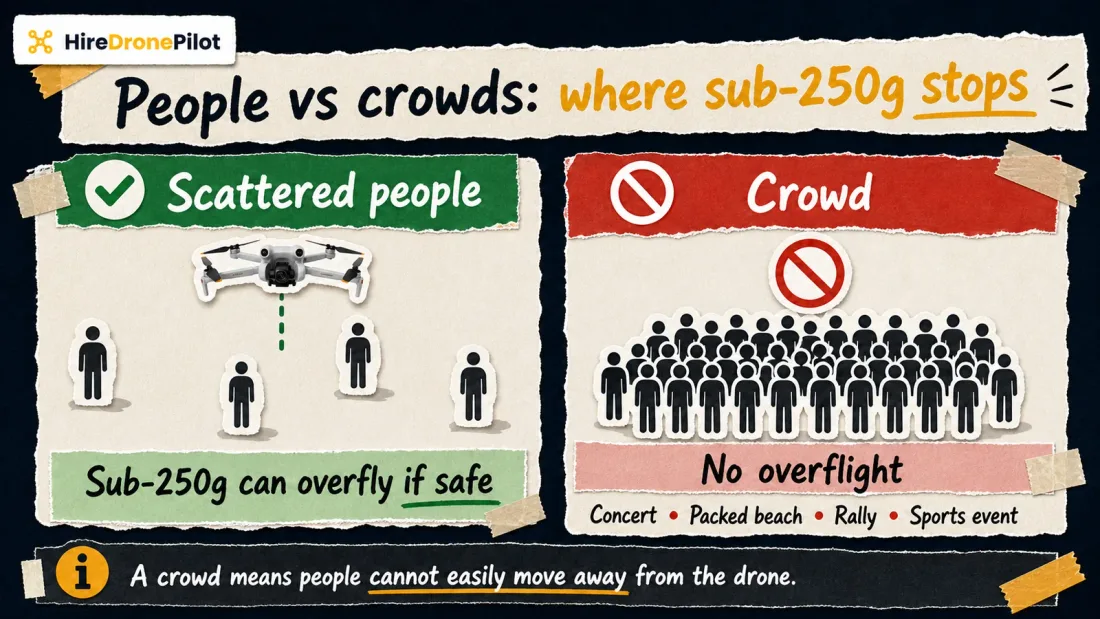
The counterintuitive bit: the small drone has the strongest rights
Most people assume the rules get more permissive as you get more serious. At a wedding they work the opposite way round. Here is the whole of UK drone law as it applies to a venue, in one table.
| WHAT YOU HOLD | DISTANCE FROM GUESTS | INSIDE THE VENUE? | OVER THE CROWD? |
|---|---|---|---|
| Under 250 g, or C0/C1Over People (A1) | No minimum — you may fly closer than 50 m to uninvolved people | Yes | No |
| C2 drone + A2 CofCNear People (A2) | 30 m, or 5 m in low-speed mode | Yes, but never over an uninvolved person | No |
| Legacy under 2 kg + A2 CofCNear People (A2) | 50 m | Yes, but never over an uninvolved person | No |
| Anything heavier, no certificateFar from People (A3) | 50 m | No — 150 m from anything built-up | No |
| PDRA01 authorisationSpecific category, £524 a year, 250 g–25 kg | 50 m (30 m on take-off and landing) | Yes | No — and 50 m from any assembly |
Look at the first row against the last. A sub-250-gram drone you can buy this afternoon may legally fly closer to a wedding guest than a flagship costing nearly three times as much, flown by somebody holding a professional qualification and a £524-a-year authorisation from the CAA. That is not a loophole; it is the deliberate logic of the rules. The risk being managed is the energy of the thing that falls on somebody’s head, and 249 grams is not very much of it.
Two details in that table are worth pulling out, because they are the ones people get wrong. The first is that the A2 test does get a heavy drone to the venue — it is not an authorisation you need for that. With the certificate, a C2 drone like the Mavic 4 Pro may be in the grounds of a hotel or a country house perfectly legally. It just has to hold 30 metres from every guest, and it may never fly above one. The second is that the £524-a-year PDRA01, the authorisation a full-time commercial operator holds, is stricter on that point rather than looser: 50 metres from uninvolved people, and a flat ban on overflying an assembly.
Which is also why the middle of the market is the worst place to be at a wedding. A 595-gram Air 2S with no class mark is a legacy drone: without the A2 test it drops to Far from People, which is 150 metres from anything built-up. That is the house, the car park and the village. You have bought a better sensor and lost the entire location.
The day, moment by moment
Here is how that translates into the running order somebody hands you in the morning. This is the sub-250-gram case, which is the only one worth planning around.
A WEDDING DAY, FLOWN LEGALLY
- Venue, empty (morning). Fly. The house, the drive, the marquee, the ceremony set before a single chair is filled. This is where your best footage comes from and nobody is even outside yet.
- Guests arriving. Fly, carefully. People are spread out and moving, so this is not a crowd. Stay high, stay wide, and land before the ushers start seating anybody.
- The ceremony. Grounded. Seated guests cannot move away quickly, which makes them a crowd — and the noise would be unforgivable regardless. There is no version of this shot that is both legal and welcome.
- Confetti line and group photo. Grounded. The most requested aerial shot at any wedding, and a textbook assembly of people. You can shoot it from the side, from height, offset — but not from above them.
- Drinks reception. Judgement. Guests spread across a lawn are not a crowd; guests packed three deep round a bar are. Look before you launch, and relaunch if it changes.
- Couple portraits. Fly. Two people who know you are there, briefed, in an open space. This is the shot the drone is genuinely best at and the one couples remember.
- Speeches and the meal. Grounded. Indoors or under canvas, and the audio matters more than any aerial.
- Golden hour, couple only. Fly. Ten minutes, one battery, the best light of the day, everyone else still at the table. Plan the day around this.
- First dance and evening. Grounded. Indoors. And if you do fly outside after dark, your drone needs a green flashing light on.
What year one actually costs, on both routes
Two ways to arrive at a wedding legally. One of them costs about a thousand pounds and one of them costs three, and the expensive one still cannot fly over the confetti.
I am not going to print you a price list. Drone prices move week to week, the figure I typed this morning is wrong by the autumn, and a stale number is worse than no number because you will budget against it. What does not move is the shape of the bill, and the shape is the part that decides which route you take. Both routes carry the same lines. Only the size of them changes, and only two of the lines are set by anybody official.
WHAT YEAR ONE ACTUALLY CONTAINS
- The drone. The biggest line on both routes by a distance, and the only one where the two routes are genuinely far apart: the sub-250-gram pick is a bit over a third of what the flagship costs. Everything below is roughly the same on either route, or scaled to the drone.
- The two registrations. Flyer ID is free and lasts five years. Operator ID is £12.34 a year — the one figure on this page the CAA actually sets, and identical whichever drone you buy. It is a rounding error against everything else here, which is worth knowing, because it is the line people worry about most.
- A second battery, and a card to fill. Not optional at a wedding. One pack does not cover arrival, venue and golden hour, and there is no interval in the day for a charge. Budget a spare pack and a fast 256 GB card on both routes; the flagship’s battery costs well over twice what the small drone’s does, which is a bigger gap than people expect.
- Filters, if you are delivering film. An ND set is what stops midday footage looking like security video. Small money on the light route, several times that on the flagship, and skippable for a first year if you are only shooting golden hour anyway.
- Commercial insurance. Compulsory on both routes the moment you are paid, roughly the same premium either way, and the line most people leave out of the sum entirely. It is the second largest thing you will pay in year one.
- An allowance for breaking it. Nobody puts this in a spreadsheet and everybody eventually needs it. Set aside enough for a replacement drone, or buy the manufacturer’s cover; on the light route that allowance is small enough to be sane, and on the heavy route it is a serious sum in its own right.
- Training — heavy route only. The A2 Certificate of Competence, and a GVC or RPC-L1 on top if you go the professional way. I am not quoting these either, and for a better reason: the CAA does not set them, the Recognised Assessment Entities do, and they vary enough that any figure would be wrong for somebody. Ring three. It is the largest remaining variable and the only one you can negotiate.
- PDRA01 — professional route only. £524 a year to the CAA, no VAT, twelve months. Also a fee rather than a purchase, so I can tell you exactly what it is.
Add those up and the light route lands a little over a thousand pounds for the first year, everything in. The heavy route lands around three thousand before you have paid a single training provider — and the training is not a small extra. Take the PDRA01 off, because it is the professional’s choice rather than a requirement, and the heavy route still sits at the thick end of two and a half thousand.
That PDRA01 line is worth being clear about. The A2 certificate on its own is enough to bring a C2 drone to a venue at 30 metres; the authorisation is what somebody flying commercially week in, week out holds on top of it. You do not need it to shoot a wedding legally. You need it to be the person who shoots weddings for a living.
And look at what the heavy route buys for roughly three times the money. Nine hundred grams more drone, a hundred megapixels, three lenses — and a legal position that keeps you 30 metres from every guest all day, with no overflight of any of them, ever. For a venue’s marketing film shot on a closed Tuesday, that is money well spent. For a Saturday with a hundred and twenty people on the lawn, the small drone is not the budget option. It is the correct one.
PART FOUR
The drone I’d fly at a real booking
The DJI Mini 5 Pro, is what goes in my bag for a wedding, and I would not spend long deciding. It is the sixth most expensive of the eleven, which is the first clue that this is not a spending decision.
It is the only drone on this page that is simultaneously good enough to deliver from and light enough to be legally welcome. At 249.9 grams it sits in Over People (A1), which means it can be inside the grounds of a venue, close to guests, with nothing more than the two registrations and a commercial insurance policy. Every heavier drone here needs a certificate before it may go anywhere near a guest — and even once you hold it, that drone must stand thirty or fifty metres further back than the Mini 5 Pro does, all day, with no overflight of anybody at all.
The camera is the part that makes it a professional answer rather than a legal compromise. A one-inch, 50-megapixel sensor shooting 10-bit D-Log M and DNG raw is the same class of image that was, until very recently, only available in a drone you needed a qualification to fly. It intercuts with proper wedding video without looking like the cheap camera in the edit.
Spend less if it is your own wedding. The DJI Flip flies exactly the same legal profile for well under half the money, with caged propellers and a smaller sensor. Nobody is paying you, so nobody is judging the grade.
Spend more only if the venue is the client. The Mavic 4 Pro costs the best part of three of the small drone and is the better camera by a distance, and on an empty estate with no guests to keep fifty metres from, all of that camera is available to you. On a wedding day, most of it is not.
The one I’d actively tell you to avoid
The DJI Avata 2, and I say that as somebody who enjoys flying it more than anything else I own.
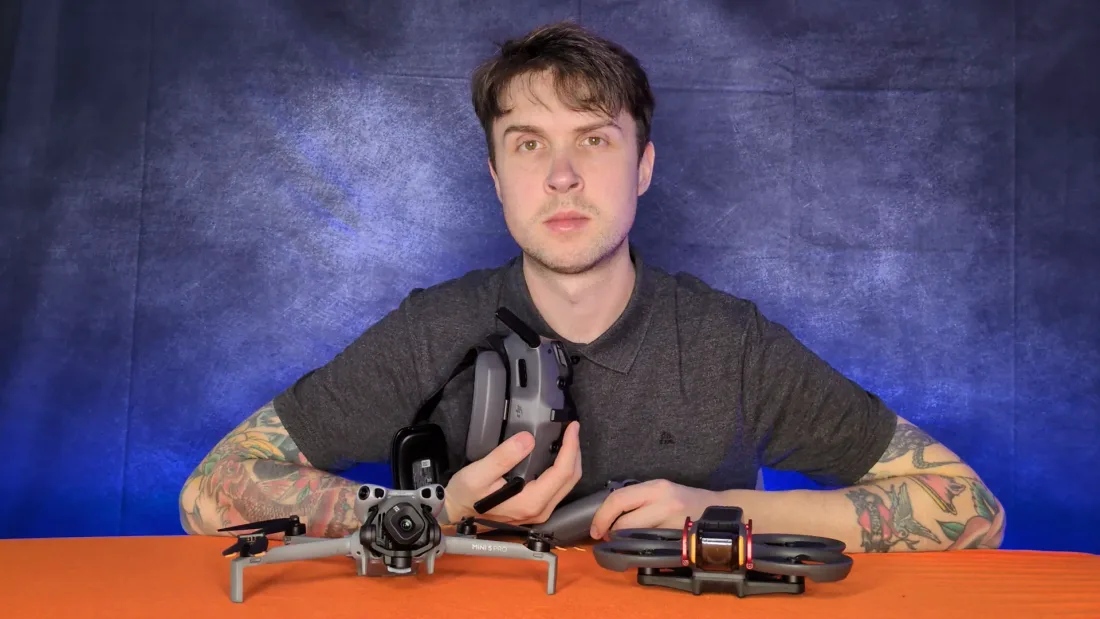
Couples ask for it by description rather than by name: the shot that flies in through the doorway, round the dancefloor and out of a window. Three problems. You fly it through goggles, so UK law requires a second competent person stood beside you watching it for the whole flight — at a wedding, that is two of you on the payroll and neither of you photographing the couple. Its camera is 12 megapixels with JPEG-only stills, so it cannot double as anything. And at 377 grams with a C1 mark, it is one of the two drones here that loses its no-test status on 1 January 2028.
If you genuinely want that shot, hire somebody who does it for a living and has the observer, the authorisation and the insurance already. Our guide to FPV drones in the UK goes through why it is a two-person hobby in law.
If this would be your first drone, do not fly a wedding
I want to be direct about this, because the search that brought you here is often somebody who has been asked a favour and is about to buy a drone for it.
A wedding is a single-take live event with no rehearsal, in an unfamiliar location, with an audience, under time pressure, in whatever weather arrives. Everything that makes flying easy — an empty field, a second attempt, the option to go home — is absent. The first time you deal with a gust funnelling round the corner of a building, or a return-to-home that wants to climb through a tree, you do not want it to be at eleven minutes past three with the bridal party watching.
So buy the drone by all means. Then fly it for six months, in fields and on beaches and in your own garden, until the pre-flight checks are boring and you have had one thing go wrong and dealt with it. Learn what the distances from people feel like in the air rather than on a page. Then say yes to the wedding.
And if the wedding is in nine weeks, which it usually is: you can book a drone pilot for the wedding instead. Someone who already holds the insurance, the qualifications and a drone they have flown a hundred times will cost less than the year-one bill above, and you can see what a day’s work costs before you decide. There are qualified pilots across the UK who do this most Saturdays of the summer.
Wedding drones: the questions I get asked most
What is the best drone for weddings in the UK in 2026?
The DJI Mini 5 Pro, and it is the sixth most expensive of the eleven here rather than the dearest. At 249.9 grams it sits in the Over People (A1) sub-category, which is the only part of UK drone law that lets you fly close to guests and inside the grounds of a venue without a certificate or an authorisation from the CAA. It also carries a one-inch, 50-megapixel camera, so the footage stands up in a paid film. If it is your own wedding, the DJI Flip does the same legal job with a smaller sensor for well under half the money.
Can you legally fly a drone over a wedding?
Not over the guests. The CAA defines a crowd as any group of people who cannot move away quickly because of the number of other people around them, and its Drone Code (CAP2320) says never fly over crowds, no matter what size of drone you have. A seated ceremony, a confetti line and a group photo all meet that description. You can fly around and above the venue itself, and over people who are spread out, if your drone is under 250 grams or carries a C0 or C1 class mark. Nothing you can buy, and no qualification you can sit, buys you permission to hover over the assembled guests.
Do I need insurance to film a wedding with a drone?
Yes. The CAA is explicit that if you fly for any reason other than recreation, sport or hobby, you must have third-party insurance as a minimum, and being paid to take pictures or record video is named as an example. The policy has to comply with Assimilated Regulation (EU) 785/2004, the operator rather than the pilot is responsible for having it, and the policyholder name should match the name on your Operator ID. A wedding you are being paid for is commercial flying even if it is your cousin’s.
Do I need the venue’s permission as well as a drone licence?
Yes, and they are two separate permissions. Air law decides whether the flight is legal; the landowner decides whether you may be on their ground at all. The CAA requires you to make sure the person or organisation that owns the land allows you to take off and land there. Plenty of country houses, cathedrals and heritage estates operate blanket no-drone policies on their own land regardless of what your registration says, so ask in writing before you quote for the job.
How loud is a drone at a wedding ceremony?
Loud enough to be the thing everyone remembers if you get it wrong. DJI does not publish an acoustic figure for any of the drones in this guide, so nobody can quote you a specification. What is reliable is the physics: sound falls away sharply with distance, so the fix is always height and standoff rather than a quieter drone. In practice that means flying the venue before guests arrive, staying off the air completely through the vows and the speeches, and treating the drone as an establishing-shot tool rather than a ceremony camera.
Do I need a licence to film a wedding with a drone?
For a drone under 250 grams, no — you need a free Flyer ID, the £12.34-a-year Operator ID and commercial insurance, and that is the whole list. There is no longer any such thing as a commercial drone licence in the UK; the old Permission for Commercial Operations was withdrawn at the end of 2020. Go above 250 grams and you need an A2 Certificate of Competence before you may fly anywhere near a guest — and even then you must hold 30 metres back with a C2 drone, or 50 with an unmarked one, and never fly over anyone. Full-time commercial operators usually hold a Specific category authorisation such as a PDRA01 on top, which costs £524 a year and requires a GVC or RPC-L1.
The short version
If you read all of that and still want me to just say it: buy the DJI Mini 5 Pro, insure it before you take a penny for a booking, get the venue’s permission in writing, and keep it off the air during the vows and away from the confetti line. That is the whole job.
Affiliate links · costs you nothing extra · full disclosure
Every link was checked on 31 July 2026 and points at the exact bundle the row describes. Drone prices move constantly, so I do not print them here — check the live listing before you buy, and check it again if you are budgeting for more than one thing. Regulatory detail, including the definition of a crowd, the sub-category distances and the PDRA01 conditions, from the UK Civil Aviation Authority. Comparison specifications from DroneCompare, licensed under CC BY 4.0. Amazon links are affiliate links.