UK Drone Distance From People Rules Explained

Peter Leslie
16 Apr 2026
Key Takeaways
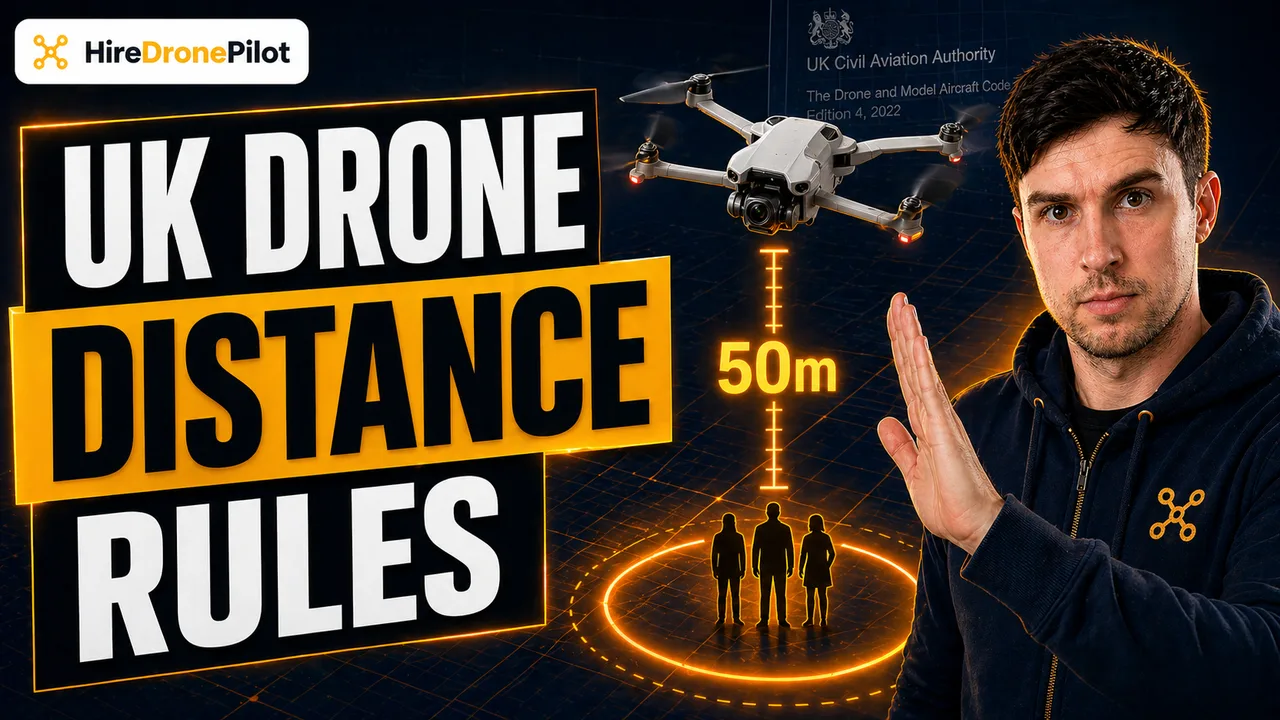
- The baseline rule in the UK Drone Code is 50 metres horizontal distance between your drone and any uninvolved person
- Above 50 metres of altitude the horizontal buffer scales up to match your height, and no overflight is ever permitted inside that cylinder
- Sub-250g and UK0, UK1, C0 and C1 class drones are exempt from the 50-metre buffer, but still cannot fly over crowds
- A2 drones unlock a 30-metre buffer, or 5 metres in low-speed mode, and A3 drones must stay at least 150 metres from residential, commercial, industrial and recreational areas
- Going closer than these limits requires a Specific Category authorisation like PDRA01, not a judgement call on site
- Breaking the buffer is a criminal offence under the Air Navigation Order 2016 and invalidates your third-party drone insurance
The question sounds simple. How far does a drone have to be from other people in the UK? The honest answer is that there is not a single number — there is a 50-metre floor in the Drone Code, a set of exemptions for the smallest class marks, a tighter rule for crowds, and a whole different set of buffers once you move into the A2 sub-category or the Specific Category.
This is the guide I wish I had when I was new to this. Every figure below traces to the Drone and Model Aircraft Code or the PDRA01 authorisation, and every figure is written for the regime as it stands in April 2026, after the January 2026 class-mark deadline.
The Drone Code sets a 50-metre horizontal buffer between your drone and any uninvolved person, and that buffer is a cylinder not a circle
Rule 4 of the Drone Code is the single most important line in this whole article. It tells you not to fly closer to people than 50 metres, and it makes clear that this is a horizontal separation that extends all the way up to the legal height limit.
The CAA spells it out in so many words: the buffer is a cylinder, not a flat disc on the ground. You are not allowed to climb over the top of the 50-metre ring and then drop photographs straight down. If a person is standing there and they are not involved in your flight, there is a column of airspace above them you cannot enter, no matter how high you are.
This rule applies to people in buildings and transport too — cars on a road, a group on a train platform, passengers in a boat, shoppers inside a glass-fronted shop. The buffer is measured to the nearest person, not to the nearest empty field.
Above 50 metres of altitude, the horizontal buffer scales up to match your height — the rule drone forums call 1-to-1
Rule 4 has a sentence most casual drone pilots miss. If you fly higher than 50 metres, keep the same horizontal distance. Fly at 80 metres and you must stay 80 metres away. Fly at the legal ceiling of 120 metres and the buffer becomes 120 metres as well.
This is the rule forum posts call the 1-to-1 rule. It is not a standalone regulation — it is this clause inside Rule 4, read as a people-buffer that scales with altitude.
| Altitude | Minimum horizontal distance from uninvolved people |
|---|---|
| 30m | 50m (the floor still applies) |
| 50m | 50m |
| 80m | 80m |
| 120m — legal ceiling | 120m |
The Code also tells you to stretch the buffer further in poor weather and at high flying speeds. That is not decoration. A gust that would be fine at 50 metres of separation can put the drone inside the buffer before you finish reacting, and Rule 17 of the Code expects you to land or reduce height quickly when the situation changes.
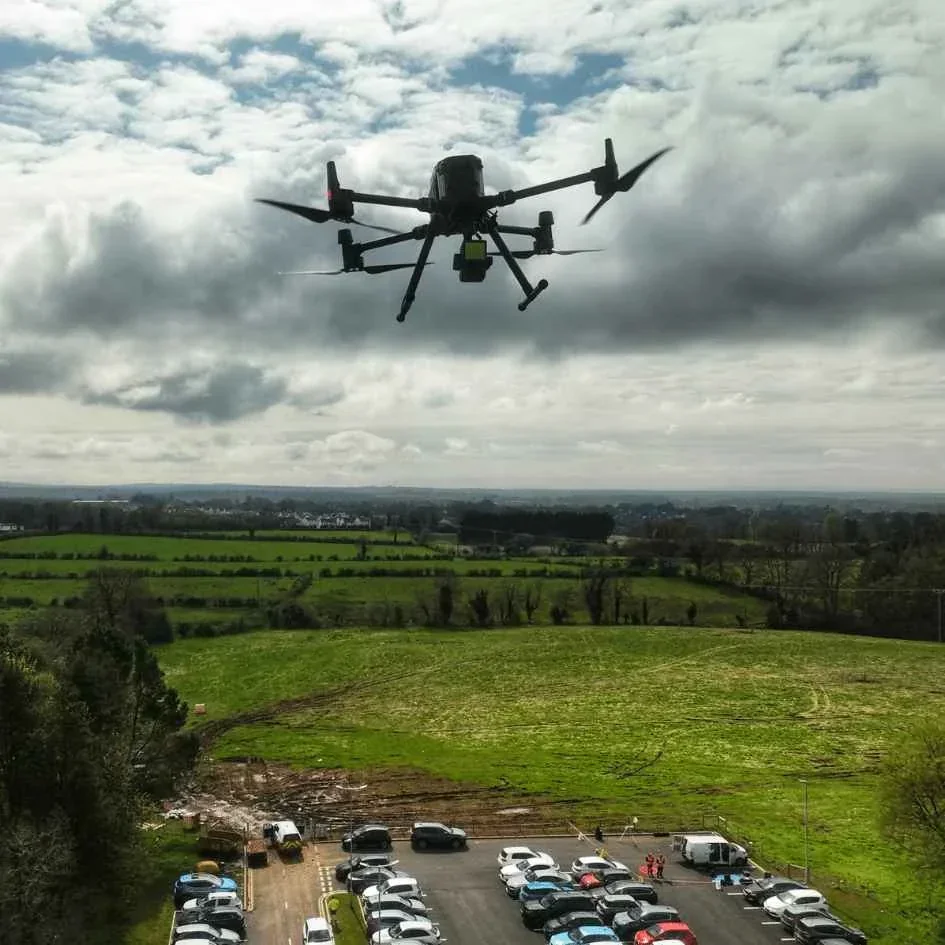
Sub-250g and UK0, UK1, C0 and C1 class drones are exempt from the 50-metre buffer, but the crowd rule still applies
The smallest drones get a significant concession. If you are flying a drone under 250 grams, or a UK0, UK1 or C0 class drone, the 50-metre buffer does not apply at all. The same applies to C1 class drones between January 2026 and the end of December 2027, which is the transition window the CAA set in the current Drone Code.
That is why the DJI Mini and DJI Neo class of sub-250g drones have become the default choice for garden, beach and urban street use in the UK. You can legally fly them close to people, and you can fly them over individuals, as long as the airspace permits it.
What the exemption does not remove is Rule 5 of the Code. A crowd is any group of people who cannot move away quickly because of the number of people around them, and flying over a crowd is banned outright — sub-250g or not. That is the specific rule the can-I-fly-a-250g-over-a-crowd question runs into.
A2 class marks buy you a 30-metre buffer, or 5 metres in low-speed mode, and A3 pushes you 150 metres from residential areas
Once you step up to a heavier drone, the sub-category your class mark unlocks decides the distance you can legally fly at. The A2 Near People sub-category is the one to understand if you want to fly close to people with a camera-grade drone.
A UK2 or C2 class drone flown under A2 rules keeps a 30-metre buffer from uninvolved people, and that can reduce to 5 metres if the drone has a low-speed mode and you switch it on. Without the UK2 or C2 class mark, an unclassed drone under 2 kilograms falls back to a 50-metre buffer under A2. A2 flying requires the A2 Certificate of Competency.
A3 Far from People is the sub-category most heavier drones end up in. It keeps you 50 metres from individual people and from isolated buildings, and 150 metres from residential, commercial, industrial and recreational areas. In practice, A3 is a rural sub-category — it is the reason you cannot casually launch a Mavic 3 in a city park, and it sits behind a GVC or equivalent qualification for commercial work.
| Sub-category | Drone | Distance from uninvolved people |
|---|---|---|
| A1 Over People | <250g, UK0, UK1, C0 (and C1 until 31 Dec 2027) | No minimum buffer; over-crowd ban still applies |
| A2 Near People | UK2 / C2 class | 30m (5m in low-speed mode); no overflight |
| A2 Near People | Unclassed <2kg | 50m; no overflight |
| A3 Far from People | UK2, UK3, UK4, privately built <25kg | 50m from people; 150m from residential / commercial / industrial / recreational areas |
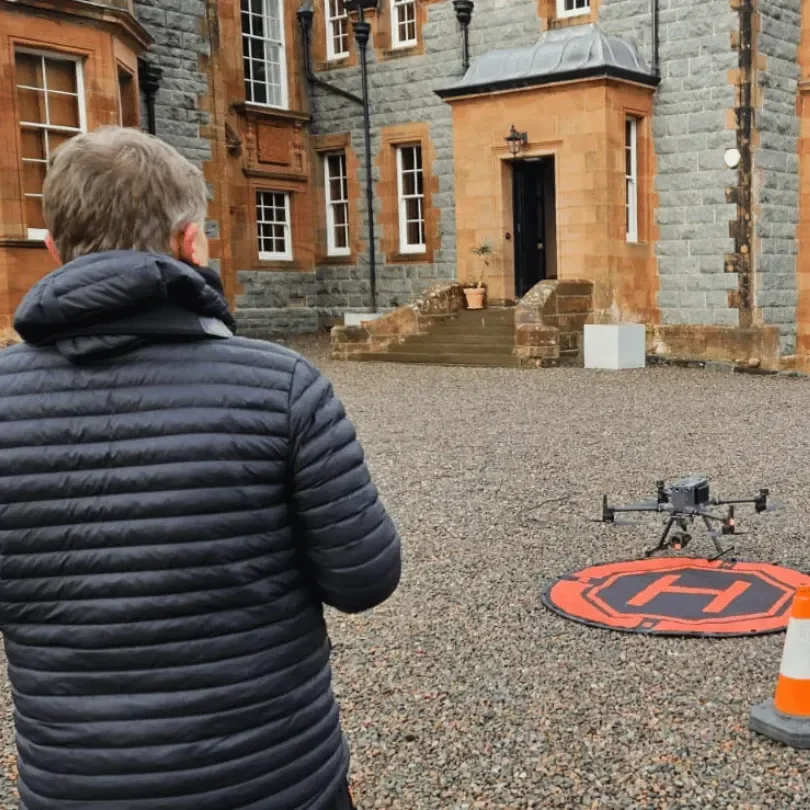
Crowds are a hard no at any weight, and an assembly of people has its own 50-metre ban inside PDRA01
Rule 5 of the Drone Code is the one rule there is no weight-based wiggle room on. Never fly over a crowd — shopping areas, sports events, religious and political gatherings, music festivals, carnivals, a crowded beach, a packed park. The sub-250g exemption does not touch it.
Inside the Specific Category, the language shifts from crowds to assemblies of people, and the buffer gets numeric. Specific Category drone operators flying under PDRA01 must keep a 50-metre horizontal separation from any assembly of people, and the separation cannot be less than the height of the drone above the ground — the CAA names that condition the 1-to-1 rule in the authorisation itself.
Overflight of assemblies is banned under PDRA01 at any height. If you need to fly over a festival or a sports event, the route is a bespoke Operational Authorisation, not a Drone Code loophole.
Uninvolved is the word the whole distance rule turns on, and the briefing standard is real
Every buffer in this article applies to uninvolved people. An uninvolved person is anyone who has not been briefed on the flight and has not agreed to be part of it. That covers the general public by default.
An involved person is someone who understands what the drone is doing, understands the risks, has consented to be near the operation, and knows what to do if something goes wrong. Involved people do not count against the 50-metre buffer, which is how a wedding photographer or a roof surveyor legally works close to a small group.
The catch, in practice, is that a casual mind the drone, mate is not a briefing. Every working drone pilot I know runs a two-minute walk-through before a flight — flight path, landing zone, emergency shutdown, what to do if the drone comes down. The drone pilots on our directory treat this as default, and it is the difference between a defensible flight and a Section-107 charge if something goes sideways.
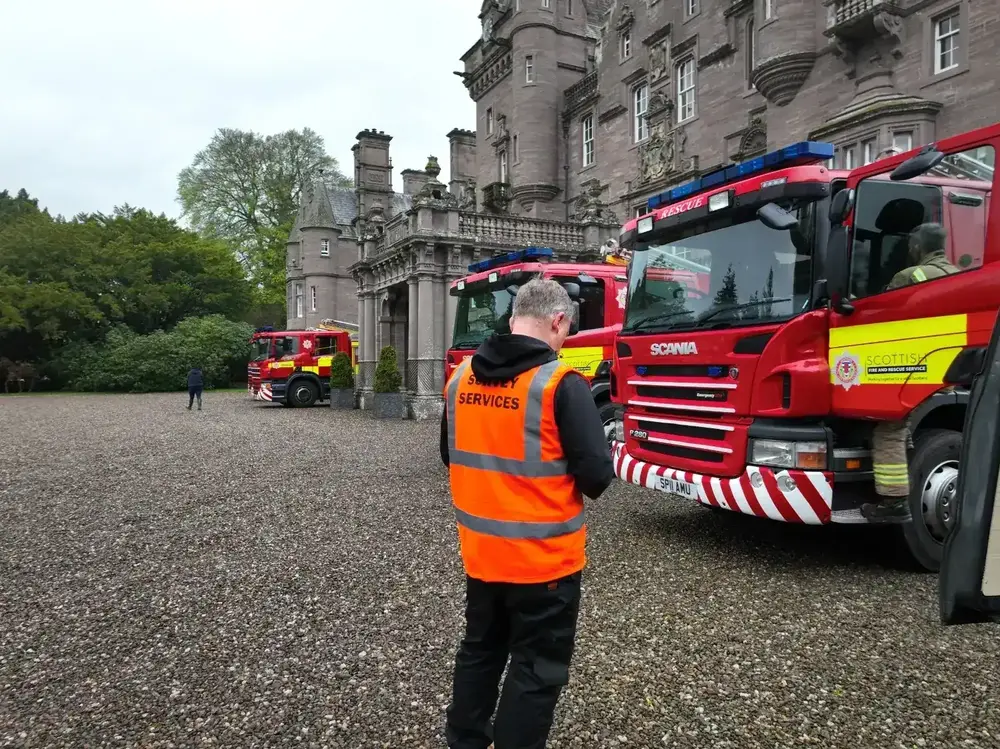
Getting closer than the Drone Code allows means a Specific Category authorisation, not a judgement call
There is no ad-hoc but it was a Sunday and the park was empty defence built into the UK regime. If a shoot needs you to fly a UK2 drone closer than 30 metres, or a UK3 drone closer than 50 metres, or anywhere near a gathering, the legal route is an authorisation under the Specific Category.
PDRA01 is the most common route — it authorises flight within 150 metres of residential, commercial, industrial and recreational areas and limited overflight of uninvolved people, and it ties you to a buffer of 50 metres from uninvolved people that reduces to 30 metres only during take-off and landing. Anything tighter than that needs a bespoke Operational Authorisation with a site-specific risk assessment and an Operations Manual the CAA has accepted.
This is the threshold that separates hobby flying from commercial work. You cannot buy your way past Rule 4 with more insurance, and you cannot brief your way past it with a Hi-Vis vest. The framework wants paperwork, training, and a named accountable operator.
Breaking the buffer is a criminal offence under the Air Navigation Order 2016, and it invalidates your insurance
The legal backbone behind the whole Drone Code is the Air Navigation Order 2016, working alongside UK Regulations (EU) 2019/945 and 2019/947. Breaking Rule 4 is not a civil matter — it is a criminal offence, and the penalty scales with the outcome of the flight.
Routine breaches can result in a fine. Endangering an aircraft in flight carries up to five years in prison. On top of the criminal side, flying outside the Code invalidates your third-party drone insurance — any collision becomes a direct personal liability, and any commercial engagement ends with it.
The 50-metre buffer is cheap. Fines, civil claims and a lost commercial standing are not.
If you remember one thing from this guide, make it the cylinder. The buffer is not a ring on the ground — it is a column of airspace that reaches all the way up to the ceiling, and it moves with the nearest uninvolved person. Everything else in this article is either an exemption to that cylinder (sub-250g, A2, A3) or an upgrade path through it (PDRA01, Operational Authorisation).
Got a specific scenario you want covered — a borderline site, a close-in A2 shoot, a question on who counts as involved? Drop a note to peter@hiredronepilot.uk and I will come back to you directly. If you prefer the video version of this explainer, the comments are open on YouTube.
References
Primary source material for this article is the UK Civil Aviation Authority. External links open in a new tab.
- UK CAA — The Drone and Model Aircraft Code (CAP2320) · Rule 4 (50m buffer and altitude scaling), Rule 5 (no overflight of crowds), class mark sub-categories
- UK CAA — Where You Can Fly (A1, A2, A3 sub-categories) · A1 over-people exemptions, A2 30m and 5m low-speed buffer, A3 150m residential buffer
- UK CAA — PDRA01 Operational Authorisation Overview · 50m uninvolved buffer (30m on take-off and landing), 50m assembly buffer, explicit 1-to-1 rule for assemblies
- UK CAA — UK Regulatory Framework for Drones · Air Navigation Order 2016, UK Regulations (EU) 2019/945 and 2019/947, criminal-offence framework
Peter Leslie
Founder & GVC Drone Pilot
Peter is the founder of HireDronePilot. With thousands of logged commercial flight hours, he writes about drone technology, commercial surveying tactics, and UK aviation compliance.
Connect on LinkedIn