How Loud Are Drones? A Realistic Answer from a UK Drone Pilot

Peter Leslie
10 Sept 2025
Key Takeaways
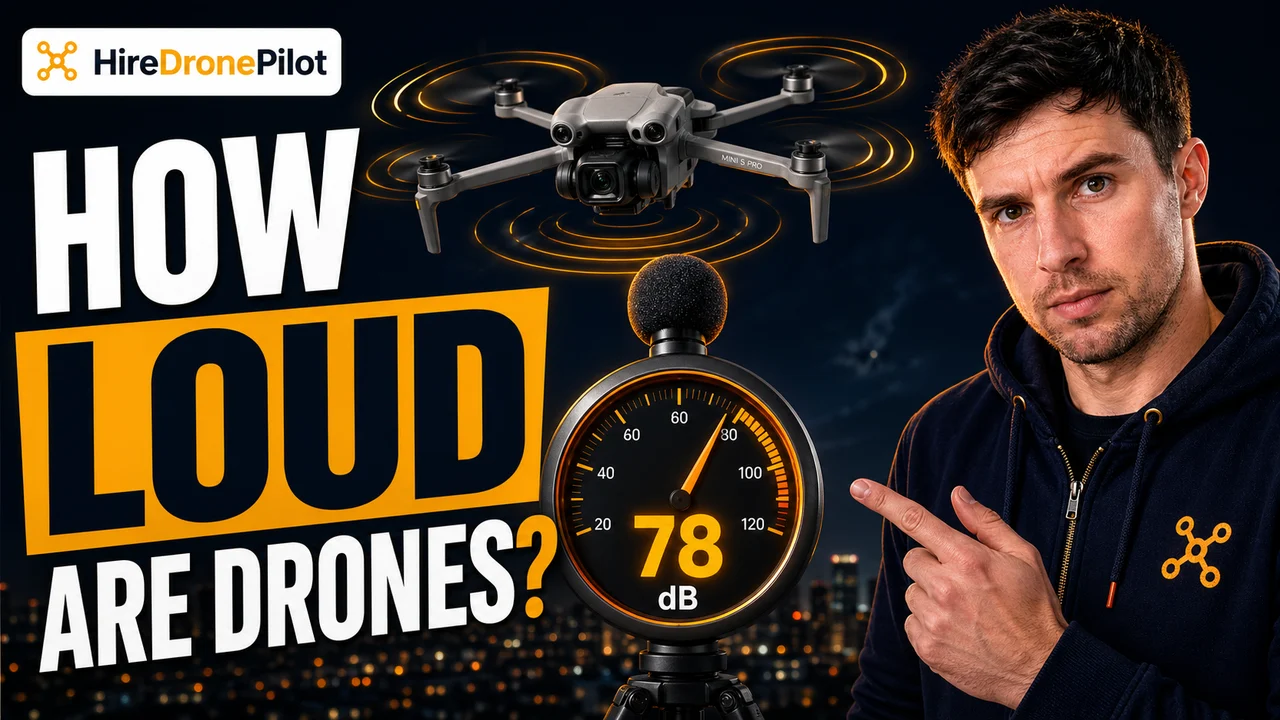
- Consumer drones typically sit around 70–90 dB close to the source — somewhere between a vacuum cleaner and a lawnmower
- Larger professional drones like the DJI Matrice are louder again, in the 85–95 dB range, because bigger propellers have to shift more air
- Sound drops sharply with distance — a drone at the 120 m legal ceiling is usually barely audible over ambient traffic
- The UK has no specific drone-noise dB limit, but drone operators still fall under the Environmental Protection Act 1990 and local noise-nuisance rules
- How you fly matters — smooth steady speeds are quieter than sharp manoeuvres, and low-noise propellers can meaningfully reduce the footprint
The single most common complaint I hear about drones has nothing to do with footage or privacy. It is the noise. A buzzing overhead on a quiet Sunday morning can go from novelty to genuine annoyance faster than almost any other sound in a neighbourhood, because drones occupy a frequency range that human ears are particularly good at picking out of the background.
The honest answer to how loud are drones? is that the number you hear depends heavily on which drone, how close it is, and how it is being flown. A DJI Mini hovering fifty metres overhead is almost inaudible in traffic. The same Mini at two metres above your head is roughly the same volume as a vacuum cleaner in the same room. Those two experiences are both true, and they are both the same drone. For the wider legal picture around noise, privacy, and distance, the UK drone laws hub is the companion read.
Consumer drones sit around 70–90 decibels at close range
For most consumer drones at a short distance, the measured sound pressure level is somewhere between 70 and 90 decibels. For perspective, a normal conversation is around 60 dB, a vacuum cleaner is roughly 75, and a petrol lawnmower is about 90. A standard DJI Mavic, Air, or Mini at a few metres is comfortably inside that band.
The sound itself is a blend of two components: the motors spinning, which is a relatively low buzz, and the propeller tips cutting through the air, which is a high-pitched whine. The propeller whine is the part that travels furthest and is the hardest to ignore, because it sits in a frequency range our ears are optimised to detect.
How you fly it changes the profile noticeably. A drone hovering in a steady hold is significantly quieter than the same drone accelerating hard or correcting against wind. Flying in wind forces the motors to work harder to hold station, and every watt of extra motor load becomes audible on the ground.
Professional drones like the DJI Matrice sit around 85–95 decibels because they have to shift more air
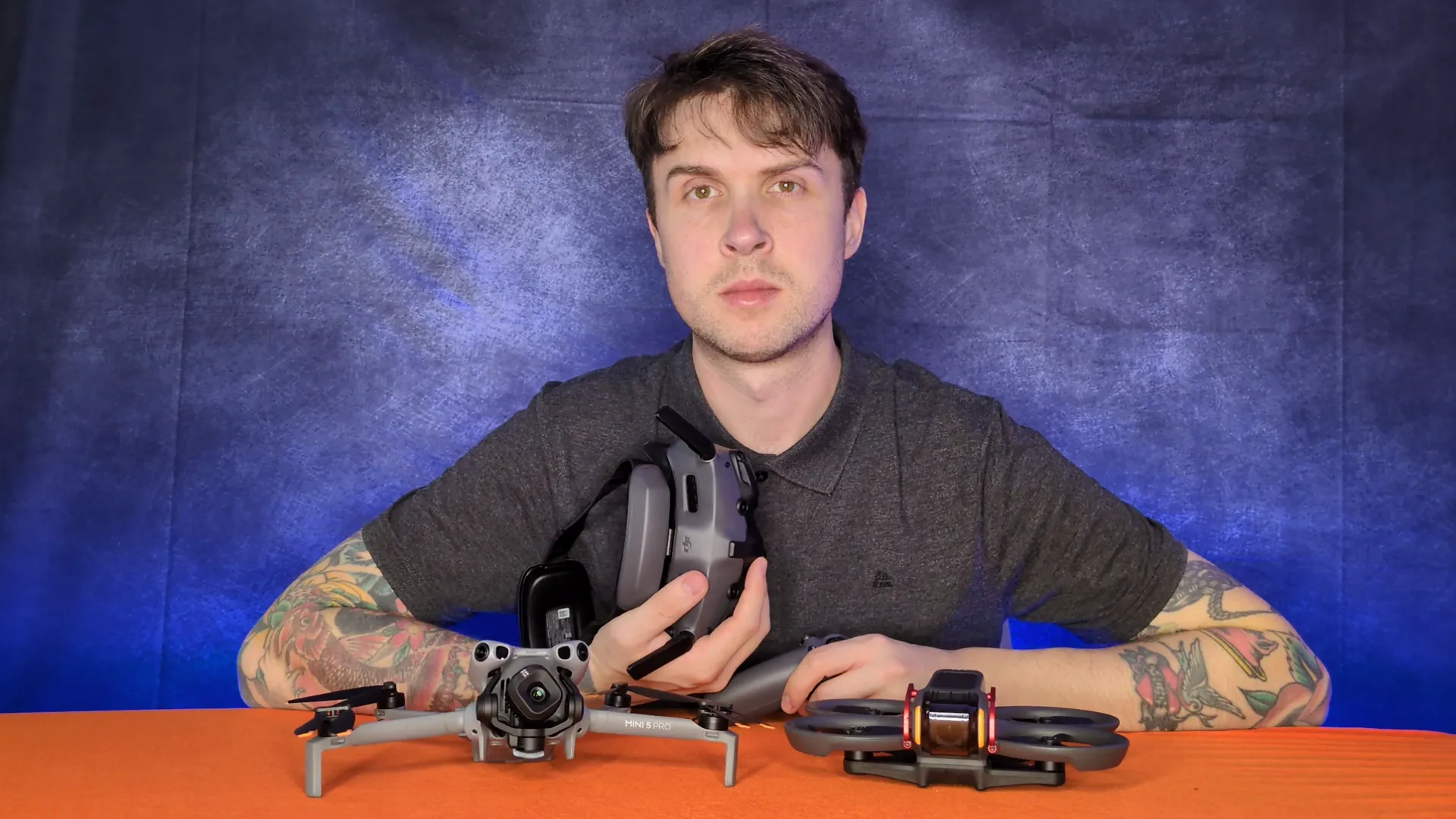
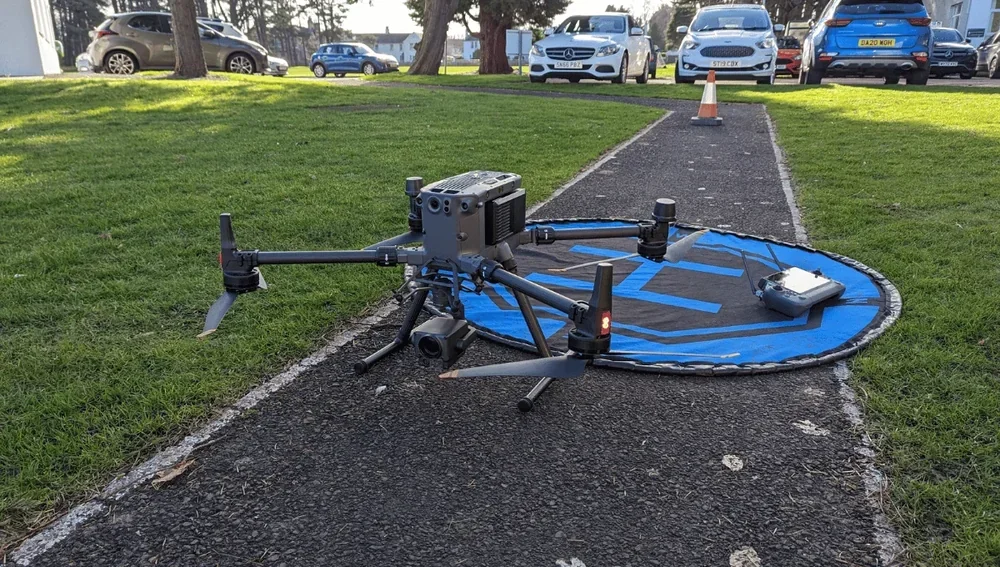
Step up to a larger commercial drone and the numbers climb. A DJI Matrice-class drone or a heavy-lift rig is closer to 85–95 dB at short range. This is not a failure of engineering — it is basic physics. A bigger drone with a heavier payload needs bigger propellers to generate enough thrust, and bigger propellers moving more air make more sound.
That is why noise tends to track the job. A drone photography shoot with a Mini is almost unnoticeable from a hundred metres away. A thermal imaging survey with an M30T carrying a thermal payload is a noticeably louder flight, and any neighbours worth notifying in advance are probably worth an email. Serious drone pilots think about this in the site survey, not at the kitchen window complaint.
Sound drops sharply with distance, which is why altitude matters so much
Sound follows the inverse-square law: double the distance, and the perceived loudness drops by roughly six decibels. In practical terms that means a drone that measures 85 dB at two metres is already in the region of 70 dB at eight metres, and meaningfully quieter again at thirty.
At the legal 120 m altitude ceiling, a DJI Mini-class drone is typically hard to hear over ambient traffic in most urban environments. A Matrice is still audible at 120 m but is easily masked by a bus passing or a bit of wind in the trees. This is the main reason that responsible drone pilots climb to a sensible operating altitude as early as it is safe to do so — it gets the noise away from the people who did not sign up for it.
The same effect is why a drone hovering directly above your garden is so much louder than a drone flying past at height. If you have ever wondered whether the drone buzzing over your roof was especially loud or just especially close, the honest answer is usually the second one. For the wider picture of what a drone may lawfully be doing over a residential area, see the primer on a neighbour's drone over your garden.
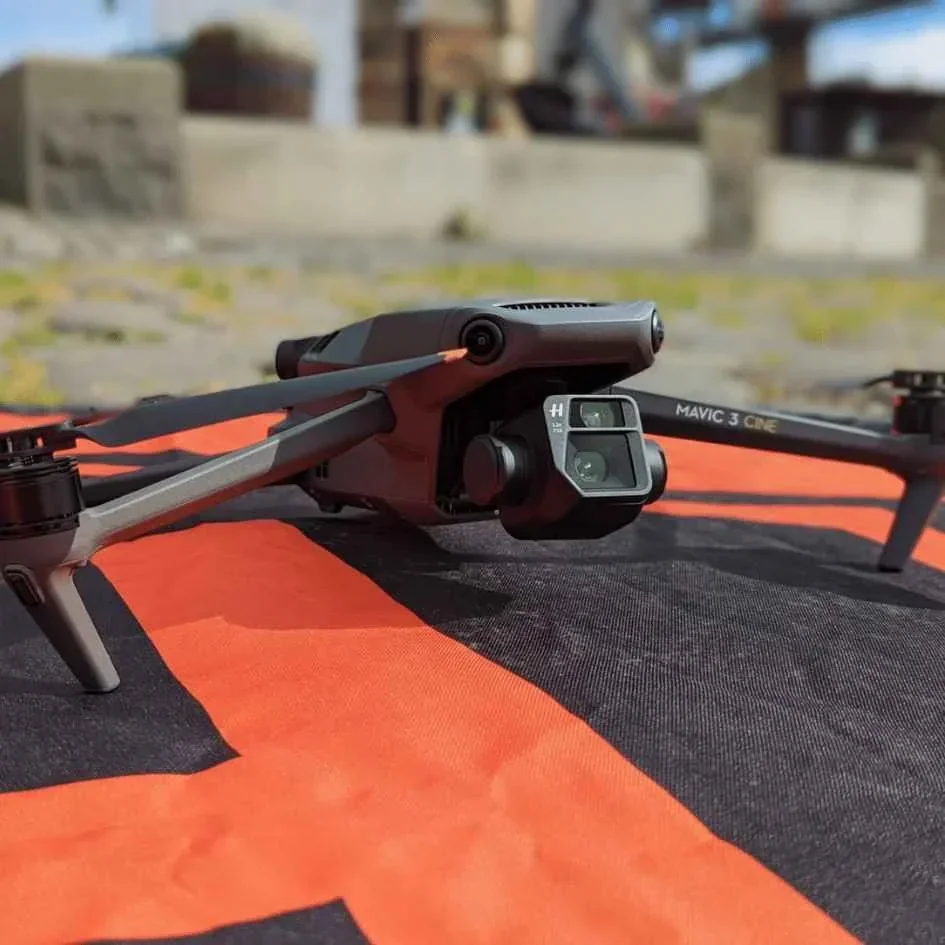
Noise compared to everyday sounds — a rough frame of reference
| Sound source | Typical level |
|---|---|
| Quiet room | ~30 dB |
| Normal conversation | ~60 dB |
| Consumer drone at close range | 70–90 dB |
| Vacuum cleaner | ~75 dB |
| Heavy city traffic | ~85 dB |
| Professional drone at close range | 85–95 dB |
| Petrol lawnmower | ~90 dB |
| Motorcycle | ~95 dB |
These are ballpark figures. The actual decibel level measured at any given flight depends on the specific drone, the propellers fitted, the ambient environment, and the distance and angle from the observer — so use this as a frame of reference rather than a specification.
For manufacturer-level figures on your specific drone, DJI's UK support portal is the best starting point — individual product pages sometimes publish measured sound pressure levels as part of the technical specifications.
There is no specific UK drone-noise limit, but the general noise laws still apply
On the legal side, the UK does not set a maximum decibel level for drones as a category. There is no number you can point to in the Drone and Model Aircraft Code that caps drone noise at X dB. That does not mean noise is unregulated.
Drones fall under the same general noise-nuisance rules that apply to any other source of sound — the Environmental Protection Act 1990, local authority noise bylaws, and in the case of commercial operations, customer-facing expectations about how you conduct a shoot. Persistent hovering over a residential garden early in the morning is the kind of thing a council can act on, and the fact that no specific drone rule exists does not prevent the complaint.
The practical implication for serious drone pilots is to fly like a good neighbour. Climb to altitude quickly once the drone is up. Do not hold a hover over someone's garden any longer than the shot actually needs. Give notice if you are running a long job in a residential area. These are common-sense habits that keep the relationship healthy and prevent a small number of loud complaints from turning into harder regulation later. If you are flying in a public park or on a UK beach, the rules cover more than just noise — but the noise is usually what gets complained about first.
Low-noise propellers and smoother flight inputs genuinely reduce the footprint
If noise is a real consideration on a job, there are a few practical levers. Low-noise propellers — the curved-tip designs that DJI ships as an accessory for most Mavic-class drones — take a meaningful bite out of the high-frequency whine that carries furthest. They do not change the motor hum, but the motor hum is not what bothers people.
Smooth flight inputs matter too. A drone in a steady cruise is measurably quieter than a drone chopping through a sequence of hard corrections. This is both a style point and a flight-control point: a drone pilot who can hold a clean line leaves a smaller noise footprint than one who is fighting the drone.
And altitude, again. If you can climb to 80 or 100 metres quickly after takeoff, you have already done most of the work of making the flight unobtrusive.
So the honest answer to the original question. Consumer drones are vacuum-cleaner volume at close range and mostly inaudible at the legal ceiling. Larger commercial drones are lawnmower volume at close range and clearly audible but not intrusive from altitude. There is no specific UK dB limit, but there are general noise laws that apply, and the professional move is to fly in a way that makes them irrelevant.
Got a specific site where noise is the deal-breaker — a wedding venue, a conservation area, a hospital perimeter? Drop a note to peter@hiredronepilot.uk and I will come back to you with a plan. If you prefer the video version of this explainer, the comments are open on YouTube.
References
Primary source material for this article is the UK Civil Aviation Authority. External links open in a new tab.
- UK CAA — The Drone and Model Aircraft Code (CAP2320) · 120 m altitude ceiling, responsible flying
- UK Legislation — Environmental Protection Act 1990 · general noise-nuisance framework that applies to drone flights
- DJI — UK support portal · manufacturer product pages and low-noise propeller specifications
Peter Leslie
Founder & GVC Drone Pilot
Peter is the founder of HireDronePilot. With thousands of logged commercial flight hours, he writes about drone technology, commercial surveying tactics, and UK aviation compliance.
Connect on LinkedIn