What Is the Minimum Age to Fly a Drone in the UK?

Peter Leslie
17 Apr 2026
Key Takeaways
- The UK sets no legal minimum age to fly a drone — what the law regulates is registration, not the act of flying
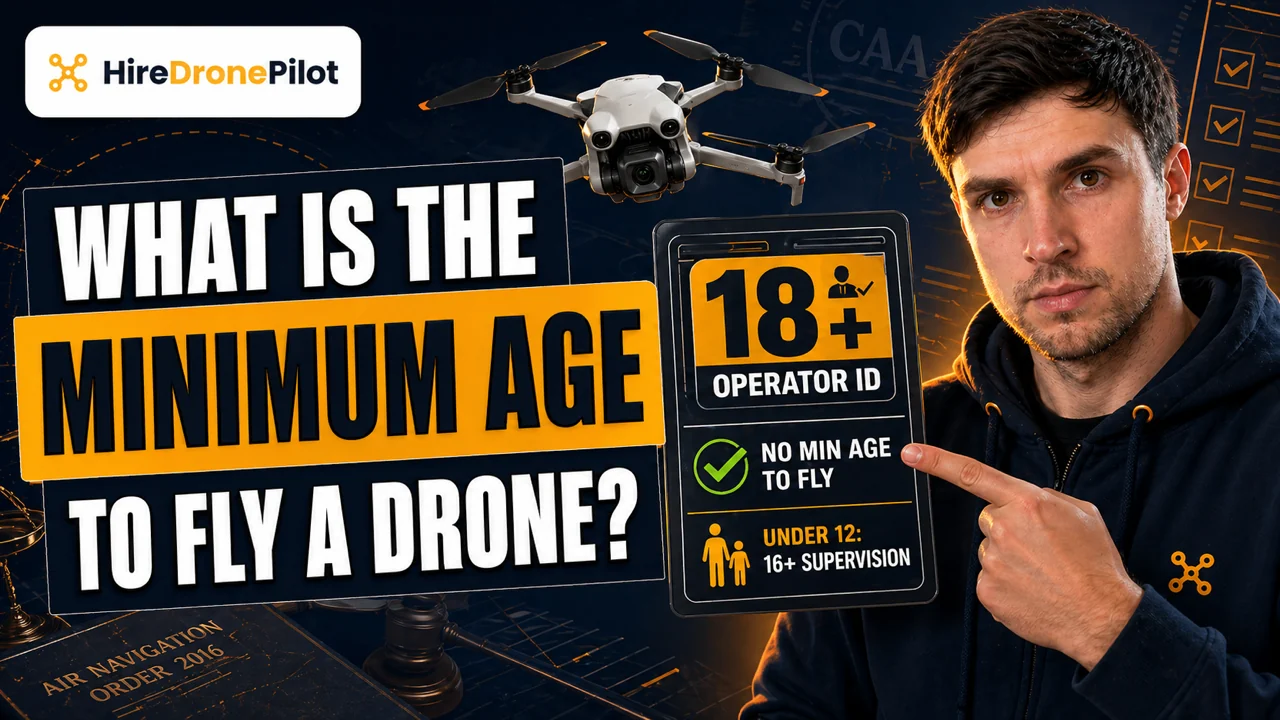
- Children under 12 may fly, but only while supervised by someone aged 16 or over
- Everyone flying a drone that needs registering must hold a Flyer ID, and under-13s take the test with a parent or guardian present
- The Operator ID carries the only hard age gate — you must be 18 or over to hold one in your own name
- A parent or guardian can register as the Operator for a child's drone, which is how the under-18 route works in practice
- Flying without the IDs your drone needs is a criminal offence under the Air Navigation Order 2016, carrying fines and, in serious cases, prison
One of the first questions parents, uncles, grandparents and anyone buying a drone as a present asks is whether there is a minimum age to fly one in the UK. The short answer is no. There is no age floor written into UK drone law that stops a child from flying a drone.
What the law does regulate is who registers as responsible for the drone, and who is allowed to take the Flyer ID theory test alone. Those rules split neatly into three age brackets: under 12, 13 to 17, and 18 or over. Get the bracket right and the rest of the process is straightforward.
The UK has no legal minimum age to fly a drone, only to register as responsible for one
This is the point most headlines miss. There is no line in the Civil Aviation Authority rulebook that says a child must be a certain age before they can pick up a controller and fly. A four-year-old on a parent's knee with a palm-launched toy drone is not breaking UK law just by being four.
What the CAA does regulate is registration. Most drones you can buy as a gift — anything at or above one hundred grams with a camera, and everything at or above two hundred and fifty grams regardless of camera — need a Flyer ID for the person flying and an Operator ID for the person responsible for the drone. The age rules all live inside those two registrations.
The easiest way for drone pilots — and for parents shopping for their children — to see the age picture is to forget the controller for a moment and look at who has to hold which ID. The rest falls out of that.
One useful exemption before we get into the brackets. If the drone only ever flies indoors, or inside a fully enclosed netted area where it cannot escape into the outside world, no Flyer ID and no Operator ID are required at all, regardless of age. The same goes for drones under one hundred grams — they are a special case where registration is recommended but not legally required. For everything else, age starts to matter, and the rules sharpen as the child gets older.
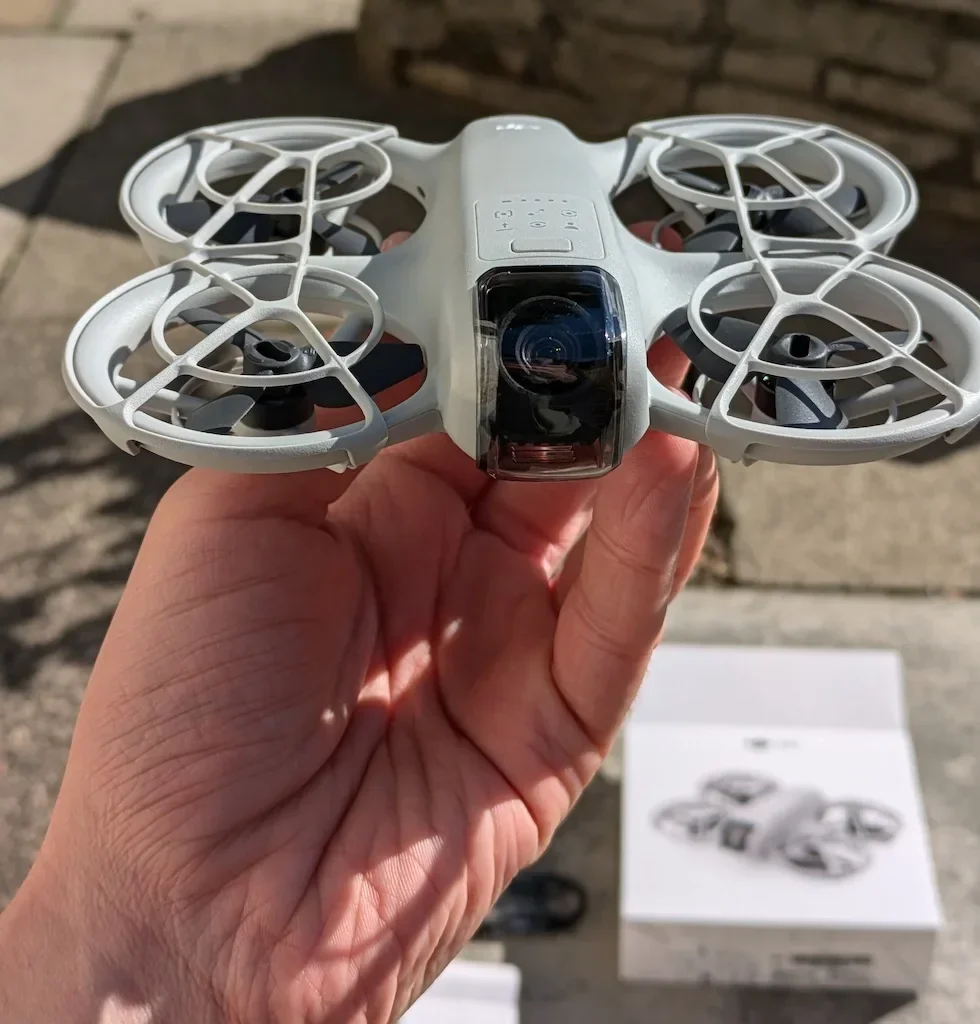
Children under 12 may fly a drone, but only while supervised by someone aged 16 or over
The first age rule that has actual numbers attached to it is the supervision rule. Children under the age of twelve are allowed to fly a drone — there is nothing in the Drone and Model Aircraft Code that prohibits them from taking the controller. What is prohibited is letting them fly unaccompanied.
The CAA requires any under-12 drone flyer to be directly supervised by someone who is at least 16 years old. That supervisor does not need to be the parent, and does not strictly need to be the Operator, but they do need to be present and paying attention.
In practice this means a nine-year-old flying their own drone on an afternoon in the park is fine, provided a teenaged sibling, a parent, a grandparent or another responsible adult over sixteen is standing next to them and watching the flight. The moment that supervision drops away — the sibling walks off, the parent checks their phone for ten minutes — the flight is outside the rules.
This rule exists because the Flyer ID test is designed for a reading age of about thirteen, and the CAA's position is that younger children can absolutely fly, but should do so with an older decision-maker physically on site.
The Flyer ID is required from day one, and under-13s take the test with a parent or guardian present
The Flyer ID is the free CAA registration that shows the person at the controls has passed a basic theory test. It is free, valid for five years, and renewed by retaking the test. Every person who flies a drone that falls inside the registration weight bands needs their own Flyer ID — this is not something a parent can hold on behalf of a child.
The test itself has forty questions, and the pass mark is thirty. It is open-book, the retake count is unlimited, and the whole thing costs nothing. Most drone pilots finish it in under half an hour the first time.
For children under 13, the CAA has one hard condition: a parent or guardian must be physically present while the child takes the test. This is a data protection rule rather than a competence rule — under-13s cannot legally enter their own details into the registration system without an adult alongside them. The child still has to answer the questions, but the parent completes the registration account.
From the age of 13 upward, things loosen. A 13 to 17-year-old can take the Flyer ID test on their own, register their own account, and fly unsupervised. What they cannot do is become an Operator — which brings us to the next rule.
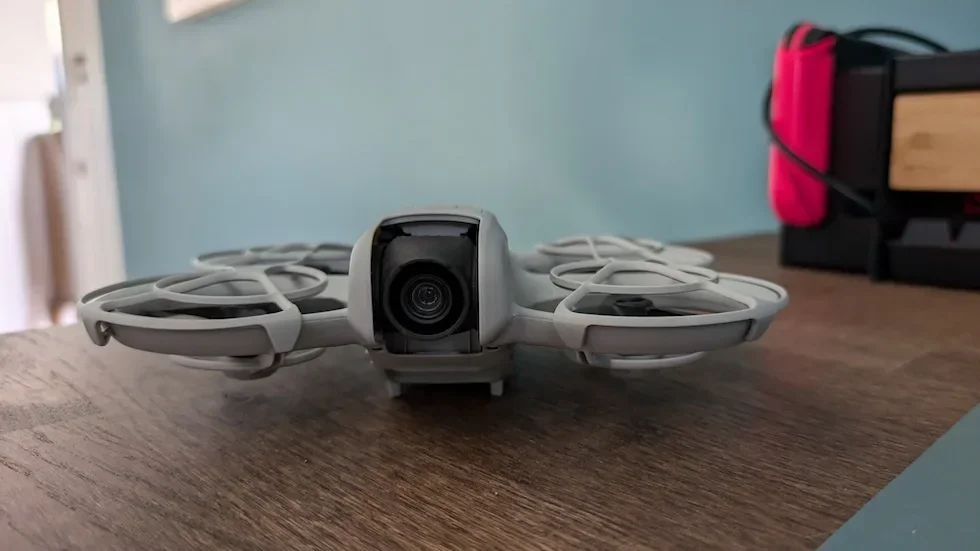
The Operator ID is the registration with the eighteen-plus age gate, and a parent can hold it on the child's behalf
The Operator ID is the other half of the registration picture. It identifies the person or organisation legally responsible for the drone — the one whose details are labelled on the drone body in block capitals, the one who carries the duty to make sure the drone is flown safely and legally. It costs £12.34 per year and has to be renewed annually.
This is where the only hard age limit in the whole system sits. You must be 18 or over to register for an Operator ID in your own name. Nobody under eighteen can hold one, regardless of how competent they are, how many drones they fly, or how long they have been interested in the hobby.
That does not mean children cannot own drones. What it means is that if a child owns a drone that requires an Operator ID, someone else has to register as the Operator on their behalf. In almost every case this is a parent or guardian, who takes on the legal duties of the Operator role for as long as the child is under eighteen.
One Operator ID covers any number of drones. A parent who already holds an Operator ID for their own drone can add the child's drone to that same registration — they do not pay £12.34 twice. A parent who does not fly at all can still register as Operator only, without a Flyer ID, to carry the child's drone.
The practical split inside a family with one drone-flying child looks like this. The child holds their own Flyer ID from age 13, or from any age under 13 with the parent present at the test. The parent holds the Operator ID. Both of those details go on the drone: the Flyer ID identifies the drone pilot, the Operator ID identifies the responsible adult.
| Age bracket | Flyer ID | Operator ID | Supervision |
|---|---|---|---|
| Under 12 | Required, test taken with parent/guardian present | Parent or guardian holds it | Must fly under the supervision of someone aged 16 or over |
| 12 | Required, test taken with parent/guardian present | Parent or guardian holds it | No supervision requirement |
| 13 to 17 | Required, child can take the test alone | Parent or guardian holds it | No supervision requirement |
| 18 and over | Required | Adult holds their own | No supervision requirement |
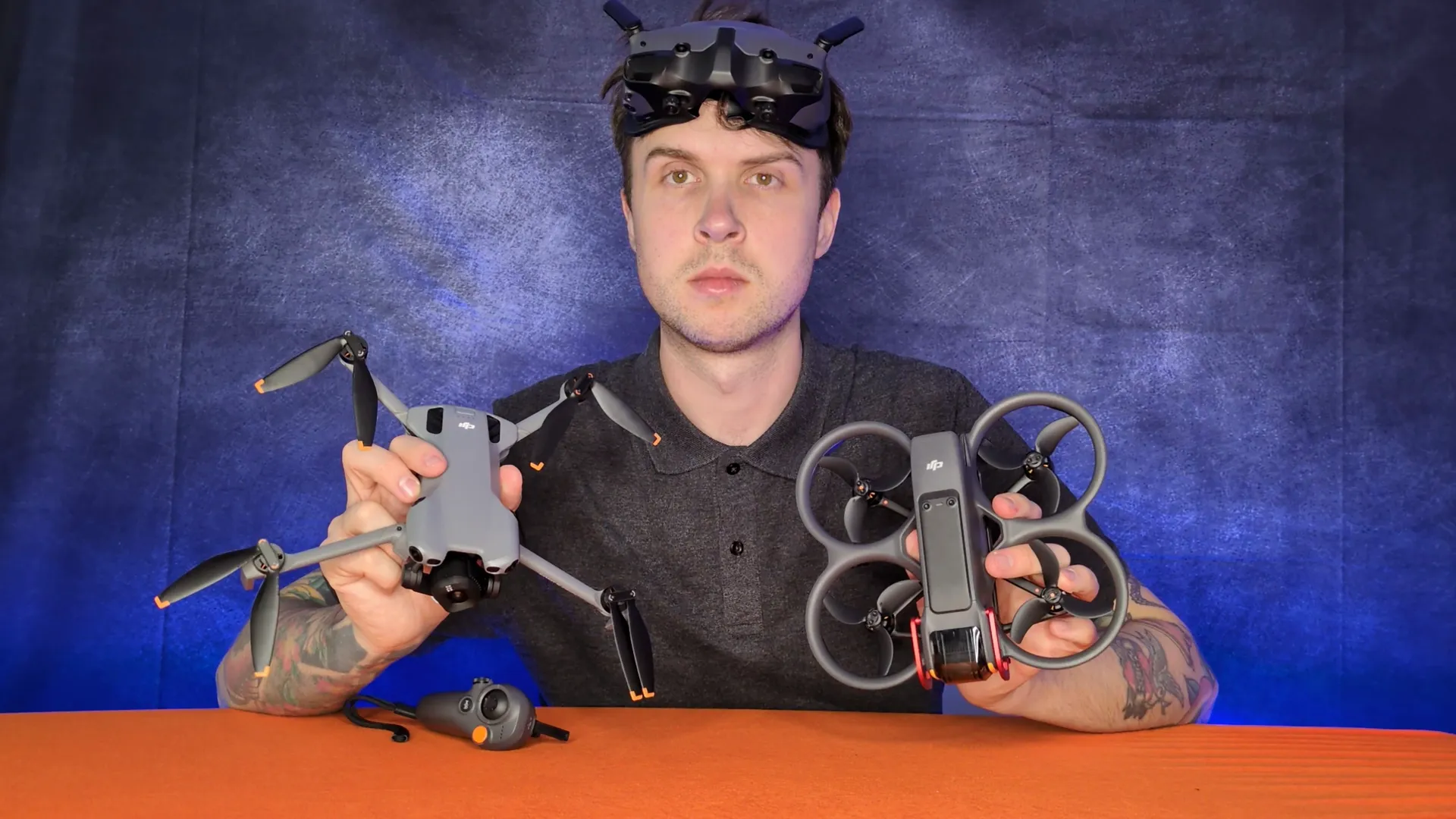
Weight and camera status change which IDs a drone needs before age ever comes into it
The age rules above only kick in once a drone needs registering. Whether a specific drone does needs registering comes down to two things — its weight and whether it has a camera.
A drone under one hundred grams sits outside the mandatory registration system entirely. The CAA recommends a Flyer ID for anyone flying one, but it is not legally required, and no Operator ID is needed. This is the bracket most small indoor toy drones live in, and the age rules effectively do not apply to them in the way they do to heavier drones.
A drone between one hundred and two hundred and forty-nine grams with a camera needs both a Flyer ID and an Operator ID, which brings the age rules back in. The same drone without a camera needs a Flyer ID only, making the Operator ID optional. Almost every modern sub-250g drone sold today has a camera, so the camera-free carve-out is a narrow one in practice.
A drone from two hundred and fifty grams up to twenty-five kilograms needs both IDs regardless of camera — including all UK1, UK2, UK3 and UK4 class-marked drones. Almost every drone a family would buy for a child sits inside this bracket once they outgrow the true pocket-sized drones.
The shorthand most drone pilots use is this: if the drone needs a Flyer ID, the age rules apply. If it needs an Operator ID, at least one adult aged 18 or over has to be involved somewhere. Everything else flows from those two checks.
Flying without the IDs your drone needs is a criminal offence under the Air Navigation Order 2016
The age rules are not guidance. They sit inside the Air Navigation Order 2016, working alongside the UK Regulations (EU) 2019/945 and 2019/947. Flying a drone that requires registration without the right IDs — including letting an under-12 fly unsupervised, or flying as an under-18 without a parent-held Operator ID on the drone — is a criminal offence.
In most routine cases the penalty is a fine. A parent letting a child fly without a Flyer ID is technically in breach of the rules and can be fined as the responsible adult. Where things get dangerous — a drone coming close to manned aircraft, or being flown somewhere banned such as a prison or a crowd — the penalty scale sharpens rapidly. Endangering an aircraft in flight carries a maximum sentence of five years in prison.
Beyond criminal penalties, flying outside the rules invalidates drone insurance. For a family, the practical consequence of letting a twelve-year-old fly alone is not usually a court case — it is that the first fly-away or crash becomes a direct personal liability rather than an insurance claim.
None of this is meant to put anyone off. The rules are genuinely simple once you line up the brackets. Register the parent as Operator, register the child as Flyer, stay on top of the under-12 supervision rule, and the law is satisfied. Most UK drone pilots started exactly this way as kids flying with a parent on a field somewhere.
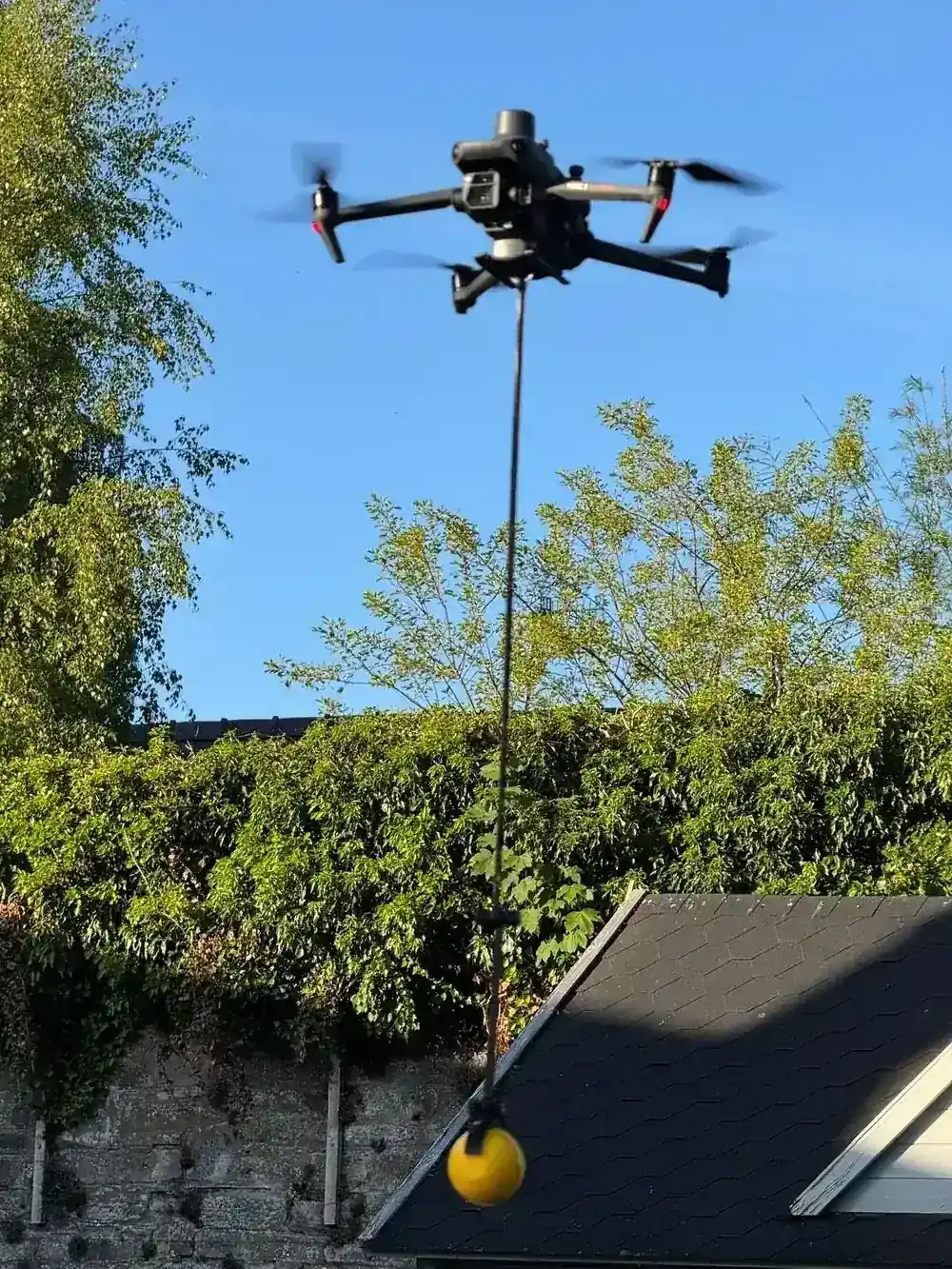
So there is no minimum age to fly a drone in the UK, but there are three clean thresholds inside the registration system: twelve for unsupervised flying, thirteen for solo Flyer ID registration, and eighteen for the Operator ID. Get those right and the rest of the Drone Code does the legal work for you.
If you are buying a drone as a gift, the next natural read is the Flyer ID and Operator ID explainers linked earlier in this piece — one for the child, one for the adult. Between them they cover every step of the registration process, including the parent-present flow for under-thirteens.
Got a specific scenario you want covered — a split family with an older sibling as supervisor, a school running a drone club, a grandparent who wants to register the drone but not fly it? Drop a note to peter@hiredronepilot.uk and I will come back to you directly. If you prefer the video version of this explainer, the comments are open on YouTube.
References
Primary source material for this article is the UK Civil Aviation Authority. External links open in a new tab.
- UK CAA — Children and Parent Guidance · under-12 supervision rule, under-13 parent-present test rule, 13-to-17 carve-outs
- UK CAA — Flyer IDs and Operator IDs · Flyer ID vs Operator ID, 18-plus rule for Operator ID, parent-as-Operator
- UK CAA — Registering to Fly Drones and Model Aircraft · weight-threshold table, indoor exemption, criminal penalties for flying without IDs
- UK CAA — Get an Operator ID · £12.34 annual fee, 18-plus minimum, one Operator ID covers all drones
- UK CAA — Get a Flyer ID for a Child Under 13 · parent-assisted registration flow, free Flyer ID, 5-year validity
- UK CAA — The Drone and Model Aircraft Code (CAP2320) · underlying rules every Flyer ID holder is tested on
- UK CAA — UK Regulatory Framework for Drones · Air Navigation Order 2016 and the UAS Regulations that back the penalties
Peter Leslie
Founder & GVC Drone Pilot
Peter is the founder of HireDronePilot. With thousands of logged commercial flight hours, he writes about drone technology, commercial surveying tactics, and UK aviation compliance.
Connect on LinkedIn